

Antimicrobial Hospital Textiles Market Report
First published: 08 October 2024 | Last updated: 28 May 2026 | Report Code: antimicrobial-hospital-textiles
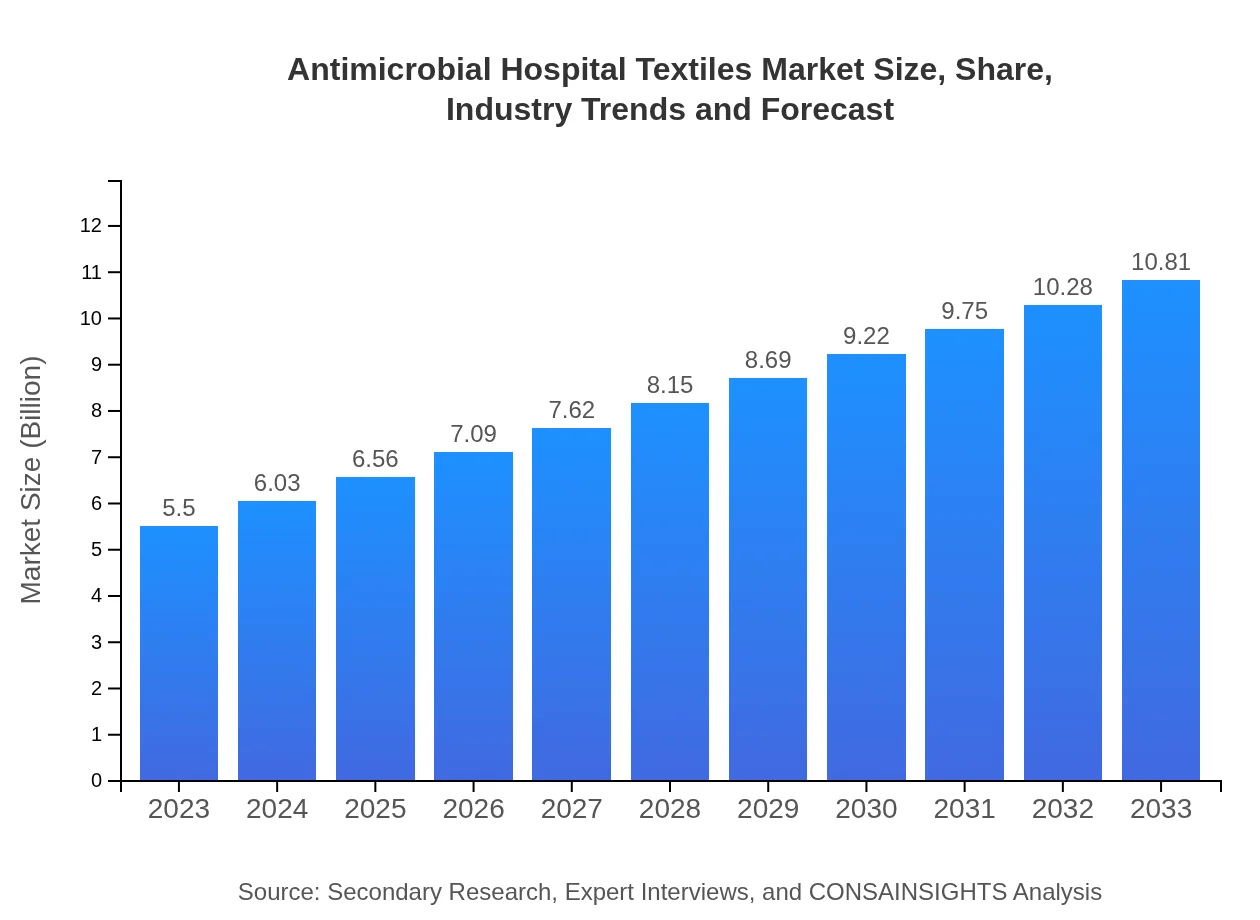
Antimicrobial Hospital Textiles Market — USD 5.5 billion in 2023, Growing to USD 10.81B by 2033 at 6.8% CAGR
This report provides a comprehensive analysis of the Antimicrobial Hospital Textiles market, highlighting market size, segmentation, regional insights, trends, and forecasts from 2023 to 2033. It aims to equip stakeholders with valuable data and insights for informed decision-making.
Key Takeaways
- Global market projected from $5.50 Billion in 2023 to $10.81 Billion in 2033, with a 6.8% CAGR over 2023 to 2033.
- North America is the largest region, expanding from $1.77 Billion in 2023 to $3.48 Billion in 2033.
- North America is largest regional market; Latin America is regional market region based on implied CAGR across 2023 to 2033.
- Product innovation—chemical, physical, and nanotechnology treatments—supports performance and adoption.
- Top players include Ahlstrom, Medline Industries, and Berry Global, reflecting established supply-side presence.
Antimicrobial Hospital Textiles Market Report — Executive Summary
Regional analysis shows North America as largest market and Latin America as fastest-growing region by implied CAGR. The Antimicrobial Hospital Textiles Market Report details a steadily expanding sector driven by heightened infection-control measures, technological advances in antimicrobial treatments, and broader healthcare investment. The market is projected to grow from $5.50 Billion in 2023 to $10.81 Billion in 2033 at a 6.8% CAGR across 2023 to 2033. Demand is underpinned by adoption of treated textiles in inpatient, surgical, outpatient, and critical care settings, along with fiber and product diversification—cotton, polyester, polypropylene, blends, and patient, surgical, and surface textiles. Regional dynamics vary: North America is the largest regional market, and Latin America is the regional market region. Competitive activity centers on product development and scale, with participants such as Ahlstrom, Medline Industries, and Berry Global. Regulatory emphasis on safety, investment in R&D, and ongoing focus on hospital-acquired infection reduction will shape market trajectories and supplier strategies.
Key Growth Drivers
- Rising emphasis on infection prevention in healthcare facilities increasing demand for treated textiles.
- Advances in antimicrobial technologies, including chemical, physical, and nanotechnology approaches, improving efficacy and durability.
- Expansion of healthcare infrastructure and higher healthcare spending supporting broader textile adoption.
- Product differentiation across fiber types and applications enabling tailored solutions for clinical environments.
- Regulatory attention to patient safety encouraging procurement of antimicrobial textile solutions.
| Metric | Value |
|---|---|
| Study Period | 2023 - 2033 |
| 2023 Market Size | $5.50 Billion |
| CAGR (2023-2033) | 6.8% |
| 2033 Market Size | $10.81 Billion |
| Top Companies | Ahlstrom, Medline Industries, Berry Global |
| Published Date | 08 October 2024 |
| Last Modified Date | 28 May 2026 |
Antimicrobial Hospital Textiles Market Overview
Customize Antimicrobial Hospital Textiles Market Report market research report
- ✔ Get in-depth analysis of Antimicrobial Hospital Textiles market size, growth, and forecasts.
- ✔ Understand Antimicrobial Hospital Textiles's regional dynamics and industry-specific trends.
- ✔ Identify potential applications, end-user demand, and growth segments in Antimicrobial Hospital Textiles
What is the Market Size & CAGR of Antimicrobial Hospital Textiles Market Report market in 2023?
Antimicrobial Hospital Textiles Industry Analysis
Antimicrobial Hospital Textiles Market Segmentation and Scope
Tell us your focus area and get a customized research report.
Antimicrobial Hospital Textiles Market Report Market Analysis Report by Region
Europe Antimicrobial Hospital Textiles Market Report:
Europe grows from $1.69 Billion in 2023 to $3.33 Billion in 2033. Adoption is driven by regulatory emphasis on patient safety, investments in clinical hygiene, and innovation in treated textile offerings.Asia Pacific Antimicrobial Hospital Textiles Market Report:
Asia Pacific grows from $1.13 Billion in 2023 to $2.22 Billion in 2033. Growth factors include expanding healthcare infrastructure, rising awareness of infection control, and increasing procurement of antimicrobial textiles across care settings.North America Antimicrobial Hospital Textiles Market Report:
North America is largest regional market, rising from $1.77 Billion in 2023 to $3.48 Billion in 2033. Regional demand reflects established healthcare systems, procurement focus on infection prevention, and uptake of advanced antimicrobial textile solutions.South America Antimicrobial Hospital Textiles Market Report:
Latin America is fastest-growing region by implied CAGR, increasing from $0.23 Billion in 2023 to $0.46 Billion in 2033. Market momentum is attributed to growing healthcare investment, heightened focus on reducing hospital-acquired infections, and adoption of improved textile technologies.Middle East & Africa Antimicrobial Hospital Textiles Market Report:
Middle East and Africa grows from $0.67 Billion in 2023 to $1.32 Billion in 2033. Drivers include expanding clinical facilities, rising emphasis on hygiene standards, and gradual uptake of antimicrobial textile solutions.Tell us your focus area and get a customized research report.
Research Methodology
Antimicrobial Hospital Textiles Market Analysis By Product Type
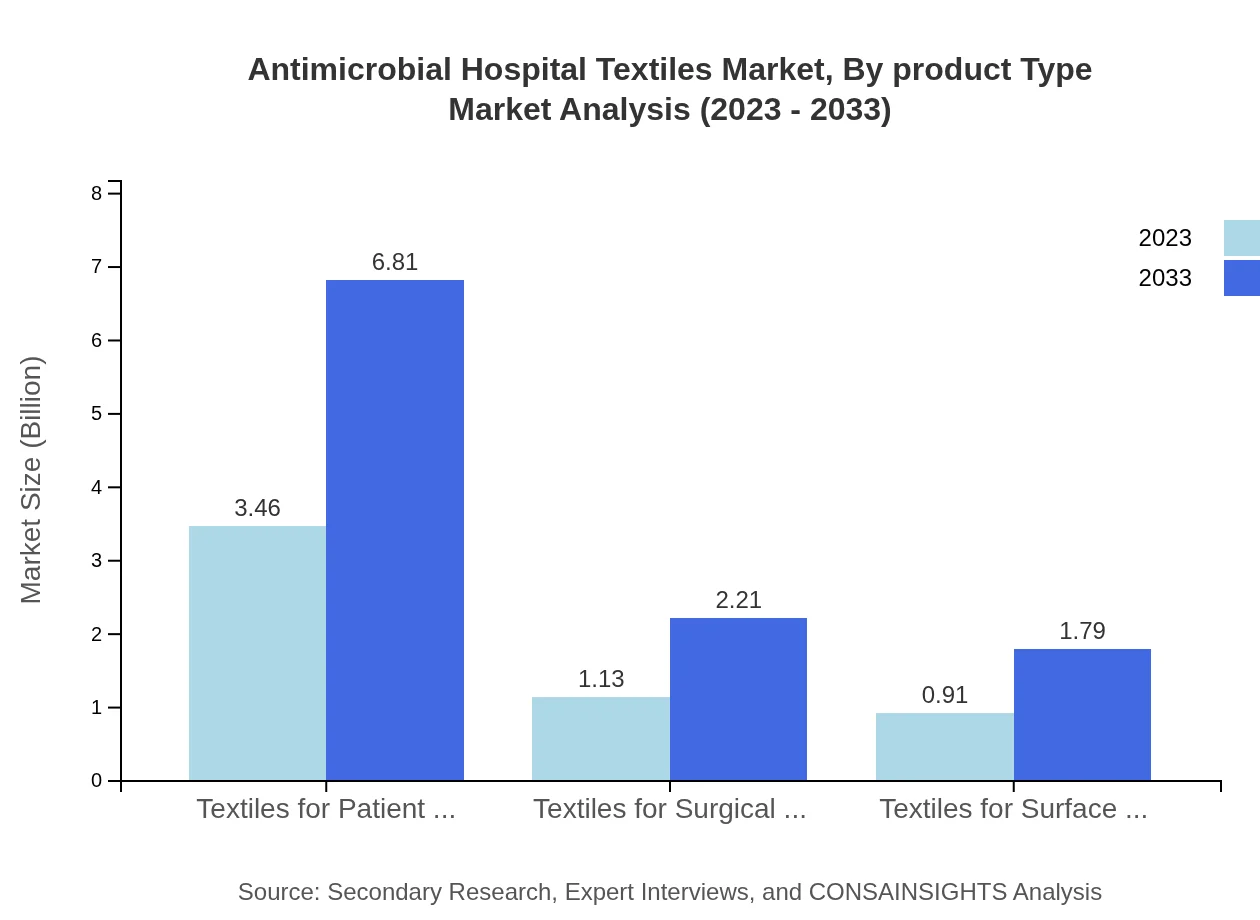
The product types in the Antimicrobial Hospital Textiles market include surgical drapes, gowns, and bed linens. In 2023, textiles for patient use account for a significant portion of the market at $3.46 billion (62.97% share), reflecting their essential role in infection prevention.
Antimicrobial Hospital Textiles Market Analysis By Fiber Type
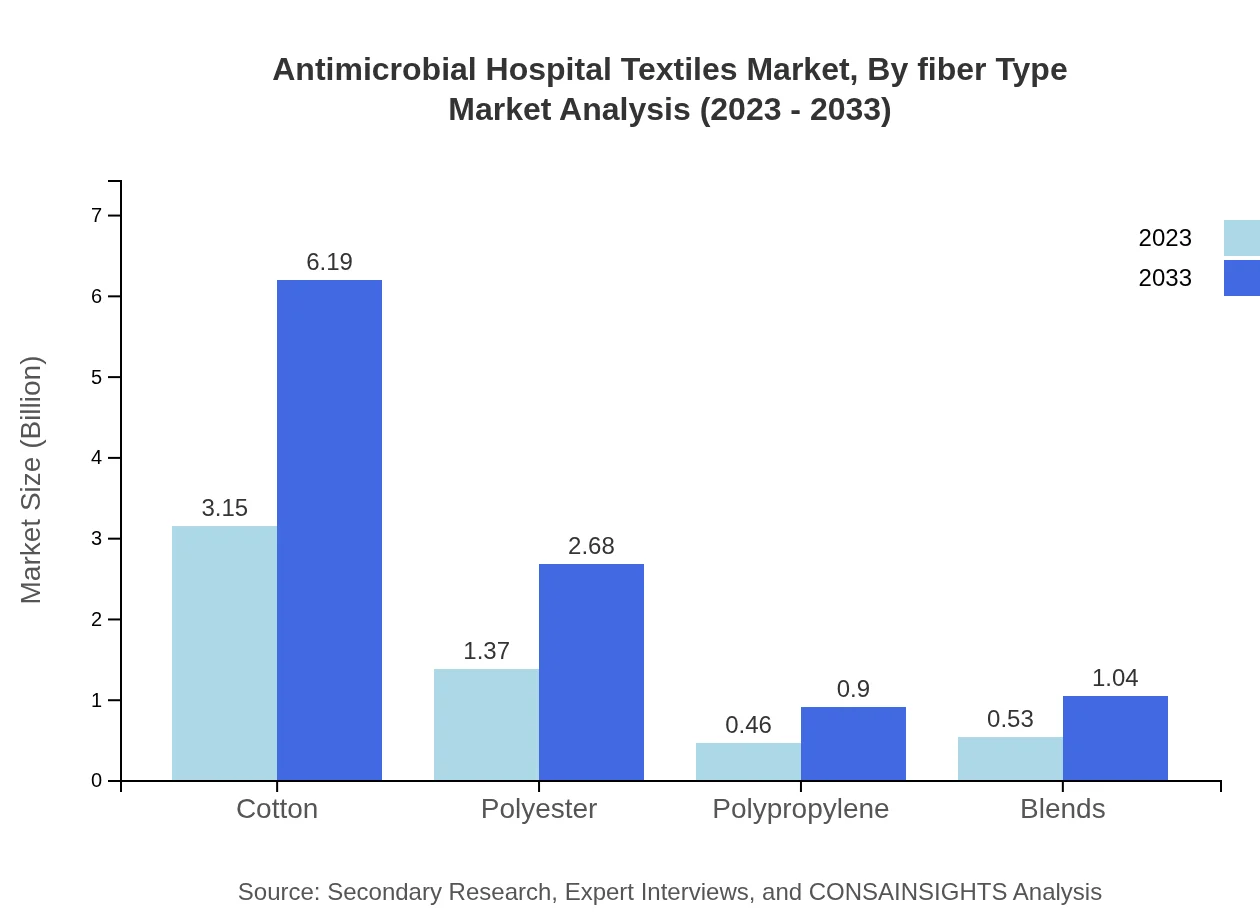
The fiber types segment features cotton, polyester, polypropylene, and blends. Cotton dominates the market with a size of $3.15 billion in 2023, representing a 57.28% market share due to its comfort and durability in medical applications.
Antimicrobial Hospital Textiles Market Analysis By Application
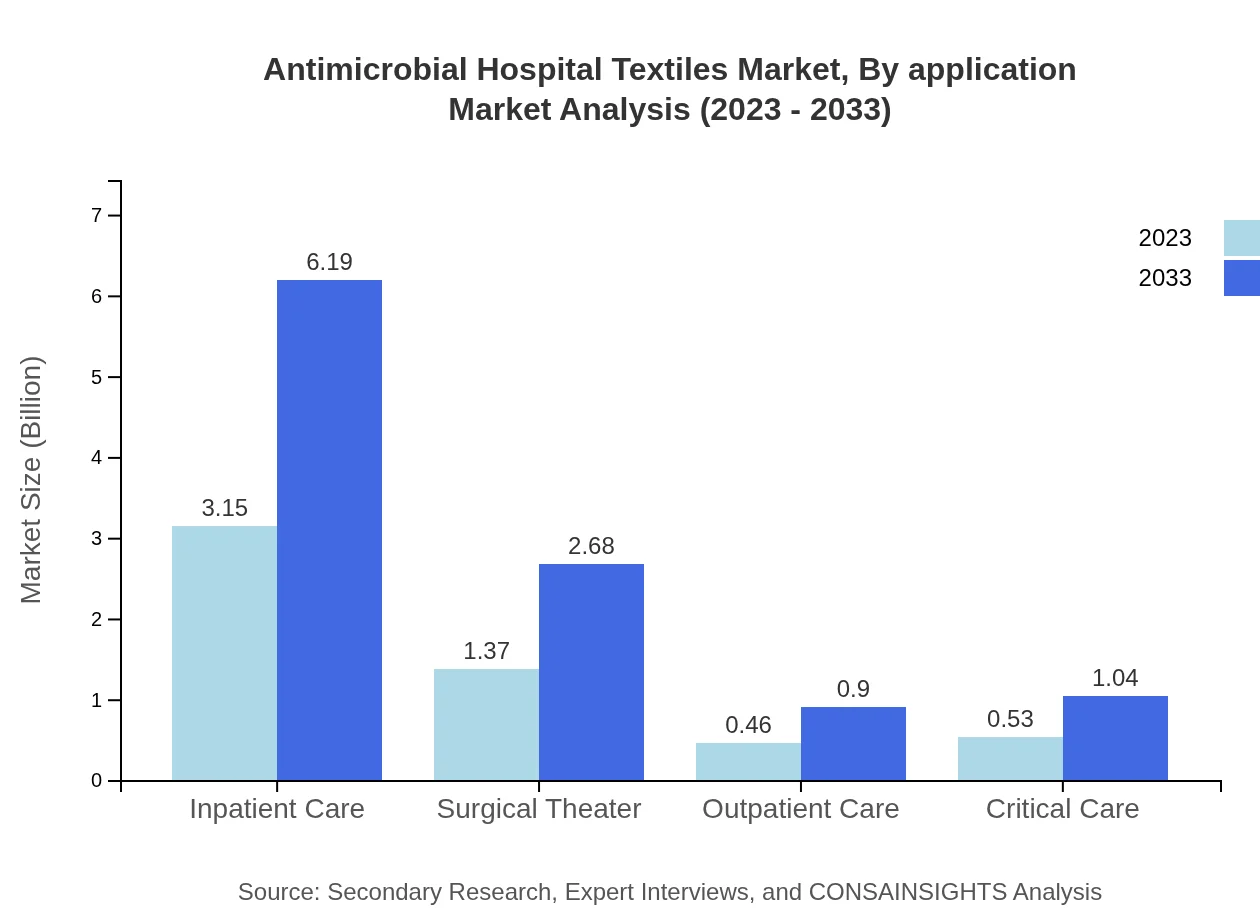
In terms of applications, inpatient care textiles lead with a market size of $3.15 billion in 2023 (57.28% share). These textiles are crucial in hospitals for reducing infection risks during patient treatment.
Antimicrobial Hospital Textiles Market Analysis By Technology
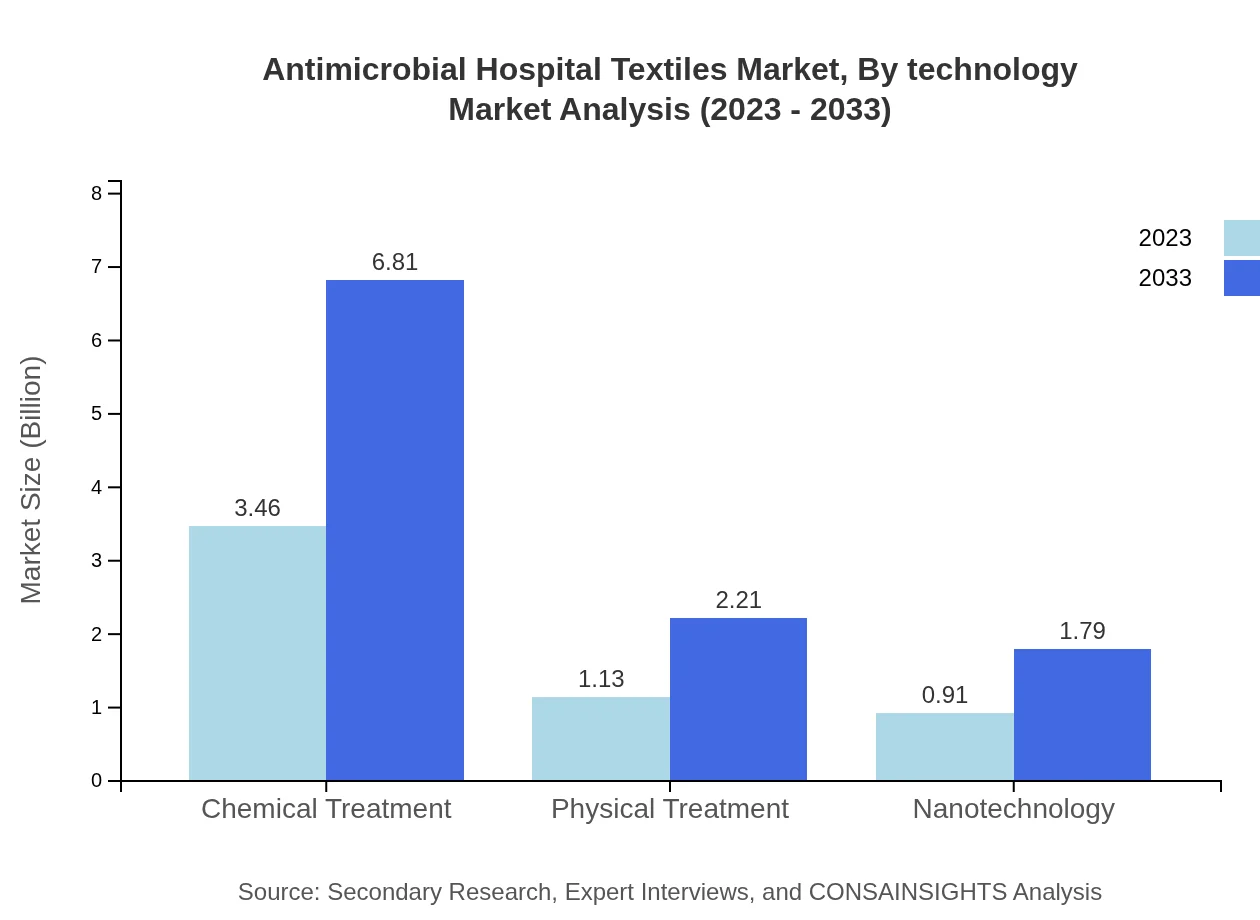
The technologies impacting the Antimicrobial Hospital Textiles market include chemical treatments, physical treatments, and nanotechnology. Chemical treatments hold the largest market share at 62.97%, emphasizing their effectiveness in enhancing textile performance against microorganisms.
Antimicrobial Hospital Textiles Market Analysis By End User
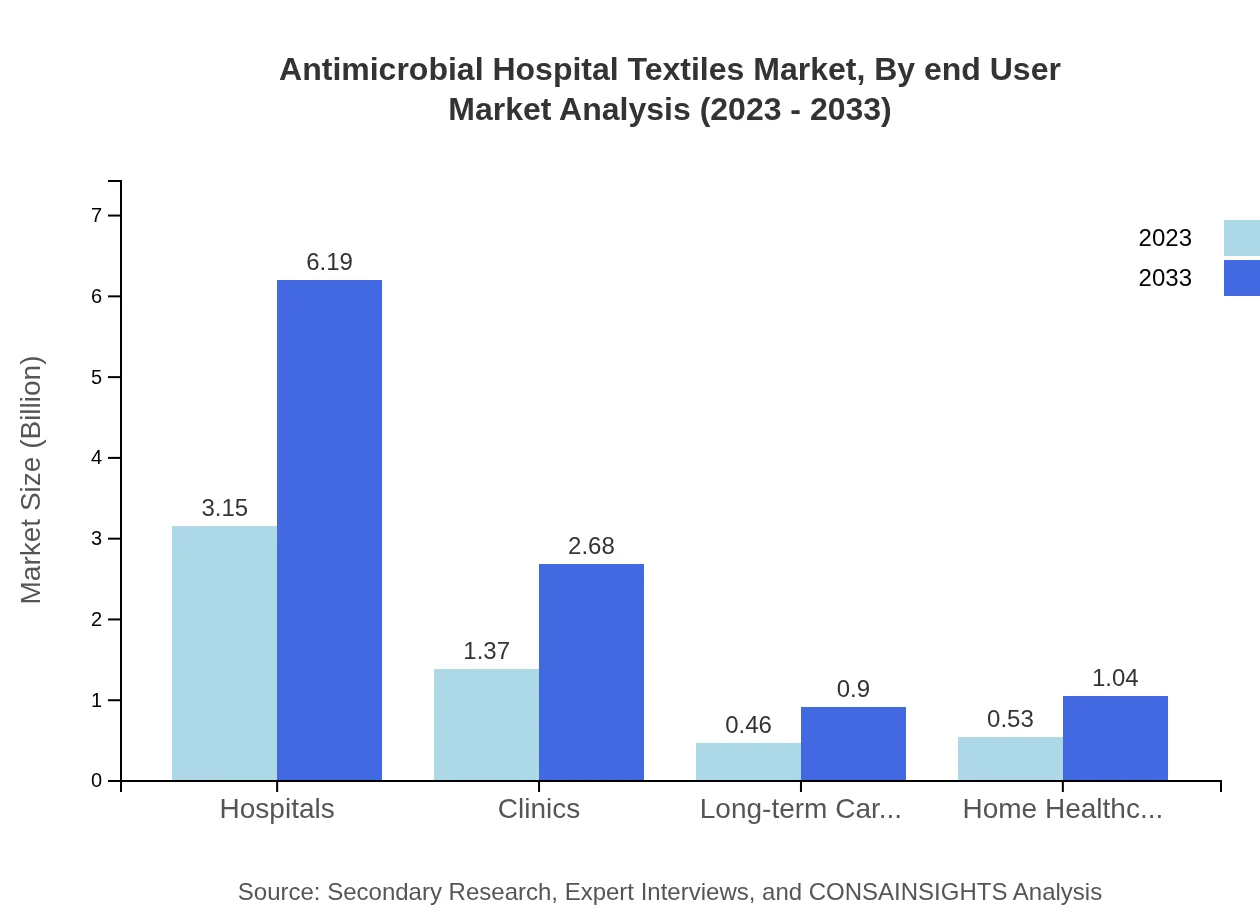
Key end-users of Antimicrobial Hospital Textiles include hospitals, clinics, long-term care facilities, and home healthcare. Hospitals continue to dominate this sector, maintaining a 57.28% market share in 2023 due to stringent hygiene requirements.
Antimicrobial Hospital Textiles Market Trends and Future Forecast
Tell us your focus area and get a customized research report.
Global Market Leaders and Top Companies in Antimicrobial Hospital Textiles Industry
Ahlstrom:
A leading manufacturer of fiber-based materials known for producing high-performance textiles for medical applications, focusing on innovative antimicrobial solutions.Medline Industries:
A prominent provider of healthcare products and services, Medline specializes in a range of antimicrobial textiles designed to protect patients and healthcare workers.Berry Global:
A global leader in providing protective solutions, Berry manufactures a variety of antimicrobial textiles catering to the healthcare industry, emphasizing sustainability.We're grateful to work with incredible clients.









FAQs
What is the market size in 2023?
The market size in 2023 is $5.50 Billion as reported, representing the baseline for the 2023 to 2033 projection period.
How big will the market be in 2033?
The projected market value for 2033 is $10.81 Billion according to the provided forecast for 2023 to 2033.
What is CAGR for the forecast period?
The Compound Annual Growth Rate (CAGR) for the 2023 to 2033 forecast period is 6.8% as stated in the report data.
Which region is the fastest Growing in the Antimicrobial Hospital Textiles Market Report market?
Latin America is the fastest-growing region, projected to expand from $0.23 Billion in 2023 to $0.46 Billion in 2033, reflecting an implied 7.18% CAGR over the forecast period.
Which region is fastest Growing?
Latin America is named the regional market region with an implied 7.18% CAGR, increasing from $0.23 Billion in 2023 to $0.46 Billion in 2033.
Who are the top companies profiled?
Top companies listed in the report include Ahlstrom, Medline Industries, and Berry Global, representing established industry participants.
What product types are covered?
The report covers textiles for patient use, surgical use, and surface use, reflecting varied clinical applications and procurement categories.
How are technologies categorized?
Technologies are categorized as chemical treatment, physical treatment, and nanotechnology, indicating the main approaches to imparting antimicrobial function.