
Reports >
Life Sciences
>
Hyperhidrosis Treatment Market Report

Hyperhidrosis Treatment Market Report
First published: 08 October 2024 | Last updated: 25 May 2026 | Report Code: hyperhidrosis-treatment
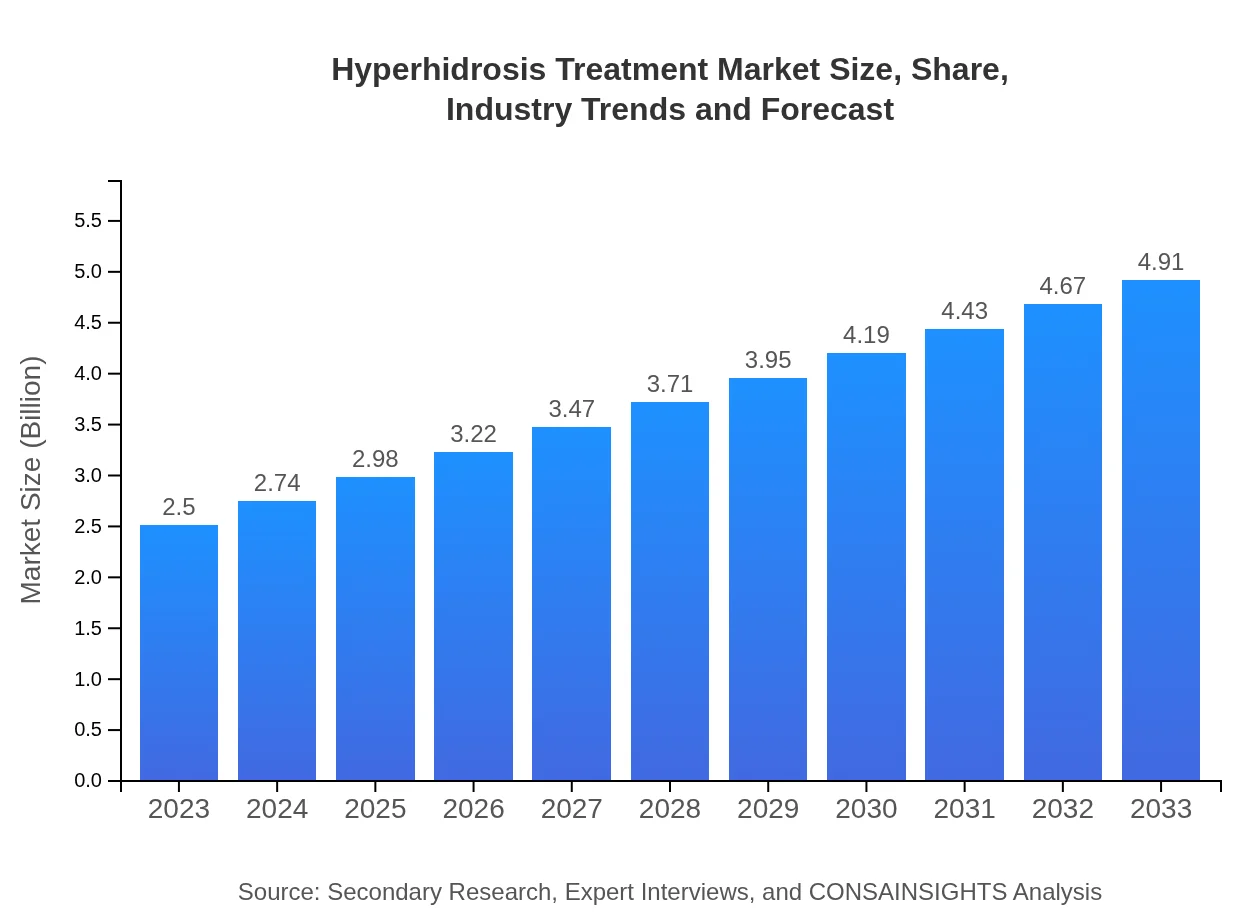
Hyperhidrosis Treatment Market — USD 2.5 billion in 2023, Growing to USD 4.91B by 2033 at 6.8% CAGR
This report provides an in-depth analysis of the Hyperhidrosis Treatment market, covering market dynamics, size, segmentation, regional insights, technological advancements, and future forecasts spanning from 2023 to 2033.
Key Takeaways
- Global market expands from $2.50 Billion in 2023 to $4.91 Billion by 2033, reflecting a 6.8% CAGR over the forecast period.
- North America is largest regional market, while no single fastest-growing region is stated because regional CAGR differences remain within 0.15 percentage points.
- Pharmaceutical therapies, surgical options and OTC antiperspirants are central segments shaping treatment availability and patient choice.
- Hospitals, dermatology clinics and home care settings remain primary end-users supporting treatment delivery.
- Leading companies named include Allergan, Galderma, Eli Lilly and Valeant Pharmaceuticals, which influence product development and commercialization.
Hyperhidrosis Treatment Market Report — Executive Summary
North America remains largest market by forecast-period value, while no single fastest-growing region is stated because top regional growth rates are separated by less than 0.15 percentage points. This report analyzes the hyperhidrosis treatment market across treatment types, end-users, age groups and regions. The market stood at $2.50 Billion in 2023 and is projected to reach $4.91 Billion by 2033 at a 6.8% CAGR. Growth is supported by improved diagnosis rates, broader awareness, and an expanding mix of therapies from topical antiperspirants to botulinum toxin injections and surgical options. Hospitals and dermatology clinics are key delivery channels, while home care supports OTC and maintenance therapies. Regional dynamics vary: North America is the largest market by 2033, and notable expansion is seen across Europe, Asia Pacific, Latin America, and the Middle East and Africa. Competitive activity centers on product innovation and market access strategies. The report highlights market structure, principal trends, and strategic implications for manufacturers, providers, and investors.
Key Growth Drivers
- Rising awareness and diagnosis of hyperhidrosis increasing demand for clinical and over-the-counter treatments.
- Advances in pharmaceutical formulations and injectable therapies expanding therapeutic options and patient acceptance.
- Wider availability of treatments through hospitals, dermatology clinics and home care channels enhancing access.
- Ongoing product development and commercialization efforts by leading firms strengthening market offerings.
- Growth in regional healthcare infrastructure supporting broader treatment adoption and service provision.
| Metric | Value |
|---|---|
| Study Period | 2023 - 2033 |
| 2023 Market Size | $2.50 Billion |
| CAGR (2023-2033) | 6.8% |
| 2033 Market Size | $4.91 Billion |
| Top Companies | Allergan, Galderma, Eli Lilly, Valeant Pharmaceuticals |
| Published Date | 08 October 2024 |
| Last Modified Date | 25 May 2026 |
Hyperhidrosis Treatment Market Overview
Customize Hyperhidrosis Treatment Market Report market research report
- ✔ Get in-depth analysis of Hyperhidrosis Treatment market size, growth, and forecasts.
- ✔ Understand Hyperhidrosis Treatment's regional dynamics and industry-specific trends.
- ✔ Identify potential applications, end-user demand, and growth segments in Hyperhidrosis Treatment
What is the Market Size & CAGR of Hyperhidrosis Treatment Market Report market in 2023?
Hyperhidrosis Treatment Industry Analysis
Hyperhidrosis Treatment Market Segmentation and Scope
Tell us your focus area and get a customized research report.
Hyperhidrosis Treatment Market Report Market Analysis Report by Region
Europe Hyperhidrosis Treatment Market Report:
Europe grows from $0.72 Billion in 2023 to $1.42 Billion in 2033. Growth is driven by rising awareness, increased diagnostic rates and availability of both pharmaceutical and procedural treatment options in clinical settings.Asia Pacific Hyperhidrosis Treatment Market Report:
Asia Pacific grows from $0.48 Billion in 2023 to $0.95 Billion in 2033. Expansion is supported by improving healthcare infrastructure, growing patient awareness, and greater access to a mix of OTC and clinical therapies.North America Hyperhidrosis Treatment Market Report:
North America is largest regional market, rising from $0.91 Billion in 2023 to $1.79 Billion in 2033. The region’s expansion reflects strong clinical adoption, established healthcare delivery through hospitals and dermatology clinics, and active product commercialization by leading firms.South America Hyperhidrosis Treatment Market Report:
Latin America grows from $0.08 Billion in 2023 to $0.16 Billion in 2033. Market progression is linked to expanding healthcare services, growing awareness of treatment options, and gradual uptake of clinical therapies and OTC products.Middle East & Africa Hyperhidrosis Treatment Market Report:
Middle East and Africa grows from $0.31 Billion in 2023 to $0.6 Billion in 2033. Growth stems from enhanced access to dermatological care, expanding clinical service networks, and increased recognition of condition-specific treatments.Tell us your focus area and get a customized research report.
Research Methodology
Hyperhidrosis Treatment Market Analysis By Treatment Type
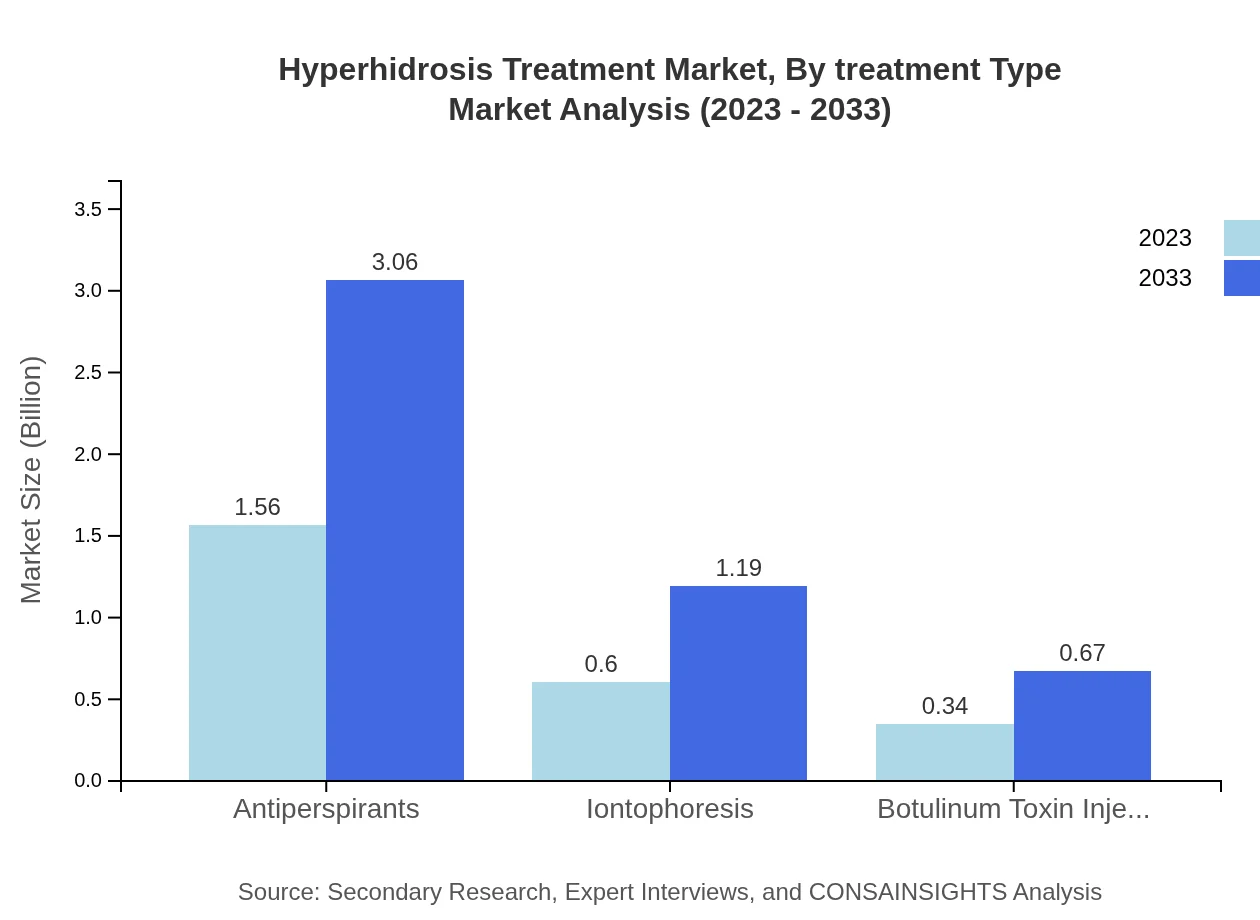
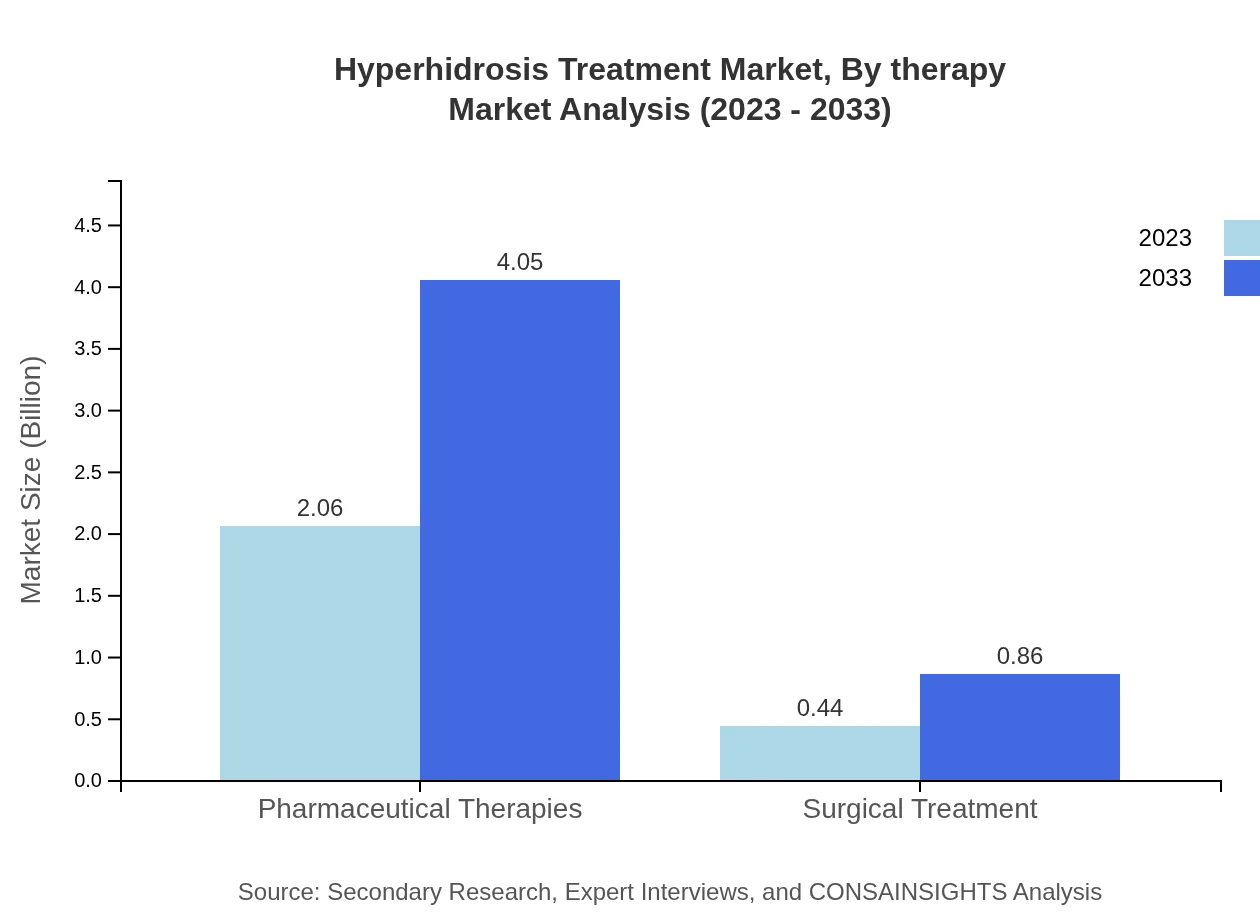
Within the treatment type segment, pharmaceutical therapies dominate, generating $2.06 billion in 2023 and projected to reach $4.05 billion by 2033, maintaining an 82.43% market share. Surgical treatments follow closely, providing effective long-term solutions with a market size of $0.44 billion in 2023, anticipated to grow to $0.86 billion by 2033, holding 17.57% share.
Hyperhidrosis Treatment Market Analysis By End User
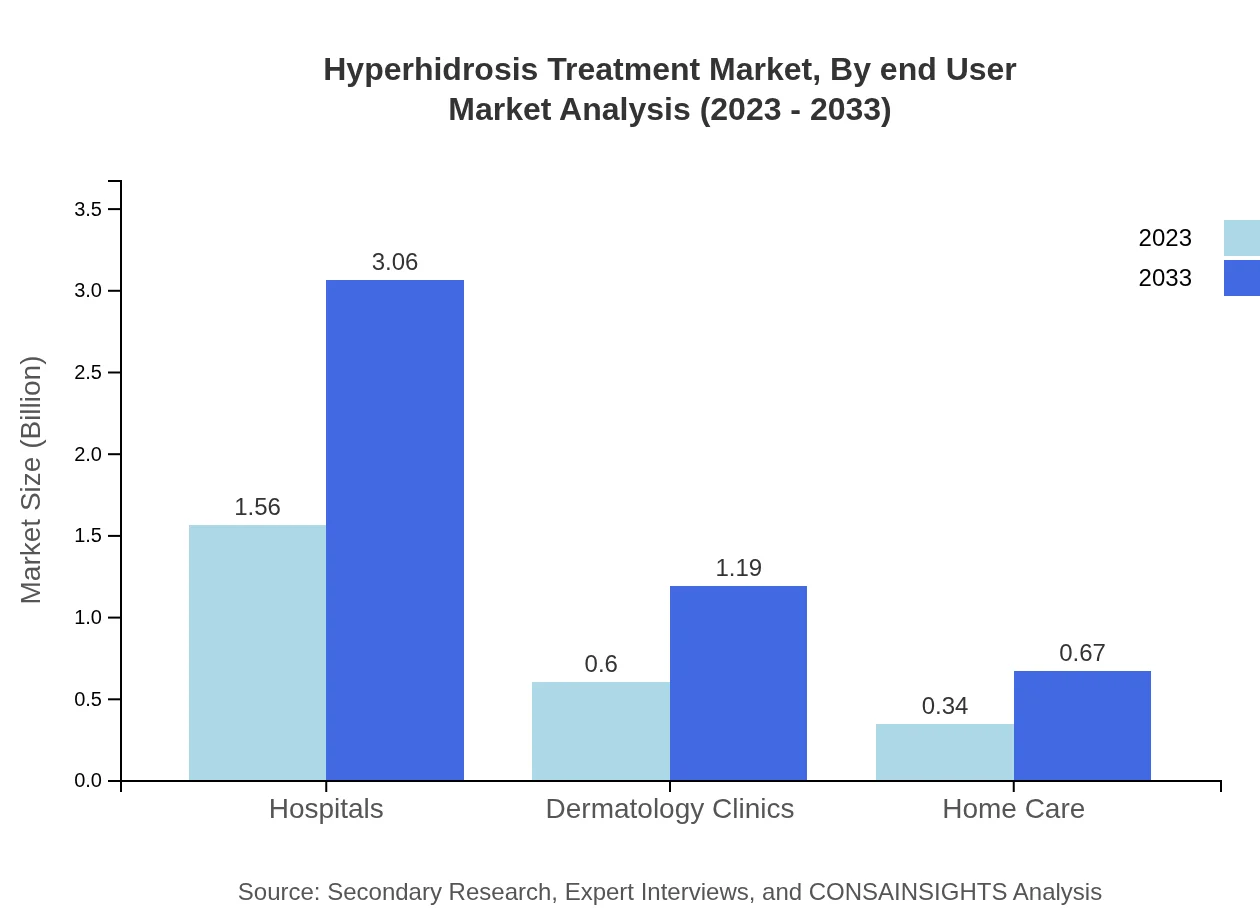
Hospitals lead the end-user segment, with a projected market size of $1.56 billion in 2023, expected to rise to $3.06 billion by 2033, representing approximately 62.29% of the market share. Dermatology clinics account for 24.12%, and home care solutions capture 13.59%.
Hyperhidrosis Treatment Market Analysis By Region
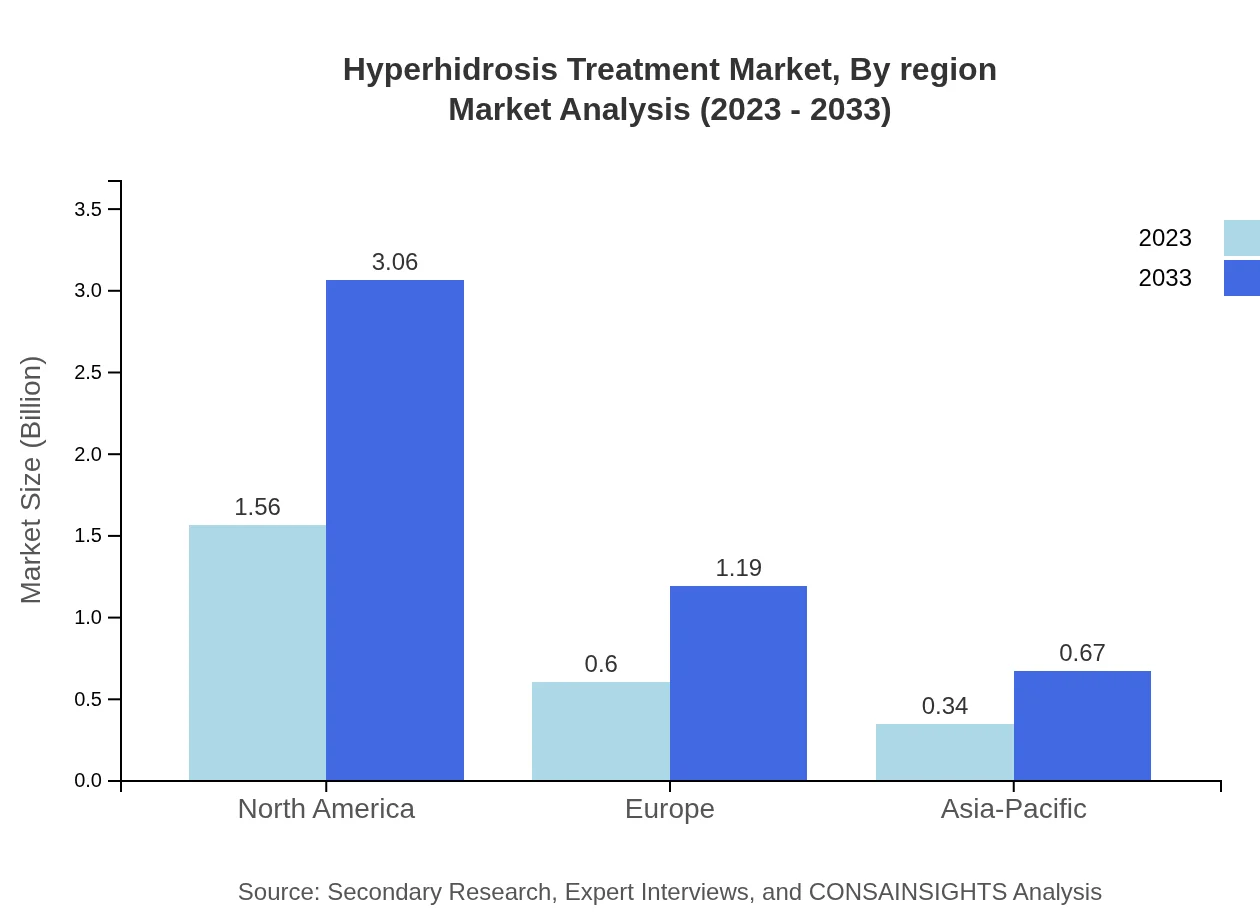
North America continues to dominate with a strong revenue base of $1.56 billion in 2023 and projected to stabilize around $3.06 billion by 2033. Meanwhile, Europe and Asia-Pacific reflect solid growth, driven by rising healthcare awareness and improved economic conditions. North America's share remains constant at 62.29% through the forecast period.
Hyperhidrosis Treatment Market Analysis By Age Group
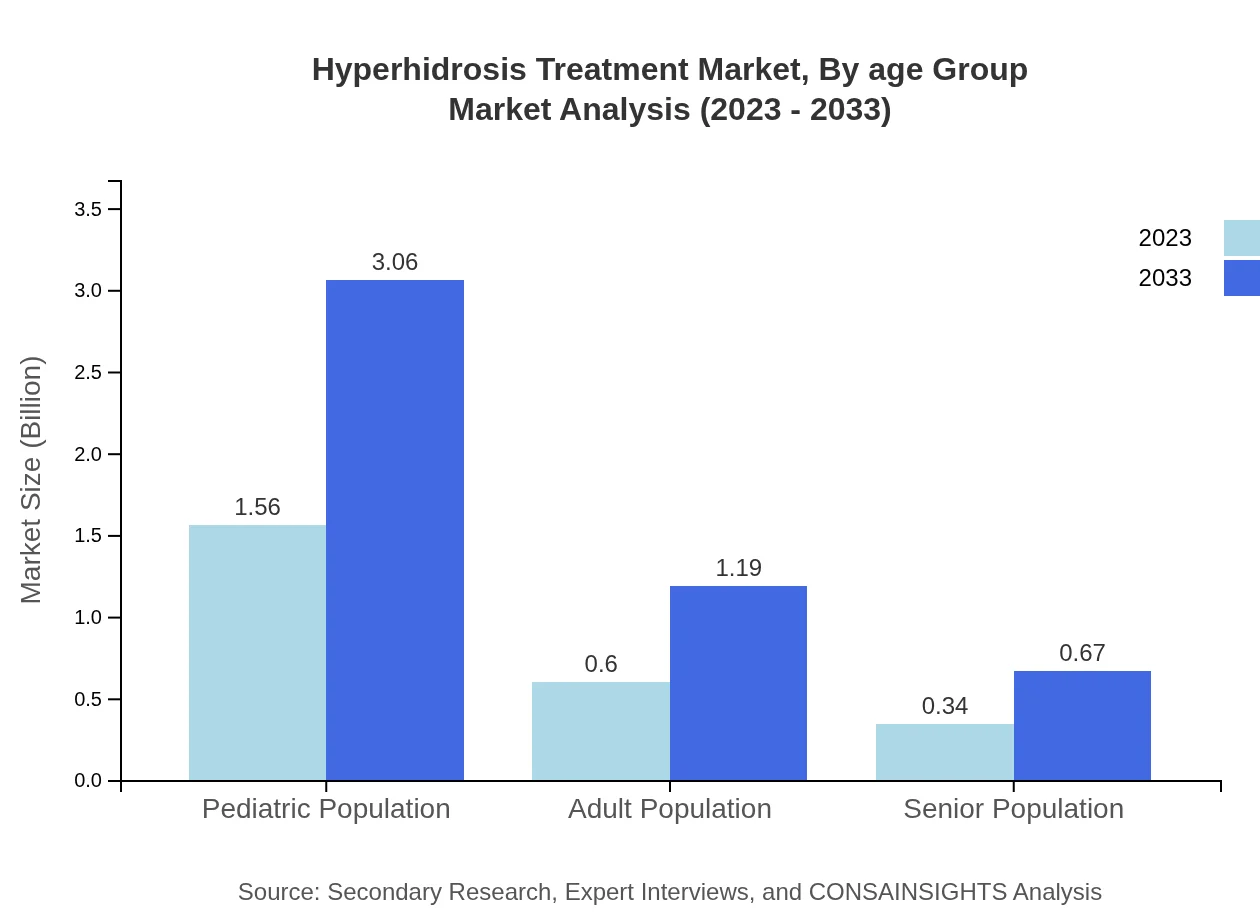
The pediatric population constitutes a significant share, with market sizes of $1.56 billion in 2023 expected to reach $3.06 billion by 2033. Following closely are adults and seniors, capturing 24.12% and 13.59% of the share, respectively, driven by an increased susceptibility among older individuals.
Hyperhidrosis Treatment Market Analysis By Therapy
Antiperspirants and iontophoresis dominate the therapy market. With market sizes of $1.56 billion (62.29% share) and $0.60 billion (24.12% share) respectively in 2023, both are anticipated to maintain similar shares by 2033, reflecting consistent consumer preference.
Hyperhidrosis Treatment Market Trends and Future Forecast
Tell us your focus area and get a customized research report.
Global Market Leaders and Top Companies in Hyperhidrosis Treatment Industry
Allergan:
Allergan is recognized for its FDA-approved formulations of botulinum toxin, leading the pharmaceutical sector in hyperhidrosis treatment.Galderma:
A prominent player in dermatology, Galderma produces various innovative solutions, including topical treatments targeting excessive sweating.Eli Lilly:
Eli Lilly contributes to the market with research-driven products, focusing on innovative solutions for sweat management.Valeant Pharmaceuticals:
Valeant plays a role with its broad range of dermatological products, providing effective solutions to hyperhidrosis.We're grateful to work with incredible clients.






FAQs
What is the market size of the hyperhidrosis treatment market in 2023?
The market size in 2023 is $2.50 Billion as reported, serving as the baseline for the 2023 to 2033 forecast period with noted segment and regional detail.
How big will the market be by 2033?
By 2033 the market is projected to reach $4.91 Billion, reflecting cumulative growth across treatment types, end-users, and regions over the forecast period.
What is CAGR for the forecast period?
The reported compound annual growth rate for 2023 to 2033 is 6.8%, summarizing expected average annual expansion during the decade.
Is there a single fastest Growing region in the Hyperhidrosis Treatment Market Report market?
No single fastest-growing region is stated for the Hyperhidrosis Treatment Market Report market because the top regional implied CAGR values are within 0.15 percentage points of each other, making the ranking too close to call reliably.
Which treatment categories are included in the analysis?
The report covers treatment types such as antiperspirants, iontophoresis, botulinum toxin injections, pharmaceutical therapies and surgical treatments across clinical and OTC settings.
Who are the prominent companies in this market?
Top companies referenced include Allergan, Galderma, Eli Lilly and Valeant Pharmaceuticals, cited for their roles in product development and market presence.
What end User segments are covered?
End-users detailed include hospitals, dermatology clinics and home care providers, each serving different patient needs and treatment delivery contexts.
How is regional performance presented?
Regional performance is provided with start and end-period values for each region, highlighting market evolution without inferring unsupported comparative rankings.
What age groups are analyzed in the report?
The report segments by age groups including pediatric, adult and senior populations to capture differing treatment needs and utilization patterns.
Which research approaches supported the findings?
Findings are supported by primary interviews with industry experts, secondary sources such as company reports, data triangulation and expert-led trend analysis.