

Interleukin Inhibitors Market Report
First published: 07 October 2024 | Last updated: 28 May 2026 | Report Code: interleukin-inhibitors
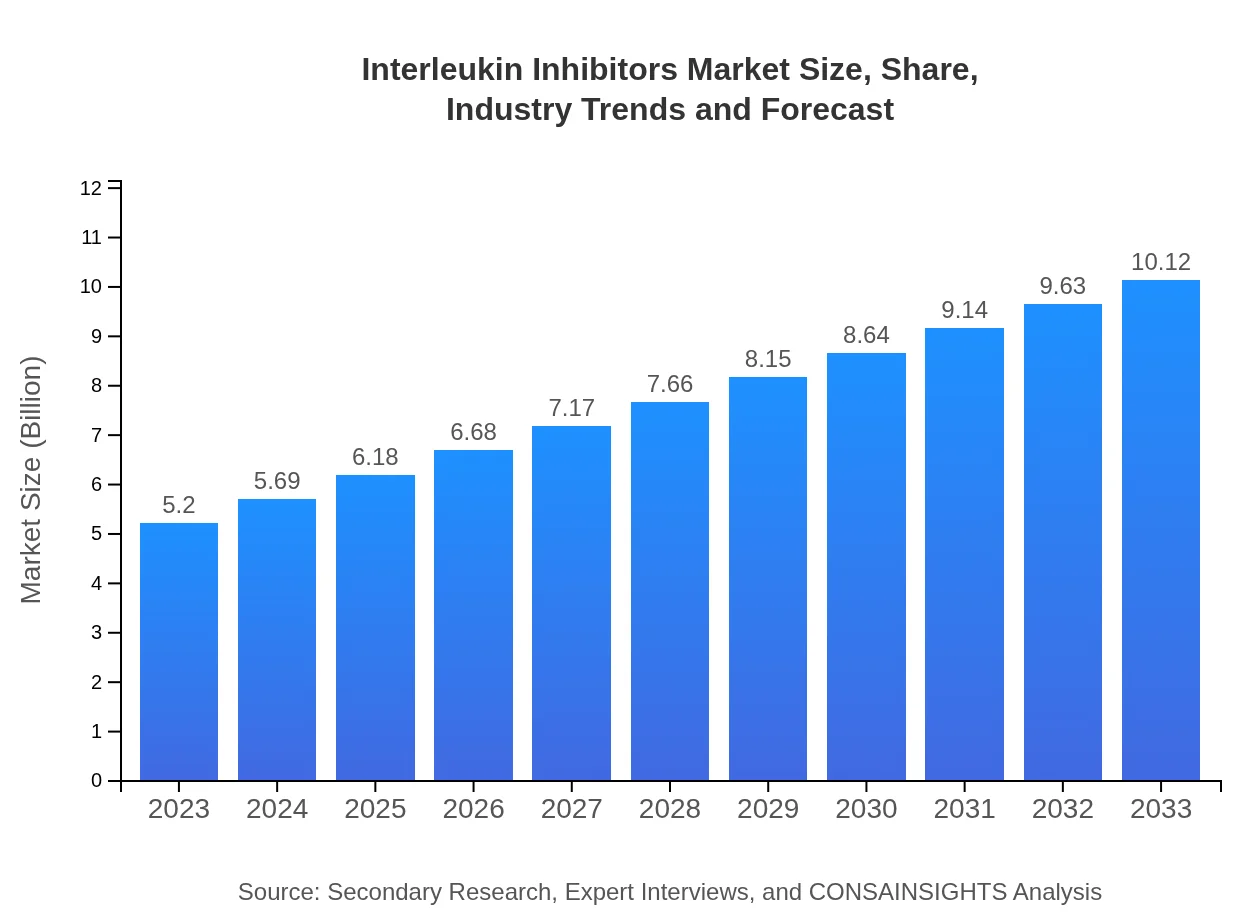
Interleukin Inhibitors Market — USD 5.2 billion in 2023, Growing to USD 10.12B by 2033 at 6.7% CAGR
This report provides a comprehensive analysis of the Interleukin Inhibitors market, focusing on insights related to market size, industry trends, and regional dynamics from 2023 to 2033.
Key Takeaways
- Global market expands from $5.20 Billion (2023) to $10.12 Billion (2033) at a 6.7% CAGR, reflecting sustained demand for biologic therapies.
- North America is identified as the largest region, increasing from $1.79 Billion to $3.48 Billion over the forecast period.
- North America is largest regional market; Middle East and Africa is regional market region based on implied CAGR across 2023 to 2033.
- Europe moves from $1.45 Billion to $2.81 Billion, and Asia Pacific grows from $1.12 Billion to $2.17 Billion, highlighting broad regional expansion.
- Top industry participants include AbbVie, Amgen, Roche, Novartis, and Sanofi, underscoring competitive innovation.
- Key segments covered include drug class (IL-1, IL-6, IL-17), route of administration, end-users, and distribution channels.
Interleukin Inhibitors Market Report — Executive Summary
Regional analysis shows North America as largest market and Middle East and Africa as fastest-growing region by implied CAGR. The report provides a comprehensive assessment of the Interleukin inhibitors market between 2023 and 2033, driven by increased uptake of targeted biologic therapies and sustained clinical development. Market size moves from $5.20 Billion in 2023 to $10.12 Billion in 2033, supported by demand across autoimmune, dermatology, and oncology indications. Regional dynamics show North America as the largest market and Middle East and Africa as the regional market region. The analysis examines product classes—IL-1, IL-6, IL-17—injection and oral routes, and end-users such as hospitals, clinics and homecare. Competitive coverage profiles leading firms including AbbVie, Amgen, Roche, Novartis, and Sanofi, and evaluates distribution channels from hospital pharmacies to online outlets. Trends considered include advances in biologics, shifting care to home settings, and collaborative R&D. Methodology combines expert interviews and secondary sources with triangulation to validate findings and highlight actionable opportunities.
Key Growth Drivers
- Rising prevalence of autoimmune and inflammatory conditions fueling demand for targeted interleukin therapies.
- Ongoing biologic innovation and clinical pipelines expanding therapeutic options and indications.
- Shifts toward homecare delivery and subcutaneous administration increase patient access and adherence.
- Growing regulatory approvals and stronger reimbursement frameworks in several regions supporting market uptake.
- Increased collaboration between pharmaceutical companies and research institutions accelerating product development.
| Metric | Value |
|---|---|
| Study Period | 2023 - 2033 |
| 2023 Market Size | $5.20 Billion |
| CAGR (2023-2033) | 6.7% |
| 2033 Market Size | $10.12 Billion |
| Top Companies | AbbVie, Amgen, Roche, Novartis, Sanofi |
| Published Date | 07 October 2024 |
| Last Modified Date | 28 May 2026 |
Interleukin Inhibitors Market Overview
Customize Interleukin Inhibitors Market Report market research report
- ✔ Get in-depth analysis of Interleukin Inhibitors market size, growth, and forecasts.
- ✔ Understand Interleukin Inhibitors's regional dynamics and industry-specific trends.
- ✔ Identify potential applications, end-user demand, and growth segments in Interleukin Inhibitors
What is the Market Size & CAGR of Interleukin Inhibitors Market Report market in 2023?
Interleukin Inhibitors Industry Analysis
Interleukin Inhibitors Market Segmentation and Scope
Tell us your focus area and get a customized research report.
Interleukin Inhibitors Market Report Market Analysis Report by Region
Europe Interleukin Inhibitors Market Report:
Europe grows from $1.45 Billion in 2023 to $2.81 Billion in 2033. Growth in this region reflects regulatory support for biologics, ongoing clinical research, and demand across autoimmune and dermatology indications that favor targeted interleukin treatments.Asia Pacific Interleukin Inhibitors Market Report:
Asia Pacific grows from $1.12 Billion in 2023 to $2.17 Billion in 2033. Regional expansion is driven by increasing healthcare investments, broader access to advanced biologic therapies, and rising awareness of autoimmune and inflammatory conditions.North America Interleukin Inhibitors Market Report:
North America is largest regional market, rising from $1.79 Billion in 2023 to $3.48 Billion in 2033. The region benefits from established biopharma infrastructure, high uptake of biologics, and advanced clinical development capabilities supporting interleukin therapy adoption.South America Interleukin Inhibitors Market Report:
Latin America grows from $0.45 Billion in 2023 to $0.87 Billion in 2033. Market development in this region is supported by improving healthcare access, expanding pharmaceutical distribution channels, and growing interest in targeted therapies for chronic inflammatory diseases.Middle East & Africa Interleukin Inhibitors Market Report:
Middle East and Africa is fastest-growing region by implied CAGR, increasing from $0.4 Billion in 2023 to $0.79 Billion in 2033. 4 Billion in 2023 to $0.79 Billion in 2033 at an implied 7.04% CAGR. Growth drivers include expanding healthcare infrastructure, increasing investment in biotechnology, and rising demand for specialized treatments.Tell us your focus area and get a customized research report.
Research Methodology
Interleukin Inhibitors Market Analysis By Drug Class
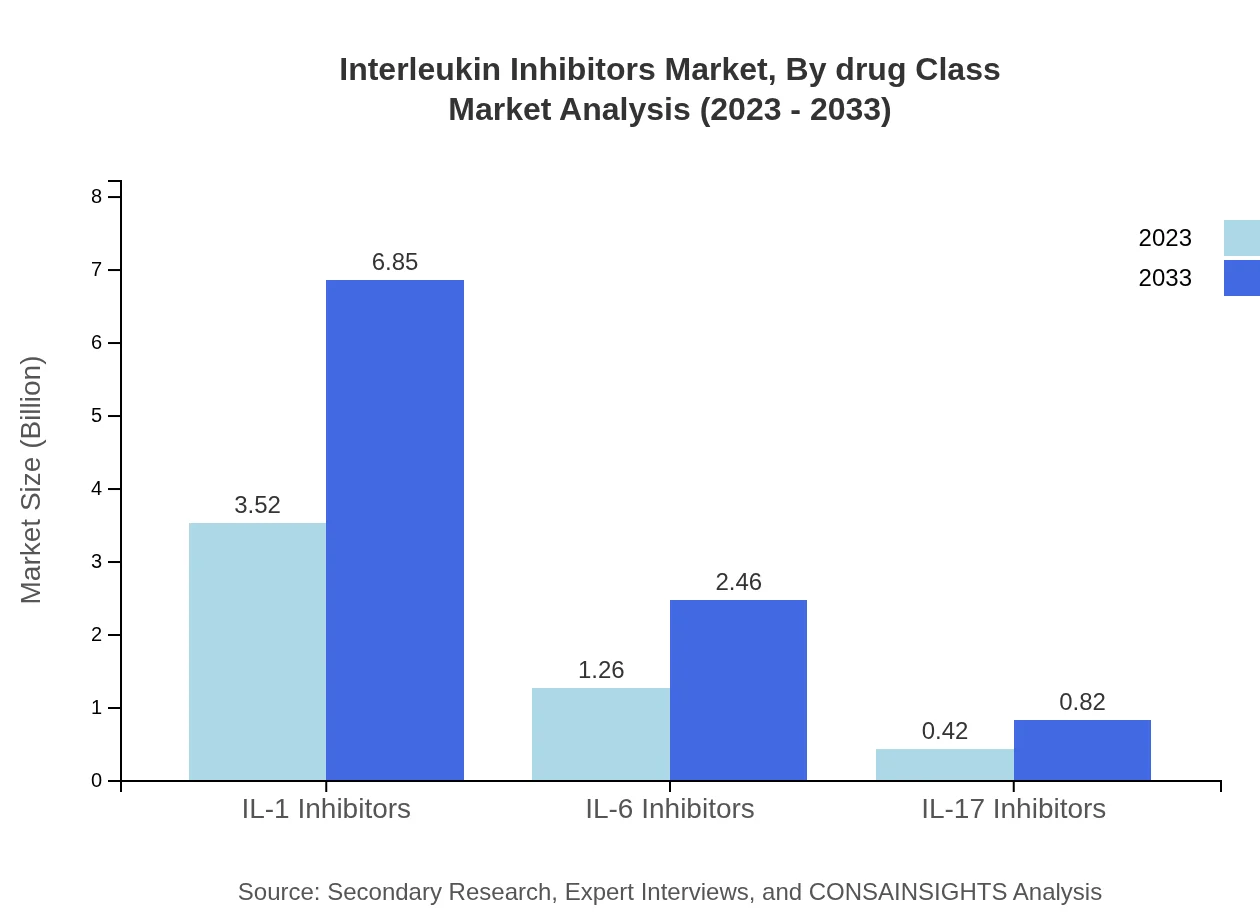
The Interleukin Inhibitors market is predominantly driven by IL-1 inhibitors, which accounted for approximately 67.65% of the market share in 2023, valued at $3.52 billion, with projections moving to $6.85 billion by 2033. IL-6 inhibitors follow closely, capturing 24.27% of the market share in 2023 and expected to grow from $1.26 billion to $2.46 billion over the same period.
Interleukin Inhibitors Market Analysis By Application
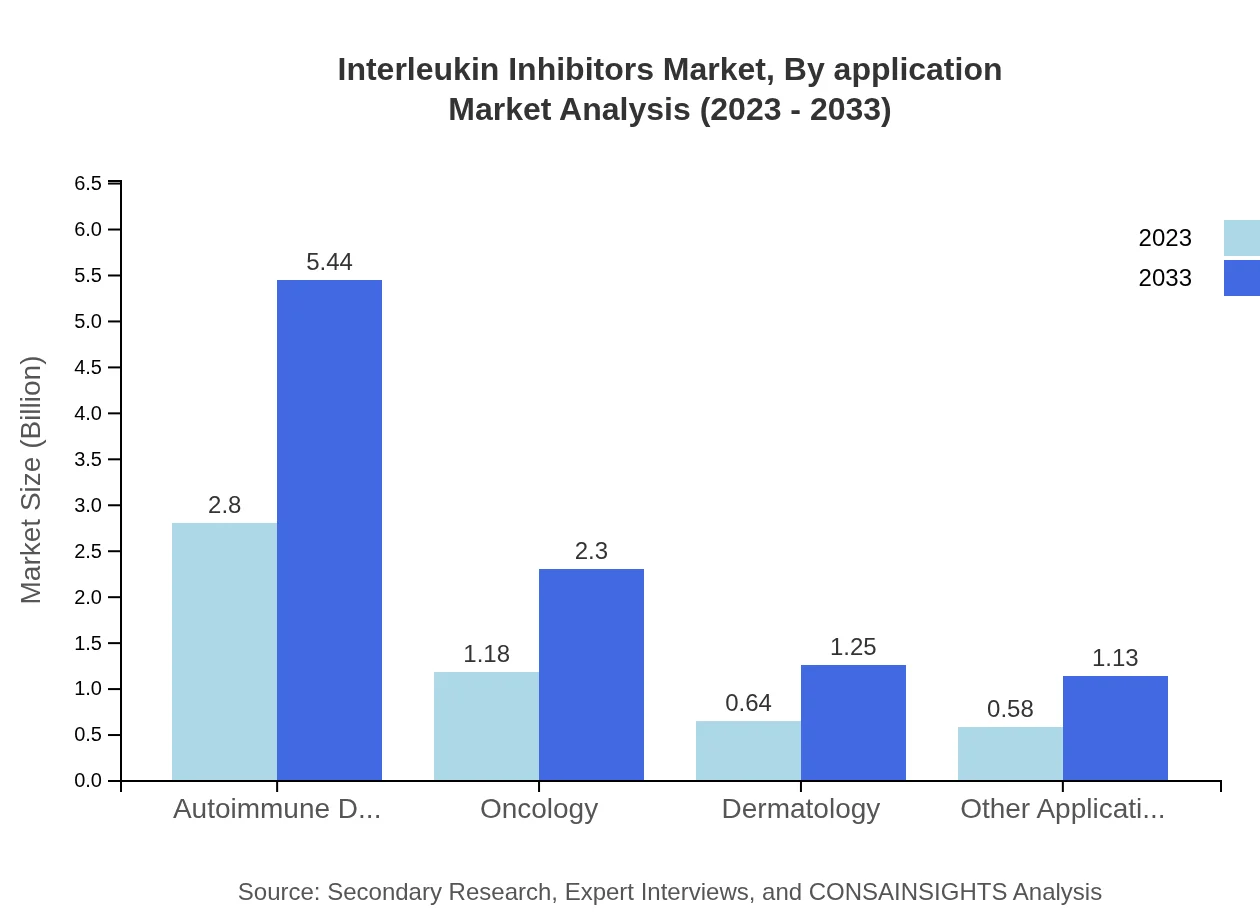
Applications in autoimmune diseases dominate the Interleukin inhibitors market, holding a share of 53.79% in 2023, valued at $2.80 billion, and growing to $5.44 billion by 2033. Oncology applications follow with a share of 22.72% in 2023, projected to reach $2.30 billion by 2033.
Interleukin Inhibitors Market Analysis By Route Of Administration
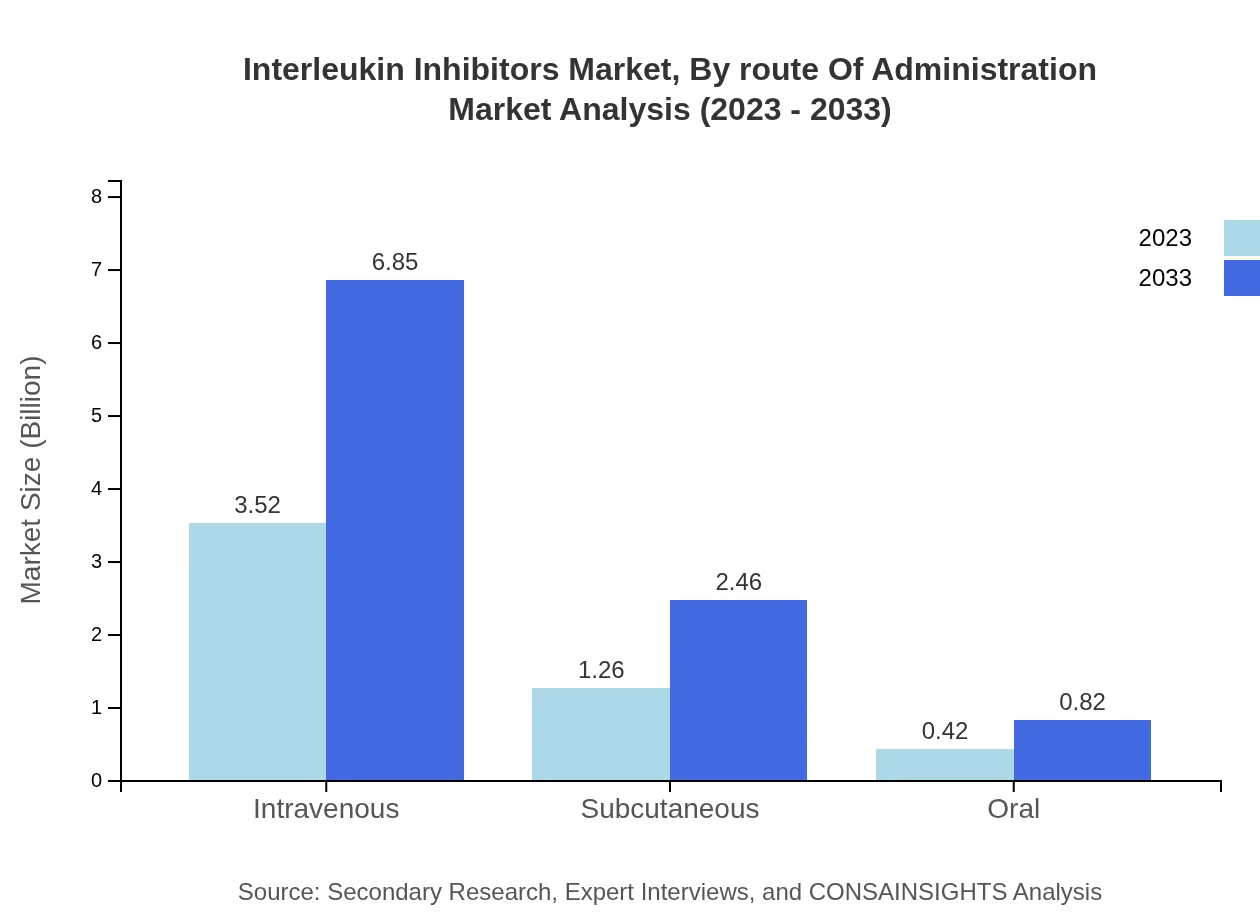
By 2023, intravenous routes dominated the administration method segment with a size of $3.52 billion, reflecting a robust share of 67.65%. This segment is expected to grow to $6.85 billion by 2033, while subcutaneous routes also show significant growth potential from $1.26 billion to $2.46 billion.
Interleukin Inhibitors Market Analysis By End User
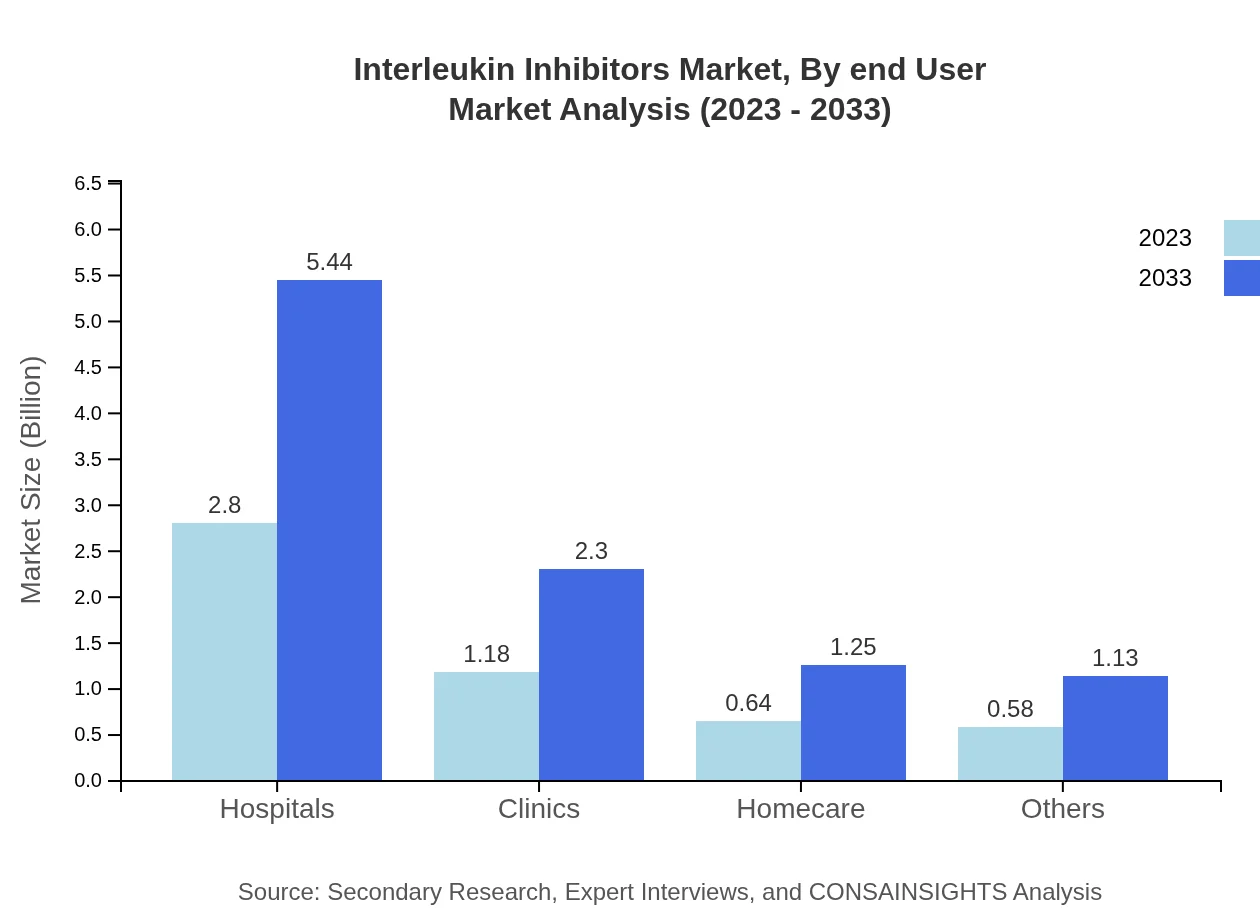
Hospitals remain the principal end-user segment, capturing 53.79% of the market share in 2023 with a valuation of $2.80 billion, expected to expand to $5.44 billion by 2033. Clinics and homecare settings are also showing increasing importance, with shares of 22.72% and 12.32% respectively.
Interleukin Inhibitors Market Analysis By Distribution Channel
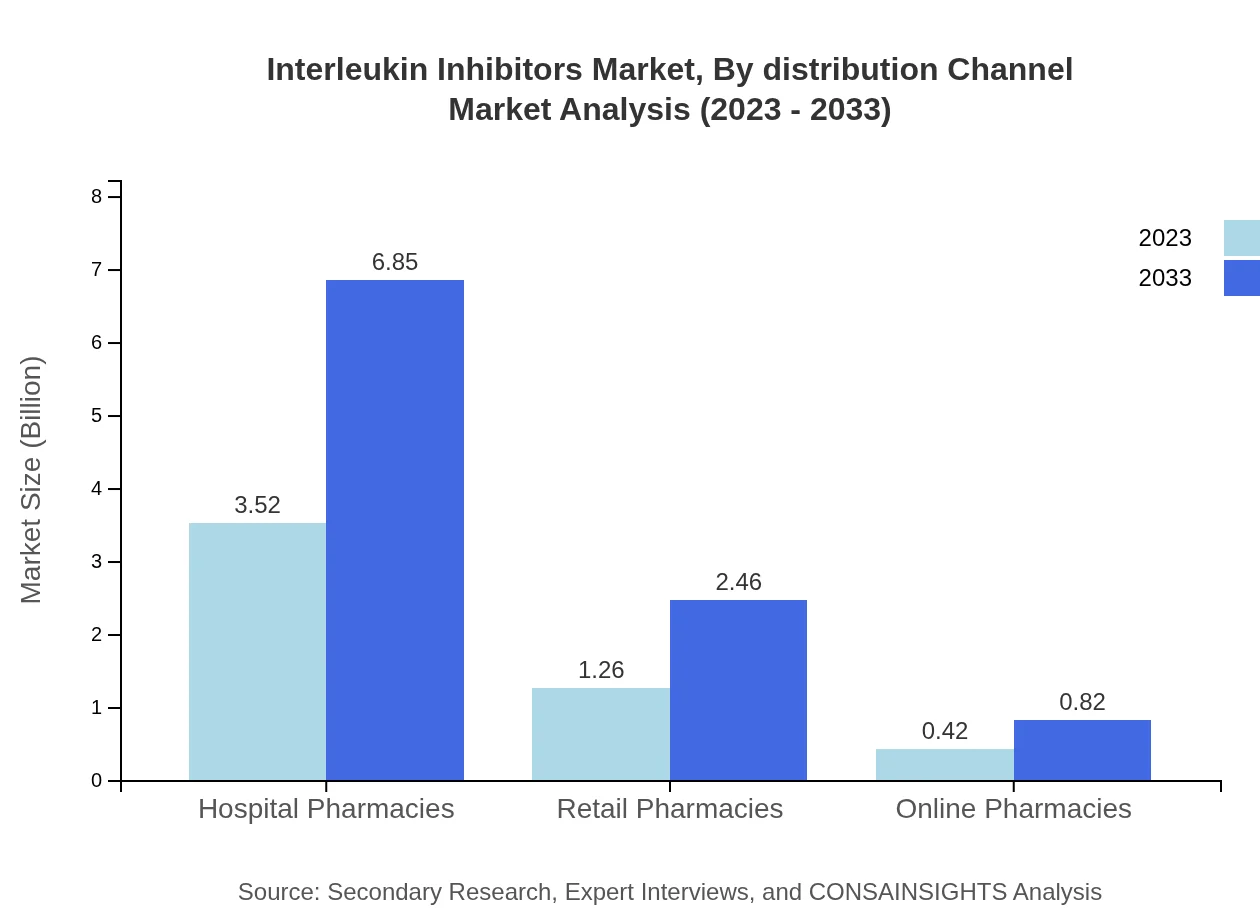
Hospital pharmacies accounted for 67.65% of distribution channels in 2023, with a revenue of $3.52 billion, anticipated to grow to $6.85 billion by 2033. Retail pharmacies and online platforms are also gaining traction, reflecting a combined strategy for enhancing accessibility.
Interleukin Inhibitors Market Trends and Future Forecast
Tell us your focus area and get a customized research report.
Global Market Leaders and Top Companies in Interleukin Inhibitors Industry
AbbVie:
AbbVie is a leader in developing IL-1 inhibitors and has a strong portfolio in autoimmune diseases with its flagship product Humira.Amgen:
Amgen is renowned for its innovative approach to biologics and has made significant advancements in IL-6 inhibitor therapies.Roche:
Roche has a strong foothold in oncology applications of Interleukin inhibitors, focusing on personalized medicine.Novartis:
Novartis is engaged in extensive research and has been instrumental in developing IL-17 inhibitors for dermatology applications.Sanofi:
Sanofi boasts a dynamic portfolio with IL-1 and IL-6 inhibitors, aimed at treating various inflammatory conditions.We're grateful to work with incredible clients.







FAQs
What is the market size of the Interleukin inhibitors market in 2023?
The Interleukin inhibitors market is reported at $5.20 Billion in 2023, based on the provided market-size data for the base year.
How big will the market be by 2033?
The market is projected to reach $10.12 Billion in 2033 according to the supplied forecast figures for the period.
What is CAGR for the forecast period?
The reported compound annual growth rate for the 2023 to 2033 forecast period is 6.7% as stated in the input data.
Which region is the fastest Growing in the Interleukin Inhibitors Market Report market?
Middle East and Africa is the fastest-growing region, projected to expand from $0.4 Billion in 2023 to $0.79 Billion in 2033, reflecting an implied 7.04% CAGR over the forecast period.
Which region is the fastest Growing?
The Middle East and Africa is identified as the regional market region with an implied 7.04% CAGR, increasing from $0.4 Billion in 2023 to $0.79 Billion in 2033.
Who are the top companies in this market?
Top companies listed for the Interleukin inhibitors market include AbbVie, Amgen, Roche, Novartis, and Sanofi as provided in the input.
What are the primary drug classes covered?
The market segmentation includes IL-1 inhibitors, IL-6 inhibitors, and IL-17 inhibitors, as specified among the drug-class subsegments.
What end User segments are included?
End-user categories specified are Hospitals, Clinics, Homecare, and Others based on the provided subsegment list.
How are distribution channels categorized?
Distribution channels provided include Hospital Pharmacies, Retail Pharmacies, and Online Pharmacies according to the input data.
What routes of administration are considered?
Routes of administration covered in the input are Intravenous, Subcutaneous, and Oral for interleukin inhibitor therapies.