

Portable Ultrasound Devices Market Report
First published: 07 October 2024 | Last updated: 25 May 2026 | Report Code: portable-ultrasound-devices
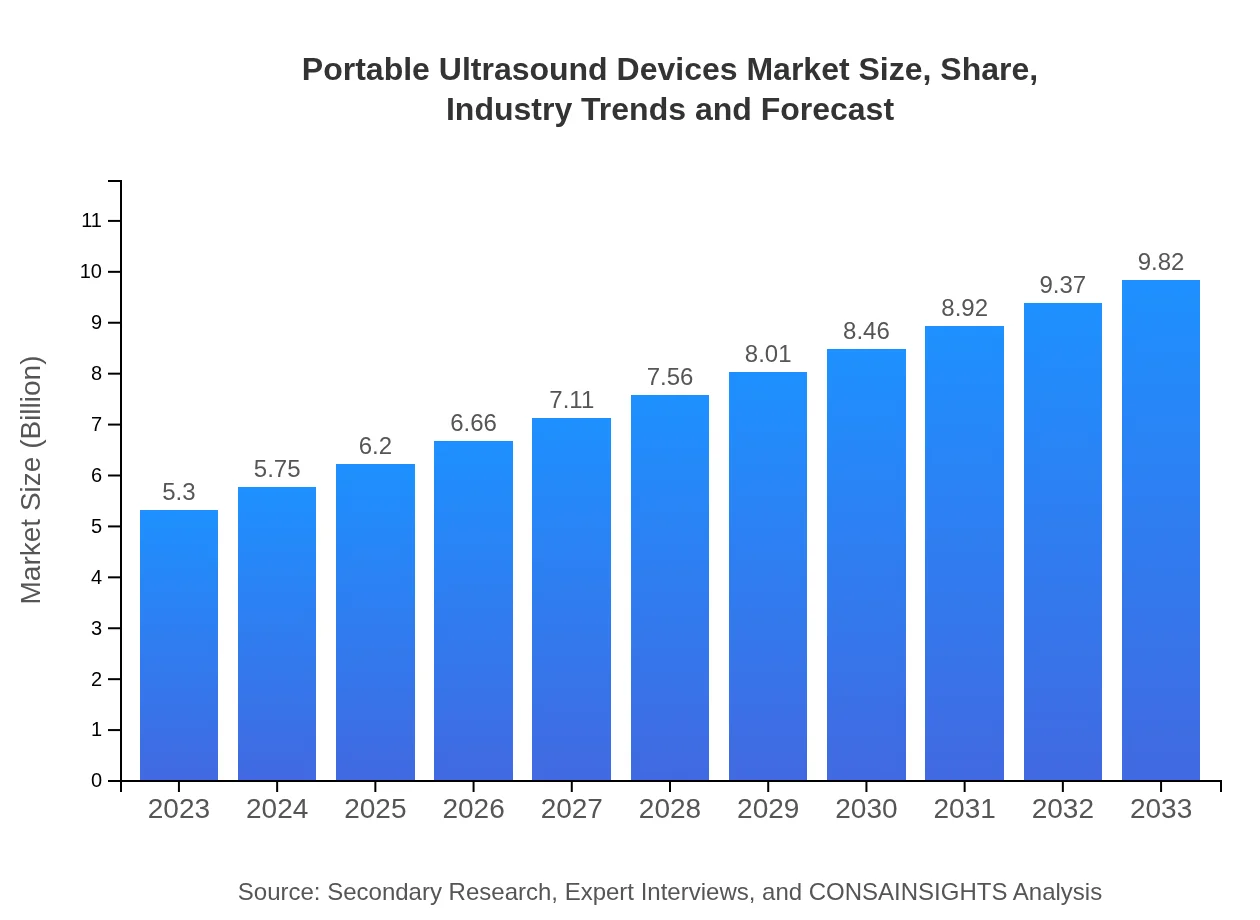
Portable Ultrasound Devices Market — USD 5.3 billion in 2023, Growing to USD 9.82B by 2033 at 6.2% CAGR
This report provides a comprehensive analysis of the Portable Ultrasound Devices market from 2023 to 2033, showcasing market size, trends, and forecasts. It includes insights on regional performance, technological advancements, and key market players.
Key Takeaways
- Global market value rises from $5.30 Billion in 2023 to $9.82 Billion in 2033 at a 6.2% CAGR.
- North America is largest regional market, while no single fastest-growing region is stated because regional CAGR differences remain within 0.15 percentage points.
- Handheld and battery-operated devices, along with telemedicine adoption, are central to product and deployment shifts.
- Top vendors include GE Healthcare, Philips Healthcare, Siemens Healthineers, Canon Medical Systems, and Mindray.
- Regional expansion is notable across Europe ($1.29B to $2.39B) and Asia Pacific ($1.10B to $2.04B) over the forecast period.
Portable Ultrasound Devices Market Report — Executive Summary
North America remains largest market by forecast-period value, while no single fastest-growing region is stated because top regional growth rates are separated by less than 0.15 percentage points. This report presents a focused analysis of portable ultrasound device demand across clinical and non-clinical settings. Market size was $5.30 Billion in 2023 and is expected to reach $9.82 Billion by 2033, reflecting a 6.2% CAGR from 2023 to 2033. Growth is driven by improvements in handheld imaging, rising use of home care services, and broader telemedicine integration. The study reviews device types such as handheld, battery-operated and cart-mounted systems, and profiles applications spanning diagnostics, therapeutic, and research uses. It also evaluates sales channels including direct, online, and retail. Regional detail highlights North America as the largest market, with Europe, Asia Pacific, Latin America, and Middle East and Africa each showing expansion in absolute terms. Competitive coverage lists major vendors and examines product innovation, regulatory context, and adoption trends to inform procurement, R&D, and investment decisions.
Key Growth Drivers
- Wider home care adoption increases demand for portable point-of-care imaging solutions.
- Advances in handheld hardware and improved imaging capabilities enhance clinical utility outside hospitals.
- Integration with telemedicine workflows expands remote diagnostic and monitoring applications.
- Growing need for non-invasive diagnostics in outpatient and emergency settings supports device deployment.
- Direct and online sales channels simplify procurement for smaller clinics and remote providers.
| Metric | Value |
|---|---|
| Study Period | 2023 - 2033 |
| 2023 Market Size | $5.30 Billion |
| CAGR (2023-2033) | 6.2% |
| 2033 Market Size | $9.82 Billion |
| Top Companies | GE Healthcare, Philips Healthcare, Siemens Healthineers, Canon Medical Systems, Mindray |
| Published Date | 07 October 2024 |
| Last Modified Date | 25 May 2026 |
Portable Ultrasound Devices Market Overview
Customize Portable Ultrasound Devices Market Report market research report
- ✔ Get in-depth analysis of Portable Ultrasound Devices market size, growth, and forecasts.
- ✔ Understand Portable Ultrasound Devices's regional dynamics and industry-specific trends.
- ✔ Identify potential applications, end-user demand, and growth segments in Portable Ultrasound Devices
What is the Market Size & CAGR of Portable Ultrasound Devices Market Report market in 2023?
Portable Ultrasound Devices Industry Analysis
Portable Ultrasound Devices Market Segmentation and Scope
Tell us your focus area and get a customized research report.
Portable Ultrasound Devices Market Report Market Analysis Report by Region
Europe Portable Ultrasound Devices Market Report:
Europe grows from $1.29 Billion in 2023 to $2.39 Billion in 2033. Regional expansion reflects rising use of portable imaging in clinics and home care, and demand for improved diagnostic access across health systems.Asia Pacific Portable Ultrasound Devices Market Report:
Asia Pacific grows from $1.1 Billion in 2023 to $2.04 Billion in 2033. Growth is linked to greater adoption in outpatient and remote care contexts, along with uptake of handheld and battery-operated devices.North America Portable Ultrasound Devices Market Report:
North America is largest regional market, rising from $1.88 Billion in 2023 to $3.48 Billion in 2033. This region’s growth is supported by technology investment, extensive clinical adoption, and demand for portable solutions in hospitals and outpatient settings.South America Portable Ultrasound Devices Market Report:
Latin America grows from $0.32 Billion in 2023 to $0.59 Billion in 2033. Market expansion is driven by growing demand for non-invasive diagnostics and increased availability of portable devices through diverse sales channels.Middle East & Africa Portable Ultrasound Devices Market Report:
Middle East and Africa grows from $0.71 Billion in 2023 to $1.31 Billion in 2033. Adoption is influenced by expanding home care services and investments in point-of-care imaging to improve access in varied clinical environments.Tell us your focus area and get a customized research report.
Research Methodology
Portable Ultrasound Devices Market Analysis By Device Type
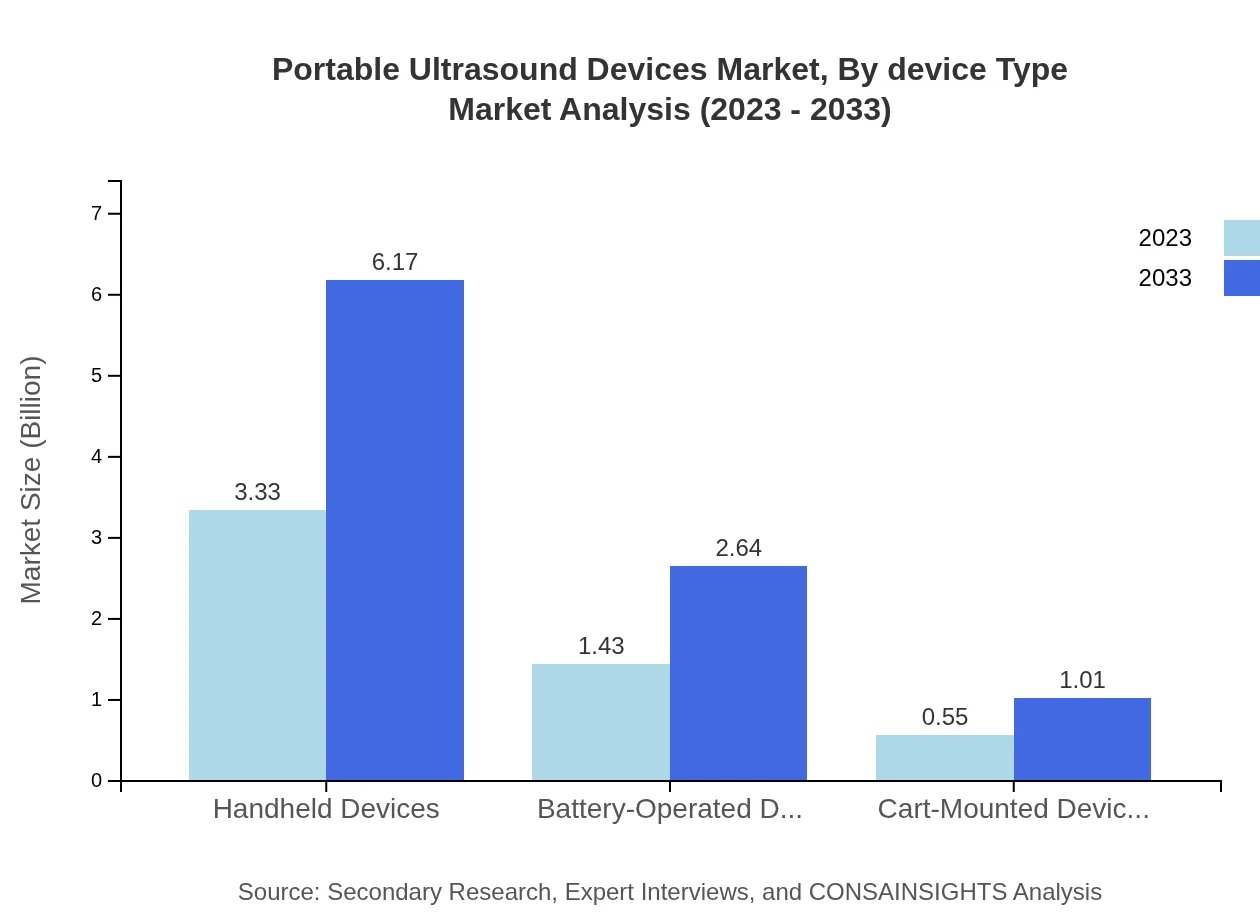
The device type segment highlights significant growth in handheld and battery-operated devices, with market sizes projected at $3.33 billion and $1.43 billion respectively by 2033. Handheld devices dominate the market due to their portability and ease of use, while battery-operated devices cater to home care providers, expanding access to diagnostic imaging.
Portable Ultrasound Devices Market Analysis By Application
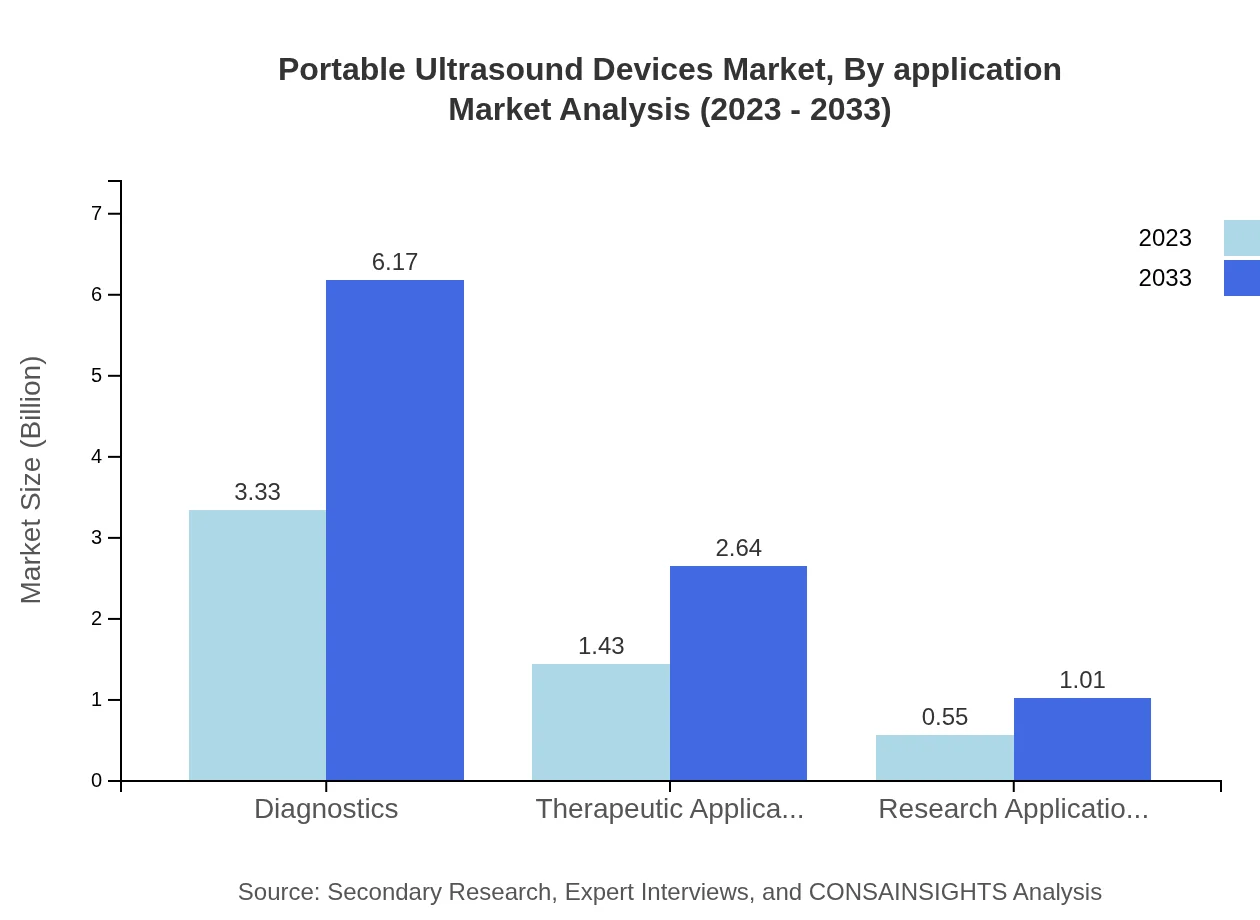
The application segmentation identifies diagnostics as the primary domain, projected to account for $3.33 billion by 2033. Therapeutic applications and research purposes follow, highlighting a diversification in the usage of ultrasound technology, fueled by innovations in medical imaging.
Portable Ultrasound Devices Market Analysis By Technology
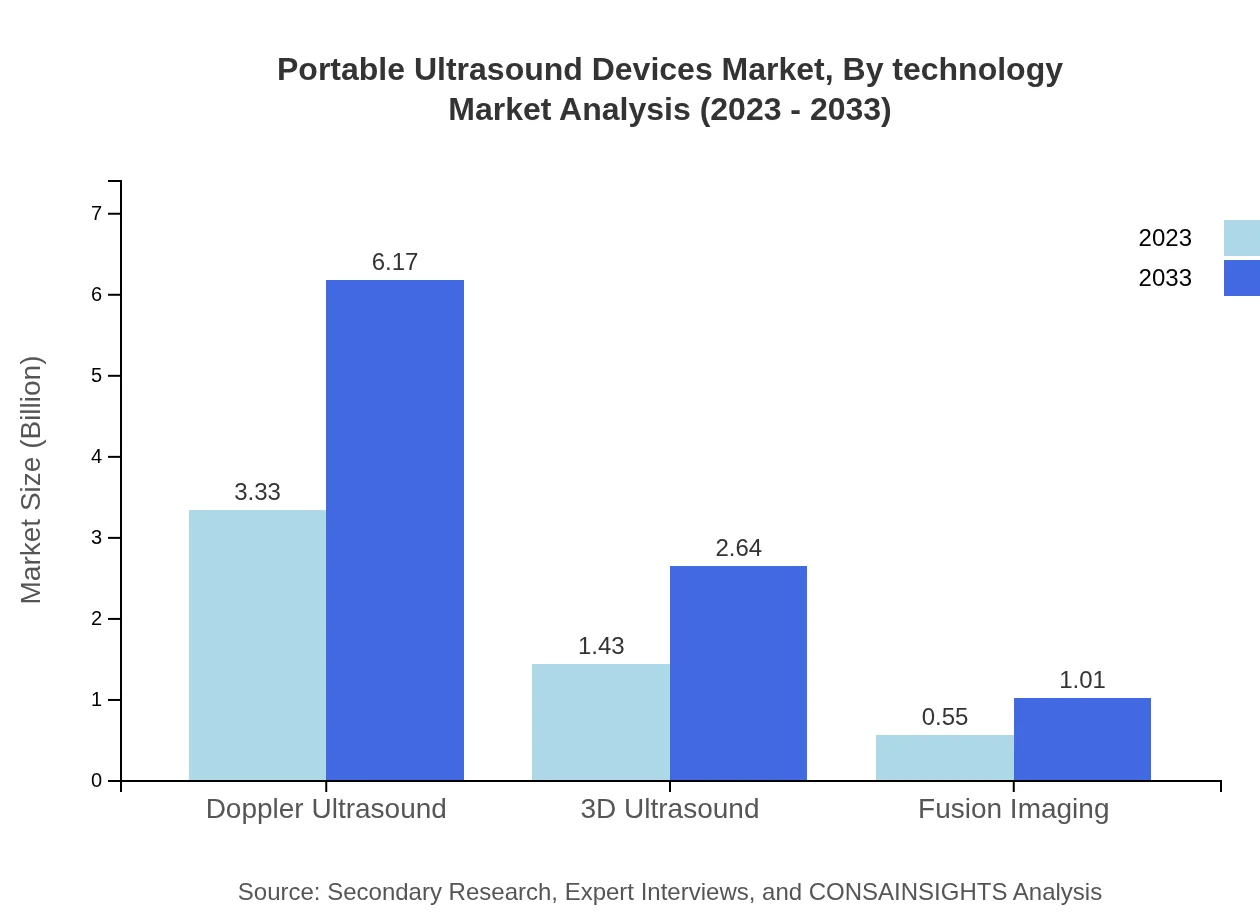
Key technologies driving the Portable Ultrasound Devices include Doppler and 3D ultrasound. The Doppler technology segment is anticipated to maintain a substantial market share, reaching $3.33 billion by 2033, known for its effectiveness in vascular studies.
Portable Ultrasound Devices Market Analysis By End User
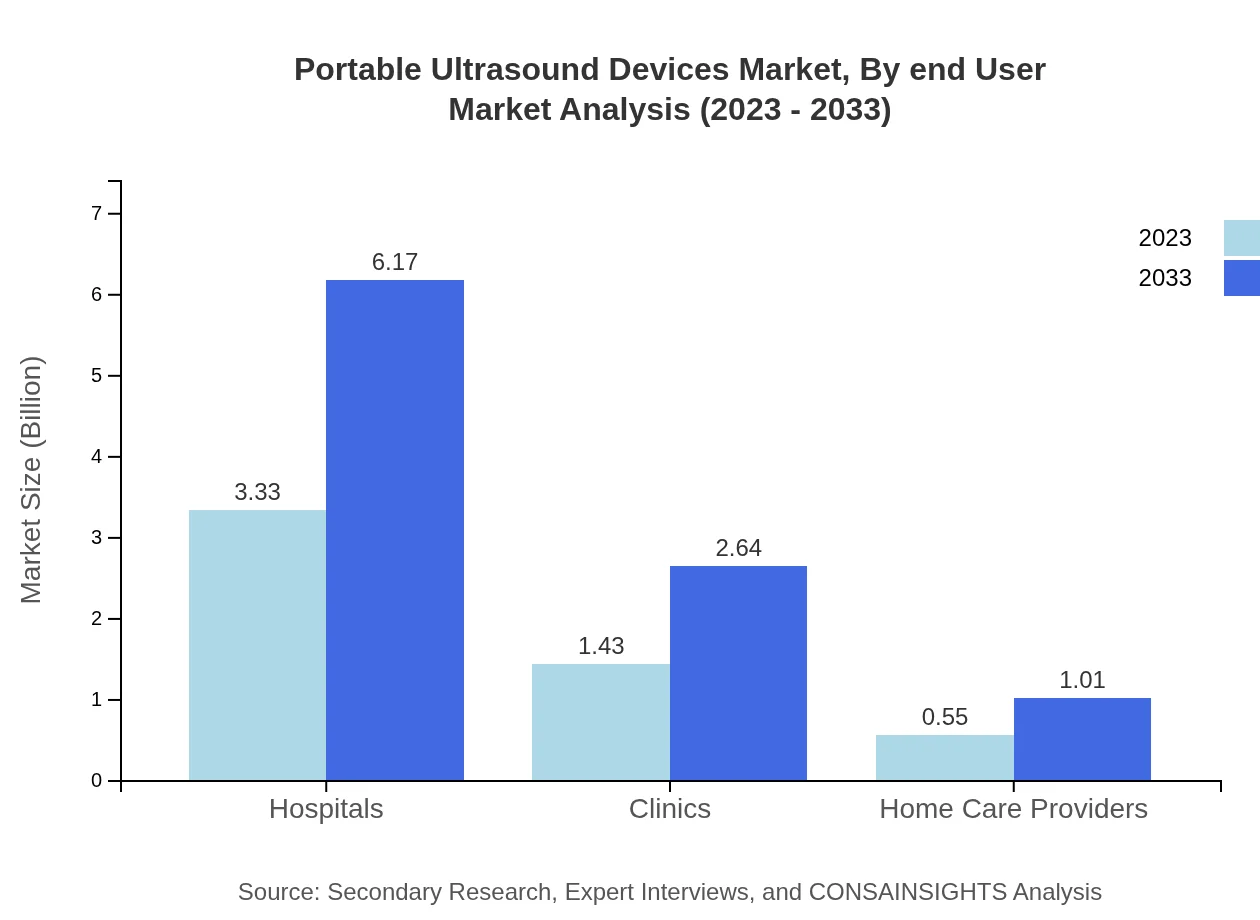
Hospitals are the leading end-users of Portable Ultrasound Devices, projected to hold 62.8% market share throughout the forecast period. This is followed by clinics and home care providers, reflecting a trend towards more decentralized healthcare delivery.
Portable Ultrasound Devices Market Analysis By Sales Channel
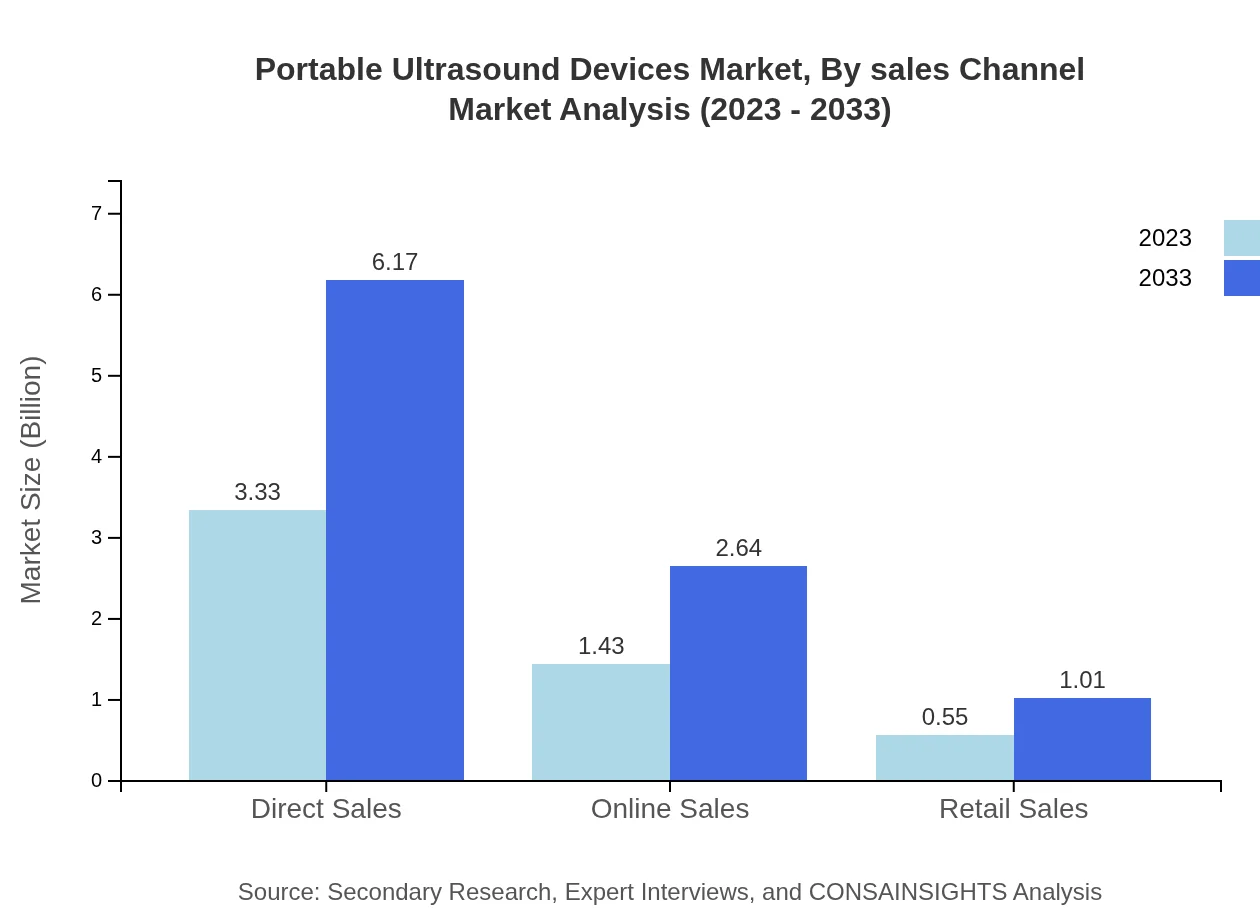
The market's sales channel segmentation shows direct sales as the dominant method, maintaining a 62.8% share, while online sales are gaining traction, accounting for 26.89% by 2033 due to the increasing preference for e-commerce solutions in the medical equipment sector.
Portable Ultrasound Devices Market Trends and Future Forecast
Tell us your focus area and get a customized research report.
Global Market Leaders and Top Companies in Portable Ultrasound Devices Industry
GE Healthcare:
GE Healthcare is a leading player in the health technology sector, known for its innovative ultrasound imaging solutions designed to enhance patient care and streamline workflow in clinical settings.Philips Healthcare:
Philips Healthcare specializes in diagnostic imaging technologies, including portable ultrasound that integrates advanced features such as portability, ease of use, and high-quality imaging.Siemens Healthineers:
Siemens Healthineers provides a range of portable ultrasound systems tailored for various applications, maintaining a focus on precision diagnostics and enhanced patient experience.Canon Medical Systems:
Canon Medical Systems is committed to advancing ultrasound technology and offers innovative handheld ultrasound devices that improve accessibility to diagnostic care.Mindray:
Mindray focuses on providing cost-effective, portable ultrasound solutions ideal for point-of-care applications, serving a wide range of healthcare professionals.We're grateful to work with incredible clients.









FAQs
What is the market size of the Portable Ultrasound Devices Market Report in 2023?
The market size in 2023 is $5.30 Billion, as reported. This figure serves as the baseline for the 2023 to 2033 forecast period and comparative regional analysis.
How big is the market expected to be in 2033?
The market is expected to reach $9.82 Billion in 2033 according to the provided forecast, reflecting cumulative growth across device types and regions through 2033.
What is CAGR for the forecast period?
The reported compound annual growth rate for the 2023 to 2033 period is 6.2%, indicating steady expansion over the ten-year forecast window.
Is there a single fastest Growing region in the Portable Ultrasound Devices Market Report market?
No single fastest-growing region is stated for the Portable Ultrasound Devices Market Report market because the top regional implied CAGR values are within 0.15 percentage points of each other, making the ranking too close to call reliably.
Which companies are listed as top players?
Listed top companies include GE Healthcare, Philips Healthcare, Siemens Healthineers, Canon Medical Systems, and Mindray as key competitors in this market.
What device types are covered in the segmentation?
Segmentation covers handheld devices, battery-operated devices, and cart-mounted devices to reflect distinct form factors and deployment scenarios.
How are technologies categorized in the report?
Technologies are categorized including Doppler Ultrasound, 3D Ultrasound, and Fusion Imaging to represent imaging capabilities assessed in the study.
What end users does the report analyze?
End-user segmentation includes Hospitals, Clinics, and Home Care Providers, each examined for adoption patterns and purchasing channels.
What research methods were used to compile the report?
Primary interviews with industry experts and secondary sources such as company reports were used, along with data triangulation and internal validation led by subject-matter analysts.
Why is telemedicine mentioned as relevant?
Telemedicine is relevant because portable ultrasound devices enable remote diagnostics and monitoring, extending imaging capabilities beyond traditional care settings.