

Proteases Market Report
First published: 12 October 2024 | Last updated: 25 May 2026 | Report Code: proteases
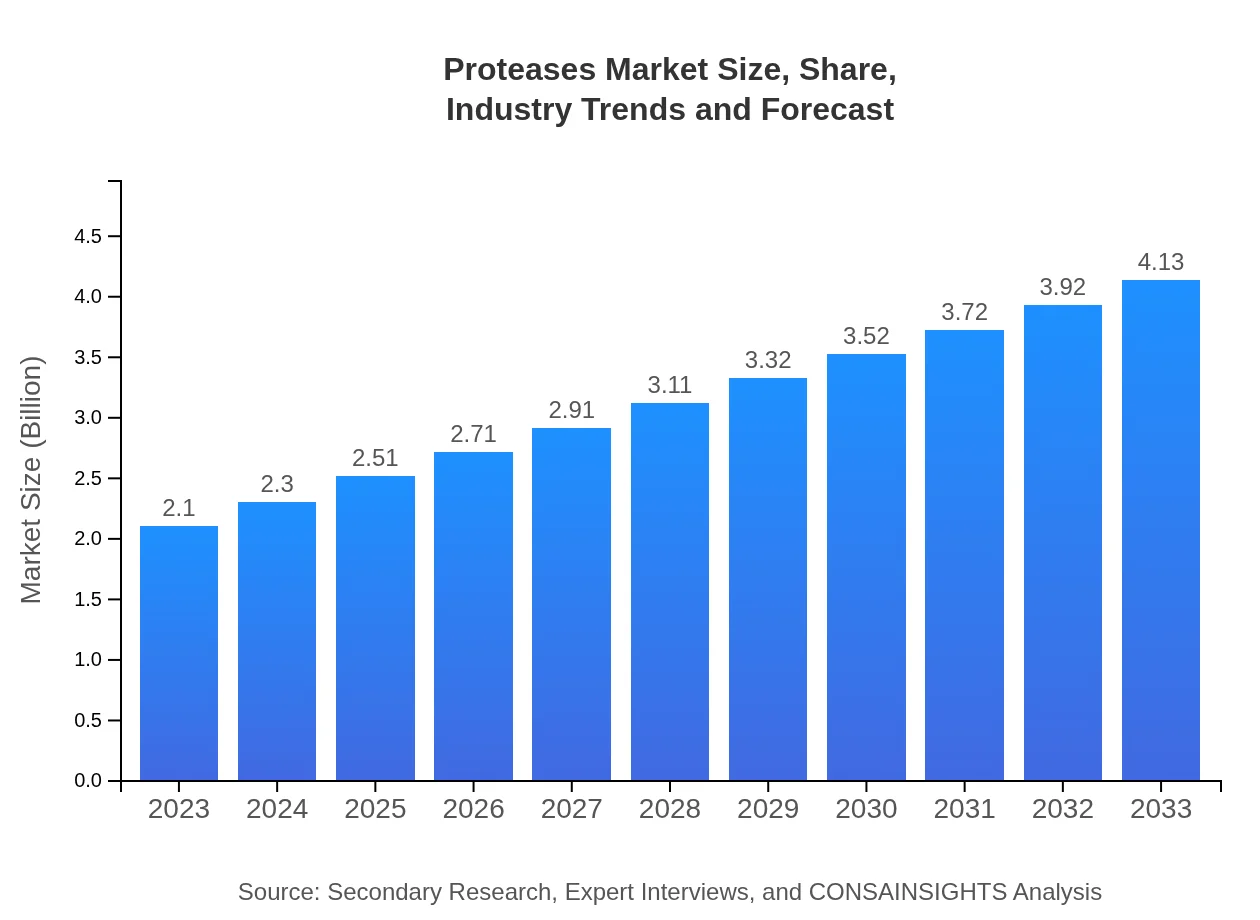
Proteases Market — USD 2.1 billion in 2023, Growing to USD 4.13B by 2033 at 6.8% CAGR
This report provides an extensive analysis of the global proteases market, covering key insights, market size, and CAGR forecast for 2023-2033. It includes industry analysis, segmentation, regional insights, and major players affecting market dynamics.
Key Takeaways
- Global market value rises from $2.10 Billion in 2023 to $4.13 Billion in 2033 with a 6.8% CAGR over 2023 to 2033.
- North America is largest regional market, while no single fastest-growing region is stated because regional CAGR differences remain within 0.15 percentage points.
- Europe grows from $0.67 Billion to $1.32 Billion between 2023 and 2033, driven by pharmaceutical and food industry uptake.
- Asia Pacific increases from $0.39 Billion to $0.77 Billion by 2033, reflecting greater enzyme adoption in food processing and biotech.
- Key suppliers include Novozymes, BASF, DuPont, and AB Enzymes serving multiple industry applications.
Proteases Market Report — Executive Summary
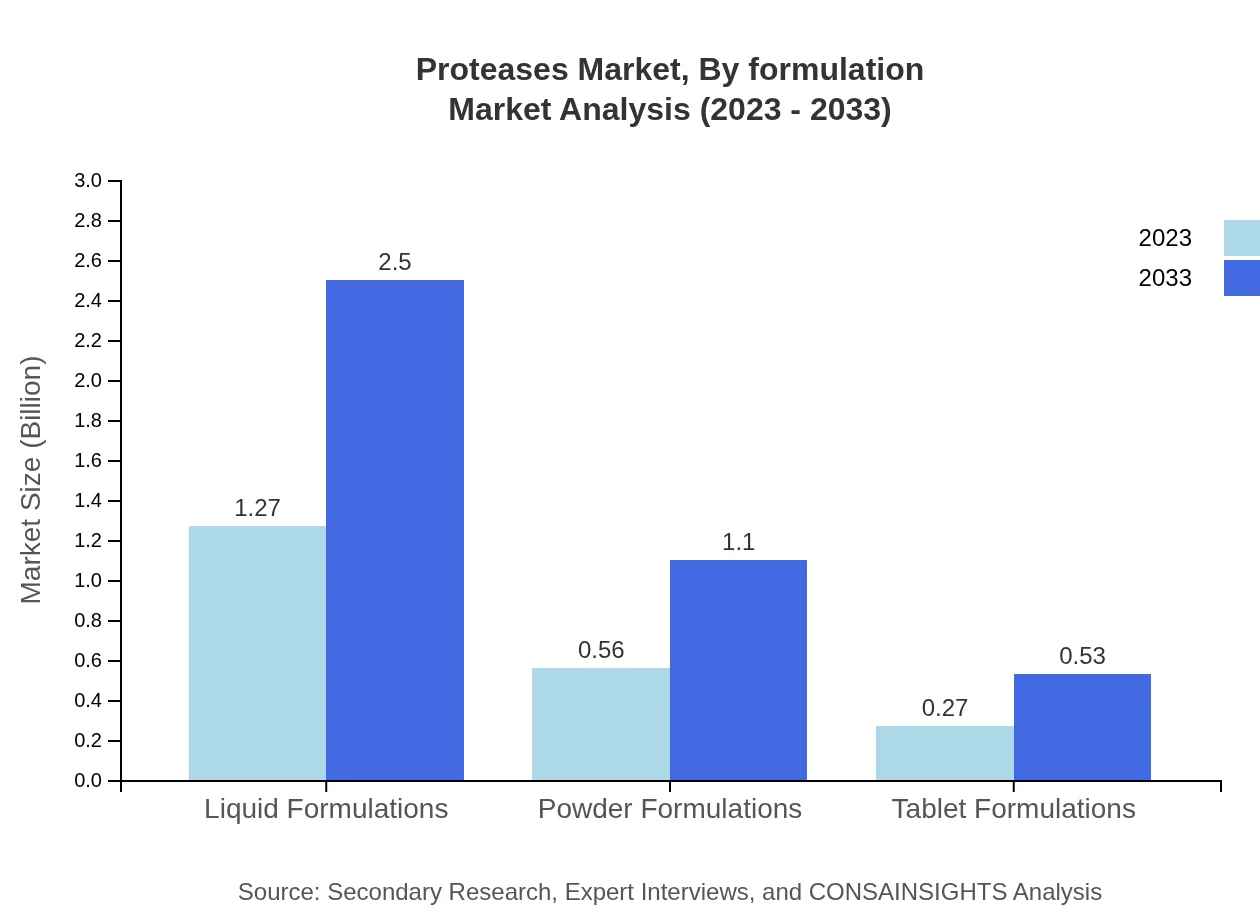
North America remains largest market by forecast-period value, while no single fastest-growing region is stated because top regional growth rates are separated by less than 0.15 percentage points. The proteases market is projected to expand substantially over the 2023 to 2033 forecast period, with market size moving from $2.10 Billion to $4.13 Billion at a 6.8% CAGR. Demand is fueled by enzyme use across food processing, pharmaceuticals, and biotechnology, alongside technological improvements in enzyme production and formulation. Regional demand patterns show North America as the largest market by 2033. Segmentation covers types such as serine, cysteine, aspartic, and metalloproteases; sources including animal-, plant-, and microbial-derived enzymes; and applications spanning food, pharma, and biotech. Formulation formats include liquid, powder, and tablet presentations. Leading firms named in the market include Novozymes, BASF, DuPont, and AB Enzymes. Stakeholders should monitor product innovation, sustainability trends, and regulatory developments that influence formulation choices and sourcing strategies.
Key Growth Drivers
- Increasing use of proteolytic enzymes in food processing and ingredient functionality fuels demand across key end markets.
- Rising pharmaceutical and biotechnology applications require specialized proteases for drug development and bioprocessing workflows.
- Ongoing improvements in enzyme production and formulation expand practical use cases and supply chain availability.
- Shifts toward plant-based and natural ingredient preferences lead manufacturers to explore diverse protease sources and formulations.
- Adoption of enzyme-based solutions for efficiency and quality control supports continued market expansion.
| Metric | Value |
|---|---|
| Study Period | 2023 - 2033 |
| 2023 Market Size | $2.10 Billion |
| CAGR (2023-2033) | 6.8% |
| 2033 Market Size | $4.13 Billion |
| Top Companies | Novozymes, BASF, DuPont, AB Enzymes |
| Published Date | 12 October 2024 |
| Last Modified Date | 25 May 2026 |
Proteases Market Overview
Customize Proteases Market Report market research report
- ✔ Get in-depth analysis of Proteases market size, growth, and forecasts.
- ✔ Understand Proteases's regional dynamics and industry-specific trends.
- ✔ Identify potential applications, end-user demand, and growth segments in Proteases
What is the Market Size & CAGR of Proteases Market Report market in 2023?
Proteases Industry Analysis
Proteases Market Segmentation and Scope
Tell us your focus area and get a customized research report.
Proteases Market Report Market Analysis Report by Region
Europe Proteases Market Report:
Europe grows from $0.67 Billion in 2023 to $1.32 Billion in 2033. 67 Billion in 2023 to $1.32 Billion in 2033, driven by demand from pharmaceutical and food industries and investments in enzyme formulation and quality standards within the region.Asia Pacific Proteases Market Report:
Asia Pacific grows from $0.39 Billion in 2023 to $0.77 Billion in 2033. 39 Billion in 2023 to $0.77 Billion in 2033, supported by expanding food processing capacity and biotechnology adoption, along with increased interest in enzyme-based solutions for manufacturing efficiency.North America Proteases Market Report:
North America is largest regional market, rising from $0.73 Billion in 2023 to $1.44 Billion in 2033. This expansion reflects strong uptake in food processing and pharmaceutical sectors and established industrial enzyme supply chains.South America Proteases Market Report:
Latin America grows from $0.19 Billion in 2023 to $0.38 Billion in 2033. 19 Billion in 2023 to $0.38 Billion in 2033, where growth is linked to increasing application of enzymes in regional food processing and gradual biotechnology sector development.Middle East & Africa Proteases Market Report:
Middle East and Africa grows from $0.11 Billion in 2023 to $0.22 Billion in 2033. 11 Billion in 2023 to $0.22 Billion in 2033, reflecting targeted adoption in food processing and nascent biotech activities alongside evolving regulatory and sourcing practices.Tell us your focus area and get a customized research report.
Research Methodology
Proteases Market Analysis By Type
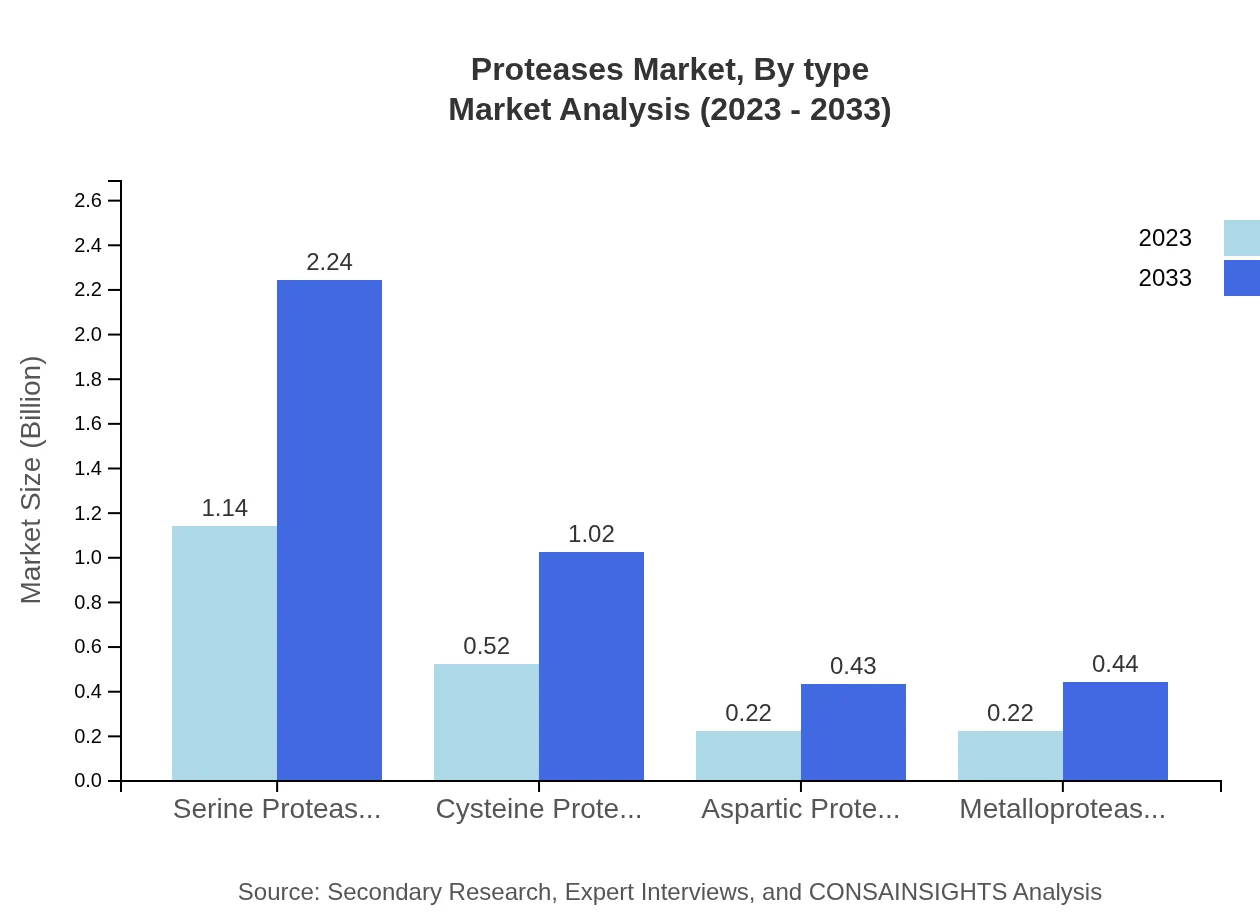
The proteases market by type reveals a strong dominance of serine proteases, which generate a market size of $1.14 billion in 2023, growing ideally to $2.24 billion by 2033. Cysteine proteases follow with a size of $0.52 billion in 2023, projected to reach $1.02 billion in 2033. The market shares are indicative of their widespread usage in food and pharmaceutical industries.
Proteases Market Analysis By Application
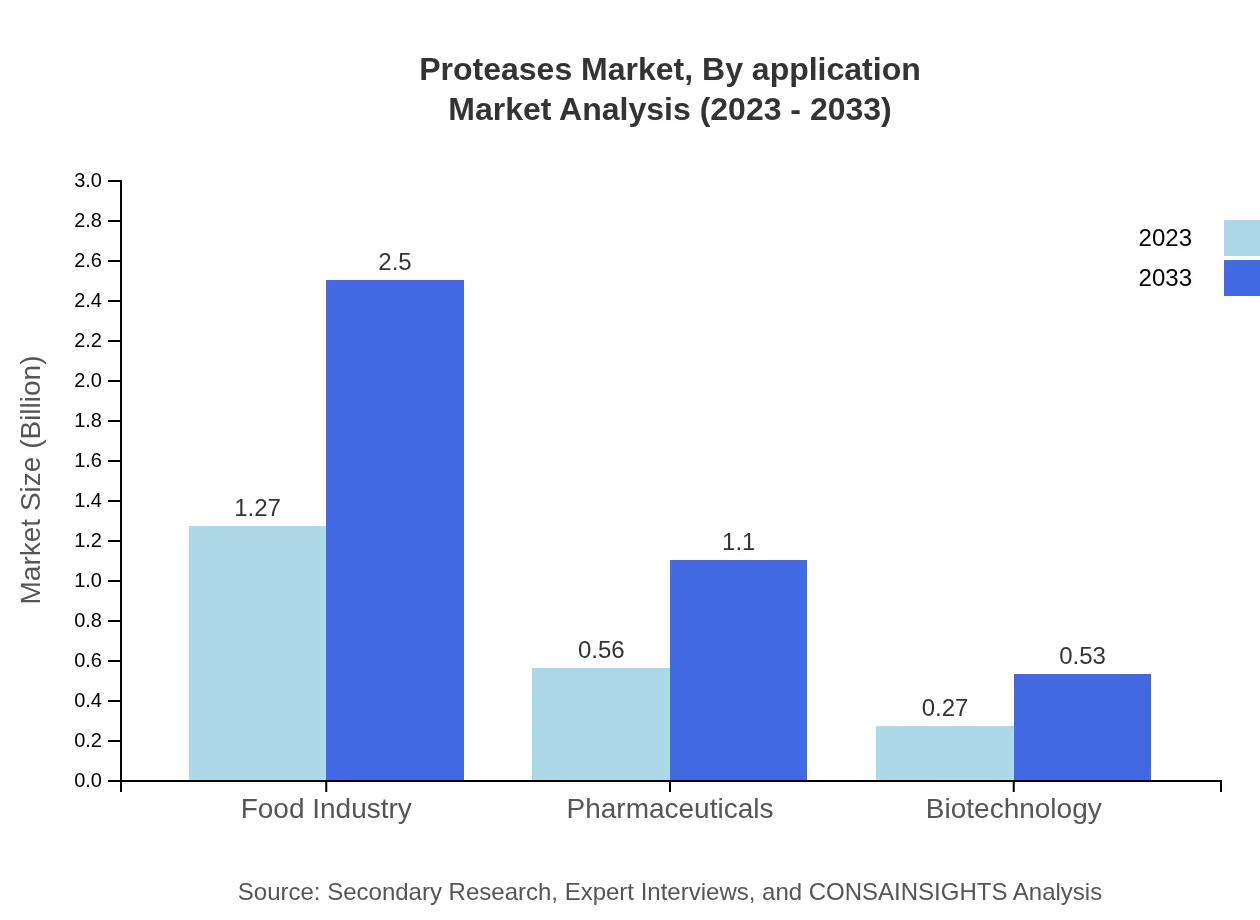
Segmented by application, the food industry commands a major share at $1.27 billion in 2023, forecasted to double to $2.50 billion by 2033. Pharmaceuticals make a vital contribution as well, starting at $0.56 billion and expected to expand to $1.10 billion by 2033.
Proteases Market Analysis By Source
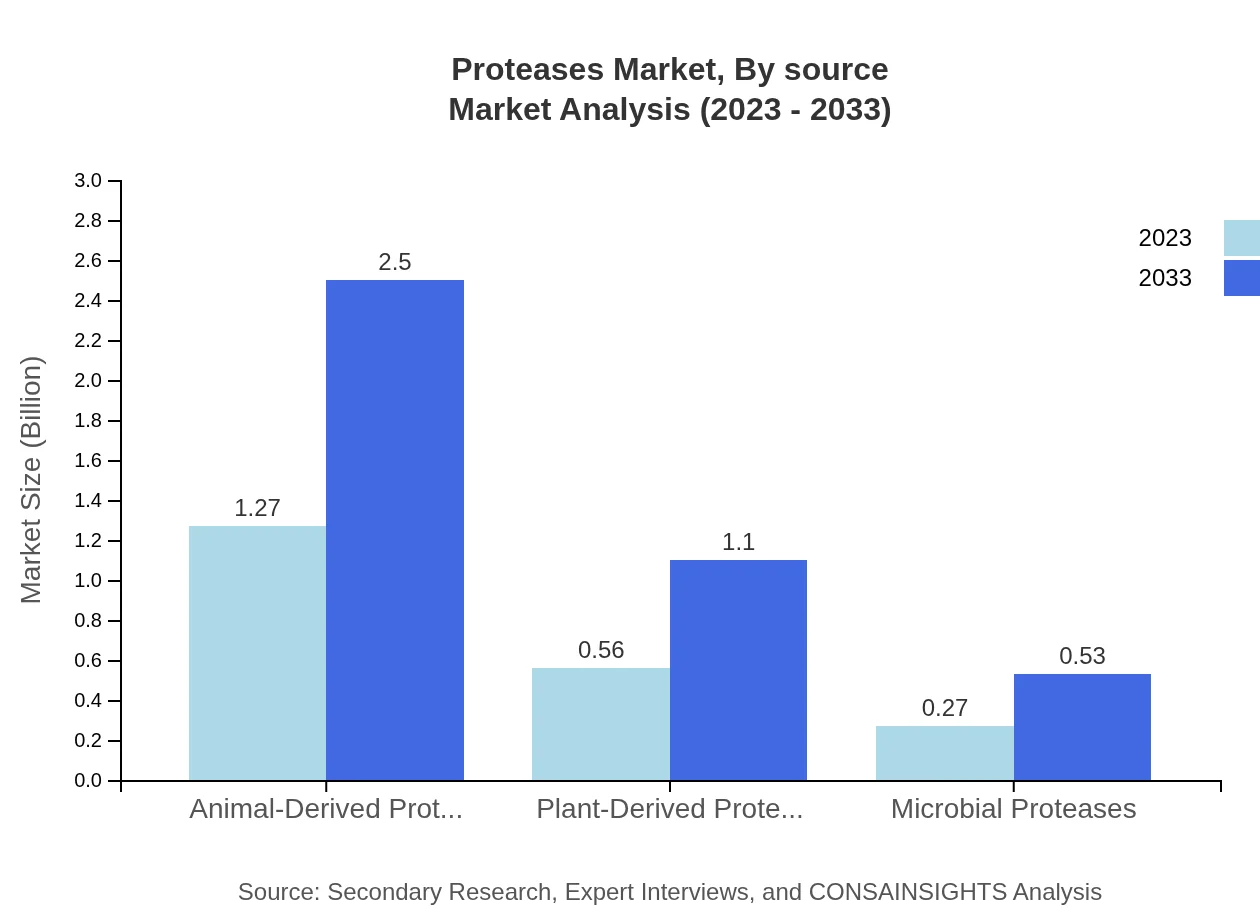
Animal-derived proteases presently dominate the source segment with a size of $1.27 billion in 2023, set to grow to $2.50 billion by 2033. Plant-derived and microbial proteases are also witnessing growth, yet they represent a smaller portion in terms of market size but are gaining traction due to rising plant-based diets.
Proteases Market Trends and Future Forecast
Tell us your focus area and get a customized research report.
Global Market Leaders and Top Companies in Proteases Industry
Novozymes:
A leading enzyme producer, Novozymes holds a prominent position in the proteases market, offering a variety of proteolytic enzymes for the food and beverage industry.BASF:
BASF is known for its innovative solutions in enzyme production, focusing on sustainability and performance of proteases to serve multiple industries.DuPont:
With extensive research and development capabilities, DuPont focuses on producing high-quality proteases, particularly for the food and pharmaceutical sectors.AB Enzymes:
AB Enzymes specializes in enzymatic products for various applications, playing a critical role in the food industry with its diverse range of proteases.We're grateful to work with incredible clients.








FAQs
What is the current market size of the proteases market?
The market size in 2023 is $2.10 Billion according to the report data, reflecting baseline industry demand across food, pharmaceuticals, and biotechnology segments.
How big will the proteases market be in 2033?
By 2033 the market is projected to reach $4.13 Billion based on provided figures, indicating sustained expansion across multiple application areas over the forecast period.
What is CAGR for the forecast period?
The compound annual growth rate for the period 2023 to 2033 is 6.8% as stated in the report, representing average annual market expansion over the decade.
Is there a single fastest Growing region in the Proteases Market Report market?
No single fastest-growing region is stated for the Proteases Market Report market because the top regional implied CAGR values are within 0.15 percentage points of each other, making the ranking too close to call reliably.
Which companies are listed as top providers?
Top companies cited in the input are Novozymes, BASF, DuPont, and AB Enzymes, representing major suppliers across formulations and application areas.
What are common protease types covered?
The report lists serine, cysteine, aspartic, and metalloproteases as primary types, reflecting standard classification used across industrial and research applications.
How are proteases sourced in the market?
Sources specified include animal-derived, plant-derived, and microbial proteases, which support different performance profiles and application needs across industries.
What are primary application areas for proteases?
Key application areas highlighted are the food industry, pharmaceuticals, and biotechnology, where enzymes play functional and processing roles.
Who conducted the research for this report?
Research methodology includes primary interviews with industry experts, secondary research from company reports and publications, and internal data validation and triangulation.
Why is formulation variety important?
Formulation formats such as liquid, powder, and tablet are listed, enabling manufacturers to match enzyme stability and delivery requirements to specific production and application conditions.