

Smoking Cessation Aids Market Report
First published: 14 October 2024 | Last updated: 28 May 2026 | Report Code: smoking-cessation-aids
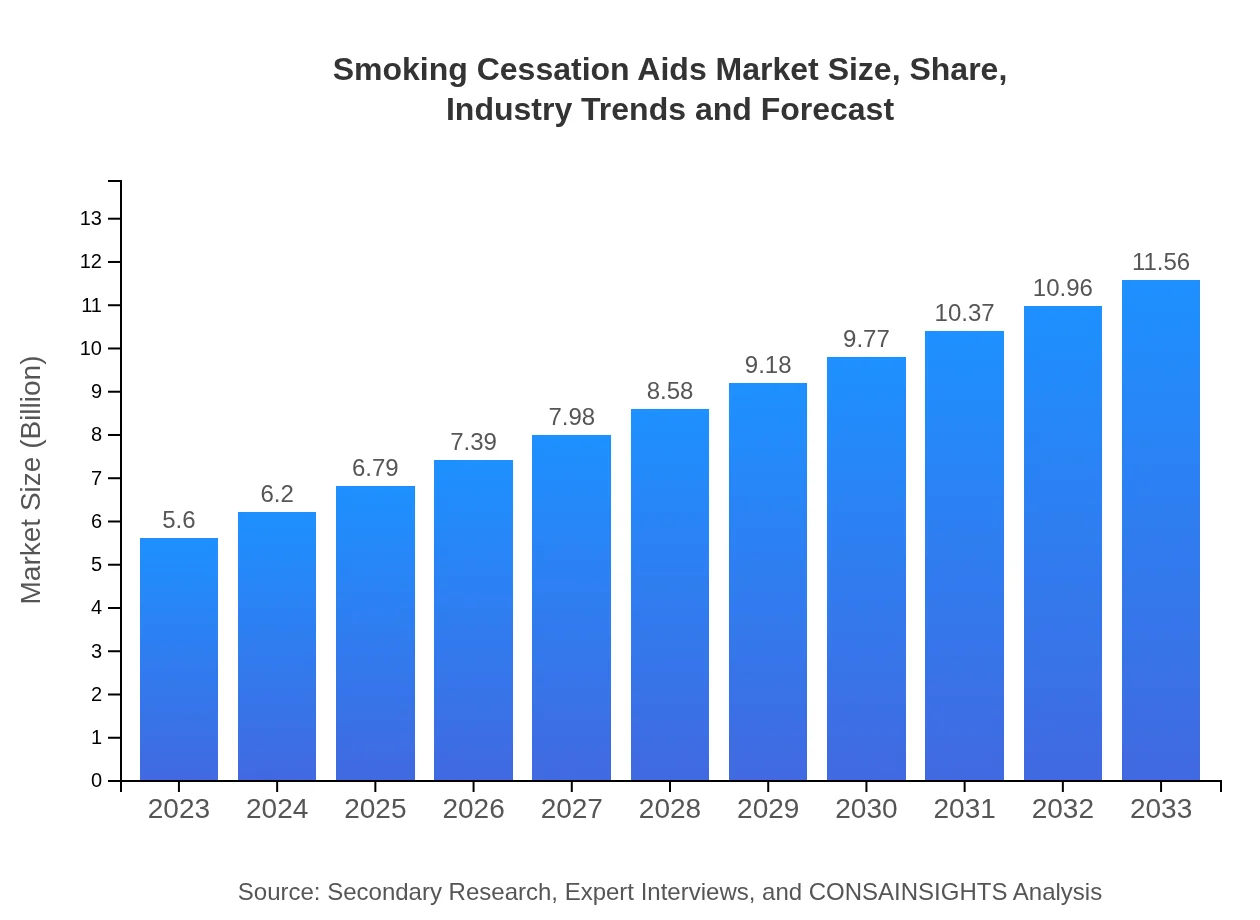
Smoking Cessation Aids Market — USD 5.6 billion in 2023, Growing to USD 11.56B by 2033 at 7.3% CAGR
This report delves into the Smoking Cessation Aids market, covering trends, forecasts from 2023 to 2033, and detailed analysis of market dynamics, including size, segmentation, regional insights, and competitive landscape.
Key Takeaways
- Global market expands from $5.60 Billion in 2023 to $11.56 Billion in 2033 at a 7.3% CAGR.
- North America is largest regional market, while no single fastest-growing region is stated because regional CAGR differences remain within 0.15 percentage points.
- Regional markets such as Europe ($1.76B to $3.64B) and Asia Pacific ($1.05B to $2.17B) show sizable absolute growth.
- Product mix includes Nicotine Replacement Therapy, prescription medicines, and non-pharmacological approaches.
- Major players listed include Pfizer Inc., GlaxoSmithKline, Johnson & Johnson, and Novartis.
Smoking Cessation Aids Market Report — Executive Summary
North America remains largest market by forecast-period value, while no single fastest-growing region is stated because top regional growth rates are separated by less than 0.15 percentage points. The Smoking Cessation Aids Market Report examines the market trajectory from 2023 to 2033, driven by public health initiatives, stronger tobacco regulations, and rising demand for effective cessation solutions. The market size rises from $5.60 Billion in 2023 to $11.56 Billion in 2033 at a 7.3% CAGR for 2023 to 2033. Product categories span nicotine replacement therapies, prescription medications, and behavioral or non-pharmacological methods, distributed through pharmacies, online retail and supermarkets. Market activity is shaped by innovation in formulations, digital support platforms, and investment in clinical research. Established pharmaceutical firms such as Pfizer Inc., GlaxoSmithKline, Johnson & Johnson, and Novartis feature prominently. The report structure covers market sizing, segmentation by product and channel, regional breakdowns, and competitive positioning, supported by primary expert interviews and secondary company research to validate trends and forecasts.
Key Growth Drivers
- Increasing regulatory measures and public health campaigns that elevate demand for cessation solutions.
- Rising consumer awareness about smoking risks encouraging uptake of pharmacological and behavioral interventions.
- Expansion of distribution options, including pharmacies and online retail, improving product accessibility.
- Ongoing R&D and product innovation by established pharmaceutical companies enhancing treatment efficacy.
- Integration of digital platforms and support services that complement traditional therapies and increase adherence.
| Metric | Value |
|---|---|
| Study Period | 2023 - 2033 |
| 2023 Market Size | $5.60 Billion |
| CAGR (2023-2033) | 7.3% |
| 2033 Market Size | $11.56 Billion |
| Top Companies | Pfizer Inc., GlaxoSmithKline, Johnson & Johnson, Novartis |
| Published Date | 14 October 2024 |
| Last Modified Date | 28 May 2026 |
Smoking Cessation Aids Market Overview
Customize Smoking Cessation Aids Market Report market research report
- ✔ Get in-depth analysis of Smoking Cessation Aids market size, growth, and forecasts.
- ✔ Understand Smoking Cessation Aids's regional dynamics and industry-specific trends.
- ✔ Identify potential applications, end-user demand, and growth segments in Smoking Cessation Aids
What is the Market Size & CAGR of Smoking Cessation Aids Market Report market in 2023?
Smoking Cessation Aids Industry Analysis
Smoking Cessation Aids Market Segmentation and Scope
Tell us your focus area and get a customized research report.
Smoking Cessation Aids Market Report Market Analysis Report by Region
Europe Smoking Cessation Aids Market Report:
Europe grows from $1.76 Billion in 2023 to $3.64 Billion in 2033. Growth reflects regulatory emphasis on tobacco reduction, public health campaigns, and adoption of varied cessation products across clinical and retail channels.Asia Pacific Smoking Cessation Aids Market Report:
Asia Pacific grows from $1.05 Billion in 2023 to $2.17 Billion in 2033. Drivers include rising awareness, expanding healthcare access, and growing availability of cessation therapies via pharmacies and online platforms.North America Smoking Cessation Aids Market Report:
North America is largest regional market, rising from $1.95 Billion in 2023 to $4.03 Billion in 2033. Market expansion is supported by regulatory measures, established healthcare infrastructure, and active involvement from major pharmaceutical firms.South America Smoking Cessation Aids Market Report:
Latin America grows from $0.4 Billion in 2023 to $0.82 Billion in 2033. Market gains are linked to increasing health initiatives, improving distribution networks, and greater attention to smoking-related public health programs.Middle East & Africa Smoking Cessation Aids Market Report:
Middle East and Africa grows from $0.44 Billion in 2023 to $0.9 Billion in 2033. Growth is influenced by intensified public health efforts, expanding access to cessation services, and gradual market development in urban centers.Tell us your focus area and get a customized research report.
Research Methodology
Smoking Cessation Aids Market Analysis By Product Type
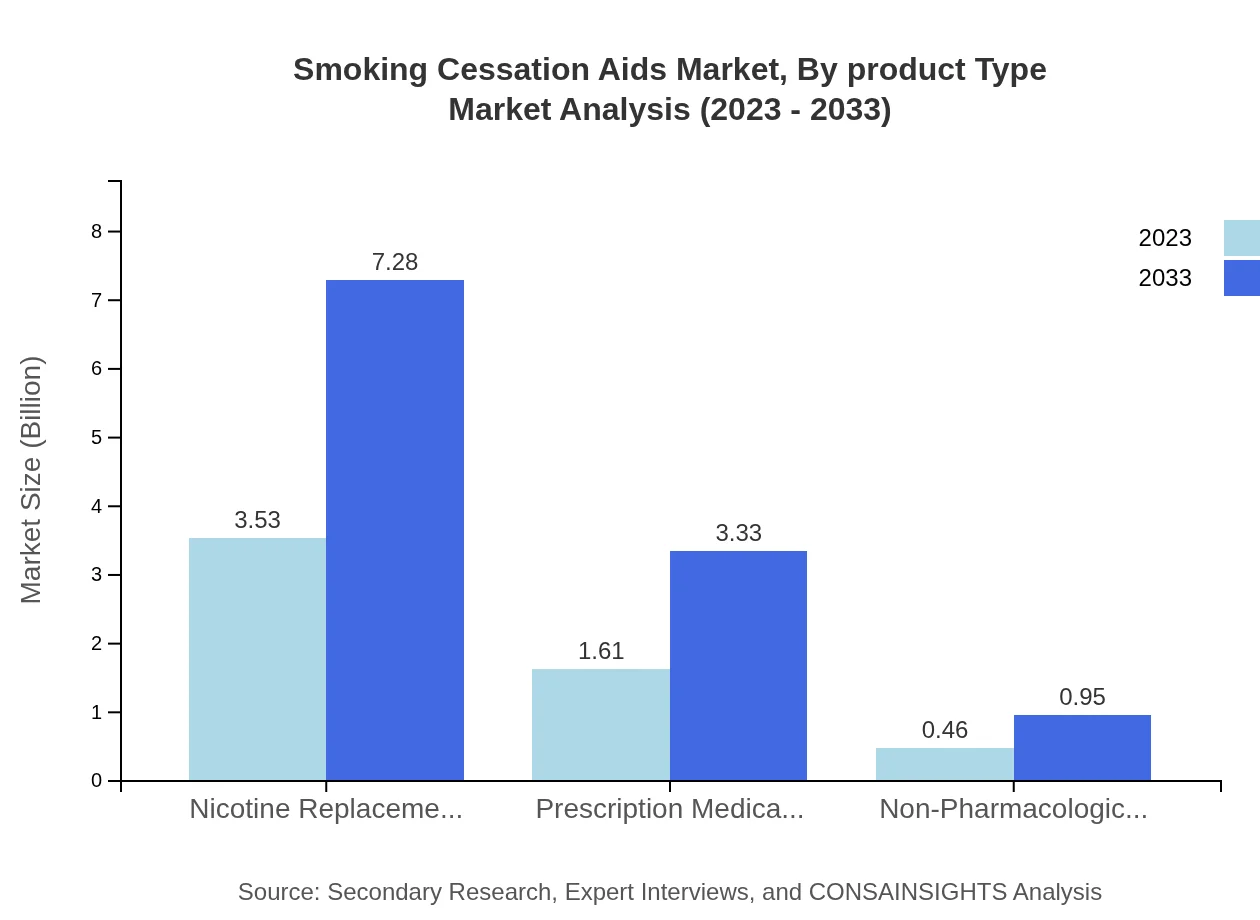
The segment for Nicotine Replacement Therapy (NRT) constitutes the largest share, with revenues expected to rise from $3.53 billion in 2023 to $7.28 billion by 2033. Prescription medications also hold significant market potential, expanding from $1.61 billion to $3.33 billion in the same timeline. Non-Pharmacological methods, while smaller at $0.46 billion, are growing due to increasing interest in holistic cessation techniques.
Smoking Cessation Aids Market Analysis By Application
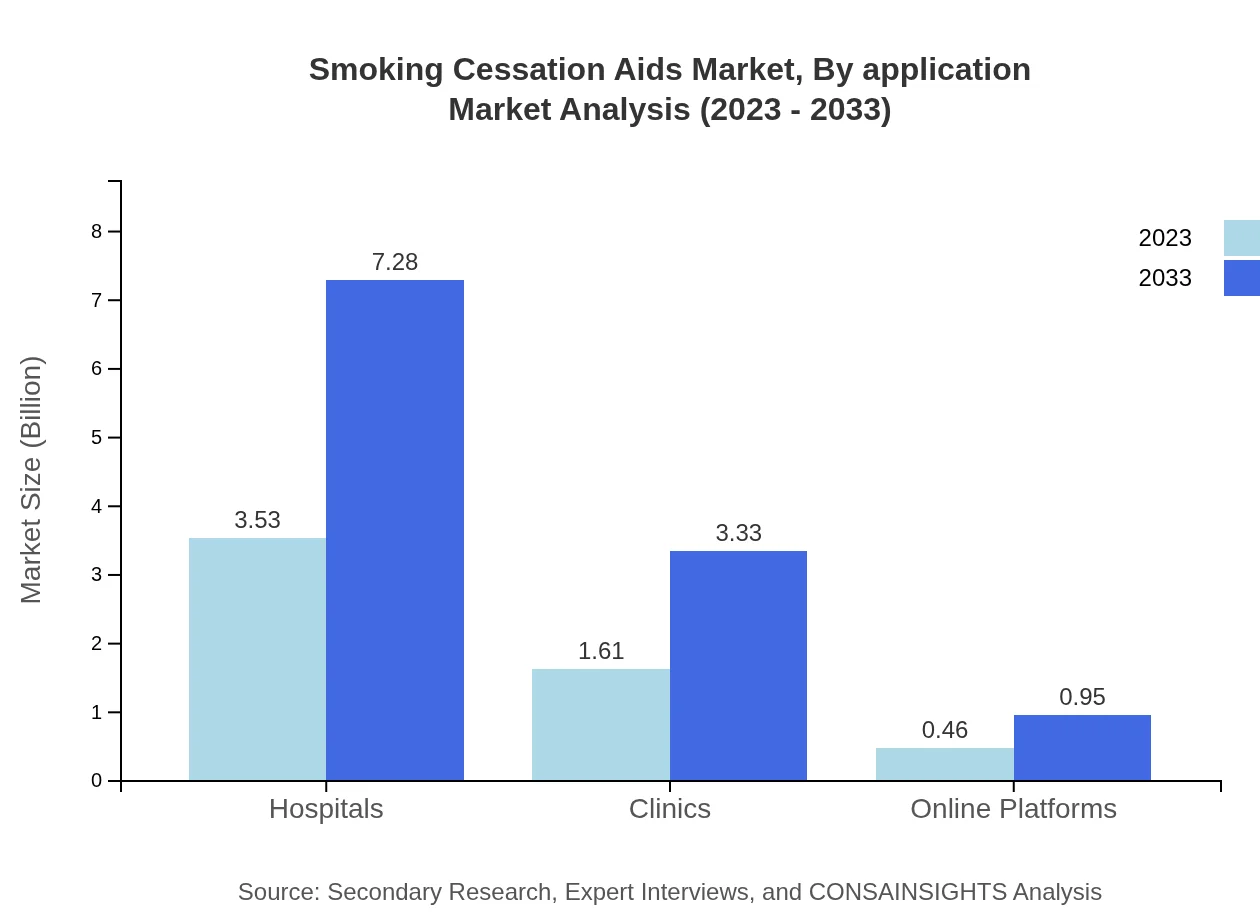
Hospitals remain the primary application segment, anticipated to grow from $3.53 billion in 2023 to $7.28 billion in 2033. Clinics and online platforms are also expanding their market presence, with clinics expected to rise from $1.61 billion to $3.33 billion, highlighting the importance of diverse access points for consumers.
Smoking Cessation Aids Market Analysis By Target User
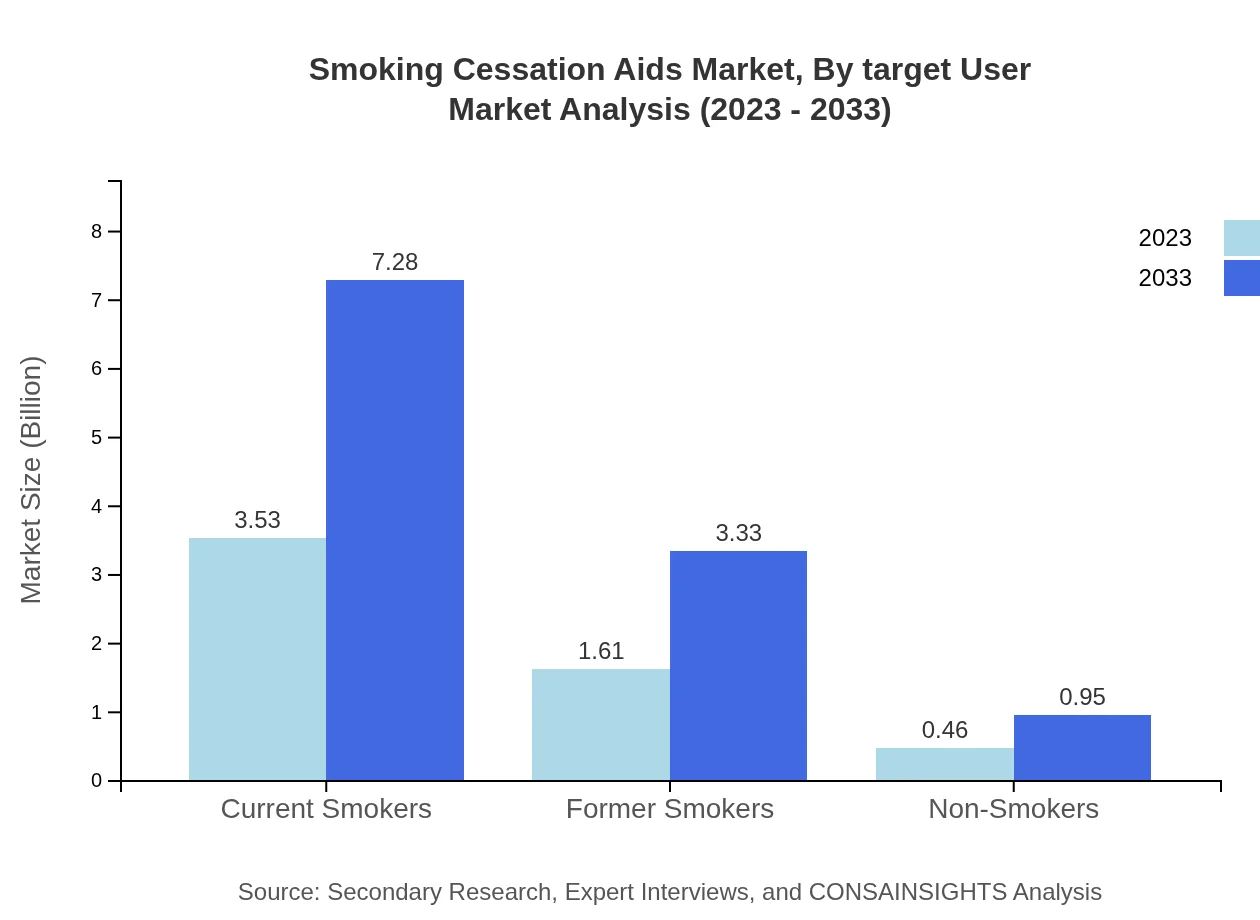
Current smokers form the largest demographic, growing from $3.53 billion in 2023 to $7.28 billion by 2033. Former smokers and non-smokers comprise smaller but significant market opportunities, expanding from $1.61 billion to $3.33 billion and $0.46 billion to $0.95 billion respectively as health trends evolve.
Smoking Cessation Aids Market Analysis By Distribution Channel
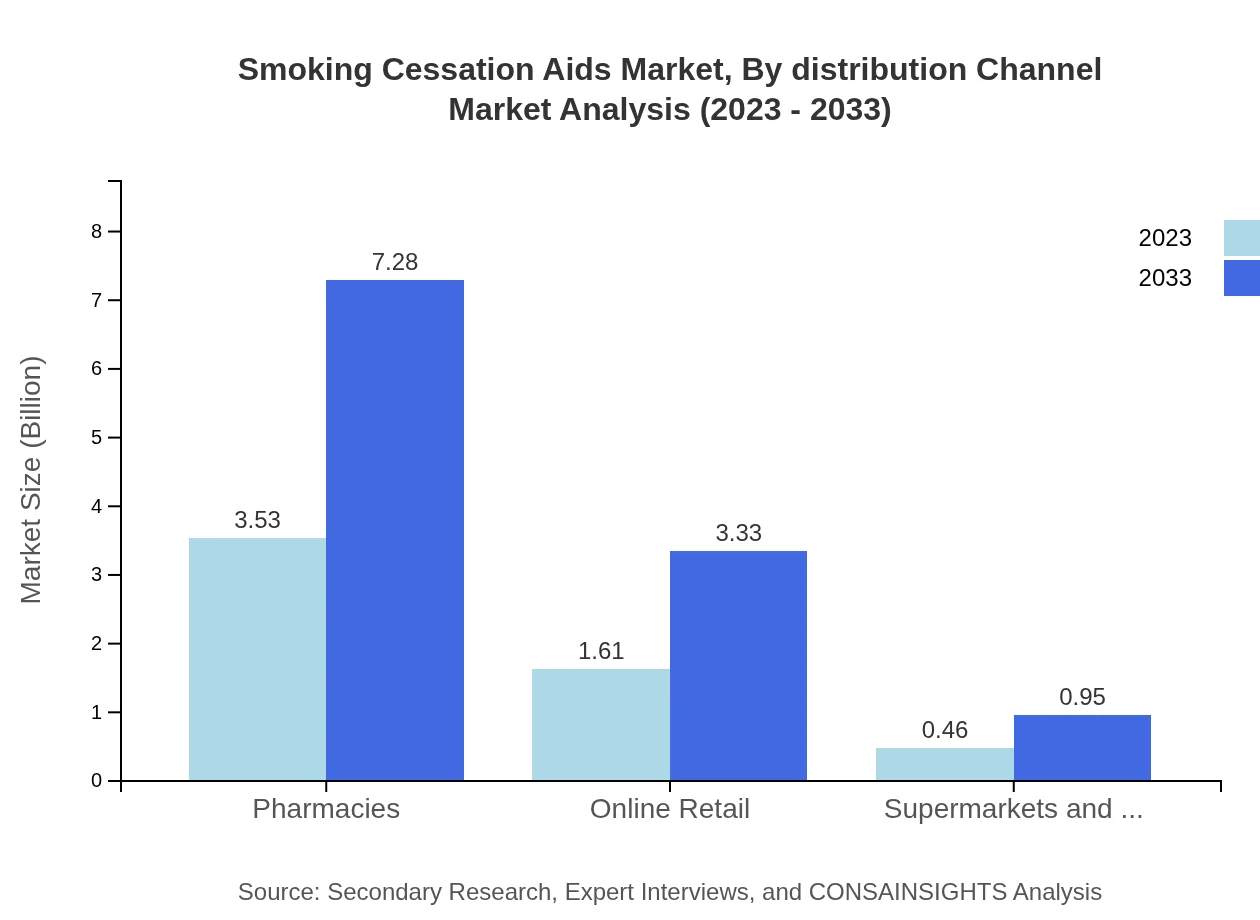
Pharmacies dominate the distribution channel, with a projected growth from $3.53 billion to $7.28 billion, representing a significant share. Online retail is also a growing channel, expected to rise from $1.61 billion to $3.33 billion, reflecting increased consumer preference for e-commerce solutions.
Smoking Cessation Aids Market Trends and Future Forecast
Tell us your focus area and get a customized research report.
Global Market Leaders and Top Companies in Smoking Cessation Aids Industry
Pfizer Inc.:
A leading pharmaceutical company, Pfizer is well-known for its effective smoking cessation drug Chantix, which has contributed significantly to the global market.GlaxoSmithKline:
GlaxoSmithKline manufactures several popular NRT products including nicotine patches and gums, maintaining a strong presence in the smoking cessation market.Johnson & Johnson:
With a diverse portfolio in health care products, Johnson & Johnson is involved in smoking cessation through its Nicorette brand, which includes lozenges and gums.Novartis:
Novartis offers quit-support products that align with modern consumer preferences, enhancing their market share in the smoking cessation aids sector.We're grateful to work with incredible clients.









FAQs
What is the market size of the Smoking Cessation Aids market in 2023?
The market size for 2023 is $5.60 Billion, as stated in the report.
How big will the market be in 2033?
By 2033 the market is projected to reach $11.56 Billion according to the provided forecast.
What is CAGR of the market for the forecast period?
The report specifies a compound annual growth rate (CAGR) of 7.3% for 2023 to 2033.
Is there a single fastest Growing region in the Smoking Cessation Aids Market Report market?
No single fastest-growing region is stated for the Smoking Cessation Aids Market Report market because the top regional implied CAGR values are within 0.15 percentage points of each other, making the ranking too close to call reliably.
Who are the top companies operating in this market?
Top companies listed include Pfizer Inc., GlaxoSmithKline, Johnson & Johnson, and Novartis.
What major product types are included in the market segmentation?
Product types specified are Nicotine Replacement Therapy (NRT), prescription medications, and non-pharmacological methods.
How are distribution channels categorized in the report?
Distribution channels include pharmacies, online retail, and supermarkets and hypermarkets as noted in the segmentation.
Why is the market expected to grow over the forecast period?
Growth is attributed to strengthened regulations, increased awareness of health risks, broader distribution, and continued product innovation.
What applications are covered in the segmentation?
Applications listed are hospitals, clinics, and online platforms as part of the market breakdown.
What target User groups are identified in the report?
Target-user categories include current smokers, former smokers, and non-smokers as listed in the input data.