

Angiography Equipment Market Report
First published: 21 October 2024 | Last updated: 25 May 2026 | Report Code: angiography-equipment
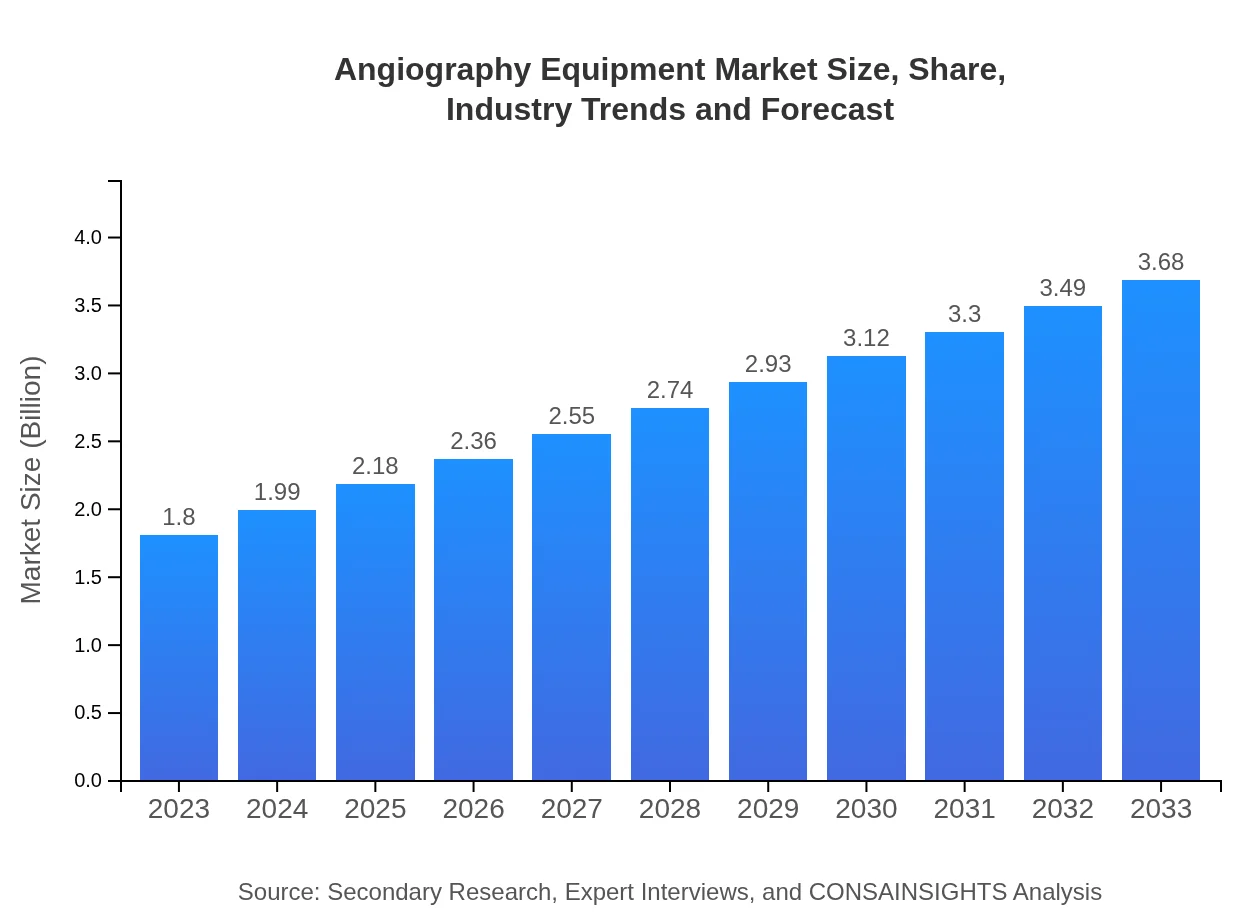
Angiography Equipment Market — USD $1.8 Billion in 2023, Growing to USD 3.68null by 2033 at 7.2% CAGR
This comprehensive market report on Angiography Equipment analyzes the current landscape, forecasts future growth, and presents insights into key product segments and regional performance from 2023 to 2033.
Key Takeaways
- Global market rises from $1.80 Billion in 2023 to $3.68 Billion in 2033 at a 7.2% CAGR, reflecting sustained investment in imaging technology.
- Europe is largest regional market, while no single fastest-growing region is stated because regional CAGR differences remain within 0.15 percentage points.
- North America grows from $0.60 Billion in 2023 to $1.23 Billion in 2033, driven by healthcare infrastructure and procedural demand.
- Asia Pacific advances from $0.34 Billion in 2023 to $0.70 Billion in 2033, supported by expanding care access and technology adoption.
- Primary vendors include Siemens Healthineers, Philips Healthcare, GE Healthcare, Canon Medical Systems and Medtronic, influencing product development and distribution.
Angiography Equipment Market Report — Executive Summary
Europe remains largest market by forecast-period value, while no single fastest-growing region is stated because top regional growth rates are separated by less than 0.15 percentage points. The angiography equipment market is propelled by rising demand for minimally invasive procedures, expanding healthcare infrastructure, and ongoing technological enhancements in imaging modalities. Market value increases from $1.80 Billion in 2023 to $3.68 Billion by 2033, at a 7.2% CAGR during the 2023 to 2033 period. European adoption remains notable, with Europe identified as the largest regional market. Product segmentation spans angiography systems, contrast media, and accessories, while end users include hospitals, diagnostic centers, research institutes and ambulatory surgical centers. Vendors focus on portability, hybrid operating room compatibility and advanced imaging technologies to address clinical needs. Regulatory complexity and system costs remain challenges, but investments in capital equipment and growing procedural volumes sustain demand. Major companies such as Siemens Healthineers, Philips Healthcare, GE Healthcare, Canon Medical Systems and Medtronic shape competitive dynamics through product rollouts and service offerings.
Key Growth Drivers
- Rising procedural volumes and preference for minimally invasive interventions increase demand for advanced angiography systems.
- Healthcare infrastructure expansion and capital investments in hospitals and diagnostic centers support equipment procurement.
- Technological progress in imaging modalities and hybrid operating room integration enhances clinical capabilities and drives upgrades.
- Growing prevalence of cardiovascular and vascular conditions raises requirement for diagnostic and interventional imaging solutions.
| Metric | Value |
|---|---|
| Study Period | 2023 - 2033 |
| 2023 Market Size | $1.80 Billion |
| CAGR (2023-2033) | 7.2% |
| 2033 Market Size | $3.68 Billion |
| Top Companies | Siemens Healthineers, Philips Healthcare, GE Healthcare, Canon Medical Systems, Medtronic |
| Published Date | 21 October 2024 |
| Last Modified Date | 25 May 2026 |
Angiography Equipment Market Overview
Customize Angiography Equipment Market Report market research report
- ✔ Get in-depth analysis of Angiography Equipment market size, growth, and forecasts.
- ✔ Understand Angiography Equipment's regional dynamics and industry-specific trends.
- ✔ Identify potential applications, end-user demand, and growth segments in Angiography Equipment
What is the Market Size & CAGR of Angiography Equipment Market Report market in 2023?
Angiography Equipment Industry Analysis
Angiography Equipment Market Segmentation and Scope
Tell us your focus area and get a customized research report.
Angiography Equipment Market Report Market Analysis Report by Region
Europe Angiography Equipment Market Report:
Europe is largest regional market, rising from $0.62 Billion in 2023 to $1.27 Billion in 2033. 62 Billion in 2023 to $1.27 Billion in 2033 and is the largest regional market. Adoption is driven by hospital upgrades, integration of hybrid suites and strong capital spending on diagnostic and interventional imaging equipment.Asia Pacific Angiography Equipment Market Report:
Asia Pacific grows from $0.34 Billion in 2023 to $0.7 Billion in 2033. Expansion reflects increased access to care, growing procedural demand and uptake of modern imaging technologies across emerging healthcare markets.North America Angiography Equipment Market Report:
North America grows from $0.6 Billion in 2023 to $1.23 Billion in 2033. Regional demand is influenced by established healthcare infrastructure, high procedural volumes and investment in advanced imaging systems that support interventional cardiology and vascular procedures.South America Angiography Equipment Market Report:
Latin America grows from $0.01 Billion in 2023 to $0.02 Billion in 2033. Market activity is shaped by gradual infrastructure improvements and selective investment in diagnostic and interventional imaging capabilities.Middle East & Africa Angiography Equipment Market Report:
Middle East and Africa grows from $0.25 Billion in 2023 to $0.51 Billion in 2033. Growth stems from expanding hospital capacity, targeted investments in imaging equipment and rising clinical demand for minimally invasive procedures.Tell us your focus area and get a customized research report.
Research Methodology
Angiography Equipment Market Analysis By Product
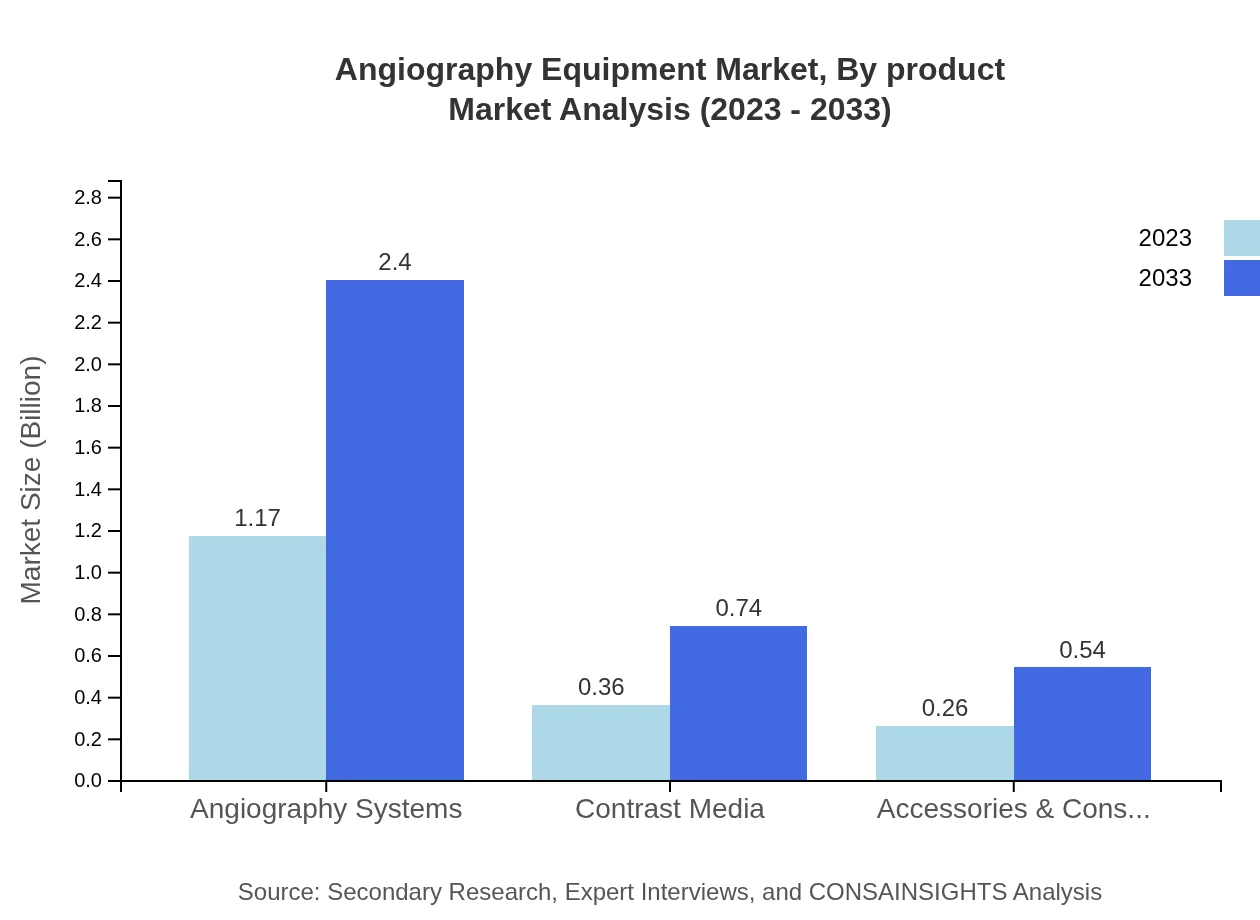
In terms of product segmentation, Angiography Systems dominate the market size, reaching $1.17 billion in 2023 and projected to grow to $2.40 billion by 2033. Contrast Media follows with a market size of $0.36 billion, expected to grow to $0.74 billion. Accessories & Consumables contribute significantly as well, approaching $0.26 billion in 2023 and $0.54 billion by 2033, supporting various angiography procedures.
Angiography Equipment Market Analysis By Application
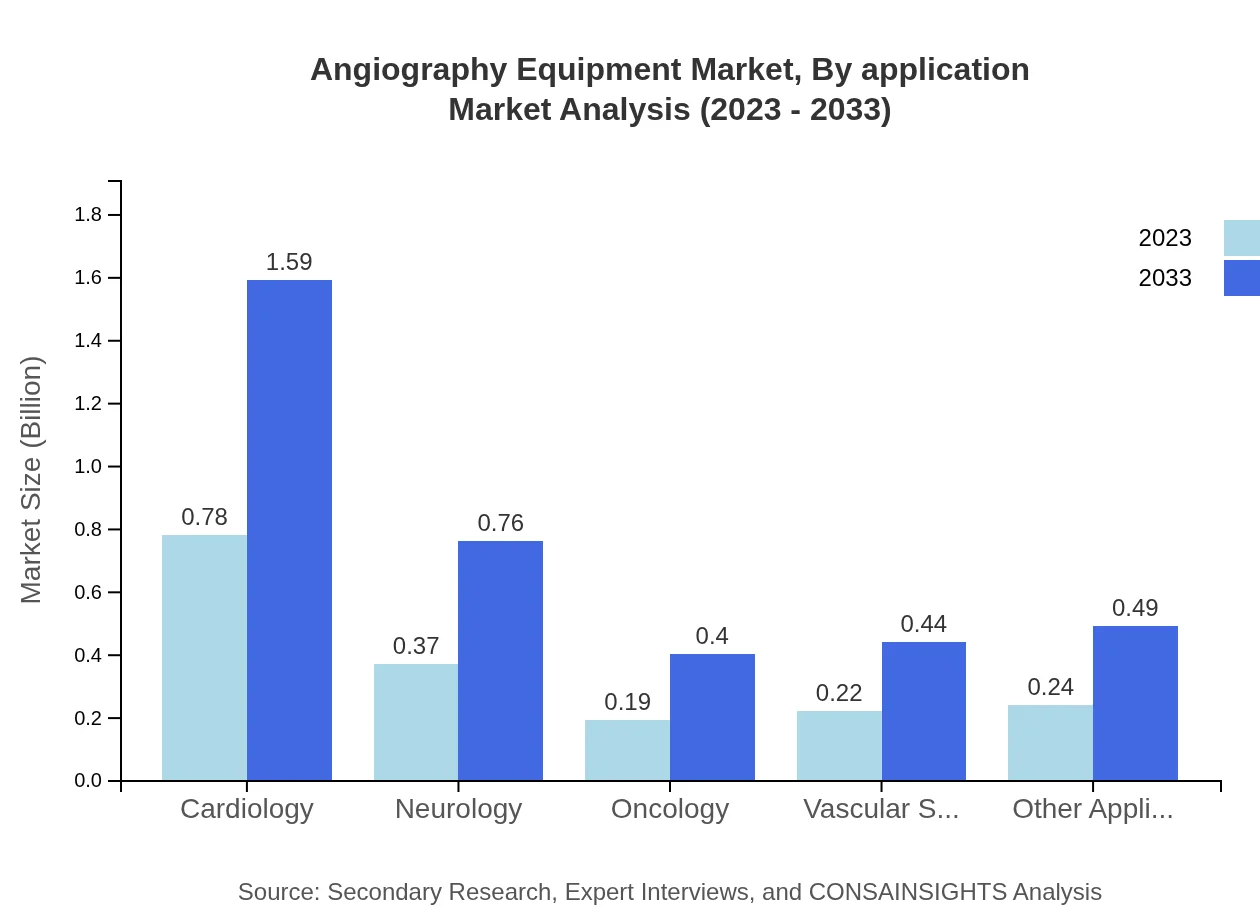
The application segment showcases the significance of cardiology, which leads with a market size of $0.78 billion in 2023, expected to grow to $1.59 billion. Neurology and oncology are also important, with sizes of $0.37 billion and $0.19 billion respectively in 2023. These applications highlight the crucial role of angiography in the treatment of various conditions.
Angiography Equipment Market Analysis By End User
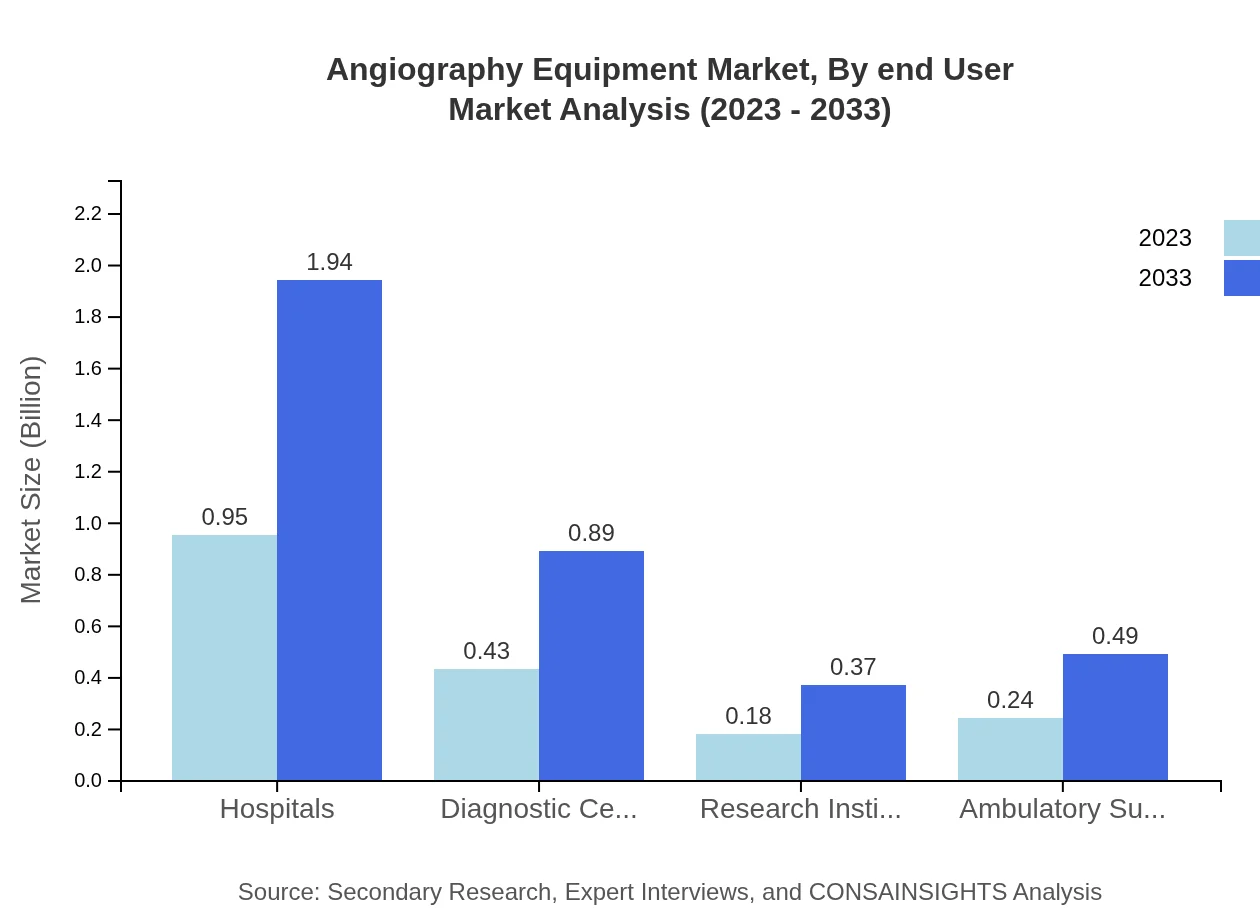
Hospitals dominate the end-user segment with a market size of $0.95 billion in 2023, projected to grow to $1.94 billion. Diagnostic Centers and Research Institutes also play a role, contributing significantly with $0.43 billion and $0.18 billion in 2023, supported by an increasing number of minimally invasive procedures across the healthcare sector.
Angiography Equipment Market Analysis By Technology
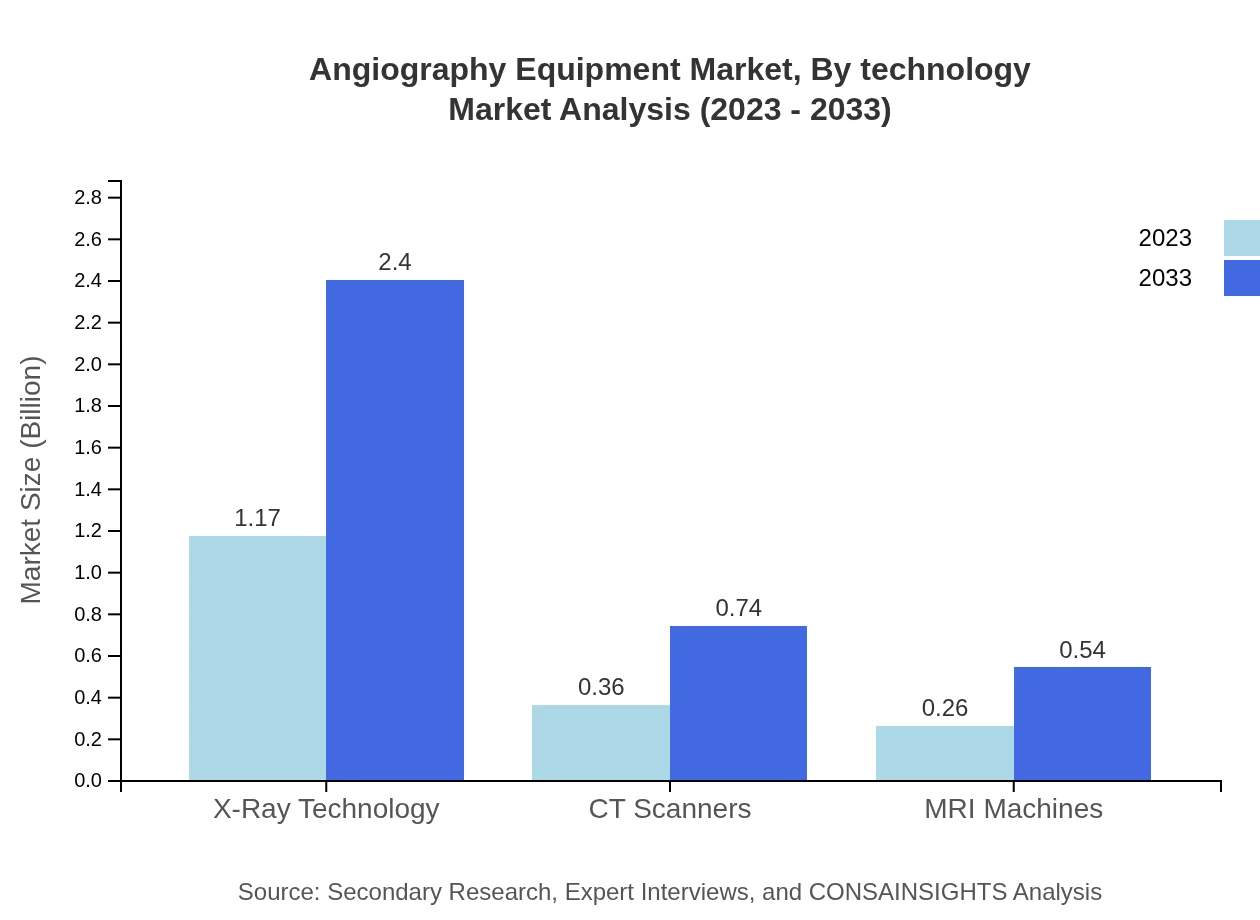
Technological advancements shape the Angiography Equipment market, with X-ray technology leading the segment at $1.17 billion in 2023, expected to reach $2.40 billion by 2033. CT Scanners and MRI Machines also contribute meaningfully, enhancing the diagnostic capabilities of angiography systems.
Angiography Equipment Market Analysis By Distribution Channel
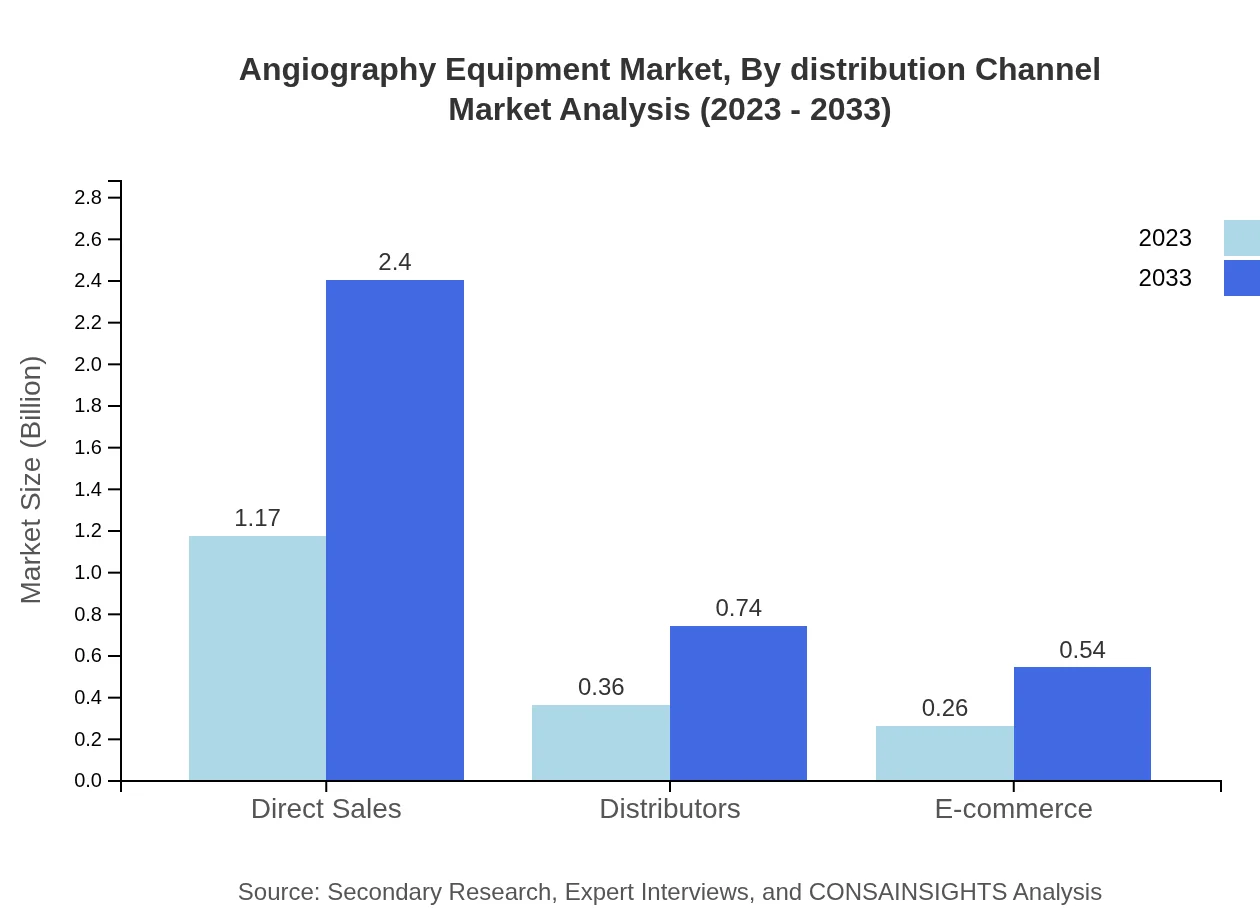
Regarding distribution channels, direct sales are prevalent, accounting for $1.17 billion in 2023, with growth expected to continue. Distributors and e-commerce channels are also vital, offering increasing accessibility to healthcare providers and supporting the market's overall expansion.
Angiography Equipment Market Trends and Future Forecast
Tell us your focus area and get a customized research report.
Global Market Leaders and Top Companies in Angiography Equipment Industry
Siemens Healthineers:
A leader in medical imaging technology, Siemens Healthineers focuses on innovation in imaging systems, enhancing diagnostic capabilities in angiography.Philips Healthcare:
Philips Healthcare is known for its advanced diagnostic imaging solutions, constantly pushing the boundaries of angiography technology with a focus on patient care.GE Healthcare:
GE Healthcare offers a diverse range of imaging solutions, leading the market with state-of-the-art angiography equipment that integrates advanced imaging techniques.Canon Medical Systems:
Canon Medical Systems specializes in high-quality imaging modalities and innovative technologies for diagnostic imaging in angiography.Medtronic :
Medtronic is a prominent player in cardiovascular therapies, offering products that enhance angiography procedures and overall patient outcomes.We're grateful to work with incredible clients.








FAQs
What is the market size of the angiography equipment market in 2023?
The market size in 2023 is $1.80 Billion, as reported for the global angiography equipment market for the base year.
How big will the market be in 2033?
The market is projected to reach $3.68 Billion in 2033 according to the forecast period figures provided.
What is CAGR for the forecast period?
The compounded annual growth rate for the 2023 to 2033 forecast period is 7.2% as specified in the data.
Is there a single fastest Growing region in the Angiography Equipment Market Report market?
No single fastest-growing region is stated for the Angiography Equipment Market Report market because the top regional implied CAGR values are within 0.15 percentage points of each other, making the ranking too close to call reliably.
Who are the top companies in the market?
Top companies listed include Siemens Healthineers, Philips Healthcare, GE Healthcare, Canon Medical Systems and Medtronic.
What are the main product segments covered?
Key product segments include angiography systems, contrast media, and accessories & consumables as specified in the segmentation facts.
Why is demand increasing for angiography equipment?
Demand rises due to investment in healthcare infrastructure, increased minimally invasive procedures and technological advances in imaging modalities.
Which end users purchase angiography equipment?
Primary end users include hospitals, diagnostic centers, research institutes and ambulatory surgical centers as listed in the report facts.
What is the regional growth in North America?
North America grows from $0.60 Billion in 2023 to $1.23 Billion in 2033 based on the region facts provided.
How significant is Asia Pacific growth?
Asia Pacific expands from $0.34 Billion in 2023 to $0.70 Billion in 2033 according to the supplied regional data.