

Aquaculture Vaccine Market Report
First published: 12 October 2024 | Last updated: 28 May 2026 | Report Code: aquaculture-vaccine
Aquaculture Vaccine Market — USD $1.8 Billion in 2023, Growing to USD 3.37null by 2033 at 6.3% CAGR
This report explores the Aquaculture Vaccine market, analyzing key insights from 2023 to 2033. It covers market size, trends, regional insights, technological advancements, and competitive landscape to provide a comprehensive overview of the industry's growth trajectory.
Key Takeaways
- Global market expands from $1.80 Billion (2023) to $3.37 Billion (2033) at a 6.3% CAGR.
- North America is largest regional market; Middle East and Africa is regional market region based on implied CAGR across 2023 to 2033.
- Middle East and Africa is identified as the regional market region, rising from $0.05 Billion in 2023 to $0.1 Billion in 2033.
- Top industry players include Zoetis Inc., Elanco Animal Health, Merck Animal Health, and Vetagro.
- Advances in vaccine technologies and rising aquaculture production underpin market expansion.
Aquaculture Vaccine Market Report — Executive Summary
Regional analysis shows North America as largest market and Middle East and Africa as fastest-growing region by implied CAGR. The report examines market expansion driven by broader aquaculture production, heightened disease management needs, and innovations in vaccine development. Rising awareness among producers and advances in biotechnology support adoption across fish, crustacean and mollusk segments. Regional trends show North America holding the largest share by end-period value, while Middle East and Africa posts the highest implied growth. Coverage addresses vaccine types, administration routes, distribution channels and species-specific demand. The competitive overview highlights Zoetis Inc., Elanco Animal Health, Merck Animal Health and Vetagro, and discusses regulatory and sustainability pressures that influence research investments and product launches.
Key Growth Drivers
- Increasing aquaculture production and demand for seafood protein, prompting preventive health measures.
- Greater awareness among producers of vaccination benefits to reduce disease-related losses.
- Biotech advances enabling new vaccine platforms and improved efficacy for target species.
- Regulatory emphasis on sustainable disease control encouraging R&D investment and product approvals.
- Shift toward environmentally conscious production methods that favor vaccination over chemical controls.
| Metric | Value |
|---|---|
| Study Period | 2023 - 2033 |
| 2023 Market Size | $1.80 Billion |
| CAGR (2023-2033) | 6.3% |
| 2033 Market Size | $3.37 Billion |
| Top Companies | Zoetis Inc., Elanco Animal Health, Merck Animal Health, Vetagro |
| Published Date | 12 October 2024 |
| Last Modified Date | 28 May 2026 |
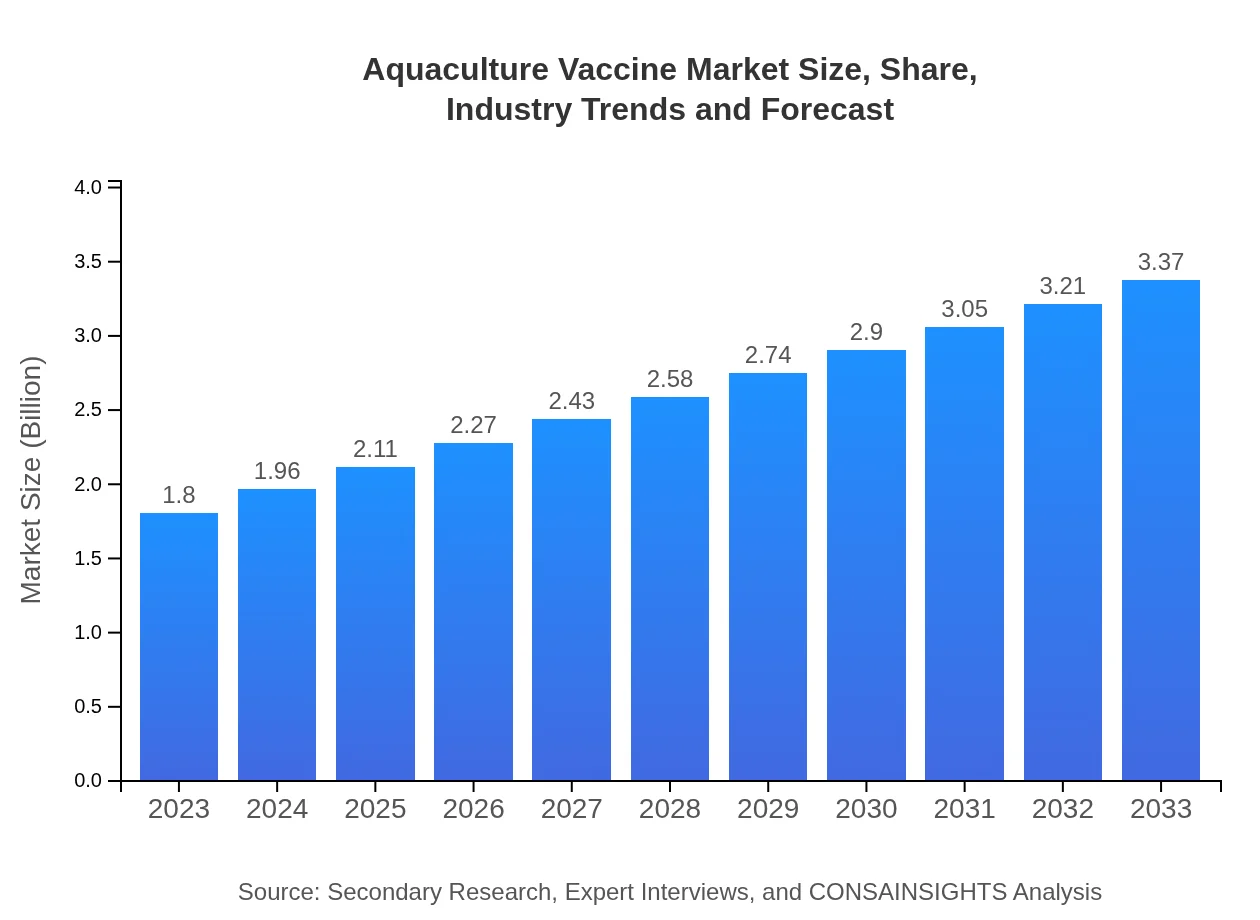
Aquaculture Vaccine Market Overview
Customize Aquaculture Vaccine Market Report market research report
- ✔ Get in-depth analysis of Aquaculture Vaccine market size, growth, and forecasts.
- ✔ Understand Aquaculture Vaccine's regional dynamics and industry-specific trends.
- ✔ Identify potential applications, end-user demand, and growth segments in Aquaculture Vaccine
What is the Market Size & CAGR of Aquaculture Vaccine Market Report market in 2023?
Aquaculture Vaccine Industry Analysis
Aquaculture Vaccine Market Segmentation and Scope
Tell us your focus area and get a customized research report.
Aquaculture Vaccine Market Report Market Analysis Report by Region
Europe Aquaculture Vaccine Market Report:
Europe grows from $0.56 Billion in 2023 to $1.06 Billion in 2033. Regional progress reflects strong regulatory focus on sustainable aquaculture, adoption of vaccine technologies and ongoing research collaborations that support disease control strategies.Asia Pacific Aquaculture Vaccine Market Report:
Asia Pacific grows from $0.34 Billion in 2023 to $0.63 Billion in 2033. Growth here is linked to rising aquaculture production volumes, greater uptake of vaccination to reduce losses, and technological adoption in high-density farming systems.North America Aquaculture Vaccine Market Report:
North America is largest regional market, rising from $0.67 Billion in 2023 to $1.25 Billion in 2033. This region is identified as the largest by end-period value, driven by established aquaculture operations, investment in animal health solutions, and demand for preventive measures to protect commercial stocks.South America Aquaculture Vaccine Market Report:
Latin America grows from $0.18 Billion in 2023 to $0.33 Billion in 2033. Expansion is associated with expanding fish farming activities, increased producer awareness of vaccination benefits, and gradual adoption of structured health-management practices.Middle East & Africa Aquaculture Vaccine Market Report:
Middle East and Africa is fastest-growing region by implied CAGR, increasing from $0.05 Billion in 2023 to $0.1 Billion in 2033. Identified as the regional growth market at an implied 7.18% CAGR, growth is supported by emerging aquaculture initiatives, investments in disease prevention and increasing focus on sustainable seafood production.Tell us your focus area and get a customized research report.
Research Methodology
Aquaculture Vaccine Market Analysis By Species
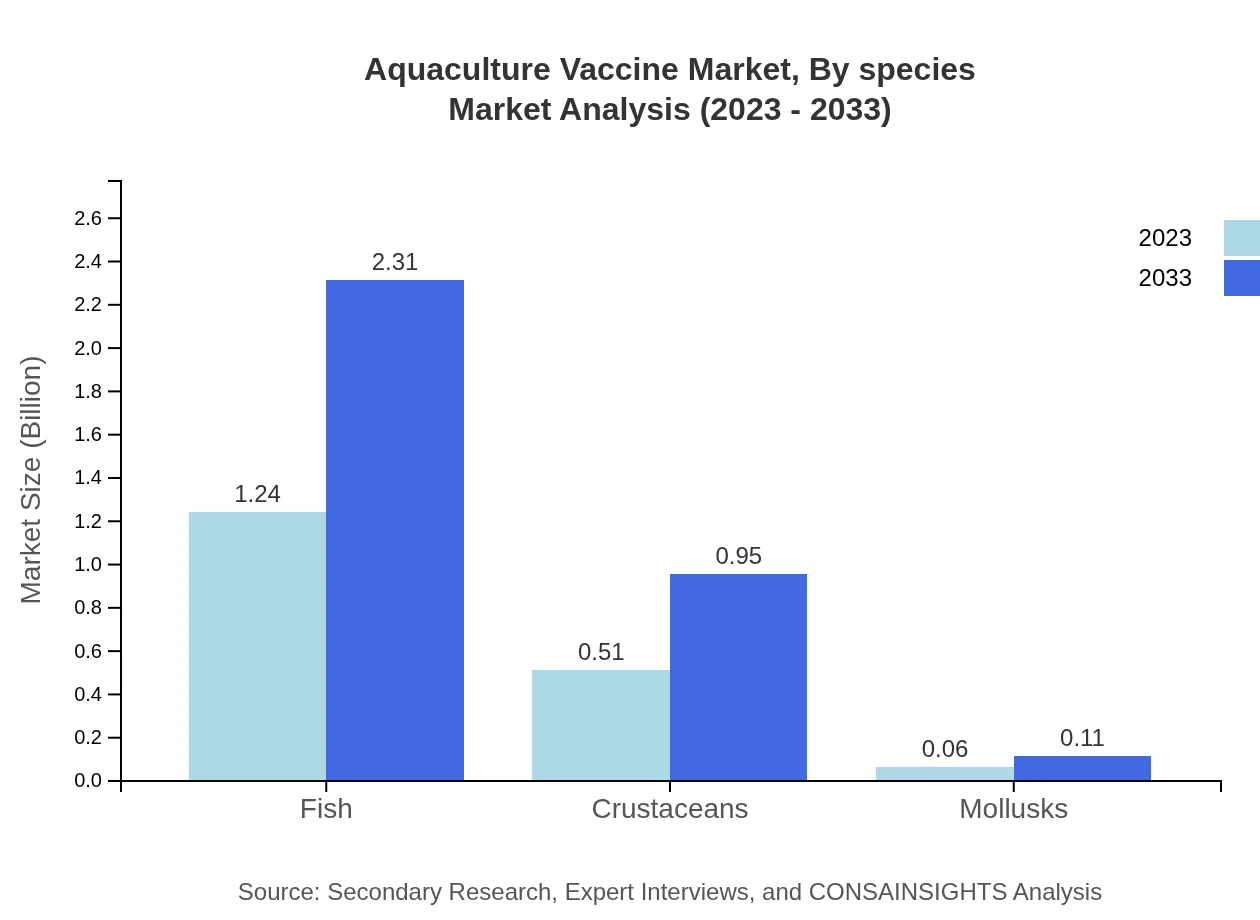
In 2023, the fish segment leads the market with a size of $1.24 billion and is expected to grow to $2.31 billion by 2033, holding a constant market share of 68.66%. Crustaceans and mollusks also show growth, projected to reach $0.95 billion and $0.11 billion respectively by 2033, but fish species remain dominant due to higher production levels.
Aquaculture Vaccine Market Analysis By Vaccine Type
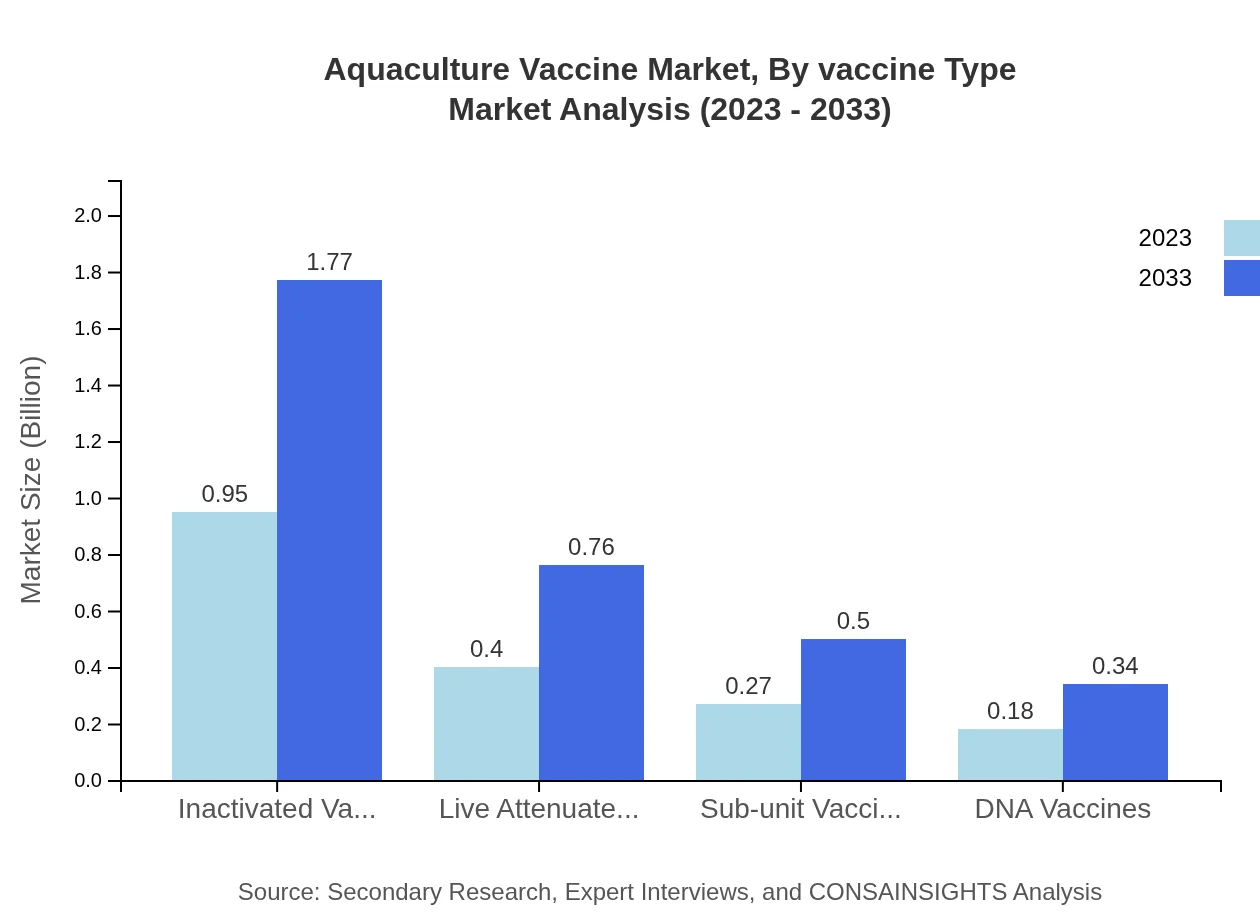
Inactivated vaccines comprise the largest segment in the aquaculture vaccine market, growing from $0.95 billion in 2023 to $1.77 billion by 2033, maintaining a share of 52.64%. Live attenuated vaccines follow, with a projected increase from $0.40 billion to $0.76 billion by 2033, reflecting a growing trend for innovative delivery methods in vaccine types.
Aquaculture Vaccine Market Analysis By Administration Route
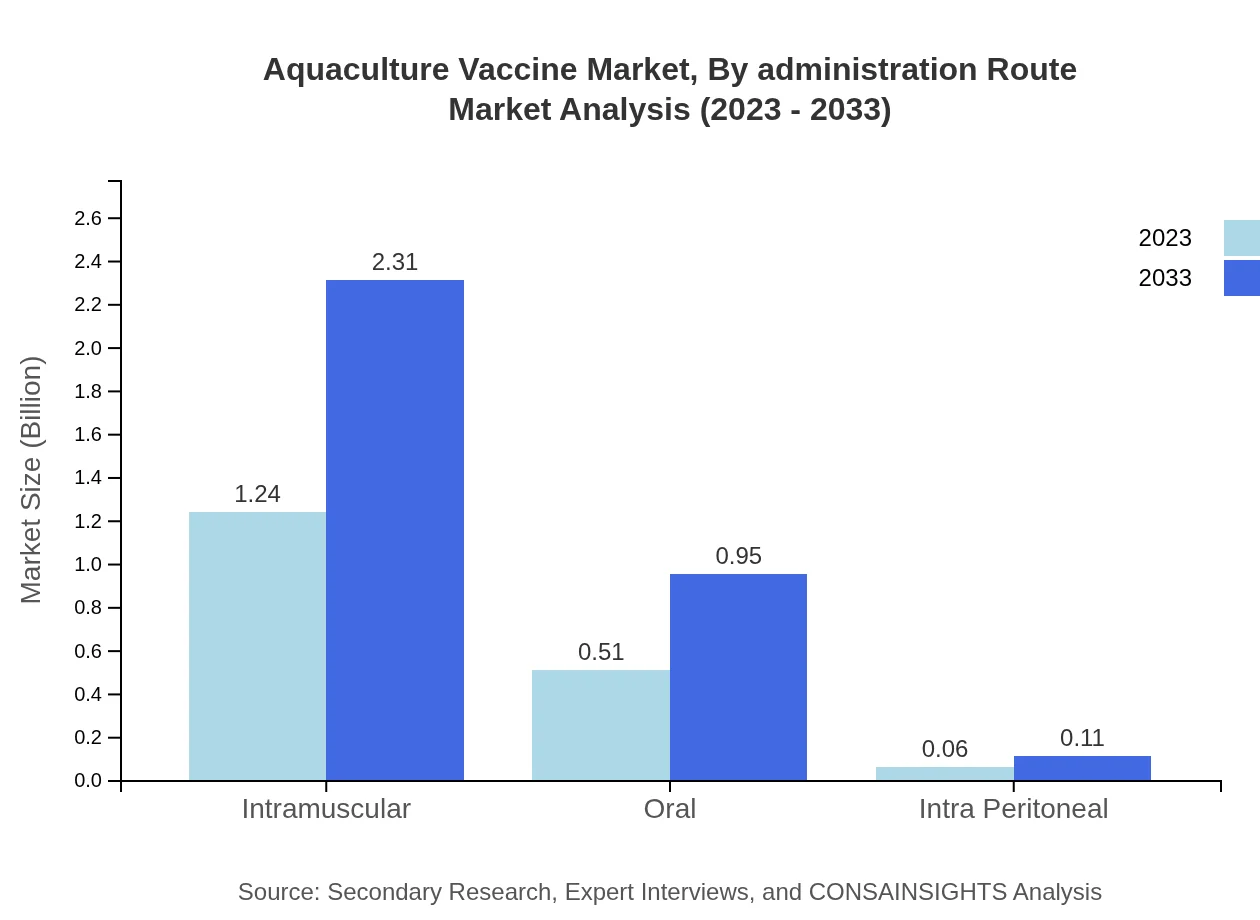
Intramuscular administration dominates the market with a size of $1.24 billion in 2023, expected to reach $2.31 billion by 2033, sustaining a stable market share of 68.66%. Oral and intra-peritoneal methods also grow but represent smaller shares.
Aquaculture Vaccine Market Analysis By Distribution Channel
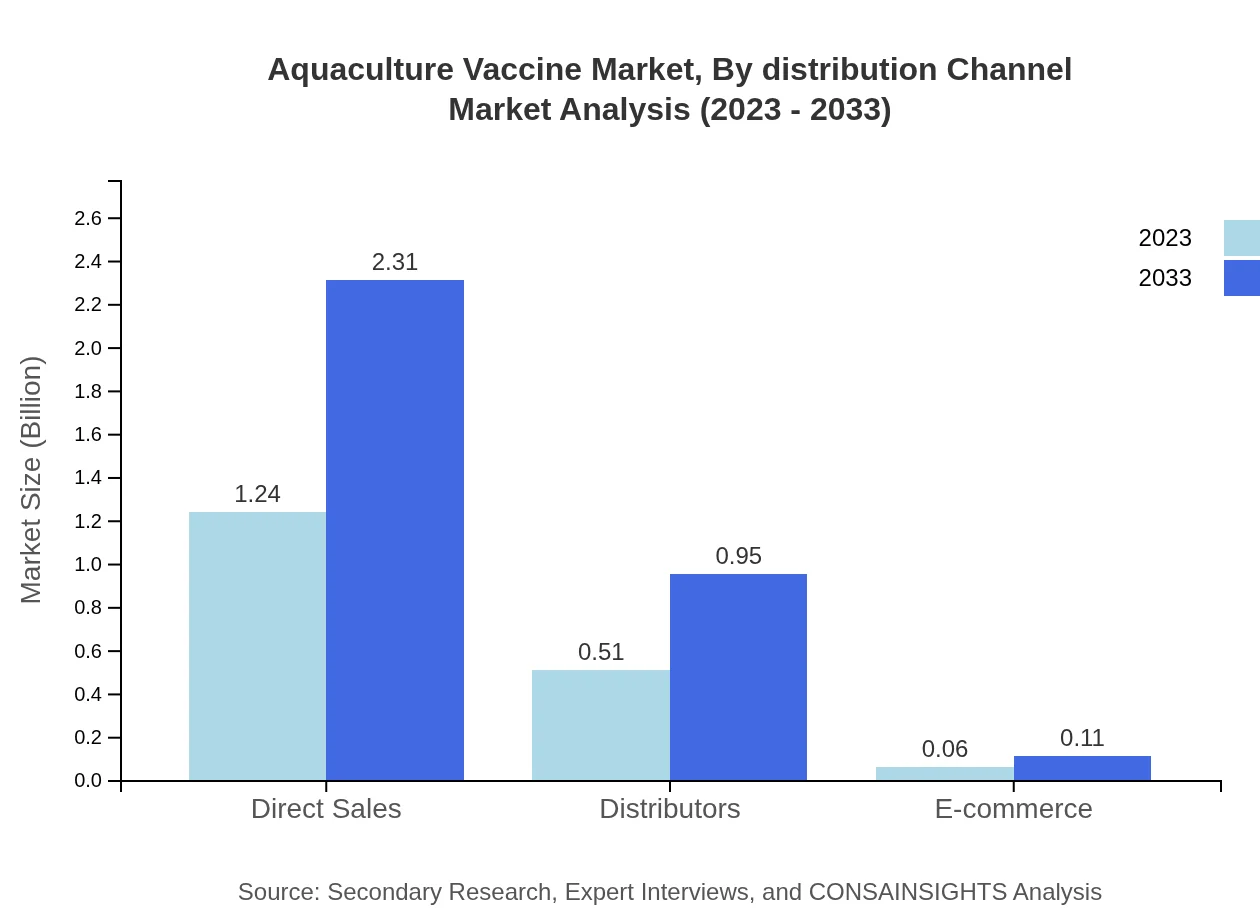
Direct sales hold the majority market share with $1.24 billion in 2023, growing to $2.31 billion by 2033 at a steady share of 68.66%. This is followed by distributors and e-commerce platforms, indicating the increasing diversity in distribution channels as aquaculture producers seek accessible vaccine solutions.
Aquaculture Vaccine Market Trends and Future Forecast
Tell us your focus area and get a customized research report.
Global Market Leaders and Top Companies in Aquaculture Vaccine Industry
Zoetis Inc.:
A leading provider of aquaculture health products, Zoetis develops vaccines that promote fish health management and disease prevention.Elanco Animal Health:
Elanco specializes in animal health products, including aquaculture vaccines aimed at improving the welfare of aquatic species.Merck Animal Health:
Merck offers a range of aquatic vaccines and therapies, recognized for their innovative approaches to fish health.Vetagro:
Vetagro specializes in fish vaccination technology with a focus on sustainable aquaculture solutions and advanced vaccine development.We're grateful to work with incredible clients.









FAQs
What is the market size of the aquaculture vaccine market in 2023?
The market size for 2023 is $1.80 Billion, as reported. This figure represents the global value at the start of the forecast period.
How big will the market be in 2033?
The market is projected to reach $3.37 Billion in 2033, reflecting the end value used in the forecast period data.
What is CAGR of the market for 2023 to 2033?
The compound annual growth rate for the forecast period 2023 to 2033 is 6.3% as provided in the report data.
Which region is the fastest Growing in the Aquaculture Vaccine Market Report market?
Middle East and Africa is the fastest-growing region, projected to expand from $0.05 Billion in 2023 to $0.1 Billion in 2033, reflecting an implied 7.18% CAGR over the forecast period.
Which region is fastest Growing?
Middle East and Africa is listed as the regional market region, increasing from $0.05 Billion in 2023 to $0.1 Billion in 2033 at an implied 7.18% CAGR.
Who are the leading companies in the market?
Top companies named in the report include Zoetis Inc., Elanco Animal Health, Merck Animal Health and Vetagro, representing significant industry participants.
What are common vaccine administration routes reported?
Reported administration routes include Intramuscular, Oral and Intra Peritoneal, reflecting the main delivery methods used across species and production systems.
Which vaccine types are covered in the segmentation?
Segmentation lists Inactivated Vaccines, Live Attenuated Vaccines, Sub-unit Vaccines and DNA Vaccines as the primary vaccine-type categories.
How are distribution channels categorized?
Distribution channels include Direct Sales, Distributors and E-commerce, indicating the principal pathways for supplying aquaculture vaccines.