
Reports >
Life Sciences
>
Auto Injectors Market Report

Auto Injectors Market Report
First published: 11 October 2024 | Last updated: 24 June 2026 | Report Code: auto-injectors
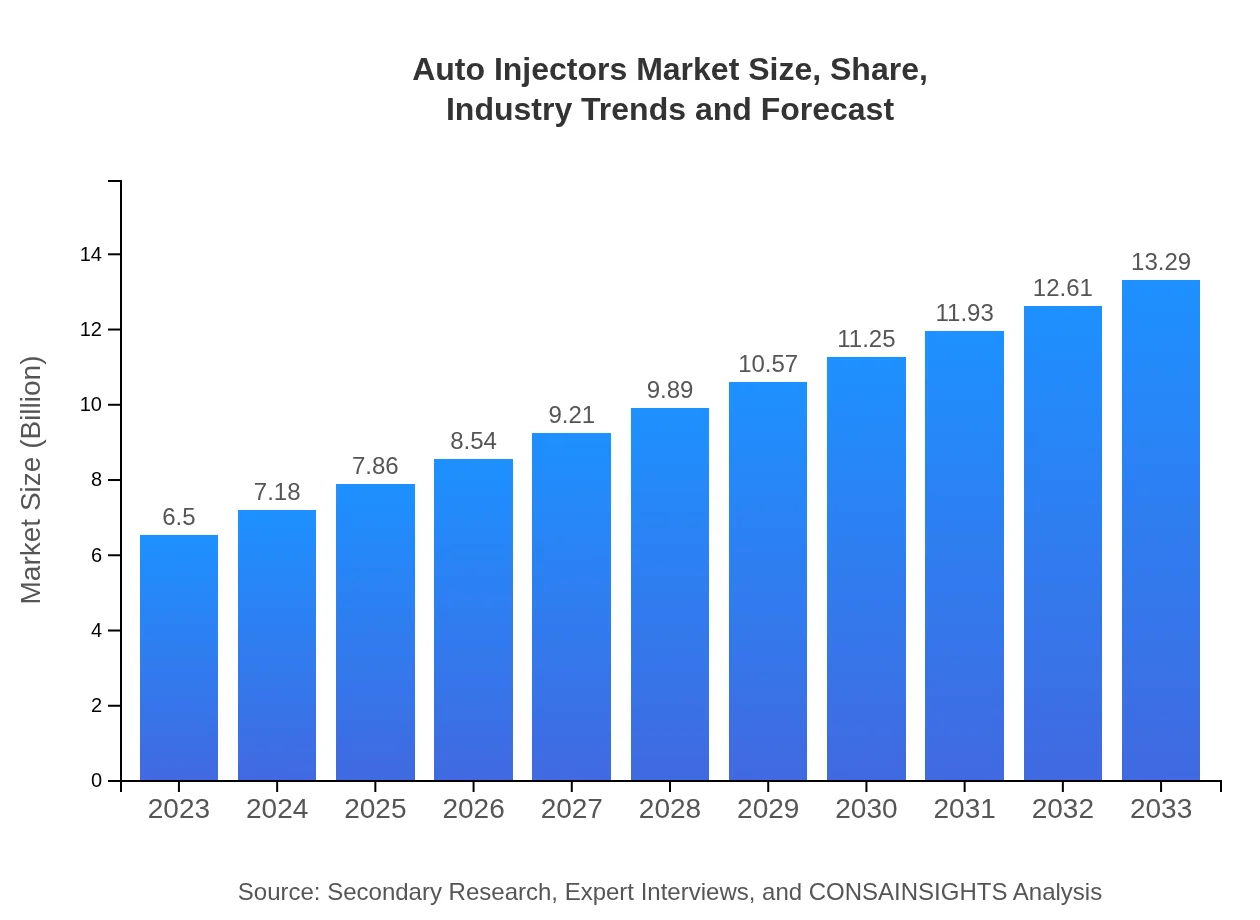
Auto Injectors Market — USD $6.5 Billion in 2023, Growing to USD 13.29null by 2033 at 7.2% CAGR
This report provides detailed insights into the Auto Injectors market, focusing on market size, analysis, trends, and forecasts from 2023 to 2033. It includes relevant data on segmentation, regional analysis, and challenges ahead for the industry.
Key Takeaways
- Global market value increases from $6.50 Billion in 2023 to $13.29 Billion in 2033 at a 7.2% CAGR during 2023 to 2033.
- North America is largest regional market, while no single fastest-growing region is stated because regional CAGR differences remain within 0.15 percentage points.
- North America is the largest region, expanding from $2.15 Billion in 2023 to $4.39 Billion in 2033.
- Europe grows from $1.85 Billion in 2023 to $3.78 Billion in 2033, reflecting rising demand for chronic disease self-care.
- Smart and electronic auto-injector development and patient self-administration drive product innovation and adoption.
- Key players include Mylan N.V., Amgen Inc., AbbVie Inc., Becton, Dickinson and Company (BD), and Sanofi.
Auto Injectors Market Report — Executive Summary
North America remains largest market by forecast-period value, while no single fastest-growing region is stated because top regional growth rates are separated by less than 0.15 percentage points. This report outlines market dynamics for auto injectors driven by patient preference for self-administration, technological advances, and increasing treatment rates for chronic and acute conditions. The market is valued at $6.50 Billion in 2023 and is forecast to reach $13.29 Billion by 2033, representing a 7.2% CAGR during 2023 to 2033. Product innovation—particularly mechanical, electronic, and smart auto-injectors—plus expanding use across hospitals, clinics, home care, and pharmacies shape demand. Regional patterns show North America as the largest market. Competitive activity centers on R&D, connected-device features, and strategic partnerships among established life-sciences firms such as Mylan N.V., Amgen Inc., AbbVie Inc., Becton, Dickinson and Company (BD), and Sanofi. Regulatory considerations and cost pressures remain constraints, while usability and digital integration create opportunities for market participants focused on adherence and remote monitoring.
Key Growth Drivers
- Rising preference for self-administration and home care boosts demand for user-friendly auto-injectors.
- Advances in electronic and smart auto-injector technologies enhance adherence, tracking, and connectivity features.
- Growing prevalence of chronic conditions and need for rapid treatment, including diabetes and autoimmune disorders.
- Expansion of distribution channels such as pharmacies, hospital distribution, online retail, and direct sales increases access.
- Ongoing product innovation and regulatory approvals support new device introductions and broader clinical use.
| Metric | Value |
|---|---|
| Study Period | 2023 - 2033 |
| 2023 Market Size | $6.50 Billion |
| CAGR (2023-2033) | 7.2% |
| 2033 Market Size | $13.29 Billion |
| Top Companies | Mylan N.V., Amgen Inc., AbbVie Inc., Becton, Dickinson and Company (BD), Sanofi |
| Published Date | 11 October 2024 |
| Last Modified Date | 24 June 2026 |
Auto Injectors Market Overview
Customize Auto Injectors Market Report market research report
- ✔ Get in-depth analysis of Auto Injectors market size, growth, and forecasts.
- ✔ Understand Auto Injectors's regional dynamics and industry-specific trends.
- ✔ Identify potential applications, end-user demand, and growth segments in Auto Injectors
What is the Market Size & CAGR of Auto Injectors Market Report market in 2023?
Auto Injectors Industry Analysis
Auto Injectors Market Segmentation and Scope
Tell us your focus area and get a customized research report.
Auto Injectors Market Report Market Analysis Report by Region
Europe Auto Injectors Market Report:
Europe grows from $1.85 Billion in 2023 to $3.78 Billion in 2033. Market growth reflects increasing chronic disease management, regulatory approvals for new devices, and growing acceptance of self-administration in clinical pathways.Asia Pacific Auto Injectors Market Report:
Asia Pacific grows from $1.3 Billion in 2023 to $2.65 Billion in 2033. Rising healthcare investment, expanding access to treatment, and greater awareness of self-injection options support regional demand.North America Auto Injectors Market Report:
North America is largest regional market, rising from $2.15 Billion in 2023 to $4.39 Billion in 2033. Adoption is driven by strong uptake of advanced devices, established healthcare infrastructure, and higher patient use of self-injection therapies.South America Auto Injectors Market Report:
Latin America grows from $0.47 Billion in 2023 to $0.96 Billion in 2033. Market gains are supported by gradual improvements in healthcare delivery and wider availability of distribution channels such as pharmacies and hospital networks.Middle East & Africa Auto Injectors Market Report:
Middle East and Africa grows from $0.74 Billion in 2023 to $1.52 Billion in 2033. Growth is influenced by expanding healthcare infrastructure, higher adoption of chronic disease therapies, and improved access to medical devices.Tell us your focus area and get a customized research report.
Research Methodology
Auto Injectors Market Analysis By Product Type
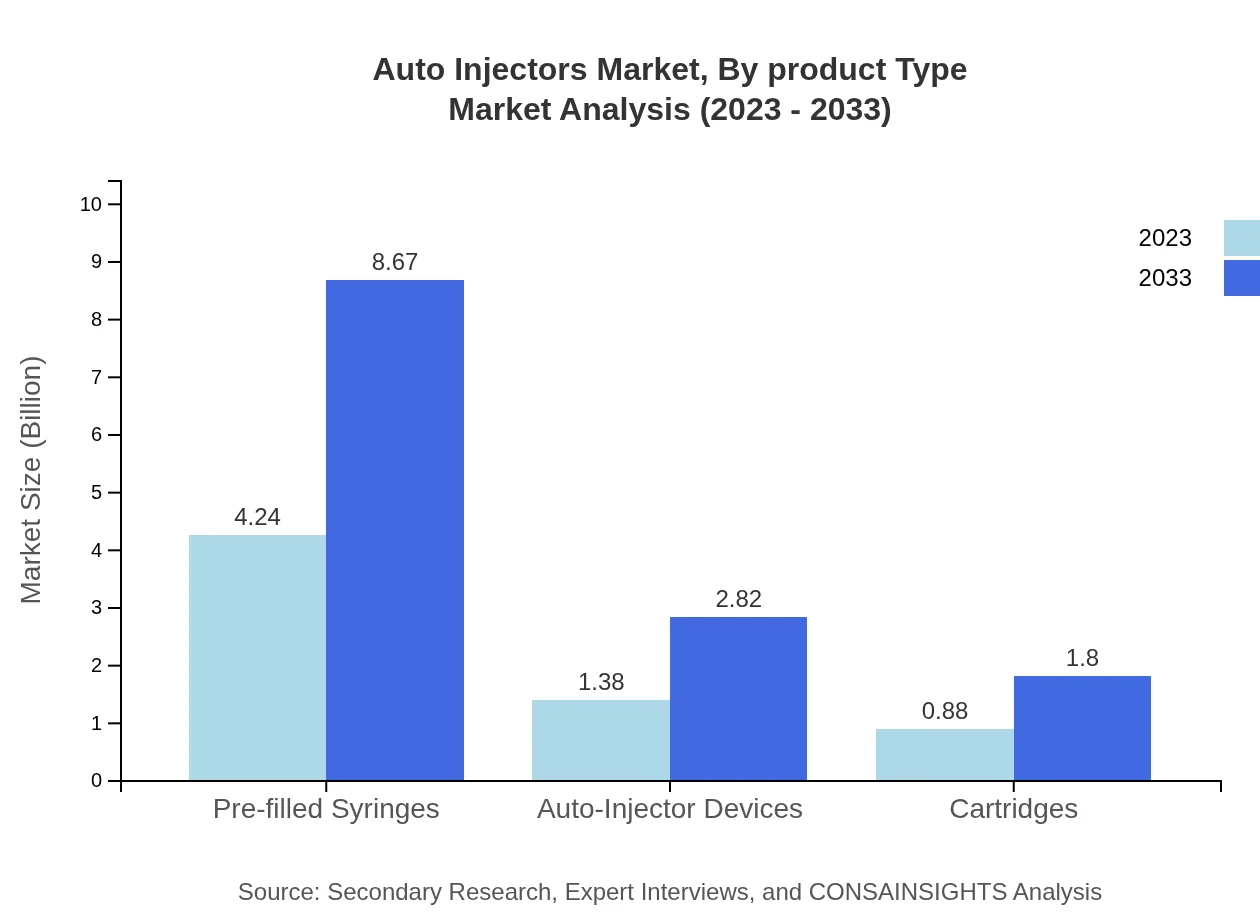
The Auto Injectors market is predominantly represented by Mechanical Technology, which holds a major share with a market size of $4.24 billion projected for 2023, increasing to $8.67 billion by 2033. Electronic Technology and Smart Auto-Injectors also contribute significantly, catering to a growing preference for user-friendly and connected devices.
Auto Injectors Market Analysis By Therapeutic Area
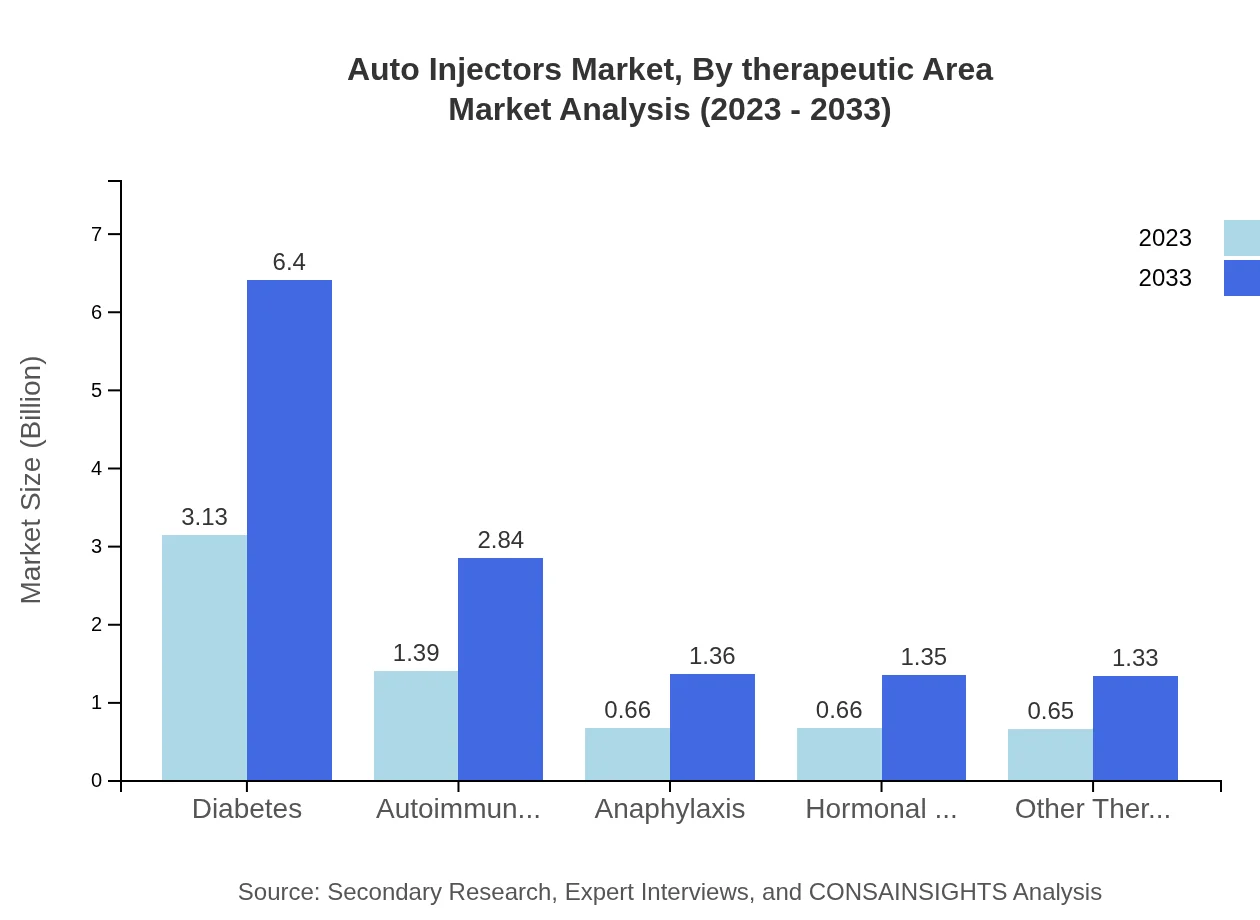
Diabetes remains the most significant therapeutic area for auto injectors, commanding the largest share at 48.17% in 2023. Projections suggest the market for diabetes auto injectors will double by 2033, currently pegged at $3.13 billion and rising to $6.40 billion.
Auto Injectors Market Analysis By End User
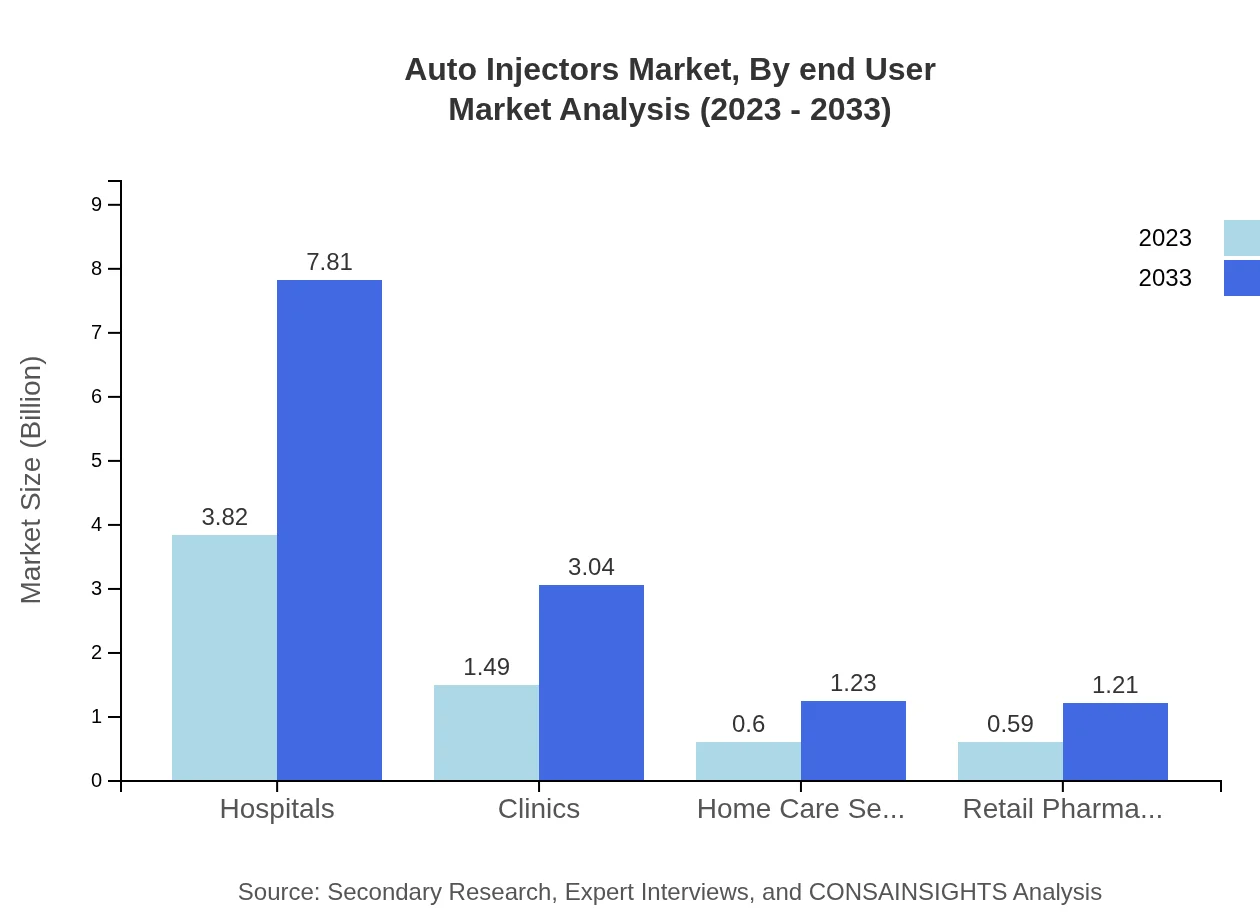
Hospitals dominate the end-user segment, accounting for a significant market share in 2023 at 58.78% ($3.82 billion), with growth expected to continue through 2033 as patient care dynamics evolve. Home care settings are also seeing a notable increase in market share due to the demand for at-home treatment options.
Auto Injectors Market Analysis By Distribution Channel
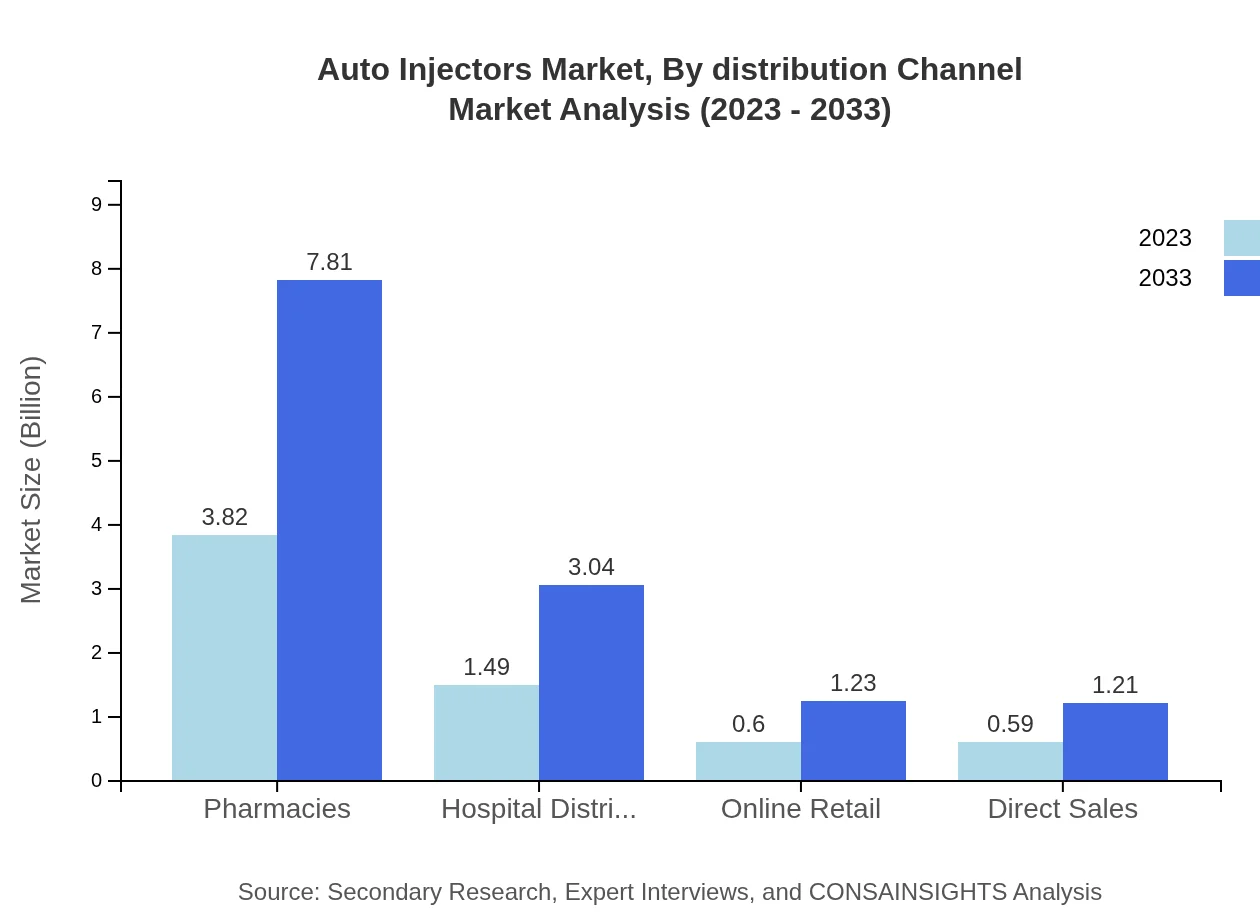
Pharmacies remain the primary distribution channel, with a share of 58.78% in 2023 and expected to maintain prominence due to their accessibility. However, online retail is rapidly gaining traction as healthcare providers embrace digital transformation.
Auto Injectors Market Analysis By Technology
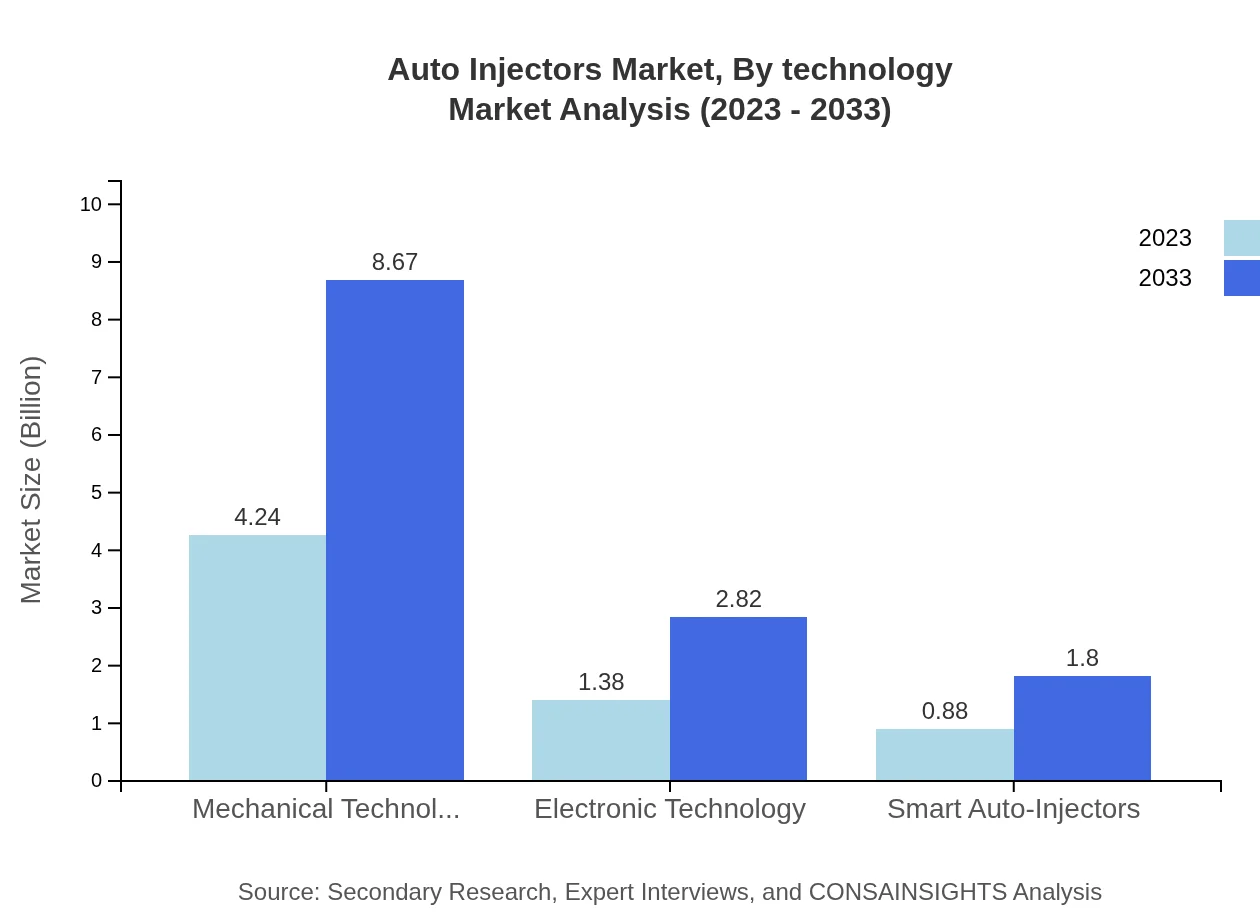
Mechanical technology continues to dominate market preferences with a share of 65.24%, while Electronic technologies and Smart Auto-Injectors are also experiencing increased adoption as healthcare becomes more technology-driven, with projected growth in these segments.
Auto Injectors Market Trends and Future Forecast
Tell us your focus area and get a customized research report.
Global Market Leaders and Top Companies in Auto Injectors Industry
Mylan N.V.:
Known for its EpiPen auto-injector, Mylan leads the industry with extensive offerings in generic and specialty pharmaceuticals, enhancing access to life-saving medications.Amgen Inc.:
Amgen supports personalized medicine and aims to improve patient outcomes through innovative auto-injector systems for biologically-based therapies.AbbVie Inc.:
AbbVie’s auto-injectors for therapies targeting autoimmune conditions and chronic diseases highlight their commitment to advanced healthcare solutions and patient-centric designs.Becton, Dickinson and Company (BD):
BD is a key player in the device space and focuses on the development of injectable drug delivery systems, providing medical practices with high-quality auto injectors.Sanofi:
Sanofi is known for its development of patient-friendly auto-injectors and has a significant presence in the allergy treatment market, creating solutions for acute allergic reactions.We're grateful to work with incredible clients.



FAQs
What is the current market size of the auto injectors industry?
The global market size for auto injectors was $6.50 Billion in 2023, as reported for the 2023 baseline year of the forecast.
How big will the auto injectors market be by 2033?
The market is projected to reach $13.29 Billion by 2033 according to the forecast data provided for the 2023 to 2033 period.
What is CAGR for the forecast period?
The reported compound annual growth rate (CAGR) for the auto injectors market is 7.2% for the 2023 to 2033 forecast window.
Is there a single fastest Growing region in the Auto Injectors Market Report market?
No single fastest-growing region is stated for the Auto Injectors Market Report market because the top regional implied CAGR values are within 0.15 percentage points of each other, making the ranking too close to call reliably.
Which companies are named as key players?
Top companies listed in the report include Mylan N.V., Amgen Inc., AbbVie Inc., Becton, Dickinson and Company (BD), and Sanofi.
What are primary technology sub Segments covered?
The report identifies Mechanical Technology, Electronic Technology, and Smart Auto-Injectors as the main technology sub-segments in the market.
How are distribution channels structured in the report?
Distribution channels are categorized as Pharmacies, Hospital Distribution, Online Retail, and Direct Sales to reflect points of patient access and supply.
What research methods supported the report findings?
Research combined primary interviews with industry experts and secondary sources like company reports, plus data triangulation and internal validation led by subject experts.