

Back End Revenue Cycle Management Market Report
First published: 11 October 2024 | Last updated: 25 May 2026 | Report Code: back-end-revenue-cycle-management
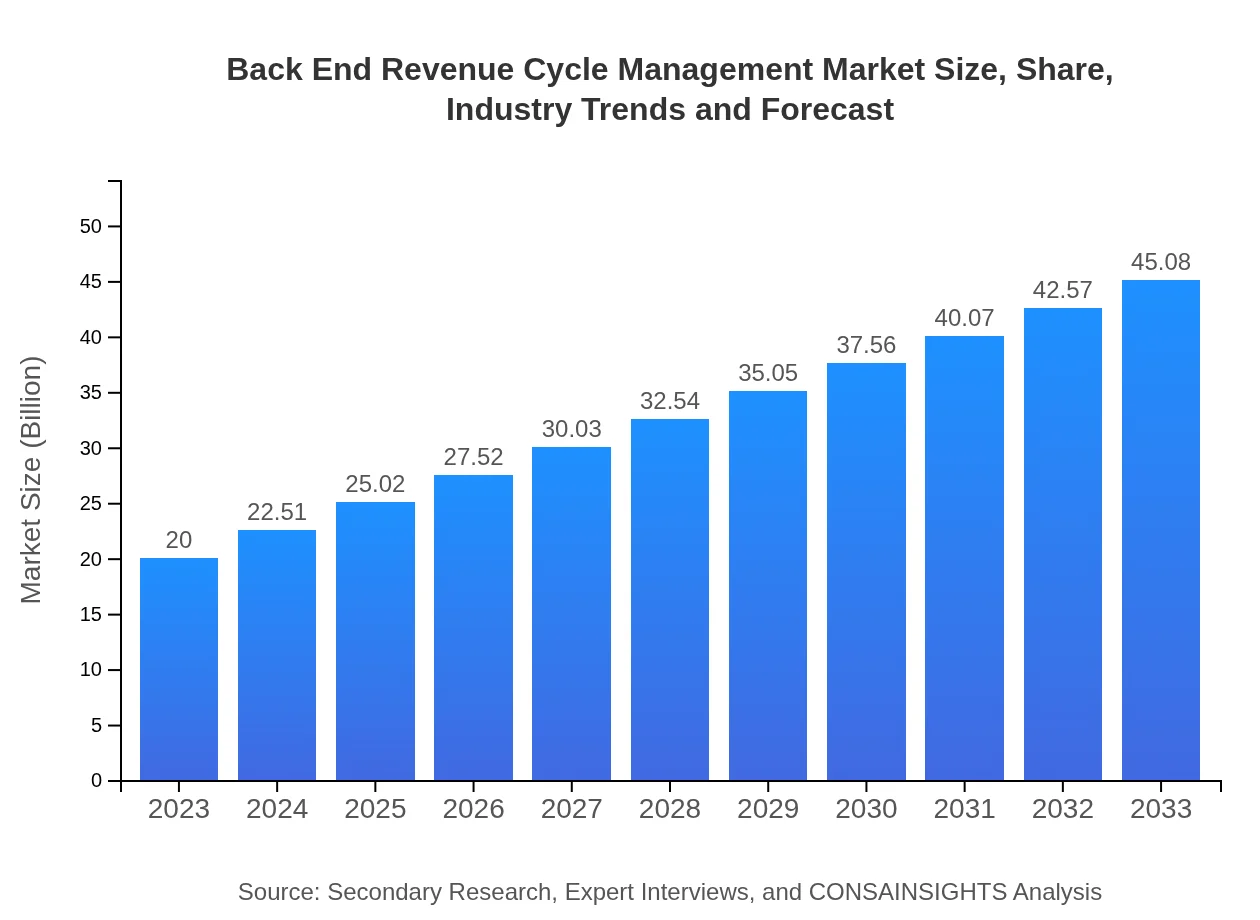
Back End Revenue Cycle Management Market — USD $20 Billion in 2023, Growing to USD 45.08null by 2033 at 8.2% CAGR
This comprehensive market report for Back End Revenue Cycle Management provides insights into market size, segmentation, trends, and forecasts from 2023 to 2033. It analyzes key regional markets and industry leaders, offering valuable data for stakeholders and investors.
Key Takeaways
- Global market expands from $20.00 Billion in 2023 to $45.08 Billion in 2033 at an 8.2% CAGR.
- North America is largest regional market, while no single fastest-growing region is stated because regional CAGR differences remain within 0.15 percentage points.
- North America leads regionally, increasing from $7.17 Billion in 2023 to $16.16 Billion in 2033.
- Europe and Asia Pacific show notable gains: Europe from $5.27 Billion to $11.88 Billion; Asia Pacific from $4.15 Billion to $9.36 Billion.
- Cloud-based, AI-based, analytics, and automation solutions are central technology themes driving adoption.
- Top vendors include Optum, Cerner Corporation, Change Healthcare, and McKesson Corporation.
Back End Revenue Cycle Management Market Report — Executive Summary
North America remains largest market by forecast-period value, while no single fastest-growing region is stated because top regional growth rates are separated by less than 0.15 percentage points. The Back End Revenue Cycle Management Market Report outlines a market rising from $20.00 Billion in 2023 to $45.08 Billion by 2033 at an 8.2% CAGR. Growth is driven by increasing billing complexity, demand for revenue integrity, and the shift from manual to automated processing. Key trends include broader adoption of cloud-based deployments, integration of AI and analytics, and bundled service offerings spanning claims management, coding services, and payment posting. Market structure covers deployment types, technology stacks, end users such as hospitals and physician practices, and regional distribution. North America is identified as the largest regional market. Vendors named in the report include Optum, Cerner Corporation, Change Healthcare, and McKesson Corporation. The analysis emphasizes operational efficiencies, regulatory compliance pressures, and partnerships between solution providers and healthcare organizations as central themes shaping market development.
Key Growth Drivers
- Rising complexity of healthcare billing processes increases demand for comprehensive back-end RCM solutions.
- Shift from manual workflows to automation and analytics improves claim accuracy and reduces days in accounts receivable.
- Adoption of cloud deployments enables scalable service delivery and faster integration across care settings.
- Regulatory compliance and revenue integrity priorities push healthcare providers toward outsourced or technology-enabled RCM services.
- Integration of AI and analytics enhances coding accuracy, denial management, and financial forecasting.
| Metric | Value |
|---|---|
| Study Period | 2023 - 2033 |
| 2023 Market Size | $20.00 Billion |
| CAGR (2023-2033) | 8.2% |
| 2033 Market Size | $45.08 Billion |
| Top Companies | Optum, Cerner Corporation, Change Healthcare, McKesson Corporation |
| Published Date | 11 October 2024 |
| Last Modified Date | 25 May 2026 |
Back End Revenue Cycle Management Market Overview
Customize Back End Revenue Cycle Management Market Report market research report
- ✔ Get in-depth analysis of Back End Revenue Cycle Management market size, growth, and forecasts.
- ✔ Understand Back End Revenue Cycle Management's regional dynamics and industry-specific trends.
- ✔ Identify potential applications, end-user demand, and growth segments in Back End Revenue Cycle Management
What is the Market Size & CAGR of Back End Revenue Cycle Management Market Report market in 2023?
Back End Revenue Cycle Management Industry Analysis
Back End Revenue Cycle Management Market Segmentation and Scope
Tell us your focus area and get a customized research report.
Back End Revenue Cycle Management Market Report Market Analysis Report by Region
Europe Back End Revenue Cycle Management Market Report:
Europe grows from $5.27 Billion in 2023 to $11.88 Billion in 2033. Growth is influenced by regulatory obligations, increasing complexity of billing, and rising implementation of cloud and analytics-enabled RCM solutions across provider networks.Asia Pacific Back End Revenue Cycle Management Market Report:
Asia Pacific grows from $4.15 Billion in 2023 to $9.36 Billion in 2033. Local drivers include modernization of healthcare IT, greater demand for outsourced revenue cycle services, and adoption of automation and analytics to manage growing patient volumes.North America Back End Revenue Cycle Management Market Report:
North America is largest regional market, rising from $7.17 Billion in 2023 to $16.16 Billion in 2033. Regional expansion is supported by advanced technology adoption, consolidation among providers, and emphasis on revenue integrity and compliance across hospitals and health systems.South America Back End Revenue Cycle Management Market Report:
Latin America grows from $1.52 Billion in 2023 to $3.43 Billion in 2033. Expansion is driven by gradual digitization of billing systems, adoption of managed services, and the need to improve claims management and payment posting efficiency.Middle East & Africa Back End Revenue Cycle Management Market Report:
Middle East and Africa grows from $1.88 Billion in 2023 to $4.25 Billion in 2033. Market progress is associated with investments in healthcare infrastructure, increased use of cloud deployments, and a move toward automated solutions for coding and claims processing.Tell us your focus area and get a customized research report.
Research Methodology
Back End Revenue Cycle Management Market Analysis By Service Type
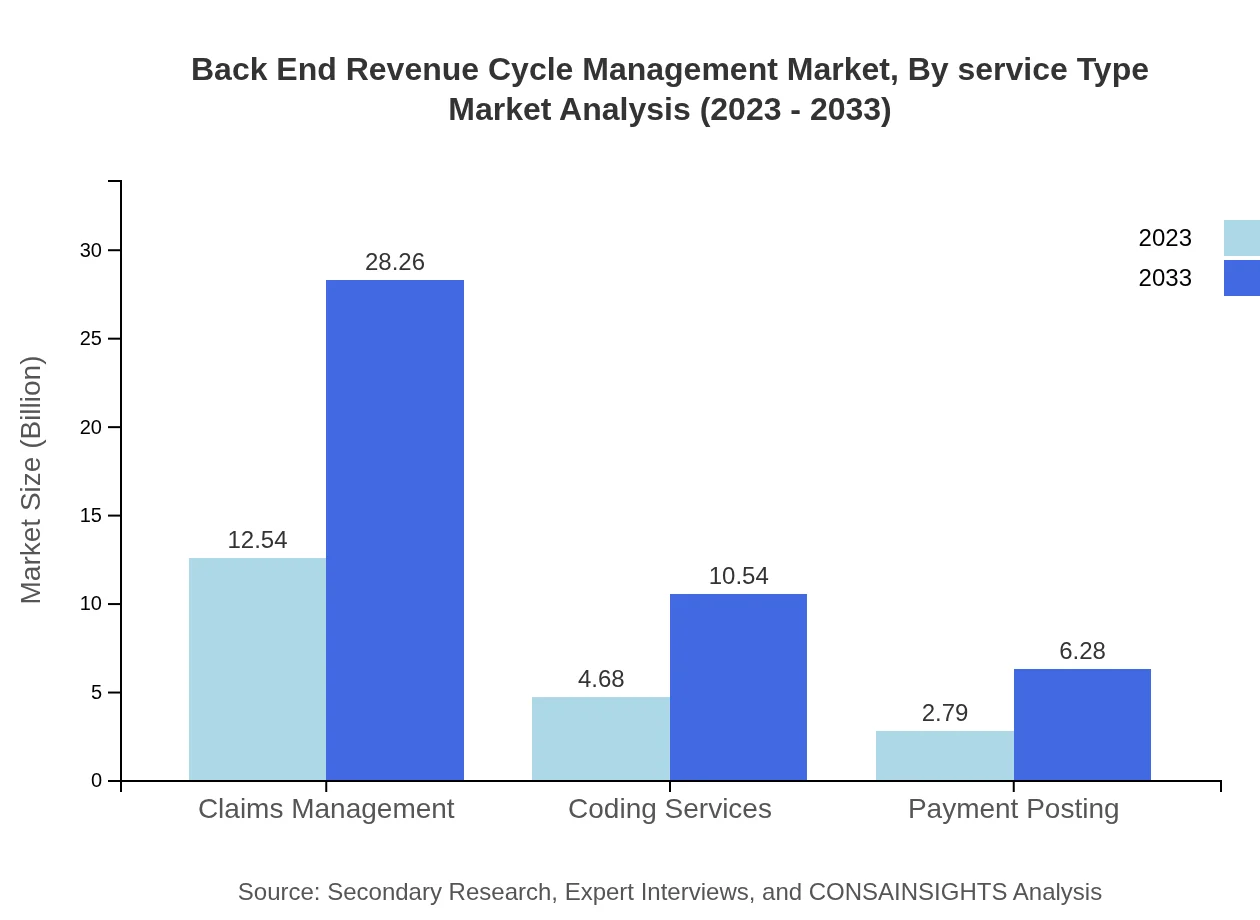
The service type segmentation reveals that Claims Management leads the market with significant revenue, expected to reach $28.26 billion by 2033 from $12.54 billion in 2023. Other notable segments include Coding Services and Payment Posting, both experiencing steady growth as healthcare professionals seek efficiency in reimbursement processes.
Back End Revenue Cycle Management Market Analysis By Deployment
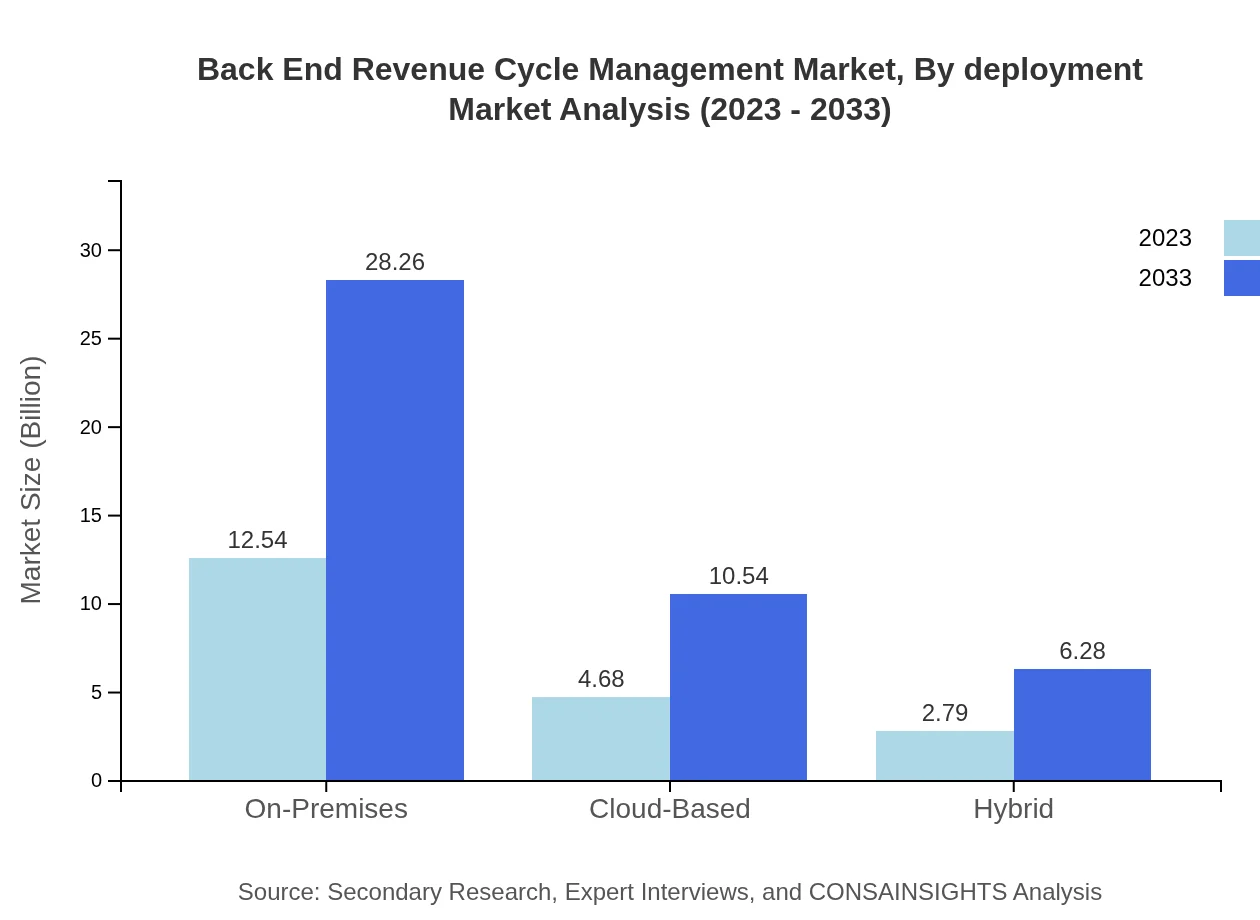
By deployment type, On-Premises solutions dominate the Back End RCM market due to customization flexibility and data security concerns. However, Cloud-Based deployments are rapidly gaining popularity, expected to grow significantly over the next decade as providers seek scalable and cost-effective solutions.
Back End Revenue Cycle Management Market Analysis By End User
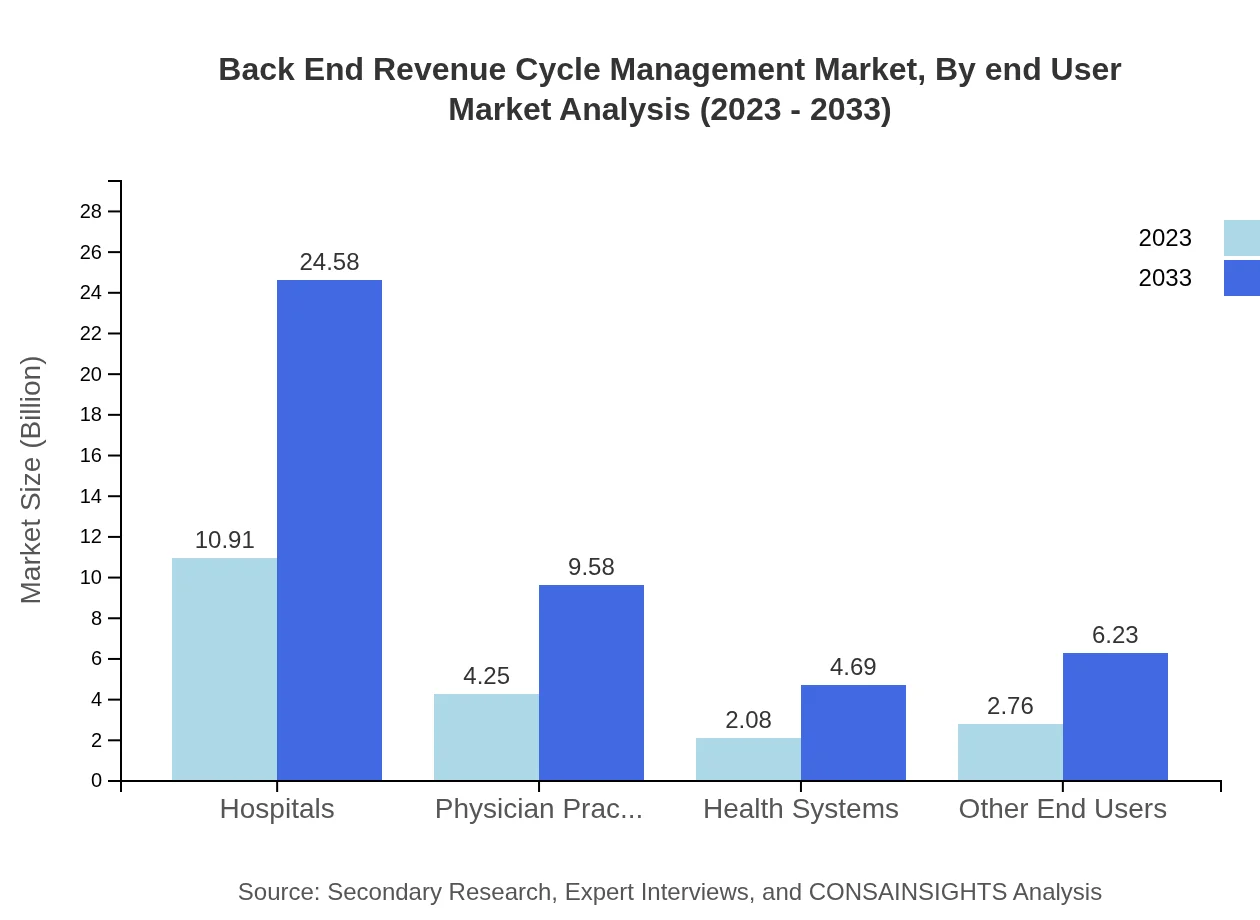
Within the end-user segment, Hospitals represent the largest market share, significantly driving revenue growth. The increasing focus on operational efficiency and cost control in hospitals mandates the use of advanced RCM solutions.
Back End Revenue Cycle Management Market Analysis By Technology
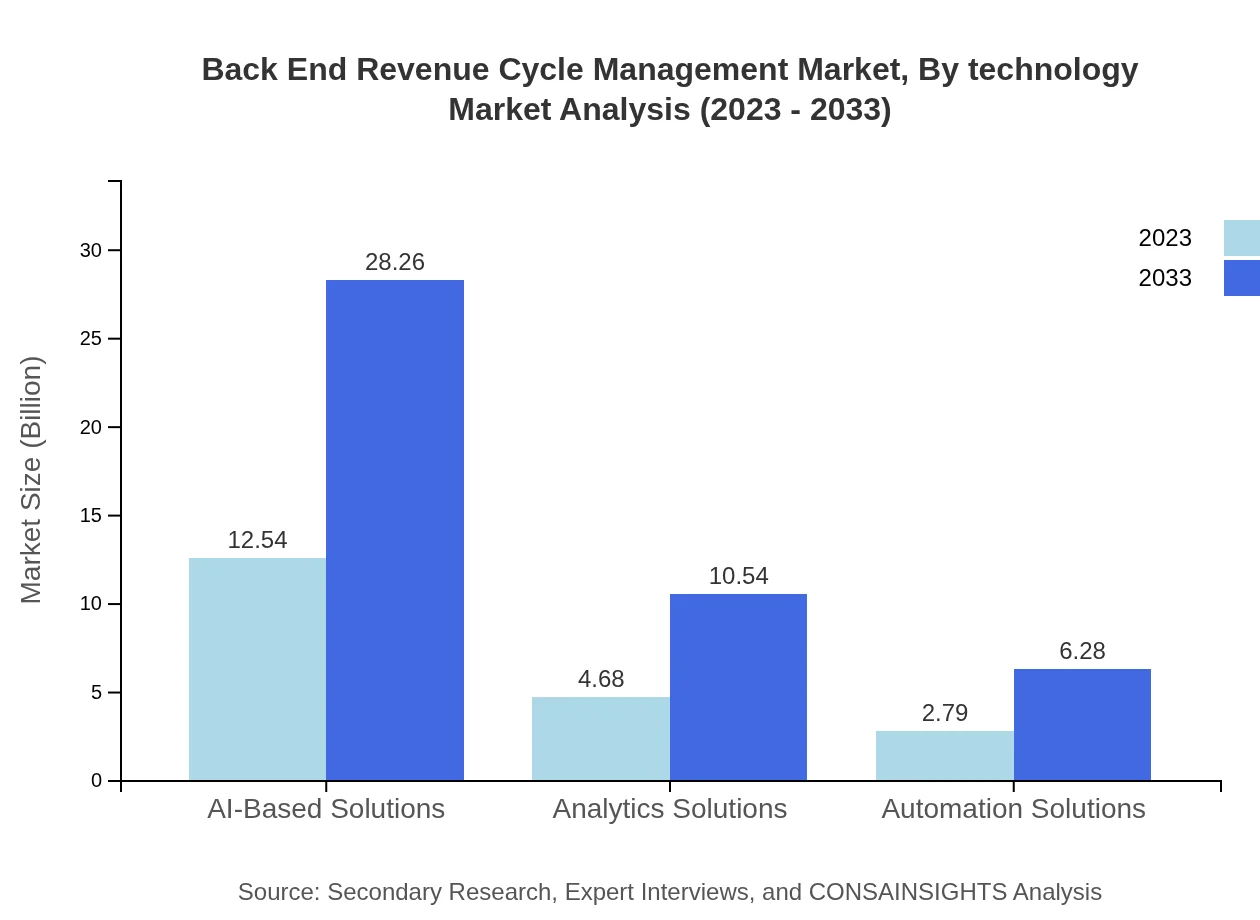
The Back End RCM market is rapidly integrating advanced technologies such as AI and machine learning, enhancing predictive analytics capabilities and process automation. These technologies substantially improve the accuracy of billing and expedite claims processing.
Back End Revenue Cycle Management Market Analysis By Region
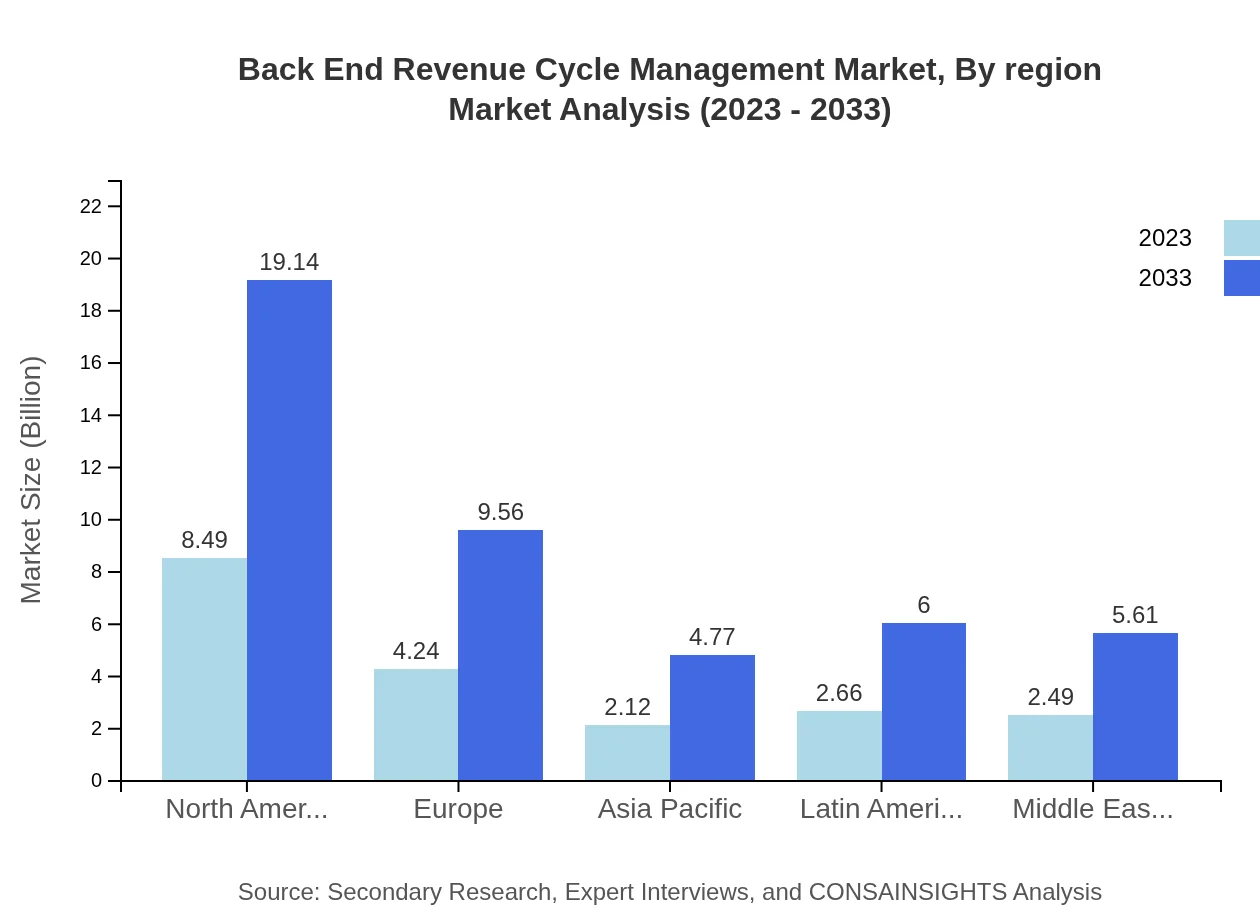
Regionally, North America continues to lead in market share, followed by Europe and Asia Pacific. Each region exhibits distinct growth drivers, from regulatory requirements in North America to the burgeoning healthcare markets in Asia Pacific.
Back End Revenue Cycle Management Market Trends and Future Forecast
Tell us your focus area and get a customized research report.
Global Market Leaders and Top Companies in Back End Revenue Cycle Management Industry
Optum:
Optum offers health services and information technology solutions, providing comprehensive RCM services that optimize revenue and reduce operational costs for healthcare providers.Cerner Corporation:
Cerner is known for its health information technology designed to enhance RCM processes, assisting hospitals and physician practices in revenue optimization.Change Healthcare:
Change Healthcare specializes in healthcare technology solutions, focusing on improving patient outcomes through smarter payment and billing processes backed by advanced analytics.McKesson Corporation:
McKesson provides a broad range of RCM services, supporting healthcare organizations in managing their billing, collections, and financial reporting more effectively.We're grateful to work with incredible clients.









FAQs
What is the market size of the Back End Revenue Cycle Management Market Report in 2023?
The market size in 2023 is $20.00 Billion, as stated in the report data for the Back End Revenue Cycle Management market.
How big will the market be in 2033?
By 2033 the market is projected to reach $45.08 Billion according to the provided forecast figures for the Back End Revenue Cycle Management market.
What is CAGR for the forecast period?
The specified compound annual growth rate for the 2023 to 2033 forecast period is 8.2% as provided in the input data.
Is there a single fastest Growing region in the Back End Revenue Cycle Management Market Report market?
No single fastest-growing region is stated for the Back End Revenue Cycle Management Market Report market because the top regional implied CAGR values are within 0.15 percentage points of each other, making the ranking too close to call reliably.
Who are the top companies listed in the report?
The top companies named in the report are Optum, Cerner Corporation, Change Healthcare, and McKesson Corporation.
What are primary technology trends driving the market?
Key technologies include AI-based solutions, analytics solutions, automation solutions, and increased cloud-based deployments as highlighted in the segment facts.
Why are healthcare providers adopting back End RCM solutions?
Providers pursue back-end RCM solutions to improve revenue capture, reduce billing errors, streamline claims management, and better manage accounts receivable under evolving regulatory pressures.
What end users are covered in the segmentation?
Reported end-user segments include hospitals, physician practices, health systems, and other end users as specified in the segment facts.
How is deployment categorized in the report?
Deployment types listed are on-premises, cloud-based, and hybrid, reflecting varying technology adoption and hosting preferences among providers.
Which service types are included in the market segmentation?
Service-type segments specified include claims management, coding services, and payment posting as part of the back-end RCM offering set.