

Basal Insulin Long Acting Insulin Market Report
First published: 07 October 2024 | Last updated: 25 May 2026 | Report Code: basal-insulin-long-acting-insulin
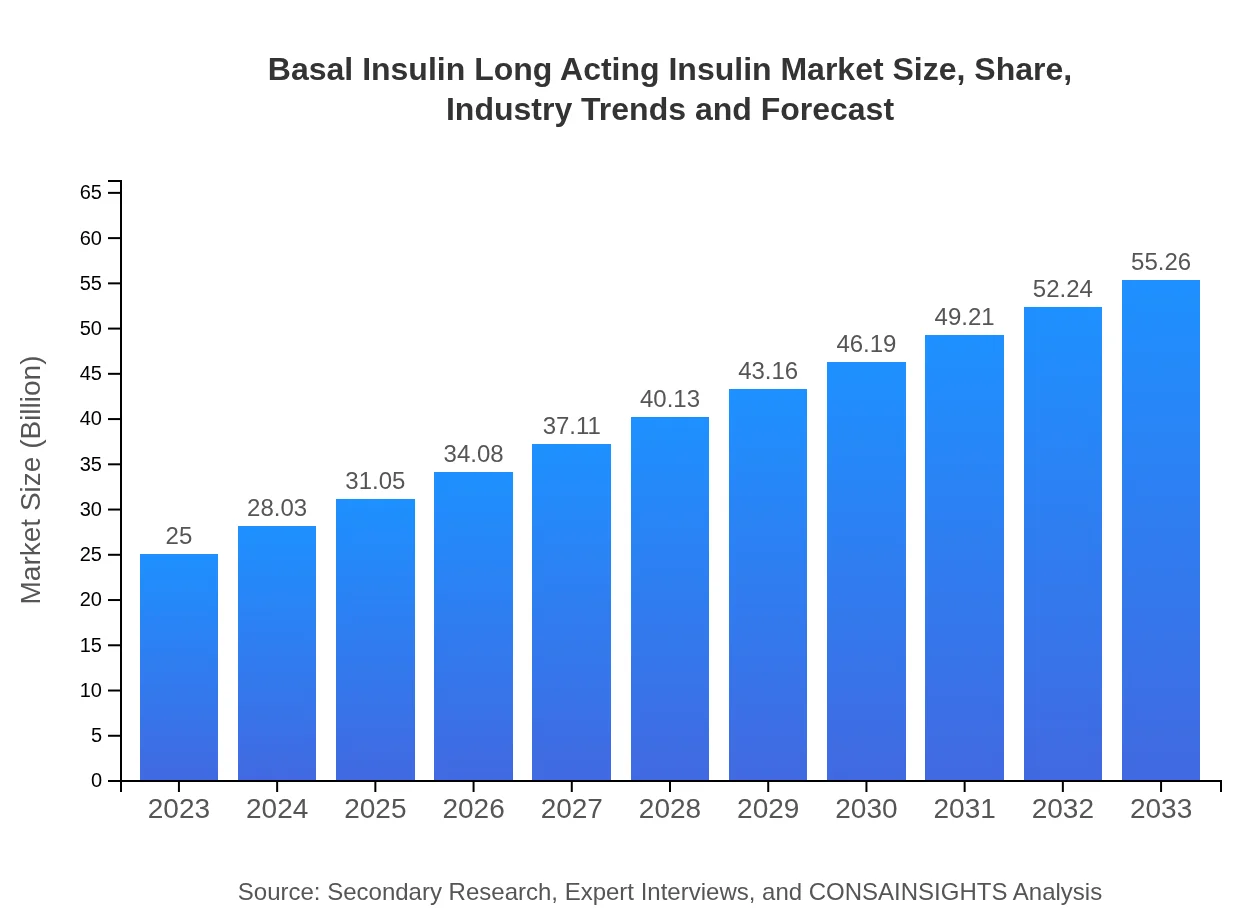
Basal Insulin Long Acting Insulin Market — USD $25 Billion in 2023, Growing to USD 55.26null by 2033 at 8.0% CAGR
This report provides a comprehensive analysis of the Basal Insulin Long Acting Insulin market, offering insights into market size, growth forecasts, regional evaluations, segment analysis, and competitive landscape, covering the period from 2023 to 2033.
Key Takeaways
- Global market value expands from $25.00 Billion in 2023 to $55.26 Billion by 2033 at an 8% CAGR.
- North America is largest regional market, while no single fastest-growing region is stated because regional CAGR differences remain within 0.15 percentage points.
- Europe and Asia Pacific each show notable growth: Europe rises from $6.08 Billion to $13.43 Billion, Asia Pacific from $5.49 Billion to $12.14 Billion.
- Top manufacturers include Sanofi, Novo Nordisk, Boehringer Ingelheim, and Bristol Myers Squibb, reflecting concentrated industry participation.
- Market growth is supported by rising diabetes prevalence, expanded access in emerging markets, and innovations in delivery and formulation.
- Distribution channels involve hospital and retail pharmacies alongside growing online pharmacy availability.
Basal Insulin Long Acting Insulin Market Report — Executive Summary
North America remains largest market by forecast-period value, while no single fastest-growing region is stated because top regional growth rates are separated by less than 0.15 percentage points. This report analyzes the Basal Insulin Long Acting Insulin market across product types, end users, formulations, applications, and distribution channels. The global market value is reported at $25.00 Billion in 2023 and is expected to reach $55.26 Billion by 2033 at an 8% CAGR. Growth is driven by increasing diabetes prevalence, technological advances in insulin delivery, and improving healthcare infrastructure in developing regions. The analysis highlights regional trajectories, with North America identified as the largest market by end-period value. Product segmentation covers insulin variants including Insulin Glargine, Insulin Detemir, and Insulin Degludec, while end-user segments span hospitals, clinics, and homecare. The competitive overview profiles key players such as Sanofi, Novo Nordisk, Boehringer Ingelheim, and Bristol Myers Squibb. Methodology integrates expert interviews and secondary data sources, with triangulation and internal validation applied to ensure robustness of findings.
Key Growth Drivers
- Rising global prevalence of diabetes increasing demand for long-acting basal insulin therapies.
- Innovation in delivery formats and formulations improving patient adherence and therapeutic outcomes.
- Expansion of healthcare infrastructure in emerging markets enhancing access to insulin products.
- Greater adoption of digital health and remote monitoring facilitating insulin therapy management.
- Favorable government initiatives and programs promoting diabetes diagnosis and long-term care.
| Metric | Value |
|---|---|
| Study Period | 2023 - 2033 |
| 2023 Market Size | $25.00 Billion |
| CAGR (2023-2033) | 8.0% |
| 2033 Market Size | $55.26 Billion |
| Top Companies | Sanofi, Novo Nordisk, Boehringer Ingelheim, Bristol Myers Squibb |
| Published Date | 07 October 2024 |
| Last Modified Date | 25 May 2026 |
Basal Insulin Long Acting Insulin Market Overview
Customize Basal Insulin Long Acting Insulin Market Report market research report
- ✔ Get in-depth analysis of Basal Insulin Long Acting Insulin market size, growth, and forecasts.
- ✔ Understand Basal Insulin Long Acting Insulin's regional dynamics and industry-specific trends.
- ✔ Identify potential applications, end-user demand, and growth segments in Basal Insulin Long Acting Insulin
What is the Market Size & CAGR of Basal Insulin Long Acting Insulin Market Report market in 2023?
Basal Insulin Long Acting Insulin Industry Analysis
Basal Insulin Long Acting Insulin Market Segmentation and Scope
Tell us your focus area and get a customized research report.
Basal Insulin Long Acting Insulin Market Report Market Analysis Report by Region
Europe Basal Insulin Long Acting Insulin Market Report:
Europe grows from $6.08 Billion in 2023 to $13.43 Billion in 2033. Regional drivers include increasing diabetes diagnosis rates, healthcare funding for chronic disease management, and ongoing innovation in insulin formulations and delivery.Asia Pacific Basal Insulin Long Acting Insulin Market Report:
Asia Pacific grows from $5.49 Billion in 2023 to $12.14 Billion in 2033. Expansion is driven by improving healthcare infrastructure, rising treatment access in emerging countries, and growing awareness of long-term diabetes care.North America Basal Insulin Long Acting Insulin Market Report:
North America is largest regional market, rising from $8.24 Billion in 2023 to $18.22 Billion in 2033. 24 Billion in 2023, rising to $18.22 Billion in 2033. The region’s scale reflects established healthcare infrastructure, broad access to advanced insulin therapies, and strong presence of major manufacturers driving adoption.South America Basal Insulin Long Acting Insulin Market Report:
Latin America grows from $2.04 Billion in 2023 to $4.51 Billion in 2033. Growth stems from strengthening healthcare delivery, expanding distribution channels, and greater availability of long-acting insulin therapies across public and private providers.Middle East & Africa Basal Insulin Long Acting Insulin Market Report:
Middle East and Africa grows from $3.15 Billion in 2023 to $6.96 Billion in 2033. Drivers include improving healthcare access, targeted diabetes initiatives, and gradual adoption of advanced insulin products in regional markets.Tell us your focus area and get a customized research report.
Research Methodology
Basal Insulin Long Acting Insulin Market Analysis By Product
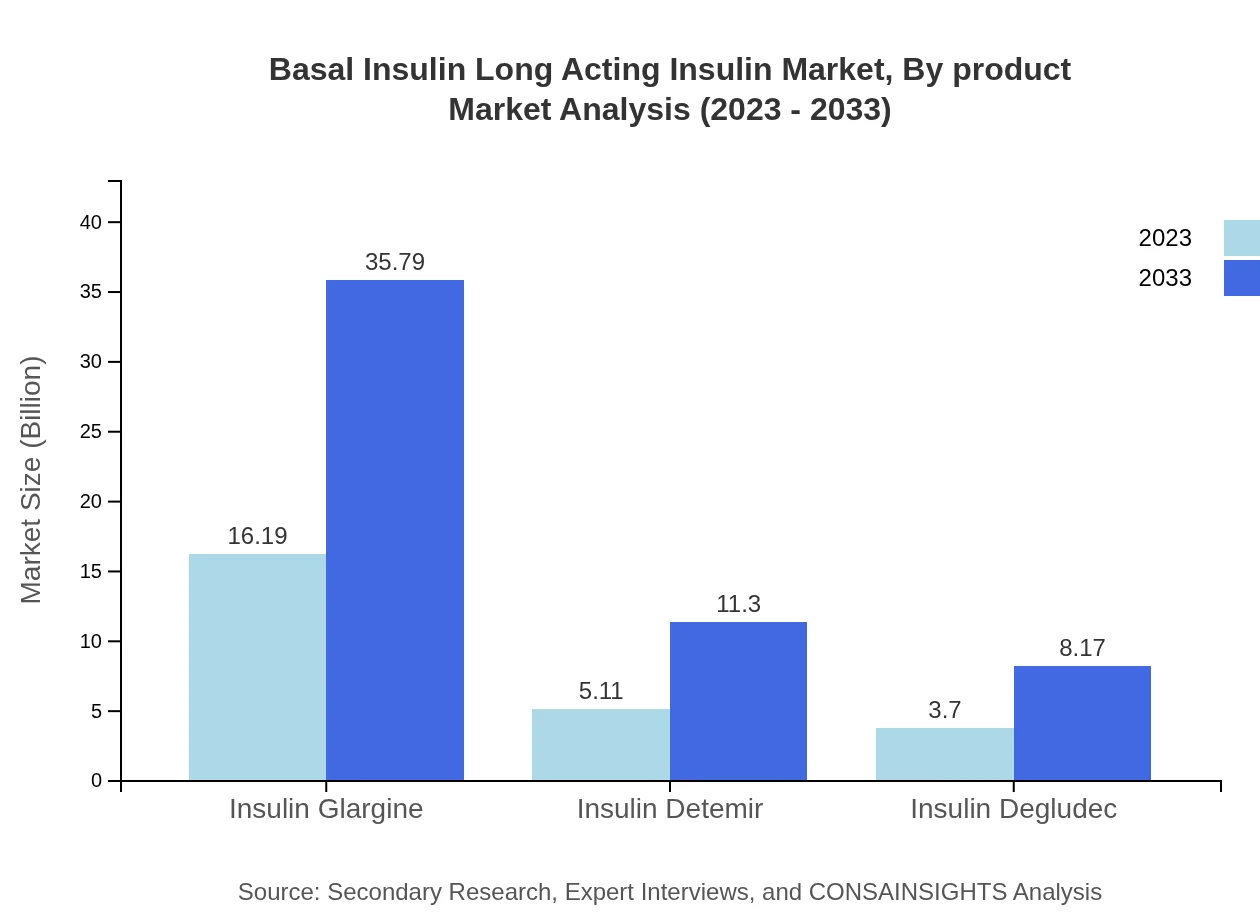
Among the product segments, Insulin Glargine dominates the market with a size of $16.19 billion in 2023, growing to $35.79 billion in 2033. Insulin Detemir follows with a market size of $5.11 billion expected to increase to $11.30 billion, while Insulin Degludec has a market size of $3.70 billion projected to grow to $8.17 billion.
Basal Insulin Long Acting Insulin Market Analysis By Application
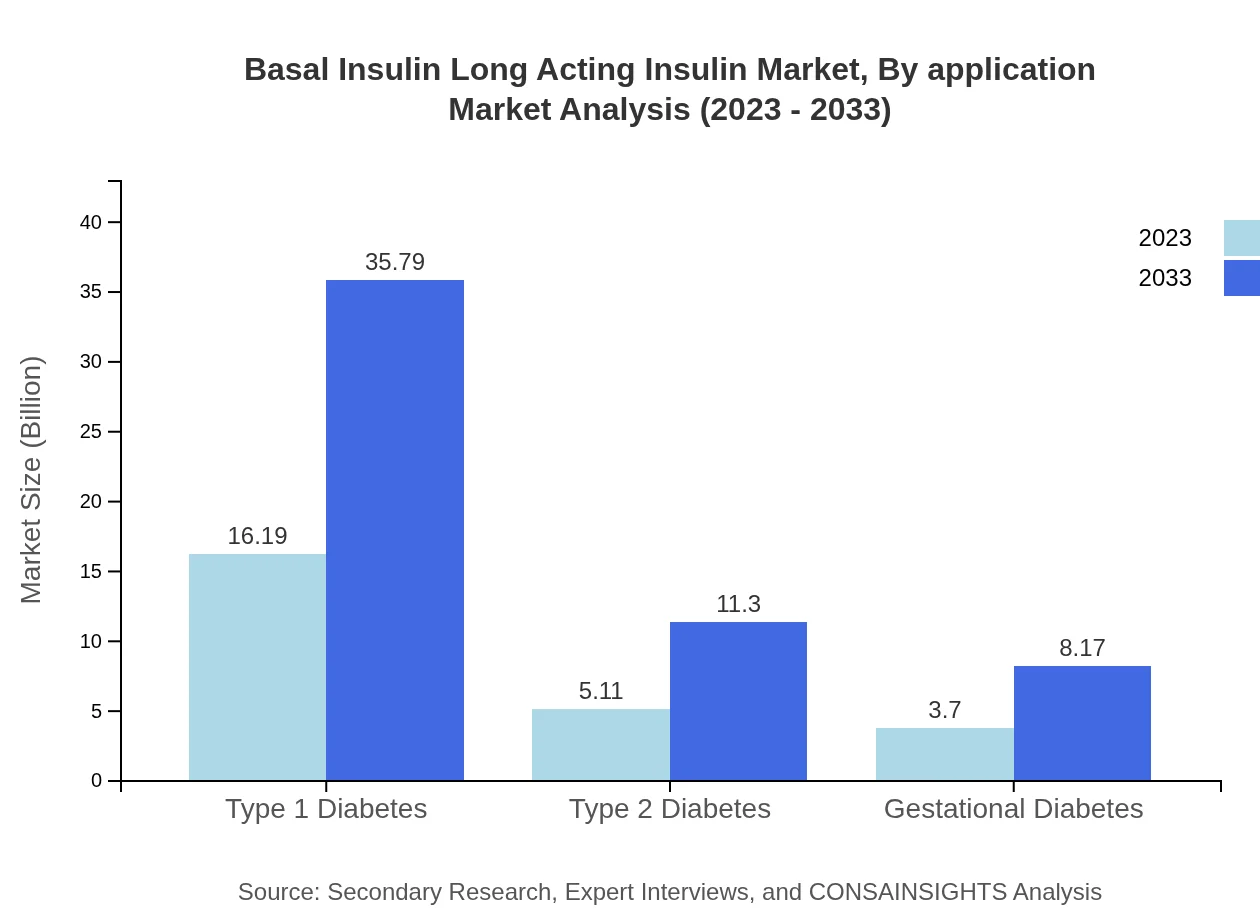
In terms of applications, Type 1 diabetes treatments account for a significant share, with a market size of $16.19 billion in 2023 that will expand to $35.79 billion by 2033. Type 2 diabetes treatments also show robust growth, growing from $5.11 billion to $11.30 billion during the same period. Gestational diabetes treatments, currently valued at $3.70 billion, are projected to reach $8.17 billion.
Basal Insulin Long Acting Insulin Market Analysis By Distribution Channel
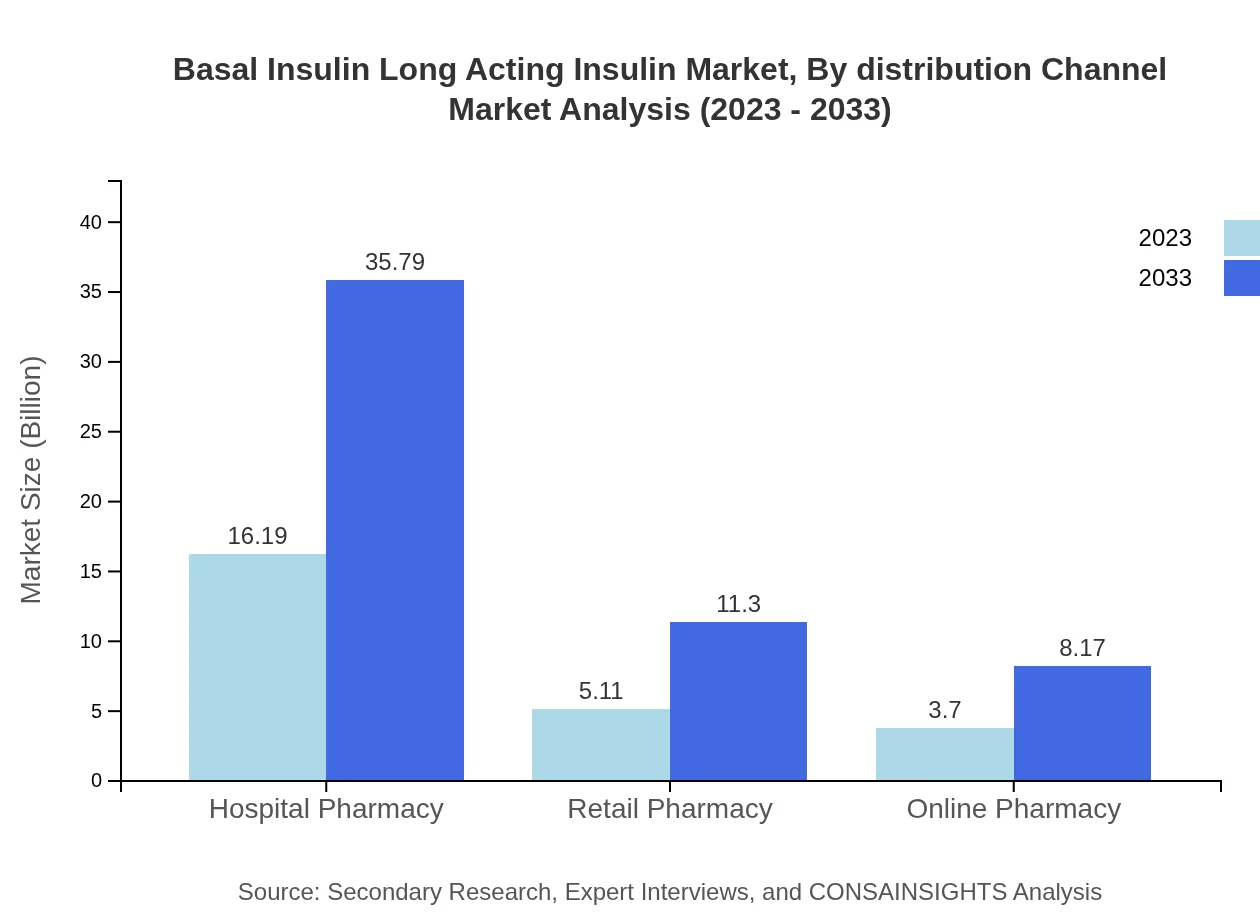
Hospitals are the largest distribution channel, with a market size of $16.19 billion in 2023 set to increase to $35.79 billion by 2033. Retail pharmacies and online pharmacies also contribute significantly, with retail pharmacies growing from $5.11 billion to $11.30 billion and online pharmacies from $3.70 billion to $8.17 billion.
Basal Insulin Long Acting Insulin Market Analysis By Formulation
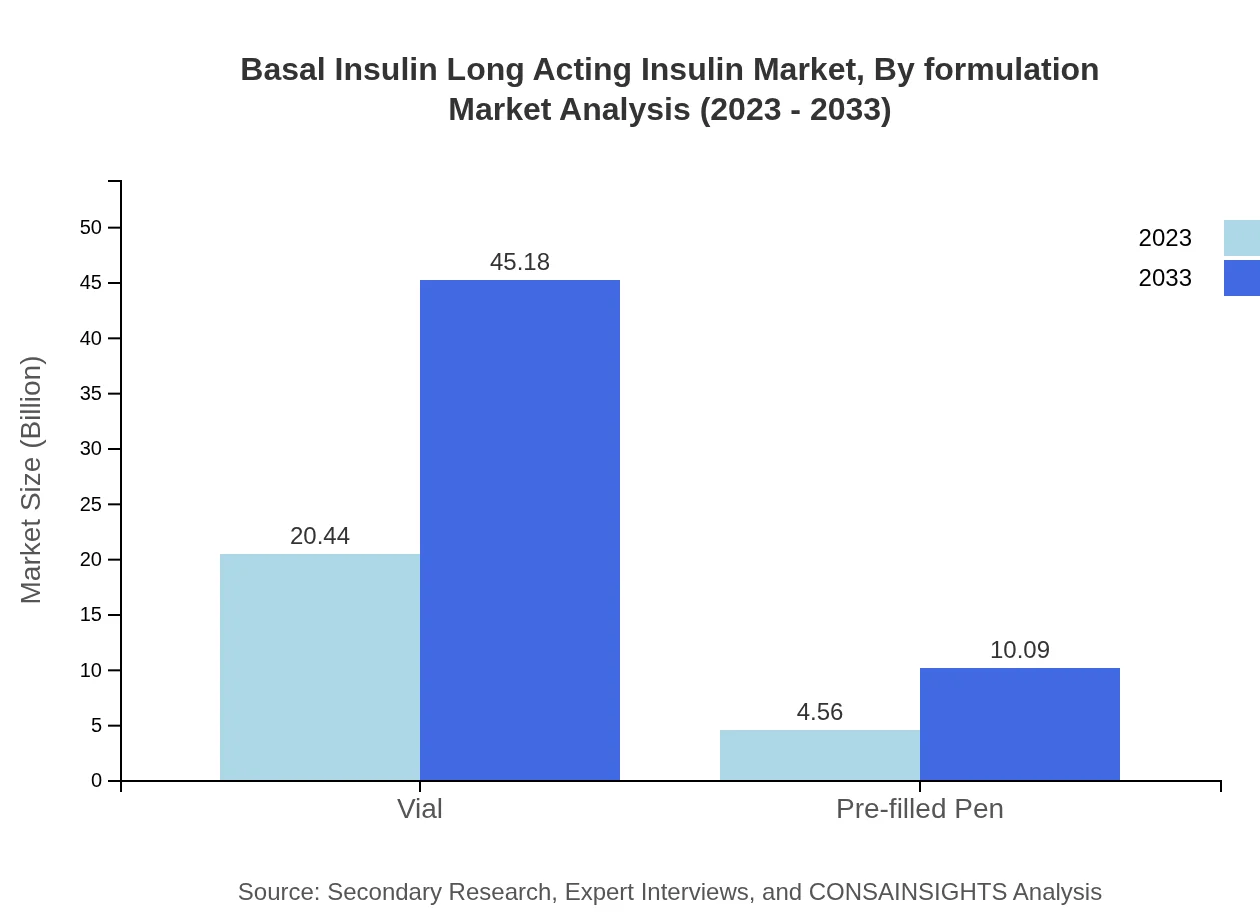
The market is primarily divided into vial and pre-filled pen formulations. Vials lead the market with $20.44 billion in 2023, rising to $45.18 billion by 2033. Pre-filled pens have a smaller share at $4.56 billion expected to increase to $10.09 billion, indicating a growing preference for convenience and ease of use.
Basal Insulin Long Acting Insulin Market Analysis By End User
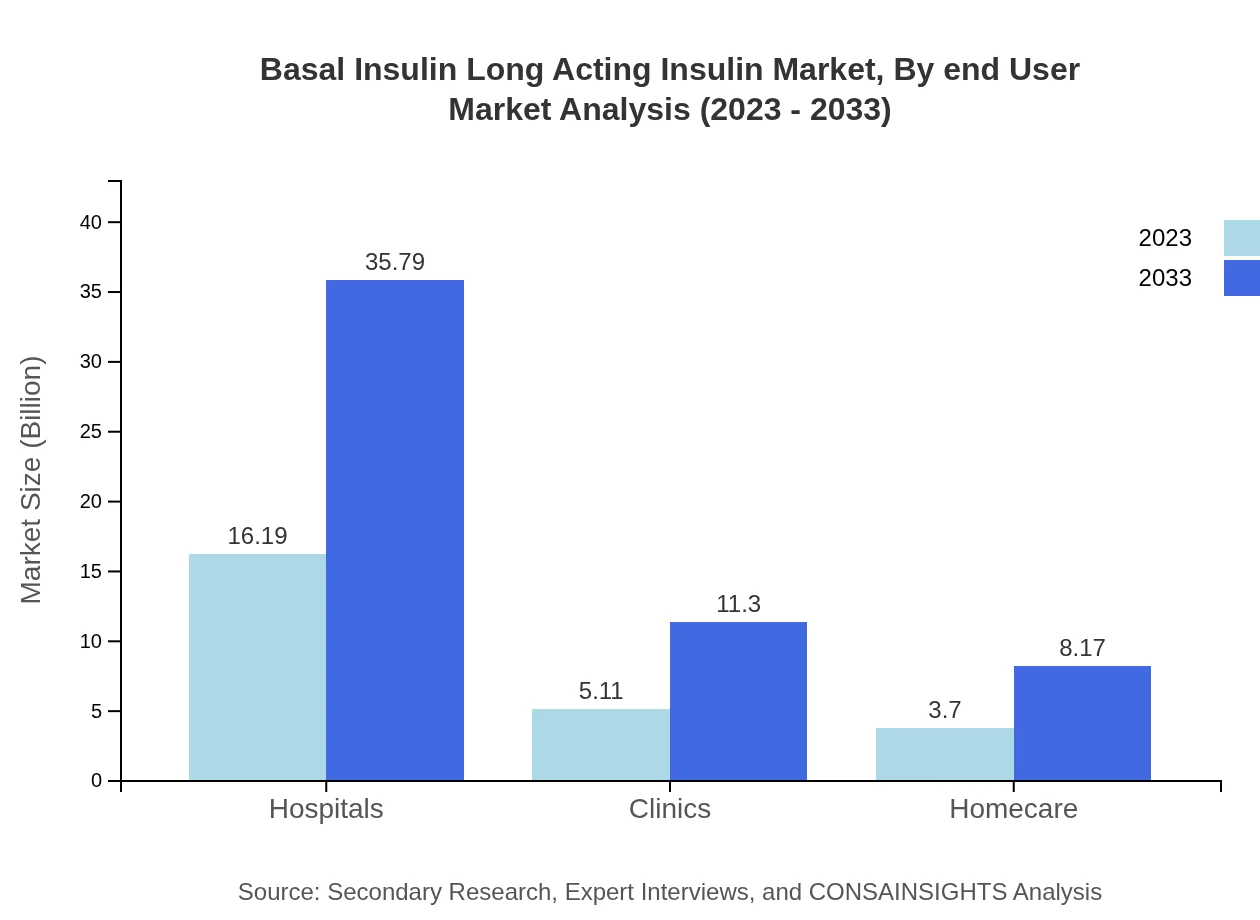
In terms of end-users, hospitals constitute a significant segment with a market size of $16.19 billion projected to grow to $35.79 billion. Clinics also exhibit growth from $5.11 billion to $11.30 billion, alongside homecare settings which will expand from $3.70 billion to $8.17 billion, reflecting a trend towards patient-centered care.
Basal Insulin Long Acting Insulin Market Trends and Future Forecast
Tell us your focus area and get a customized research report.
Global Market Leaders and Top Companies in Basal Insulin Long Acting Insulin Industry
Sanofi:
A global healthcare leader known for its development of insulin products, notably Insulin Glargine, which has significantly impacted diabetes management.Novo Nordisk:
Specializes in diabetes care and offers Insulin Degludec and Insulin Detemir, recognized for their long-acting properties and widespread adoption among patients.Boehringer Ingelheim:
Provides innovative insulin solutions, including biosimilars that challenge traditional insulin pricing and accessibility.Bristol Myers Squibb:
Focuses on diabetes medications, providing access to essential therapies that retain competitive relevancy in the insulin market.We're grateful to work with incredible clients.







FAQs
What is the market size of the Basal Insulin Long Acting Insulin Market Report in 2023?
The market size in 2023 is $25.00 Billion, based on the reported valuation for the Basal Insulin Long Acting Insulin market in the input dataset.
How big will the market be in 2033?
The market is projected to reach $55.26 Billion in 2033, according to the provided forecast figures for the Basal Insulin Long Acting Insulin market.
What is CAGR for the forecast period?
The provided CAGR for the forecast period 2023 to 2033 is 8%, as stated in the input data for the Basal Insulin Long Acting Insulin market.
Is there a single fastest Growing region in the Basal Insulin Long Acting Insulin Market Report market?
No single fastest-growing region is stated for the Basal Insulin Long Acting Insulin Market Report market because the top regional implied CAGR values are within 0.15 percentage points of each other, making the ranking too close to call reliably.
Which companies are identified as top players?
Top companies named in the report are Sanofi, Novo Nordisk, Boehringer Ingelheim, and Bristol Myers Squibb, as specified in the input company list.
What are the main product subsegments covered?
Product subsegments include Insulin Glargine, Insulin Detemir, and Insulin Degludec, listed as the by-product categories in the provided segment facts.
How are distribution channels categorized?
Distribution channels are defined as Hospital Pharmacy, Retail Pharmacy, and Online Pharmacy, matching the exact subsegment entries in the input data.
What end User categories does the report include?
End-user categories include Hospitals, Clinics, and Homecare, as specified in the by-end-user subsegment facts.
Who conducted the research methodology?
Research included primary interviews with industry experts and secondary research from company reports and publications, followed by data triangulation and internal validation.
Which applications are analyzed in the market?
Analyzed applications include Type 1 Diabetes, Type 2 Diabetes, and Gestational Diabetes, as listed under by-application subsegments in the input.