
Reports >
Life Sciences
>
Personalized Medicine Market Report

Personalized Medicine Market Report
First published: 11 October 2024 | Last updated: 25 May 2026 | Report Code: personalized-medicine
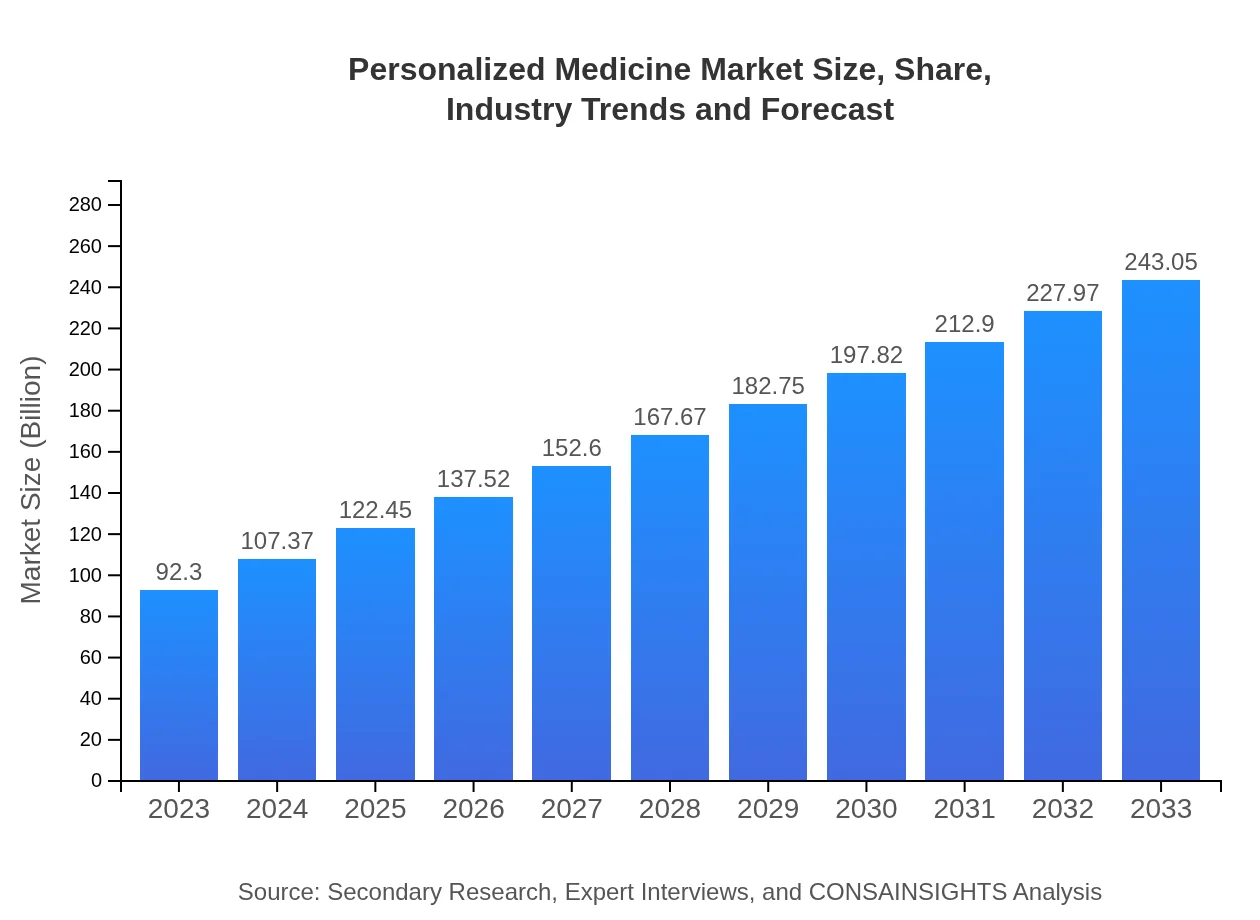
Personalized Medicine Market — USD 92.3 billion in 2023, Growing to USD 243.05B by 2033 at 9.8% CAGR
This report presents an in-depth analysis of the Personalized Medicine market, covering insights into the market dynamics and projections from 2023 to 2033. It includes market sizes, technology trends, segment performance, and key players shaping the industry.
Key Takeaways
- Global market expands from $92.30 Billion in 2023 to $243.05 Billion in 2033 at a 9.8% CAGR.
- North America is largest regional market, while no single fastest-growing region is stated because regional CAGR differences remain within 0.15 percentage points.
- North America leads regional market value, increasing from $31.45 Billion to $82.81 Billion between 2023 and 2033.
- Europe’s market grows from $24.91 Billion to $65.6 Billion, while Asia Pacific moves from $18.02 Billion to $47.44 Billion.
- Market structure includes product, application, end-user and regional segmentation with leading firms such as Illumina, Inc., Roche Diagnostics, Thermo Fisher Scientific, Pfizer, Inc., and Novartis.
- Diagnostics, therapeutics and services are core product categories supporting broader personalized solutions.
Personalized Medicine Market Report — Executive Summary
North America remains largest market by forecast-period value, while no single fastest-growing region is stated because top regional growth rates are separated by less than 0.15 percentage points. The Personalized Medicine market is positioned for sustained expansion as precision diagnostics, genomic platforms and targeted therapeutics converge. Market size moves from $92.30 Billion in 2023 to $243.05 Billion by 2033 at a 9.8% CAGR for 2023 to 2033. Growth is supported by advances in genomic technologies, integrated bioinformatics, and increased adoption of tailored treatments across oncology, cardiology and rare diseases. Regional shifts show cumulative increases across North America, Europe, Asia Pacific, Latin America and Middle East and Africa, with North America holding the highest end-period value. The competitive landscape features established players including Illumina, Inc., Roche Diagnostics, Thermo Fisher Scientific, Pfizer, Inc., and Novartis. Market segmentation spans products (therapeutics, diagnostics, services), applications, end-users and specialized regional offerings. Continued innovation, regulatory support and cross-disciplinary collaboration are expected to shape investment and deployment strategies over the forecast period.
Key Growth Drivers
- Improvements in genomic sequencing and bioinformatics that enable precise diagnostics and targeted therapies.
- Broader integration of diagnostics and therapeutics across clinical workflows, increasing demand in hospitals and diagnostic laboratories.
- Rising investment from pharmaceutical companies and research institutes to develop personalized treatment options.
- Expansion of services supporting diagnostics and therapy delivery, strengthening market adoption in diverse care settings.
| Metric | Value |
|---|---|
| Study Period | 2023 - 2033 |
| 2023 Market Size | $92.30 Billion |
| CAGR (2023-2033) | 9.8% |
| 2033 Market Size | $243.05 Billion |
| Top Companies | Illumina, Inc., Roche Diagnostics, Thermo Fisher Scientific, Pfizer, Inc., Novartis |
| Published Date | 11 October 2024 |
| Last Modified Date | 25 May 2026 |
Personalized Medicine Market Overview
Customize Personalized Medicine Market Report market research report
- ✔ Get in-depth analysis of Personalized Medicine market size, growth, and forecasts.
- ✔ Understand Personalized Medicine's regional dynamics and industry-specific trends.
- ✔ Identify potential applications, end-user demand, and growth segments in Personalized Medicine
What is the Market Size & CAGR of Personalized Medicine Market Report market in 2023?
Personalized Medicine Industry Analysis
Personalized Medicine Market Segmentation and Scope
Tell us your focus area and get a customized research report.
Personalized Medicine Market Report Market Analysis Report by Region
Europe Personalized Medicine Market Report:
Europe grows from $24.91 Billion in 2023 to $65.6 Billion in 2033. Expansion is driven by adoption of advanced diagnostics, investment in genomics and integration of personalized approaches within clinical practice.Asia Pacific Personalized Medicine Market Report:
Asia Pacific grows from $18.02 Billion in 2023 to $47.44 Billion in 2033. Growth reflects increasing research capacity, regional investments in biotech infrastructure and broader deployment of diagnostic and therapeutic solutions.North America Personalized Medicine Market Report:
North America is largest regional market, rising from $31.45 Billion in 2023 to $82.81 Billion in 2033. This region’s rise is linked to high uptake of sequencing platforms, strong clinical research activity and significant participation from leading firms and healthcare providers.South America Personalized Medicine Market Report:
Latin America grows from $5.86 Billion in 2023 to $15.43 Billion in 2033. Market development is supported by expanding diagnostic services and emerging partnerships that enable access to personalized care.Middle East & Africa Personalized Medicine Market Report:
Middle East and Africa grows from $12.06 Billion in 2023 to $31.77 Billion in 2033. Growth drivers include expanding healthcare infrastructure, greater diagnostic adoption and investments in precision medicine capabilities.Tell us your focus area and get a customized research report.
Research Methodology
Personalized Medicine Market Analysis By Product
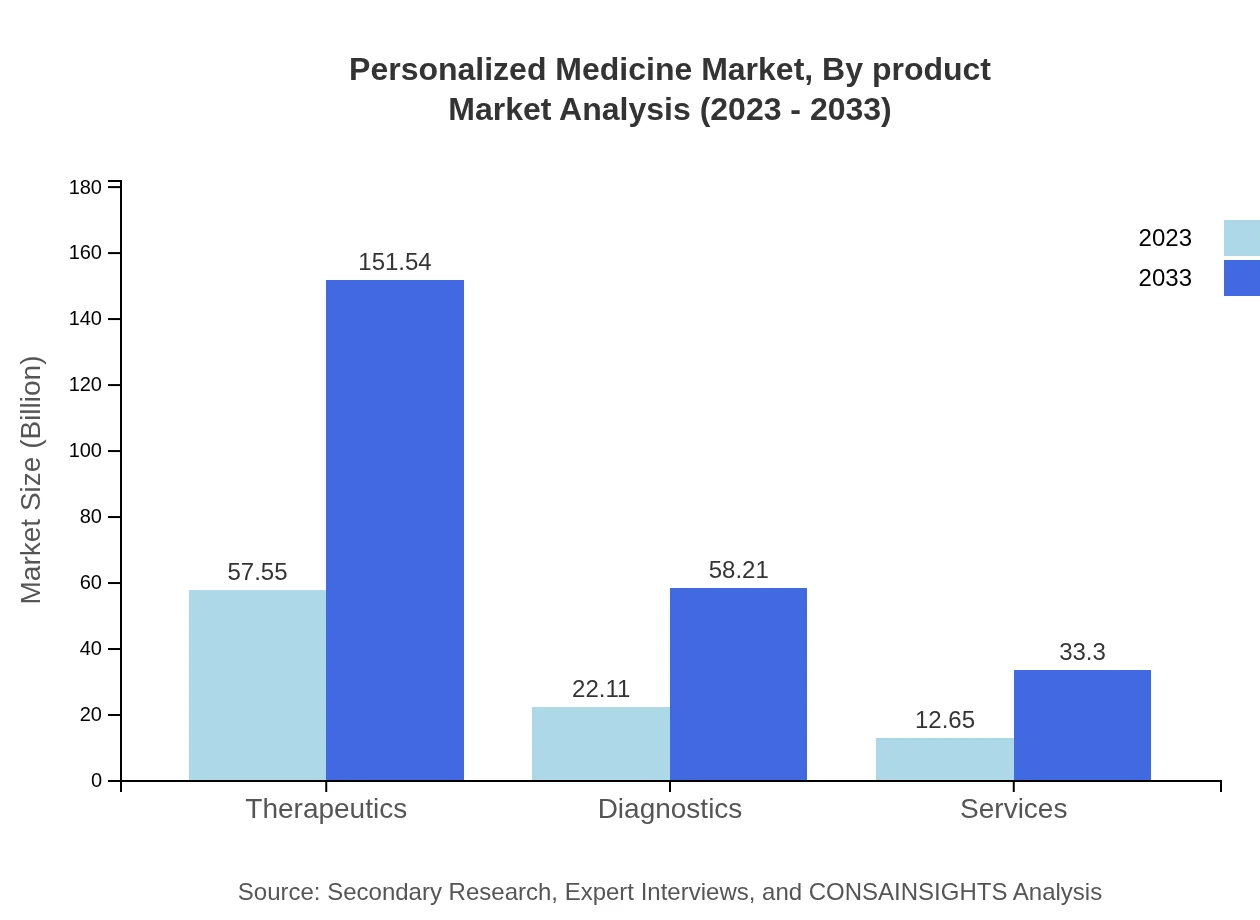
In terms of products, diagnostics hold a significant share as they are critical in determining the appropriate therapeutic regimen for patients. This segment emphasizes the use of biomarkers and diagnostic tools to personalize treatment plans according to individual genetic profiles.
Personalized Medicine Market Analysis By Application
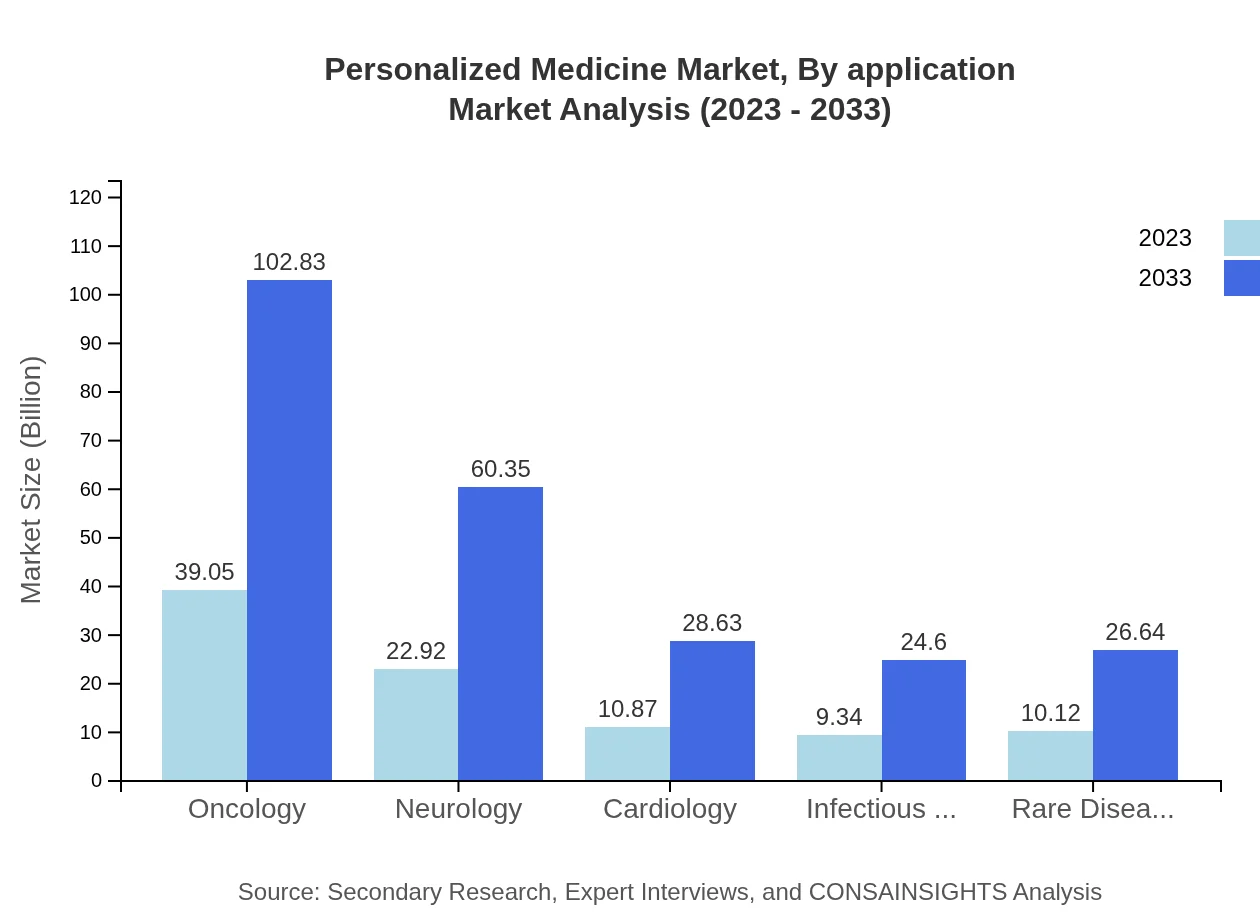
Applications of personalized medicine span across numerous disease areas, including oncology, cardiology, infectious diseases, and rare diseases. Oncology is the leading application area as targeted therapies revolutionize cancer treatment, making it more effective and less invasive.
Personalized Medicine Market Analysis By End User
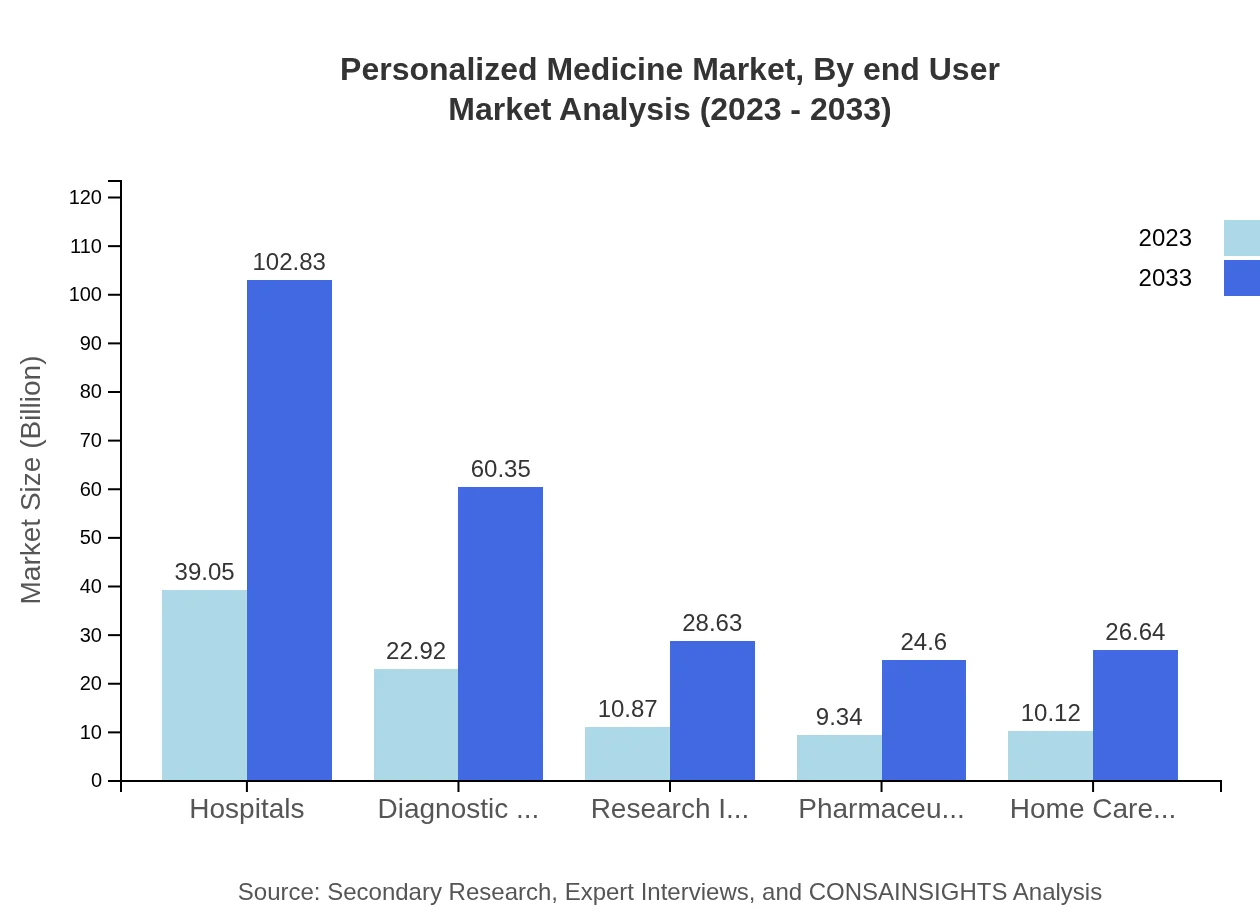
End users include hospitals, diagnostic laboratories, and pharmaceutical companies. Hospitals represent the largest segment as they implement personalized treatment protocols in real-time patient management, significantly enhancing the quality of care.
Personalized Medicine Market Analysis By Region
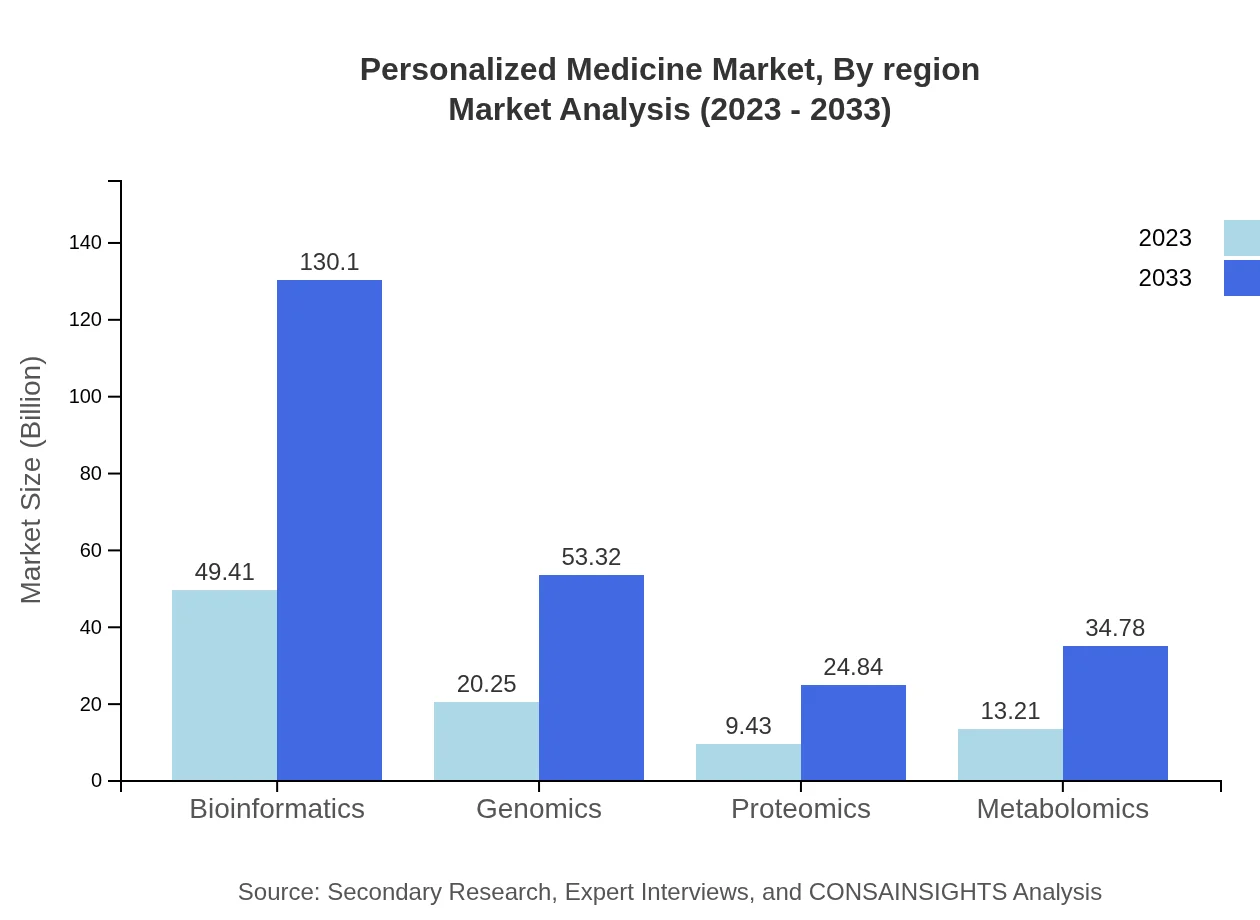
Technological advancements such as next-generation sequencing, CRISPR technology, and bioinformatics are redefining personalized medicine. These technologies enable better identification of genetic markers and disease predispositions, facilitating the development of tailored therapies.
Personalized Medicine Market Trends and Future Forecast
Tell us your focus area and get a customized research report.
Global Market Leaders and Top Companies in the Personalized Medicine Industry
Illumina, Inc.:
Illumina is a leader in genomic sequencing and analysis, providing technological advancements that enable the effective implementation of personalized medicine approaches.Roche Diagnostics:
Roche is renowned for its innovative diagnostics and therapeutic solutions in the field of personalized medicine, particularly for oncology and chronic disease management.Thermo Fisher Scientific:
Thermo Fisher Scientific offers a wide range of tools, services, and reagents that crucially support personalized medicine research and clinical application.Pfizer, Inc.:
Pfizer is actively involved in developing targeted therapies and companion diagnostics, driving advancements in personalized medicine in various therapeutic areas.Novartis:
Novartis focuses on precision medicine with a strong portfolio of therapies tailored to specific genetic profiles, especially in oncology and immunology.We're grateful to work with incredible clients.








FAQs
What is the market size of personalized medicine in 2023?
The market size in 2023 is $92.30 Billion, as reported for the worldwide personalized medicine sector covering diagnostics, therapeutics and related services.
How big will the personalized medicine market be in 2033?
By 2033 the market is projected to reach $243.05 Billion, reflecting expansion across product categories and regional markets through the forecast period.
What is CAGR of the personalized medicine market for 2023 to 2033?
The reported compound annual growth rate for the 2023 to 2033 period is 9.8%, capturing the market’s projected expansion over that decade.
Is there a single fastest Growing region in the Personalized Medicine Market Report market?
No single fastest-growing region is stated for the Personalized Medicine Market Report market because the top regional implied CAGR values are within 0.15 percentage points of each other, making the ranking too close to call reliably.
Which companies are noted as key players?
Top companies identified include Illumina, Inc., Roche Diagnostics, Thermo Fisher Scientific, Pfizer, Inc., and Novartis as leading contributors to market activity.
What are the main product categories in this market?
Primary product groupings are therapeutics, diagnostics and services, which together support personalized care delivery across multiple applications.
How big is the market in Europe in 2023 and 2033?
Europe’s market is reported at $24.91 Billion in 2023, increasing to $65.6 Billion by 2033, driven by diagnostic and therapeutic adoption.
What role do research institutes play in market growth?
Research institutes contribute through R&D collaboration, clinical validation and translation of genomic discoveries into diagnostic and therapeutic applications.
Who are the main end Users of personalized medicine solutions?
Primary end-users include hospitals, diagnostic laboratories, research institutes, pharmaceutical companies and home care settings that deploy diagnostics and therapies.
What drives demand for diagnostics in personalized medicine?
Demand is supported by the need for precise patient stratification, disease biomarker identification and integration with therapeutic decision-making across applications like oncology.