

Anesthetic Gas Machine Market Report
First published: 11 October 2024 | Last updated: 28 May 2026 | Report Code: anesthetic-gas-machine
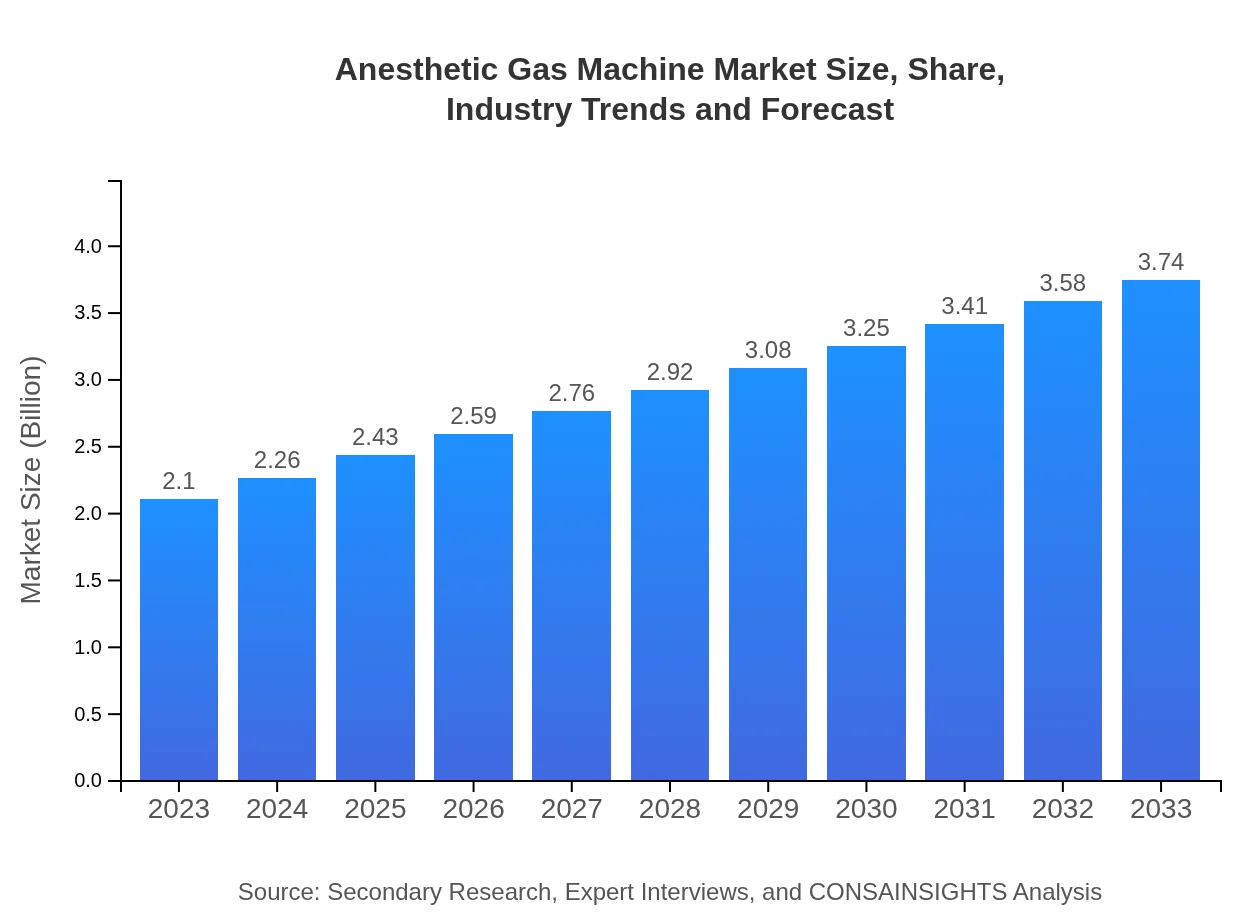
Anesthetic Gas Machine Market — USD 2.1 billion in 2023, Growing to USD 3.74B by 2033 at 5.8% CAGR
This report provides a comprehensive analysis of the Anesthetic Gas Machine market, highlighting critical insights and data from 2023 to 2033, including market size, growth forecasts, regional analysis, and competitive landscape.
Key Takeaways
- Global market value grows from $2.10 Billion in 2023 to $3.74 Billion in 2033 at a 5.8% CAGR.
- North America is largest regional market; Latin America is regional market region based on implied CAGR across 2023 to 2033.
- Latin America is the regional market region with an implied 6.13% CAGR, moving from $0.16 Billion to $0.29 Billion.
- Electronic machines, portable units, and outpatient surgery demand are primary trend areas shaping product development.
- Major vendors include GE Healthcare, Philips Healthcare, Dräger, and Mindray, reflecting concentrated supplier presence.
Anesthetic Gas Machine Market Report — Executive Summary
Regional analysis shows North America as largest market and Latin America as fastest-growing region by implied CAGR. The global anesthetic gas machine market is projected to expand from $2.10 Billion in 2023 to $3.74 Billion by 2033 at a 5.8% CAGR. Growth is supported by an increase in surgical procedures, higher healthcare spending, and technological shifts toward electronic and portable devices. Regional dynamics vary: North America stands as the largest market with notable expansion, while Latin America records the highest implied growth rate. Product segmentation covers fixed and portable machines; technology split includes electronic and mechanical platforms; end users range from hospitals to ambulatory surgical centers. Competitive activity centers on innovation and partnerships among established suppliers such as GE Healthcare, Philips Healthcare, Dräger, and Mindray. This report structures findings around market drivers, regional trends, product and technology segmentation, and vendor positioning to inform strategy and investment decisions over the 2023 to 2033 forecast period.
Key Growth Drivers
- Rising volume of surgical procedures that increases demand for reliable anesthetic delivery systems.
- Adoption of electronic anesthetic machines that offer enhanced monitoring and patient safety features.
- Expansion of outpatient and ambulatory care settings driving demand for portable anesthetic units.
- Increased healthcare expenditure prompting upgrades and replacement of legacy equipment in hospitals.
- Competitive pressure encouraging manufacturers to integrate advanced functionality and user-friendly interfaces.
| Metric | Value |
|---|---|
| Study Period | 2023 - 2033 |
| 2023 Market Size | $2.10 Billion |
| CAGR (2023-2033) | 5.8% |
| 2033 Market Size | $3.74 Billion |
| Top Companies | GE Healthcare, Philips Healthcare, Dräger, Mindray |
| Published Date | 11 October 2024 |
| Last Modified Date | 28 May 2026 |
Anesthetic Gas Machine Market Overview
Customize Anesthetic Gas Machine Market Report market research report
- ✔ Get in-depth analysis of Anesthetic Gas Machine market size, growth, and forecasts.
- ✔ Understand Anesthetic Gas Machine's regional dynamics and industry-specific trends.
- ✔ Identify potential applications, end-user demand, and growth segments in Anesthetic Gas Machine
What is the Market Size & CAGR of Anesthetic Gas Machine Market Report market in 2023?
Anesthetic Gas Machine Industry Analysis
Anesthetic Gas Machine Market Segmentation and Scope
Tell us your focus area and get a customized research report.
Anesthetic Gas Machine Market Report Market Analysis Report by Region
Europe Anesthetic Gas Machine Market Report:
Europe grows from $0.53 Billion in 2023 to $0.94 Billion in 2033. This progression is supported by healthcare modernization, rising surgical demand, and regulatory emphasis on equipment performance and patient safety.Asia Pacific Anesthetic Gas Machine Market Report:
Asia Pacific grows from $0.42 Billion in 2023 to $0.74 Billion in 2033. Growth drivers include expanding healthcare access, rising numbers of surgical interventions, and uptake of portable and electronic anesthetic machines in diverse care settings.North America Anesthetic Gas Machine Market Report:
North America is largest regional market, rising from $0.75 Billion in 2023 to $1.34 Billion in 2033. Regional expansion reflects high procedure volumes, adoption of advanced electronic systems, and ongoing capital investment in hospital infrastructure.South America Anesthetic Gas Machine Market Report:
Latin America is fastest-growing region by implied CAGR, increasing from $0.16 Billion in 2023 to $0.29 Billion in 2033. 16 Billion in 2023 to $0.29 Billion in 2033 and is identified as the regional growth market with an implied 6.13% CAGR. Market momentum is linked to expanding healthcare services and targeted upgrades in perioperative equipment.Middle East & Africa Anesthetic Gas Machine Market Report:
Middle East and Africa grows from $0.24 Billion in 2023 to $0.42 Billion in 2033. Demand is influenced by healthcare infrastructure development, increasing surgical capacity, and investments in modern anesthetic technologies.Tell us your focus area and get a customized research report.
Research Methodology
Anesthetic Gas Machine Market Analysis By Product
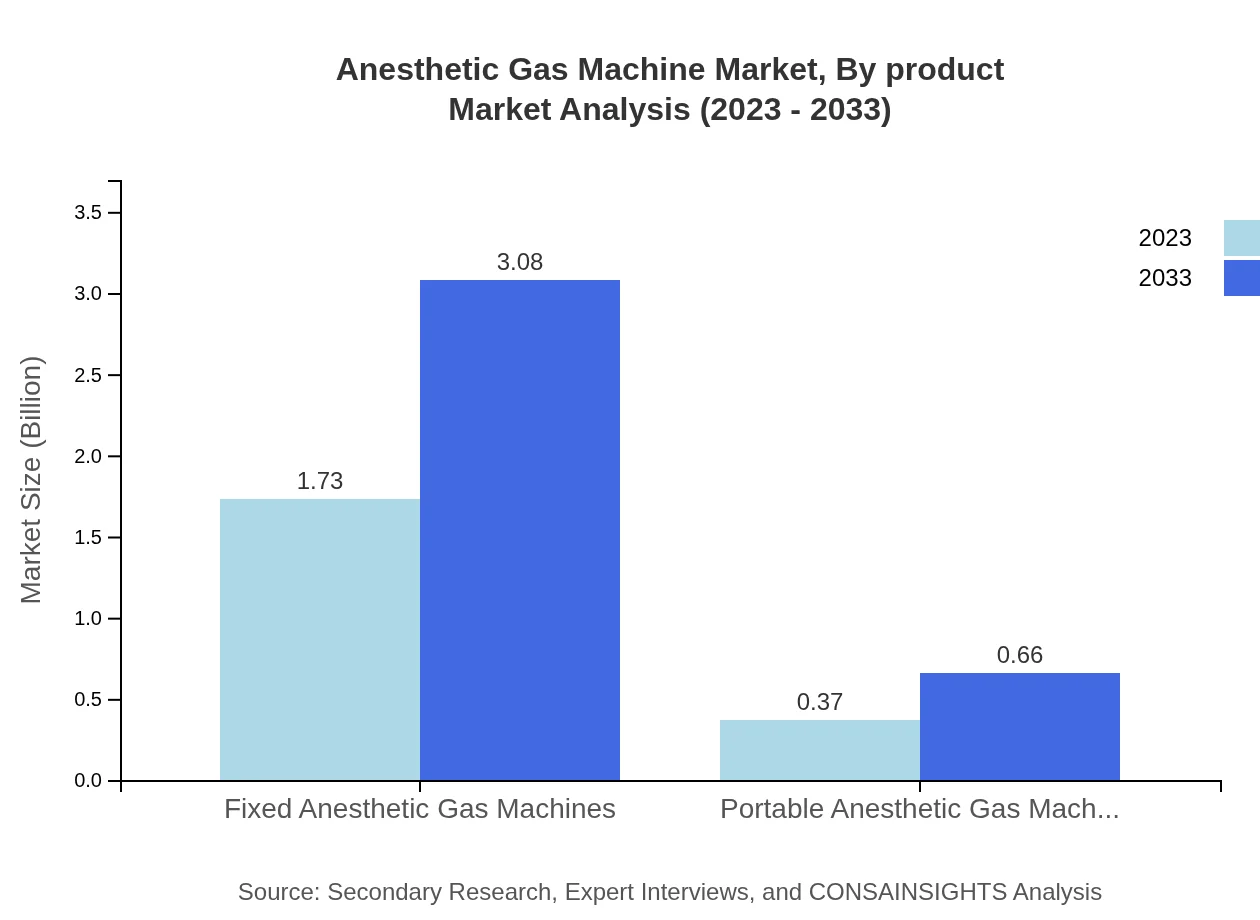
The anesthetic gas machine market is bifurcated into fixed and portable anesthetic gas machines. Fixed machines dominate the market with an 82.28% share in 2023, providing stability during surgical procedures. The portable segment, while smaller at 17.72%, caters to the growing need for flexibility in healthcare settings, particularly in emergency and outpatient care.
Anesthetic Gas Machine Market Analysis By Technology
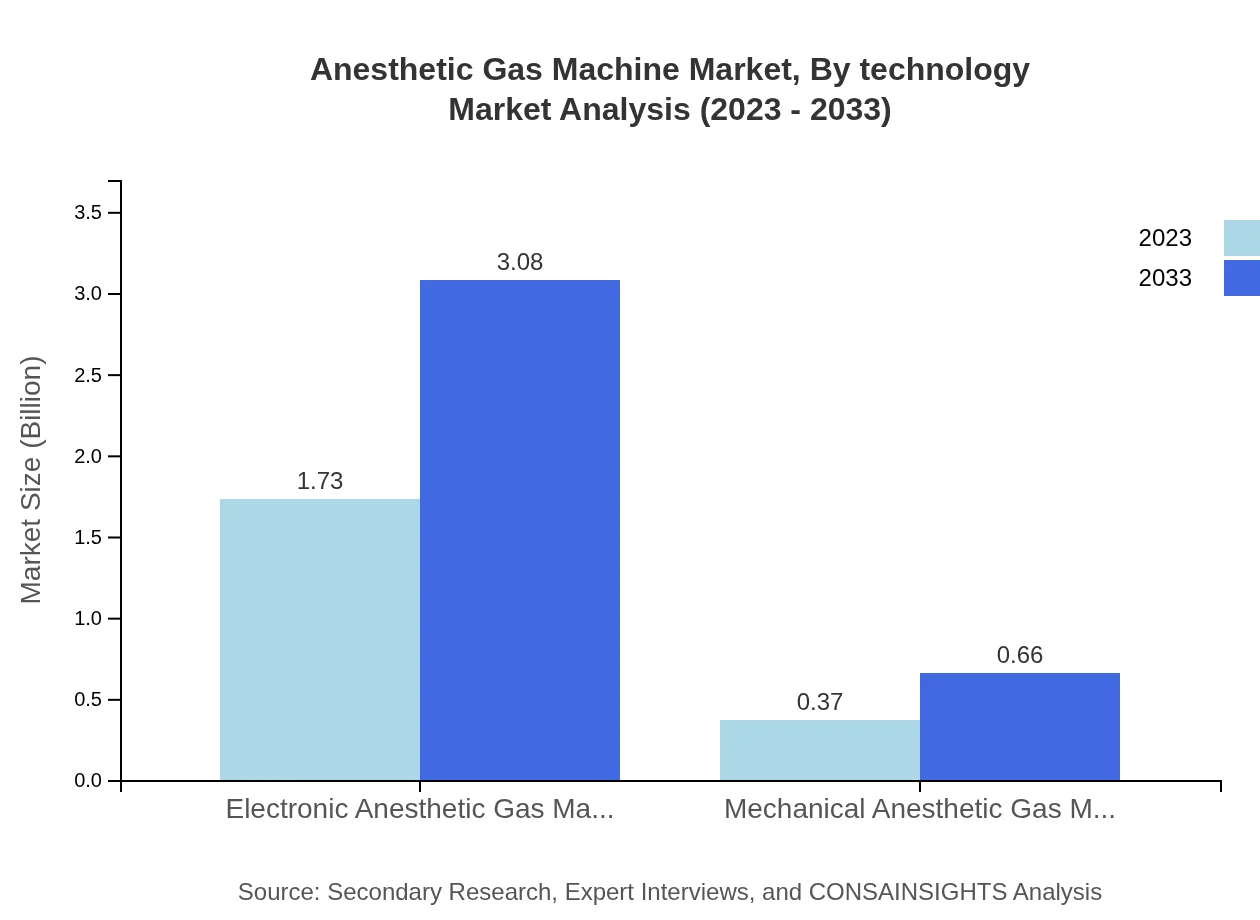
The market segmentation includes electronic and mechanical anesthetic gas machines. Electronic models constitute 82.28% of the market in 2023 due to their enhanced functionality and integration with advanced monitoring systems. Mechanical machines, while trailing at 17.72%, remain relevant in certain settings that prefer traditional, straightforward designs.
Anesthetic Gas Machine Market Analysis By End User
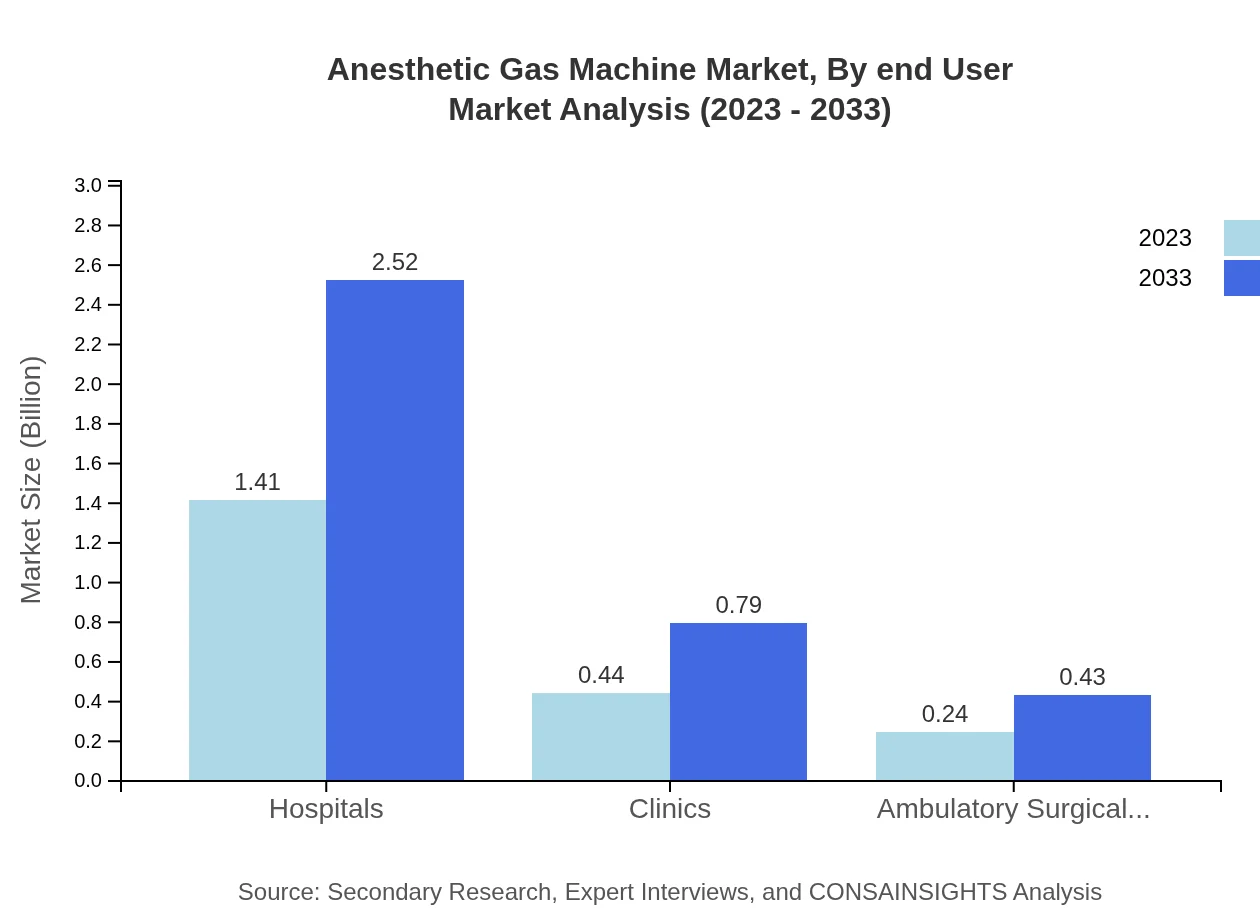
Hospitals are the largest end users of anesthetic gas machines, accounting for 67.37% of the market in 2023. Clinics and ambulatory surgical centers have shares of 21.01% and 11.62% respectively, reflecting a shift towards outpatient procedures and non-hospital settings for surgical operations.
Anesthetic Gas Machine Market Analysis By Application
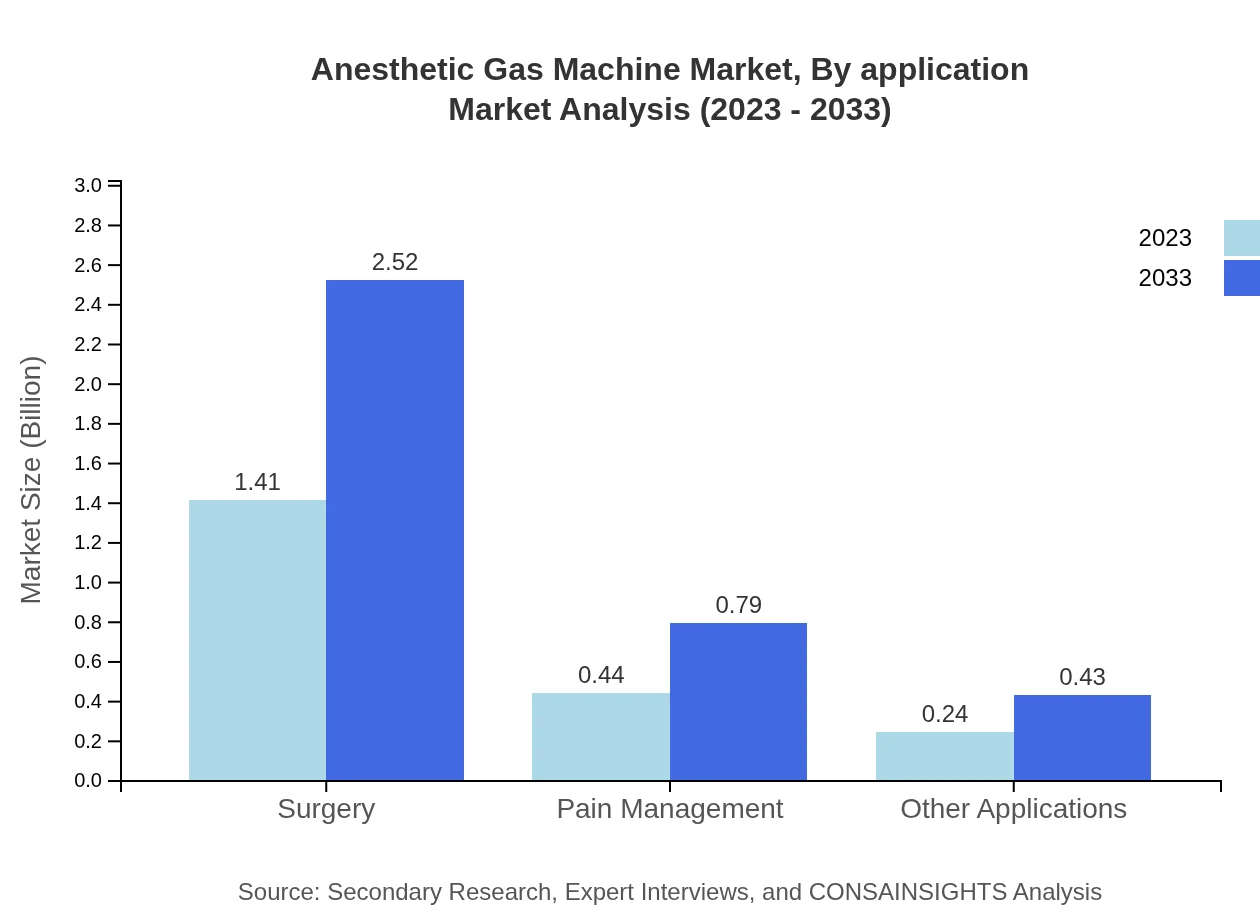
The market is categorized by applications including surgery (67.37% share), pain management (21.01%), and other applications (11.62%). The surgical application segment is anticipated to maintain its dominance due to the rising complexity and frequency of surgeries performed globally.
Anesthetic Gas Machine Market Analysis By Region
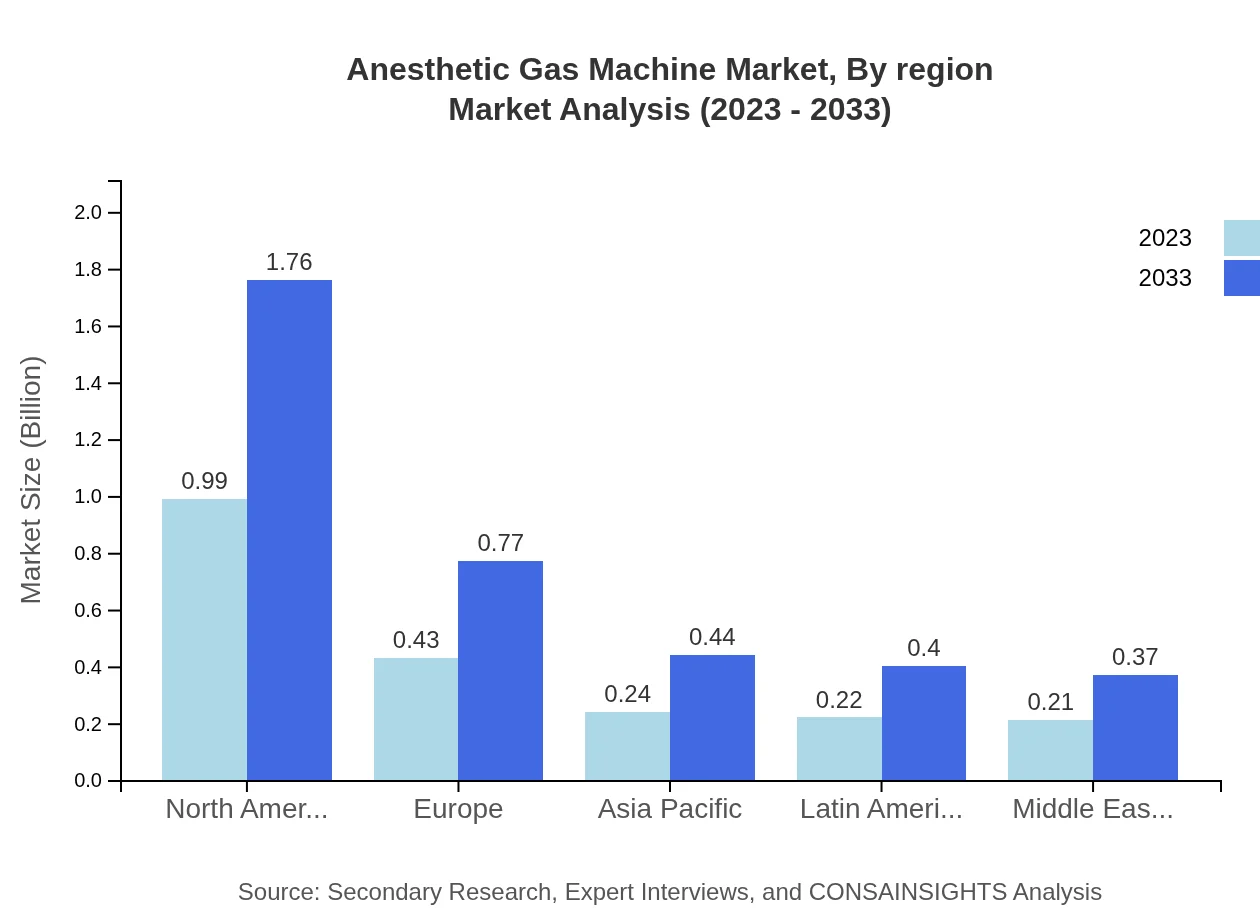
Regional analysis shows varying dynamics with North America leading in total market value, followed by Europe and Asia Pacific. Each region presents unique growth opportunities shaped by regulatory frameworks, healthcare infrastructure development, and the adoption of advanced technologies.
Anesthetic Gas Machine Market Trends and Future Forecast
Tell us your focus area and get a customized research report.
Global Market Leaders and Top Companies in Anesthetic Gas Machine Industry
GE Healthcare:
GE Healthcare is a prominent player known for its innovative medical technologies and equipment, including advanced anesthetic gas machines that enhance patient safety and surgical outcomes.Philips Healthcare:
Philips Healthcare offers cutting-edge solutions in anesthetic delivery systems that incorporate state-of-the-art monitoring technologies, catering to the demands of modern surgical environments.Dräger:
Dräger specializes in medical technology and has a substantial portfolio of anesthetic gas machines recognized for reliability and precision in anesthesia delivery.Mindray:
Mindray offers a comprehensive range of anesthesia solutions, combining innovative designs with user-friendly interfaces to support healthcare providers in various settings.We're grateful to work with incredible clients.









FAQs
What is the market size of the anesthetic gas machine market in 2023?
The market size in 2023 is $2.10 Billion, reflecting current deployment across hospitals, clinics and ambulatory surgical centers globally.
How big will the market be by 2033?
By 2033 the market is projected to reach $3.74 Billion according to the specified forecast period and growth assumptions provided.
What is CAGR of the forecast period for the market?
The reported compound annual growth rate for 2023 to 2033 is 5.8%, representing the projected average annual expansion over the decade.
Which region is the fastest Growing in the Anesthetic Gas Machine Market Report market?
Latin America is the fastest-growing region, projected to expand from $0.16 Billion in 2023 to $0.29 Billion in 2033, reflecting an implied 6.13% CAGR over the forecast period.
Why is Latin America highlighted in the report?
Latin America is noted as the regional market region with an implied 6.13% CAGR, increasing from $0.16 Billion to $0.29 Billion over the forecast period.
Who are the top companies active in this market?
Top companies listed in the report include GE Healthcare, Philips Healthcare, Dräger, and Mindray as key suppliers and innovators.
What product segments are covered in the analysis?
The report examines fixed and portable anesthetic gas machines, capturing both stationary hospital systems and mobile units for outpatient care.
How are technology types categorized in the report?
Technology segmentation includes electronic anesthetic gas machines and mechanical anesthetic gas machines, reflecting differing control and monitoring capabilities.
What end users does the market analysis consider?
End-user categories include hospitals, clinics, and ambulatory surgical centers, covering the primary venues where anesthetic gas machines are deployed.
Why are electronic machines gaining traction?
Electronic machines are increasingly adopted for their improved precision, monitoring capabilities, and integration potential with clinical information systems.