

Bionics Market Report
First published: 11 October 2024 | Last updated: 25 May 2026 | Report Code: bionics
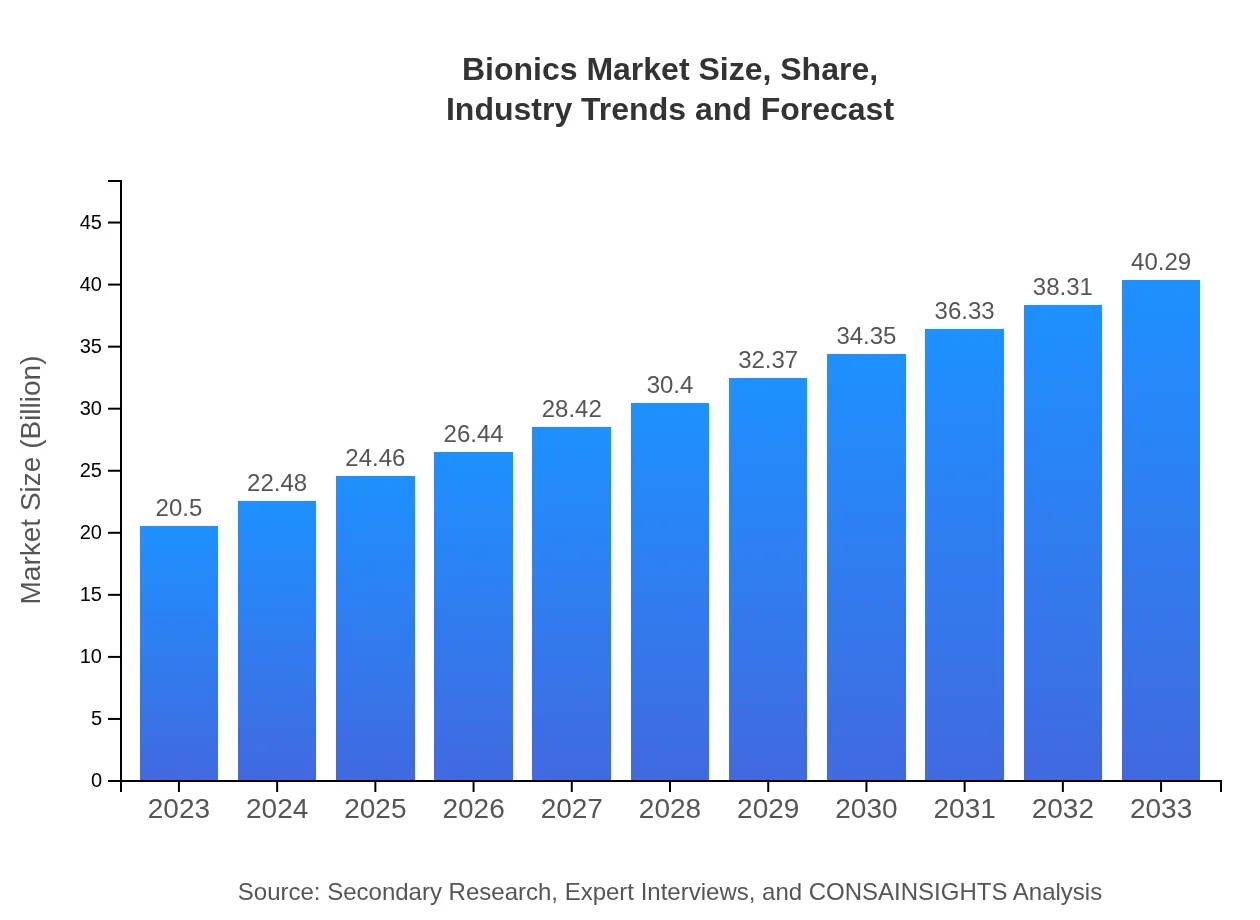
Bionics Market — USD 20.5 billion in 2023, Growing to USD 40.29B by 2033 at 6.8% CAGR
This report provides a comprehensive analysis of the Bionics market, exploring current market conditions and future growth projections from 2023 to 2033. Key insights include market size, trends, segmentation, and competitive landscape to guide stakeholders in strategic decision-making.
Key Takeaways
- Global market value rises from $20.50 Billion in 2023 to $40.29 Billion in 2033 with a 6.8% CAGR over 2023 to 2033.
- North America is largest regional market, while no single fastest-growing region is stated because regional CAGR differences remain within 0.15 percentage points.
- Europe grows from $6.12 Billion in 2023 to $12.03 Billion in 2033, reflecting sustained regional investment and adoption.
- Asia Pacific expands from $3.86 Billion in 2023 to $7.59 Billion in 2033, driven by rising demand and healthcare access.
- Key suppliers include Össur, Smith & Nephew, Hanger Inc., and InMotion, reflecting active industry participation.
Bionics Market Report — Executive Summary
North America remains largest market by forecast-period value, while no single fastest-growing region is stated because top regional growth rates are separated by less than 0.15 percentage points. The bionics market is forecast to more than double from $20.50 Billion in 2023 to $40.29 Billion in 2033, reflecting a 6.8% CAGR over the 2023 to 2033 period. Growth is propelled by rising demand for prosthetics, orthotics and exoskeletons, expanding rehabilitation services, and technological advancements in control systems and biofeedback. Regional dynamics show North America as the largest market, supported by established healthcare infrastructure and investment. Leading companies such as Össur, Smith & Nephew, Hanger Inc., and InMotion are active in product development. The report structures analysis across product types, technologies, applications and end users, and synthesizes primary interviews, company documentation and expert validation to present market trends and strategic implications.
Key Growth Drivers
- Increased need for prosthetics and orthotics due to demographic shifts and higher prevalence of disability amplifies demand.
- Technological progress in brain-machine interfaces and robotic control systems improves device functionality and user outcomes.
- Expanding rehabilitation services and tele-rehabilitation increase uptake of exoskeletons and supportive devices.
- Investment by established medical-device companies accelerates product development and market availability.
- Enhanced biofeedback and connectivity enable personalized therapies, supporting broader adoption across end users.
| Metric | Value |
|---|---|
| Study Period | 2023 - 2033 |
| 2023 Market Size | $20.50 Billion |
| CAGR (2023-2033) | 6.8% |
| 2033 Market Size | $40.29 Billion |
| Top Companies | Össur, Smith & Nephew, Hanger Inc., InMotion |
| Published Date | 11 October 2024 |
| Last Modified Date | 25 May 2026 |
Bionics Market Overview
Customize Bionics Market Report market research report
- ✔ Get in-depth analysis of Bionics market size, growth, and forecasts.
- ✔ Understand Bionics's regional dynamics and industry-specific trends.
- ✔ Identify potential applications, end-user demand, and growth segments in Bionics
What is the Market Size & CAGR of Bionics Market Report market in 2023?
Bionics Industry Analysis
Bionics Market Segmentation and Scope
Tell us your focus area and get a customized research report.
Bionics Market Report Market Analysis Report by Region
Europe Bionics Market Report:
Europe grows from $6.12 Billion in 2023 to $12.03 Billion in 2033. Continued investment in rehabilitation services, regulatory frameworks, and technology adoption supports regional expansion and device uptake.Asia Pacific Bionics Market Report:
Asia Pacific grows from $3.86 Billion in 2023 to $7.59 Billion in 2033. Market momentum is linked to improving healthcare access, rising rehabilitation capacity, and increasing focus on assistive technologies across the region.North America Bionics Market Report:
North America is largest regional market, rising from $7.75 Billion in 2023 to $15.23 Billion in 2033. Regional strength is underpinned by advanced healthcare infrastructure, investment in clinical research, and active industry participation by major suppliers.South America Bionics Market Report:
Latin America grows from $0.51 Billion in 2023 to $1 Billion in 2033. Growth drivers include broader healthcare service availability, rising awareness of bionic solutions, and gradual increases in regional investment.Middle East & Africa Bionics Market Report:
Middle East and Africa grows from $2.26 Billion in 2023 to $4.44 Billion in 2033. Adoption is supported by targeted healthcare initiatives, investments in rehabilitation infrastructure, and growing interest in assistive device technologies.Tell us your focus area and get a customized research report.
Research Methodology
Bionics Market Analysis By Product
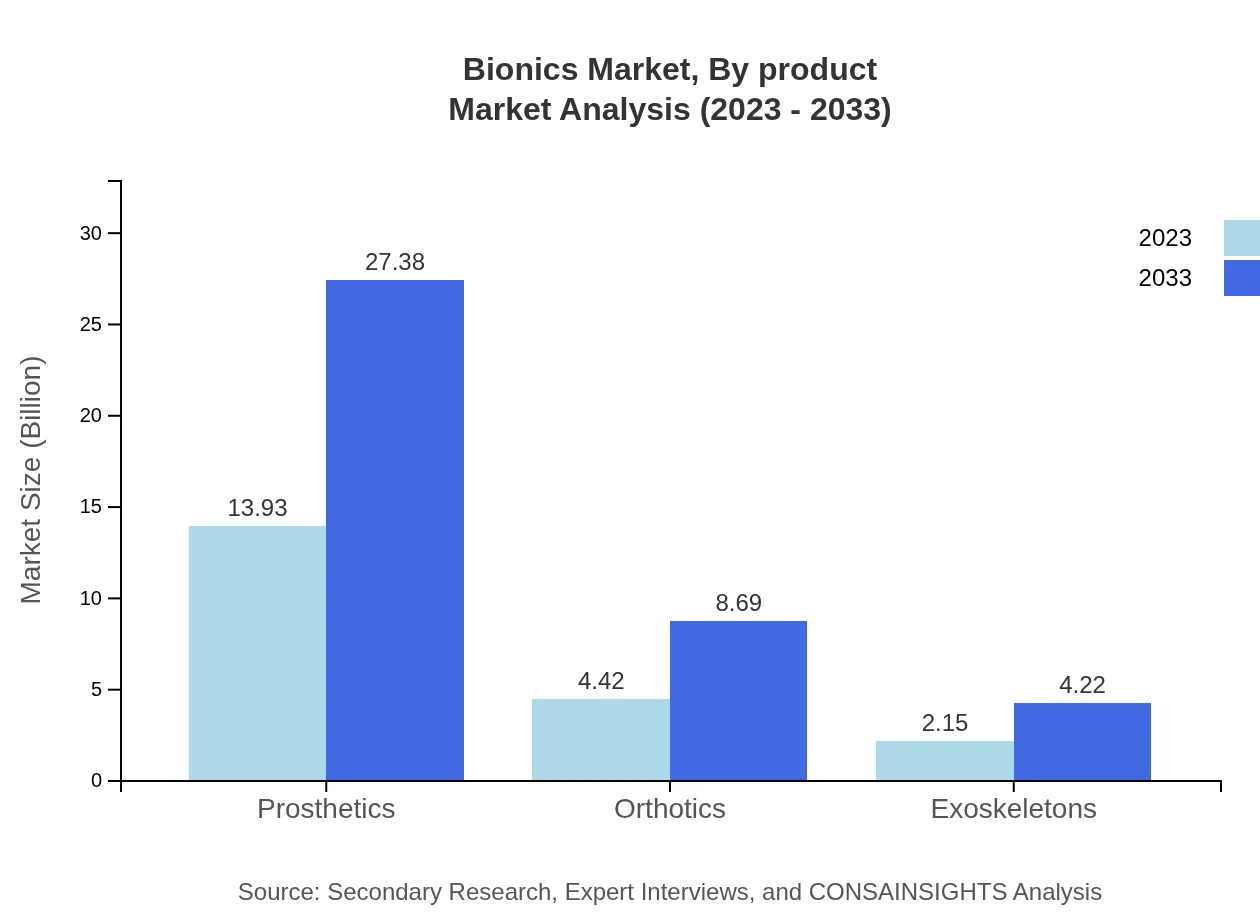
The Bionics market is heavily influenced by the product segment. Currently, prosthetics dominate the market with a size of $13.93 billion in 2023, expected to reach $27.38 billion by 2033. Orthotics, valued at $4.42 billion in 2023, will also grow to $8.69 billion. Exoskeletons, although smaller, are gaining traction with anticipated growth from $2.15 billion to $4.22 billion.
Bionics Market Analysis By Application
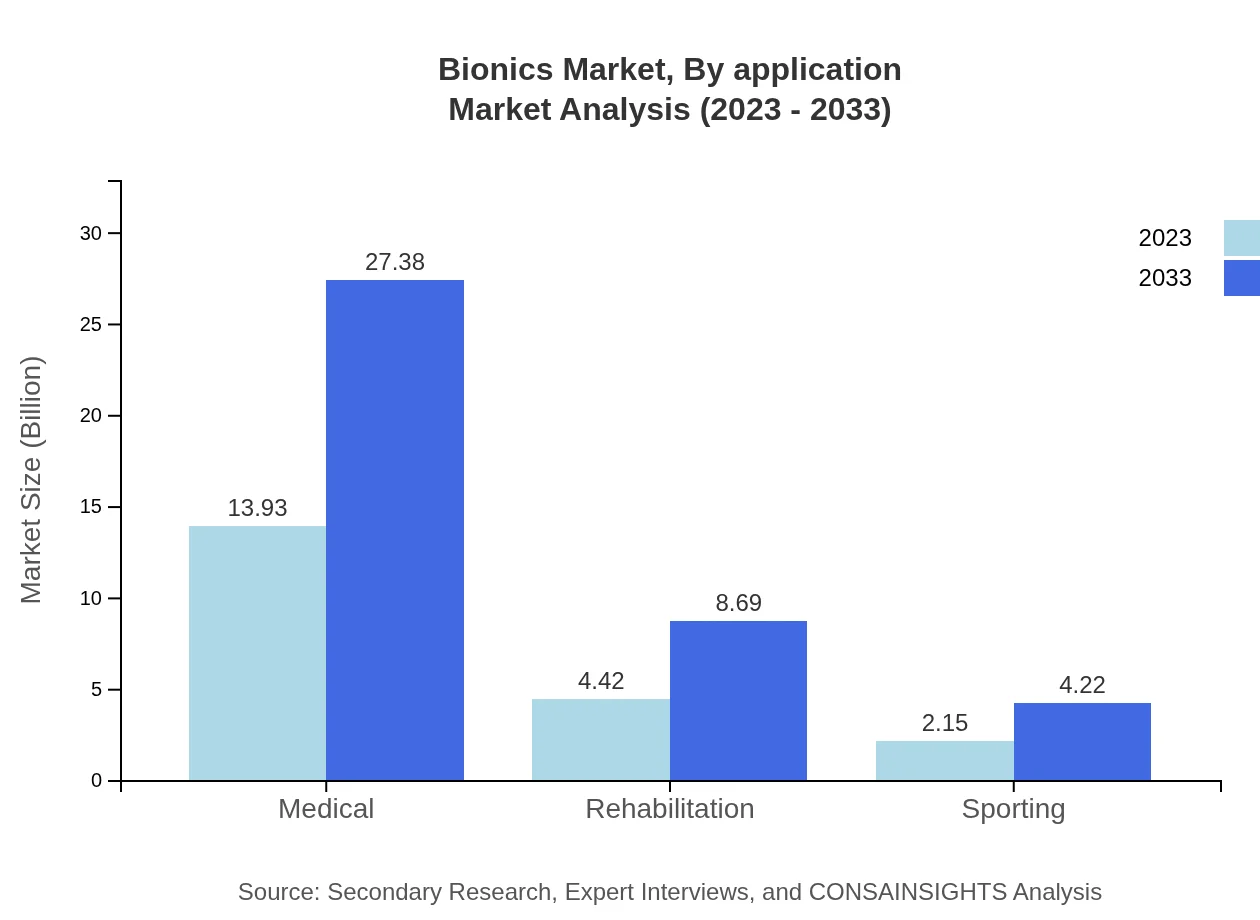
Bionics applications include medical, rehabilitation, and sporting sectors. The medical application segment is currently the largest, with a market size of $13.93 billion in 2023, forecasted to also reach $27.38 billion by 2033. Rehabilitation applications follow with growth from $4.42 billion to $8.69 billion, while sporting applications expect an increase from $2.15 billion to $4.22 billion.
Bionics Market Analysis By End User
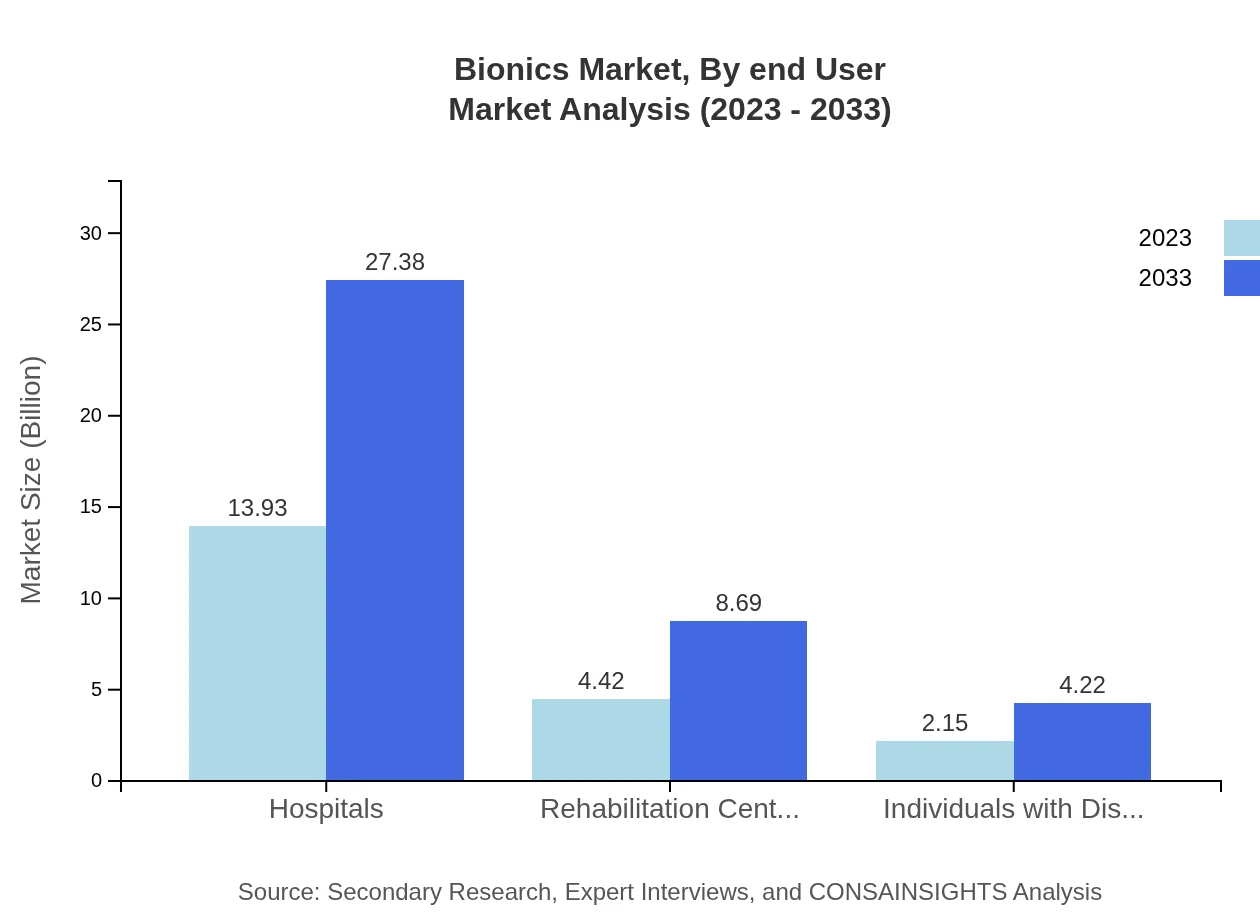
In terms of end-users, the largest segment comprises hospitals, projected to maintain significant contributions with market growth from $13.93 billion in 2023 to $27.38 billion by 2033. Rehabilitation centers and individuals with disabilities also form crucial segments, moving from $4.42 billion to $8.69 billion and from $2.15 billion to $4.22 billion, respectively.
Bionics Market Analysis By Technology
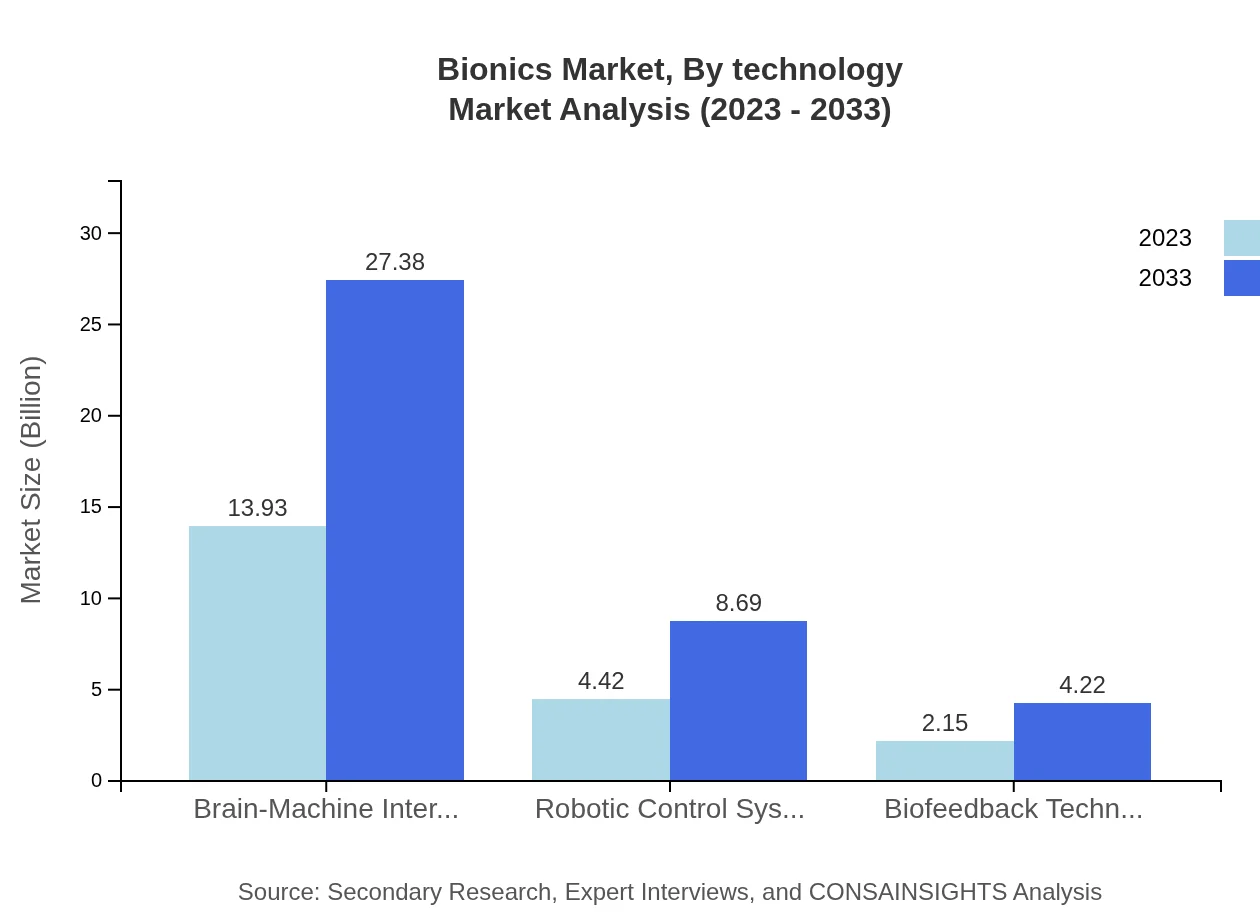
Technological innovations play a vital role in the Bionics market. The integration of artificial intelligence and machine learning enhances device functionality. The growth of brain-machine interfaces, currently valued at $13.93 billion in 2023 with a forecast doubling by 2033, underlines the rapid evolution in this space. Robotic control systems and biofeedback technologies are also growing with expected market sizes following similar growth trajectories.
Bionics Market Analysis By Region Type
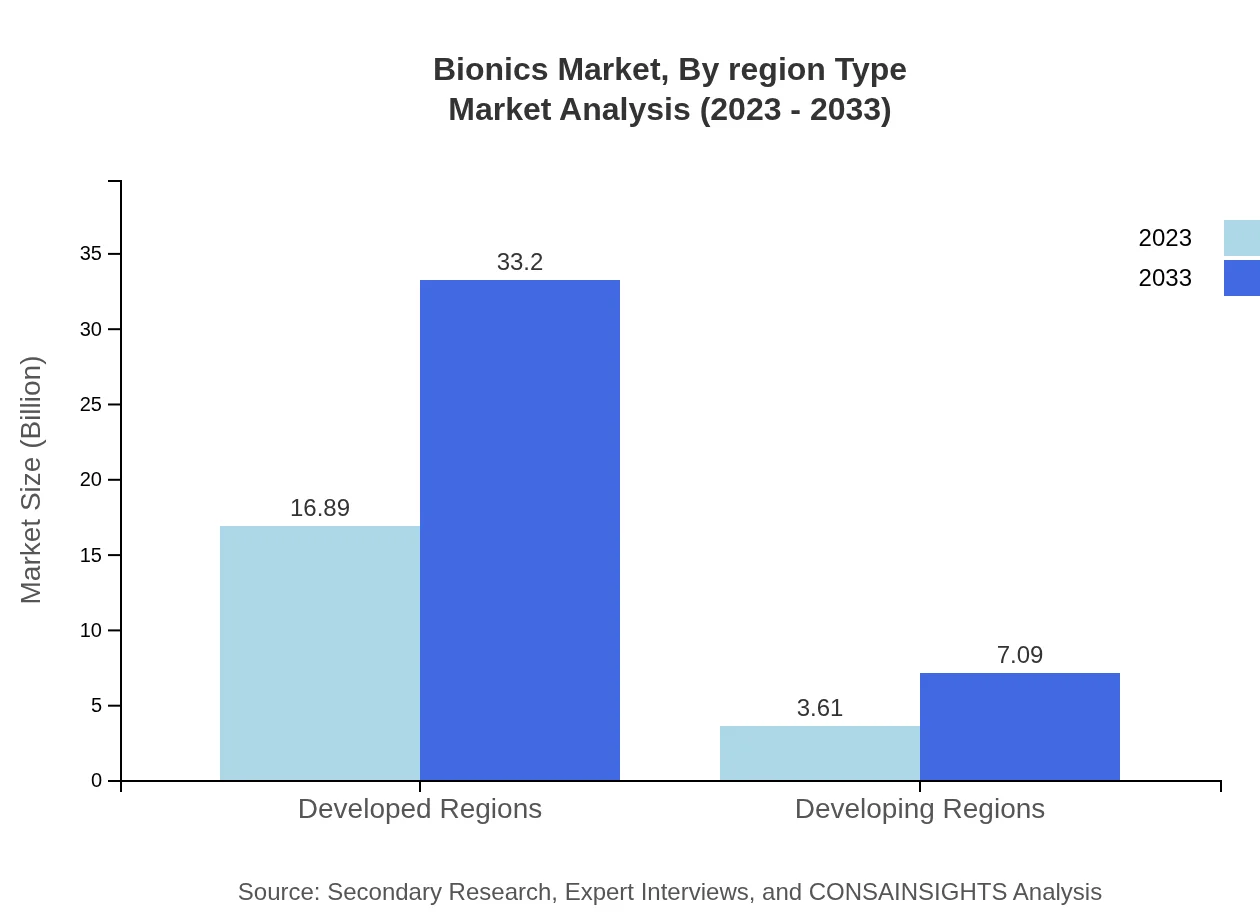
The market can be segmented into developed and developing regions. Developed regions currently lead the market, with a size of $16.89 billion in 2023 expected to reach $33.20 billion by 2033, representing 82.41% market share. Conversely, developing regions, valued at $3.61 billion in 2023, are projected to grow steadily to $7.09 billion, showcasing an increasing demand for bionic solutions.
Bionics Market Trends and Future Forecast
Tell us your focus area and get a customized research report.
Global Market Leaders and Top Companies in Bionics Industry
Össur:
A global leader in non-invasive orthopedic solutions specializing in advanced bionic prosthetics to enhance human mobility and achieve personal independence.Smith & Nephew:
Known for its innovative medical devices, Smith & Nephew excels in advanced technologies, focusing on the rehabilitation and accelerating recovery for individuals.Hanger Inc.:
A company with a legacy in creating advanced prosthetics and orthotics, Hanger Inc. offers comprehensive rehabilitation solutions and adaptive equipment for individuals with disabilities.InMotion:
InMotion focuses on the development of robotic exoskeletons that assist individuals with mobility challenges, transforming the approach to rehabilitation and independent movement.We're grateful to work with incredible clients.









FAQs
What is the market size of the bionics market in 2023?
The market size for the bionics market in 2023 is $20.50 Billion, as stated for the base year used in the report’s forecast horizon.
How big will the bionics market be in 2033?
By 2033 the bionics market is projected to reach $40.29 Billion according to the report’s stated end‑period estimate for the forecast window.
What is CAGR of the bionics market over the forecast period?
The compound annual growth rate for the bionics market over the 2023 to 2033 forecast period is 6.8% as reported in the study.
Is there a single fastest Growing region in the Bionics Market Report market?
No single fastest-growing region is stated for the Bionics Market Report market because the top regional implied CAGR values are within 0.15 percentage points of each other, making the ranking too close to call reliably.
Which companies are listed as top players in the report?
Top companies named in the report include Össur, Smith & Nephew, Hanger Inc., and InMotion as notable market participants.
What are the principal product categories analyzed?
Principal product categories covered are prosthetics, orthotics and exoskeletons, reflecting device types serving mobility, support, and rehabilitation needs.
Who were the primary sources for the research methodology?
Primary research included interviews with industry experts, supplemented by company reports and publications as part of the study’s evidence base.
What regional growth details are provided in the report?
Regional details include exact start and end values: Europe $6.12 Billion to $12.03 Billion; Asia Pacific $3.86 Billion to $7.59 Billion; Latin America $0.51 Billion to $1 Billion.
How big is the market in Europe in 2023 and 2033?
Europe’s market size is reported as $6.12 Billion in 2023, increasing to $12.03 Billion by 2033, per the regional figures provided.
What factors drive adoption of bionic technologies?
Adoption is driven by enhanced device capabilities, growing rehabilitation services, investment in R&D, and improved access to healthcare technologies globally.