

Neurosurgery Devices Market Report
First published: 11 October 2024 | Last updated: 25 May 2026 | Report Code: neurosurgery-devices
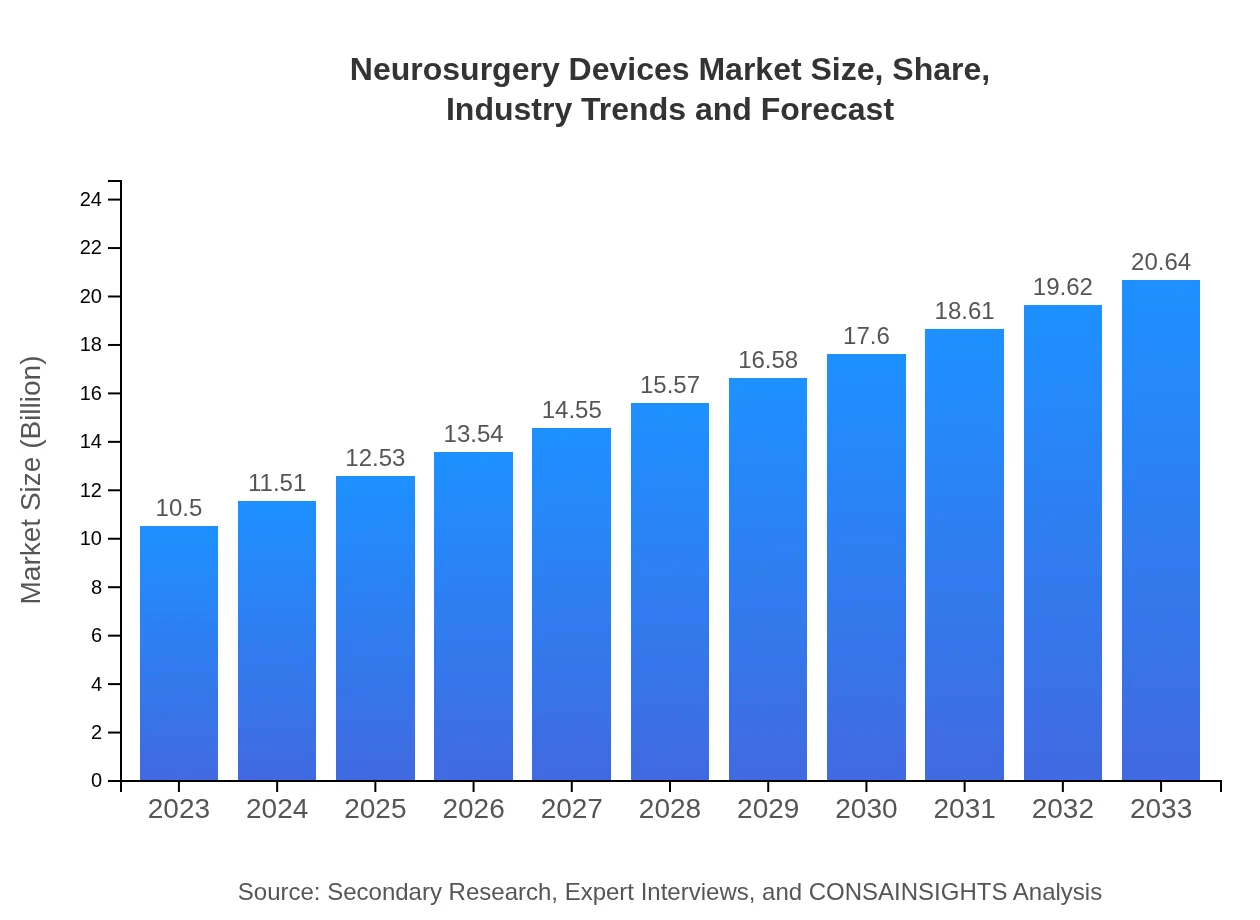
Neurosurgery Devices Market — USD 10.5 billion in 2023, Growing to USD 20.64B by 2033 at 6.8% CAGR
This report provides a comprehensive analysis of the neurosurgery devices market from 2023 to 2033, focusing on market size, growth trends, regional insights, and key players, along with detailed segmentation of applications, technologies, and materials.
Key Takeaways
- Global market projected to grow from $10.50 Billion in 2023 to $20.64 Billion in 2033 with a 6.8% CAGR.
- North America is largest regional market, while no single fastest-growing region is stated because regional CAGR differences remain within 0.15 percentage points.
- Europe and Asia Pacific show notable expansion: Europe from $2.83 Billion to $5.56 Billion; Asia Pacific from $2.01 Billion to $3.96 Billion.
- Technology segments such as robot-assisted surgery and navigation systems are central to innovation and adoption.
- Hospitals, ambulatory surgical centers, and neuroscience research institutes remain primary end-users driving demand.
Neurosurgery Devices Market Report — Executive Summary
North America remains largest market by forecast-period value, while no single fastest-growing region is stated because top regional growth rates are separated by less than 0.15 percentage points. The neurosurgery devices market is set for substantial expansion from $10.50 Billion in 2023 to $20.64 Billion by 2033, at a 6.8% CAGR. Growth is supported by advances in minimally invasive techniques, enhanced imaging, and rising investments in surgical robotics and navigation platforms. Demand is further fueled by increasing prevalence of neurological conditions and broader healthcare infrastructure spending. The market structure includes device types such as cranial implants, intracranial pressure devices, and neurosurgical instruments, with applications spanning tumor resection, trauma, functional, and vascular neurosurgery. Hospitals, ambulatory surgical centers, and neuroscience research institutes constitute primary end-users. Regional dynamics vary: North America is the largest regional market, while Europe, Asia Pacific, Latin America, and Middle East & Africa each contribute distinct growth drivers. Leading firms active in the space include Medtronic, Stryker Corporation, Johnson & Johnson, and B. Braun Melsungen AG. Regulatory complexity and cost barriers are noted restraints, while continued R&D and collaboration offer opportunities for product differentiation and market penetration.
Key Growth Drivers
- Advancements in surgical robotics and navigation systems enhancing procedural precision and adoption.
- Rising incidence and detection of neurological disorders increasing demand for diagnostic and therapeutic devices.
- Investment in healthcare infrastructure and specialized neurosurgical centers supporting broader device deployment.
- Shift toward minimally invasive procedures reducing recovery times and encouraging device uptake.
- Ongoing research initiatives by neuroscience institutes driving innovation in materials and instrumentation.
| Metric | Value |
|---|---|
| Study Period | 2023 - 2033 |
| 2023 Market Size | $10.50 Billion |
| CAGR (2023-2033) | 6.8% |
| 2033 Market Size | $20.64 Billion |
| Top Companies | Medtronic , Stryker Corporation, Johnson & Johnson, B. Braun Melsungen AG |
| Published Date | 11 October 2024 |
| Last Modified Date | 25 May 2026 |
Neurosurgery Devices Market Overview
Customize Neurosurgery Devices Market Report market research report
- ✔ Get in-depth analysis of Neurosurgery Devices market size, growth, and forecasts.
- ✔ Understand Neurosurgery Devices's regional dynamics and industry-specific trends.
- ✔ Identify potential applications, end-user demand, and growth segments in Neurosurgery Devices
What is the Market Size & CAGR of Neurosurgery Devices Market Report market in 2023?
Neurosurgery Devices Industry Analysis
Neurosurgery Devices Market Segmentation and Scope
Tell us your focus area and get a customized research report.
Neurosurgery Devices Market Report Market Analysis Report by Region
Europe Neurosurgery Devices Market Report:
Europe grows from $2.83 Billion in 2023 to $5.56 Billion in 2033. 83 Billion in 2023 to $5.56 Billion in 2033, reflecting increasing uptake of imaging and navigation systems, expanded access to specialist care, and ongoing product development supported by regional medical research funding.Asia Pacific Neurosurgery Devices Market Report:
Asia Pacific grows from $2.01 Billion in 2023 to $3.96 Billion in 2033. 01 Billion in 2023 to $3.96 Billion in 2033, supported by rising healthcare expenditure, expanding hospital networks, and growing demand for minimally invasive neurosurgical procedures and related device technologies.North America Neurosurgery Devices Market Report:
North America is largest regional market, rising from $3.44 Billion in 2023 to $6.75 Billion in 2033. Regional expansion is driven by high adoption of advanced surgical technologies, established healthcare infrastructure, and significant investments in neurosurgical research and clinical centers.South America Neurosurgery Devices Market Report:
Latin America grows from $0.79 Billion in 2023 to $1.56 Billion in 2033. 79 Billion in 2023 to $1.56 Billion in 2033, with growth underpinned by improving healthcare infrastructure, greater availability of neurosurgical services, and gradual adoption of modern surgical equipment.Middle East & Africa Neurosurgery Devices Market Report:
Middle East and Africa grows from $1.43 Billion in 2023 to $2.81 Billion in 2033. 43 Billion in 2023 to $2.81 Billion in 2033, driven by investments in healthcare facilities, expansion of specialist surgical centers, and targeted procurement of advanced neurosurgical devices.Tell us your focus area and get a customized research report.
Research Methodology
Neurosurgery Devices Market Analysis By Device Type
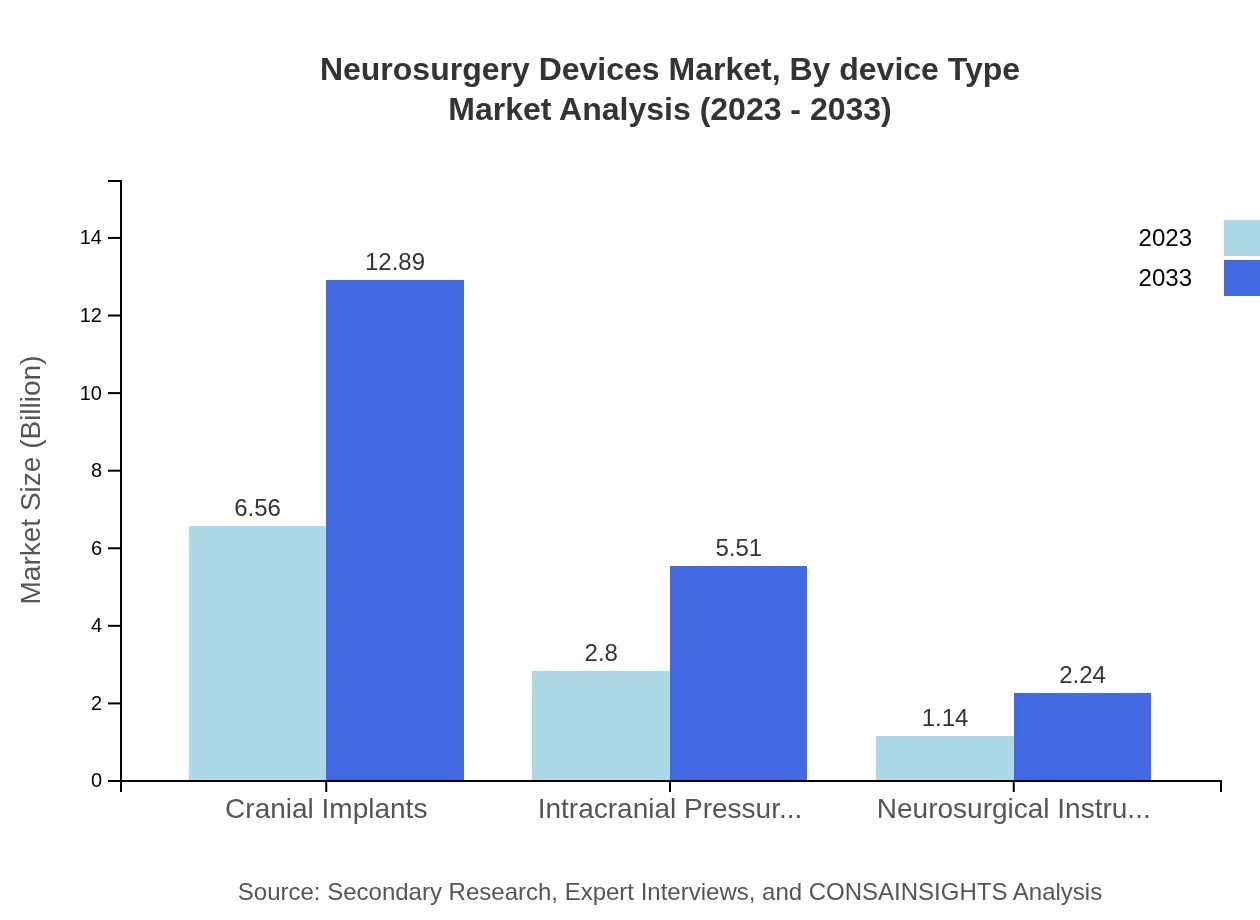
The neurosurgery devices market by device type includes surgical instruments, robot-assisted surgery systems, imaging technologies, and navigation systems. Each segment plays a crucial role in enhancing surgical outcomes and precision, leading to their increasing adoption in operating rooms. The surgical instruments segment is anticipated to dominate the market due to their extensive use in various neurosurgical procedures.
Neurosurgery Devices Market Analysis By Application
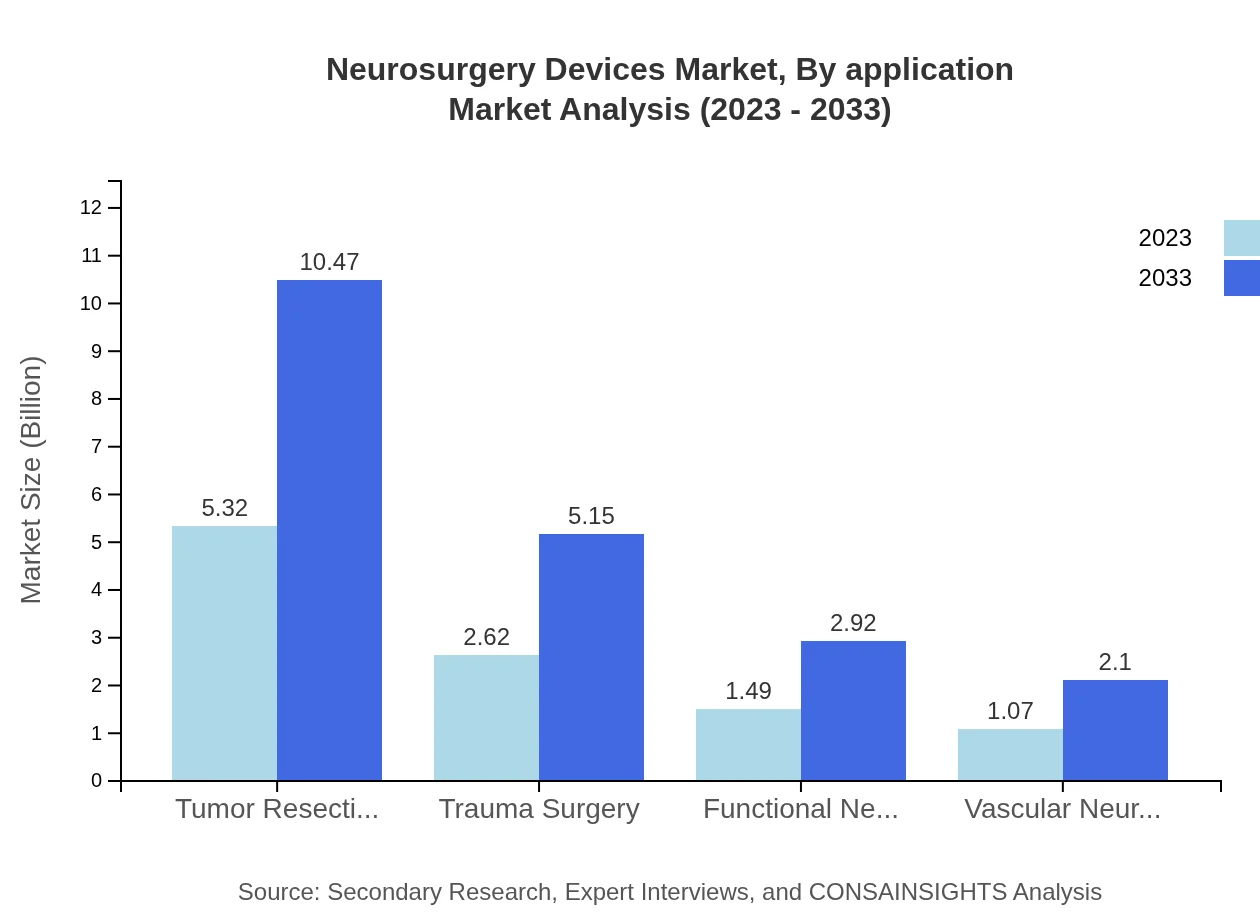
The application segment covers tumor resection, trauma surgery, functional neurosurgery, and vascular neurosurgery. Tumor resection is expected to continue leading the market, accounting for a substantial market share due to the high incidence of benign and malignant tumors.
Neurosurgery Devices Market Analysis By End User
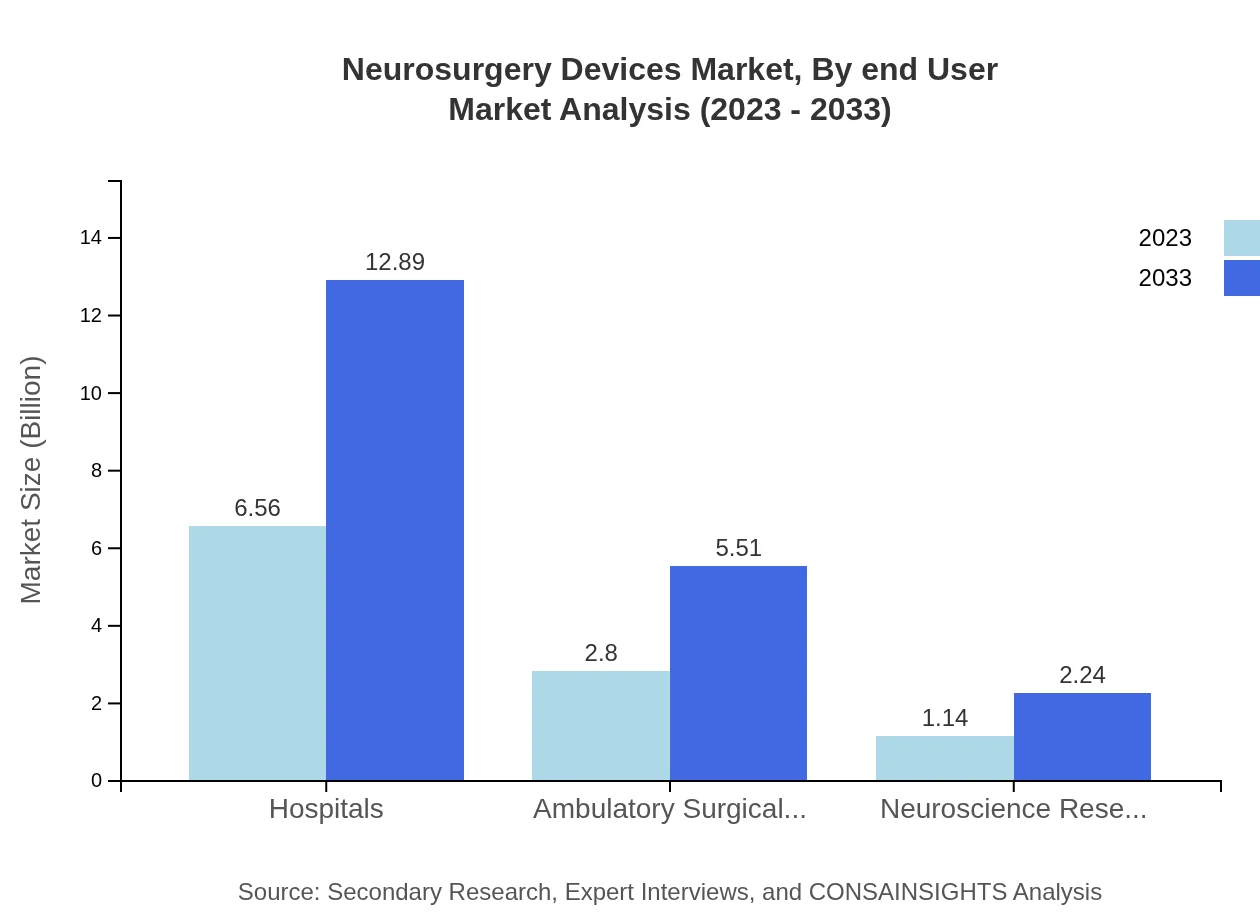
This segment includes hospitals, ambulatory surgical centers, and neuroscience research institutes. Hospitals are projected to hold the largest market share due to higher patient volumes and advanced surgical facilities available in these institutions.
Neurosurgery Devices Market Analysis By Materials
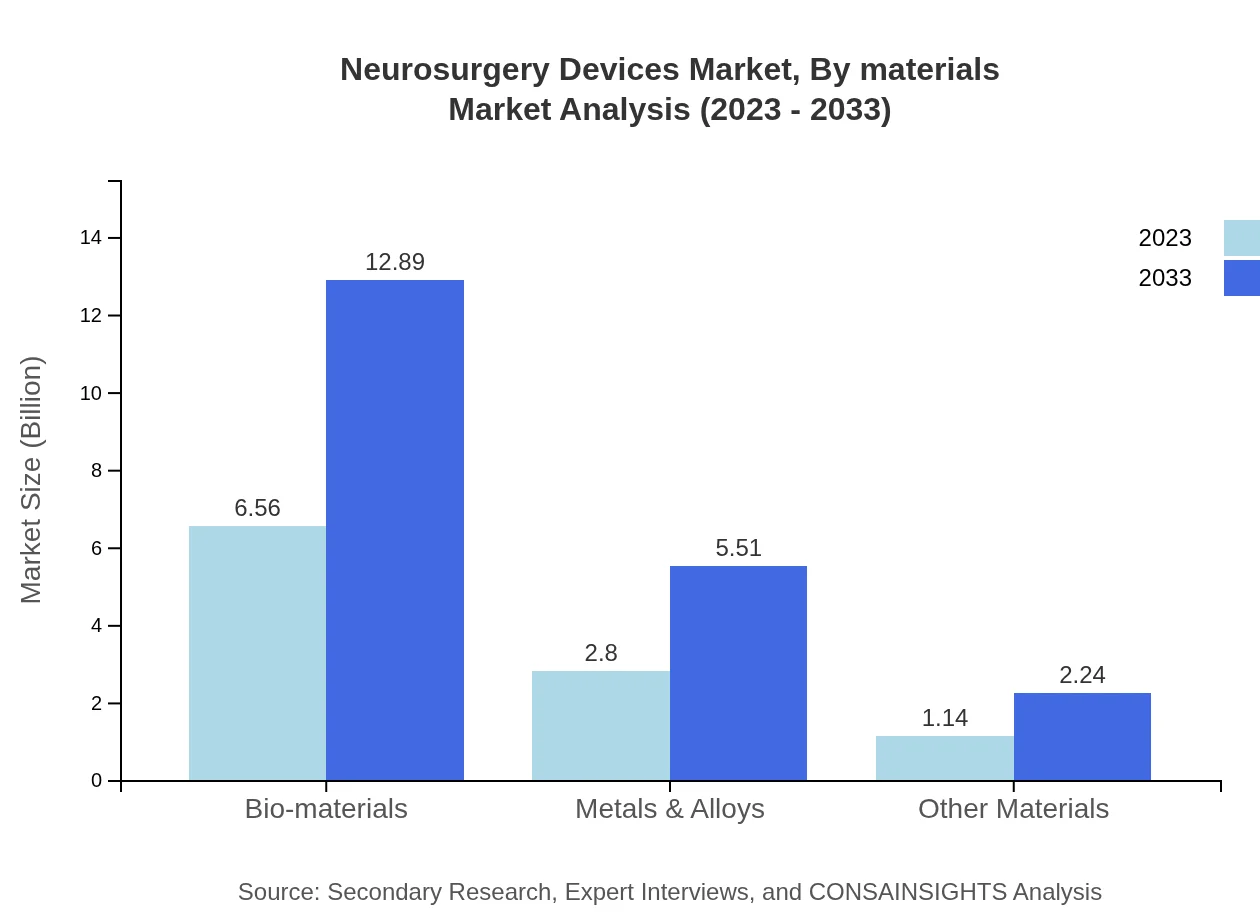
The materials segment consists of bio-materials, metals & alloys, and other materials. Bio-materials are expected to have a significant market share due to their compatibility with human tissues and growing applications in cranial implants.
Neurosurgery Devices Market Analysis By Technology
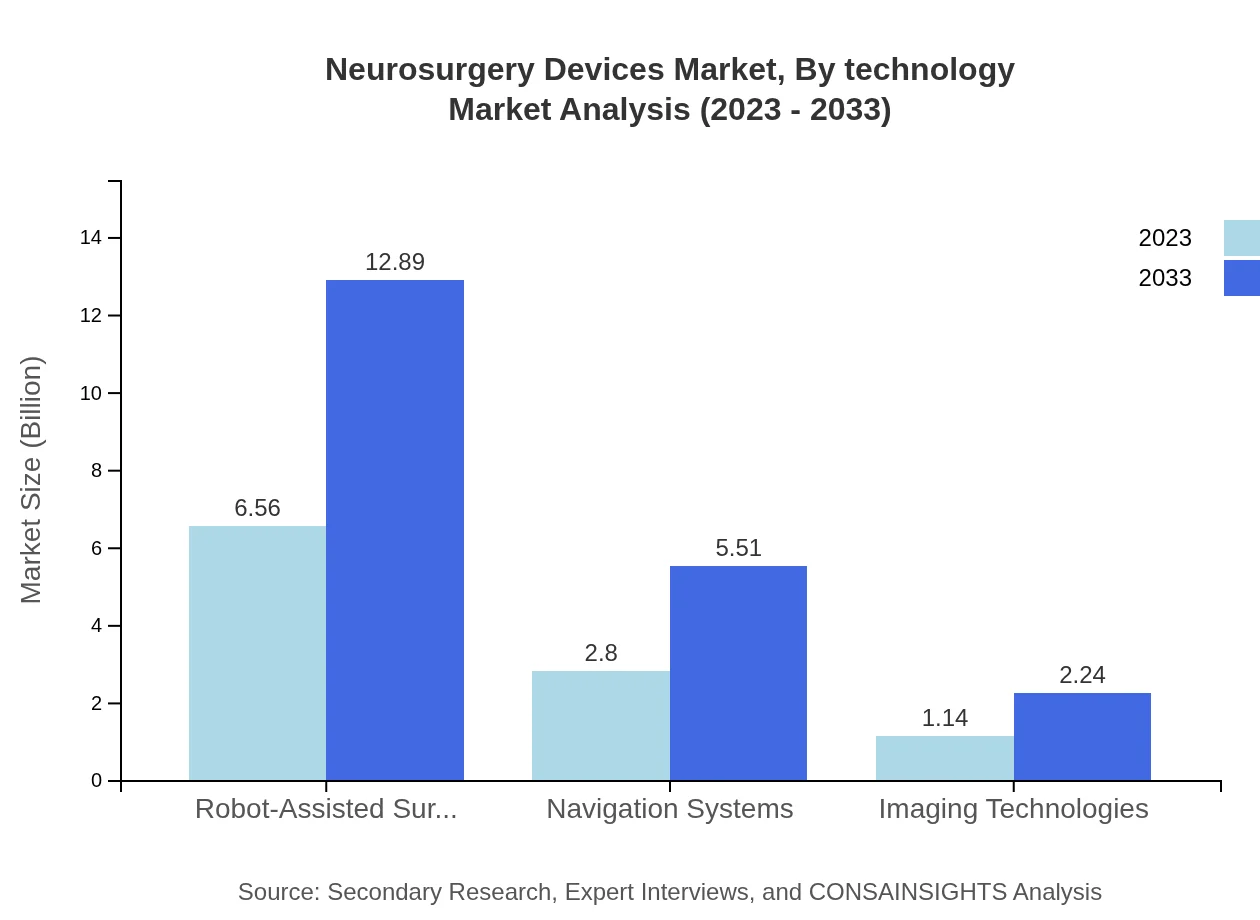
This segment includes robot-assisted surgery systems, navigation systems, and advanced imaging technologies. Technologies facilitating minimally invasive procedures are gaining traction, enhancing surgical precision, and increasing adoption rates among healthcare providers.
Neurosurgery Devices Market Trends and Future Forecast
Tell us your focus area and get a customized research report.
Global Market Leaders and Top Companies in Neurosurgery Devices Industry
Medtronic :
A leading global medical technology company providing innovative solutions in neurosurgery aimed at improving surgical outcomes and patient care.Stryker Corporation:
Known for advanced surgical devices and robotics, Stryker continuously innovates to enhance surgical performance for neurosurgeons.Johnson & Johnson:
A global leader in medical devices, they offer a range of neurosurgical products, ensuring safety and efficacy in neurosurgical procedures.B. Braun Melsungen AG:
B. Braun specializes in medical technology, providing products and services for surgery, including sophisticated neurosurgery devices.We're grateful to work with incredible clients.









FAQs
What is the market size of the neurosurgery devices market in 2023?
The market size in 2023 is $10.50 Billion as reported for the neurosurgery devices market.
How big will the market be in 2033?
The projected market value for 2033 is $20.64 Billion based on the provided forecast figures.
What is CAGR of the market for 2023 to 2033?
The compound annual growth rate (CAGR) for the 2023 to 2033 period is 6.8%.
Is there a single fastest Growing region in the Neurosurgery Devices Market Report market?
No single fastest-growing region is stated for the Neurosurgery Devices Market Report market because the top regional implied CAGR values are within 0.15 percentage points of each other, making the ranking too close to call reliably.
Which companies lead the neurosurgery devices market?
Top companies listed include Medtronic, Stryker Corporation, Johnson & Johnson, and B. Braun Melsungen AG.
What are primary technology trends in the market?
Key technology trends include robot-assisted surgery, navigation systems, and advanced imaging technologies improving surgical outcomes.
How are end Users categorized in the market?
End-users comprise hospitals, ambulatory surgical centers, and neuroscience research institutes per the segmentation data.
What materials are commonly used in neurosurgery devices?
Materials include bio-materials, metals & alloys, and other materials as specified in the materials segmentation.
Why is research and development important for market players?
R&D enables device performance improvements, regulatory compliance, and product differentiation important for sustained competitiveness.
Which applications drive demand for devices?
Applications driving demand include tumor resection, trauma surgery, functional neurosurgery, and vascular neurosurgery.