

Behavioral Health Software Market Report
First published: 07 October 2024 | Last updated: 25 May 2026 | Report Code: behavioral-health-software
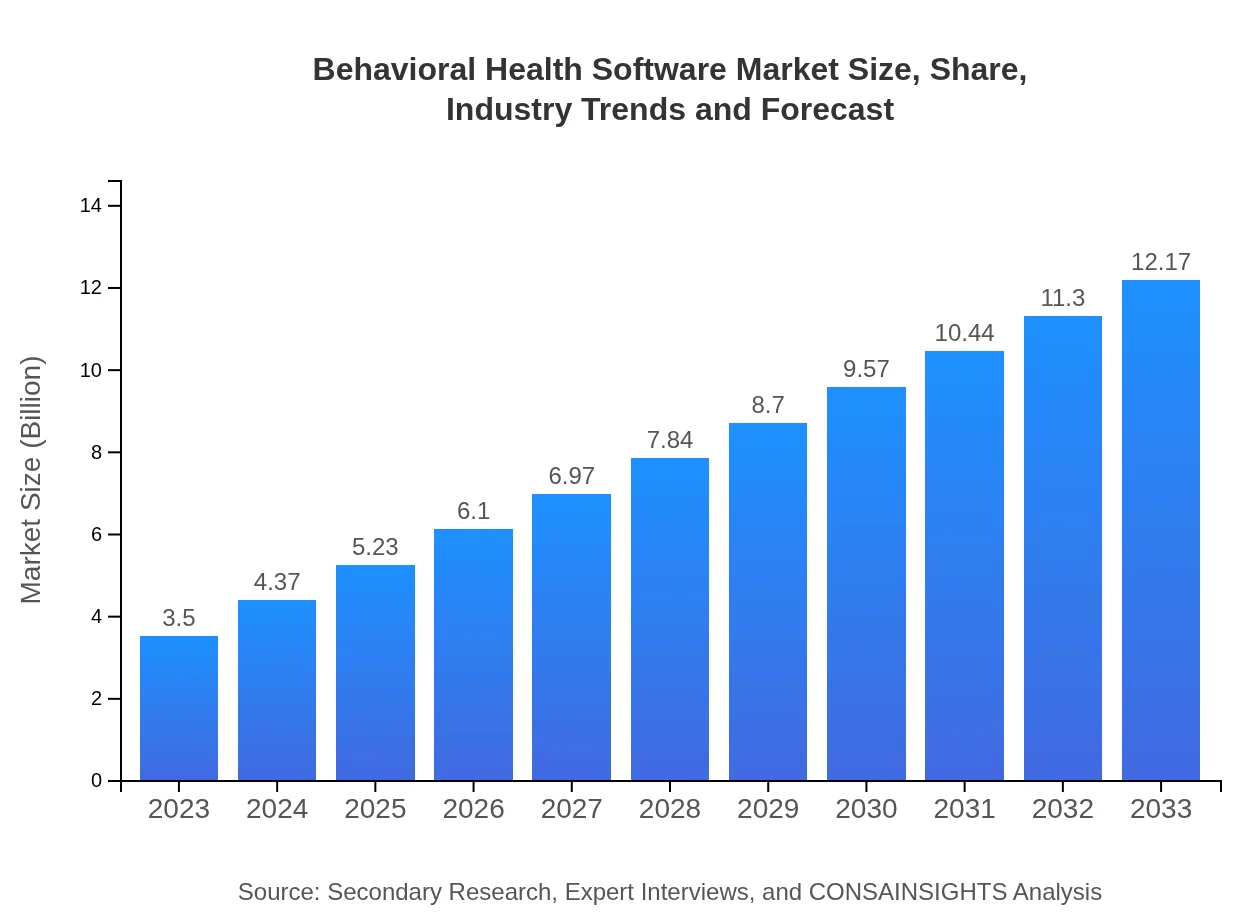
Behavioral Health Software Market — USD 3.5 billion in 2023, Growing to USD 12.17B by 2033 at 12.7% CAGR
This report provides a comprehensive analysis of the Behavioral Health Software market, covering key insights on market size, growth potential, segmentation, regional analysis, and industry trends, with a forecast period from 2023 to 2033.
Key Takeaways
- Global market value increases from $3.50 Billion in 2023 to $12.17 Billion in 2033 at a 12.7% CAGR.
- Europe is largest regional market, while no single fastest-growing region is stated because regional CAGR differences remain within 0.15 percentage points.
- Europe is identified as the largest region, rising from $1.25 Billion in 2023 to $4.33 Billion in 2033.
- North America grows from $1.15 Billion in 2023 to $3.98 Billion in 2033, reflecting substantial regional expansion.
- Solutions span clinical management, patient engagement, analytics and telehealth, with vendors such as Cerner Corporation and Epic Systems Corporation influencing adoption.
Behavioral Health Software Market Report — Executive Summary
Europe remains largest market by forecast-period value, while no single fastest-growing region is stated because top regional growth rates are separated by less than 0.15 percentage points. This report assesses the behavioral health software sector, outlining market fundamentals, growth drivers and competitive dynamics. The global market stood at $3.50 Billion in 2023 and is forecast to reach $12.17 Billion by 2033, with a 12.7% CAGR. Key forces include rising mental health awareness, expanding telehealth services, and broader adoption of clinical and patient-engagement platforms. Product categories examined cover therapeutic, management and telehealth software, delivered via cloud and on-premises deployments across hospitals, clinics and individual practitioners. The analysis integrates primary interviews, company documents and triangulated secondary sources to present vendor positioning, regional performance and functionality trends. Top vendors profiled include Cerner Corporation, Epic Systems Corporation, McKesson Corporation and Allscripts Healthcare Solutions. The report is structured to support decision-making for providers, payers and technology suppliers seeking clarity on market opportunities and implementation challenges such as interoperability and data privacy.
Key Growth Drivers
- Increasing recognition of mental health needs and demand for specialized software solutions.
- Expansion of telehealth services enabling remote behavioral health consultations and follow-ups.
- Adoption of analytics and reporting tools to improve treatment outcomes and operational efficiency.
- Shift toward cloud-based deployments facilitating faster rollouts and scalable access across care settings.
| Metric | Value |
|---|---|
| Study Period | 2023 - 2033 |
| 2023 Market Size | $3.50 Billion |
| CAGR (2023-2033) | 12.7% |
| 2033 Market Size | $12.17 Billion |
| Top Companies | Cerner Corporation, Epic Systems Corporation, McKesson Corporation, Allscripts Healthcare Solutions |
| Published Date | 07 October 2024 |
| Last Modified Date | 25 May 2026 |
Behavioral Health Software Market Overview
Customize Behavioral Health Software Market Report market research report
- ✔ Get in-depth analysis of Behavioral Health Software market size, growth, and forecasts.
- ✔ Understand Behavioral Health Software's regional dynamics and industry-specific trends.
- ✔ Identify potential applications, end-user demand, and growth segments in Behavioral Health Software
What is the Market Size & CAGR of Behavioral Health Software Market Report market in 2023?
Behavioral Health Software Industry Analysis
Behavioral Health Software Market Segmentation and Scope
Tell us your focus area and get a customized research report.
Behavioral Health Software Market Report Market Analysis Report by Region
Europe Behavioral Health Software Market Report:
Europe is largest regional market, rising from $1.25 Billion in 2023 to $4.33 Billion in 2033. 25 Billion in 2023 to $4.33 Billion in 2033, making it the largest regional market by end-period value. Growth drivers include policy focus on mental health services and increasing adoption of integrated care platforms and analytics.Asia Pacific Behavioral Health Software Market Report:
Asia Pacific grows from $0.61 Billion in 2023 to $2.12 Billion in 2033. Growth is driven by expanding healthcare infrastructure, rising mental health awareness and greater use of mobile and web applications for remote care.North America Behavioral Health Software Market Report:
North America grows from $1.15 Billion in 2023 to $3.98 Billion in 2033. Regional expansion is supported by strong digital health adoption, broad telehealth implementation and healthcare IT investments in clinical and administrative systems.South America Behavioral Health Software Market Report:
Latin America grows from $0.16 Billion in 2023 to $0.56 Billion in 2033. Market progress is supported by gradual digitization of health services, growing telemedicine use and adoption of scalable cloud solutions.Middle East & Africa Behavioral Health Software Market Report:
Middle East and Africa grows from $0.34 Billion in 2023 to $1.18 Billion in 2033. Development is encouraged by investments in healthcare IT, increasing access to telehealth and demand for clinical management tools.Tell us your focus area and get a customized research report.
Research Methodology
Behavioral Health Software Market Analysis By Software Type
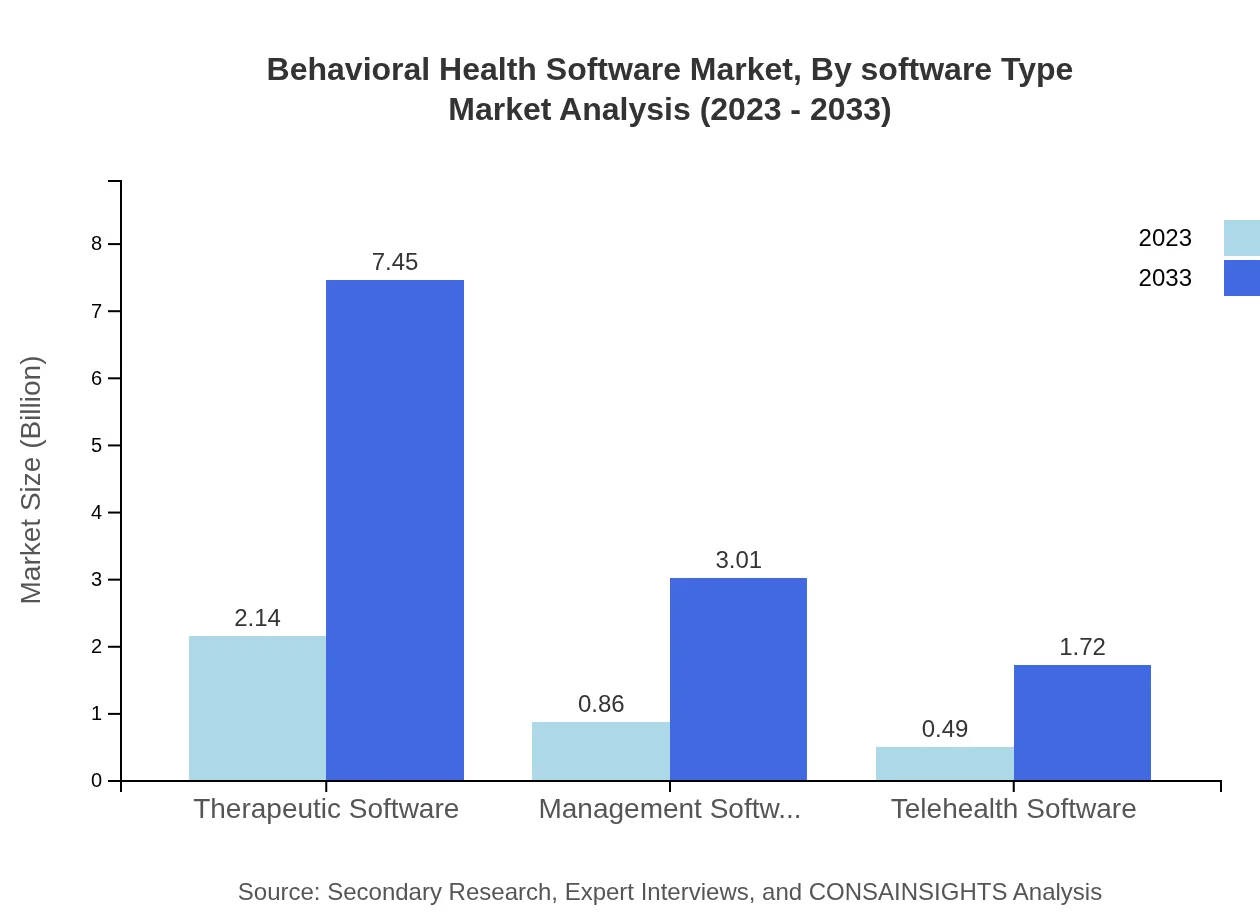
The software type segment includes clinical management software, therapeutic software, patient engagement tools, and analytics and reporting solutions. The cloud-based deployment model dominates the segment, showing a market size of USD 2.81 billion in 2023, growing to USD 9.78 billion by 2033, due to its scalability and effective patient data management capabilities.
Behavioral Health Software Market Analysis By End User
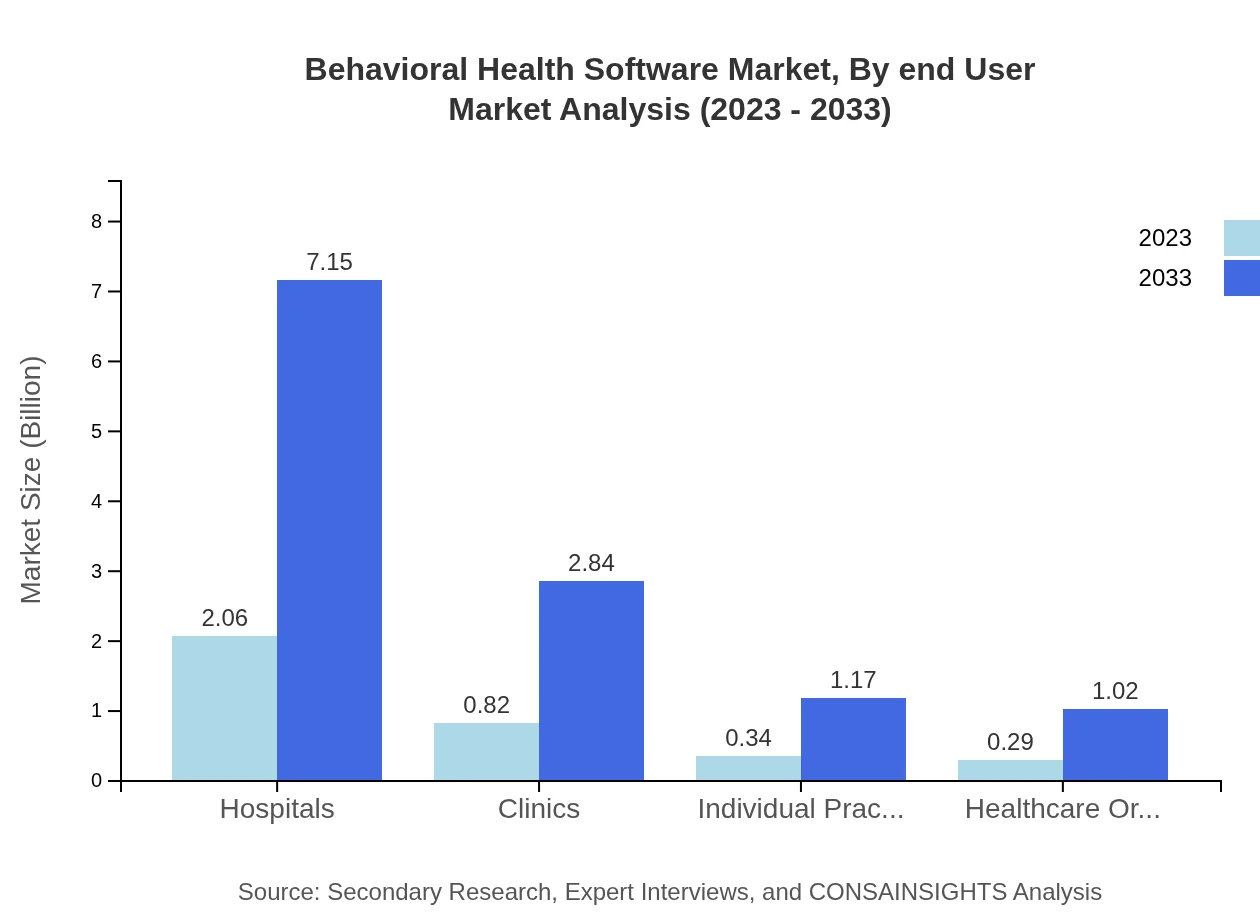
Segments include hospitals, clinics, individual practitioners, and healthcare organizations. Hospitals currently hold the largest market share of 58.74% in 2023, due to their significant reliance on integrated healthcare solutions.
Behavioral Health Software Market Analysis By Deployment Type
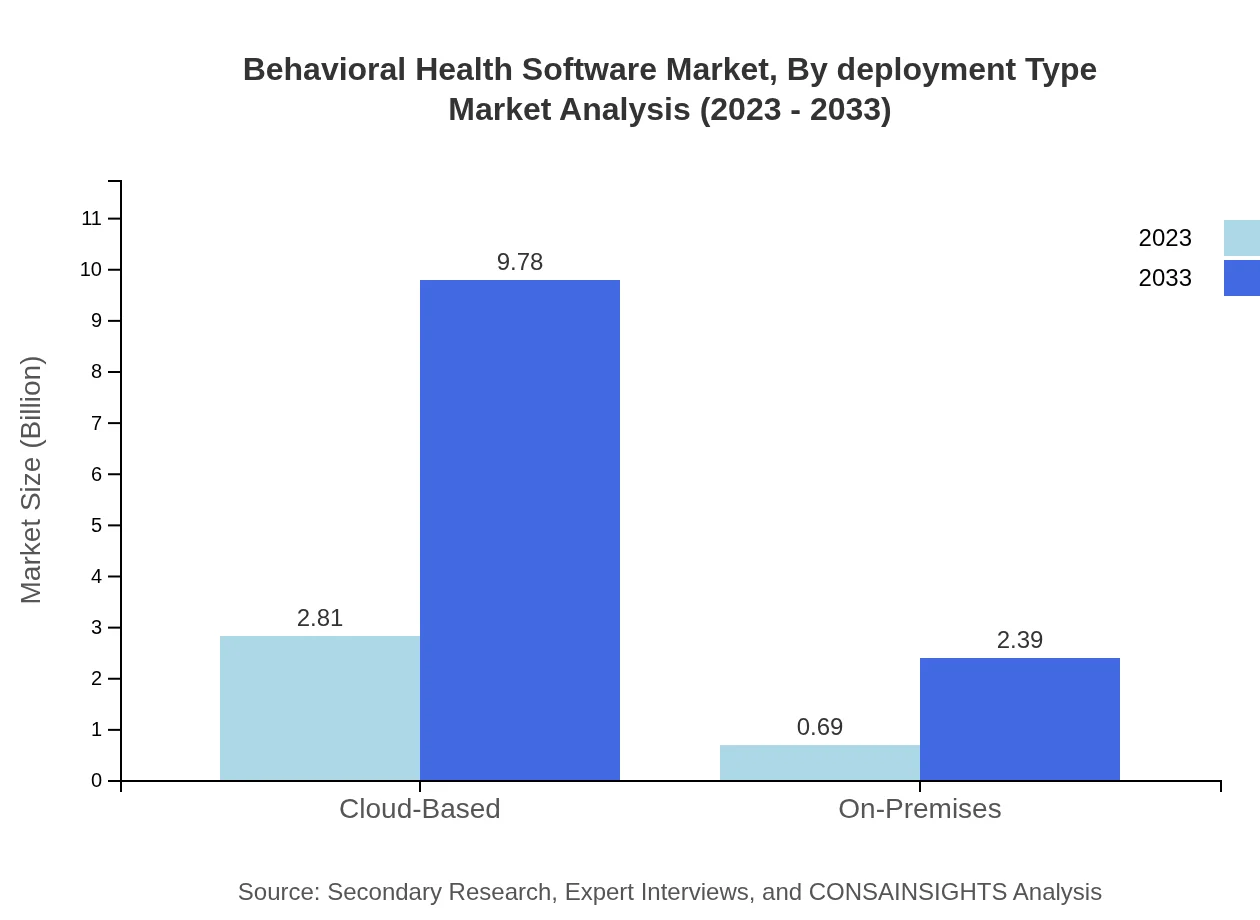
The market is categorized into cloud-based and on-premises solutions. Cloud-based solutions are highly favored, accounting for 80.33% share in 2023 thanks to their flexibility and lower upfront costs.
Behavioral Health Software Market Analysis By Functionality
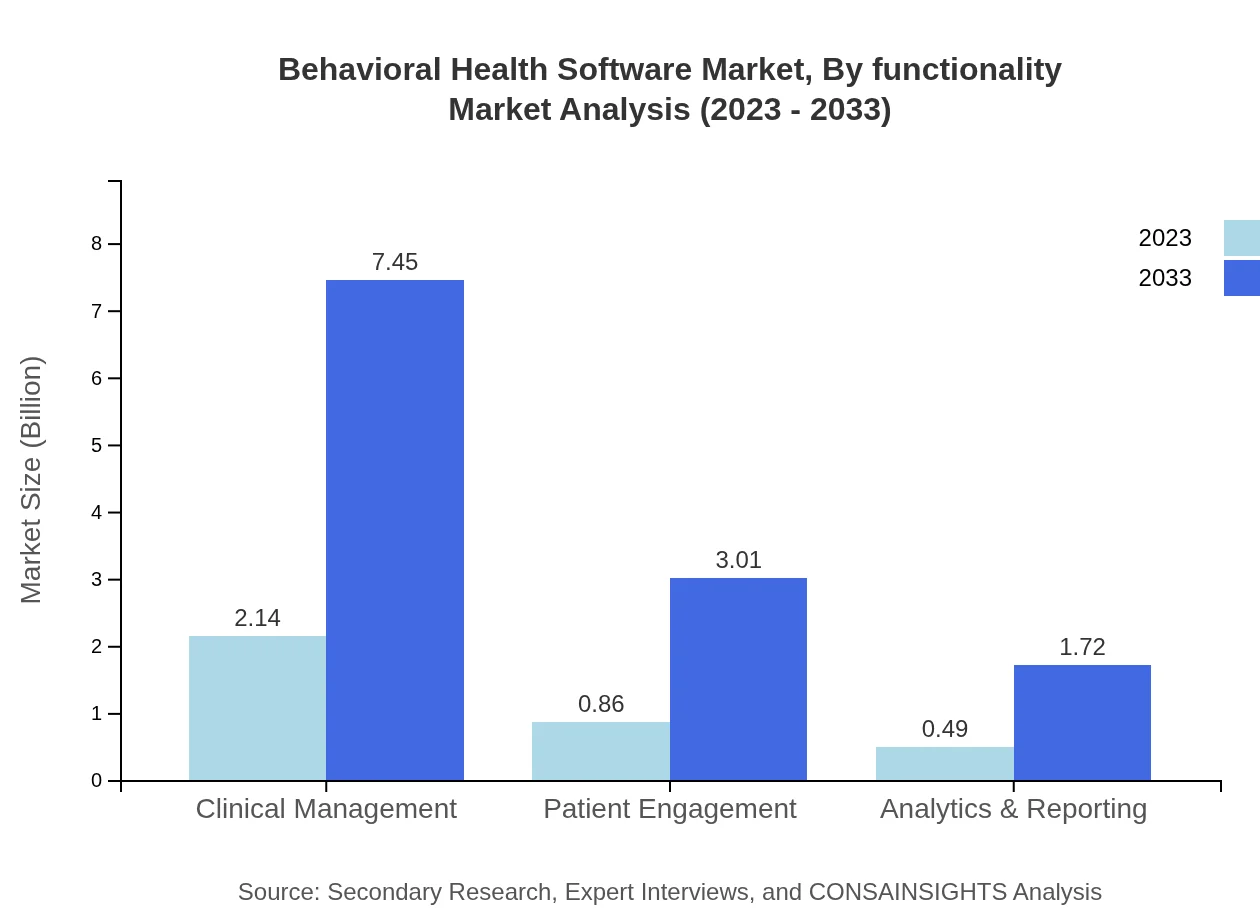
Functionality segments encompass clinical management, patient engagement, and analytics. Clinical management software is dominant due to its critical role in managing patient data and cares processes.
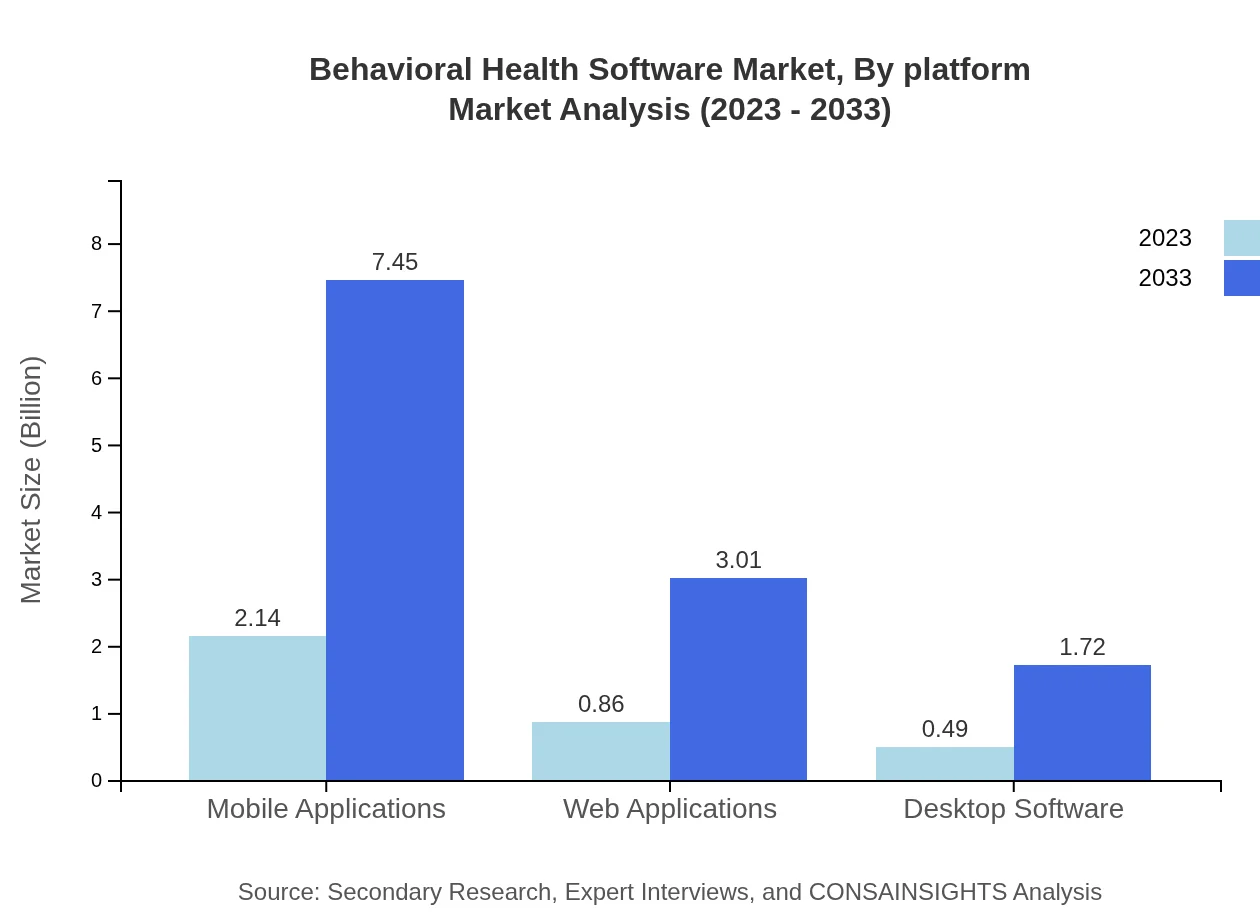
Behavioral Health Software Market Trends and Future Forecast
Tell us your focus area and get a customized research report.
Global Market Leaders and Top Companies in Behavioral Health Software Industry
Cerner Corporation:
A leading healthcare technology company that provides various healthcare IT solutions, including electronic health records and behavioral health software.Epic Systems Corporation:
Known for its powerful electronic health record systems, Epic offers solutions focused on behavioral health management and data analytics.McKesson Corporation:
A global healthcare services and information technology company, McKesson delivers software solutions that enhance care delivery in behavioral health.Allscripts Healthcare Solutions:
Allscripts provides integrated technology solutions that support clinical, financial, and operational needs in the behavioral health domain.We're grateful to work with incredible clients.









FAQs
What is the market size of the behavioral health software market in 2023?
The global behavioral health software market size in 2023 is $3.50 Billion, as reported, based on market assessments and compiled industry data for that year.
How big will the market be by 2033?
By 2033 the behavioral health software market is projected to reach $12.17 Billion according to the provided forecast, reflecting the reported growth trajectory through 2033.
What is CAGR for the forecast period?
The compound annual growth rate for the 2023 to 2033 forecast period is 12.7%, as specified in the market projection data supplied for the report.
Is there a single fastest Growing region in the Behavioral Health Software Market Report market?
No single fastest-growing region is stated for the Behavioral Health Software Market Report market because the top regional implied CAGR values are within 0.15 percentage points of each other, making the ranking too close to call reliably.
Which deployment models are covered in the market segmentation?
Segmentation includes Cloud-Based and On-Premises deployment types, reflecting delivery preferences for behavioral health software across healthcare organizations and provider settings.
Who are the top companies operating in this market?
Top companies listed for this market include Cerner Corporation, Epic Systems Corporation, McKesson Corporation and Allscripts Healthcare Solutions as prominent industry participants.
What end users are included in the by End User segmentation?
By-end-user segmentation includes Hospitals, Clinics, Individual Practitioners and Healthcare Organizations as the stated subsegments for buyer categories in the market.
What key functionalities does the market address?
Core functionality segments specified are Clinical Management, Patient Engagement and Analytics & Reporting, covering the primary software capabilities noted in the dataset.