

Biliary Stents Market Report
First published: 07 October 2024 | Last updated: 28 May 2026 | Report Code: biliary-stents
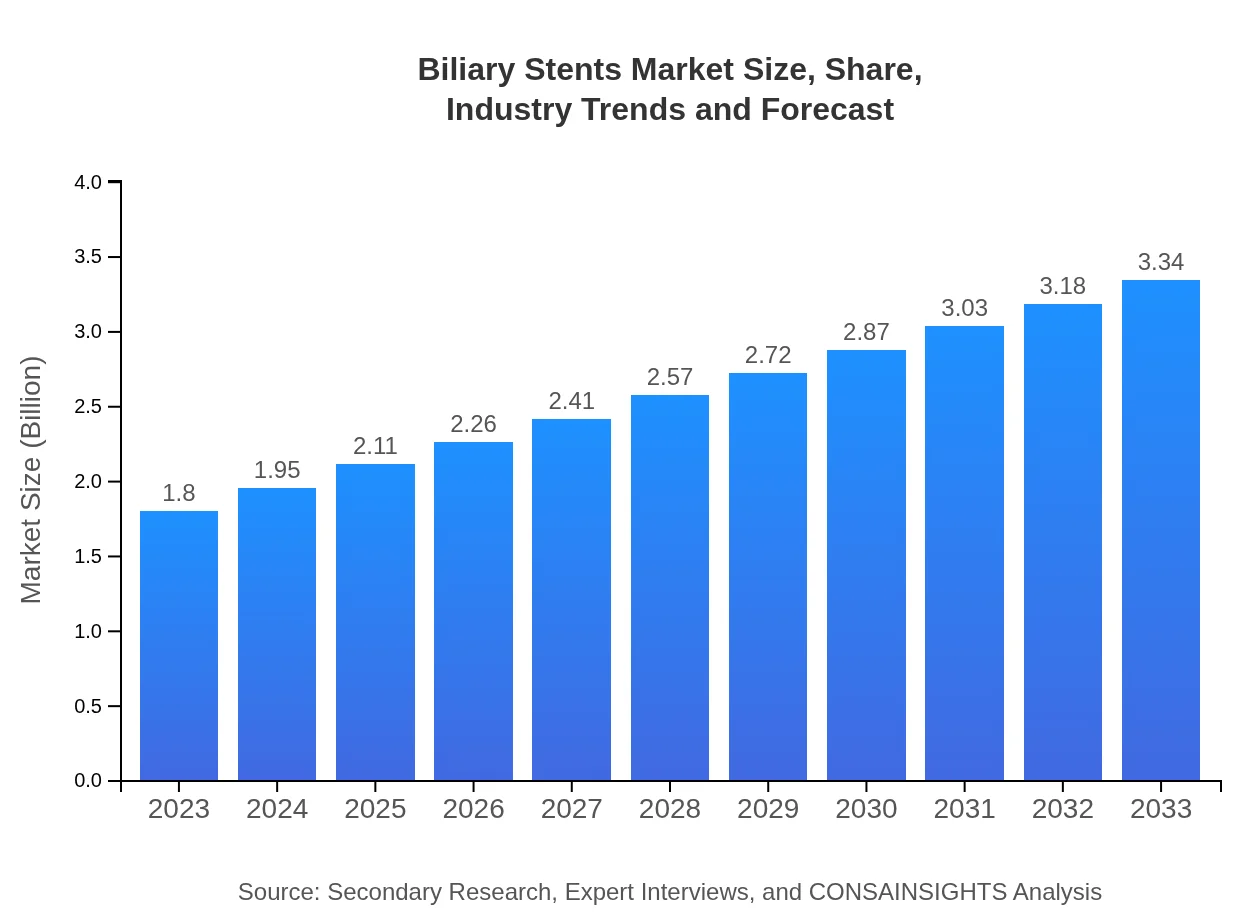
Biliary Stents Market — USD $1.8 Billion in 2023, Growing to USD 3.34null by 2033 at 6.2% CAGR
This report analyzes the Biliary Stents market, providing insights into market size, growth trends, and industry dynamics from 2023 to 2033. Comprehensive data on segmentation, regional trends, and leading market players are included.
Key Takeaways
- Global market expands from $1.80 Billion in 2023 to $3.34 Billion in 2033 at a 6.2% CAGR.
- North America is largest regional market; Middle East and Africa is regional market region based on implied CAGR across 2023 to 2033.
- Middle East and Africa records the highest implied growth rate, increasing from $0.11 Billion in 2023 to $0.21 Billion in 2033.
- Product segmentation highlights plastic, metal, and biodegradable stents across hospitals, specialty clinics, and ambulatory surgery centers.
- Leading companies profiled include Boston Scientific Corporation, Medtronic, Cook Medical, and Bard Peripheral Vascular.
Biliary Stents Market Report — Executive Summary
Regional analysis shows North America as largest market and Middle East and Africa as fastest-growing region by implied CAGR. The report presents a structured analysis of the biliary stents market driven by rising demand for interventions to relieve biliary obstruction and technological progress in stent design. Market value moves from $1.80 Billion in 2023 to $3.34 Billion in 2033, with a 6.2% CAGR during 2023 to 2033. Key trends include increasing adoption of minimally invasive procedures and growing interest in biodegradable stents that aim to reduce complications. The study examines segmentation by product type, material, application, end-user, and distribution channel, and profiles major vendors such as Boston Scientific Corporation, Medtronic, Cook Medical, and Bard Peripheral Vascular. Regional dynamics are presented with North America identified as the largest regional market and Middle East and Africa noted as the regional market region. Methodology combines expert interviews, secondary sources, and data triangulation to validate findings and interpret market direction for stakeholders and investors.
Key Growth Drivers
- Higher incidence of biliary and pancreatic disorders increasing demand for obstructive-relief devices.
- Technological innovation, including biodegradable and improved metal stent designs, expanding treatment options.
- Greater use of minimally invasive procedures that favor stent-based interventions due to faster recovery.
- Expanded hospital and specialty clinic adoption supported by clinical validation and procedural familiarity.
- Distribution diversification with direct sales, third-party distributors, and online channels improving market access.
| Metric | Value |
|---|---|
| Study Period | 2023 - 2033 |
| 2023 Market Size | $1.80 Billion |
| CAGR (2023-2033) | 6.2% |
| 2033 Market Size | $3.34 Billion |
| Top Companies | Boston Scientific Corporation, Medtronic , Cook Medical, Bard Peripheral Vascular |
| Published Date | 07 October 2024 |
| Last Modified Date | 28 May 2026 |
Biliary Stents Market Overview
Customize Biliary Stents Market Report market research report
- ✔ Get in-depth analysis of Biliary Stents market size, growth, and forecasts.
- ✔ Understand Biliary Stents's regional dynamics and industry-specific trends.
- ✔ Identify potential applications, end-user demand, and growth segments in Biliary Stents
What is the Market Size & CAGR of Biliary Stents Market Report market in 2023?
Biliary Stents Industry Analysis
Biliary Stents Market Segmentation and Scope
Tell us your focus area and get a customized research report.
Biliary Stents Market Report Market Analysis Report by Region
Europe Biliary Stents Market Report:
Europe grows from $0.57 Billion in 2023 to $1.05 Billion in 2033. Growth drivers comprise increasing procedural volumes, regulatory approvals for improved stent designs, and hospital-led adoption of newer biodegradable and metal stent options.Asia Pacific Biliary Stents Market Report:
Asia Pacific grows from $0.3 Billion in 2023 to $0.56 Billion in 2033. Demand is influenced by growing patient populations, rising access to specialized care, and gradual uptake of newer stent technologies across hospitals and specialty clinics.North America Biliary Stents Market Report:
North America is largest regional market, rising from $0.68 Billion in 2023 to $1.25 Billion in 2033. Regional strengths include established healthcare infrastructure, widespread minimally invasive procedure adoption, and active deployment of advanced stent technologies.South America Biliary Stents Market Report:
Latin America grows from $0.14 Billion in 2023 to $0.26 Billion in 2033. Expansion reflects improving healthcare access, increased procedural capabilities in regional centers, and greater use of stents for bile duct obstruction management.Middle East & Africa Biliary Stents Market Report:
Middle East and Africa is fastest-growing region by implied CAGR, increasing from $0.11 Billion in 2023 to $0.21 Billion in 2033. 11 Billion in 2023 to $0.21 Billion in 2033 and is identified as the regional growth market with an implied 6.68% CAGR. Growth is associated with expanding clinical services, investment in healthcare infrastructure, and adoption of modern interventional procedures.Tell us your focus area and get a customized research report.
Research Methodology
Biliary Stents Market Analysis By Product Type
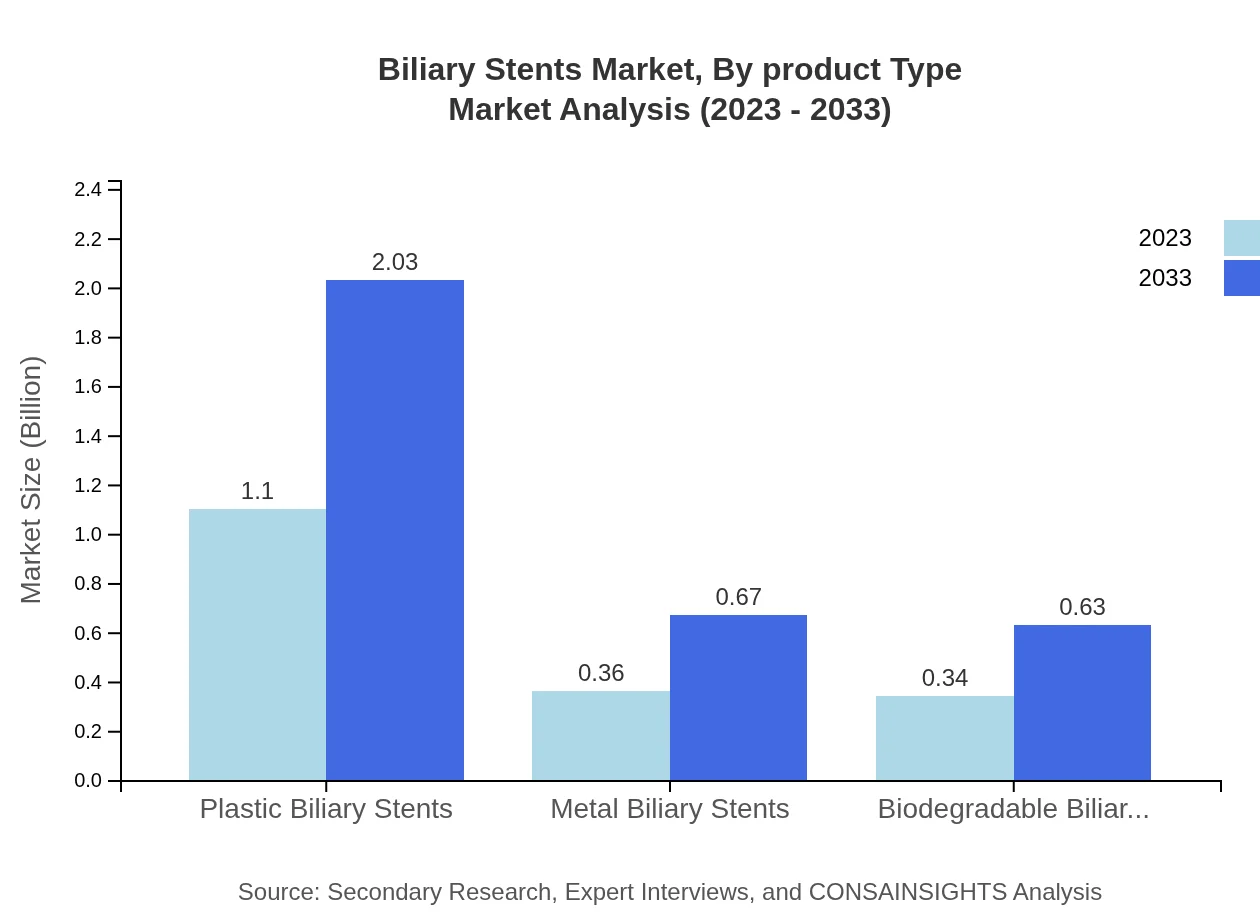
The market is divided into plastic, metal, and biodegradable stents. Plastic stents dominate with a market size of USD 1.10 billion in 2023 and expected to reach USD 2.03 billion by 2033. Metal stents account for USD 0.36 billion in 2023, growing to USD 0.67 billion by 2033. Biodegradable stents, although a newer product, are gaining traction due to their potential to dissolve over time, enhancing patient safety.
Biliary Stents Market Analysis By End User
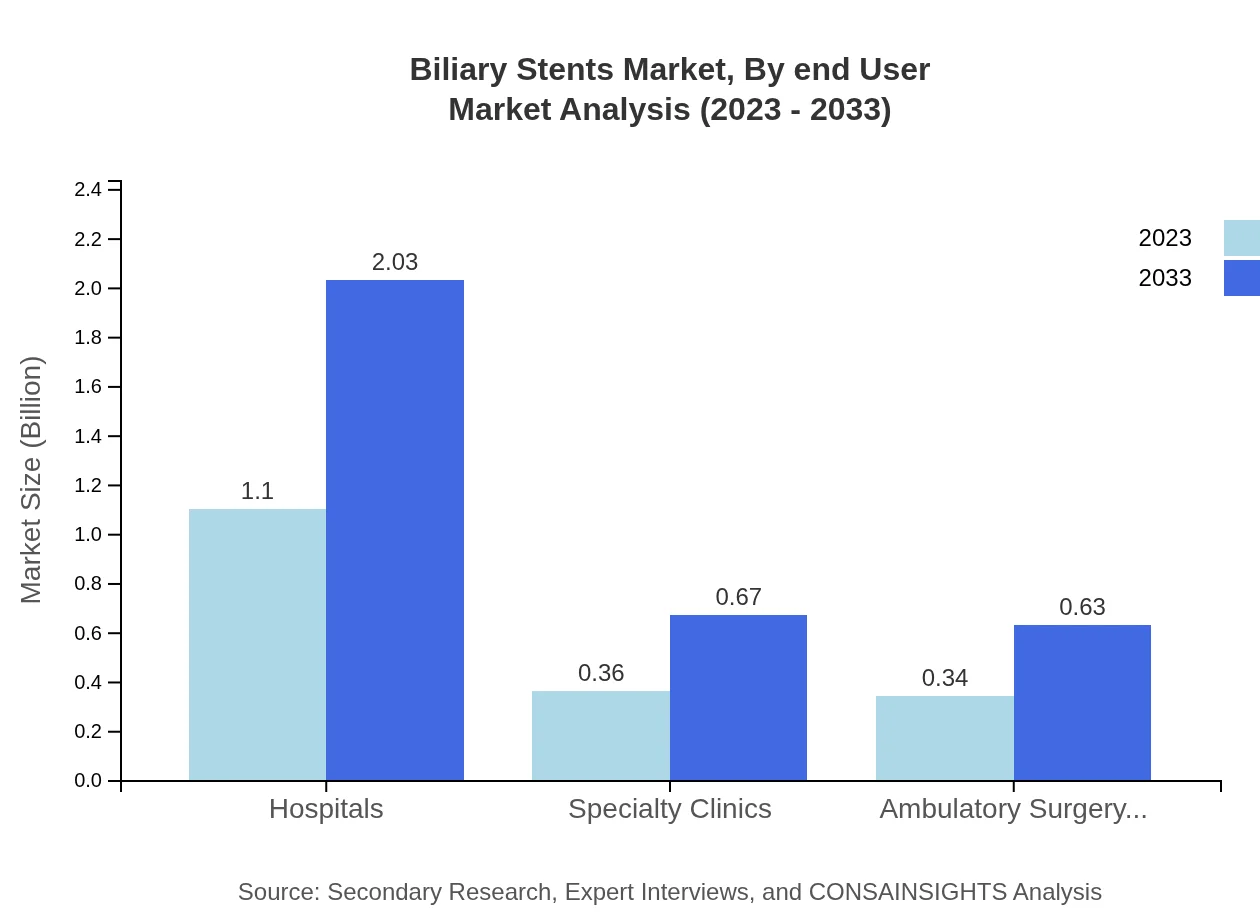
The Biliary Stents market is categorized into hospitals, specialty clinics, and ambulatory surgery centers. Hospitals are the leading end-users, with a market size of USD 1.10 billion in 2023, projected to reach USD 2.03 billion by 2033, maintaining a 60.92% market share. Specialty clinics, holding a 20.08% market share, are anticipated to grow from USD 0.36 billion to USD 0.67 billion, while ambulatory surgery centers are expected to expand from USD 0.34 billion to USD 0.63 billion.
Biliary Stents Market Analysis By Application
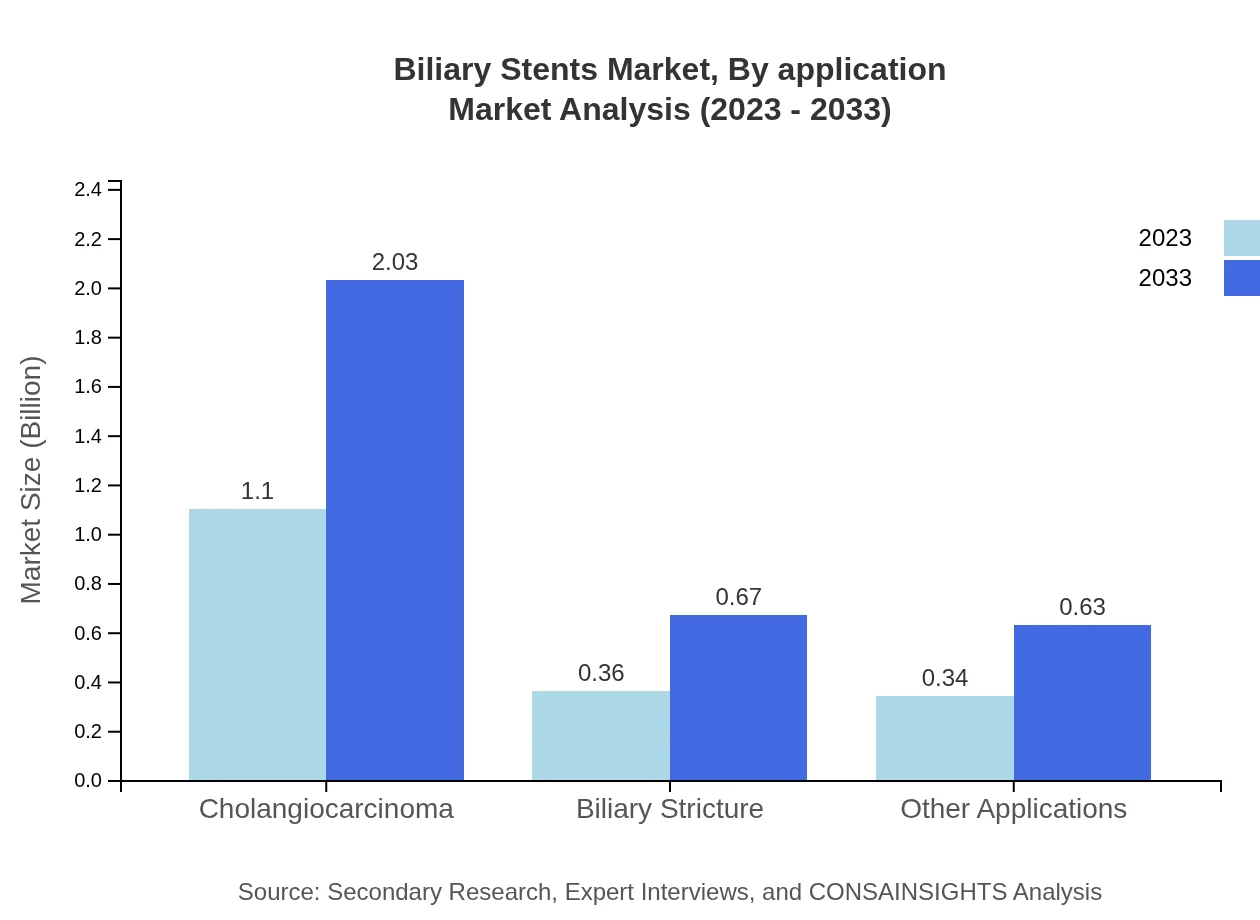
The applications of biliary stents are primarily categorized into cholangiocarcinoma, biliary stricture, and other applications. In 2023, the cholangiocarcinoma application segment accounted for USD 1.10 billion, maintaining a dominant market share. The biliary stricture segment is projected to grow from USD 0.36 billion in 2023 to USD 0.67 billion by 2033, whereas other applications will see a gradual growth.
Biliary Stents Market Analysis By Material
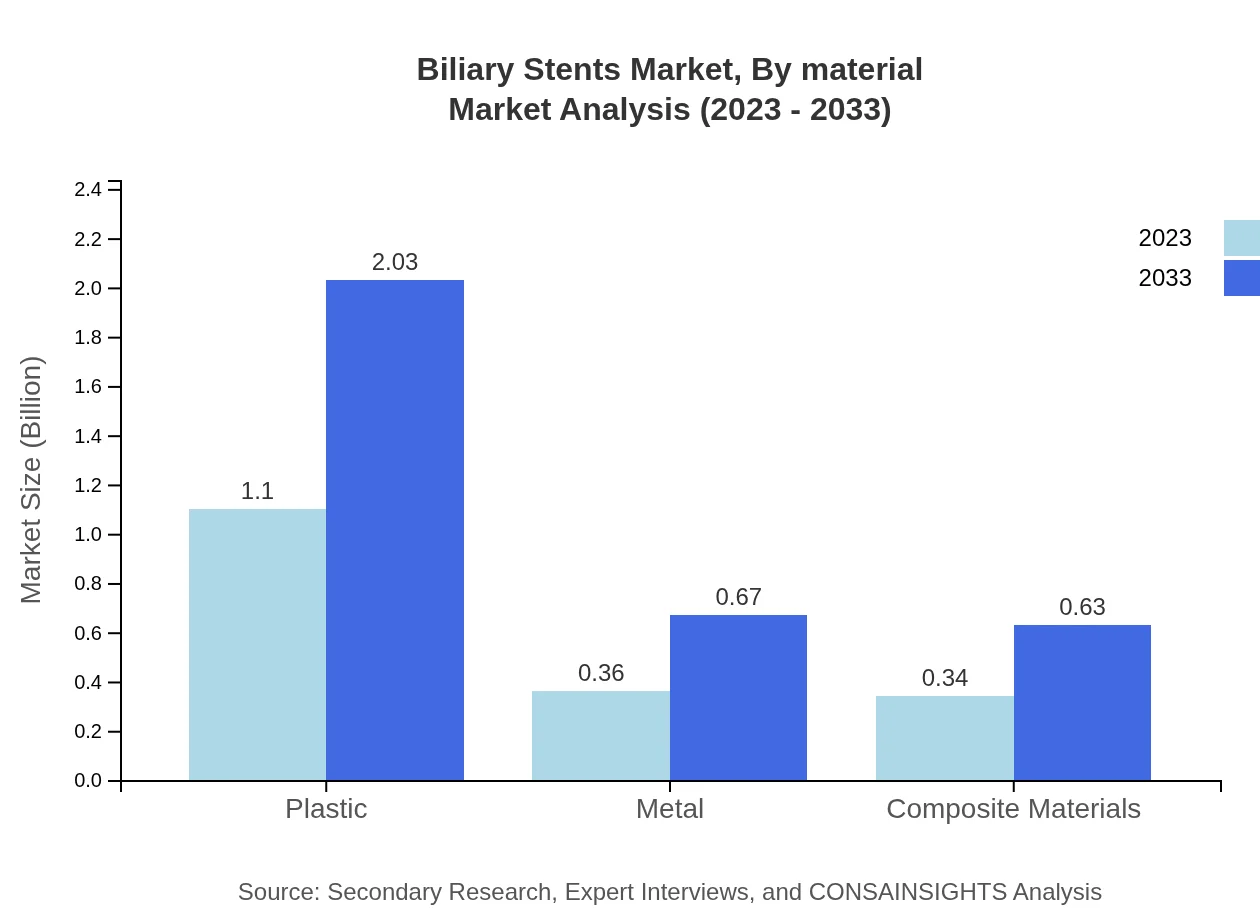
The materials used in biliary stents are segmented into plastic, metal, and composite materials. Plastic stents dominate the market, with a size of USD 1.10 billion in 2023 and expected growth to USD 2.03 billion by 2033. Metal stents represent a considerable share of USD 0.36 billion, growing to USD 0.67 billion by 2033. Composite materials also play a role in the market, expanding gradually.
Biliary Stents Market Analysis By Distribution Channel
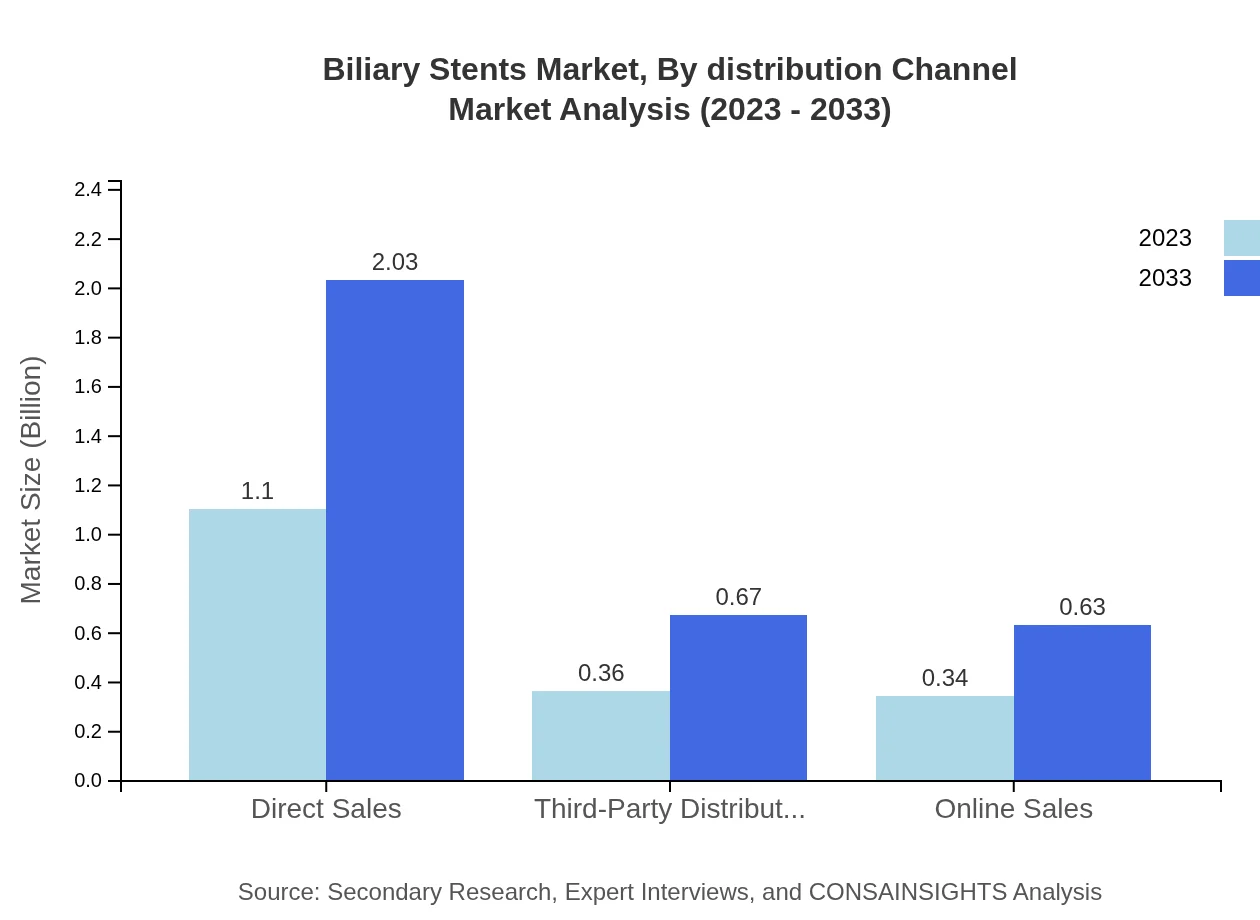
The distribution channels for biliary stents include direct sales, third-party distributors, and online sales. Direct sales remain the most significant channel, valued at USD 1.10 billion in 2023 and expected to grow to USD 2.03 billion. Third-party distributors contribute USD 0.36 billion, growing to USD 0.67 billion, while online sales are projected to expand from USD 0.34 billion to USD 0.63 billion.
Biliary Stents Market Trends and Future Forecast
Tell us your focus area and get a customized research report.
Global Market Leaders and Top Companies in Biliary Stents Industry
Boston Scientific Corporation:
A leading medical device manufacturer specializing in innovative solutions for patients with serious medical conditions, Boston Scientific offers a range of biliary stents that cater to diverse clinical needs.Medtronic :
One of the largest medical technology companies in the world, Medtronic provides biliary stents backed by robust research and clinical evidence, focusing on patient safety and procedural efficiency.Cook Medical:
Cook Medical is known for its specialized stents aimed at addressing complex biliary conditions. The company invests heavily in R&D to bring cutting-edge technologies to the market.Bard Peripheral Vascular:
A prominent player in the healthcare sector, Bard Peripheral Vascular focuses on developing advanced biliary stents designed to improve patient outcomes and procedural success rates.We're grateful to work with incredible clients.









FAQs
What is the market size of the biliary stents market in 2023?
The market size in 2023 is $1.80 Billion as reported, reflecting baseline demand for stents used to relieve bile duct obstructions and related interventions.
How big will the biliary stents market be in 2033?
By 2033 the market is projected to reach $3.34 Billion, indicating continued expansion driven by clinical adoption and product innovation throughout the forecast period.
What is CAGR of the biliary stents market for 2023 to 2033?
The reported compound annual growth rate for the 2023 to 2033 forecast period is 6.2%, reflecting steady market expansion over the decade.
Which region is the fastest Growing in the Biliary Stents Market Report market?
Middle East and Africa is the fastest-growing region, projected to expand from $0.11 Billion in 2023 to $0.21 Billion in 2033, reflecting an implied 6.68% CAGR over the forecast period.
Which region is the fastest Growing?
The Middle East and Africa is cited as the regional market region with an implied 6.68% CAGR, rising from $0.11 Billion in 2023 to $0.21 Billion in 2033.
Who are the leading companies in this market?
Top companies named in the report include Boston Scientific Corporation, Medtronic, Cook Medical, and Bard Peripheral Vascular, noted for product portfolios and market activities.
What end Users are covered in segmentation?
End-user segmentation includes Hospitals, Specialty Clinics, and Ambulatory Surgery Centers, reflecting settings where biliary stent procedures are performed.
How are stents categorized by material?
Material subsegments listed are Plastic, Metal, and Composite Materials, covering the principal material types used in biliary stent manufacturing.