
Reports >
Life Sciences
>
Biobetters Market Report

Biobetters Market Report
First published: 11 October 2024 | Last updated: 25 May 2026 | Report Code: biobetters
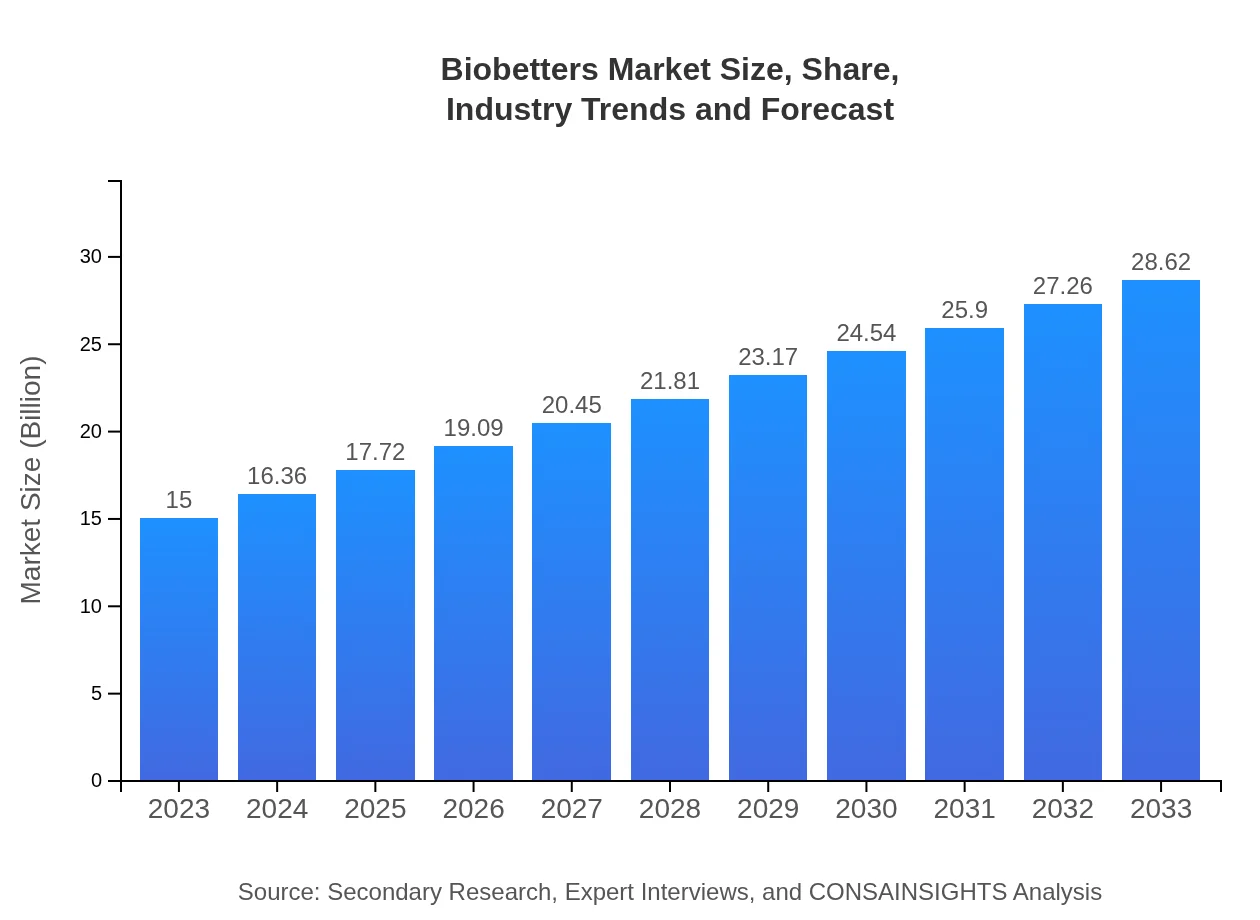
Biobetters Market — USD 15 billion in 2023, Growing to USD 28.62B by 2033 at 6.5% CAGR
This report provides a comprehensive analysis of the Biobetters market from 2023 to 2033, focusing on market size, trends, and regional dynamics. Insights into key players, segmentation, and future forecasts are included to inform stakeholders and investors.
Key Takeaways
- Global market expands from $15.00 Billion in 2023 to $28.62 Billion in 2033 at a 6.5% CAGR.
- North America is largest regional market, while no single fastest-growing region is stated because regional CAGR differences remain within 0.15 percentage points.
- Europe grows from $3.66 Billion to $6.98 Billion, while Asia Pacific increases from $3.03 Billion to $5.77 Billion.
- Middle East and Africa climbs from $2.08 Billion to $3.97 Billion; Latin America moves from $1.24 Billion to $2.37 Billion.
- Leading companies active in the space include Amgen Inc., Roche Holding AG, AbbVie Inc., Johnson & Johnson, and Novartis AG.
Biobetters Market Report — Executive Summary
North America remains largest market by forecast-period value, while no single fastest-growing region is stated because top regional growth rates are separated by less than 0.15 percentage points. The Biobetters Market Report outlines market expansion driven by biotechnology advances, investment in therapeutic development, and evolving regulatory support. The global market size is $15.00 Billion in 2023 and is forecast to reach $28.62 Billion by 2033 at a 6.5% CAGR. Demand stems from needs in oncology, autoimmune, metabolic and cardiovascular treatment areas, coupled with innovation in drug delivery and development strategies. North America stands as the largest regional market, supported by established biotech infrastructure and significant R&D funding. Regional growth is evident across Europe, Asia Pacific, Latin America, and the Middle East and Africa, each showing increases in absolute market value over the forecast. Major players such as Amgen Inc., Roche Holding AG, AbbVie Inc., Johnson & Johnson, and Novartis AG are expanding portfolios through collaborations and development programs. This report covers market drivers, segment breakdowns by product type, therapeutic area, development stage, and manufacturing process, plus competitive positioning and methodological approach used to validate estimates.
Key Growth Drivers
- Advances in biotechnology enabling improved efficacy and safety profiles for therapeutic biologics.
- Increased R&D investment by pharmaceutical companies to develop differentiated biologic products.
- Rising demand for treatments across oncology, autoimmune, metabolic and cardiovascular diseases.
- Regulatory pathways and support for biosimilar and biobetter development influencing market activity.
- Innovation in drug delivery systems enhancing patient adherence and therapeutic performance.
| Metric | Value |
|---|---|
| Study Period | 2023 - 2033 |
| 2023 Market Size | $15.00 Billion |
| CAGR (2023-2033) | 6.5% |
| 2033 Market Size | $28.62 Billion |
| Top Companies | Amgen Inc., Roche Holding AG, AbbVie Inc., Johnson & Johnson, Novartis AG |
| Published Date | 11 October 2024 |
| Last Modified Date | 25 May 2026 |
Biobetters Market Overview
Customize Biobetters Market Report market research report
- ✔ Get in-depth analysis of Biobetters market size, growth, and forecasts.
- ✔ Understand Biobetters's regional dynamics and industry-specific trends.
- ✔ Identify potential applications, end-user demand, and growth segments in Biobetters
What is the Market Size & CAGR of Biobetters Market Report market in 2023?
Biobetters Industry Analysis
Biobetters Market Segmentation and Scope
Tell us your focus area and get a customized research report.
Biobetters Market Report Market Analysis Report by Region
Europe Biobetters Market Report:
Europe grows from $3.66 Billion in 2023 to $6.98 Billion in 2033. Regional expansion is driven by strong clinical research networks, regulatory frameworks that support biosimilar and biobetter development, and collaborations among pharmaceutical and biotech companies.Asia Pacific Biobetters Market Report:
Asia Pacific grows from $3.03 Billion in 2023 to $5.77 Billion in 2033. Growth in the region is linked to increasing R&D investment, expanding healthcare access, and rising demand for advanced therapeutics across oncology and chronic disease treatment areas.North America Biobetters Market Report:
North America is largest regional market, rising from $4.99 Billion in 2023 to $9.53 Billion in 2033. The region's growth reflects established biotech infrastructure, concentrated R&D funding, and active pipeline development by major firms, supporting sustained demand and commercialization activities.South America Biobetters Market Report:
Latin America grows from $1.24 Billion in 2023 to $2.37 Billion in 2033. Market gains are associated with improving healthcare infrastructure, growing clinical research activity, and increasing adoption of innovative biologic treatments.Middle East & Africa Biobetters Market Report:
Middle East and Africa grows from $2.08 Billion in 2023 to $3.97 Billion in 2033. Regional development is supported by healthcare investment, rising demand for advanced therapies, and initiatives to enhance treatment availability and biopharmaceutical capabilities.Tell us your focus area and get a customized research report.
Research Methodology
Biobetters Market Analysis By Product Type
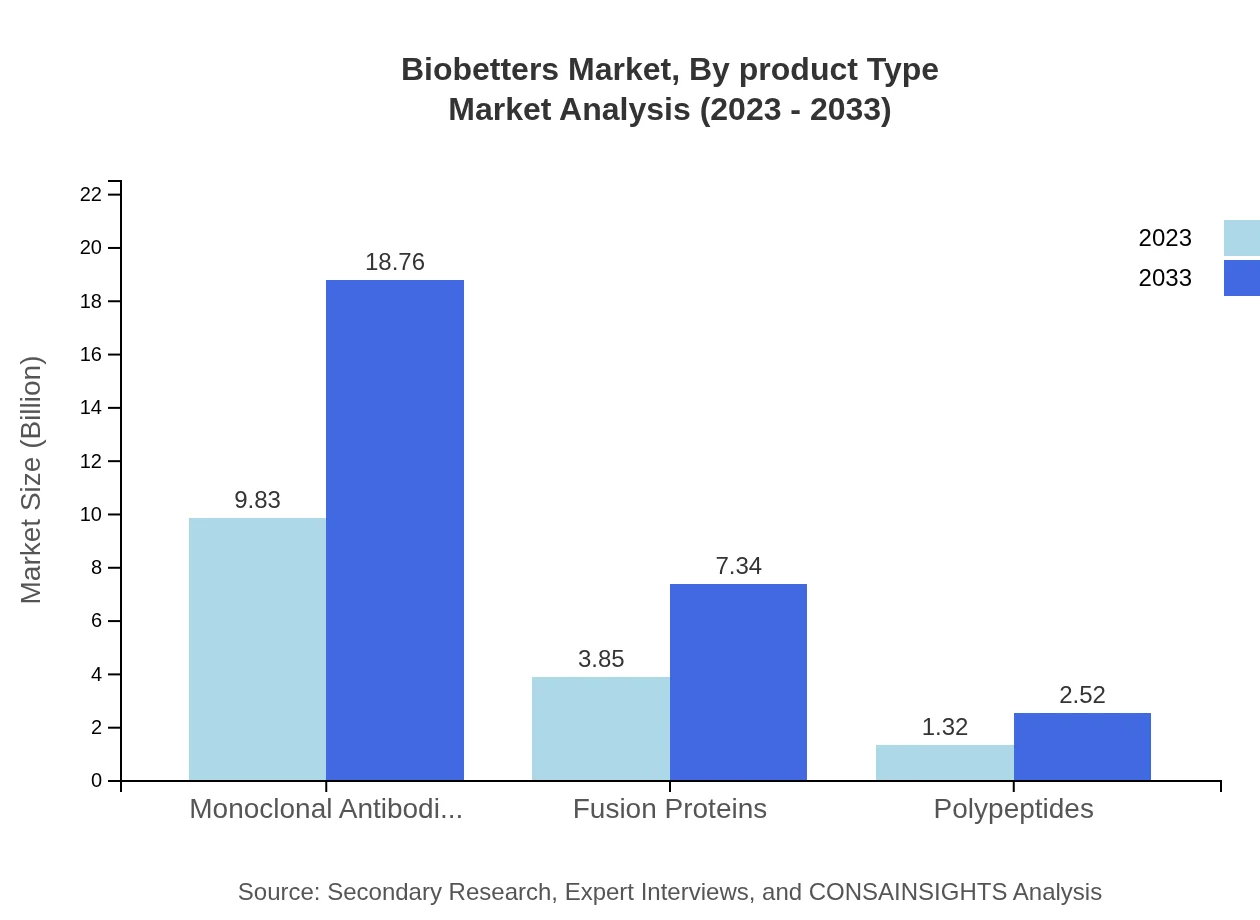
The product type segment of Biobetters indicates that Monoclonal Antibodies lead with a market size of $9.83 billion in 2023, projected to reach $18.76 billion by 2033, which represents a substantial share of the overall market at 65.53%. Fusion proteins and polypeptides also show significant potential, particularly in targeted therapies for specific diseases.
Biobetters Market Analysis By Therapeutic Area
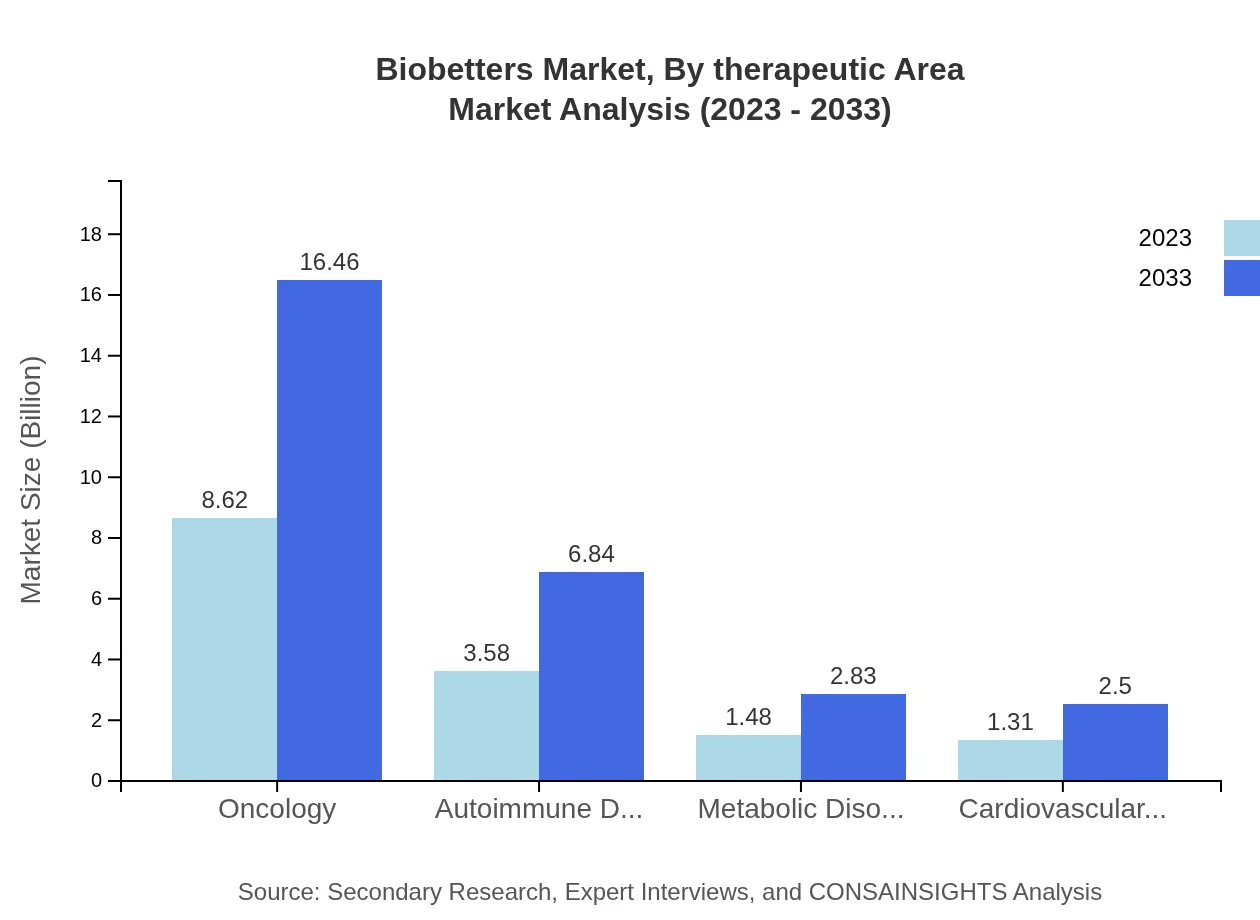
Oncology represents the largest therapeutic area for Biobetters, projected to increase from $8.62 billion in 2023 to $16.46 billion in 2033, maintaining a share of 57.49%. Autoimmune disorders also play a crucial role, expected to grow from $3.58 billion to $6.84 billion, reflecting an increased focus on patient management in chronic diseases.
Biobetters Market Analysis By Strategy
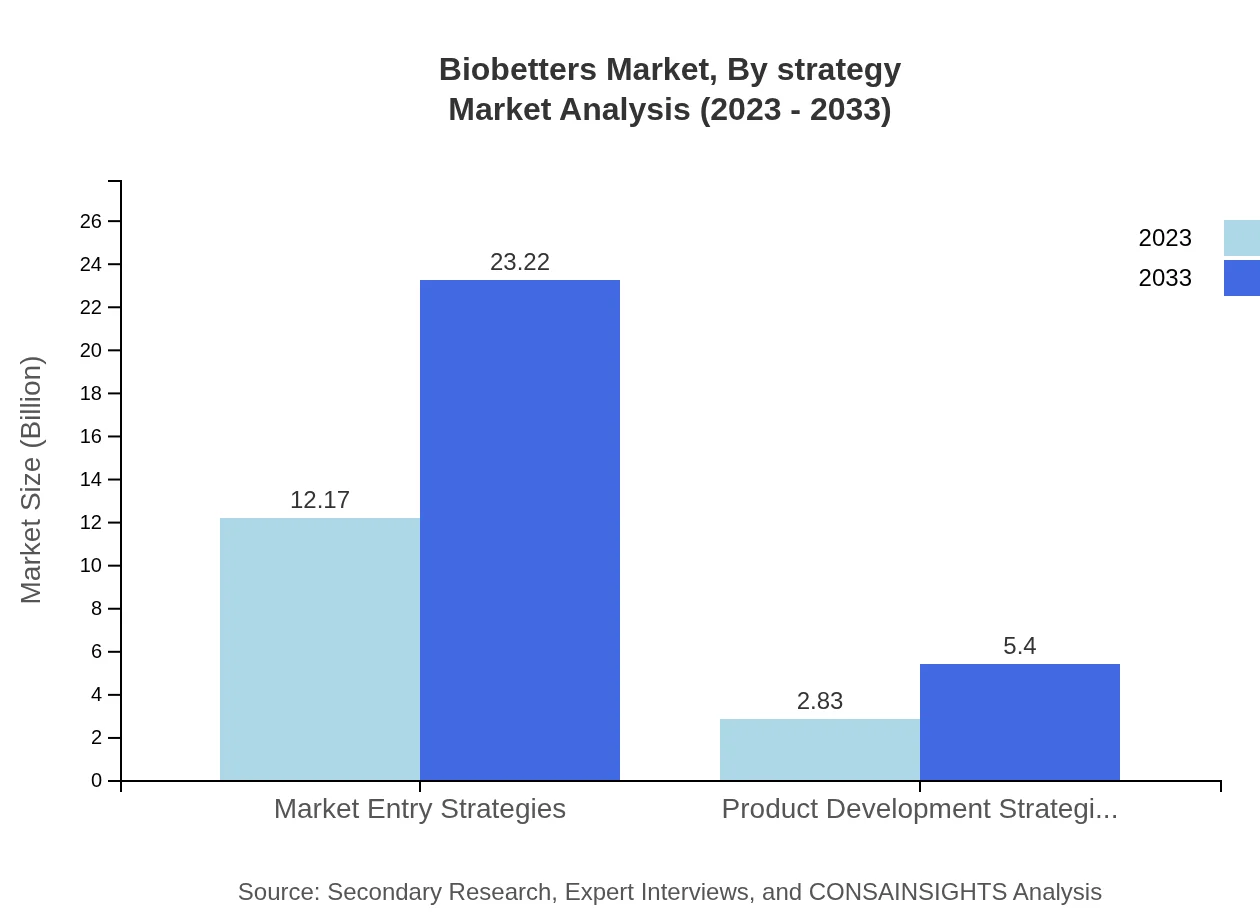
The market entry strategy segment is expected to grow significantly, from $12.17 billion in 2023 to $23.22 billion by 2033, indicating strong interest from firms capitalizing on innovation and increasing therapeutic demands. The focus on product development strategies remains crucial, anticipated to increase from $2.83 billion to $5.40 billion.
Biobetters Market Analysis By Stage Of Development
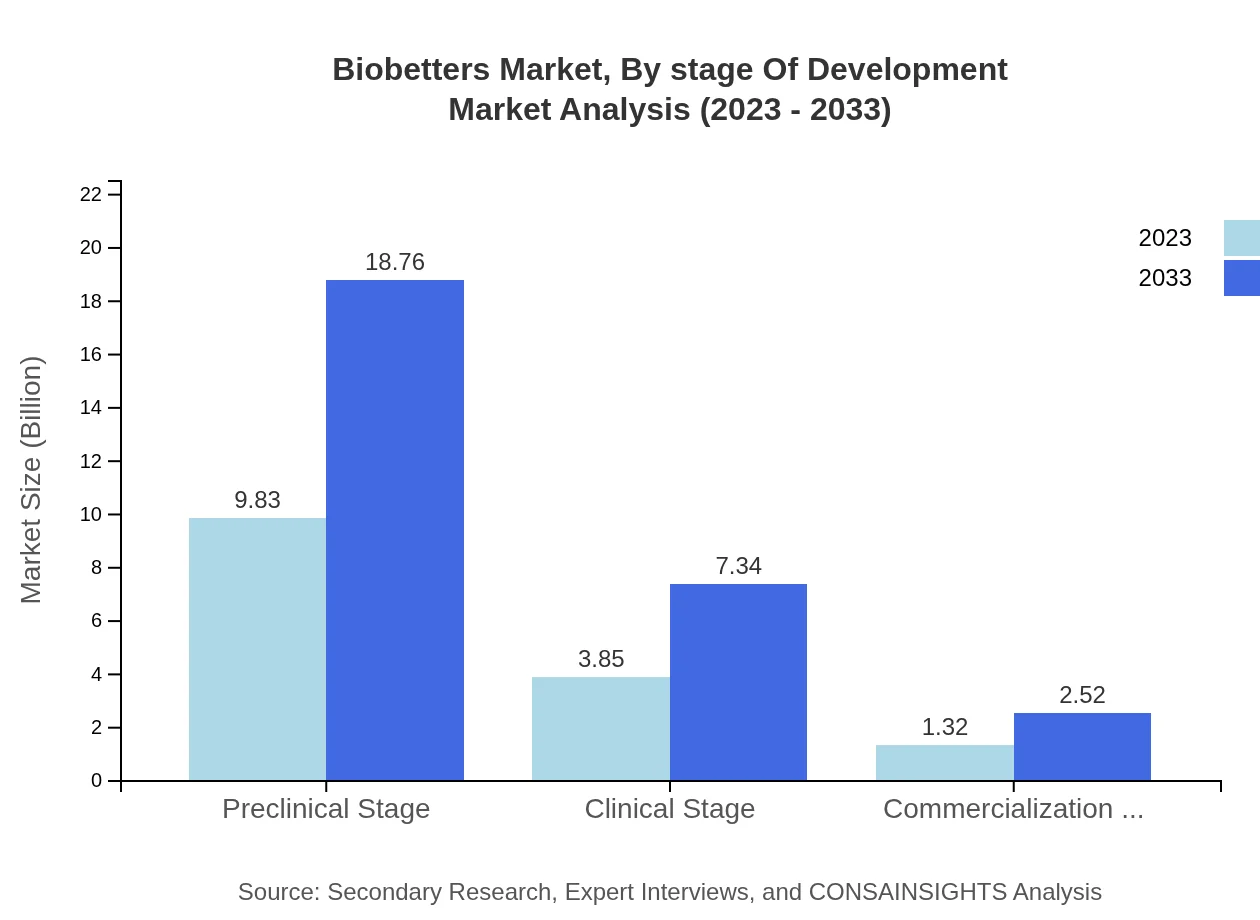
The preclinical stage dominates with expected growth from $9.83 billion in 2023 to $18.76 billion in 2033, holding a substantial share of the market. The clinical stage and commercialization stages also show growth potential, reflecting a robust pipeline of innovations.
Biobetters Market Analysis By Manufacturing Process
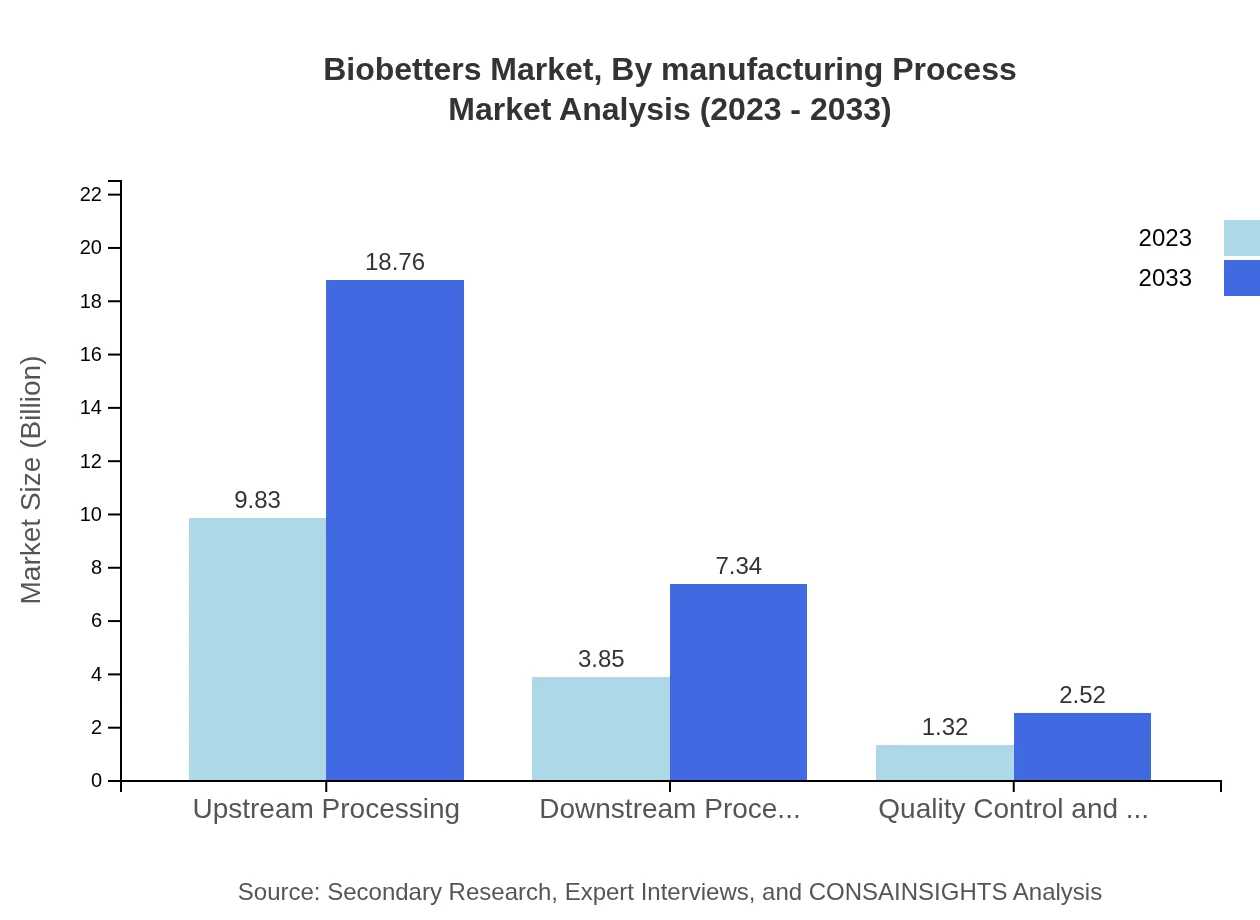
Focusing on the manufacturing process, upstream processing leads with a market size of $9.83 billion in 2023, anticipated to retain its dominance through 2033. Downstream processing, however, is also important, with a projected growth reflecting ongoing advancements in manufacturing technologies.
Biobetters Market Trends and Future Forecast
Tell us your focus area and get a customized research report.
Global Market Leaders and Top Companies in Biobetters Industry
Amgen Inc.:
A leading biotechnology company that focuses on developing and delivering innovative human therapeutics, especially biobetters targeting cancer and autoimmune diseases.Roche Holding AG:
A global leader in biotechnology with extensive experience in monoclonal antibody development, Roche is recognized for its biobetter strategies in treating chronic conditions.AbbVie Inc.:
Known for its strong pipeline of therapies, AbbVie focuses on improving patient outcomes through the development of enhanced biologics and biobetters.Johnson & Johnson:
A major player in the pharmaceutical industry, with a focus on innovation in biologics, contributing significantly to the biobetters market.Novartis AG:
Invested heavily in biotechnological advancements, Novartis continues to drive growth in the biobetters segment through strategic partnerships and innovation.We're grateful to work with incredible clients.








FAQs
What is the market size of the Biobetters Market Report in 2023?
The market size for 2023 is $15.00 Billion, as stated in the report's base-year data.
How big will the market be in 2033?
The market is projected to reach $28.62 Billion by 2033 according to the forecast figures supplied.
What is CAGR for the forecast period?
The reported compound annual growth rate (CAGR) for 2023 to 2033 is 6.5% for the market.
Is there a single fastest Growing region in the Biobetters Market Report market?
No single fastest-growing region is stated for the Biobetters Market Report market because the top regional implied CAGR values are within 0.15 percentage points of each other, making the ranking too close to call reliably.
Which companies are listed as top players?
Top companies named in the report include Amgen Inc., Roche Holding AG, AbbVie Inc., Johnson & Johnson, and Novartis AG.
What are primary therapeutic areas influencing demand?
Key therapeutic areas shaping demand include oncology, autoimmune disorders, metabolic disorders, and cardiovascular diseases cited in the segmentation.
How are manufacturing processes categorized?
Manufacturing is segmented into upstream processing, downstream processing, and quality control and management as per the report.
What research methods supported the report findings?
The study used primary interviews with industry experts, secondary company publications, data triangulation, and expert-led trend analysis for validation.
Who contributed primary inputs for the analysis?
Primary inputs were obtained through interviews with industry experts, as indicated in the research methodology facts.
How big is the Latin American market in 2023 and 2033?
Latin America is reported at $1.24 Billion in 2023 and grows to $2.37 Billion by 2033 based on the regional figures provided.