

Biologics And Biosimilars Market Report
First published: 11 October 2024 | Last updated: 25 May 2026 | Report Code: biologics-and-biosimilars
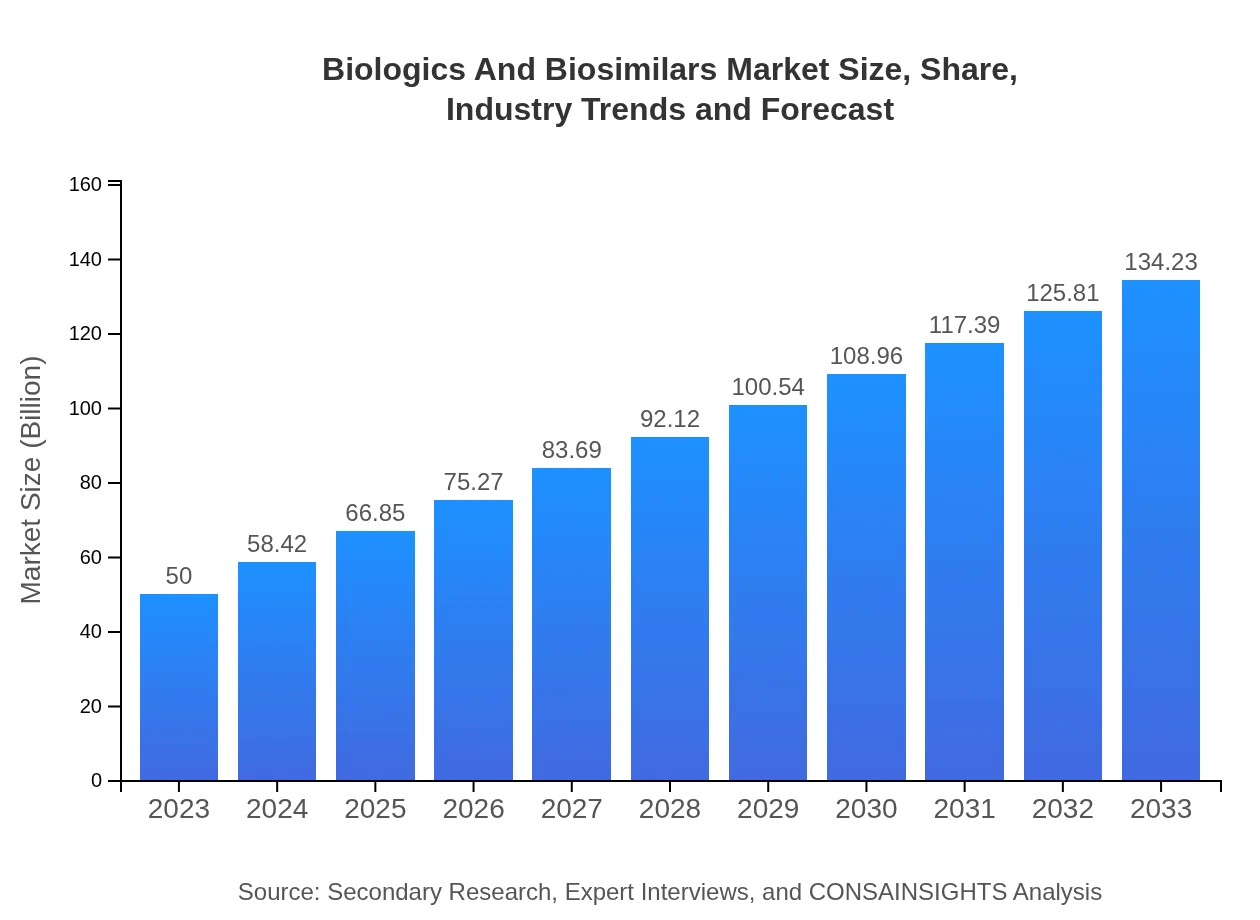
Biologics And Biosimilars Market — USD 50 billion in 2023, Growing to USD 134.23B by 2033 at 10% CAGR
This report provides an extensive overview of the Biologics and Biosimilars market, including market size, growth trends, and forecasts from 2023 to 2033. It analyzes regional markets, industry dynamics, key players, and emerging trends to offer strategic insights for businesses involved in this sector.
Key Takeaways
- Global market expands from $50.00 Billion in 2023 to $134.23 Billion by 2033 at a 10% CAGR.
- North America is largest regional market, while no single fastest-growing region is stated because regional CAGR differences remain within 0.15 percentage points.
- Europe grows from $15.15 Billion in 2023 to $40.69 Billion in 2033, reflecting strong demand across established healthcare systems.
- Asia Pacific advances from $10.47 Billion in 2023 to $28.11 Billion in 2033, supported by expanding biotech capacity and patient access.
- Key industry participants include Amgen Inc., Roche Holding AG, Biogen Inc., Sandoz (Novartis), and Pfizer Inc.
Biologics And Biosimilars Market Report — Executive Summary
North America remains largest market by forecast-period value, while no single fastest-growing region is stated because top regional growth rates are separated by less than 0.15 percentage points. The Biologics and Biosimilars market is set for sustained expansion, moving from $50.00 Billion in 2023 to $134.23 Billion by 2033 at a 10% CAGR. Growth is propelled by advances in biologic therapeutics, increased prevalence of chronic diseases, and greater investment in research and development. Regulatory pathways enabling biosimilar approvals and strategic collaborations between biotech firms and pharmaceutical companies further support market activity. Segmentally, monoclonal antibodies, vaccines, and cell and gene therapies remain central product categories, while hospitals, research institutes, pharmaceutical companies, and biotechnology firms are primary end users. Distribution through hospital pharmacies, retail pharmacies, and online channels complements diverse manufacturing techniques such as recombinant DNA, cell culture, and monoclonal antibody production. Leading firms named in the market include Amgen Inc., Roche Holding AG, Biogen Inc., Sandoz (Novartis), and Pfizer Inc. The report traces demand dynamics, technological enablers, and structural factors that shape competitive positioning and investment priorities across regions.
Key Growth Drivers
- Rising prevalence of chronic and complex diseases increases demand for targeted biologic therapies and biosimilar alternatives.
- Technological advances in recombinant DNA, cell culture, and monoclonal antibody production improve development efficiency and scale-up potential.
- Regulatory approvals and clearer biosimilar pathways enhance market entry and competition, widening patient access to biologic treatments.
- Increased R&D spending and partnerships between biotechnology firms and pharmaceutical companies accelerate pipeline development and commercialization.
- Expanding distribution channels, including hospital, retail, and online pharmacies, facilitate broader product availability across markets.
| Metric | Value |
|---|---|
| Study Period | 2023 - 2033 |
| 2023 Market Size | $50.00 Billion |
| CAGR (2023-2033) | 10% |
| 2033 Market Size | $134.23 Billion |
| Top Companies | Amgen Inc., Roche Holding AG, Biogen Inc., Sandoz (Novartis) , Pfizer Inc. |
| Published Date | 11 October 2024 |
| Last Modified Date | 25 May 2026 |
Biologics And Biosimilars Market Overview
Customize Biologics And Biosimilars Market Report market research report
- ✔ Get in-depth analysis of Biologics And Biosimilars market size, growth, and forecasts.
- ✔ Understand Biologics And Biosimilars's regional dynamics and industry-specific trends.
- ✔ Identify potential applications, end-user demand, and growth segments in Biologics And Biosimilars
What is the Market Size & CAGR of Biologics And Biosimilars Market Report market in 2023?
Biologics And Biosimilars Industry Analysis
Biologics And Biosimilars Market Segmentation and Scope
Tell us your focus area and get a customized research report.
Biologics And Biosimilars Market Report Market Analysis Report by Region
Europe Biologics And Biosimilars Market Report:
Europe grows from $15.15 Billion in 2023 to $40.69 Billion in 2033. Regional growth is supported by established biopharma manufacturing, evolving regulatory frameworks for biosimilars, and widespread clinical adoption across member states.Asia Pacific Biologics And Biosimilars Market Report:
Asia Pacific grows from $10.47 Billion in 2023 to $28.11 Billion in 2033. Growth is underpinned by expanding biotech capacity, increased patient access, and rising healthcare investment across emerging and developed markets in the region.North America Biologics And Biosimilars Market Report:
North America is largest regional market, rising from $16.07 Billion in 2023 to $43.16 Billion in 2033. This expansion reflects concentrated biotech R&D, established commercialization channels, and high therapeutic adoption rates within regional healthcare systems.South America Biologics And Biosimilars Market Report:
Latin America grows from $2.15 Billion in 2023 to $5.79 Billion in 2033. Expansion is influenced by improving healthcare infrastructure, growing demand for cost-effective biologic alternatives, and selective investment in biotech capabilities.Middle East & Africa Biologics And Biosimilars Market Report:
Middle East and Africa grows from $6.14 Billion in 2023 to $16.5 Billion in 2033. Regional drivers include targeted healthcare investments, gradual capacity building in biologics manufacturing, and expanding access to advanced therapies.Tell us your focus area and get a customized research report.
Research Methodology
Biologics And Biosimilars Market Analysis By Product
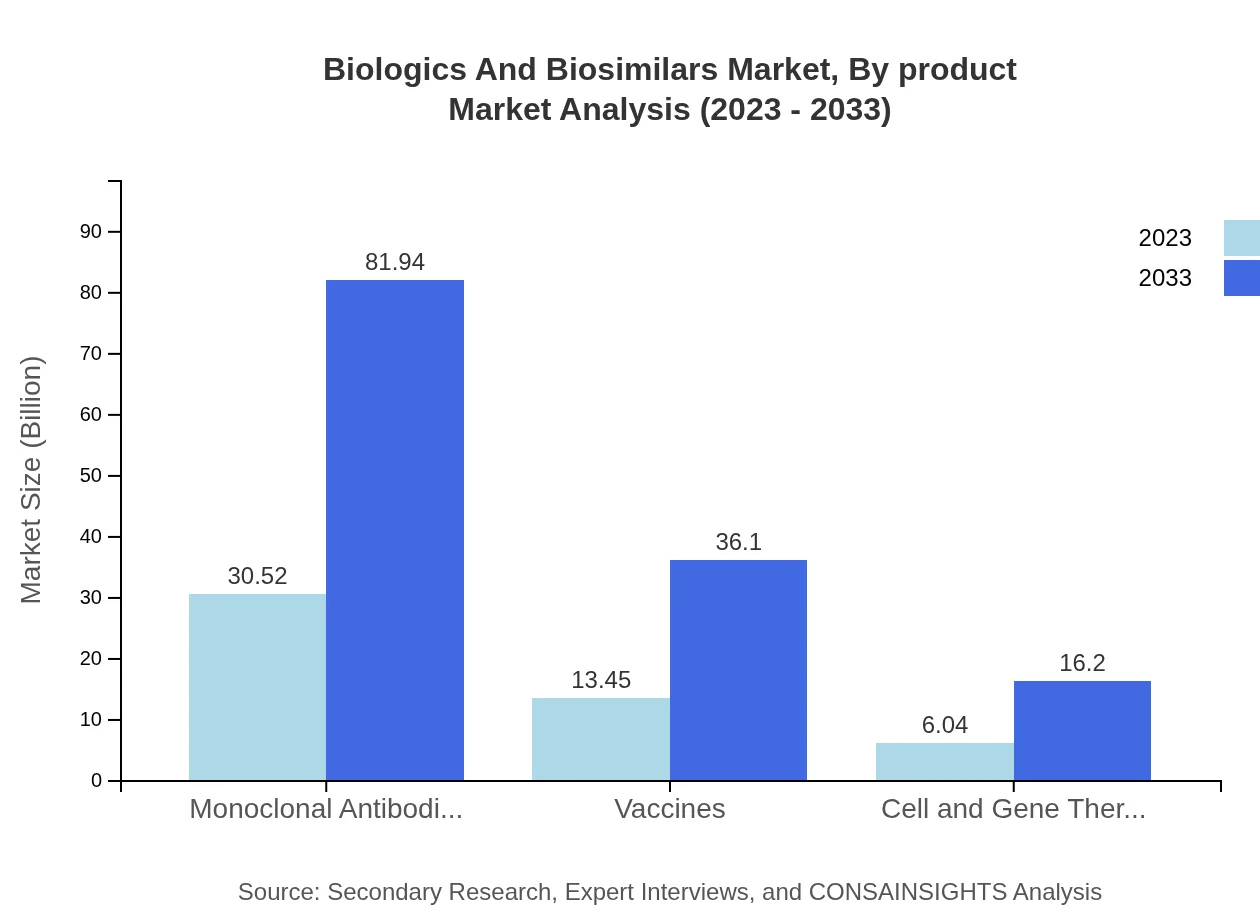
Monoclonal antibodies are leading the market, projected to grow from $30.52 billion in 2023 to $81.94 billion by 2033. Vaccines also hold a significant position, expanding from $13.45 billion to $36.10 billion over the same period. The segments of cell and gene therapy, while smaller, show promise with expected growth from $6.04 billion to $16.20 billion.
Biologics And Biosimilars Market Analysis By Application
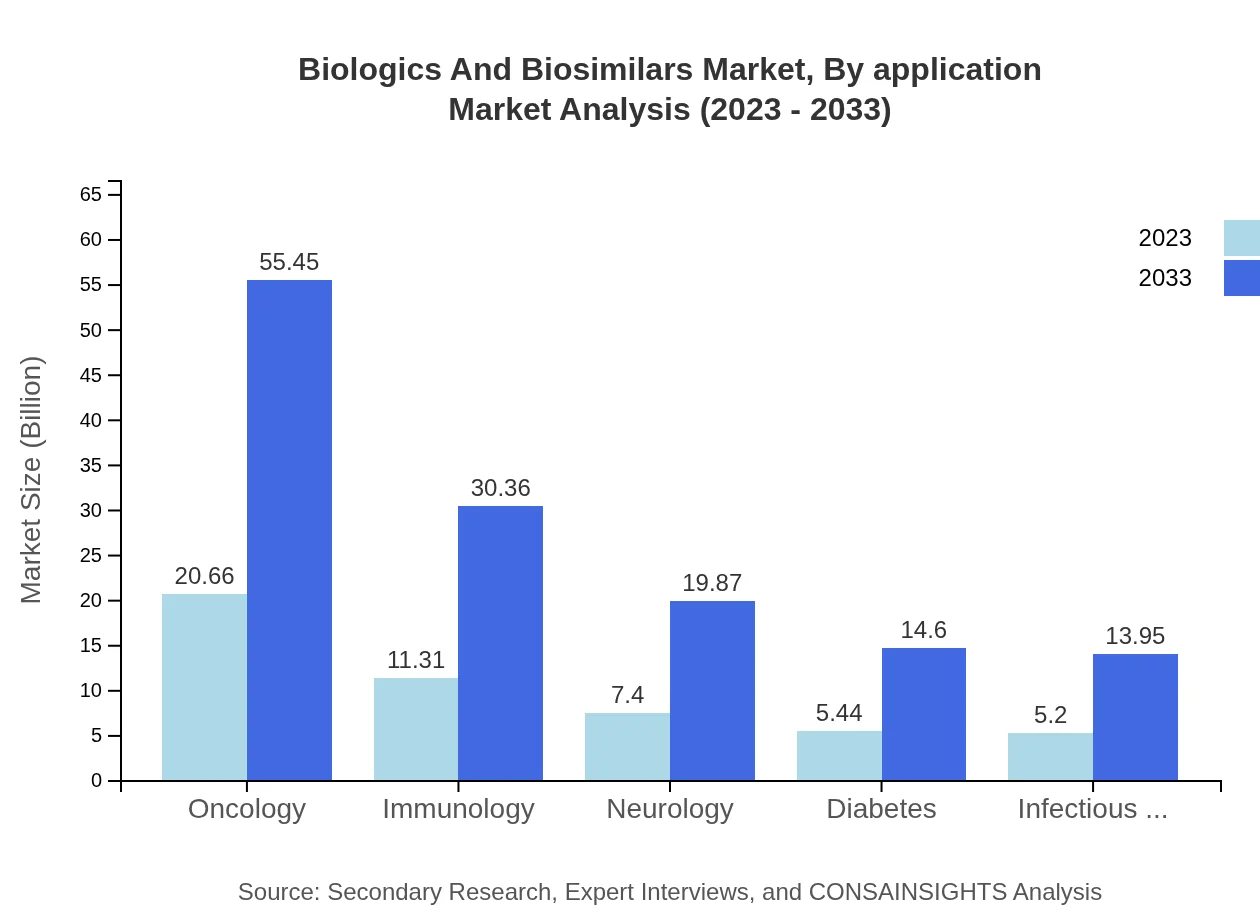
The oncology segment is a major driver, growing from $20.66 billion to $55.45 billion, reflecting increased cancer incidence and innovations in targeted therapies. Immunology and neurology applications are also experiencing growth, indicative of rising demand for effective treatments in these therapeutic areas.
Biologics And Biosimilars Market Analysis By Manufacturing Process
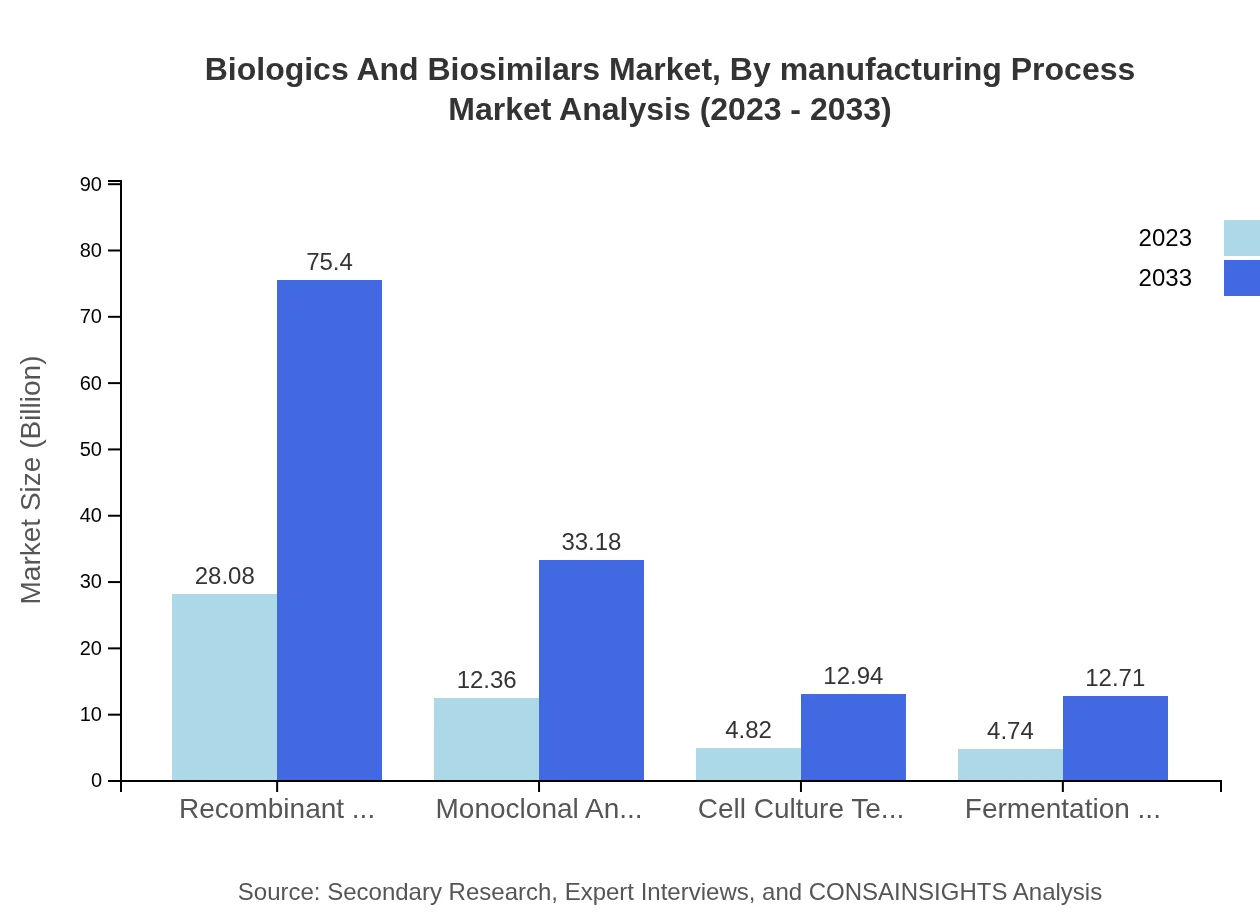
Recombinant DNA technology remains a dominant manufacturing technique, expected to increase market size from $28.08 billion to $75.40 billion. Monoclonal antibody production is also significant, growing between $12.36 billion and $33.18 billion.
Biologics And Biosimilars Market Analysis By End User
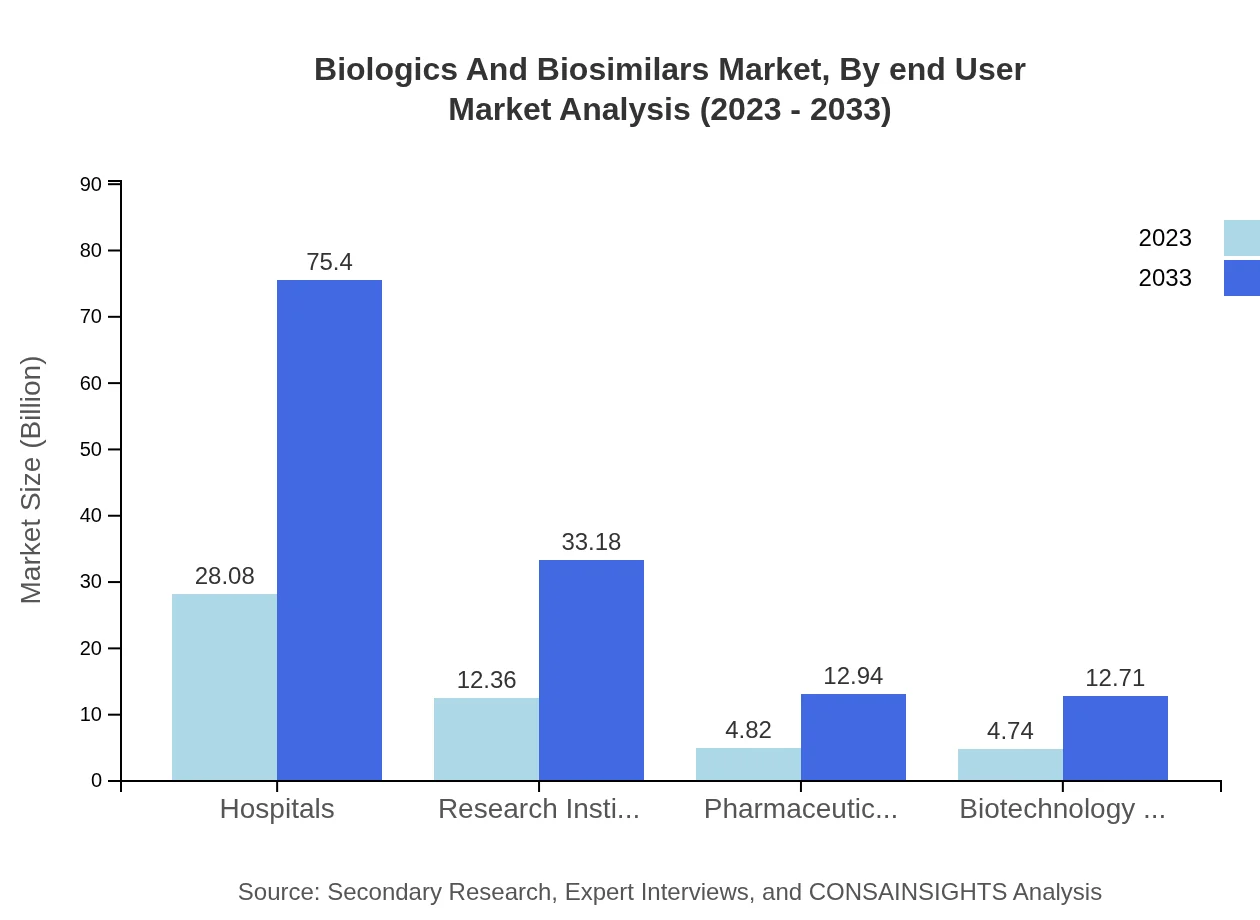
Hospitals are the primary end-users of biologics and biosimilars, anticipated to grow from $28.08 billion to $75.40 billion. Research institutes and pharmacies are also pivotal, reflecting the diverse applications of these products across healthcare settings.
Biologics And Biosimilars Market Analysis By Distribution Channel
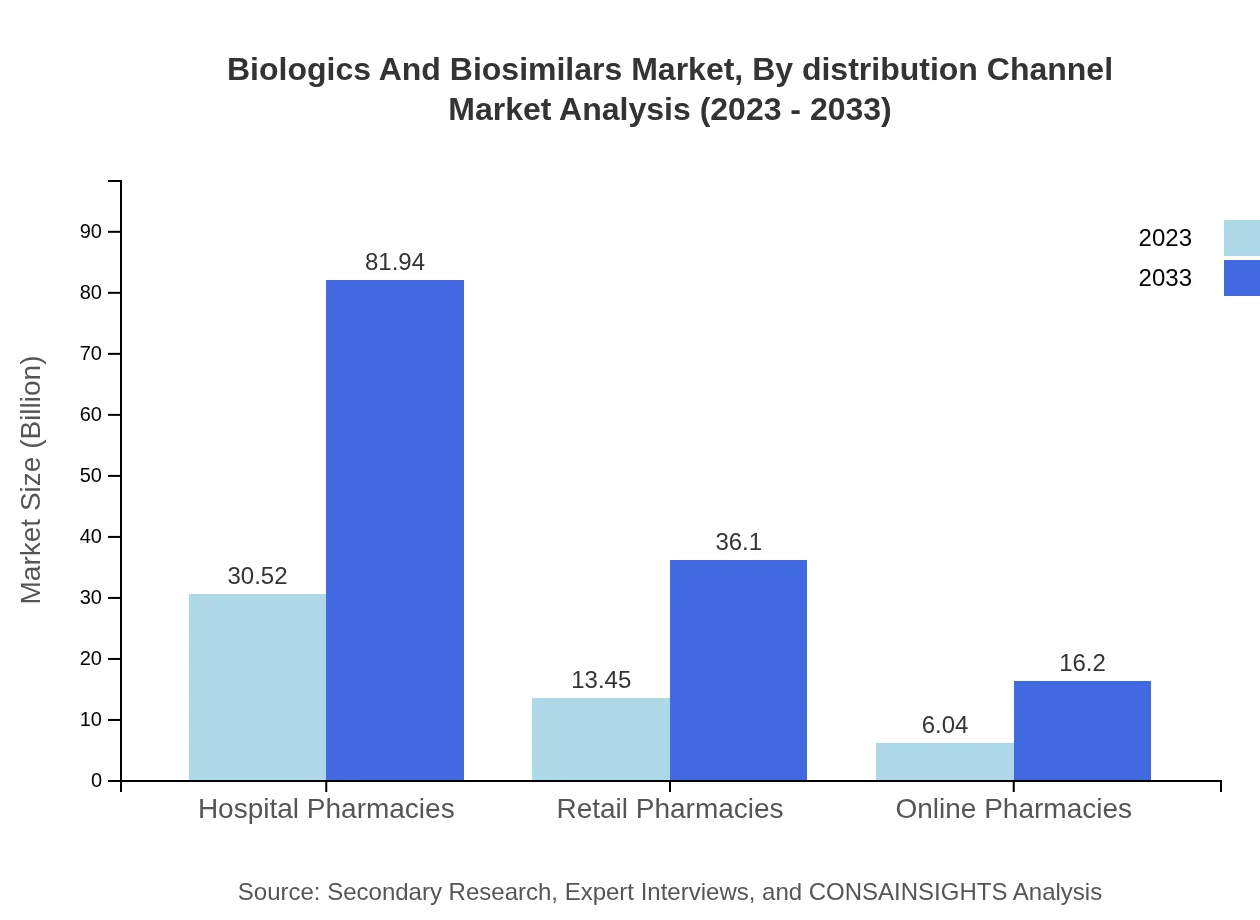
Hospital pharmacies will continue to dominate with a projected market value from $30.52 billion in 2023 to $81.94 billion in 2033. Online pharmacies show significant growth potential, increasing from $6.04 billion to $16.20 billion as e-commerce in healthcare expands.
Biologics And Biosimilars Market Trends and Future Forecast
Tell us your focus area and get a customized research report.
Global Market Leaders and Top Companies in Biologics And Biosimilars Industry
Amgen Inc.:
A leading global biotechnology company known for its innovative biological products, especially in oncology and immunology.Roche Holding AG:
A pioneer in the field of personalized healthcare and biopharmaceuticals, renowned for its monoclonal antibodies and diagnostics.Biogen Inc.:
Specializes in therapies for neurological diseases, with significant investments in biosimilar development.Sandoz (Novartis) :
A major player in generics and biosimilars, delivering a diverse portfolio of affordable medications.Pfizer Inc.:
One of the largest pharmaceutical companies globally, actively involved in developing and commercializing biosimilars.We're grateful to work with incredible clients.








FAQs
What is the market size in 2023?
The market size in 2023 is $50.00 Billion as reported for the Biologics And Biosimilars market, based on aggregated industry data and regional market figures provided in the report.
How big will the market be in 2033?
By 2033 the market is projected to reach $134.23 Billion, reflecting expansion driven by therapeutic innovation, expanded access, and increasing adoption of biosimilars across healthcare systems.
What is CAGR for the forecast period?
The compound annual growth rate (CAGR) for the 2023 to 2033 forecast period is 10%, representing sustained annual expansion across product and regional segments.
Is there a single fastest Growing region in the Biologics And Biosimilars Market Report market?
No single fastest-growing region is stated for the Biologics And Biosimilars Market Report market because the top regional implied CAGR values are within 0.15 percentage points of each other, making the ranking too close to call reliably.
Which product categories are prominent?
Prominent product groups include monoclonal antibodies, vaccines, and cell and gene therapies, each serving major therapeutic areas such as oncology, immunology, and infectious diseases.
Who are leading companies in the sector?
Top companies cited in the report include Amgen Inc., Roche Holding AG, Biogen Inc., Sandoz (Novartis), and Pfizer Inc., representing major industry participants in biologics and biosimilars.
What distribution channels are covered?
The market encompasses hospital pharmacies, retail pharmacies, and online pharmacies as primary distribution channels enabling product reach across clinical and consumer settings.
How is manufacturing landscape described?
Manufacturing approaches noted include recombinant DNA technology, monoclonal antibody production, cell culture technology, and fermentation technology, each relevant to scalable biologic production.