

Cardiac Biomarkers Market Report
First published: 20 October 2024 | Last updated: 28 May 2026 | Report Code: cardiac-biomarkers
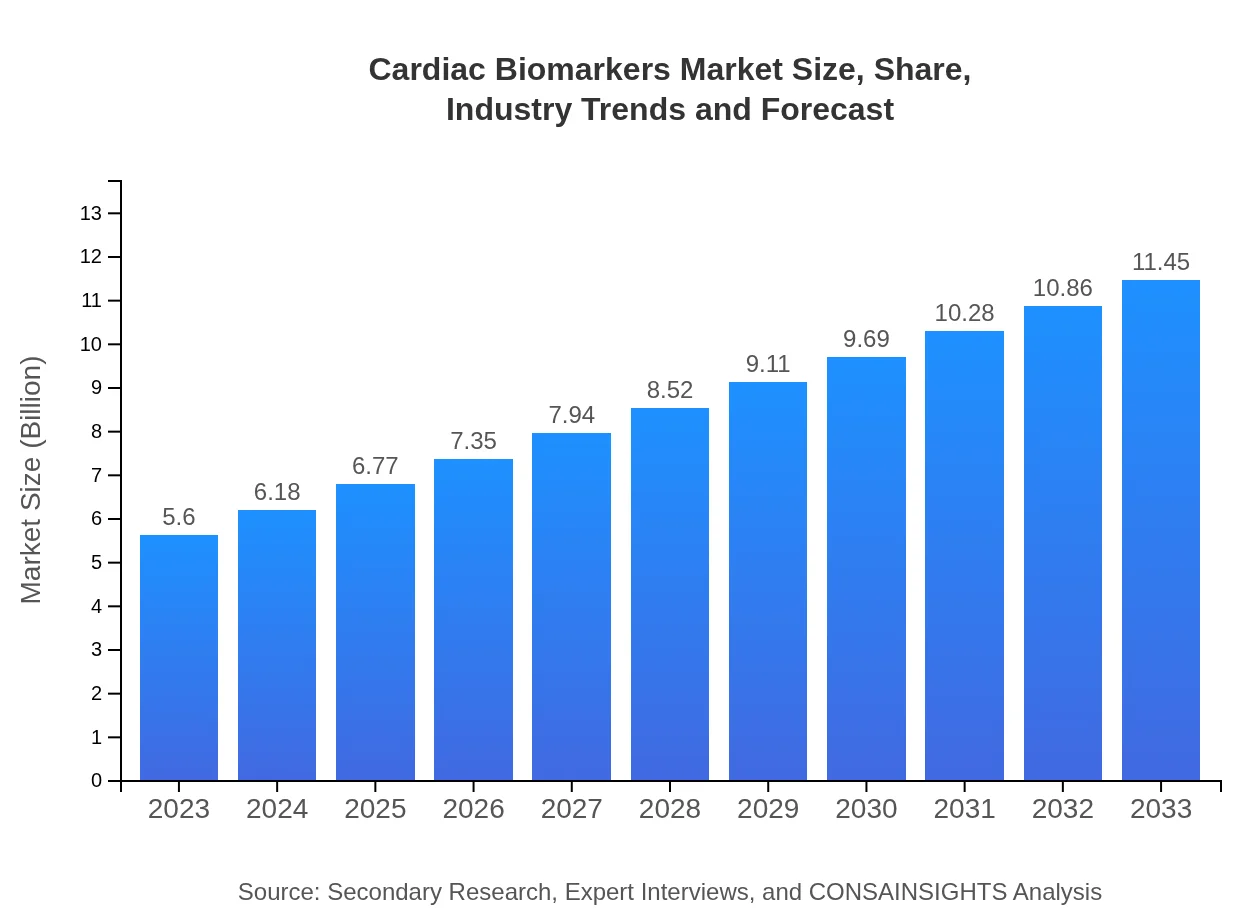
Cardiac Biomarkers Market — USD 5.6 billion in 2023, Growing to USD 11.45B by 2033 at 7.2% CAGR
This report provides an in-depth analysis of the cardiac biomarkers market, covering market trends, size, growth forecasts, and key players for the years 2023 to 2033. Insights include regional breakdowns and segment analysis to understand the intricacies of this critical healthcare sector.
Key Takeaways
- Global market to grow from $5.60 Billion in 2023 to $11.45 Billion in 2033 at a 7.2% CAGR.
- North America holds the largest regional share, rising from $1.94 Billion in 2023 to $3.96 Billion in 2033.
- North America is largest regional market; Latin America is regional market region based on implied CAGR across 2023 to 2033.
- Europe and Asia Pacific show notable expansion: Europe from $1.85 Billion to $3.78 Billion, Asia Pacific from $1.03 Billion to $2.11 Billion.
- Key vendors active in the market include Roche Diagnostics, Abbott Laboratories, Siemens Healthineers, and Thermo Fisher Scientific.
Cardiac Biomarkers Market Report — Executive Summary
Regional analysis shows North America as largest market and Latin America as fastest-growing region by implied CAGR. The cardiac biomarkers market is on a sustained growth path driven by rising cardiovascular disease prevalence, technological advances in assays, and demand for quicker diagnostics. Market value increases from $5.60 Billion in 2023 to $11.45 Billion in 2033 at a 7.2% CAGR for 2023 to 2033. Regional trajectories vary: North America records the largest absolute market value, while Latin America is noted as the regional market region. Product innovation, expanded point-of-care testing, and enhanced lab capabilities are reshaping end-user adoption across hospitals, diagnostic laboratories, and research institutes. Leading firms such as Roche Diagnostics, Abbott Laboratories, Siemens Healthineers, and Thermo Fisher Scientific are focusing on improved immunoassays, genetic tests, and natriuretic peptide assays to capture clinical and hospital demand. The report examines segmentation by test type, marker class, application and end users, and presents regional breakdowns to support strategic planning and investment decisions.
Key Growth Drivers
- Increasing incidence of cardiovascular conditions boosting demand for diagnostic tests and monitoring.
- Advances in assay technologies and point-of-care devices improving speed and accessibility of testing.
- Rising adoption of natriuretic peptide and cardiac enzyme biomarker testing in clinical protocols.
- Expanded diagnostic laboratory capacity and hospital integration of rapid testing workflows.
- Research investments and product development by major industry participants enhancing test performance.
| Metric | Value |
|---|---|
| Study Period | 2023 - 2033 |
| 2023 Market Size | $5.60 Billion |
| CAGR (2023-2033) | 7.2% |
| 2033 Market Size | $11.45 Billion |
| Top Companies | Roche Diagnostics, Abbott Laboratories, Siemens Healthineers, Thermo Fisher Scientific |
| Published Date | 20 October 2024 |
| Last Modified Date | 28 May 2026 |
Cardiac Biomarkers Market Overview
Customize Cardiac Biomarkers Market Report market research report
- ✔ Get in-depth analysis of Cardiac Biomarkers market size, growth, and forecasts.
- ✔ Understand Cardiac Biomarkers's regional dynamics and industry-specific trends.
- ✔ Identify potential applications, end-user demand, and growth segments in Cardiac Biomarkers
What is the Market Size & CAGR of Cardiac Biomarkers Market Report market in 2023?
Cardiac Biomarkers Industry Analysis
Cardiac Biomarkers Market Segmentation and Scope
Tell us your focus area and get a customized research report.
Cardiac Biomarkers Market Report Market Analysis Report by Region
Europe Cardiac Biomarkers Market Report:
Europe grows from $1.85 Billion in 2023 to $3.78 Billion in 2033. Expansion is driven by clinical adoption of improved biomarker tests, research investment, and integration of novel diagnostics into hospital care pathways.Asia Pacific Cardiac Biomarkers Market Report:
Asia Pacific grows from $1.03 Billion in 2023 to $2.11 Billion in 2033. Regional progress is linked to rising healthcare access, increased diagnostic laboratory capacity, and broader use of point-of-care and immunoassay testing.North America Cardiac Biomarkers Market Report:
North America is largest regional market, rising from $1.94 Billion in 2023 to $3.96 Billion in 2033. Growth reflects strong hospital and laboratory infrastructure, rapid uptake of advanced assays, and significant activity by leading firms in diagnostics.South America Cardiac Biomarkers Market Report:
Latin America is fastest-growing region by implied CAGR, increasing from $0.11 Billion in 2023 to $0.23 Billion in 2033. This region is identified as the fastest-growing, with improvements in diagnostic availability and growing emphasis on cardiovascular disease detection.Middle East & Africa Cardiac Biomarkers Market Report:
Middle East and Africa grows from $0.66 Billion in 2023 to $1.36 Billion in 2033. Growth is supported by expanded clinical services, investments in laboratory infrastructure, and adoption of improved testing methods.Tell us your focus area and get a customized research report.
Research Methodology
Cardiac Biomarkers Market Analysis By Marker Type
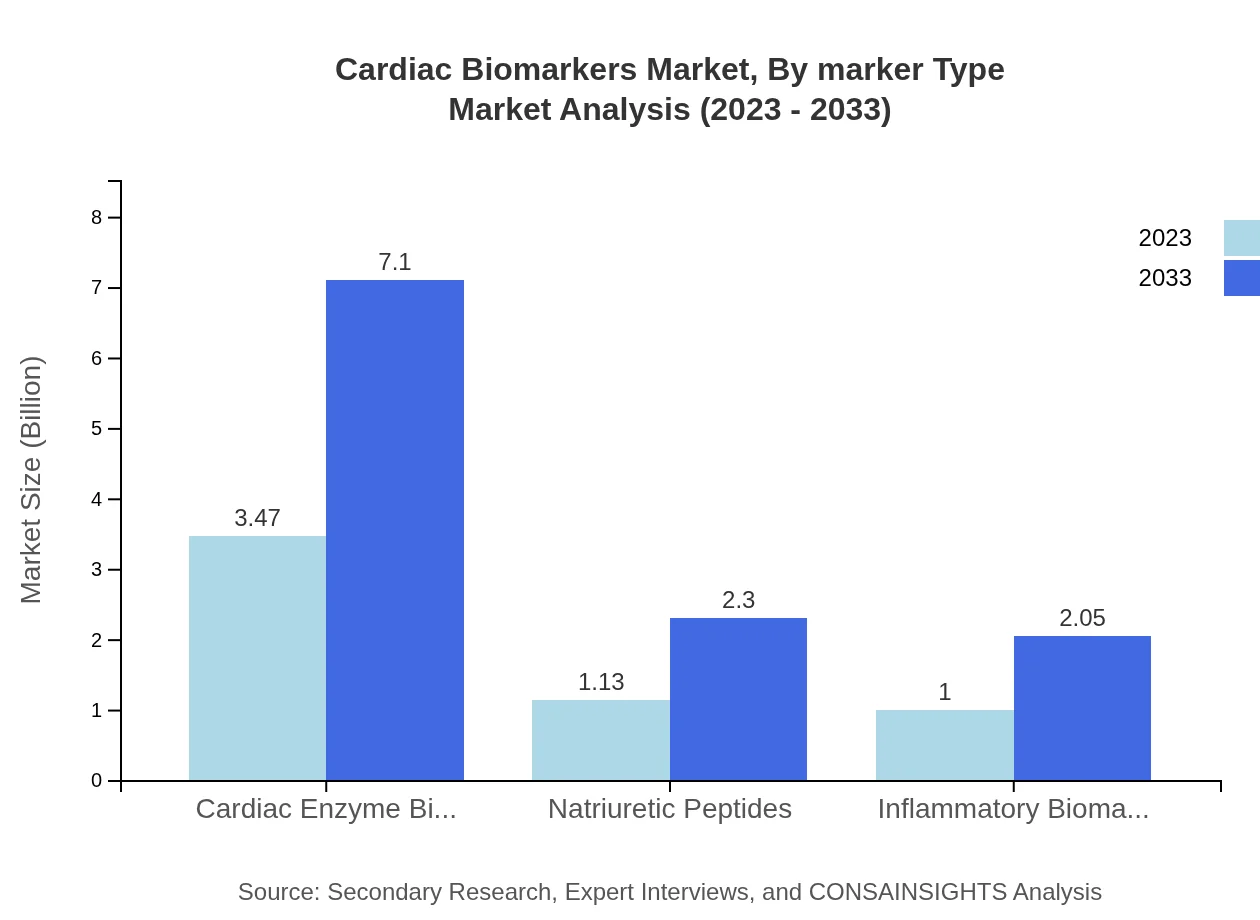
In the analysis by marker type, cardiac enzyme biomarkers account for the largest market share, reflecting their fundamental role in diagnosing myocardial infarction. In 2023, this segment's market size is projected at $3.47 billion, growing to $7.10 billion by 2033, retaining a 62.03% market share throughout the decade. Other significant markers include natriuretic peptides and inflammatory biomarkers, showing promising growth trajectories as diagnostic measures become more personalized and targeted.
Cardiac Biomarkers Market Analysis By Test Type
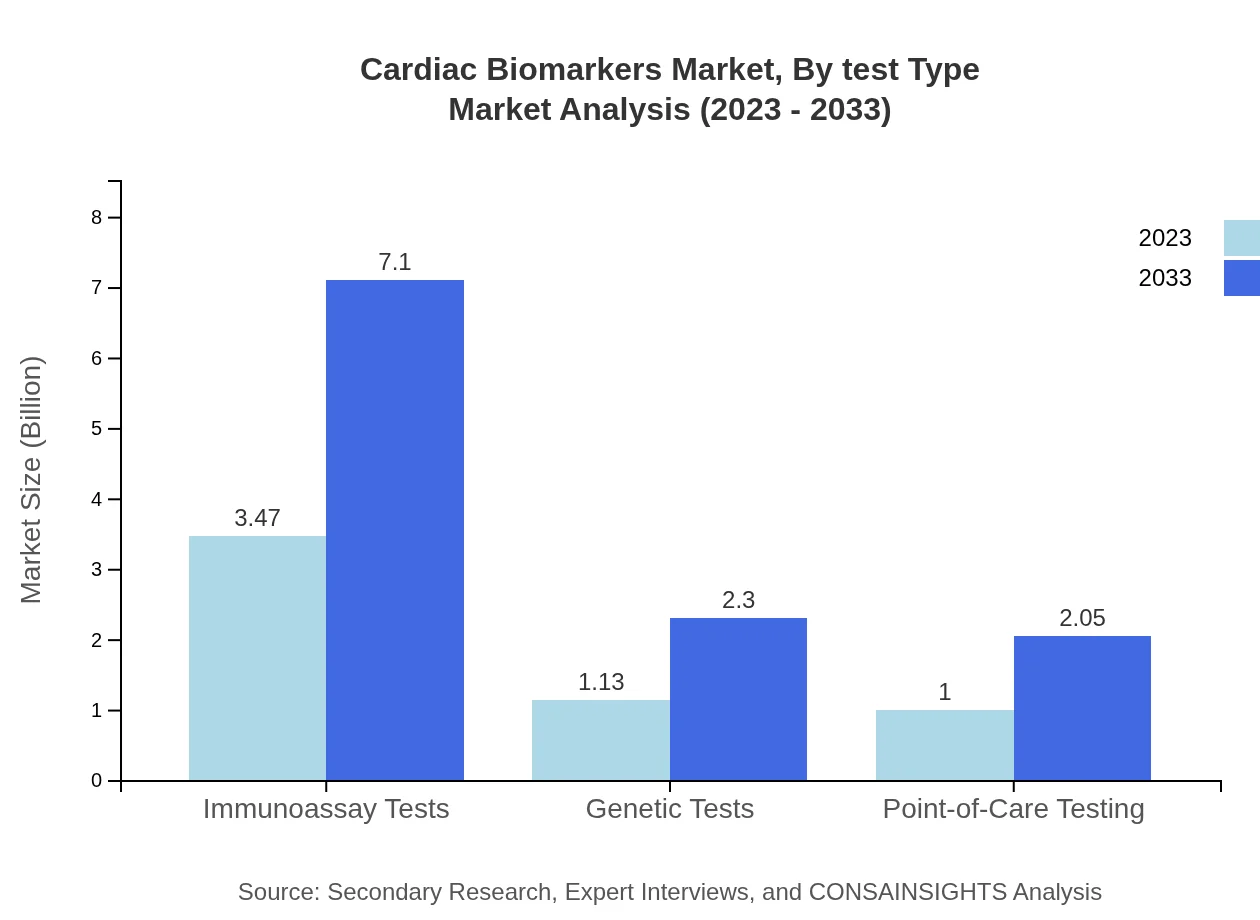
Focusing on test types, immunoassay tests dominate the market with a significant size increase, expected to reach $7.10 billion by 2033, given their effectiveness and widespread use in clinical practice. Genetic tests, while smaller at $2.30 billion in 2033, demonstrate a growing trend towards integrating genomics into cardiovascular diagnostics. Moreover, point-of-care testing is emerging as a critical area of focus, showing substantial growth as demand for rapid and convenient diagnostics rises.
Cardiac Biomarkers Market Analysis By Application
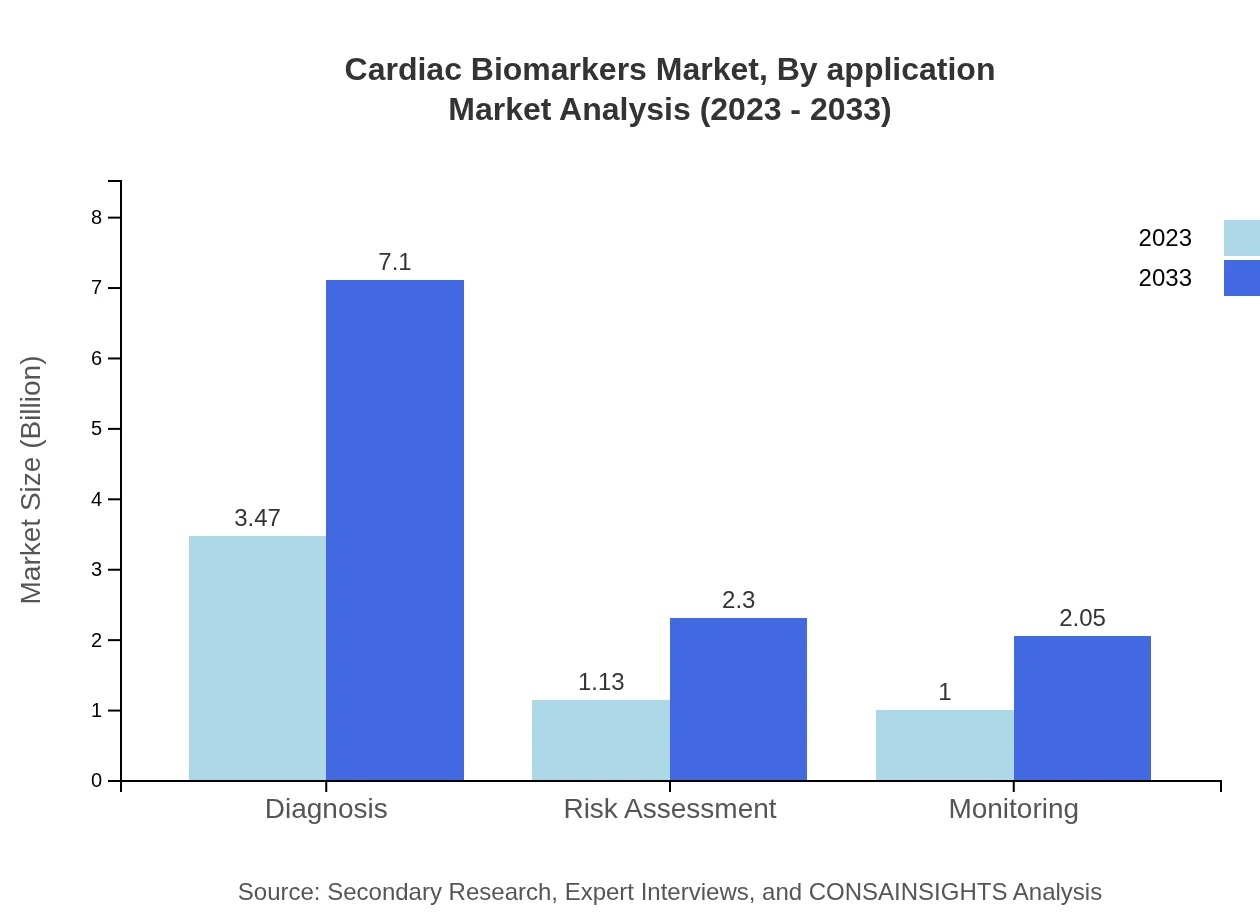
The application segment reveals that diagnosis is the leading application area, expected to grow from $3.47 billion in 2023 to $7.10 billion by 2033, which equates to a 62.03% share in the market. Monitoring and risk assessment applications are also crucial, with expected increases that underline the shift towards preventive healthcare solutions particularly in aging populations.
Cardiac Biomarkers Market Analysis By End User
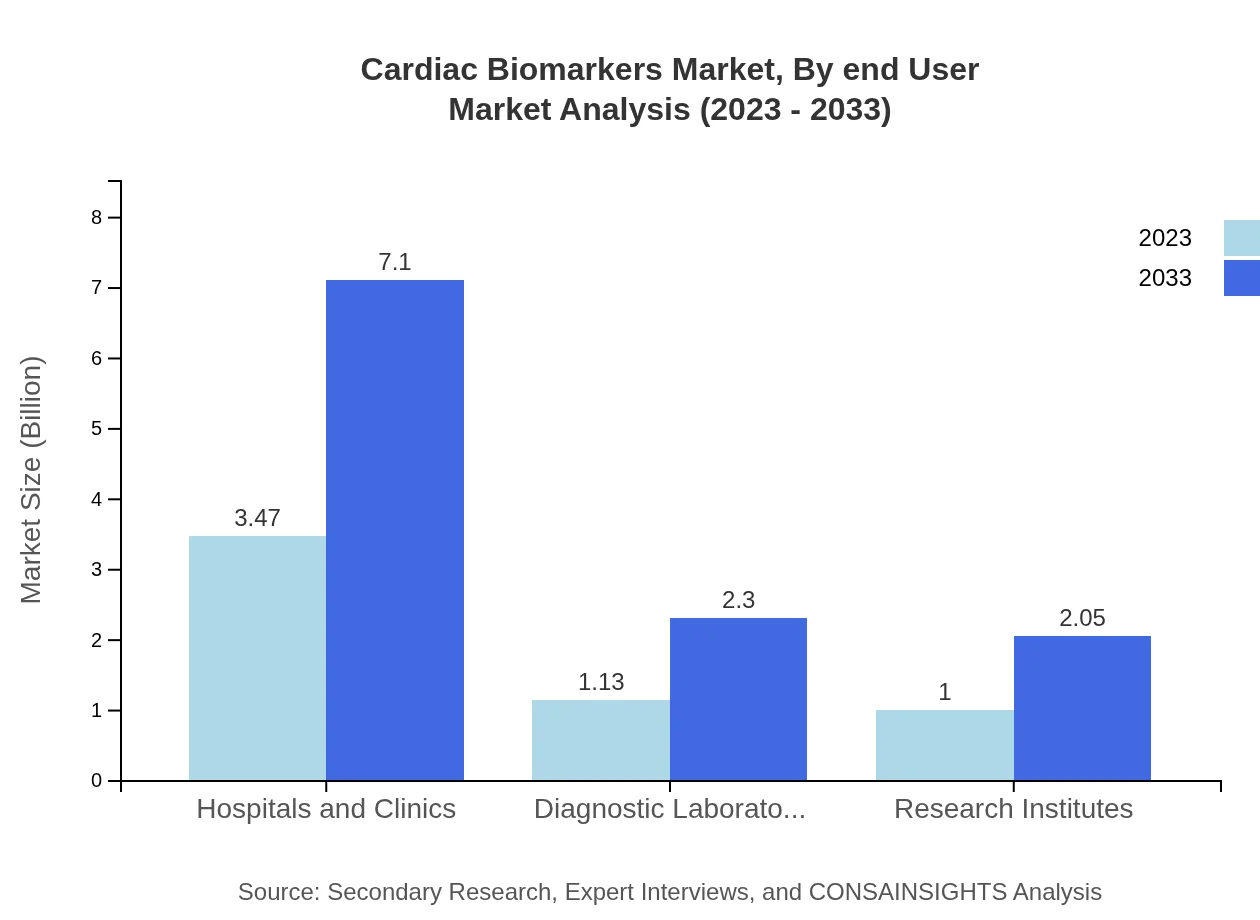
With hospitals and clinics holding a dominant position in end-user distribution, the market is projected to expand significantly, moving from $3.47 billion in 2023 to $7.10 billion by 2033. Diagnostic laboratories and research institutes are expected to maintain their growth trajectory, indicating a holistic approach to cardiac health management in various settings.
Cardiac Biomarkers Market Trends and Future Forecast
Tell us your focus area and get a customized research report.
Global Market Leaders and Top Companies in Cardiac Biomarkers Industry
Roche Diagnostics:
A leading company that specializes in innovative diagnostics solutions, Roche offers a variety of cardiac biomarkers used for cardiology diagnostics, ensuring accurate detection and management of cardiovascular diseases.Abbott Laboratories:
Known for its commitment to healthcare advancements, Abbott is a key player in the cardiac biomarkers market, providing extensive diagnostic tests that are pivotal for the detection of heart-related conditions.Siemens Healthineers:
Siemens is a major contributor to the cardiac biomarkers sector, focusing on high-quality diagnostic tools that streamline heart disease detection and management, influencing healthcare outcomes positively.Thermo Fisher Scientific:
Thermo Fisher provides a broad range of biomarker research solutions and diagnostic assays, playing a crucial role in the development and commercialization of cardiac biomarkers.We're grateful to work with incredible clients.









FAQs
What is the market size of the cardiac biomarkers market in 2023?
The cardiac biomarkers market size in 2023 is $5.60 Billion, reflecting the value of global sales across diagnostic tests and related products for that year.
How big will the market be in 2033?
By 2033 the market is projected to reach $11.45 Billion, representing the forecasted global valuation of cardiac biomarker diagnostics at the end of the period.
What is CAGR of the market for 2023 to 2033?
The market is forecast to grow at a compound annual growth rate (CAGR) of 7.2% during the 2023 to 2033 period.
Which region is the fastest Growing in the Cardiac Biomarkers Market Report market?
Latin America is the fastest-growing region, projected to expand from $0.11 Billion in 2023 to $0.23 Billion in 2033, reflecting an implied 7.65% CAGR over the forecast period.
Which region is the fastest Growing for cardiac biomarkers?
Latin America is reported as the regional market region, expanding from $0.11 Billion in 2023 to $0.23 Billion in 2033 with an implied 7.65% CAGR.
Who are the top companies in this market?
Top companies named in the report include Roche Diagnostics, Abbott Laboratories, Siemens Healthineers, and Thermo Fisher Scientific as prominent participants.
What applications drive demand for cardiac biomarkers?
Primary applications include diagnosis, risk assessment, and monitoring of cardiovascular conditions, with demand from hospitals, diagnostic laboratories, and research institutes.
How do test types segment the market?
Test-type segmentation covers immunoassay tests, genetic tests, and point-of-care testing, each serving different clinical and laboratory workflows.
What marker types are covered in the report?
Marker-type categories include cardiac enzyme biomarkers, natriuretic peptides, and inflammatory biomarkers used across diagnostic and monitoring applications.
What end users are emphasized in the study?
End-user segments highlighted are hospitals and clinics, diagnostic laboratories, and research institutes as primary purchasers and adopters.