
Reports >
Life Sciences
>
Cattle Health Market Report

Cattle Health Market Report
First published: 15 October 2024 | Last updated: 25 May 2026 | Report Code: cattle-health
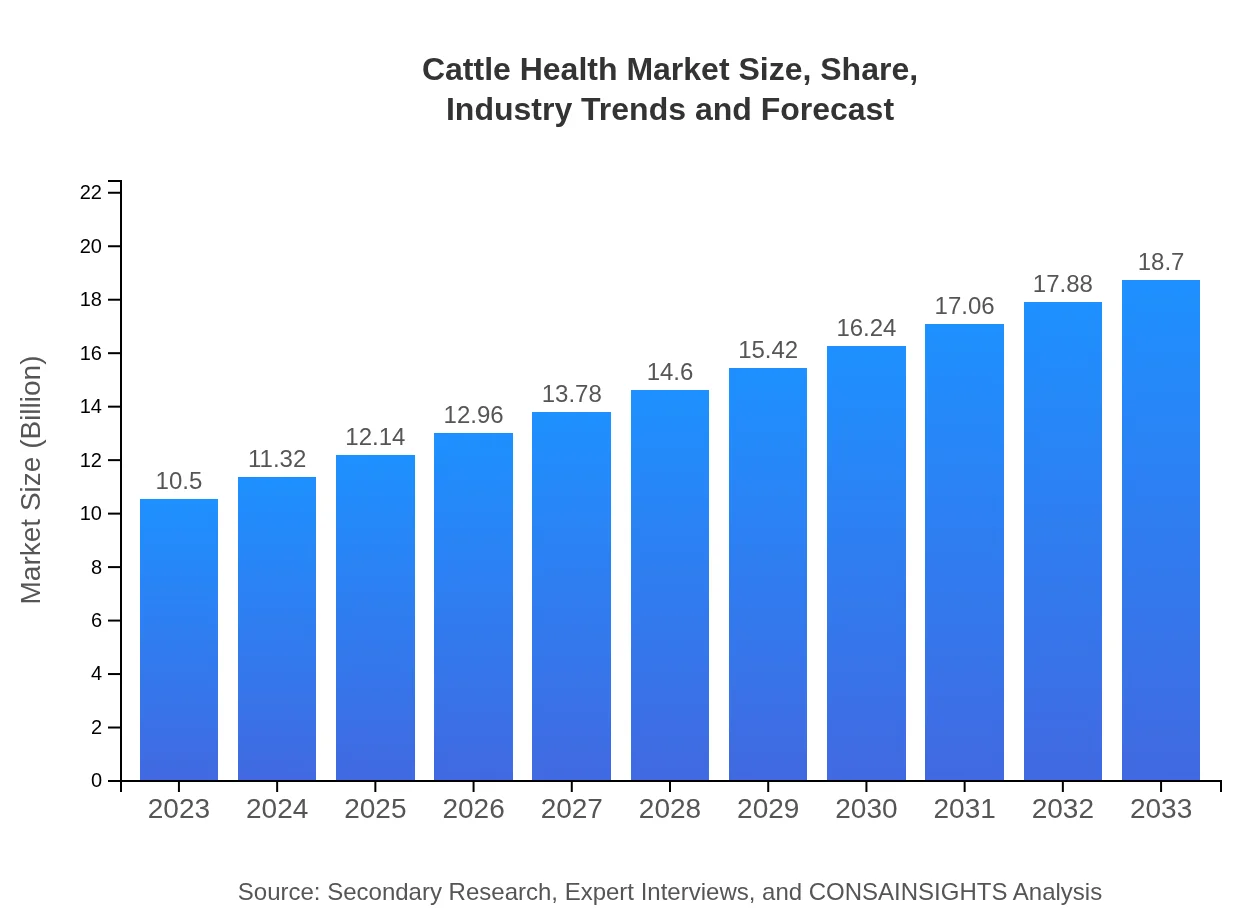
Cattle Health Market — USD 10.5 billion in 2023, Growing to USD 18.70B by 2033 at 5.8% CAGR
This market report provides a comprehensive analysis of the Cattle Health industry, highlighting market trends, size, and growth forecasts from 2023 to 2033. Insights into technological advancements, regional dynamics, and competitive landscape are also included.
Key Takeaways
- Global market expands from $10.50 Billion in 2023 to $18.70 Billion in 2033, reflecting a 5.8% CAGR over 2023 to 2033.
- North America is largest regional market, while no single fastest-growing region is stated because regional CAGR differences remain within 0.15 percentage points.
- Europe grows from $3.00 Billion in 2023 to $5.34 Billion in 2033; Asia Pacific rises from $2.20 Billion to $3.91 Billion.
- Core product categories include vaccines, medications, and nutritional supplements; leading firms include Zoetis and Merck Animal Health.
- Market momentum is supported by preventive healthcare adoption, veterinary advances, and demand for higher-quality meat and dairy products.
Cattle Health Market Report — Executive Summary
North America remains largest market by forecast-period value, while no single fastest-growing region is stated because top regional growth rates are separated by less than 0.15 percentage points. This report examines the Cattle Health market’s trajectory from $10.50 Billion in 2023 to $18.70 Billion by 2033, driven by a 5.8% CAGR during the 2023 to 2033 forecast period. Key growth drivers include rising uptake of vaccination programs, enhanced diagnostics, and increased use of therapeutic and nutritional solutions among dairy and beef farmers. North America is the largest regional market, reflecting significant investment in livestock health management. Product categories analyzed cover vaccines, medications, and nutritional supplements, while technology segments include traditional and advanced solutions. The competitive landscape highlights major participants such as Zoetis, Merck Animal Health, Boehringer Ingelheim, Elanco, and Purina Animal Nutrition. The report synthesizes primary interviews and secondary sources, offering strategic insight into end-user demand, distribution channels, and regional adoption patterns to support commercial and policy decision-making.
Key Growth Drivers
- Rising emphasis on preventive measures such as widespread vaccination campaigns among dairy and beef producers.
- Advances in veterinary diagnostics and therapies enabling earlier disease detection and targeted treatments.
- Growing consumer demand for quality meat and dairy prompting producers to invest in cattle health programs.
- Increased deployment of nutritional supplements to improve herd productivity and resilience.
- Expansion of distribution networks, including online channels, improving access to products and services.
| Metric | Value |
|---|---|
| Study Period | 2023 - 2033 |
| 2023 Market Size | $10.50 Billion |
| CAGR (2023-2033) | 5.8% |
| 2033 Market Size | $18.70 Billion |
| Top Companies | Zoetis, Merck Animal Health, Boehringer Ingelheim, Elanco, Purina Animal Nutrition |
| Published Date | 15 October 2024 |
| Last Modified Date | 25 May 2026 |
Cattle Health Market Overview
Customize Cattle Health Market Report market research report
- ✔ Get in-depth analysis of Cattle Health market size, growth, and forecasts.
- ✔ Understand Cattle Health's regional dynamics and industry-specific trends.
- ✔ Identify potential applications, end-user demand, and growth segments in Cattle Health
What is the Market Size & CAGR of Cattle Health Market Report market in 2023?
Cattle Health Industry Analysis
Cattle Health Market Segmentation and Scope
Tell us your focus area and get a customized research report.
Cattle Health Market Report Market Analysis Report by Region
Europe Cattle Health Market Report:
Europe grows from $3 Billion in 2023 to $5.34 Billion in 2033. Market expansion is driven by regulatory attention to animal health, rising focus on food safety, and adoption of preventive and therapeutic measures among producers.Asia Pacific Cattle Health Market Report:
Asia Pacific grows from $2.2 Billion in 2023 to $3.91 Billion in 2033. Growth stems from rising demand for quality meat and dairy, expanding veterinary services, and greater uptake of nutritional and disease-management solutions.North America Cattle Health Market Report:
North America is largest regional market, rising from $3.46 Billion in 2023 to $6.17 Billion in 2033. Regional growth reflects strong investment in livestock health programs, extensive veterinary infrastructure, and high adoption of vaccines and advanced management practices.South America Cattle Health Market Report:
Latin America grows from $1.01 Billion in 2023 to $1.8 Billion in 2033. Regional drivers include improving farm-level animal health practices, broader access to veterinary products, and investment in productivity-enhancing interventions.Middle East & Africa Cattle Health Market Report:
Middle East and Africa grows from $0.83 Billion in 2023 to $1.48 Billion in 2033. Market progress is supported by growing emphasis on food security, expansion of basic veterinary infrastructure, and increased use of vaccines and supplements.Tell us your focus area and get a customized research report.
Research Methodology
Cattle Health Market Analysis By Disease
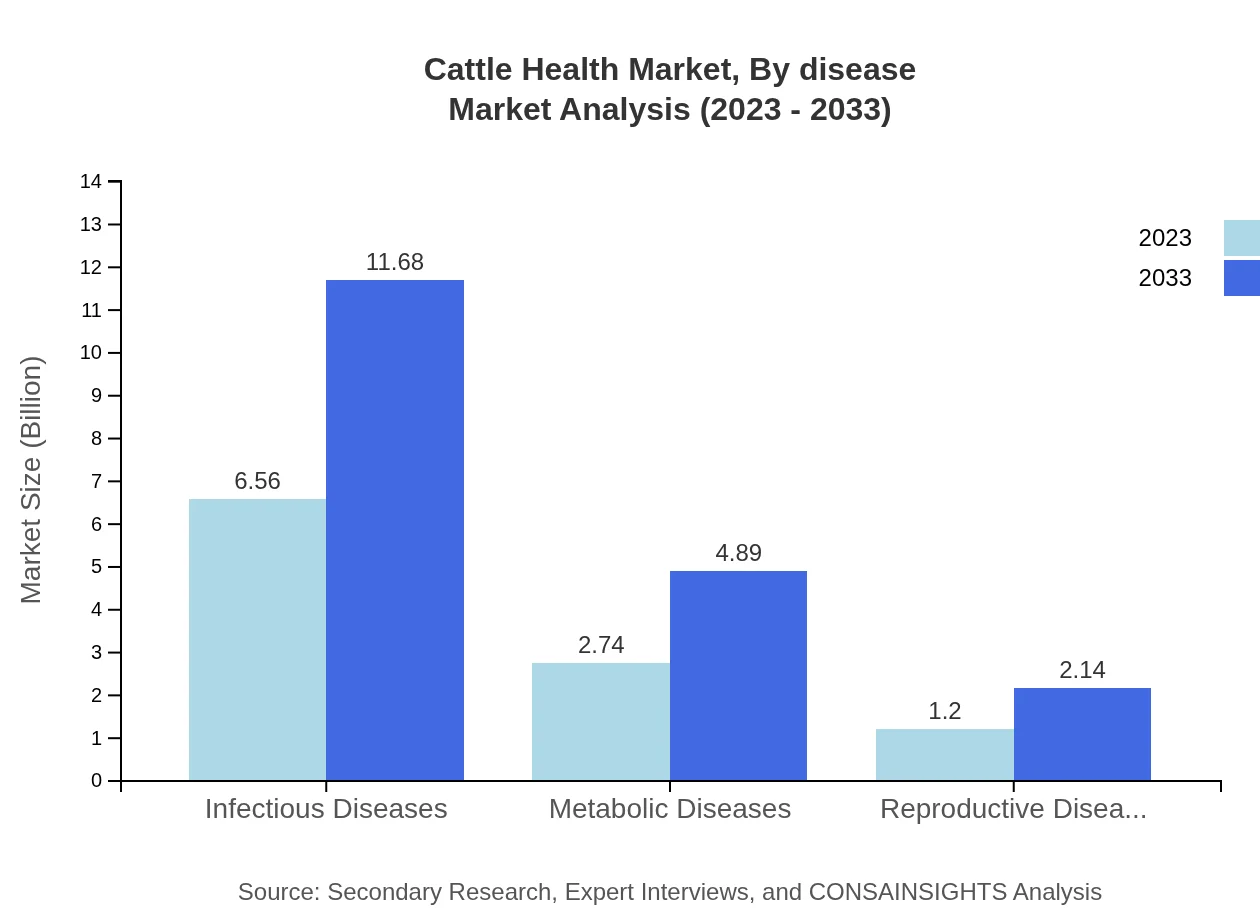
The infectious diseases segment is projected to grow from $6.56 billion in 2023 to $11.68 billion by 2033, representing a significant share of the overall market. This segment's prominence is attributed to increased incidence of diseases such as bovine respiratory disease and mastitis. The metabolic diseases segment, focusing on issues like ketosis and milk fever, is expected to see growth from $2.74 billion to $4.89 billion. Additionally, the reproductive diseases segment is estimated to expand from $1.20 billion to $2.14 billion over the forecast period.
Cattle Health Market Analysis By Product

Vaccines represent a crucial part of the Cattle Health market, with an expected growth from $6.56 billion in 2023 to $11.68 billion by 2033. The increasing efficacy of vaccines against various cattle diseases and a rising emphasis on preventive healthcare are key drivers. Medications are projected to expand from $2.74 billion to $4.89 billion during the same period, while nutritional supplements are expected to grow from $1.20 billion to $2.14 billion.
Cattle Health Market Analysis By End User
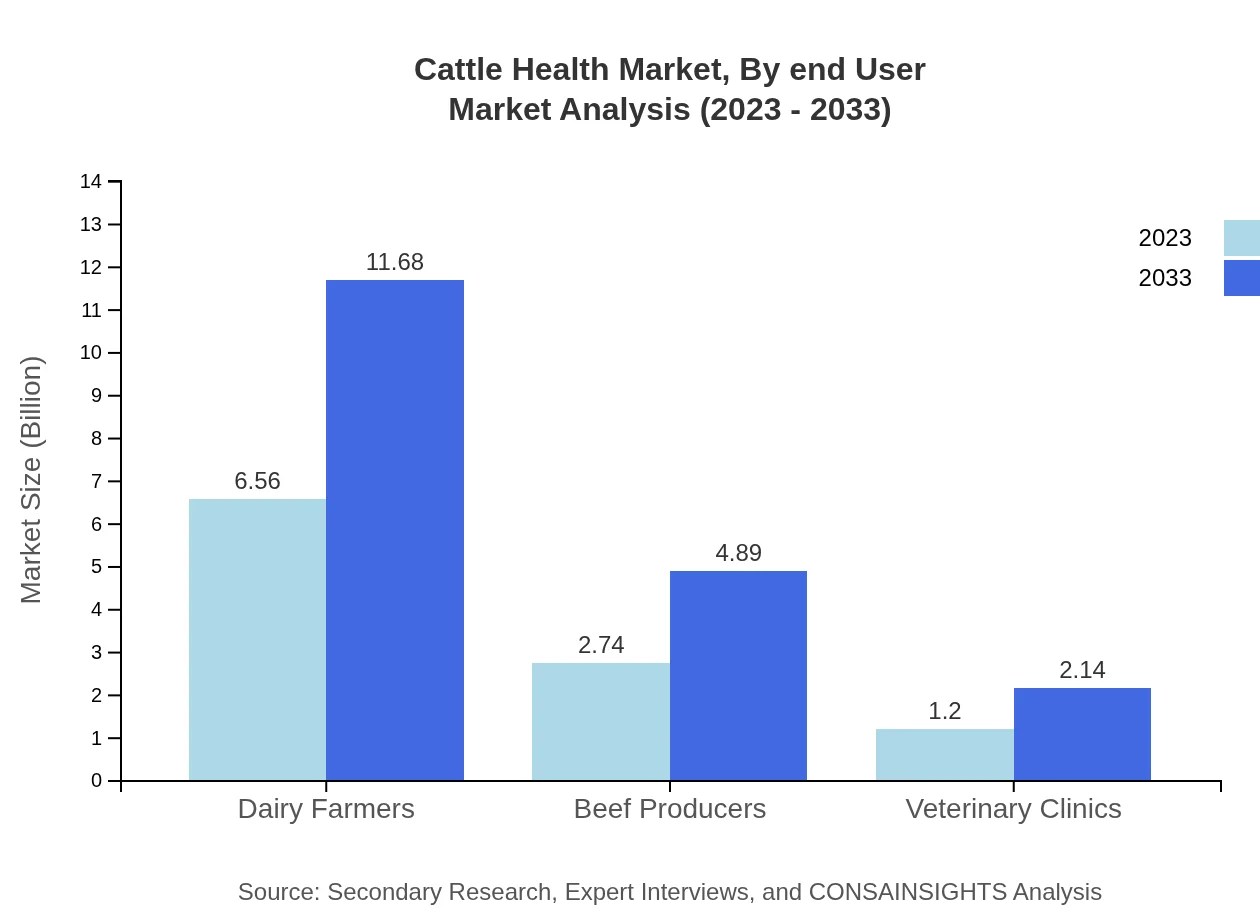
Dairy farmers represent the largest end-user segment, with a market size projected to grow from $6.56 billion in 2023 to $11.68 billion by 2033. This is due to the increasing demand for high-quality milk production. Beef producers are also significant, with growth from $2.74 billion to $4.89 billion, reflecting the rising global meat demand. Veterinary clinics are projected to see an increase from $1.20 billion to $2.14 billion as they play a crucial role in cattle health management.
Cattle Health Market Analysis By Distribution Channel
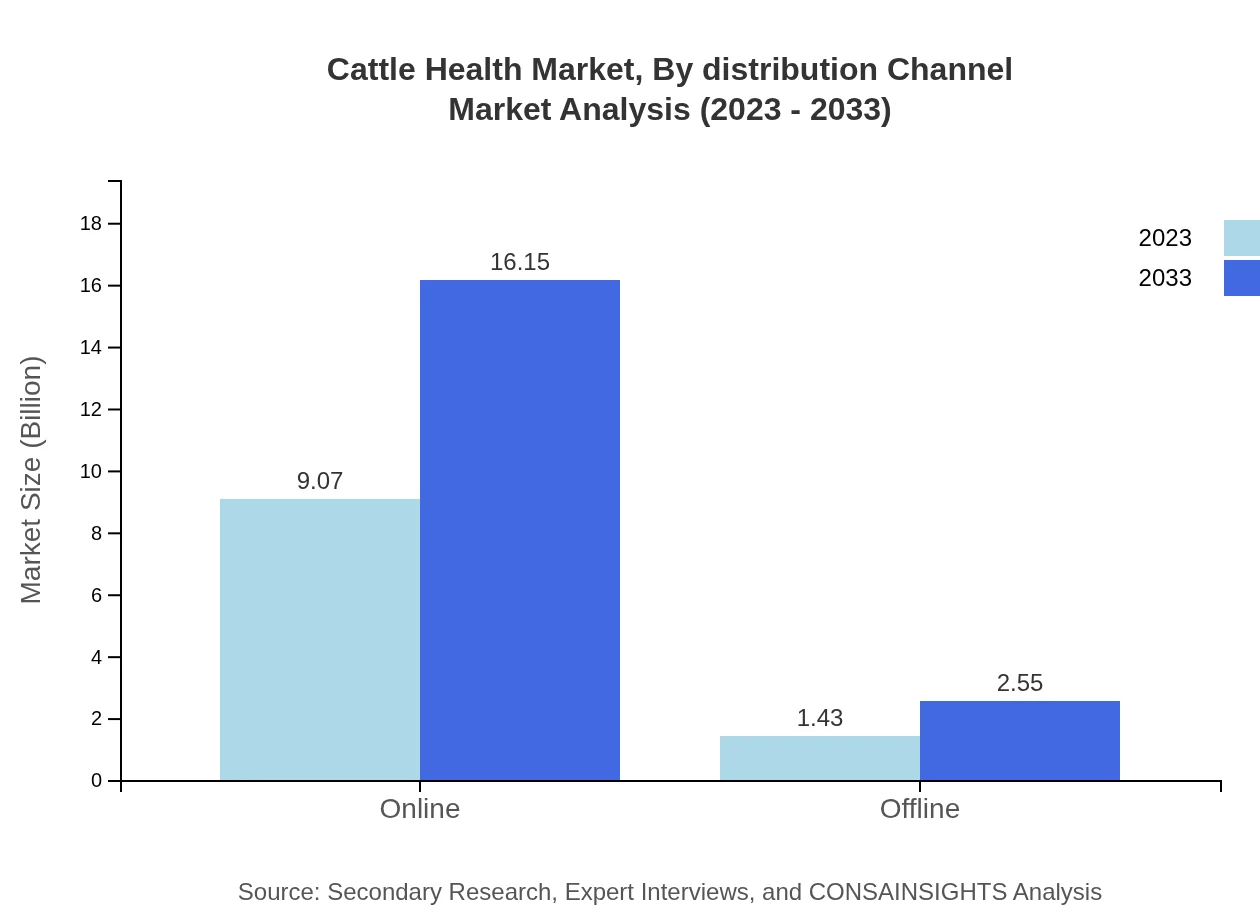
The distribution of cattle health products is adapting to technological changes. The online segment is expected to grow from $9.07 billion in 2023 to $16.15 billion by 2033, reflecting consumer preferences for convenient purchasing options. Conversely, the offline channel will see growth from $1.43 billion to $2.55 billion, maintaining a strong presence in rural areas where online access may be limited.
Cattle Health Market Analysis By Technology

Traditional technologies currently dominate the Cattle Health market with expected growth from $9.07 billion to $16.15 billion. However, there is a shift towards advanced technologies, which is projected to grow from $1.43 billion to $2.55 billion as innovative solutions like telemedicine and remote health monitoring become more prevalent.
Cattle Health Market Trends and Future Forecast
Tell us your focus area and get a customized research report.
Global Market Leaders and Top Companies in Cattle Health Industry
Zoetis:
Zoetis is a global leader in animal health, providing a wide range of medications and vaccines that enhance cattle health and productivity.Merck Animal Health:
Merck Animal Health offers solutions for veterinary care with a focus on advanced technologies and products aimed at improving livestock health.Boehringer Ingelheim:
Boehringer Ingelheim is known for its innovative vaccines and pharmaceuticals that prioritize animal welfare and disease prevention in cattle.Elanco:
Elanco focuses on providing products and services for animal prevention, health, and nutrition, influencing cattle health management practices.Purina Animal Nutrition:
Purina specializes in nutritional programs and supplements that promote the health and productivity of livestock, including cattle.We're grateful to work with incredible clients.









FAQs
What is the market size of the Cattle Health market in 2023?
The market size for the Cattle Health market in 2023 is $10.50 Billion, as stated in the report's baseline year.
How big will the Cattle Health market be in 2033?
By 2033 the Cattle Health market is projected to reach $18.70 Billion, according to the forecast figures provided.
What is CAGR for the Cattle Health market during the forecast?
The compounded annual growth rate for the forecast period 2023 to 2033 is 5.8% as reported.
Is there a single fastest Growing region in the Cattle Health Market Report market?
No single fastest-growing region is stated for the Cattle Health Market Report market because the top regional implied CAGR values are within 0.15 percentage points of each other, making the ranking too close to call reliably.
Which companies are listed as key players?
Top companies referenced include Zoetis, Merck Animal Health, Boehringer Ingelheim, Elanco, and Purina Animal Nutrition.
What are the primary product categories covered?
Primary product categories include vaccines, medications, and nutritional supplements as outlined in the segment facts.
How do distribution channels feature in the market?
Distribution is split between online and offline channels, both noted as subsegments in the distribution-channel category.
What end User groups drive demand?
Major end users include dairy farmers, beef producers, and veterinary clinics, each listed as subsegments in the report.
How are technologies categorized in the report?
Technology segments are divided into traditional technologies and advanced technologies, reflecting differing adoption levels.
Which regions are analyzed in the report?
The report provides regional analysis for North America, Europe, Asia Pacific, Latin America, and Middle East and Africa with specific value trajectories.