
Reports >
Life Sciences
>
Clot Management Devices Market Report

Clot Management Devices Market Report
First published: 15 October 2024 | Last updated: 25 May 2026 | Report Code: clot-management-devices
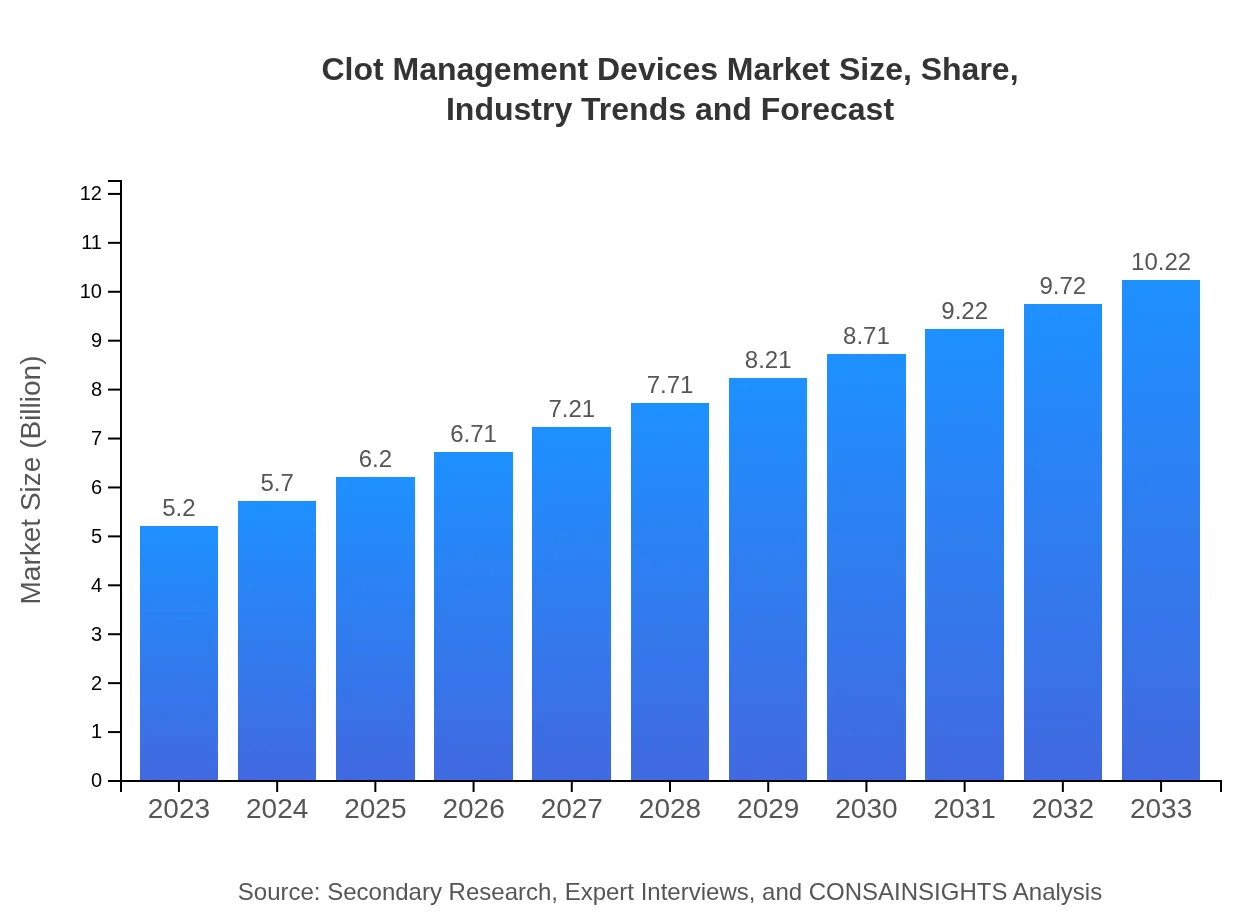
Clot Management Devices Market — USD 5.2 billion in 2023, Growing to USD 10.22B by 2033 at 6.8% CAGR
This report provides a comprehensive analysis of the Clot Management Devices market, covering market size, trends, key players, and forecasts from 2023 to 2033 to offer insights into future growth opportunities and challenges.
Key Takeaways
- Global market expands from $5.20 Billion in 2023 to $10.22 Billion in 2033, at a 6.8% CAGR over 2023 to 2033.
- North America is largest regional market, while no single fastest-growing region is stated because regional CAGR differences remain within 0.15 percentage points.
- North America is the largest region, rising from $1.71 Billion in 2023 to $3.35 Billion in 2033.
- Europe grows from $1.31 Billion in 2023 to $2.58 Billion in 2033, reflecting sustained demand for advanced interventions.
- Technology mix includes robotic assisted, ultrasound-guided, and optical imaging devices supporting less-invasive care.
- Key participants include Medtronic, Boston Scientific, Terumo Corporation, Abbott Laboratories, and Philips Healthcare.
Clot Management Devices Market Report — Executive Summary
North America remains largest market by forecast-period value, while no single fastest-growing region is stated because top regional growth rates are separated by less than 0.15 percentage points. The Clot Management Devices Market Report documents a robust expansion from $5.20 Billion in 2023 to $10.22 Billion in 2033 at a 6.8% CAGR across 2023 to 2033. Growth is driven by increasing incidence of clot-related conditions, rising surgical volumes, and continued adoption of minimally invasive and image-guided therapies. Regional dynamics show North America as the largest market, supported by advanced clinical infrastructure and high healthcare spending. Market segmentation spans device types, technologies, applications, and distribution channels, with hospitals, ambulatory surgical centers, specialty clinics, and home healthcare among end-users. Major vendors such as Medtronic, Boston Scientific, Terumo Corporation, Abbott Laboratories, and Philips Healthcare are central to competitive activity, investing in innovation and regulatory compliance. The report combines primary expert interviews with secondary company reports and triangulated data to present validated market perspectives for stakeholders and investors.
Key Growth Drivers
- Rising prevalence of clot-related disorders and aging populations increases demand for diagnostic and therapeutic devices.
- Shift toward minimally invasive and image-guided procedures expands use of robotic assisted and ultrasound-guided technologies.
- Higher volumes of cardiovascular and vascular surgeries boost requirement for thrombectomy and anticoagulant-related devices.
- Growing investment in home healthcare and ambulatory care supports deployment of user-friendly monitoring and treatment options.
- Regulatory approvals and product innovation by leading firms spur market availability and clinical adoption.
| Metric | Value |
|---|---|
| Study Period | 2023 - 2033 |
| 2023 Market Size | $5.20 Billion |
| CAGR (2023-2033) | 6.8% |
| 2033 Market Size | $10.22 Billion |
| Top Companies | Medtronic , Boston Scientific, Terumo Corporation, Abbott Laboratories, Philips Healthcare |
| Published Date | 15 October 2024 |
| Last Modified Date | 25 May 2026 |
Clot Management Devices Market Overview
Customize Clot Management Devices Market Report market research report
- ✔ Get in-depth analysis of Clot Management Devices market size, growth, and forecasts.
- ✔ Understand Clot Management Devices's regional dynamics and industry-specific trends.
- ✔ Identify potential applications, end-user demand, and growth segments in Clot Management Devices
What is the Market Size & CAGR of Clot Management Devices Market Report market in 2023?
Clot Management Devices Industry Analysis
Clot Management Devices Market Segmentation and Scope
Tell us your focus area and get a customized research report.
Clot Management Devices Market Report Market Analysis Report by Region
Europe Clot Management Devices Market Report:
Europe grows from $1.31 Billion in 2023 to $2.58 Billion in 2033. Increased procedural volumes, investment in medical technology, and adoption of robotic assisted and ultrasound-guided devices contribute to steady market expansion across clinical settings.Asia Pacific Clot Management Devices Market Report:
Asia Pacific grows from $1.02 Billion in 2023 to $2.01 Billion in 2033. Growth drivers include rising healthcare spending in emerging economies, higher surgical rates, and greater access to advanced device technologies in urban centers.North America Clot Management Devices Market Report:
North America is largest regional market, rising from $1.71 Billion in 2023 to $3.35 Billion in 2033. The region’s advanced clinical infrastructure, high healthcare expenditure, and early adoption of minimally invasive and image-guided therapies underpin its leading market position.South America Clot Management Devices Market Report:
Latin America grows from $0.5 Billion in 2023 to $0.99 Billion in 2033. Market gains are supported by expanding healthcare infrastructure, growing awareness of clot-related conditions, and incremental adoption of improved treatment modalities.Middle East & Africa Clot Management Devices Market Report:
Middle East and Africa grows from $0.66 Billion in 2023 to $1.3 Billion in 2033. Investments in healthcare facilities, increasing procedural capacity, and gradual uptake of innovative devices drive regional demand.Tell us your focus area and get a customized research report.
Research Methodology
Clot Management Devices Market Analysis By Device Type
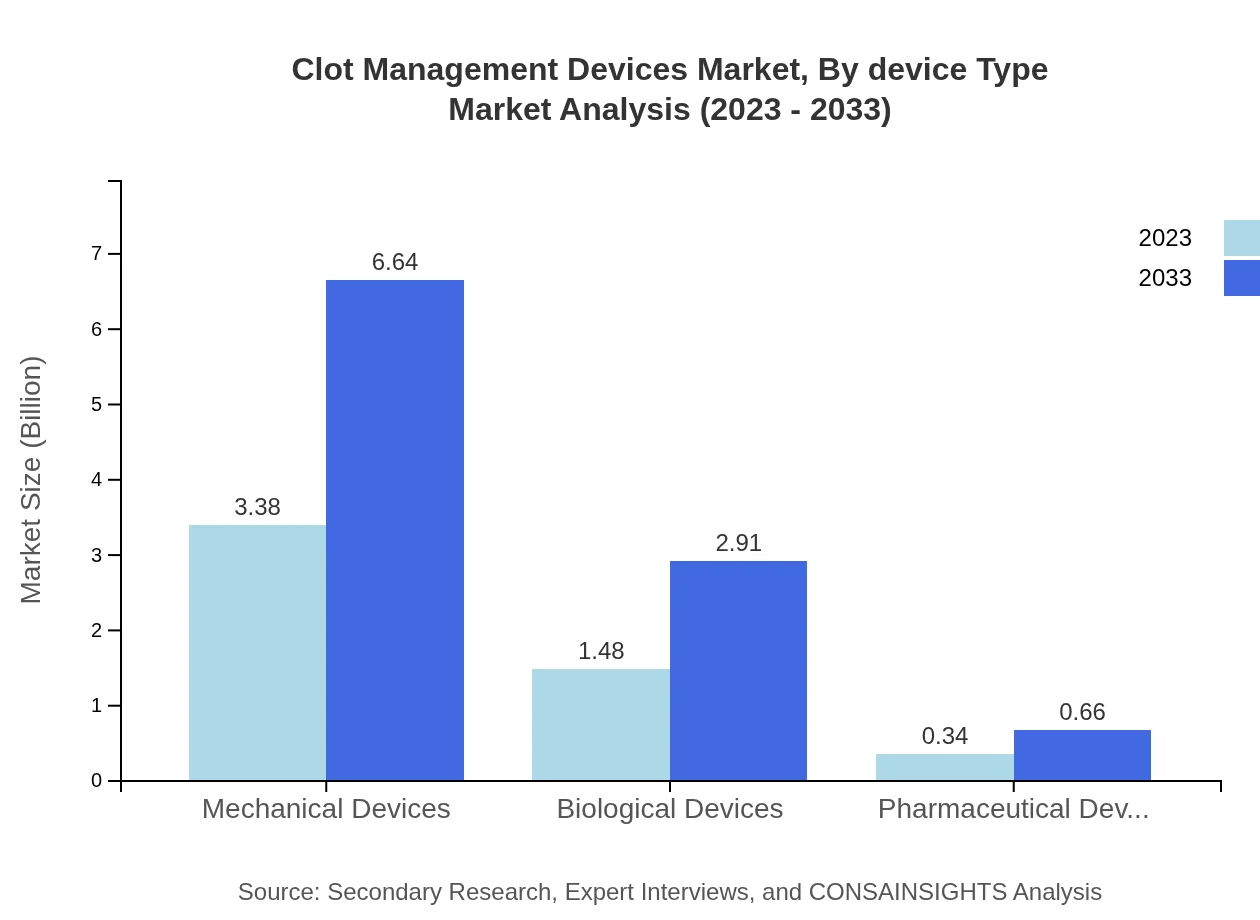
The device type segment illustrates substantial growth, with mechanical devices generating the largest revenue share, maintaining a consistent 65% market share throughout the forecast period. Biological devices and pharmaceutical devices represent significant growth areas, accounting for 28.51% each in 2023 and anticipated to remain constant through 2033.
Clot Management Devices Market Analysis By Application
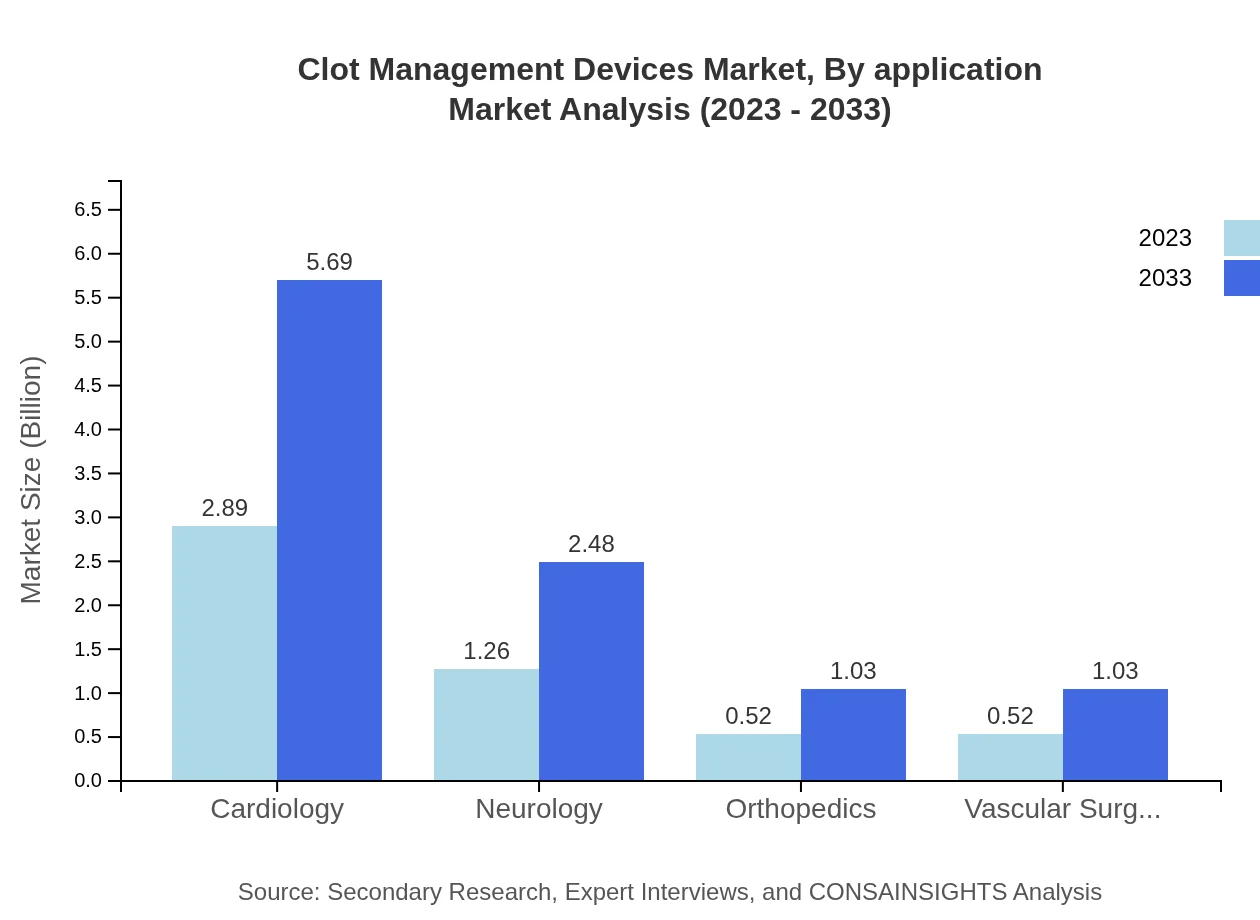
By application, cardiology holds a substantial portion of the market with a projected growth from $2.89 billion in 2023 to $5.69 billion in 2033. Neurology follows at $1.26 billion and directly correlates to improved treatments and technologies being adopted. Orthopedics and vascular surgery also show similar growth patterns.
Clot Management Devices Market Analysis By End User
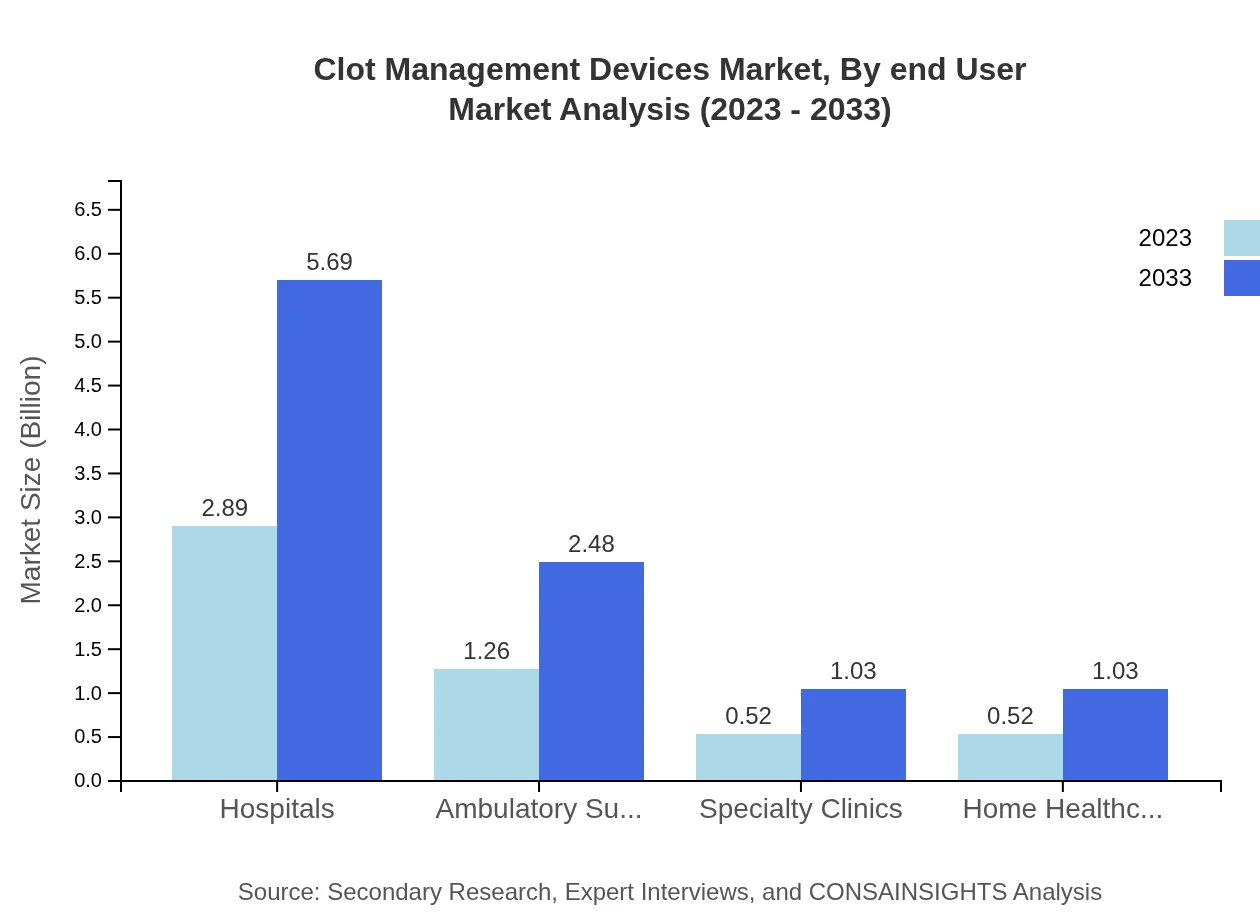
Hospitals dominate the end-user market, sharing approximately 55.63% of the market in both 2023 and 2033, primarily due to their high patient turnover and extensive use of clot management devices. Ambulatory surgical centers and specialty clinics are also significant contributors.
Clot Management Devices Market Analysis By Distribution Channel
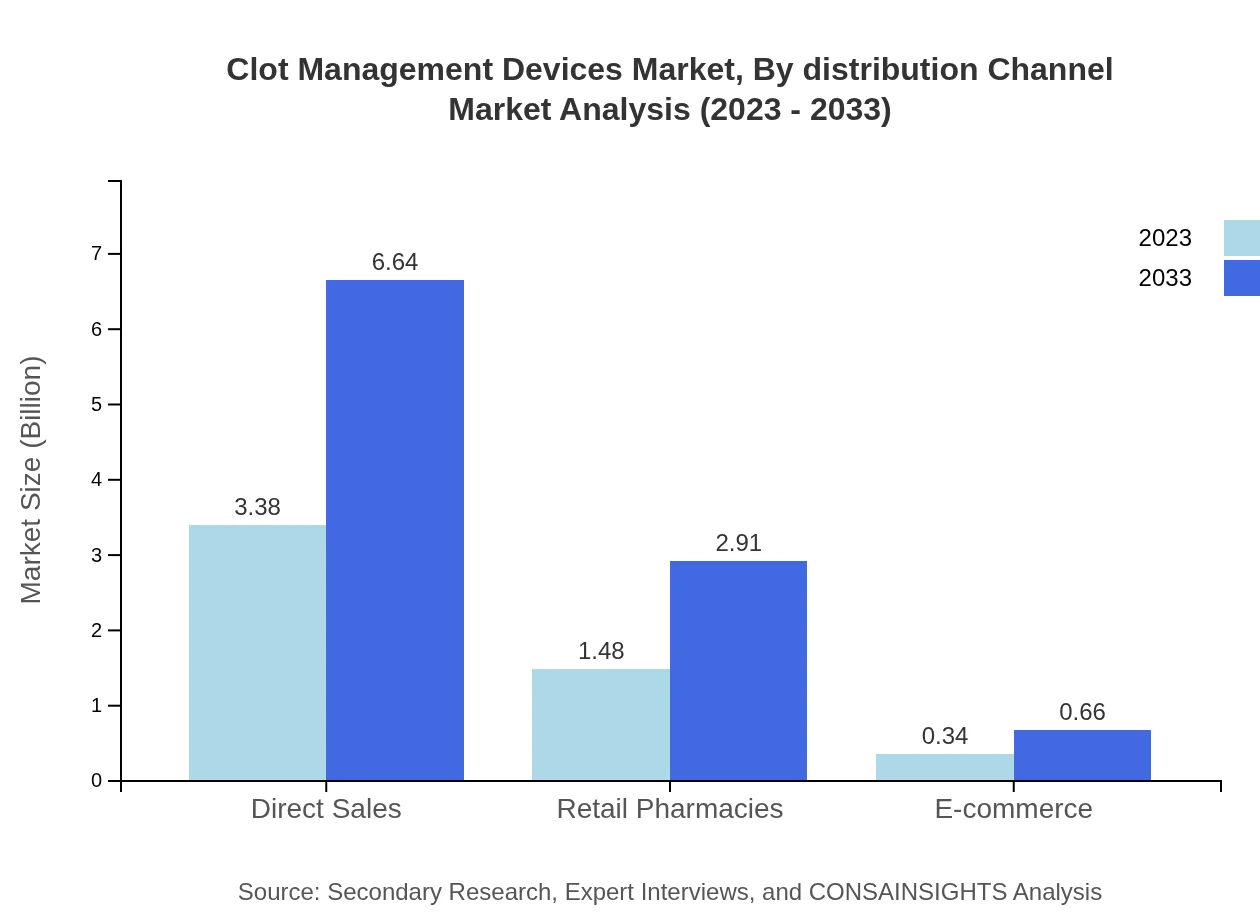
Distribution channels such as direct sales and retail pharmacies contribute significantly, accounting for 65% and 28.51% shares in 2023, respectively. E-commerce shows modest growth potential due to the increasing consumer tendencies toward online healthcare solutions.
Clot Management Devices Market Analysis By Technology
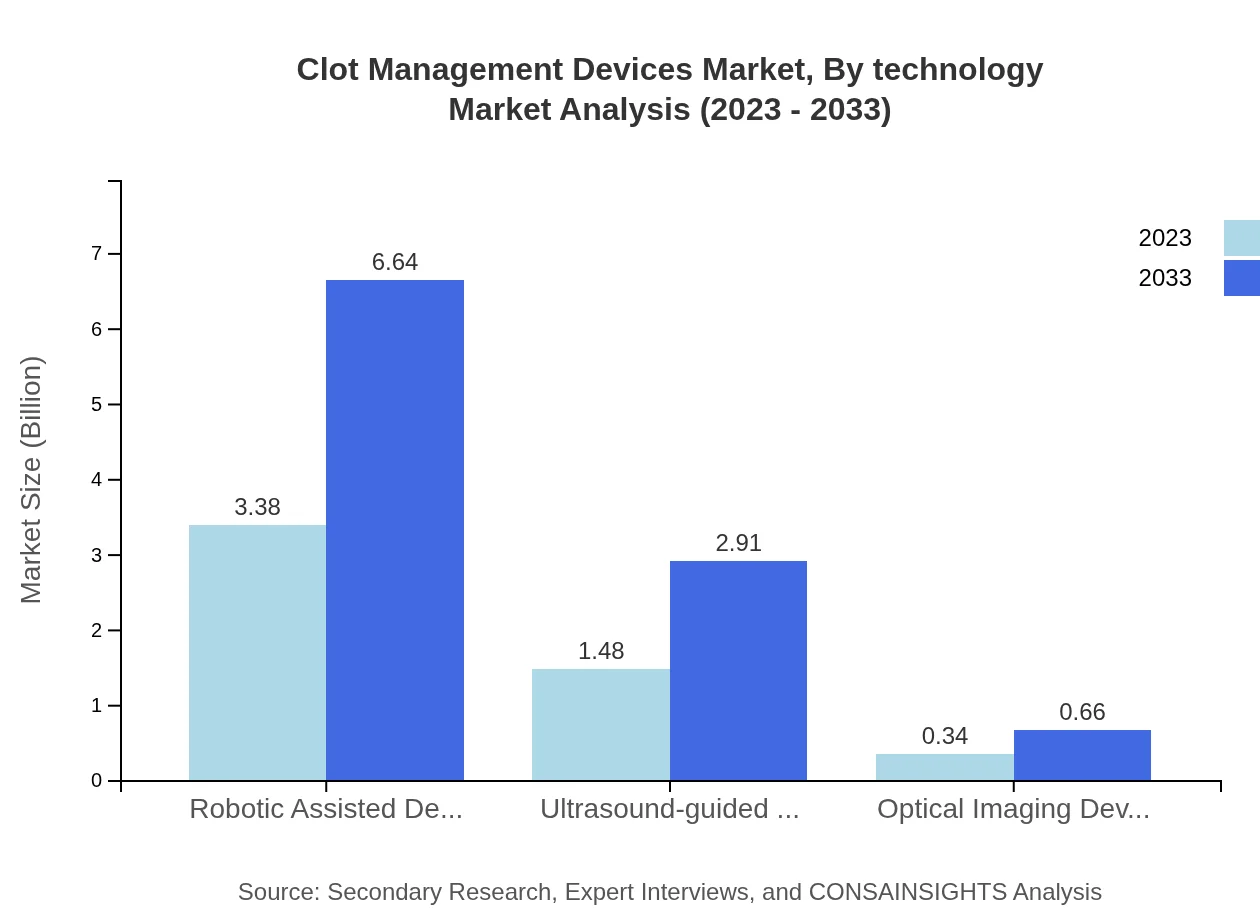
Technological advancements propel the Clot Management Devices market forward, with robotic-assisted devices emerging as frontrunners, representing a 65% share in 2023 and projected to continue this trend. Innovations in ultrasound-guided devices also show promise, expanding rapidly from $1.48 billion in 2023 to $2.91 billion by 2033.
Clot Management Devices Market Trends and Future Forecast
Tell us your focus area and get a customized research report.
Global Market Leaders and Top Companies in Clot Management Devices Industry
Medtronic :
A leading player providing advanced clot management solutions through innovative technologies and comprehensive surgical devices.Boston Scientific:
Boston Scientific specializes in developing medical devices used for interventions in clot management, emphasizing precision and effectiveness.Terumo Corporation:
Known for its wide array of medical devices, Terumo Corporation integrates advanced technology in its clot management devices to enhance patient care.Abbott Laboratories:
Abbott provides innovative technologies for minimal invasive surgeries, improving patient outcomes significantly within the clot management domain.Philips Healthcare:
Focusing on health technology innovation, Philips offers integrated solutions for diagnosing and treating clots, targeting improved operational efficiencies.We're grateful to work with incredible clients.









FAQs
What is the market size of the Clot Management Devices Market Report in 2023?
The market size in 2023 is $5.20 Billion, based on reported figures for the global clot management devices sector.
How big will the market be in 2033?
By 2033 the market is projected to reach $10.22 Billion, reflecting the reported forecast for the sector over the 2023 to 2033 period.
What is CAGR of the market for the forecast period?
The reported compound annual growth rate for 2023 to 2033 is 6.8% for the clot management devices market.
Is there a single fastest Growing region in the Clot Management Devices Market Report market?
No single fastest-growing region is stated for the Clot Management Devices Market Report market because the top regional implied CAGR values are within 0.15 percentage points of each other, making the ranking too close to call reliably.
Which companies lead the industry?
Top companies listed include Medtronic, Boston Scientific, Terumo Corporation, Abbott Laboratories, and Philips Healthcare as major market participants.
What are primary technology categories in the market?
Key technology categories include robotic assisted devices, ultrasound-guided devices, and optical imaging devices as highlighted in the segmentation.
How are end Users categorized?
End-users comprise hospitals, ambulatory surgical centers, specialty clinics, and home healthcare, reflecting clinical and home-based care settings.
What research methods were used to compile the report?
The study used primary interviews with industry experts, secondary company reports and publications, data triangulation, and internal validation for trend analysis.
What applications drive demand for these devices?
Reported application areas include cardiology, neurology, orthopedics, and vascular surgery, which collectively drive clinical demand for clot management solutions.
How are products distributed in the market?
Distribution channels noted include direct sales, retail pharmacies, and e-commerce, covering institutional and consumer access routes.