

Commercial Amino Acids Market Report
First published: 11 October 2024 | Last updated: 25 May 2026 | Report Code: commercial-amino-acids
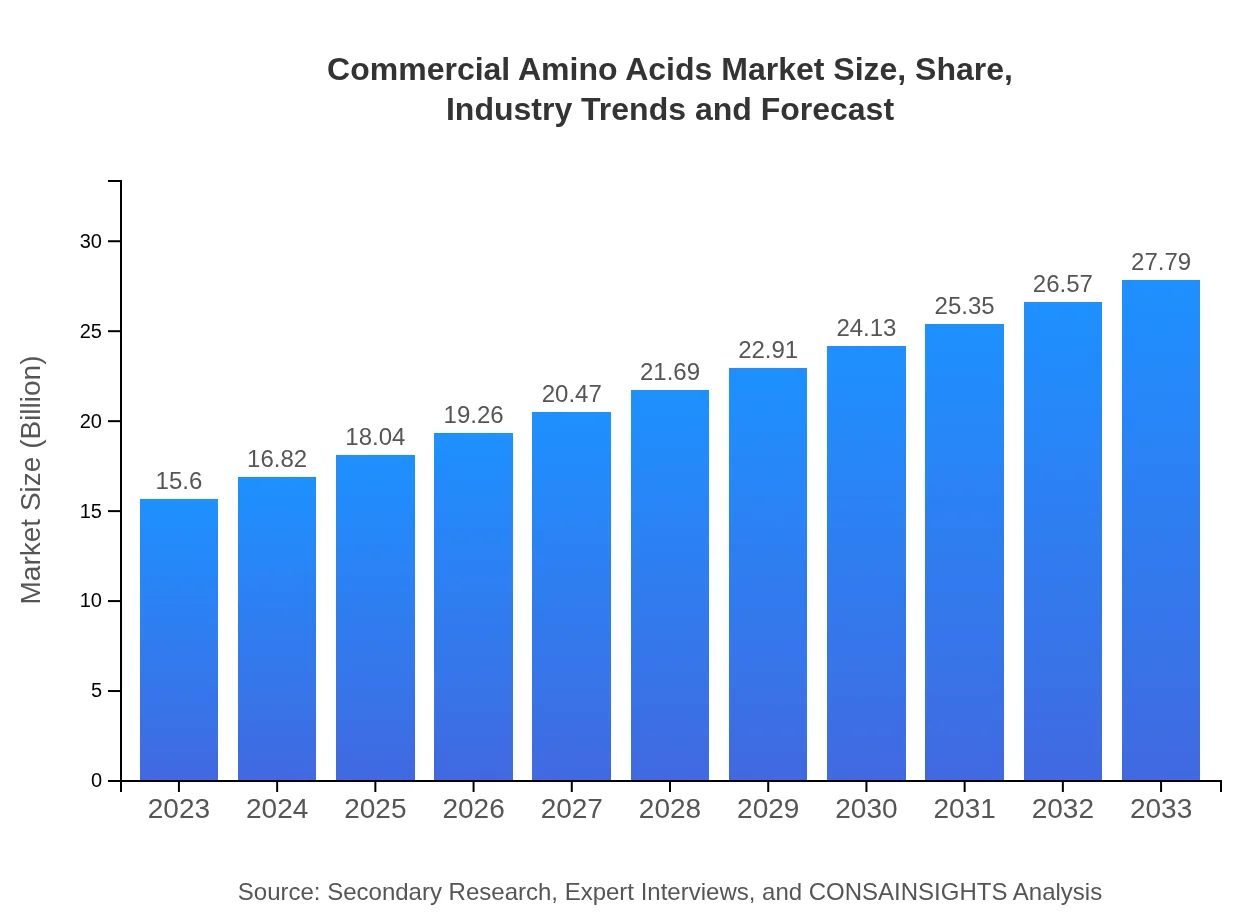
Commercial Amino Acids Market — USD 15.6 billion in 2023, Growing to USD 27.79B by 2033 at 5.8% CAGR
This report delves into the Commercial Amino Acids market, providing insights into its size, growth patterns, regional performance, and industry analysis from 2023 to 2033.
Key Takeaways
- Global market value rises from $15.60 Billion in 2023 to $27.79 Billion by 2033 at a 5.8% CAGR.
- North America is largest regional market, while no single fastest-growing region is stated because regional CAGR differences remain within 0.15 percentage points.
- Europe expands from $4.65 Billion in 2023 to $8.27 Billion in 2033, reflecting strong food, pharma, and supplement demand.
- Asia Pacific grows from $3.02 Billion in 2023 to $5.38 Billion in 2033 amid rising protein-enriched product consumption.
- Key manufacturers include Ajinomoto Co., Inc., Evonik Industries AG, Cargill, Inc., ADM, and Kyowa Hakko Bio Co., Ltd.
Commercial Amino Acids Market Report — Executive Summary
North America remains largest market by forecast-period value, while no single fastest-growing region is stated because top regional growth rates are separated by less than 0.15 percentage points. The commercial amino acids market is projected to expand from $15.60 Billion in 2023 to $27.79 Billion by 2033 at a 5.8% CAGR. Growth is supported by heightened consumer interest in health and protein-enriched products, increased application in animal feed and pharmaceuticals, and technological improvements in production. Sustainability considerations and a growing preference for natural sources are influencing product portfolios, while synthetic amino acids remain important for scalable supply. The industry structure includes product, form, source, and application segments, with prominent players such as Ajinomoto Co., Inc., Evonik Industries AG, Cargill, Inc., ADM (Archer Daniels Midland Company), and Kyowa Hakko Bio Co., Ltd. Regulatory focus on quality and safety, plus volatility in raw material costs, pose ongoing operational challenges. Market participants are responding through R&D, process optimization, and diversification into value-added formulations to capture demand across food and beverage, pharmaceuticals, cosmetics, and animal nutrition uses.
Key Growth Drivers
- Rising consumer demand for protein-fortified foods and dietary supplements increases amino acid consumption across food and beverage categories.
- Expansion of animal nutrition sectors drives feed-grade amino acid uptake to improve livestock performance and feed efficiency.
- Ongoing R&D and advances in production methods enhance yields and enable broader application in pharmaceuticals and personal care.
- Sustainability trends and interest in natural ingredients support product portfolio shifts and new market opportunities.
- Regulatory emphasis on product safety and quality encourages manufacturers to invest in compliant manufacturing and traceability.
| Metric | Value |
|---|---|
| Study Period | 2023 - 2033 |
| 2023 Market Size | $15.60 Billion |
| CAGR (2023-2033) | 5.8% |
| 2033 Market Size | $27.79 Billion |
| Top Companies | Ajinomoto Co., Inc., Evonik Industries AG, Cargill, Inc., ADM (Archer Daniels Midland Company), Kyowa Hakko Bio Co., Ltd. |
| Published Date | 11 October 2024 |
| Last Modified Date | 25 May 2026 |
Commercial Amino Acids Market Overview
Customize Commercial Amino Acids Market Report market research report
- ✔ Get in-depth analysis of Commercial Amino Acids market size, growth, and forecasts.
- ✔ Understand Commercial Amino Acids's regional dynamics and industry-specific trends.
- ✔ Identify potential applications, end-user demand, and growth segments in Commercial Amino Acids
What is the Market Size & CAGR of Commercial Amino Acids Market Report market in 2023?
Commercial Amino Acids Industry Analysis
Commercial Amino Acids Market Segmentation and Scope
Tell us your focus area and get a customized research report.
Commercial Amino Acids Market Report Market Analysis Report by Region
Europe Commercial Amino Acids Market Report:
Europe grows from $4.65 Billion in 2023 to $8.27 Billion in 2033. European expansion reflects robust use in nutraceuticals, pharmaceuticals, and clean-label food products, alongside regulatory emphasis on product safety and quality.Asia Pacific Commercial Amino Acids Market Report:
Asia Pacific grows from $3.02 Billion in 2023 to $5.38 Billion in 2033. Growth is tied to rising consumer consumption of protein-enriched foods, expanding animal nutrition sectors, and greater investment in production capacity.North America Commercial Amino Acids Market Report:
North America is largest regional market, rising from $5.56 Billion in 2023 to $9.89 Billion in 2033. Regional demand is supported by strong food and feed industries, pharmaceutical applications, and ongoing product innovation driving adoption.South America Commercial Amino Acids Market Report:
Latin America grows from $0.92 Billion in 2023 to $1.63 Billion in 2033. Regional drivers include growing demand for fortified foods and strengthening livestock feed markets that support amino acid utilization.Middle East & Africa Commercial Amino Acids Market Report:
Middle East and Africa grows from $1.46 Billion in 2023 to $2.61 Billion in 2033. Market growth is driven by increasing health-conscious consumption patterns and developing applications in feed and pharmaceutical sectors.Tell us your focus area and get a customized research report.
Research Methodology
Commercial Amino Acids Market Analysis By Product
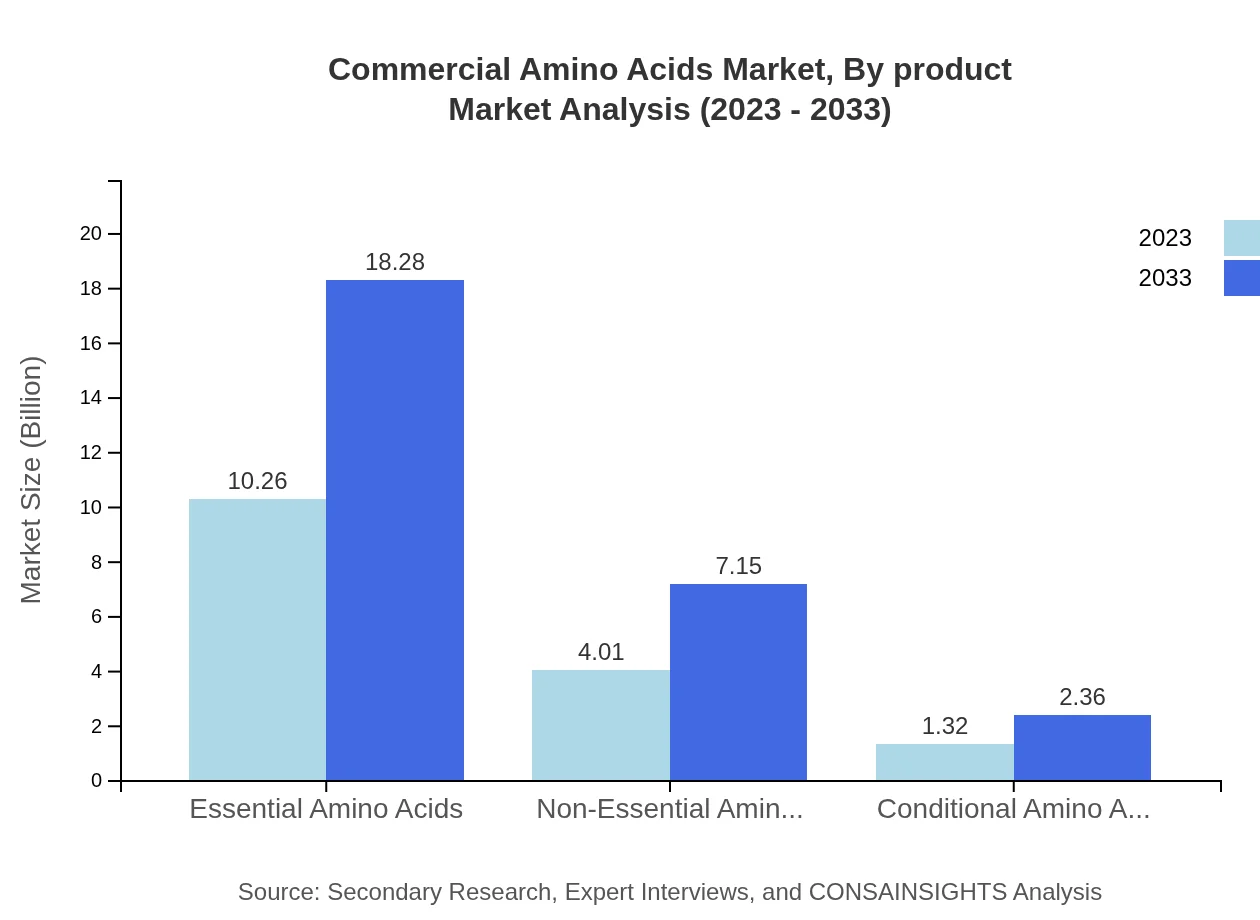
By product, the market is dominated by synthetic amino acids, which are expected to grow from $12.93 billion in 2023 to $23.03 billion in 2033, claiming 82.89% of the market share. In contrast, essential amino acids, valued at $10.26 billion in 2023, are projected to grow to $18.28 billion, capturing a significant market portion. Non-essential amino acids and conditional amino acids likewise show favorable growth trajectories.
Commercial Amino Acids Market Analysis By Application
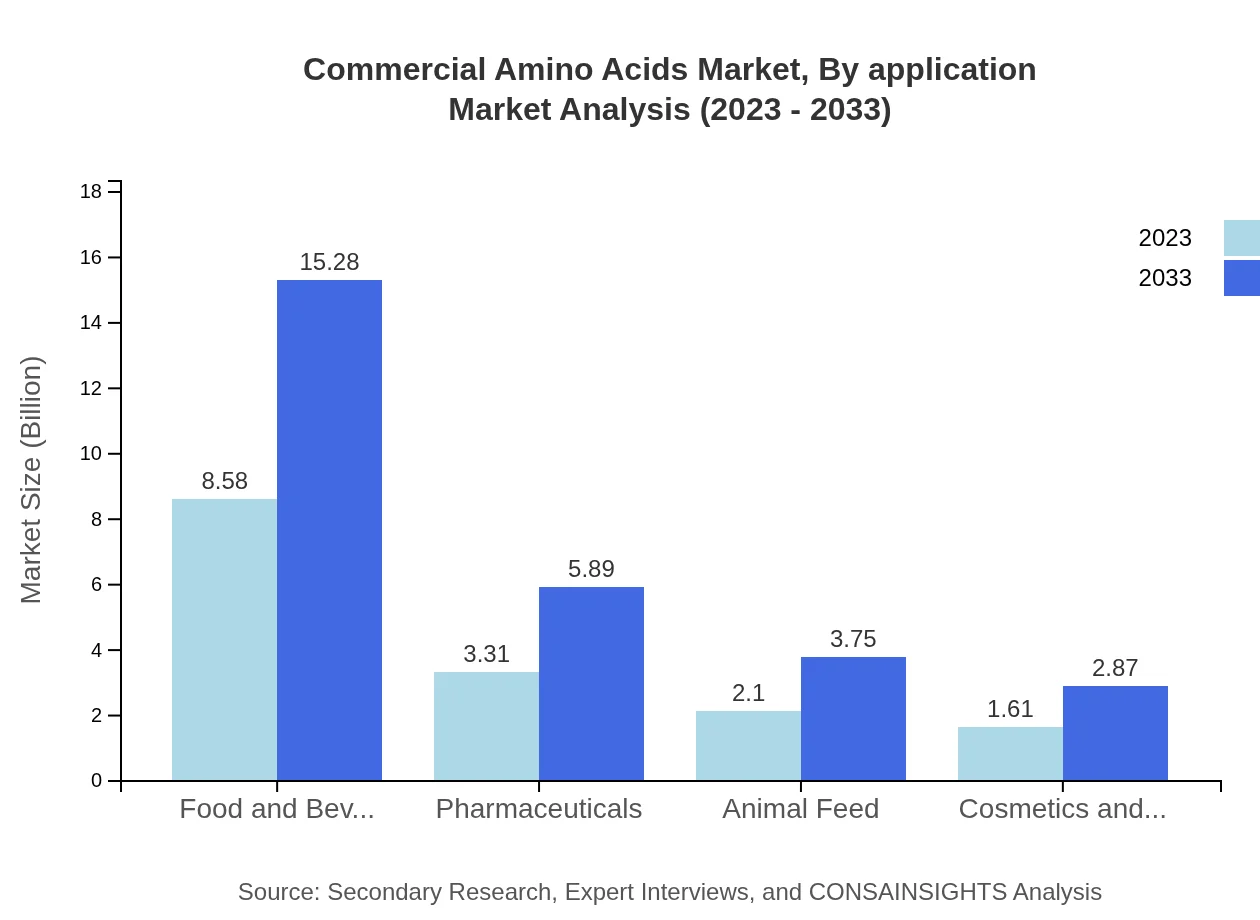
In application segmentation, the food and beverage sector dominates, with an expected market size of $8.58 billion in 2023, likely to reach $15.28 billion by 2033. Pharmaceuticals and cosmetics also play significant roles, valued at $3.31 billion and $1.61 billion, respectively, in 2023, with steady growth anticipated as health trends escalate.
Commercial Amino Acids Market Analysis By Form
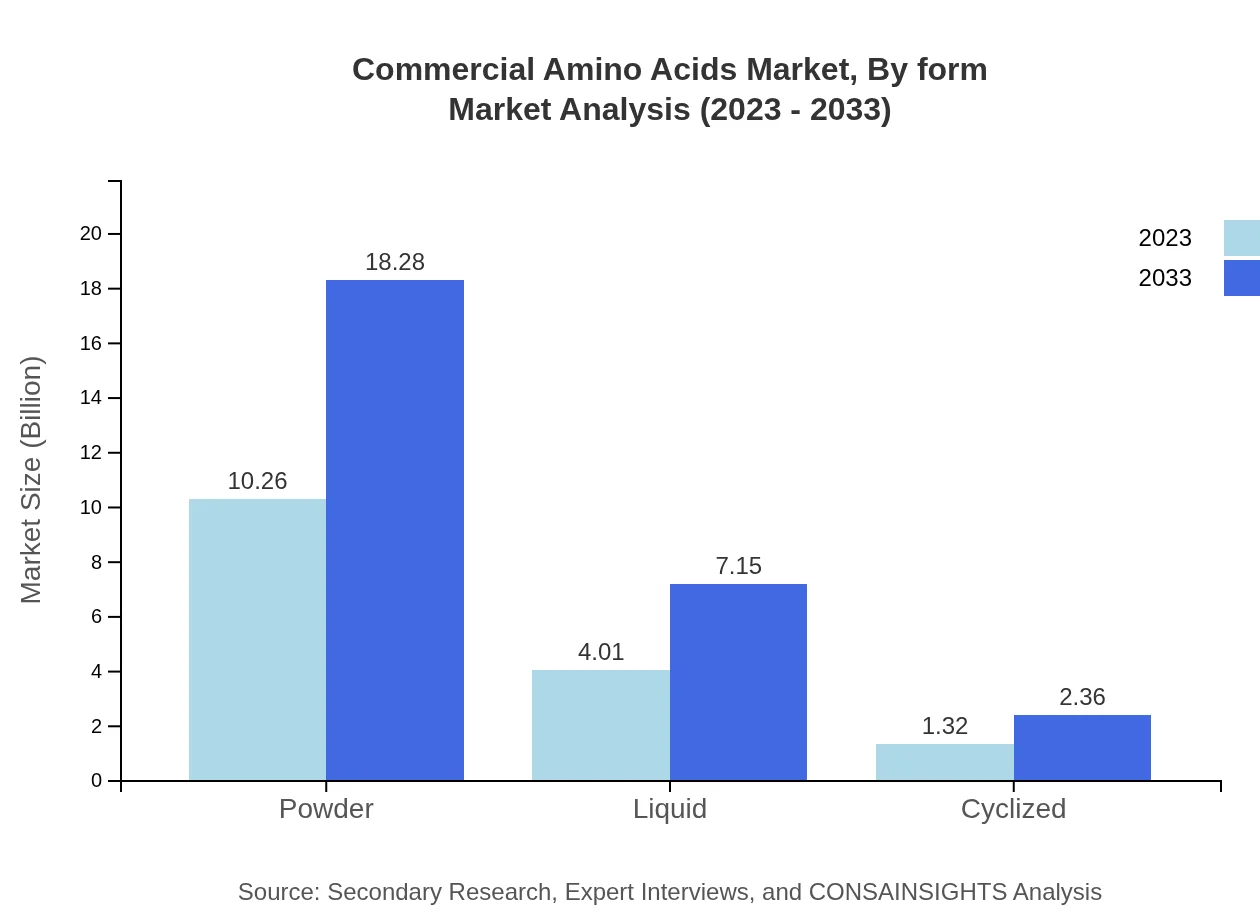
Amino acids are available in various forms, with powder formulations holding about 65.79% of the market share. In 2023, the powdered form is valued at $10.26 billion and is expected to reach $18.28 billion by 2033. Liquid formulations, while smaller in market size, also show healthy growth, moving from $4.01 billion in 2023 to $7.15 billion in 2033.
Commercial Amino Acids Market Analysis By Source
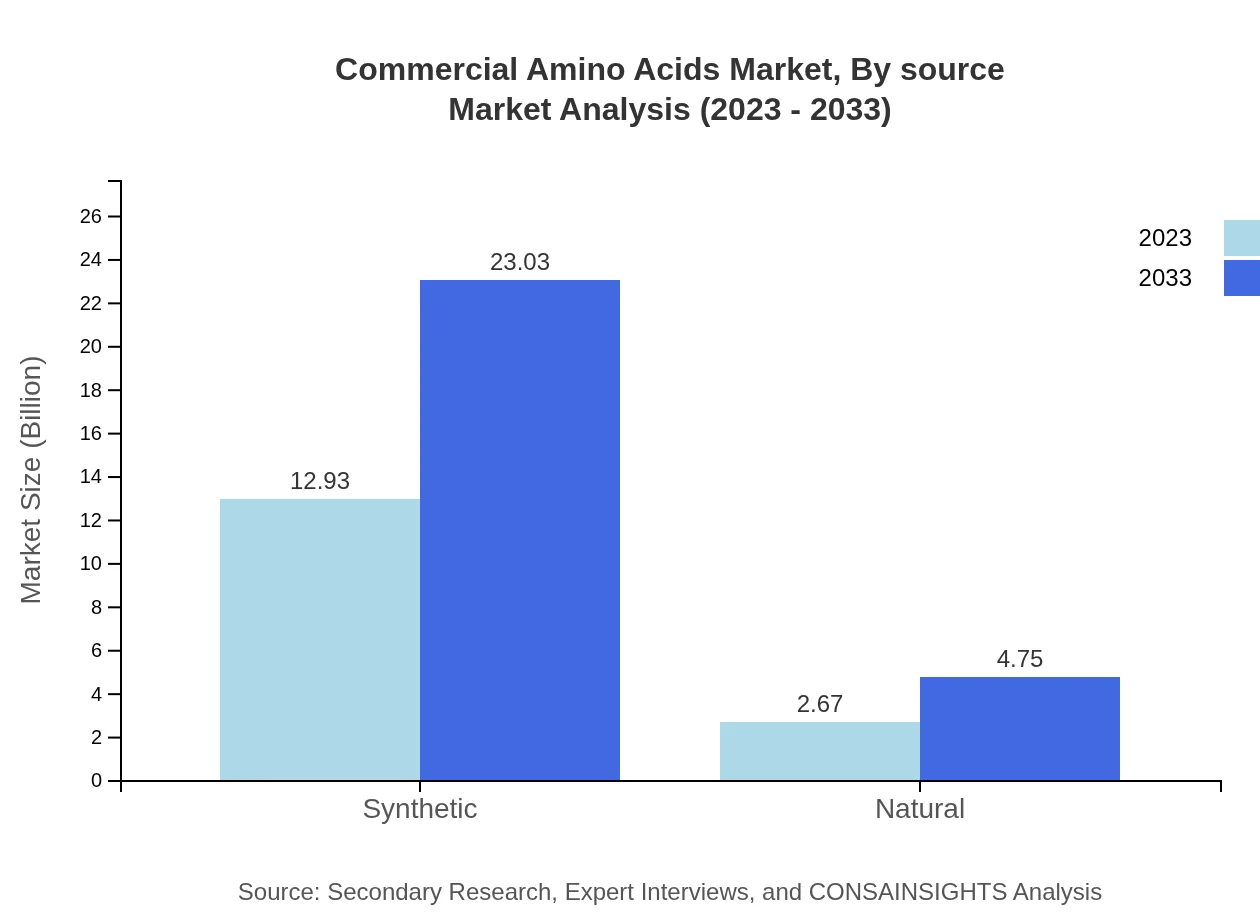
The source of amino acids can be categorized into synthetic and natural, with synthetic sources taking the lion's share. In 2023, synthetic amino acids are valued at $12.93 billion while natural sources are at $2.67 billion. By 2033, synthetic sources are estimated to reach $23.03 billion, reinforcing their dominance.
Commercial Amino Acids Market Trends and Future Forecast
Tell us your focus area and get a customized research report.
Global Market Leaders and Top Companies in Commercial Amino Acids Industry
Ajinomoto Co., Inc.:
Ajinomoto is a global leader in amino acid production, known for innovative applications in food and pharmaceuticals.Evonik Industries AG:
Evonik specializes in specialty chemicals, including amino acids, focusing on sustainable and advanced production methods.Cargill, Inc.:
Cargill is a multinational corporation, significant in the agro-industrial sector, producing a range of amino acids primarily for food applications.ADM (Archer Daniels Midland Company):
ADM is an American global food processing and commodities trading corporation producing amino acids for various industries.Kyowa Hakko Bio Co., Ltd.:
Kyowa Hakko Bio is well-known for its high-quality amino acids, especially for nutraceutical and pharmaceutical applications.We're grateful to work with incredible clients.








FAQs
What is the market size of the commercial amino acids market in 2023?
The market size in 2023 is $15.60 Billion as reported for the commercial amino acids sector.
How big will the market be in 2033?
By 2033 the market is projected to reach $27.79 Billion according to the provided forecast figures.
What is CAGR for the forecast period?
The compound annual growth rate for the 2023 to 2033 forecast period is 5.8% as stated in the report data.
Is there a single fastest Growing region in the Commercial Amino Acids Market Report market?
No single fastest-growing region is stated for the Commercial Amino Acids Market Report market because the top regional implied CAGR values are within 0.15 percentage points of each other, making the ranking too close to call reliably.
Which applications drive amino acids demand?
Key applications include food and beverage, pharmaceuticals, animal feed, and cosmetics and personal care, fueling demand across diverse end uses.
Who are the leading companies in the market?
Top companies listed include Ajinomoto Co., Inc., Evonik Industries AG, Cargill, Inc., ADM (Archer Daniels Midland Company), and Kyowa Hakko Bio Co., Ltd.
What are common product segmentations?
Product segmentation covers essential, non-essential, and conditional amino acids, serving nutritional, pharmaceutical, and feed applications.
How does source type affect market dynamics?
Source types include synthetic and natural amino acids; natural variants are gaining preference for sustainability while synthetic options remain cost-effective and scalable.
What regulatory factors influence the market?
Regulatory pressures emphasize quality and safety, prompting manufacturers to adopt stricter compliance, traceability, and manufacturing standards.
Why is sustainability mentioned as a trend?
Sustainability shapes demand for natural amino acids and drives R&D into greener production methods and ingredient sourcing strategies.