

Contract Lifecycle Management Software
First published: 06 October 2025 | Last updated: 31 January 2026 | Report Code: contract-lifecycle-management-software
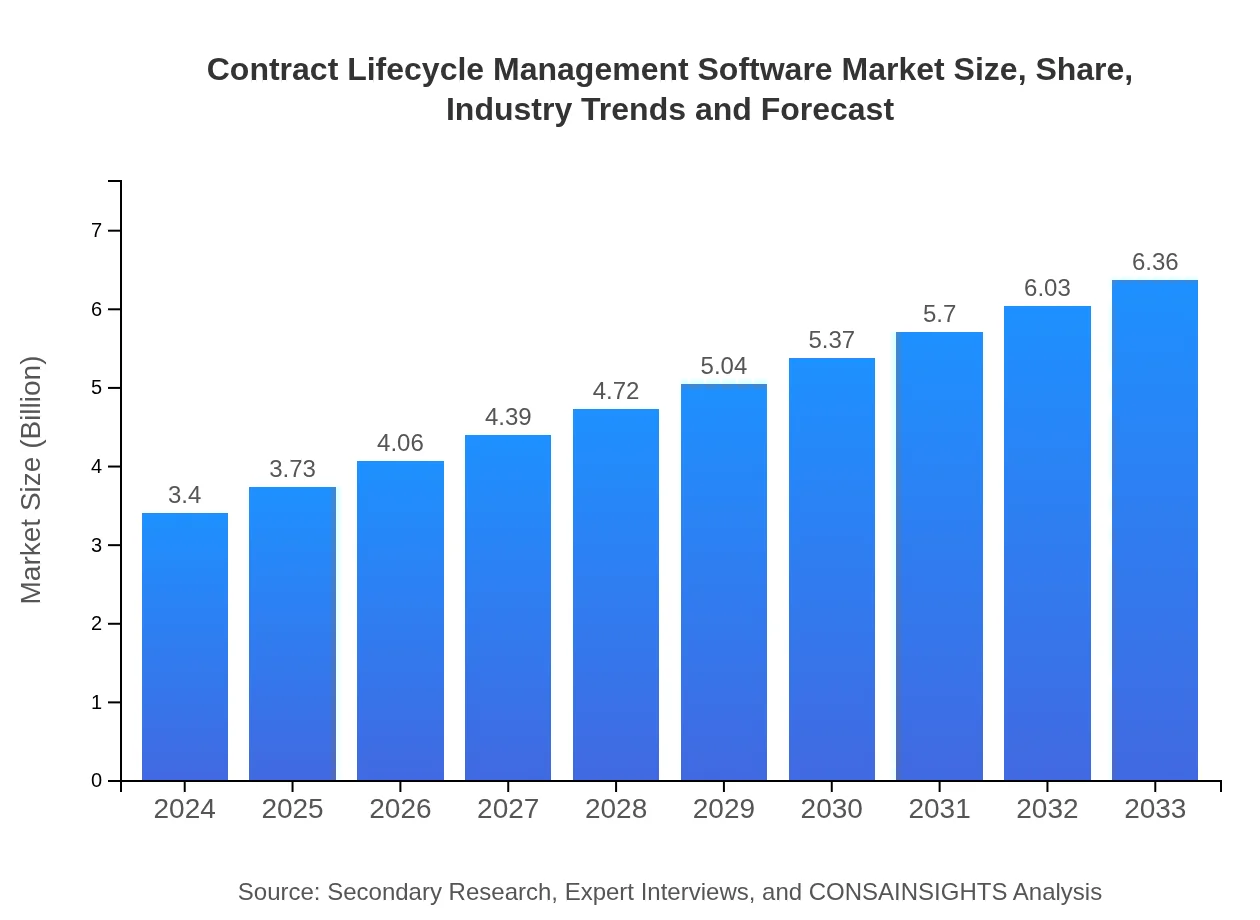
Contract Lifecycle Management Software Market — USD $3.4 Billion in 2024, Growing to USD 6.36 by 2033 at 7.0% CAGR
This report provides a comprehensive analysis of the Contract Lifecycle Management Software market, including insights into market size, segmentation, regional trends, technological advancements, and future forecasts. Covering the forecast period from 2024 to 2033, the report offers data-driven insights, industry analysis, and detailed examinations of the market segments to assist stakeholders in making informed decisions.
| Metric | Value |
|---|---|
| Study Period | 2024 - 2033 |
| 2024 Market Size | $3.40 Billion |
| CAGR (2024-2033) | 7.0% |
| 2033 Market Size | $6.36 Billion |
| Top Companies | Icertis, DocuSign, Conga, Agiloft |
| Published Date | 06 October 2025 |
| Last Modified Date | 31 January 2026 |
Contract Lifecycle Management Software Market Overview
Customize Contract Lifecycle Management Software market research report
- ✔ Get in-depth analysis of Contract Lifecycle Management Software market size, growth, and forecasts.
- ✔ Understand Contract Lifecycle Management Software's regional dynamics and industry-specific trends.
- ✔ Identify potential applications, end-user demand, and growth segments in Contract Lifecycle Management Software
What is the Market Size & CAGR of Contract Lifecycle Management Software market in 2024?
Contract Lifecycle Management Software Industry Analysis
Contract Lifecycle Management Software Market Segmentation and Scope
Tell us your focus area and get a customized research report.
Contract Lifecycle Management Software Market Analysis Report by Region
Europe Contract Lifecycle Management Software:
Europe demonstrates robust market dynamics with the market expanding from 1.11 billion in 2024 to 2.08 billion by 2033. This growth is attributed to stringent regulatory standards and the drive for enhanced data security measures. European enterprises are highly receptive to digital innovations, and the region continues to be a significant contributor in terms of technological advancements and market adoption.Asia Pacific Contract Lifecycle Management Software:
The Asia Pacific region shows promising growth, with market size estimated to increase from 0.57 billion in 2024 to 1.06 billion by 2033. Rapid digital transformation, increased adoption of cloud-based solutions, and rising investments in IT infrastructure are key factors driving this market. Economic liberalization and government initiatives in countries like China, India, and Japan further accelerate the market expansion.North America Contract Lifecycle Management Software:
North America remains a dominant market due to its significant investments in technology and innovation. With a market size growing from 1.25 billion in 2024 to 2.34 billion by 2033, the region benefits from the presence of major industry players and a mature regulatory environment. The increasing shift towards automation and the adoption of best practices in contract management is driving the market forward.South America Contract Lifecycle Management Software:
South America is emerging as a competitive market segment with growth driven by the adoption of modernized business practices and digital contract management. The market witnesses gradual expansion and increased spending on IT and software solutions, even though current market size remains modest. Businesses are increasingly realizing the importance of automated contract lifecycle management to mitigate risks and improve operational efficiency.Middle East & Africa Contract Lifecycle Management Software:
The Middle East and Africa region, though smaller in terms of market size, is experiencing gradual adoption of Contract Lifecycle Management solutions, growing from 0.21 billion in 2024 to 0.40 billion by 2033. Progressive regulatory frameworks and increased awareness regarding the benefits of digital transformation are gradually spurring market growth. Investment in IT infrastructure and a focus on improving operational efficiency are expected to drive further penetration in this region.Tell us your focus area and get a customized research report.
Contract Lifecycle Management Software Market Analysis By Product
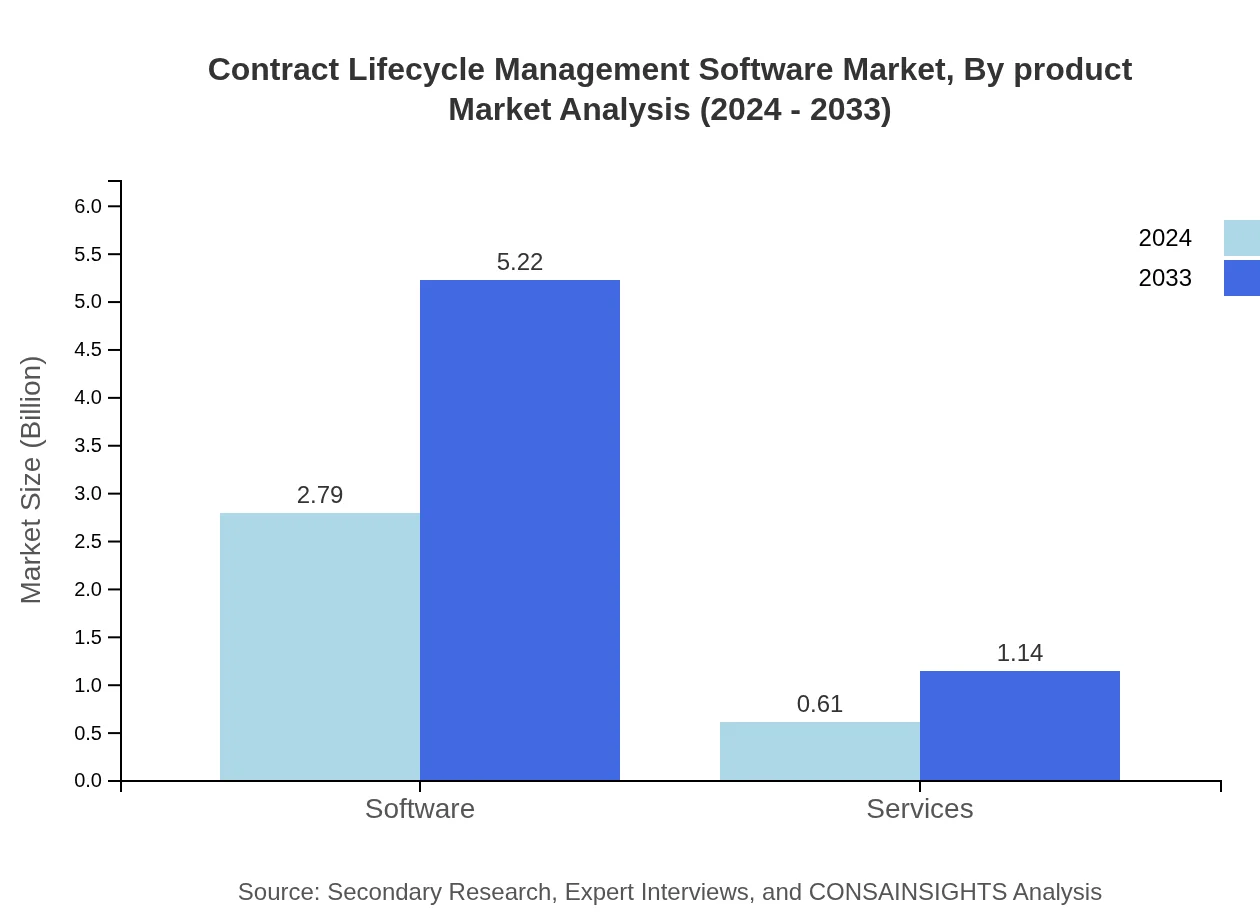
The market segmentation by product divides the overall spend between Software and Services. The Software segment, with a market size growing from 2.79 billion in 2024 to 5.22 billion in 2033, continues to dominate due to enhanced capabilities for customization, scalability, and integration. Software solutions provide automated contract drafting, approval workflows, and analytics, assisting organizations in reducing risk and ensuring regulatory compliance. On the other hand, the Services segment, although smaller, plays a critical role by offering expert implementation, training, and continuous support. Services help clients maximize the value of their investments and expedite the transition to digital contract management processes. The product segmentation clearly demonstrates that while the majority of market share is driven by software offerings, the supporting services are indispensable to ensuring effective deployment and customer satisfaction.
Contract Lifecycle Management Software Market Analysis By Application
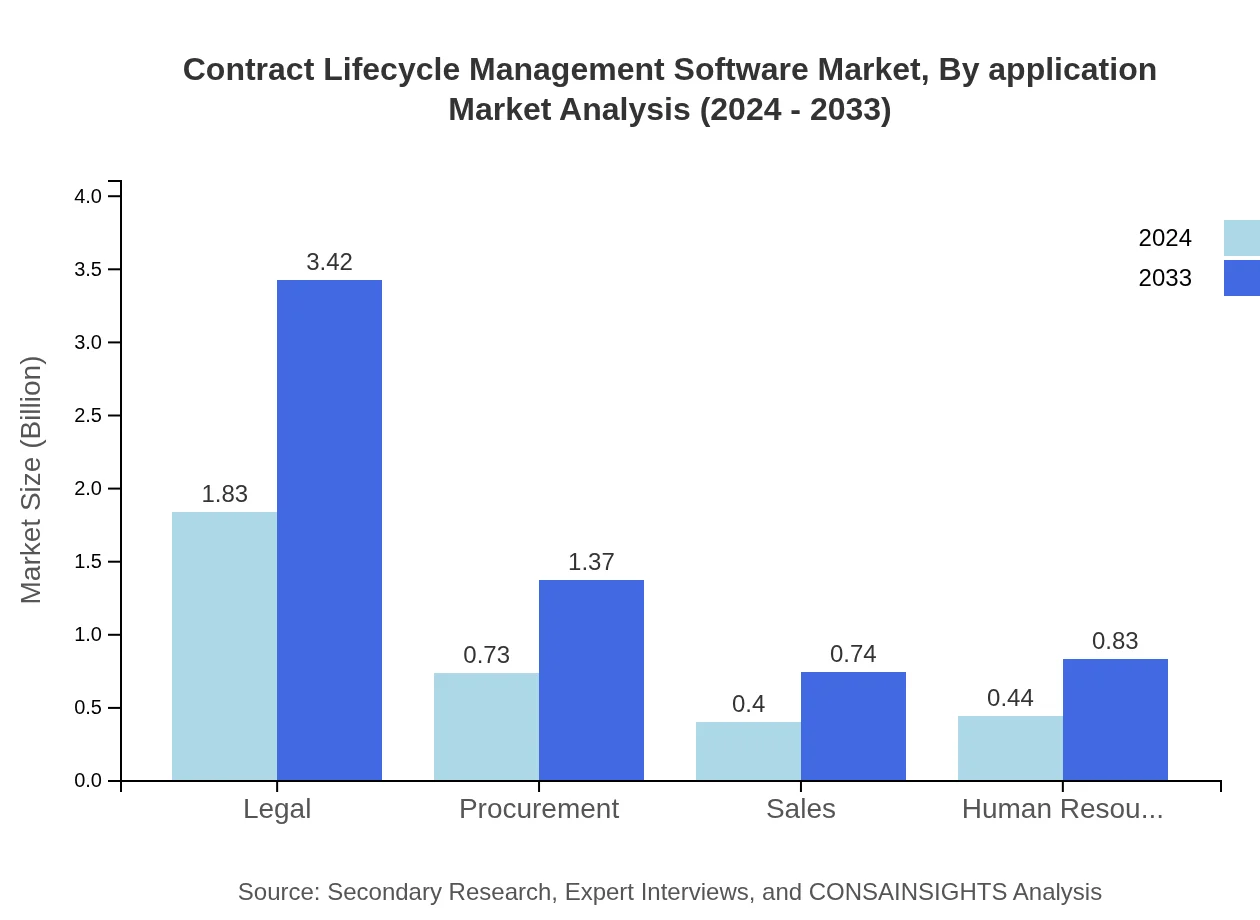
From the application perspective, the market is analyzed across various business domains such as Financial Services, Healthcare, Manufacturing, Real Estate, Legal, Procurement, Sales, and Human Resources. Each application segment is tailored to address the unique challenges faced by its respective industry. For example, in Financial Services and Legal segments, contract precision and compliance are paramount, with market sizes expected to experience substantial increases. The Healthcare and Manufacturing sectors benefit from improved risk management and operational efficiency through digital contract processing. In the Sales and Procurement domains, contract automation facilitates better vendor management and streamlined negotiations. Such segmentation not only broadens the market reach but also provides a roadmap for strategic investments across industry verticals.
Contract Lifecycle Management Software Market Analysis By Deployment Mode
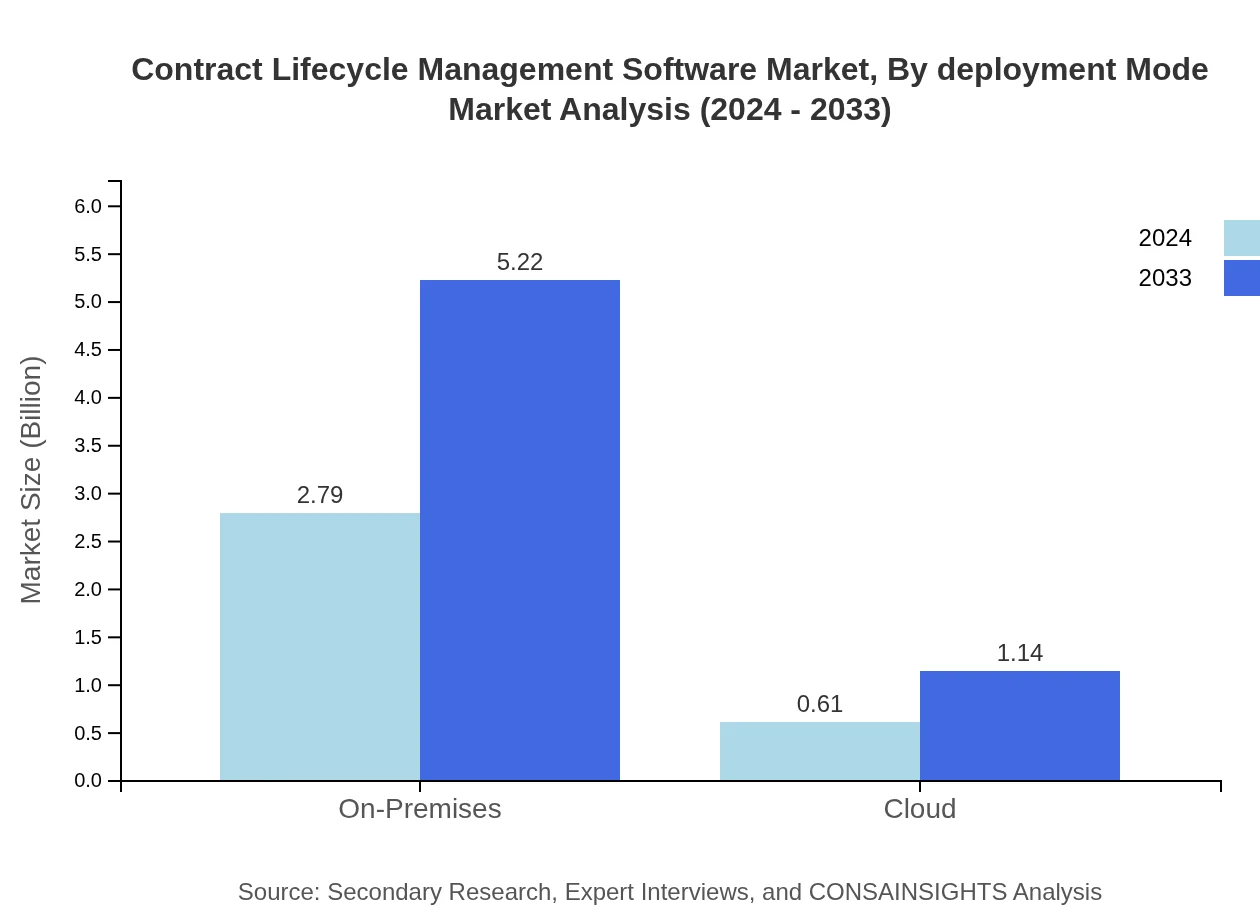
Deployment mode analysis primarily categorizes the market into On-Premises and Cloud-based solutions. On-Premises deployment holds a large share predominantly because it offers companies complete control over their data and security configurations. The market for On-Premises solutions is projected to grow significantly, with size figures moving from 2.79 billion in 2024 to 5.22 billion by 2033, reflecting its continued relevance in regulated sectors. Conversely, Cloud-based solutions, although representing a smaller share, are rapidly gaining popularity due to their flexibility, scalability, and lower initial capital requirements. Cloud deployments are favored by mid-sized businesses and startups as they offer easier implementation and quicker updates. The dynamic interplay between these deployment modes provides a competitive edge to vendors who can offer hybrid solutions that cater to both secure, on-premises management and agile, cloud-based access.
Contract Lifecycle Management Software Market Analysis By End User
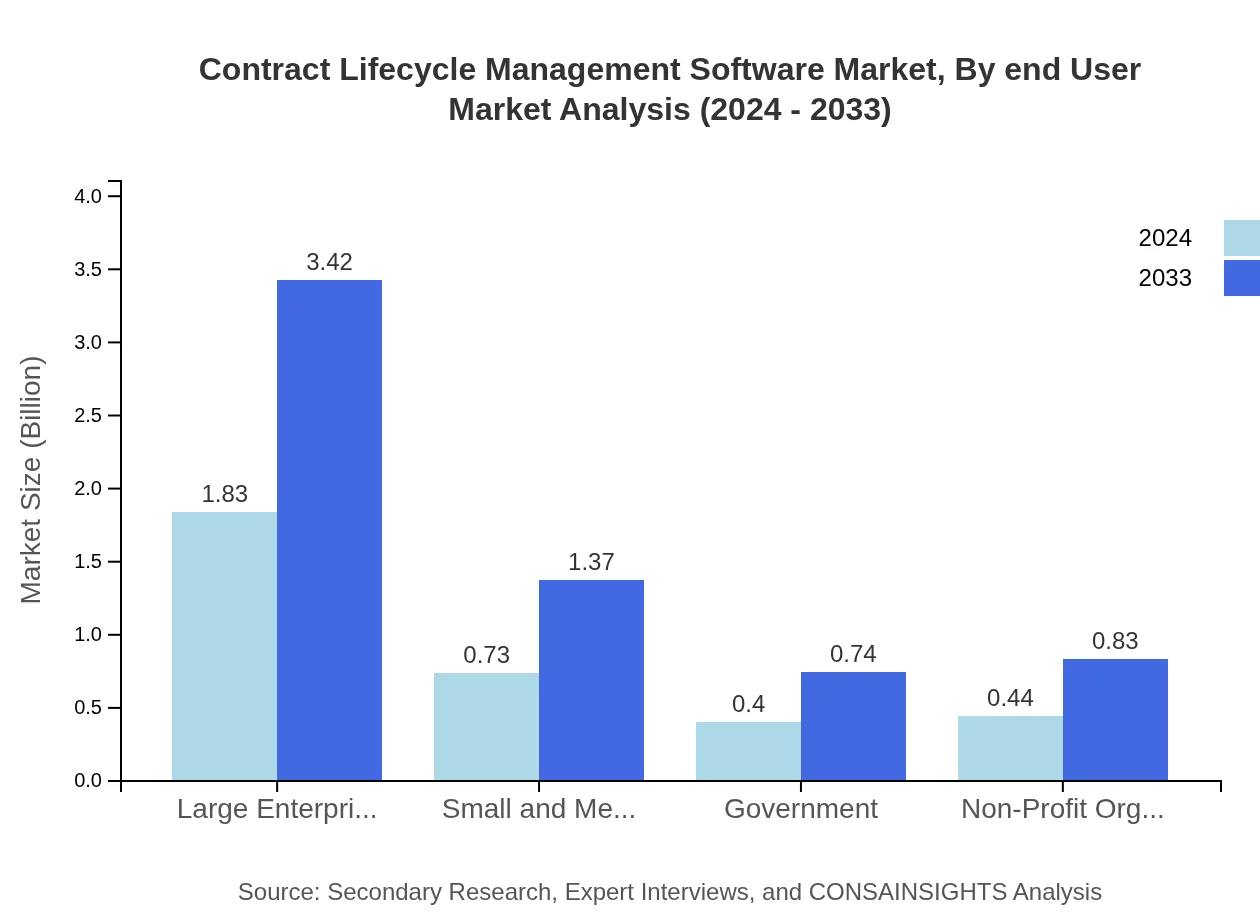
The end-user segmentation covers various customer groups including Large Enterprises, Small and Medium Businesses, Government, and Non-Profit Organizations. Large Enterprises, commanding the highest share with 53.85% in both 2024 and 2033, benefit from comprehensive contract management solutions that cater to their complex, high-volume requirements. Small and Medium Businesses, despite their relatively smaller market size, represent a significant growth area as these organizations embrace digital transformation to compete with larger firms. Government entities and Non-Profit Organizations are adopting Contract Lifecycle Management tools to improve transparency, compliance, and operational efficiency. Each end-user segment has distinct needs ranging from robust security features and regulatory compliance for large organizations to the cost-effectiveness and ease of use valued by smaller entities. This segmentation underlines the importance of customized solutions that address specific client needs across different sectors.
Contract Lifecycle Management Software Market Analysis By Industry
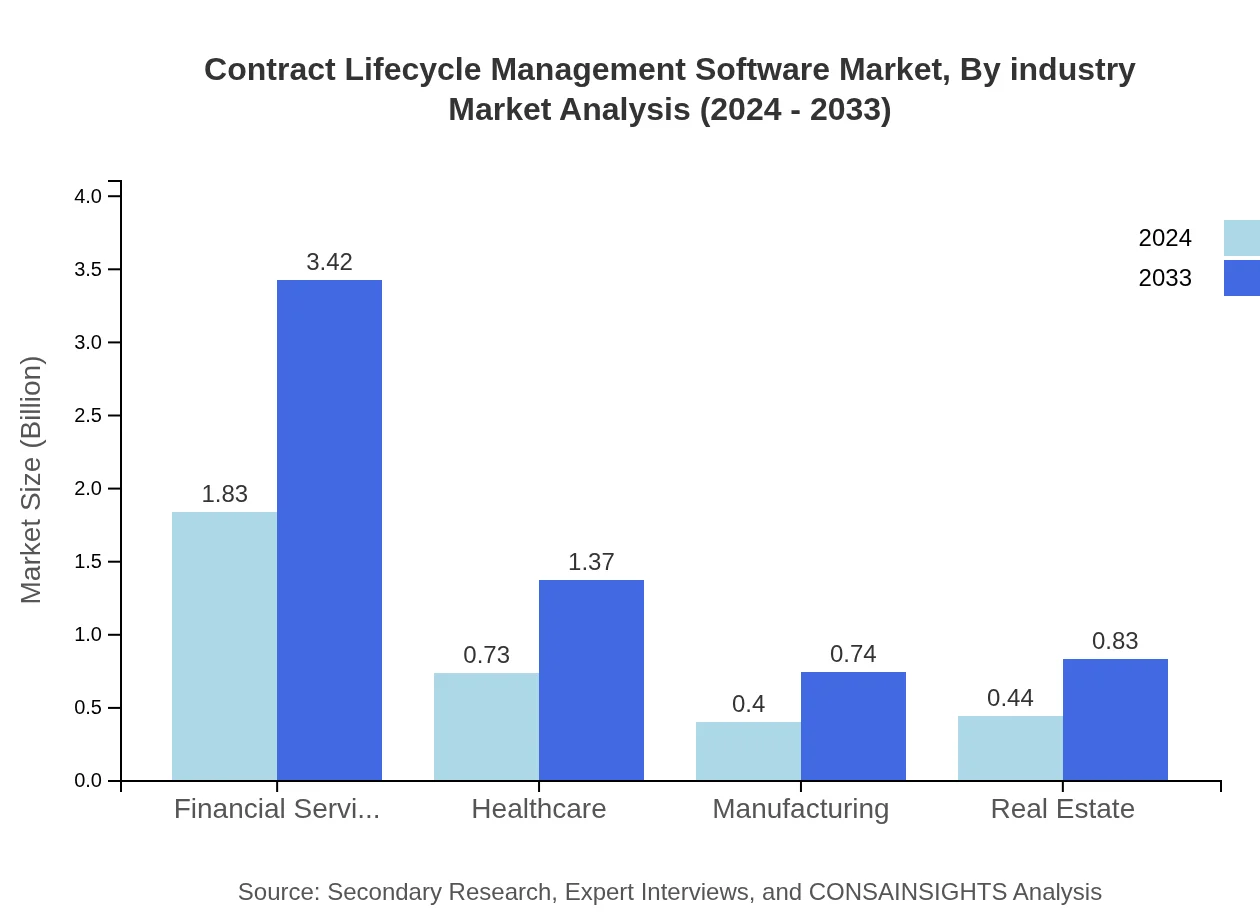
Industry-focused segmentation examines sectors such as Financial Services, Healthcare, Manufacturing, Real Estate, Legal, and more. In the Financial Services and Legal sectors, contract precision is crucial, resulting in dedicated software functionalities to manage risk, compliance, and audit processes. The Healthcare and Manufacturing sectors benefit from improved operational workflows and enhanced data management enabled by digital contract lifecycle platforms. Real Estate and Procurement industries require efficient contract execution and oversight to streamline transactions and vendor relationships. This industrial segmentation provides detailed insights into how different sectors leverage technology to manage contracts, ensuring operational excellence and mitigating legal and financial risks. The diverse industry applications reflect a strong demand for tailored solutions that address industry-specific challenges while leveraging common technological foundations.
Contract Lifecycle Management Software Market Trends and Future Forecast
Tell us your focus area and get a customized research report.
Global Market Leaders and Top Companies in Contract Lifecycle Management Software Industry
Icertis:
Icertis is recognized for its transformational approach in contract management. Leveraging artificial intelligence and cloud-based solutions, the company provides comprehensive lifecycle management software that addresses contract compliance, risk management, and operational efficiency.DocuSign:
DocuSign has established itself as a leader in digital transaction management and contract lifecycle automation. Its platform incorporates e-signature capabilities and advanced analytics, making it an indispensable tool for enterprises worldwide.Conga:
Conga offers end-to-end contract management solutions that streamline document creation, negotiation, and compliance processes. Renowned for its robust integration capabilities, Conga supports a diverse range of industries through customized solutions.Agiloft:
Agiloft is celebrated for its highly configurable contract lifecycle management software that caters to complex business processes. Its scalable solutions, built on intuitive platforms, offer organizations flexibility in managing contracts with efficiency and transparency.We're grateful to work with incredible clients.







FAQs
What is the market size of Contract Lifecycle Management Software?
The Contract Lifecycle Management Software market is projected to reach a size of $3.4 billion by 2033, showcasing a compound annual growth rate (CAGR) of 7.0% between 2024 and 2033.
What are the key market players or companies in this Contract Lifecycle Management Software industry?
Key players in the Contract Lifecycle Management Software industry include major technology companies that provide cloud-based solutions, ensuring robust performance, enhanced automation, and strategic integrations for efficient contract management.
What are the primary factors driving the growth in the Contract Lifecycle Management Software industry?
The growth in the Contract Lifecycle Management Software industry is primarily driven by the increasing demand for automation in business processes, the need for compliance in contract management, and the adoption of digital transformation across various sectors.
Which region is the fastest Growing in the Contract Lifecycle Management Software market?
The fastest-growing region in the Contract Lifecycle Management Software market is North America, with an expected market size increase from $1.21 billion in 2024 to $2.26 billion by 2033, reflecting strong investment and technological adoption.
Does ConsaInsights provide customized market report data for the Contract Lifecycle Management Software industry?
Yes, ConsaInsights offers customized market report data tailored to the needs of clients in the Contract Lifecycle Management Software industry, enabling them to make informed decisions based on specific market niches and requirements.
What deliverables can I expect from this Contract Lifecycle Management Software market research project?
Deliverables from the Contract Lifecycle Management Software market research project include detailed market analysis, segmentation data, trend reports, competitive landscape insights, and forecasts on market growth and trends up to 2033.
What are the market trends of Contract Lifecycle Management Software?
Current market trends in Contract Lifecycle Management Software include a shift towards cloud-based solutions, increasing use of AI for contract analysis, and heightened focus on improving user experience and operational efficiency in contract processes.