

Deep Brain Stimulation Market Report
First published: 15 October 2024 | Last updated: 25 May 2026 | Report Code: deep-brain-stimulation
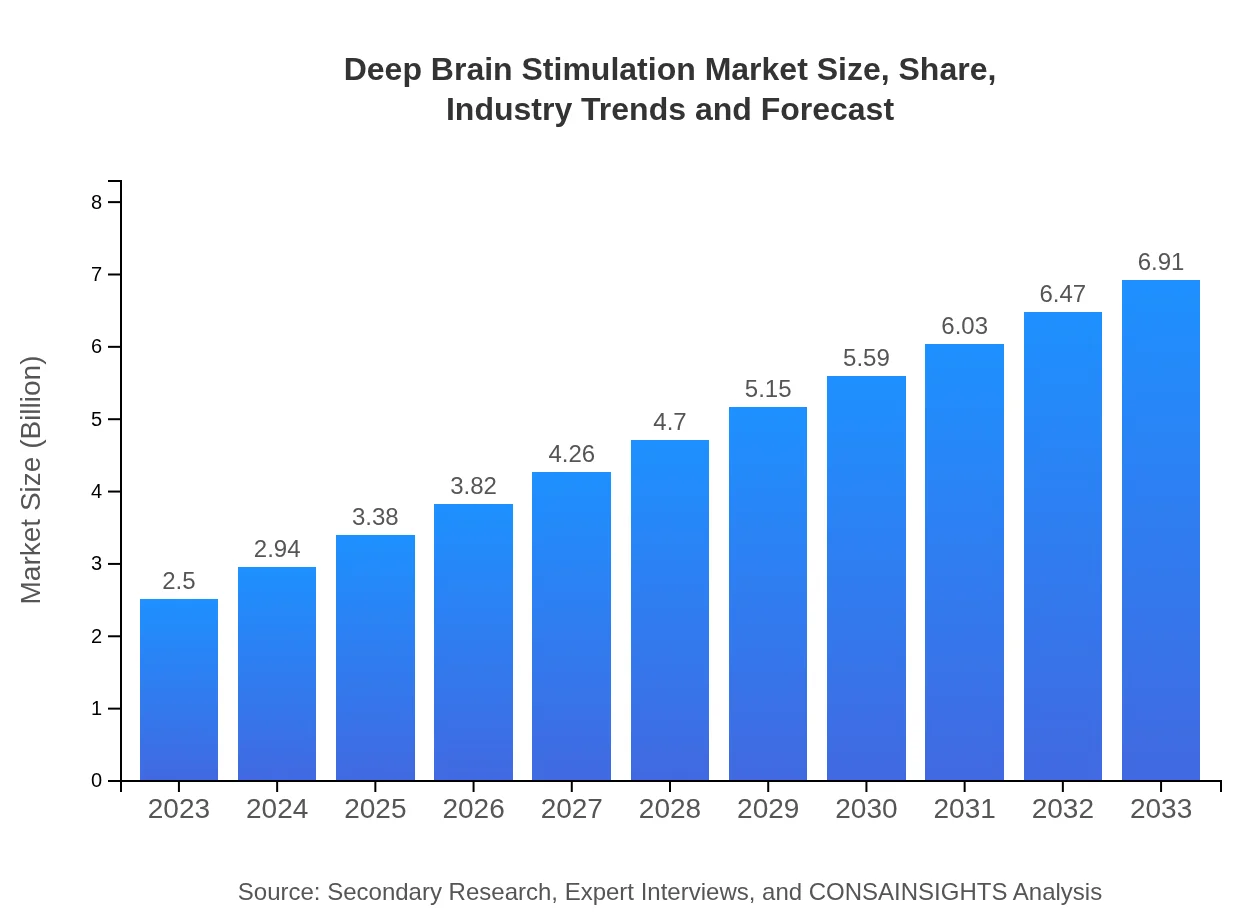
Deep Brain Stimulation Market — USD 2.5 billion in 2023, Growing to USD 6.91B by 2033 at 10.3% CAGR
This report provides an in-depth analysis of the Deep Brain Stimulation (DBS) market, covering market size, growth trends, regional insights, key players, and future forecasts from 2023 to 2033.
Key Takeaways
- Global market expands from $2.50 Billion in 2023 to $6.91 Billion by 2033 at a 10.3% CAGR.
- North America is largest regional market, while no single fastest-growing region is stated because regional CAGR differences remain within 0.15 percentage points.
- Europe and Asia Pacific show notable growth with Europe rising from $0.71 Billion to $1.95 Billion, and Asia Pacific from $0.5 Billion to $1.37 Billion.
- Market structure includes device types (single-channel, multi-channel), applications (Parkinson's, MDD, epilepsy), and end users such as hospitals and clinics.
- Key vendors cited include Medtronic, Boston Scientific, Abbott Laboratories, and St. Jude Medical (now part of Abbott).
Deep Brain Stimulation Market Report — Executive Summary
North America remains largest market by forecast-period value, while no single fastest-growing region is stated because top regional growth rates are separated by less than 0.15 percentage points. The Deep Brain Stimulation market is poised for sustained expansion driven by increasing prevalence of neurological disorders, ongoing device innovation, and broader clinical adoption. From a base of $2.50 Billion in 2023, the market is projected to reach $6.91 Billion in 2033 at a 10.3% CAGR during the 2023 to 2033 forecast period. Regional dynamics vary: North America is the largest market by 2033, while other regions such as Europe and Asia Pacific also show strong absolute growth. Product segmentation covers single-channel and multi-channel systems, implantable devices and accessories, and applications spanning Parkinson's disease, major depressive disorder, epilepsy and other indications. Hospitals, clinics and home care settings represent primary end users. Competitive activity centers on technological enhancements, expanded clinical evidence, and strategic collaborations among established players including Medtronic, Boston Scientific, Abbott Laboratories and St. Jude Medical (now part of Abbott). Regulatory pathways and reimbursement policies will continue to influence adoption rates and market evolution.
Key Growth Drivers
- Rising incidence and diagnosis of neurological disorders increasing clinical demand for neuromodulation therapies.
- Technological advancements in implantable systems and accessories improving device efficacy and patient outcomes.
- Expanding clinical indications, including Parkinson's disease, major depressive disorder and epilepsy, broadening the addressable market.
- Greater adoption across hospitals, clinics and home care settings supported by improved clinical evidence and care models.
- Sustained investment and product development by major suppliers such as Medtronic, Boston Scientific and Abbott Laboratories.
| Metric | Value |
|---|---|
| Study Period | 2023 - 2033 |
| 2023 Market Size | $2.50 Billion |
| CAGR (2023-2033) | 10.3% |
| 2033 Market Size | $6.91 Billion |
| Top Companies | Medtronic , Boston Scientific, Abbott Laboratories, St. Jude Medical (now part of Abbott) |
| Published Date | 15 October 2024 |
| Last Modified Date | 25 May 2026 |
Deep Brain Stimulation Market Overview
Customize Deep Brain Stimulation Market Report market research report
- ✔ Get in-depth analysis of Deep Brain Stimulation market size, growth, and forecasts.
- ✔ Understand Deep Brain Stimulation's regional dynamics and industry-specific trends.
- ✔ Identify potential applications, end-user demand, and growth segments in Deep Brain Stimulation
What is the Market Size & CAGR of Deep Brain Stimulation Market Report market in 2023?
Deep Brain Stimulation Industry Analysis
Deep Brain Stimulation Market Segmentation and Scope
Tell us your focus area and get a customized research report.
Deep Brain Stimulation Market Report Market Analysis Report by Region
Europe Deep Brain Stimulation Market Report:
Europe grows from $0.71 Billion in 2023 to $1.95 Billion in 2033. Expansion reflects increasing clinical utilization for neurological disorders, ongoing device innovation, and greater clinician experience with DBS therapies across major healthcare systems.Asia Pacific Deep Brain Stimulation Market Report:
Asia Pacific grows from $0.5 Billion in 2023 to $1.37 Billion in 2033. Drivers include expanding access to advanced neuromodulation, rising disease awareness, improving healthcare infrastructure, and growing interest from manufacturers in emerging regional markets.North America Deep Brain Stimulation Market Report:
North America is largest regional market, rising from $0.88 Billion in 2023 to $2.43 Billion in 2033. Growth is linked to robust clinical adoption, supportive healthcare infrastructure, investment in R&D by major vendors, and established reimbursement frameworks that enable procedural uptake.South America Deep Brain Stimulation Market Report:
Latin America grows from $0.19 Billion in 2023 to $0.52 Billion in 2033. Market progress is influenced by gradual enhancements in clinical capabilities, selective adoption in tertiary care centers, and improving access to specialized neurological treatments.Middle East & Africa Deep Brain Stimulation Market Report:
Middle East and Africa grows from $0.23 Billion in 2023 to $0.64 Billion in 2033. Development is driven by incremental investments in specialized care, expanding availability of neurosurgical services, and rising awareness of DBS among clinicians and patients.Tell us your focus area and get a customized research report.
Research Methodology
Deep Brain Stimulation Market Analysis By Type
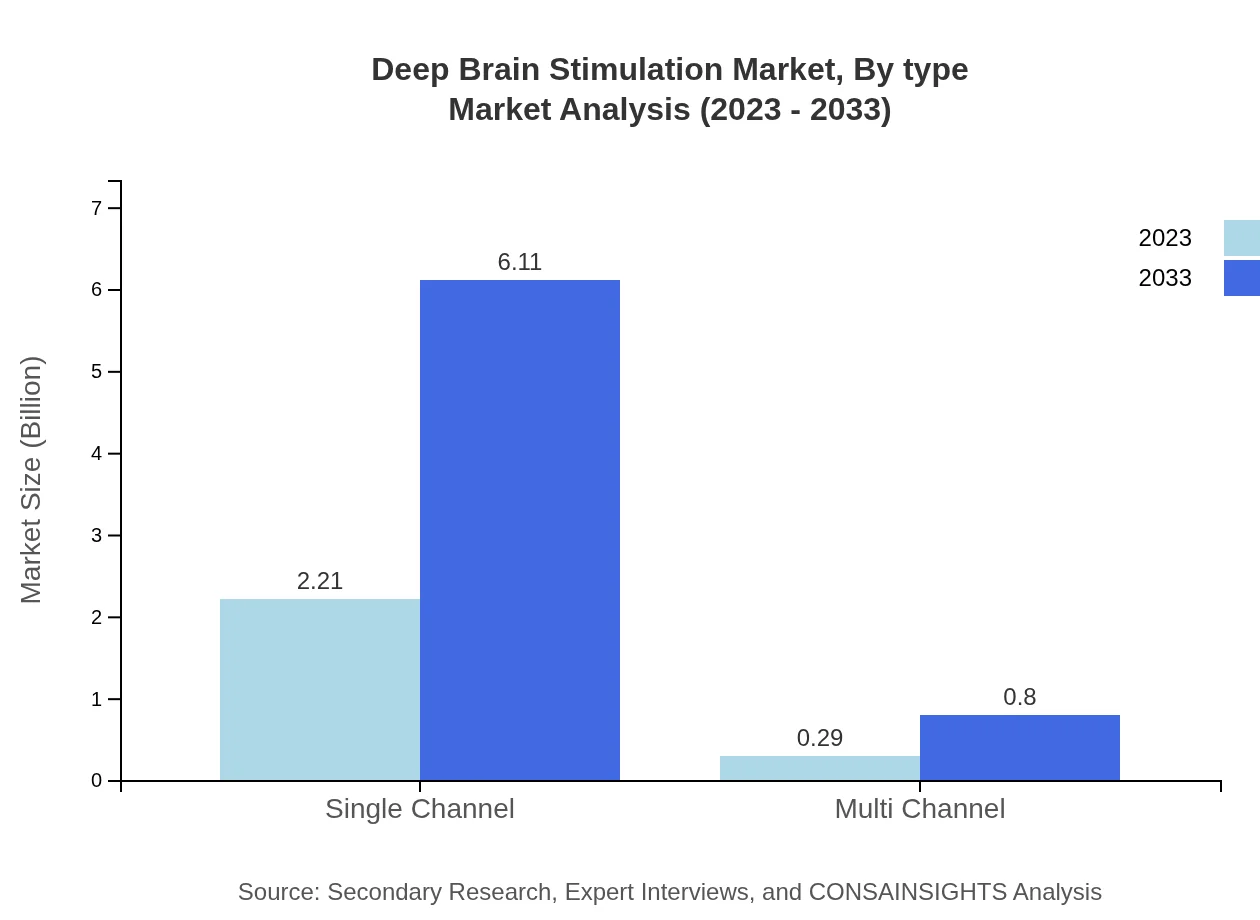
The market is primarily segmented into Single Channel and Multi Channel systems. Single Channel devices dominate the market, valued at $2.21 billion in 2023 and projected to reach $6.11 billion by 2033, holding an 88.37% market share. In contrast, Multi Channel devices are growing but remain a smaller segment, reflecting innovations that enhance the treatment of complex neurological disorders.
Deep Brain Stimulation Market Analysis By Application
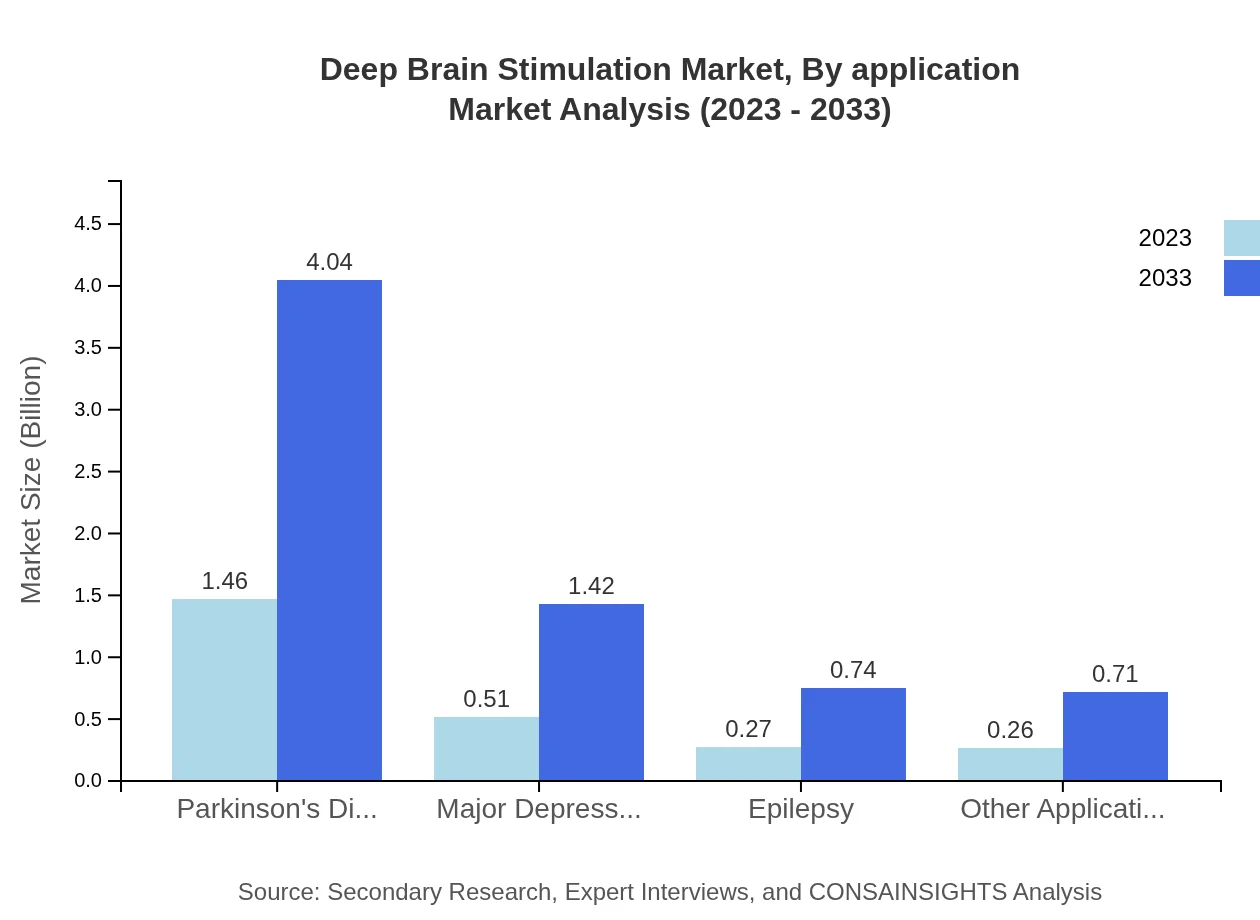
The applications of DBS encompass various neurological conditions. Parkinson's Disease represents the largest segment, with a market size of $1.46 billion in 2023 and expected to reach $4.04 billion in 2033, holding a 58.48% share. Other applications include Major Depressive Disorder, epilepsy, and various other conditions, highlighting the technology's expanding scope.
Deep Brain Stimulation Market Analysis By End User
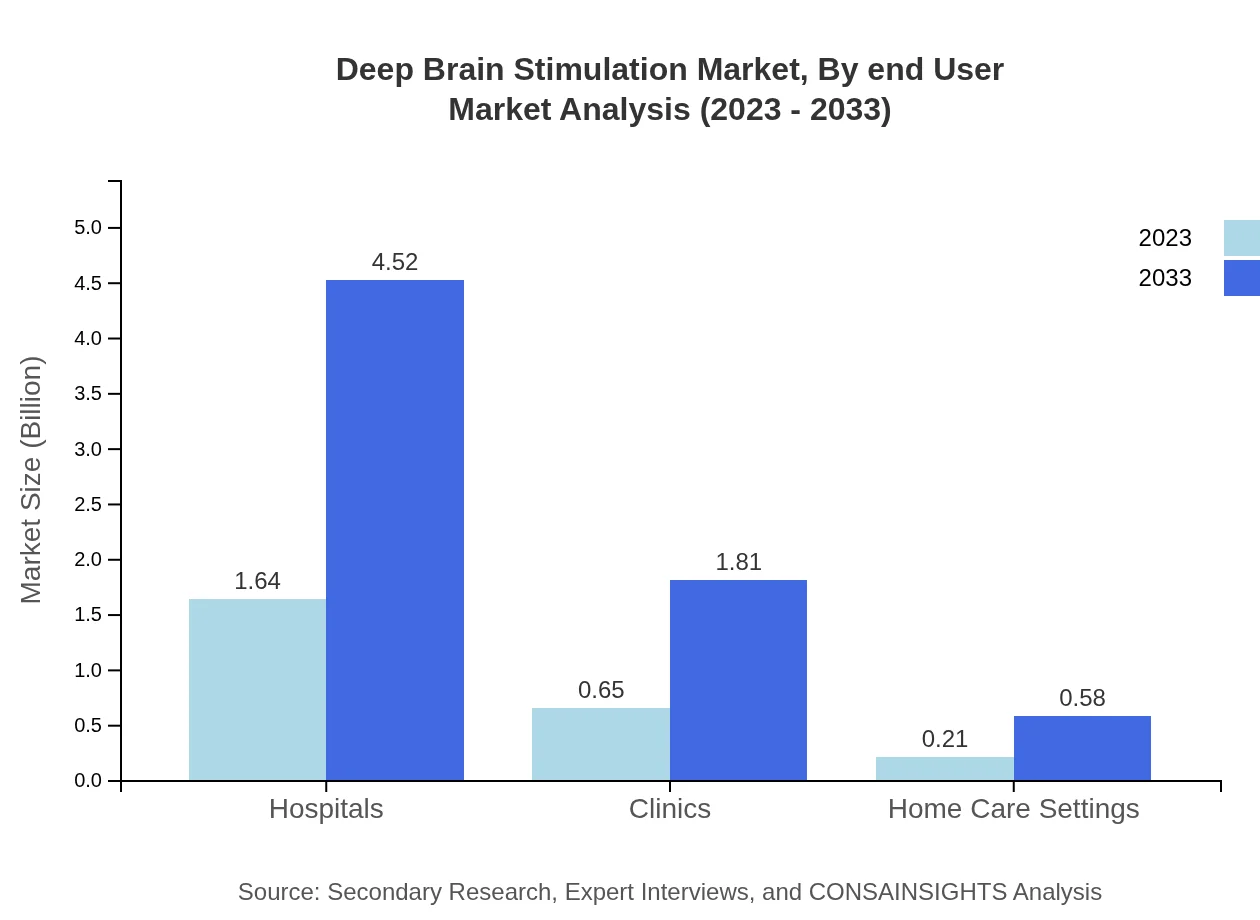
End-users of DBS systems are primarily hospitals, clinics, and home care settings. Hospitals dominate this market segment, with a share of 65.48%, valued at $1.64 billion in 2023 and projected to expand to $4.52 billion by 2033. Clinics are also growing through increased patient referrals and treatment protocols, while home care settings are gradually gaining traction.
Deep Brain Stimulation Market Analysis By Implantable Device Type
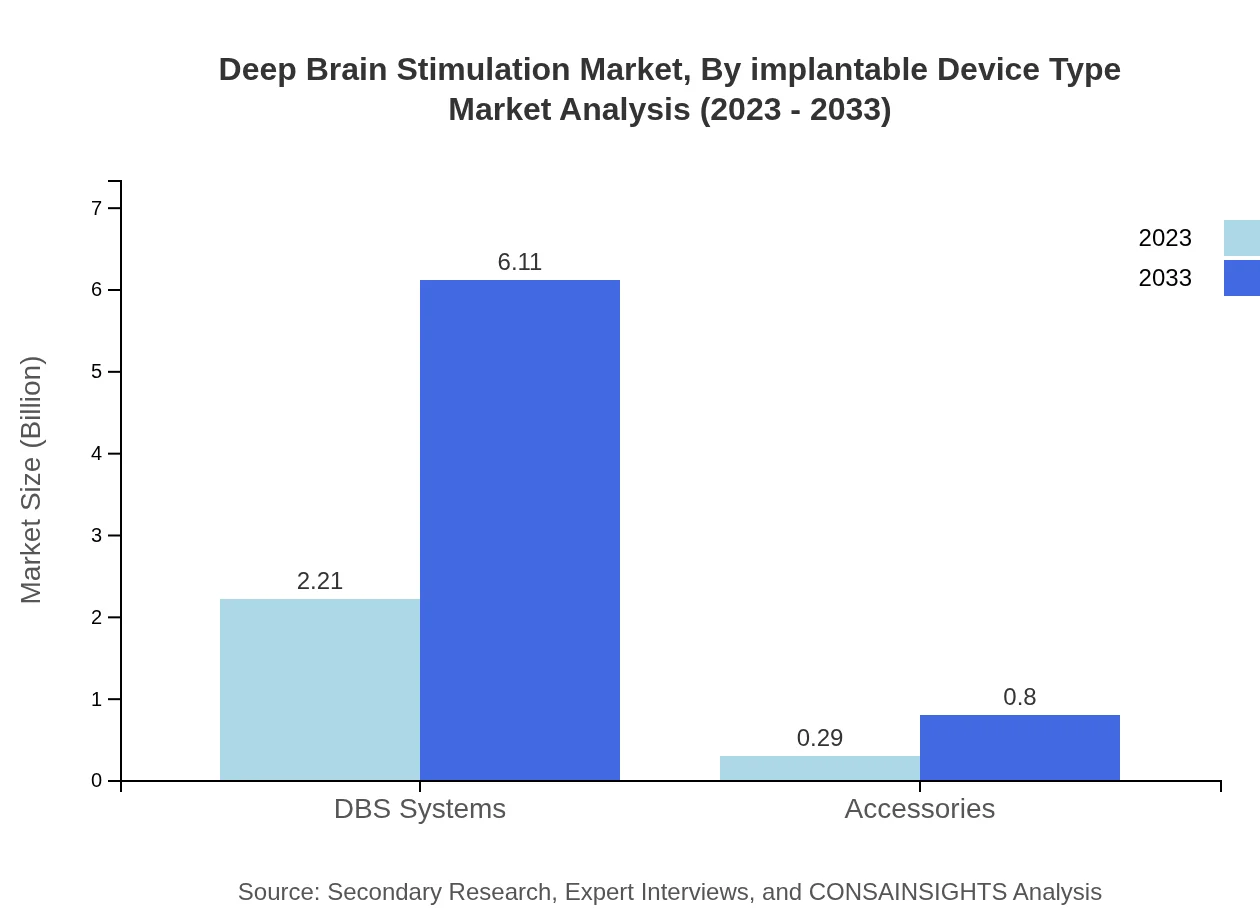
Market segmentation by device type further expands into DBS systems and accessories. DBS systems lead the market with $2.21 billion in 2023, anticipated to grow to $6.11 billion by 2033, maintaining an 88.37% market share, indicating strong demand and effectiveness. Accessories, although smaller ($0.29 billion in 2023), are also expected to grow significantly.
Deep Brain Stimulation Market Trends and Future Forecast
Tell us your focus area and get a customized research report.
Global Market Leaders and Top Companies in Deep Brain Stimulation Industry
Medtronic :
A pioneer in the development of DBS devices, Medtronic focuses on innovative solutions for neurological disorders, contributing substantially to market growth.Boston Scientific:
Boston Scientific is known for its advanced neurostimulation products and technologies, enhancing patient outcomes in DBS applications.Abbott Laboratories:
Abbott leads advancements in neurostimulation therapies, contributing to the efficacy of DBS systems and expanding accessibility to these treatments.St. Jude Medical (now part of Abbott):
A key player in neuromodulation, St. Jude Medical brings innovative DBS solutions that help manage chronic neurological disorders effectively.We're grateful to work with incredible clients.








FAQs
What is the market size of the Deep Brain Stimulation market in 2023?
The market size in 2023 is $2.50 Billion, based on the provided report figures and baseline valuation for the forecast period.
How big will the market be in 2033?
The projected market value for 2033 is $6.91 Billion according to the report's forecast for the 2023 to 2033 period.
What is CAGR for the forecast period?
The compound annual growth rate for the 2023 to 2033 forecast period is 10.3% as stated in the provided data.
Is there a single fastest Growing region in the Deep Brain Stimulation Market Report market?
No single fastest-growing region is stated for the Deep Brain Stimulation Market Report market because the top regional implied CAGR values are within 0.15 percentage points of each other, making the ranking too close to call reliably.
Who are the top companies operating in this market?
Top companies listed include Medtronic, Boston Scientific, Abbott Laboratories and St. Jude Medical (now part of Abbott).
Why is clinical adoption increasing for DBS therapies?
Clinical adoption is rising due to improved device performance, expanded indications, and growing clinical evidence supporting DBS benefits for several neurological conditions.
What types of devices are covered in the segmentation?
Segmentation includes single-channel and multi-channel systems, implantable DBS systems and accessories as noted in the report data.
How are end users categorized in the report?
End users are categorized as hospitals, clinics and home care settings, reflecting primary delivery settings for DBS treatments.
What applications are included in the market analysis?
Applications include Parkinson's disease, major depressive disorder, epilepsy and other applications as specified in the input data.
Why are regional differences important in this market?
Regional differences reflect variations in healthcare infrastructure, reimbursement, awareness and prevalence of neurological disorders that influence adoption rates.