
Reports >
Life Sciences
>
Diabetic Foot Ulcers Market Report

Diabetic Foot Ulcers Market Report
First published: 15 October 2024 | Last updated: 25 May 2026 | Report Code: diabetic-foot-ulcers
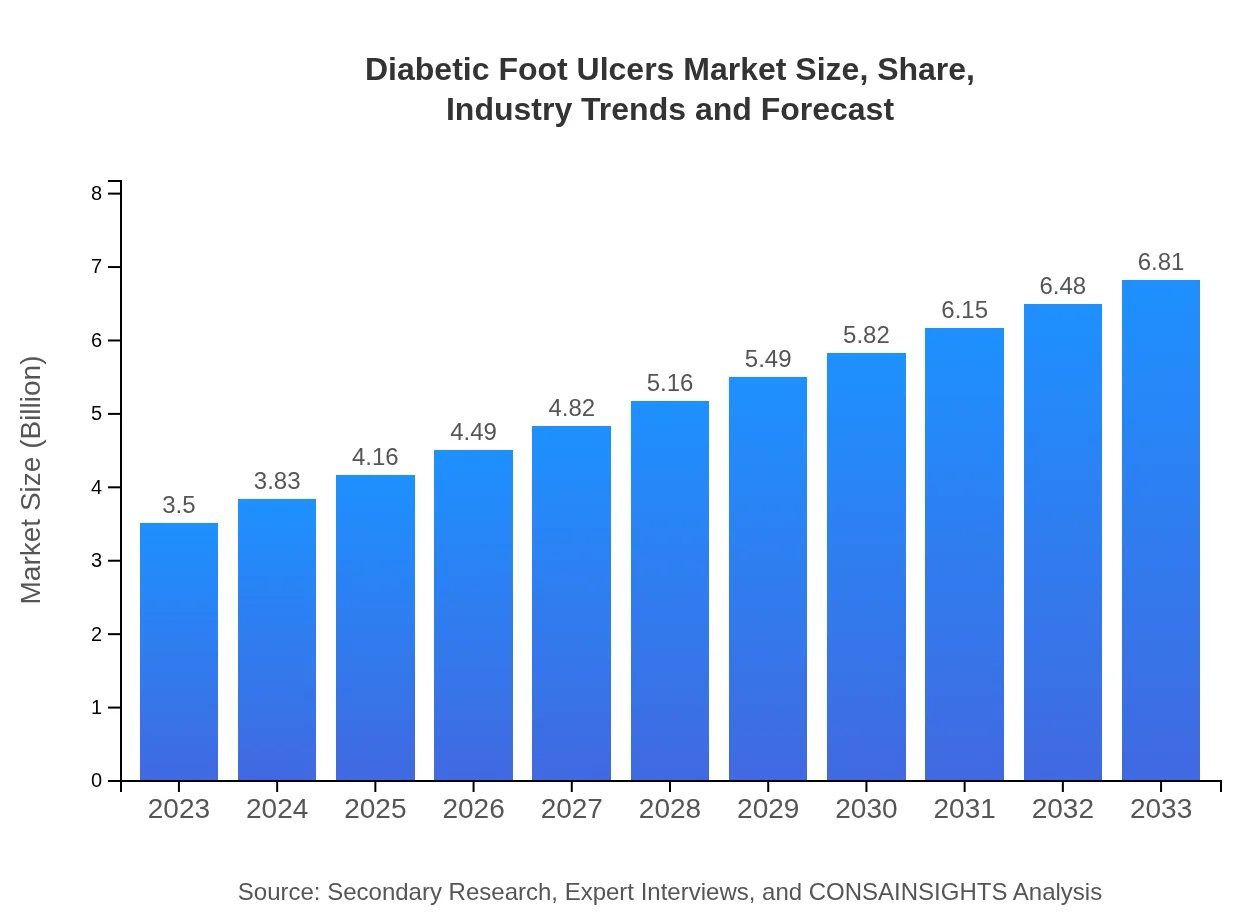
Diabetic Foot Ulcers Market — USD 3.5 billion in 2023, Growing to USD 6.81B by 2033 at 6.7% CAGR
This report provides a comprehensive analysis of the Diabetic Foot Ulcers market from 2023 to 2033, focusing on market trends, size, segmentation, and regional insights to guide stakeholders in making informed decisions.
Key Takeaways
- Global market expands from $3.50 Billion in 2023 to $6.81 Billion in 2033 at a 6.7% CAGR.
- North America is largest regional market, while no single fastest-growing region is stated because regional CAGR differences remain within 0.15 percentage points.
- North America leads regionally, growing from $1.36 Billion in 2023 to $2.64 Billion in 2033.
- Europe moves from $0.99 Billion to $1.93 Billion between 2023 and 2033, reflecting sustained demand.
- Product innovation in wound dressings, therapeutic devices, and biological agents supports market growth.
- End users include hospitals, home care settings, and long-term care facilities, shaping distribution needs.
Diabetic Foot Ulcers Market Report — Executive Summary
North America remains largest market by forecast-period value, while no single fastest-growing region is stated because top regional growth rates are separated by less than 0.15 percentage points. This report examines the diabetic foot ulcers market across products, treatment approaches, end-users and distribution channels, driven by rising diabetes prevalence, advancing therapeutic technologies and greater awareness of preventive care. The market valuation increases from $3.50 Billion in 2023 to $6.81 Billion in 2033 at a 6.7% CAGR over the 2023 to 2033 forecast period. North America is the largest regional market, with a notable rise to $2.64 Billion by 2033. Key product categories include wound dressings, therapeutic devices and biological agents; treatment approaches span surgical and non-surgical methods. Hospitals, home care settings and long-term care facilities are primary end-users, supported by hospital, retail and online pharmacy channels. Leading companies such as Smith & Nephew, Mölnlycke Health Care and 3M are active in product development and supply. The report presents trend analysis and segmentation to inform investment and strategic planning in the sector.
Key Growth Drivers
- Increasing prevalence of diabetes and related complications expanding demand for specialized foot care solutions.
- Technological progress in wound dressings and therapeutic devices improving treatment effectiveness and adoption.
- Rising geriatric population and heightened preventive care awareness driving use of advanced therapies.
- Broader access through hospital, retail and online pharmacies enhancing distribution reach for products.
- Greater collaboration between manufacturers and healthcare providers facilitating better clinical outcomes.
| Metric | Value |
|---|---|
| Study Period | 2023 - 2033 |
| 2023 Market Size | $3.50 Billion |
| CAGR (2023-2033) | 6.7% |
| 2033 Market Size | $6.81 Billion |
| Top Companies | Smith & Nephew, Mölnlycke Health Care, 3M |
| Published Date | 15 October 2024 |
| Last Modified Date | 25 May 2026 |
Diabetic Foot Ulcers Market Overview
Customize Diabetic Foot Ulcers Market Report market research report
- ✔ Get in-depth analysis of Diabetic Foot Ulcers market size, growth, and forecasts.
- ✔ Understand Diabetic Foot Ulcers's regional dynamics and industry-specific trends.
- ✔ Identify potential applications, end-user demand, and growth segments in Diabetic Foot Ulcers
What is the Market Size & CAGR of Diabetic Foot Ulcers Market Report market in 2023?
Diabetic Foot Ulcers Industry Analysis
Diabetic Foot Ulcers Market Segmentation and Scope
Tell us your focus area and get a customized research report.
Diabetic Foot Ulcers Market Report Market Analysis Report by Region
Europe Diabetic Foot Ulcers Market Report:
Europe grows from $0.99 Billion in 2023 to $1.93 Billion in 2033. 99 Billion in 2023 to $1.93 Billion in 2033, reflecting ongoing investment in therapeutic technologies and growing awareness for preventive diabetic foot care across hospital and long-term care settings.Asia Pacific Diabetic Foot Ulcers Market Report:
Asia Pacific grows from $0.66 Billion in 2023 to $1.29 Billion in 2033. 66 Billion in 2023 to $1.29 Billion in 2033, with demand driven by increasing diabetes prevalence, expanding healthcare access and rising uptake of advanced wound care solutions in hospitals and home care.North America Diabetic Foot Ulcers Market Report:
North America is largest regional market, rising from $1.36 Billion in 2023 to $2.64 Billion in 2033. Regional growth reflects established clinical infrastructure, high adoption of advanced therapies and extensive hospital and outpatient networks supporting wound care delivery.South America Diabetic Foot Ulcers Market Report:
Latin America grows from $0.35 Billion in 2023 to $0.68 Billion in 2033. 35 Billion in 2023 to $0.68 Billion in 2033, supported by broader availability of wound care products, gradual healthcare investment and expanding distribution through pharmacies and clinical channels.Middle East & Africa Diabetic Foot Ulcers Market Report:
Middle East and Africa grows from $0.14 Billion in 2023 to $0.26 Billion in 2033. 14 Billion in 2023 to $0.26 Billion in 2033, with growth linked to improving healthcare infrastructure, increased awareness of diabetic complications and gradual adoption of therapeutic and dressing solutions.Tell us your focus area and get a customized research report.
Research Methodology
Diabetic Foot Ulcers Market Analysis By Product Type
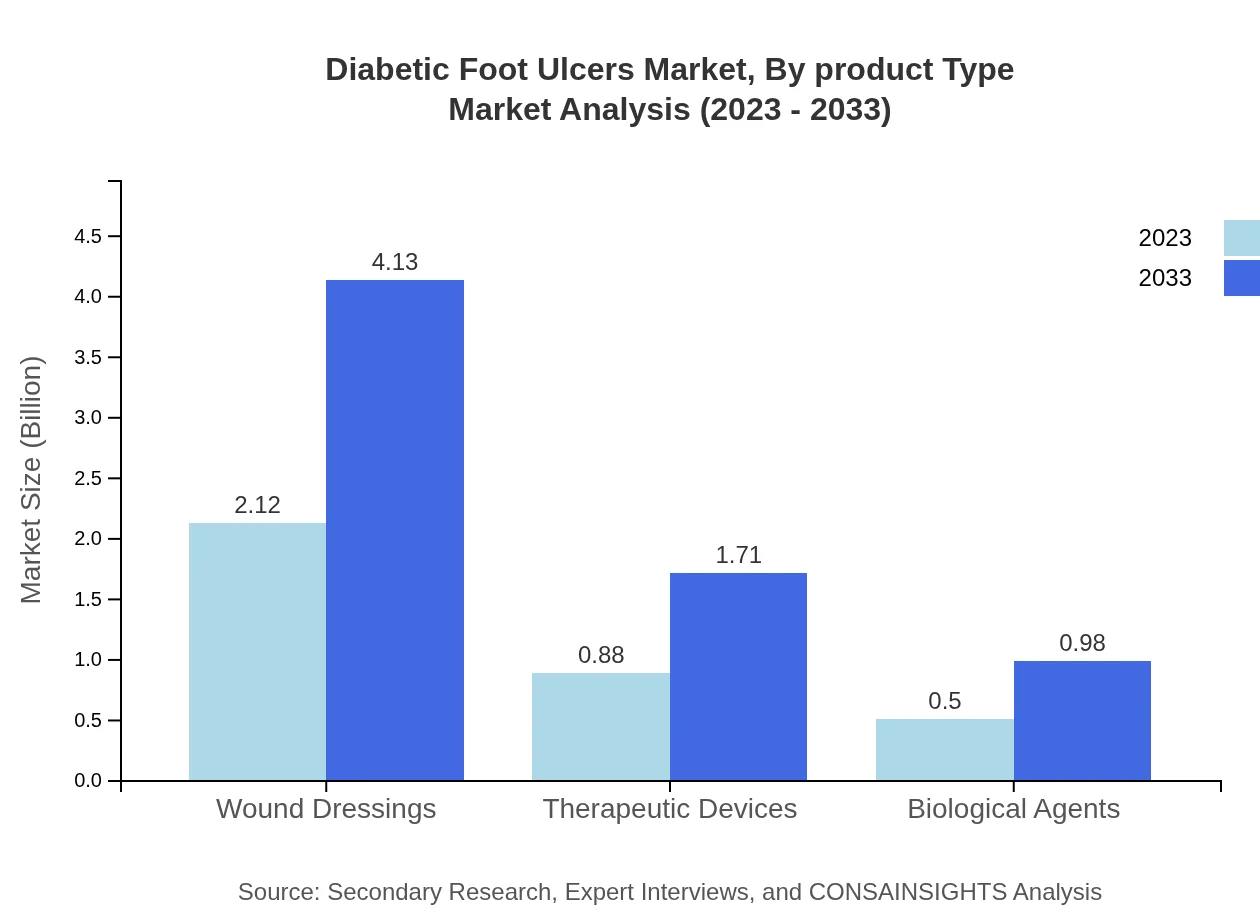
The product segments include wound dressings, therapeutic devices, biological agents, and surgical treatments. Wound dressings account for over 60% of the market share, providing essential care for diabetic foot ulcers. Surgical treatments also play a critical role, significantly impacting the overall market dynamics.
Diabetic Foot Ulcers Market Analysis By Treatment Approach
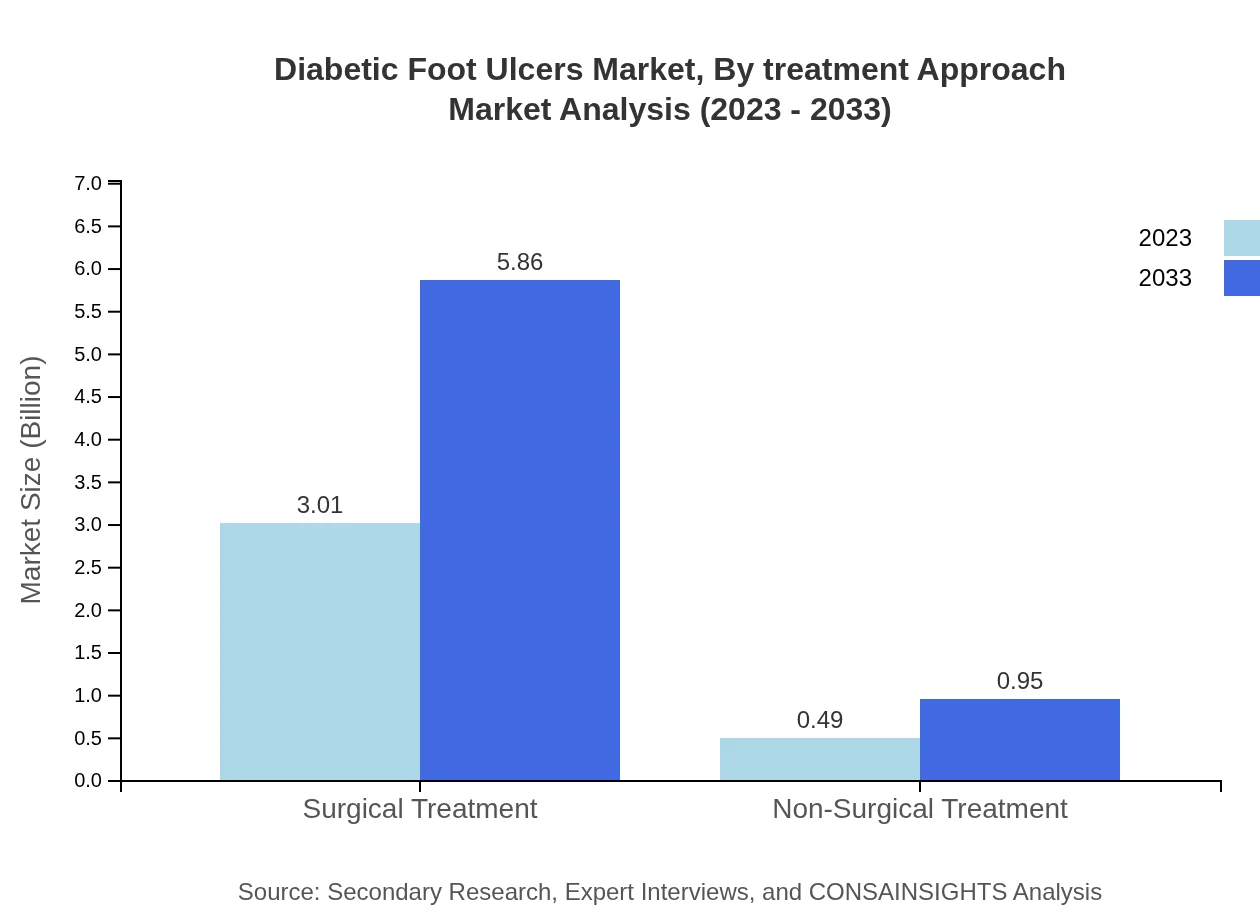
The treatment approaches are primarily categorized into surgical and non-surgical interventions. Surgical interventions dominate with an 86.08% market share in 2023, owing to their effectiveness in severe cases. Non-surgical treatments, while smaller in market presence, are gaining traction due to advances in wound healing products.
Diabetic Foot Ulcers Market Analysis By End User
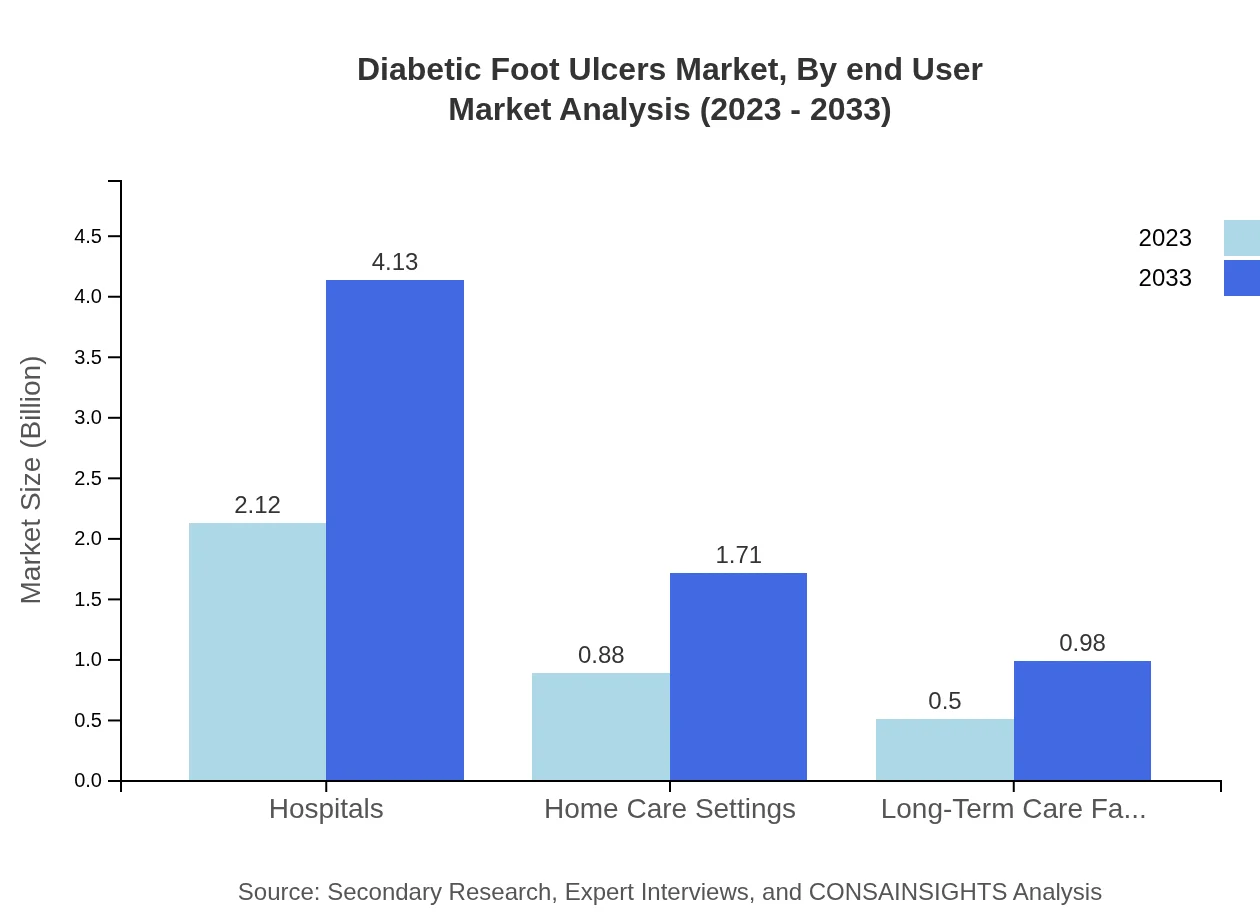
End-users of diabetic foot ulcer treatments include hospitals, home care settings, and long-term care facilities. Hospitals dominate with 60.6% market share, reflecting the critical need for specialized treatment under professional supervision.
Diabetic Foot Ulcers Market Analysis By Distribution Channel
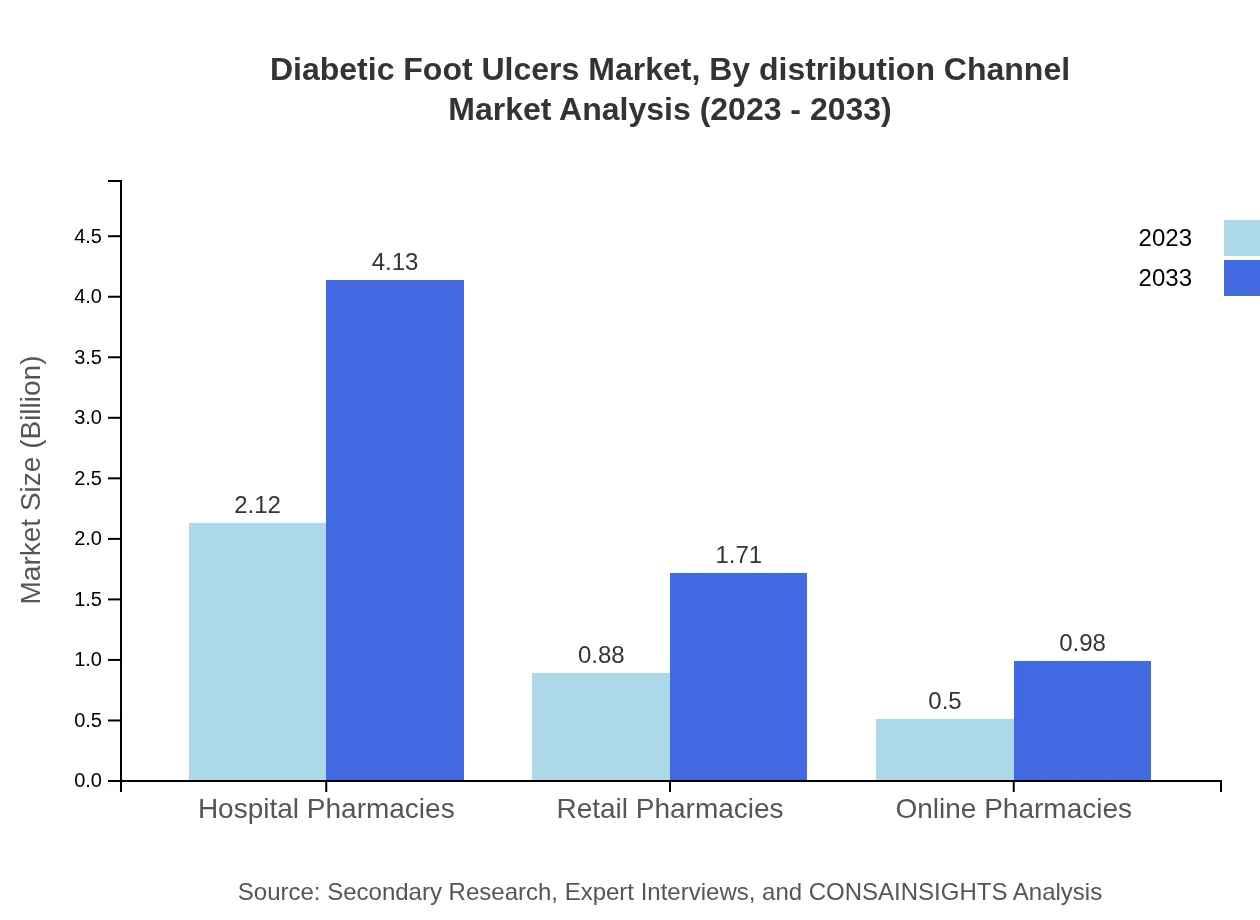
Distribution channels for diabetic foot ulcer products span hospital pharmacies, retail pharmacies, and online platforms. Hospital pharmacies lead the market due to direct access to diabetic patients in clinical settings, followed by retail pharmacies and online pharmacies, which are becoming increasingly popular among consumers for convenience.
Diabetic Foot Ulcers Market Analysis By Region
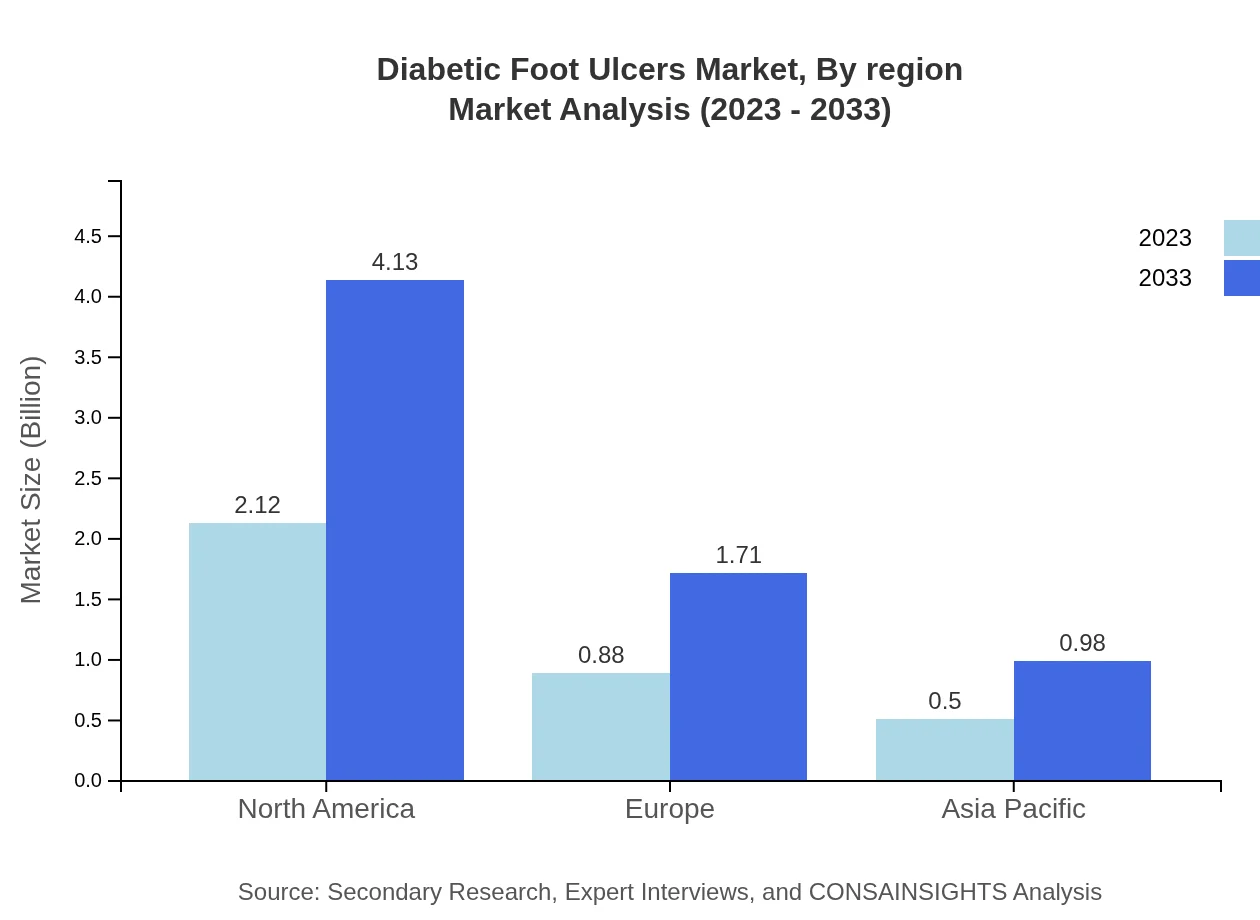
Regional analysis highlights the varying market dynamics across different regions. North America shows the highest potential with growing healthcare expenditure and extensive product offerings. Europe follows closely, benefiting from advanced healthcare systems. The Asia Pacific and LATAM regions are emerging markets, reflecting increasing diabetic incidences and growing awareness of foot care.
Diabetic Foot Ulcers Market Trends and Future Forecast
Tell us your focus area and get a customized research report.
Global Market Leaders and Top Companies in Diabetic Foot Ulcers Industry
Smith & Nephew:
A global leader in advanced wound care products, Smith & Nephew develops innovative solutions to improve outcomes for patients with diabetic foot ulcers.Mölnlycke Health Care:
Specializing in wound care, Mölnlycke Health Care offers groundbreaking products for managing diabetic foot ulcers, focusing on patient comfort and efficacy.3M:
A leader in innovation, 3M manufactures a variety of medical supplies, including advanced dressings that significantly aid in the treatment of diabetic foot ulcers.We're grateful to work with incredible clients.









FAQs
What is the market size of the diabetic foot ulcers market in 2023?
The market size in 2023 is $3.50 Billion as reported for the diabetic foot ulcers sector, reflecting baseline demand for wound care and related therapies.
How big will the market be in 2033?
By 2033 the market is projected to reach $6.81 Billion, reflecting growth driven by treatment advancements and expanding patient populations over the forecast period.
What is CAGR of the market during the forecast period?
The reported compound annual growth rate for the 2023 to 2033 forecast period is 6.7%, indicating steady expansion across product and service segments.
Is there a single fastest Growing region in the Diabetic Foot Ulcers Market Report market?
No single fastest-growing region is stated for the Diabetic Foot Ulcers Market Report market because the top regional implied CAGR values are within 0.15 percentage points of each other, making the ranking too close to call reliably.
Which product categories are covered in segmentation?
Segmentation includes wound dressings, therapeutic devices and biological agents, reflecting the primary product types used to manage diabetic foot ulcers.
Who are the leading companies in this market?
Top companies identified include Smith & Nephew, Mölnlycke Health Care and 3M, which are active in product development and market supply.
What end Users are included in the market analysis?
Primary end-users covered are hospitals, home care settings and long-term care facilities, which account for clinical and outpatient care demand.
How is distribution structured in the market?
Distribution channels include hospital pharmacies, retail pharmacies and online pharmacies, enabling product availability across clinical and consumer settings.
What drives long Term market growth?
Long-term expansion is driven by increasing diabetes prevalence, technological innovation in therapies and broader access through diverse distribution channels.
What treatment approaches are analyzed?
The report analyzes surgical and non-surgical treatment approaches, covering the spectrum of clinical interventions used for diabetic foot ulcer management.