

Diphenhydramine Market Report
First published: 08 October 2024 | Last updated: 25 May 2026 | Report Code: diphenhydramine
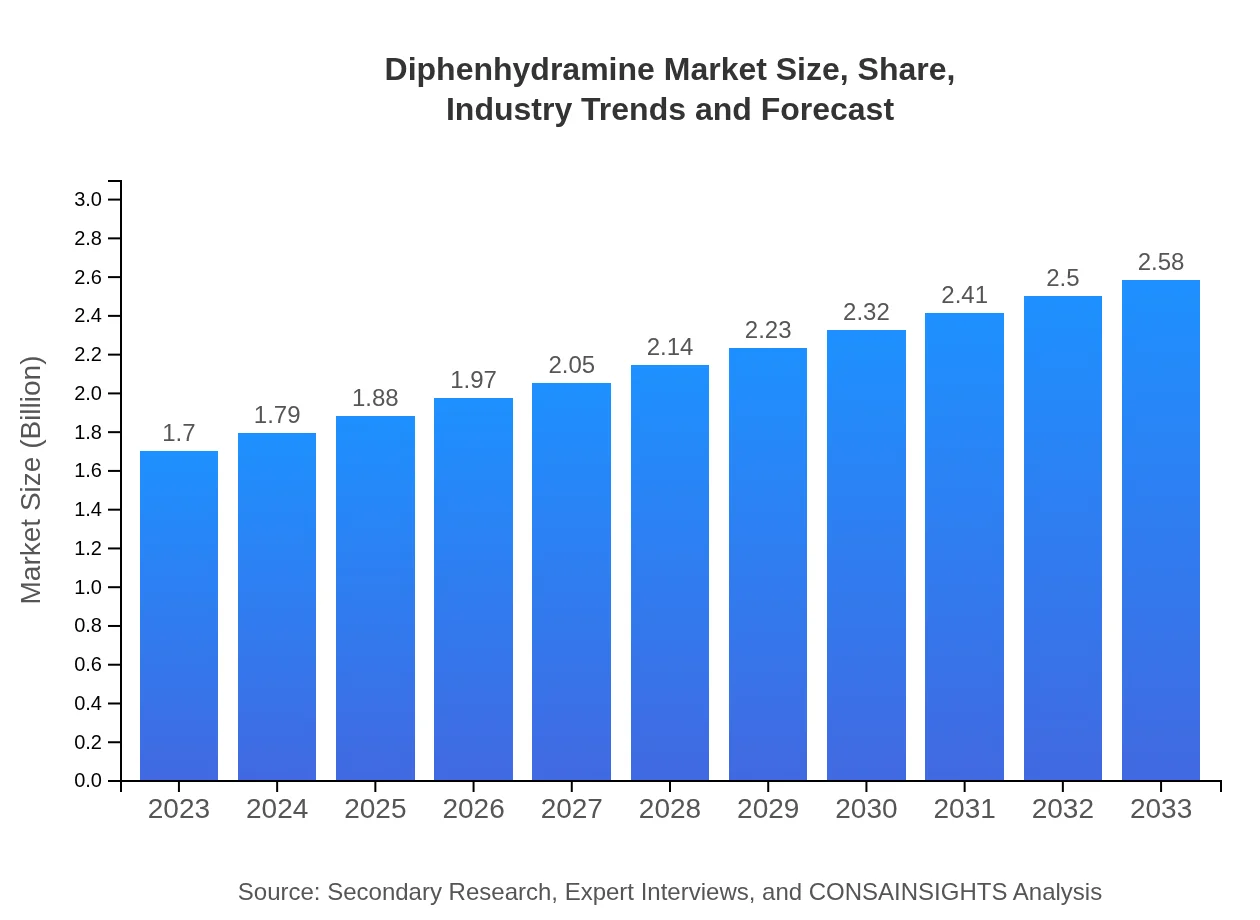
Diphenhydramine Market — USD $1.7 Billion in 2023, Growing to USD 2.58null by 2033 at 4.2% CAGR
This report offers a comprehensive analysis of the Diphenhydramine market, covering insights into market size, growth trends, and segmentation from 2023 to 2033, including detailed regional breakdowns and technological advancements impacting the industry.
Key Takeaways
- Global market expands from $1.70 Billion (2023) to $2.58 Billion (2033) at a 4.2% CAGR over 2023 to 2033.
- North America is largest regional market, while no single fastest-growing region is stated because regional CAGR differences remain within 0.15 percentage points.
- North America is the largest region, increasing from $0.57 Billion in 2023 to $0.87 Billion in 2033.
- Europe grows from $0.44 Billion to $0.67 Billion between 2023 and 2033, reflecting steady demand in established markets.
- Asia Pacific rises from $0.35 Billion in 2023 to $0.53 Billion in 2033, driven by broader access and increased awareness.
- Top firms include Bristol-Myers Squibb, Pfizer, Sanofi, GlaxoSmithKline, and Johnson & Johnson, indicating a competitive pharmaceutical landscape.
Diphenhydramine Market Report — Executive Summary
North America remains largest market by forecast-period value, while no single fastest-growing region is stated because top regional growth rates are separated by less than 0.15 percentage points. The report examines demand drivers, market structure, and regional dynamics for diphenhydramine across therapeutic and distribution segments. Market value reaches $1.70 Billion in 2023 and is projected to attain $2.58 Billion by 2033 at a 4.2% CAGR for 2023 to 2033. Growth is supported by rising healthcare spending, growing awareness of allergy and insomnia treatments, and wider availability through online and offline channels. Product innovation in formulations and strategic moves by established pharmaceutical players shape competitive positioning. Regional breakdowns highlight North America as the largest market. The analysis covers segmentation by therapy, formulation, end user, and distribution, and includes company-level activity and market trends to help stakeholders refine strategies.
Key Growth Drivers
- Increasing healthcare expenditures and greater consumer access to OTC antihistamines support market expansion.
- Rising awareness of allergy, insomnia, and motion sickness treatments fuels demand across multiple end-use segments.
- Expansion of e-commerce and digital pharmacies enhances distribution reach and consumer convenience.
- Ongoing formulation innovation and R&D efforts by established pharmaceutical firms improve product differentiation and adoption.
| Metric | Value |
|---|---|
| Study Period | 2023 - 2033 |
| 2023 Market Size | $1.70 Billion |
| CAGR (2023-2033) | 4.2% |
| 2033 Market Size | $2.58 Billion |
| Top Companies | Bristol-Myers Squibb, Pfizer , Sanofi, GlaxoSmithKline, Johnson & Johnson |
| Published Date | 08 October 2024 |
| Last Modified Date | 25 May 2026 |
Diphenhydramine Market Overview
Customize Diphenhydramine Market Report market research report
- ✔ Get in-depth analysis of Diphenhydramine market size, growth, and forecasts.
- ✔ Understand Diphenhydramine's regional dynamics and industry-specific trends.
- ✔ Identify potential applications, end-user demand, and growth segments in Diphenhydramine
What is the Market Size & CAGR of Diphenhydramine Market Report market in 2023?
Diphenhydramine Industry Analysis
Diphenhydramine Market Segmentation and Scope
Tell us your focus area and get a customized research report.
Diphenhydramine Market Report Market Analysis Report by Region
Europe Diphenhydramine Market Report:
Europe grows from $0.44 Billion in 2023 to $0.67 Billion in 2033. 44 Billion in 2023 to $0.67 Billion by 2033. Demand is driven by healthcare spending, regulatory frameworks that influence product availability, and well-developed retail and hospital channels.Asia Pacific Diphenhydramine Market Report:
Asia Pacific grows from $0.35 Billion in 2023 to $0.53 Billion in 2033. Growth reflects improving access to medications, rising health awareness, and increasing distribution through pharmacies and online platforms.North America Diphenhydramine Market Report:
North America is largest regional market, rising from $0.57 Billion in 2023 to $0.87 Billion in 2033. Regional expansion is supported by established healthcare infrastructure, significant OTC availability, and strong presence of major pharmaceutical companies.South America Diphenhydramine Market Report:
Latin America grows from $0.17 Billion in 2023 to $0.26 Billion in 2033. Market gains are linked to broader market access, evolving retail channels, and rising consumer recognition of antihistamine therapies.Middle East & Africa Diphenhydramine Market Report:
Middle East and Africa grows from $0.17 Billion in 2023 to $0.26 Billion in 2033. Regional increases stem from expanding healthcare access, growth in retail pharmacy networks, and heightened awareness of allergy and related treatments.Tell us your focus area and get a customized research report.
Research Methodology
Diphenhydramine Market Analysis By Formulation
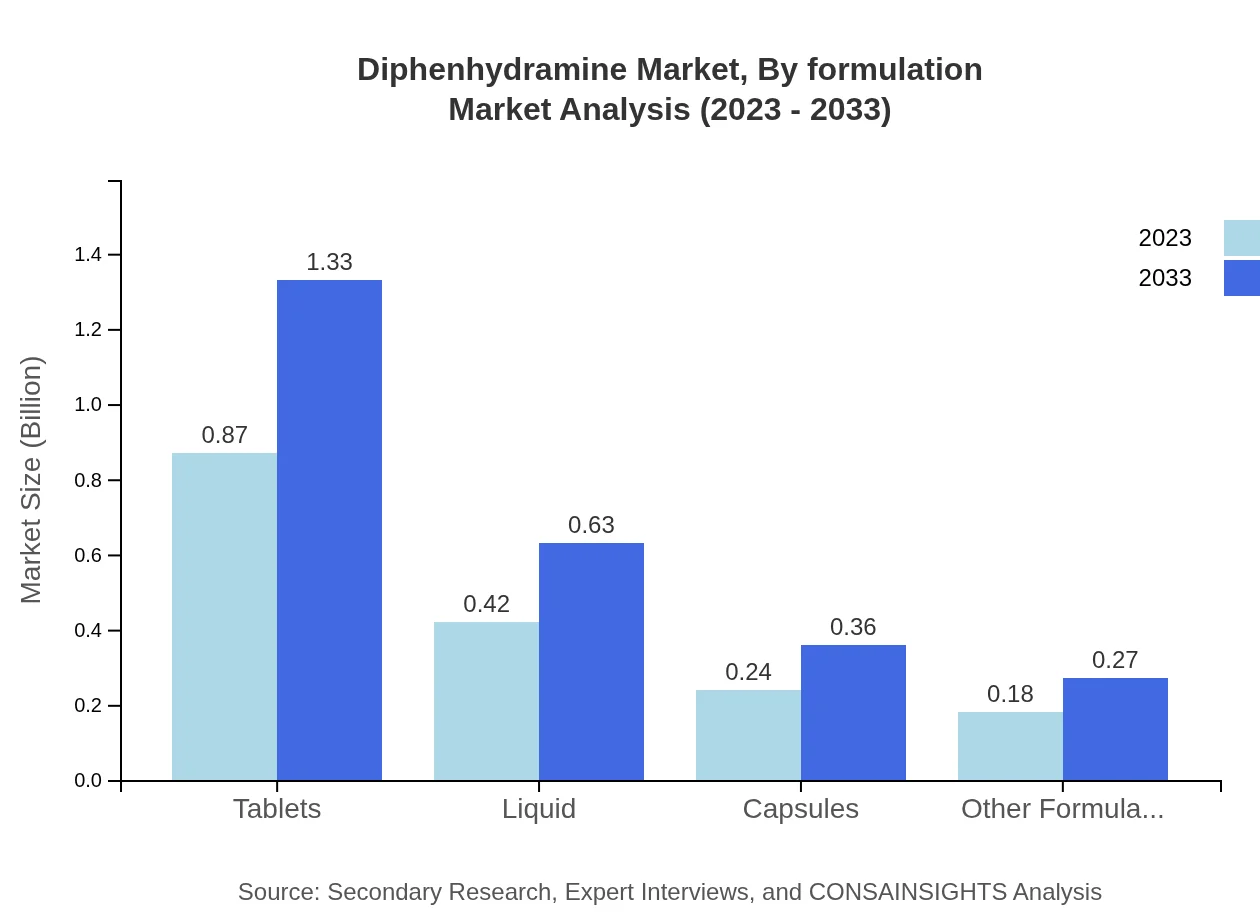
Formulation segments include tablets, liquids, capsules, and others. Tablets hold a significant market share of approximately 51.29% in 2023, valued at USD 0.87 billion, with growth projections to USD 1.33 billion by 2033. Liquid formulations, accounting for 24.45% of the market, are also anticipated to rise from USD 0.42 billion to USD 0.63 billion during the same period.
Diphenhydramine Market Analysis By End User
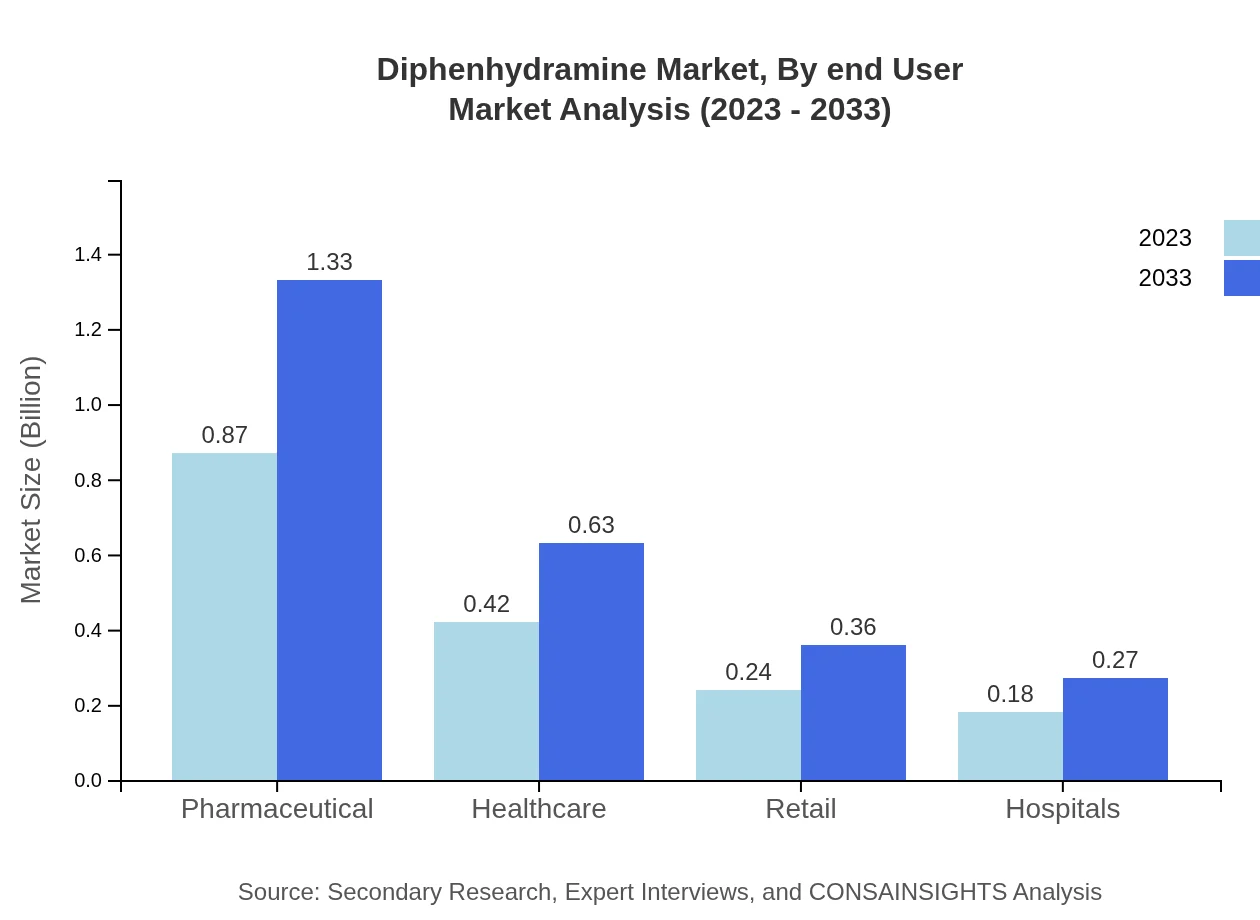
Key end-users of Diphenhydramine include retail, healthcare, hospitals, and online platforms. The retail segment is anticipated to account for 13.96% of the market and grow in size from USD 0.24 billion to USD 0.36 billion from 2023 to 2033, reflecting the increasing consumer inclination towards over-the-counter medications.
Diphenhydramine Market Analysis By Distribution Channel
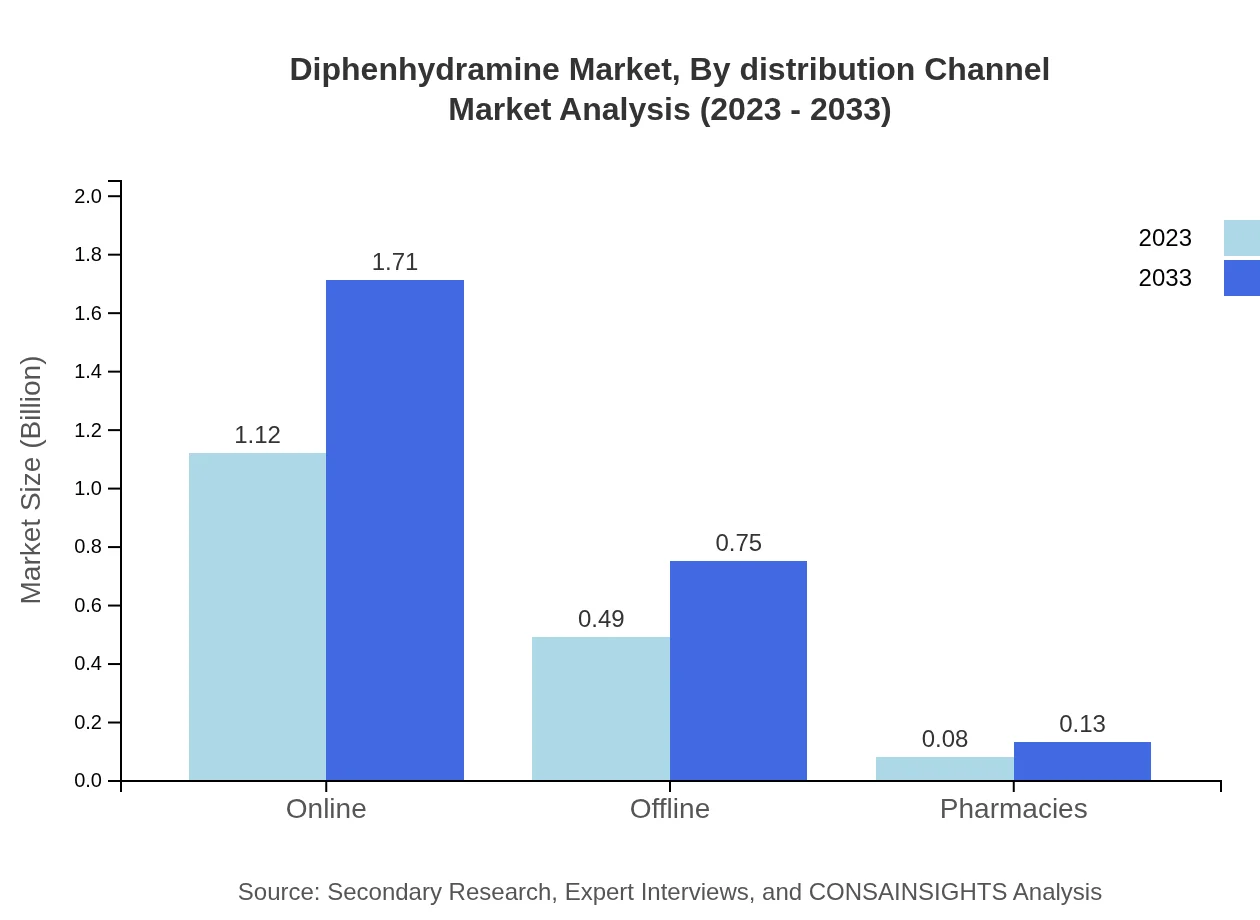
Distribution channel segments are categorized into online and offline sales. The online channel dominates with an impressive market share of 66.04%, estimated at USD 1.12 billion in 2023, and projected to increase to USD 1.71 billion by 2033, driven by the convenience of e-commerce.
Diphenhydramine Market Analysis By Therapy
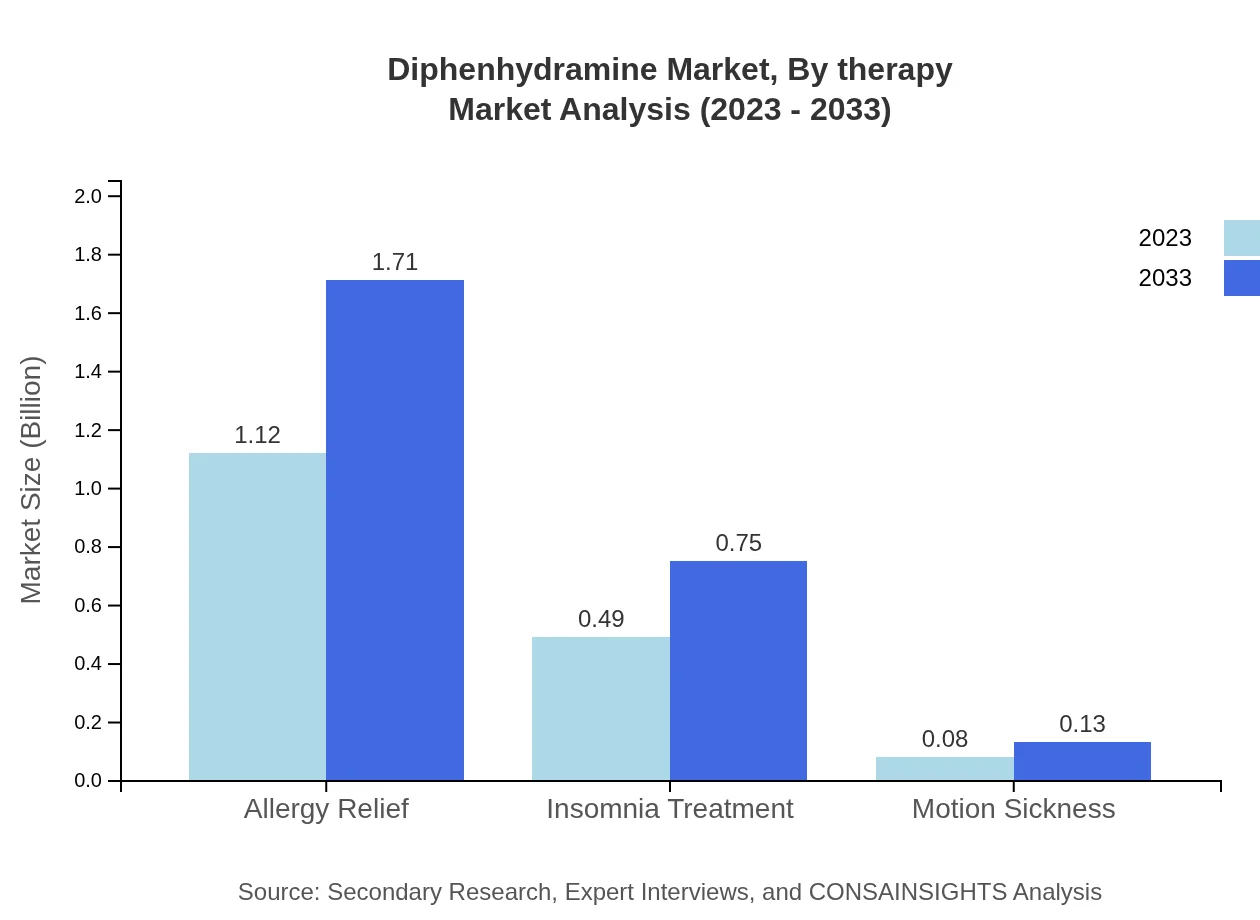
In terms of therapy types, allergy relief products account for 66.04% of the market share, indicating a strong consumer base focused on allergy management. Other therapies like insomnia treatment and motion sickness also exhibit significant market presence, with respective shares of 29% and 4.96%.
Diphenhydramine Market Analysis By Region
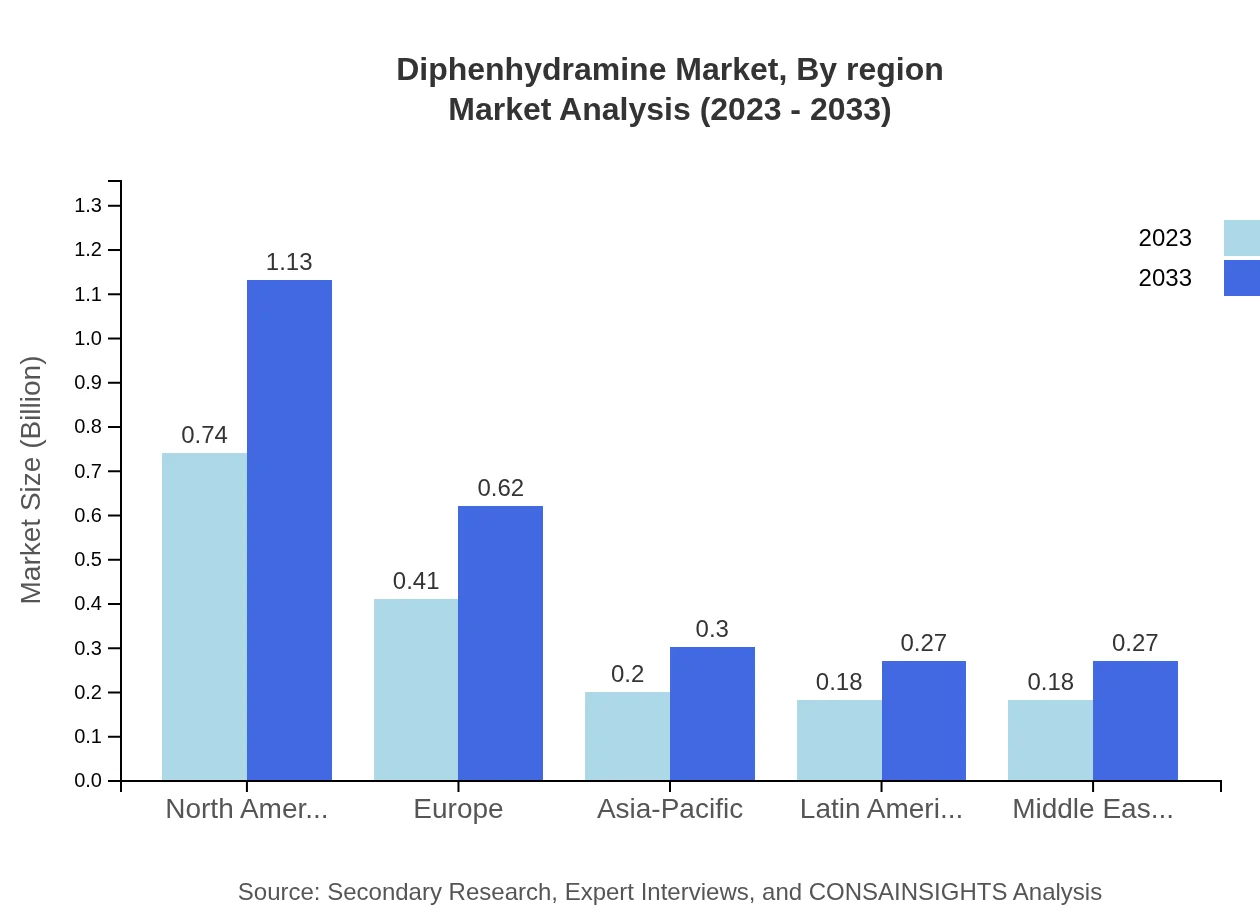
Overall regional market analysis reveals distinct growth trajectories, with North America leading in terms of market value and share, while emerging markets in Asia-Pacific and Latin America showcase rapid growth potential. Key regional strategies will be crucial for players aiming to maximize their reach and profitability.
Diphenhydramine Market Trends and Future Forecast
Tell us your focus area and get a customized research report.
Global Market Leaders and Top Companies in Diphenhydramine Industry
Bristol-Myers Squibb:
A global pharmaceutical company known for its innovative treatments and leading position in the development and production of Diphenhydramine.Pfizer :
One of the world’s largest pharmaceutical companies, focused on discovery and manufacturing of numerous therapeutic agents, including Diphenhydramine-based products.Sanofi:
A multinational healthcare company that manufactures various consumer health products, including a range of antihistamines and allergy medications.GlaxoSmithKline:
A global leader in pharmaceuticals and consumer healthcare, known for developing effective allergy treatments and maintaining a strong market presence.Johnson & Johnson:
An American multinational corporation involved in the production of pharmaceutical products, medical devices, and consumer health items, including Antihistamine formulations.We're grateful to work with incredible clients.









FAQs
What is the market size of diphenhydramine in 2023?
The market size in 2023 is $1.70 Billion as stated in the report's base-year valuation.
How big will the market be in 2033?
By 2033 the market is projected to reach $2.58 Billion according to the report's forecast figures.
What is CAGR for the forecast period?
The reported compound annual growth rate for the 2023 to 2033 forecast period is 4.2%.
Is there a single fastest Growing region in the Diphenhydramine Market Report market?
No single fastest-growing region is stated for the Diphenhydramine Market Report market because the top regional implied CAGR values are within 0.15 percentage points of each other, making the ranking too close to call reliably.
Which companies are highlighted in the competitive landscape?
Top companies listed include Bristol-Myers Squibb, Pfizer, Sanofi, GlaxoSmithKline, and Johnson & Johnson.
What are common end users for diphenhydramine products?
Key end users include pharmaceutical manufacturers, healthcare providers, retail outlets, and hospitals as primary channels for distribution and utilization.
How does distribution influence market growth?
Both online and offline distribution channels, including pharmacies, increase product accessibility and support revenue growth across regions.
What drives product innovation in this market?
Research and development by major pharmaceutical firms, aiming to improve efficacy and safety, is a primary driver of formulation and product innovations.