

Disabled Elderly Assistive Technologies Market Report
First published: 20 October 2024 | Last updated: 25 May 2026 | Report Code: disabled-elderly-assistive-technologies
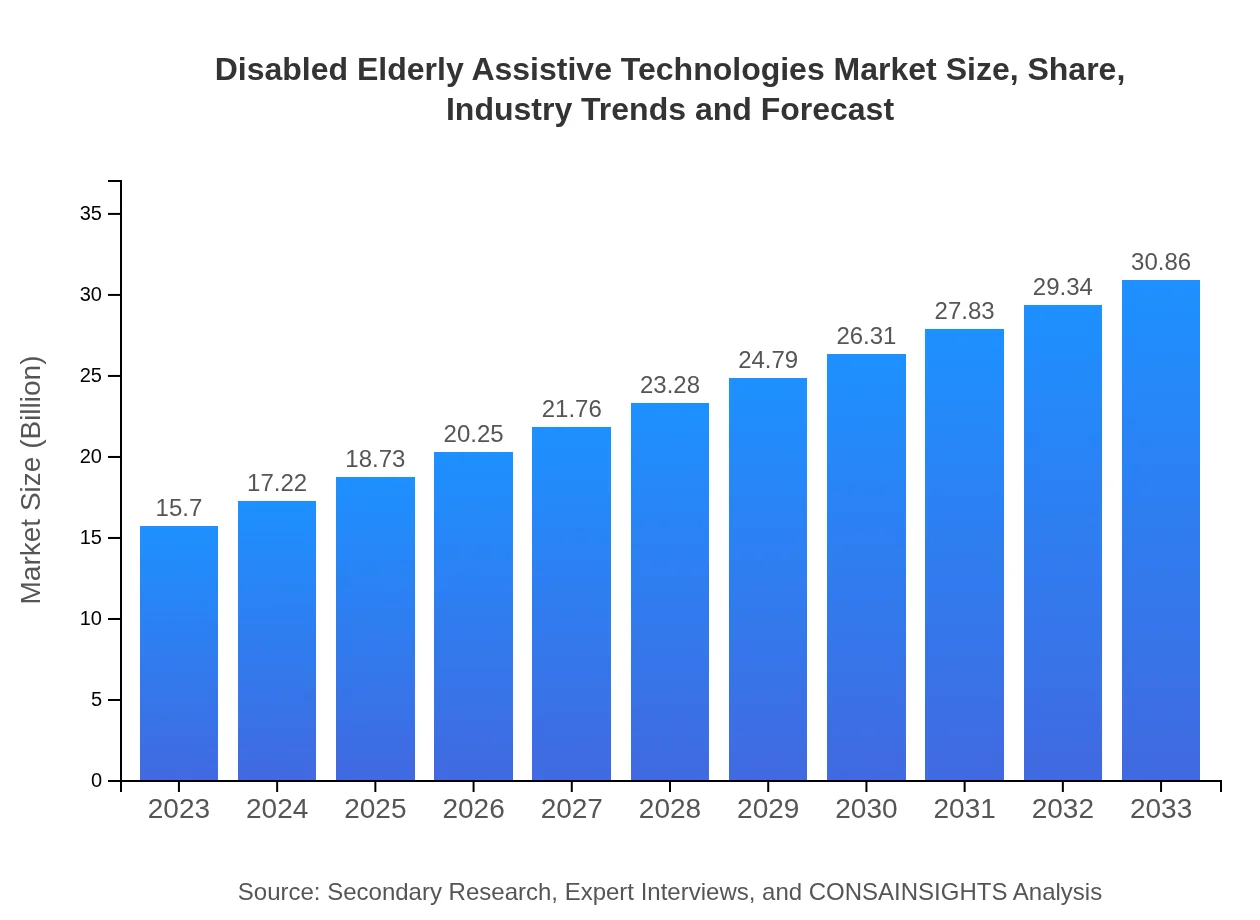
Disabled Elderly Assistive Technologies Market — USD 15.7 billion in 2023, Growing to USD 30.86B by 2033 at 6.8% CAGR
This report explores the Disabled Elderly Assistive Technologies market with a comprehensive analysis of market trends, segmentation, regional insights, and forecasts from 2023 to 2033, aimed at stakeholders in the industry.
Key Takeaways
- Global market expands from $15.70 Billion in 2023 to $30.86 Billion in 2033 at a 6.8% CAGR.
- North America is largest regional market, while no single fastest-growing region is stated because regional CAGR differences remain within 0.15 percentage points.
- Europe and Asia Pacific show notable growth: Europe from $4.19 Billion to $8.24 Billion; Asia Pacific from $3.4 Billion to $6.69 Billion.
- Product and technology innovation, including robotics and assistive software, and wider distribution channels are shaping adoption.
- Top organizations active in the space include IBM, Philips, Medtronic, Omron, and Alzheimer’s Association.
Disabled Elderly Assistive Technologies Market Report — Executive Summary
North America remains largest market by forecast-period value, while no single fastest-growing region is stated because top regional growth rates are separated by less than 0.15 percentage points. The Disabled Elderly Assistive Technologies market is undergoing sustained expansion between 2023 and 2033, supported by demographic shifts, increasing disability prevalence among older adults, and continuous technological advances. The market value moves from $15.70 Billion in 2023 to $30.86 Billion in 2033 with a 6.8% CAGR. Demand is propelled by mobility aids, communication devices, home adaptations, robotics, and assistive software, alongside growing interest from caregivers, healthcare providers, and individuals. Regional performance varies; North America is the largest market. Key trends include personalization, digital integration, and enhanced telehealth linkages, while affordability and training remain implementation challenges. Major players such as IBM, Philips, Medtronic, Omron, and Alzheimer’s Association are investing in R&D and partnerships. The report organizes analysis across product types, technologies, end users, functional areas, and distribution channels to support stakeholders in strategy and investment decisions.
Key Growth Drivers
- Rising elderly population and higher disability prevalence increasing long-term demand for assistive solutions.
- Advances in robotics and assistive software improving functionality and user acceptance of mobility and communication devices.
- Integration with digital health and telehealth services expanding monitoring and remote support capabilities.
- Wider availability through online and offline retail channels enhancing access for individuals and caregivers.
- Ongoing investment from leading organizations and increased R&D to improve usability and personalization.
| Metric | Value |
|---|---|
| Study Period | 2023 - 2033 |
| 2023 Market Size | $15.70 Billion |
| CAGR (2023-2033) | 6.8% |
| 2033 Market Size | $30.86 Billion |
| Top Companies | IBM, Philips, Medtronic , Omron, Alzheimer’s Association |
| Published Date | 20 October 2024 |
| Last Modified Date | 25 May 2026 |
Disabled Elderly Assistive Technologies Market Overview
Customize Disabled Elderly Assistive Technologies Market Report market research report
- ✔ Get in-depth analysis of Disabled Elderly Assistive Technologies market size, growth, and forecasts.
- ✔ Understand Disabled Elderly Assistive Technologies's regional dynamics and industry-specific trends.
- ✔ Identify potential applications, end-user demand, and growth segments in Disabled Elderly Assistive Technologies
What is the Market Size & CAGR of Disabled Elderly Assistive Technologies Market Report market in 2023?
Disabled Elderly Assistive Technologies Industry Analysis
Disabled Elderly Assistive Technologies Market Segmentation and Scope
Tell us your focus area and get a customized research report.
Disabled Elderly Assistive Technologies Market Report Market Analysis Report by Region
Europe Disabled Elderly Assistive Technologies Market Report:
Europe grows from $4.19 Billion in 2023 to $8.24 Billion in 2033. Growth is supported by aging demographics, regulatory support for accessibility, and increasing deployment of assistive technologies in both clinical and home-care settings.Asia Pacific Disabled Elderly Assistive Technologies Market Report:
Asia Pacific grows from $3.4 Billion in 2023 to $6.69 Billion in 2033. Expansion is aided by rising elderly populations, improving healthcare infrastructure, and growing interest in cost-effective mobility and communication solutions.North America Disabled Elderly Assistive Technologies Market Report:
North America is largest regional market, rising from $5.22 Billion in 2023 to $10.26 Billion in 2033. Local drivers include established healthcare systems, high technology adoption, strong R&D investment, and widespread availability through diverse retail channels.South America Disabled Elderly Assistive Technologies Market Report:
Latin America grows from $1.37 Billion in 2023 to $2.68 Billion in 2033. Regional uptake is influenced by improving access to healthcare services, increased awareness among caregivers, and gradual adoption of assistive devices.Middle East & Africa Disabled Elderly Assistive Technologies Market Report:
Middle East and Africa grows from $1.52 Billion in 2023 to $2.99 Billion in 2033. Drivers include expanding healthcare provision, targeted policy support, and growing investments in assistive technologies to improve elderly care access.Tell us your focus area and get a customized research report.
Research Methodology
Disabled Elderly Assistive Technologies Market Analysis By Product Type
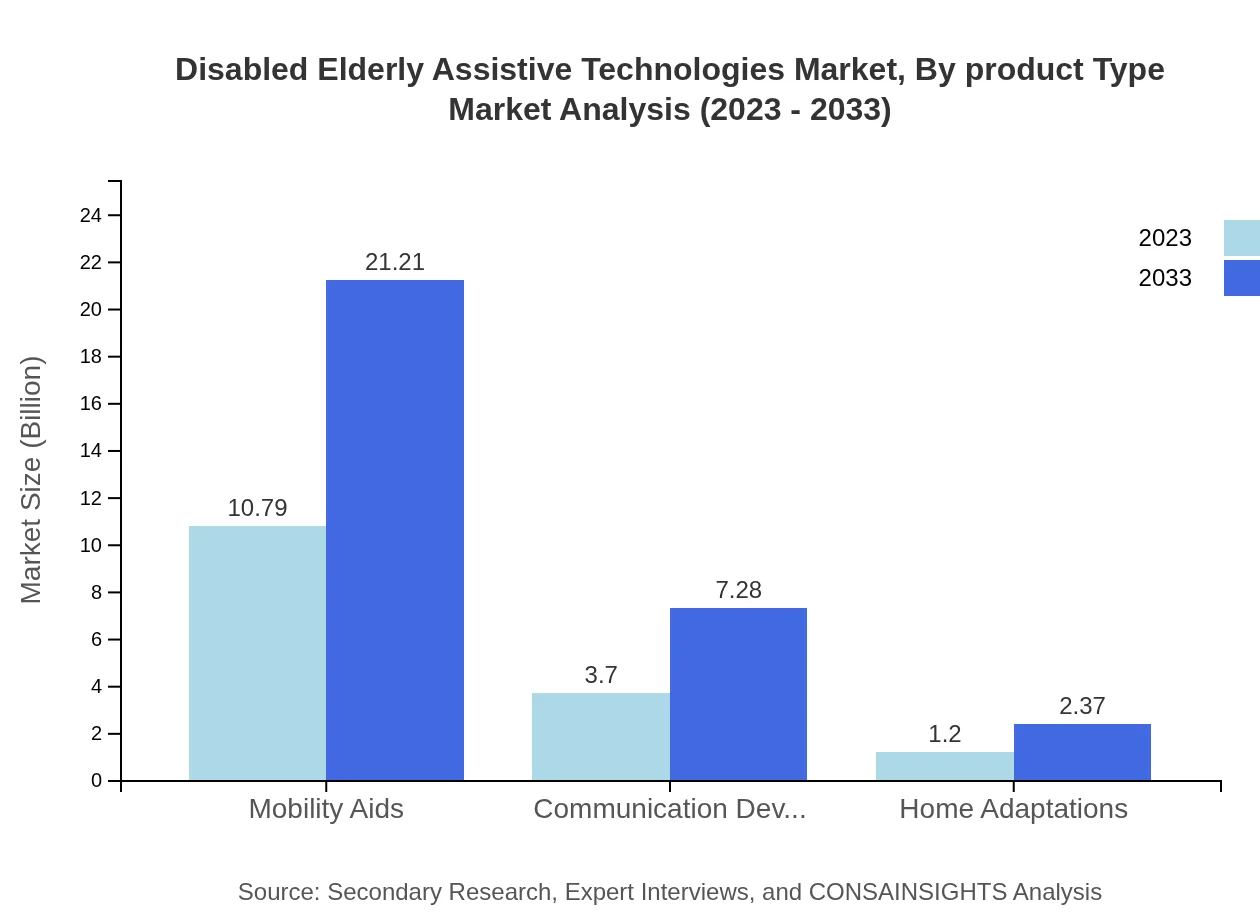
The market by product types covers various devices aimed at enhancing the quality of life for elderly individuals. Mobility aids have a significant share in the overall market, valued at $10.79 billion in 2023, projected to double to $21.21 billion by 2033. Assistive technologies for daily living also show strong growth, reflecting the increasing demand for solutions that support independence in activities such as bathing, cooking, and cleaning. Communication devices account for $3.70 billion in 2023, expected to grow correspondingly as technology facilitates more effective communication for the disabled elderly.
Disabled Elderly Assistive Technologies Market Analysis By Technology
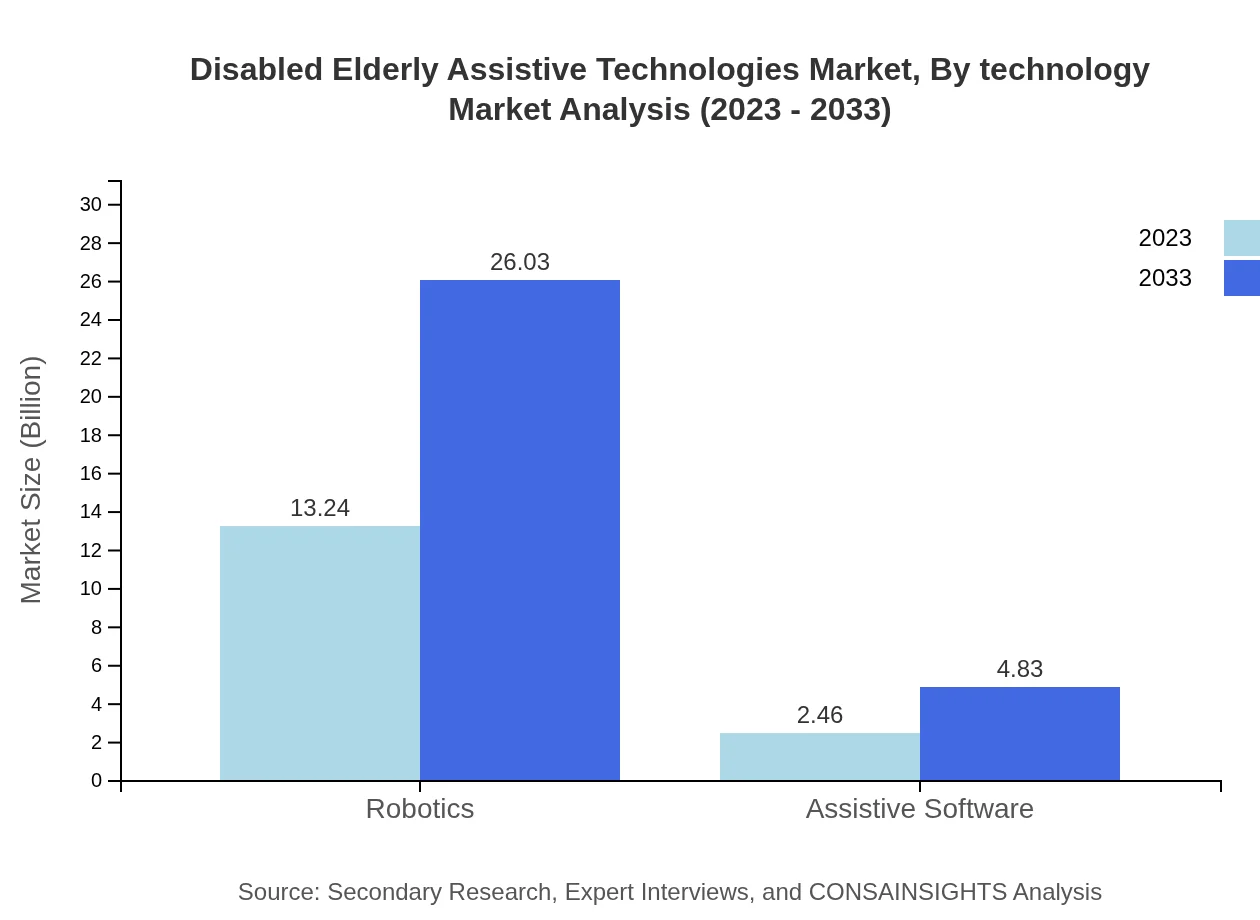
This segment focuses on robotics and assistive software as leading technological advancements in assistive technologies. Robotics hold a significant market share, accounting for $13.24 billion in 2023 and projected to reach $26.03 billion by 2033. Assistive software and smart applications are also critical for enhancing user interaction with assistive devices, valued at $2.46 billion in 2023, growing to $4.83 billion by 2033.
Disabled Elderly Assistive Technologies Market Analysis By End User
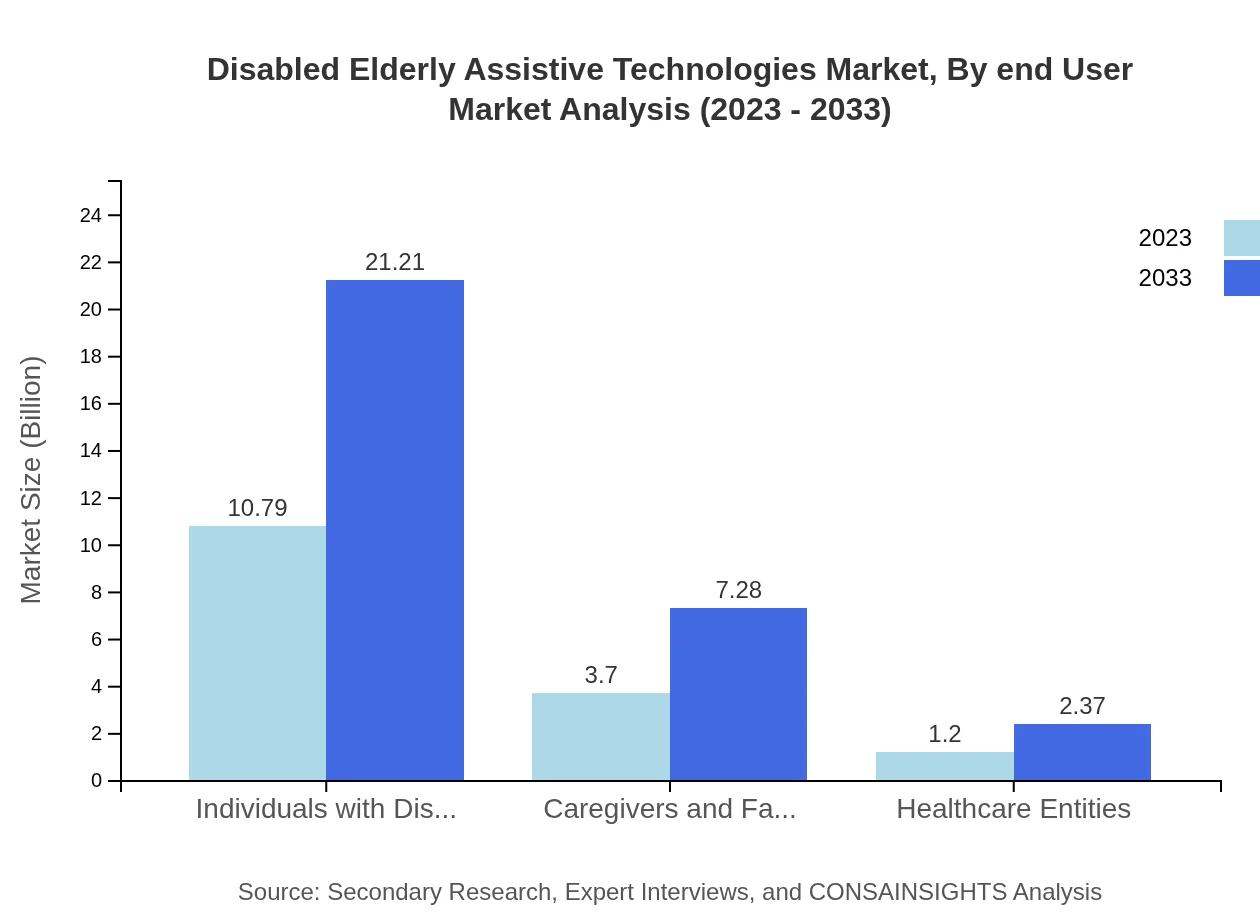
The major end-user segments include individuals with disabilities, caregivers and family members, and healthcare entities. The segment concerning individuals with disabilities dominates the market, valued at $10.79 billion in 2023, and will rise to $21.21 billion by 2033. Caregivers and family members, crucial for support systems, capture $3.70 billion in the same year, with expectations of $7.28 billion by 2033, reflecting the increasing purchasing role of caregivers.
Disabled Elderly Assistive Technologies Market Analysis By Functional Area
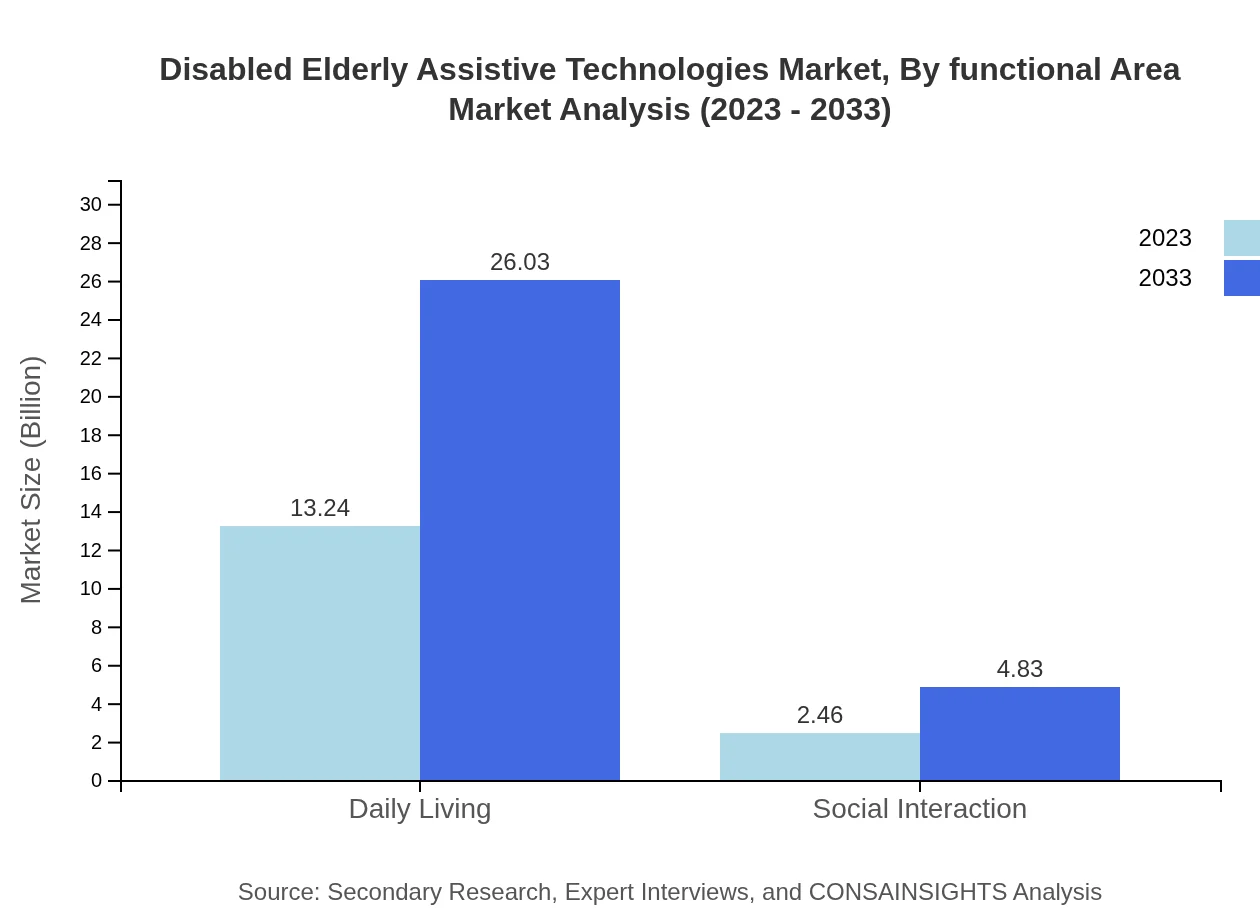
Functional areas address daily living, social interaction, and home adaptations. Daily living technologies, facilitating everyday activities for the elderly, will potentially grow from $13.24 billion in 2023 to $26.03 billion by 2033. The need for social interaction solutions is also paramount, with a market value of $2.46 billion in 2023 forecasted to reach $4.83 billion, supporting the mental health of elderly users.
Disabled Elderly Assistive Technologies Market Analysis By Distribution Channel
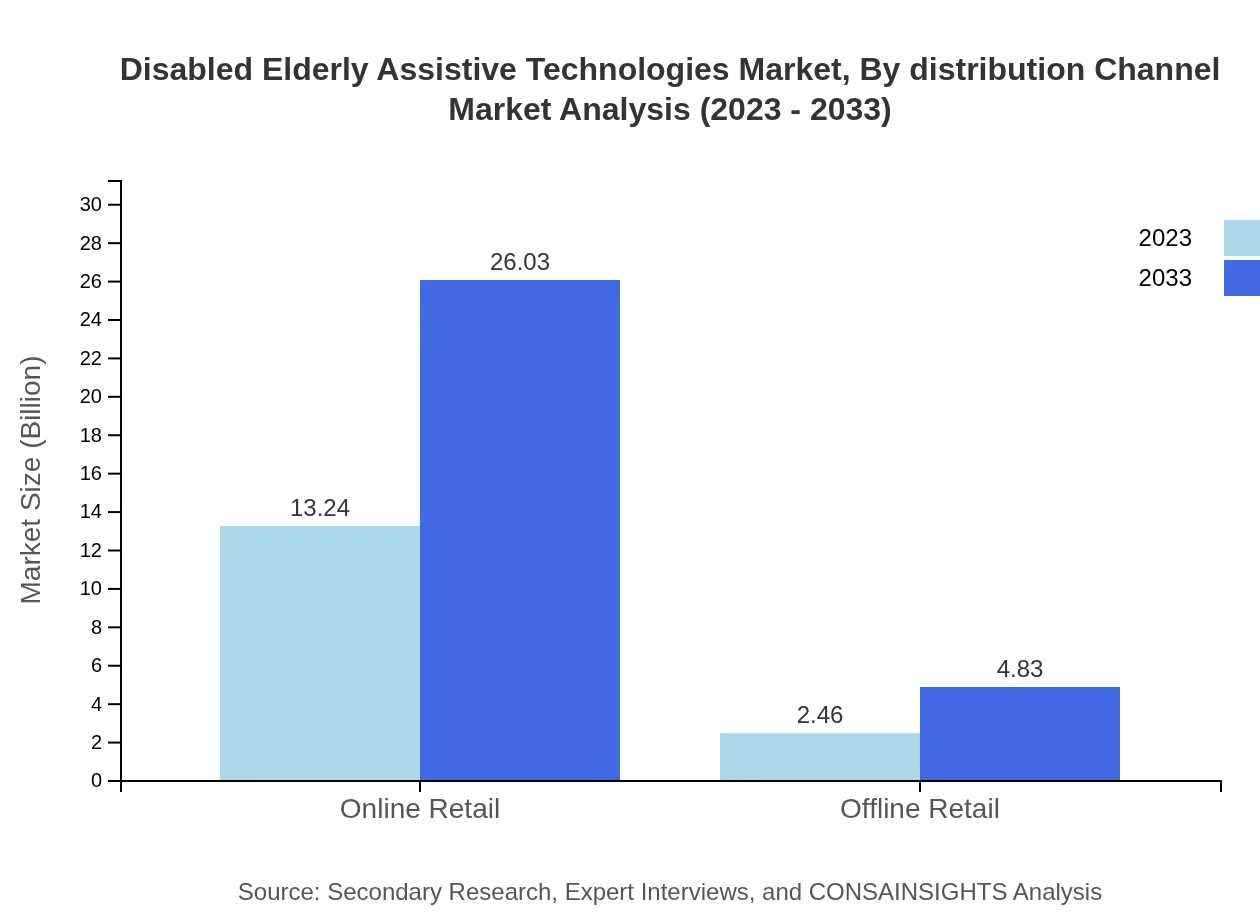
The distribution channels include online and offline retail. Online retail is projected to experience substantial growth, from $13.24 billion in 2023 to $26.03 billion by 2033, as elderly users increasingly prefer online shopping for convenience. Offline retail, while growing at a slower pace, will see an increase from $2.46 billion to $4.83 billion, retaining a critical role in community settings.
Disabled Elderly Assistive Technologies Market Trends and Future Forecast
Tell us your focus area and get a customized research report.
Global Market Leaders and Top Companies in Disabled Elderly Assistive Technologies Industry
IBM:
IBM has been at the forefront of developing AI-driven assistive technologies, enhancing accessibility options for elderly individuals.Philips:
Philips focuses on healthcare solutions, contributing significantly with advanced medical devices targeted at the elderly.Medtronic :
A leader in medical technology, Medtronic offers various assistive technologies aimed at improving the lives of elderly patients.Omron:
Specializing in advanced robotics and automation, Omron provides innovative assistive devices for mobility and health monitoring.Alzheimer’s Association:
This organization advocates for dementia care and invests in technological solutions that help improve the quality of life for affected individuals.We're grateful to work with incredible clients.









FAQs
What is the market size of the Disabled Elderly Assistive Technologies Market Report in 2023?
The market size in 2023 is $15.70 Billion, reflecting current demand for mobility, communication, and daily living assistive products for elderly individuals with disabilities.
How big will the market be in 2033?
By 2033 the market is projected to reach $30.86 Billion, driven by demographic shifts, product innovation, and expanded adoption across care settings and distribution channels.
What is CAGR of the market for 2023 to 2033?
The compound annual growth rate for the forecast period 2023 to 2033 is 6.8%, reflecting steady, long-term expansion influenced by technology and aging populations.
Is there a single fastest Growing region in the Disabled Elderly Assistive Technologies Market Report market?
No single fastest-growing region is stated for the Disabled Elderly Assistive Technologies Market Report market because the top regional implied CAGR values are within 0.15 percentage points of each other, making the ranking too close to call reliably.
Which product types are included in the market segmentation?
Product segmentation covers mobility aids, communication devices, and home adaptations, addressing mobility, daily living, and interaction needs of disabled elderly individuals.
Who are the leading companies in this space?
Top companies active in the market include IBM, Philips, Medtronic, Omron, and Alzheimer’s Association, each contributing through technology, devices, or advocacy.
What drives adoption among caregivers and healthcare entities?
Adoption is driven by improved device usability, integration with telehealth, caregiver demand for safer care solutions, and broader product availability through retail channels.
How is technology influencing market development?
Technologies such as robotics and assistive software enhance mobility and communication, while connectivity and monitoring features support personalized care and remote management.
What distribution channels support market reach?
Both online retail and offline retail channels expand product accessibility, enabling direct access for individuals and procurement by healthcare entities and caregivers.
Why is training and affordability mentioned as challenges?
Training and affordability are highlighted because complex devices require user support and cost barriers can limit uptake among some elderly users and caregivers.