

Endoscopic Retrograde Cholangiopancreatography Market Report
First published: 12 October 2024 | Last updated: 28 May 2026 | Report Code: endoscopic-retrograde-cholangiopancreatography
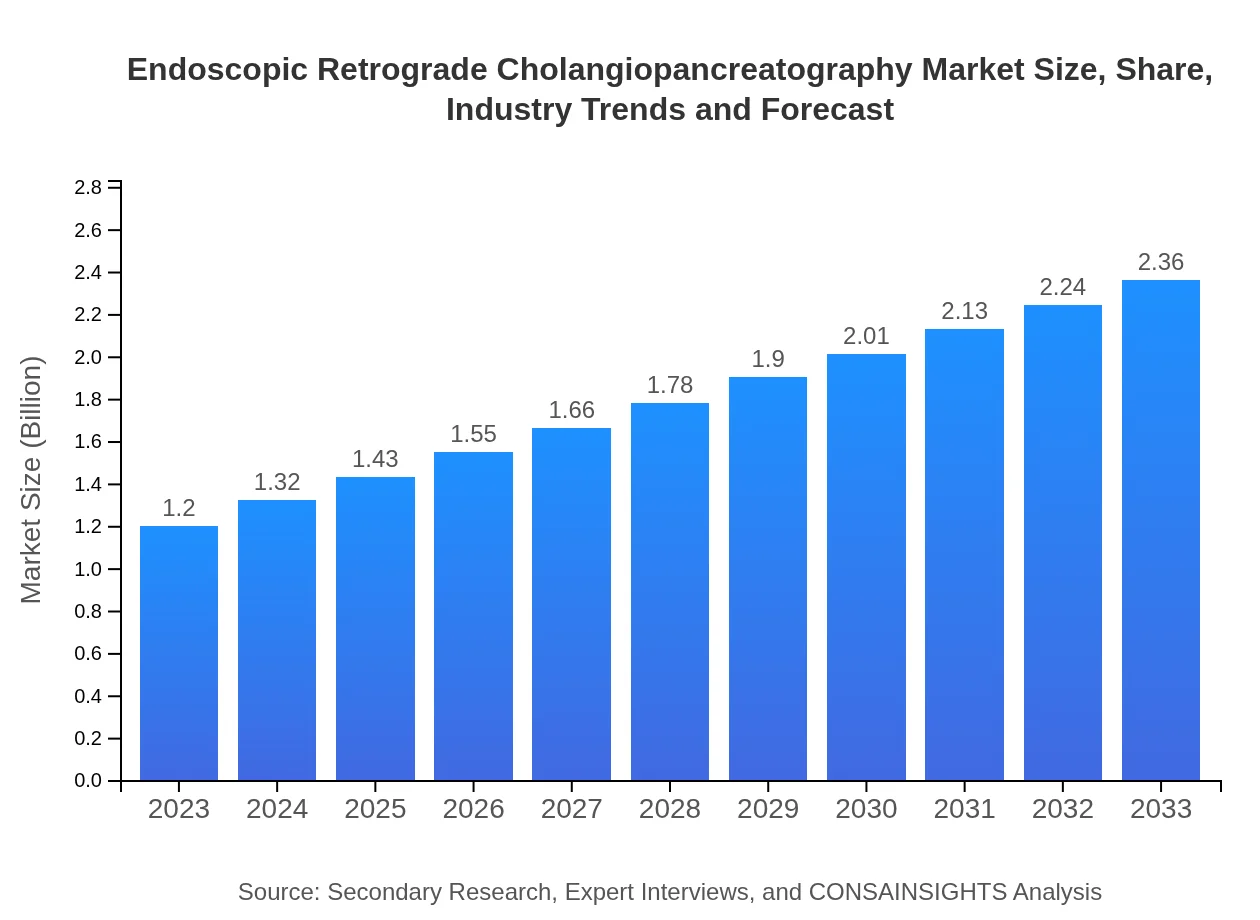
Endoscopic Retrograde Cholangiopancreatography Market — USD 1.2 billion in 2023, Growing to USD 2.36B by 2033 at 6.8% CAGR
This report provides a comprehensive analysis of the Endoscopic Retrograde Cholangiopancreatography (ERCP) market from 2023 to 2033, highlighting insights on market size, growth drivers, regional dynamics, technological advancements, and key players in the industry.
Key Takeaways
- Global market expands from $1.20 Billion in 2023 to $2.36 Billion in 2033 at a 6.8% CAGR.
- North America is largest regional market; Latin America is regional market region based on implied CAGR across 2023 to 2033.
- Latin America is the regional market region with an implied 8.84% CAGR, rising from $0.03 Billion to $0.07 Billion.
- Europe moves from $0.41 Billion to $0.8 Billion from 2023 to 2033, reflecting steady adoption of ERCP procedures.
- Top vendors include Boston Scientific Corporation, Medtronic, Pentax Medical, Fujifilm Holdings Corporation, and Olympus Corporation.
Endoscopic Retrograde Cholangiopancreatography Market Report — Executive Summary
Regional analysis shows North America as largest market and Latin America as fastest-growing region by implied CAGR. The market for Endoscopic Retrograde Cholangiopancreatography is expanding, with a global valuation of $1.20 Billion in 2023 and projected growth to $2.36 Billion by 2033 at a 6.8% CAGR. Growth is supported by increasing prevalence of biliary and pancreatic disorders, demand for minimally invasive procedures, and technological improvements in endoscopes and accessories. Regional dynamics show North America as the largest market and Latin America as the regional market. The market structure encompasses technique, application, end-user and device categories, with hospitals, ambulatory surgical centers and clinics as primary end users. Major companies such as Boston Scientific Corporation, Medtronic, Pentax Medical, Fujifilm Holdings Corporation and Olympus Corporation are active in product innovation and market expansion.
Key Growth Drivers
- Rising incidence of biliary and pancreatic conditions increasing procedural demand.
- Preference for minimally invasive diagnostics and therapeutic approaches over open surgery.
- Advances in endoscopic imaging and accessory devices improving procedural outcomes.
- Expansion of ambulatory surgical centers and specialty clinics offering ERCP services.
- Ongoing product development and competition among leading vendors enhancing device availability.
| Metric | Value |
|---|---|
| Study Period | 2023 - 2033 |
| 2023 Market Size | $1.20 Billion |
| CAGR (2023-2033) | 6.8% |
| 2033 Market Size | $2.36 Billion |
| Top Companies | Boston Scientific Corporation, Medtronic , Pentax Medical, Fujifilm Holdings Corporation, Olympus Corporation |
| Published Date | 12 October 2024 |
| Last Modified Date | 28 May 2026 |
Endoscopic Retrograde Cholangiopancreatography Market Overview
Customize Endoscopic Retrograde Cholangiopancreatography Market Report market research report
- ✔ Get in-depth analysis of Endoscopic Retrograde Cholangiopancreatography market size, growth, and forecasts.
- ✔ Understand Endoscopic Retrograde Cholangiopancreatography's regional dynamics and industry-specific trends.
- ✔ Identify potential applications, end-user demand, and growth segments in Endoscopic Retrograde Cholangiopancreatography
What is the Market Size & CAGR of Endoscopic Retrograde Cholangiopancreatography Market Report market in 2023?
Endoscopic Retrograde Cholangiopancreatography Industry Analysis
Endoscopic Retrograde Cholangiopancreatography Market Segmentation and Scope
Tell us your focus area and get a customized research report.
Endoscopic Retrograde Cholangiopancreatography Market Report Market Analysis Report by Region
Europe Endoscopic Retrograde Cholangiopancreatography Market Report:
Europe grows from $0.41 Billion in 2023 to $0.8 Billion in 2033. 41 Billion in 2023 to $0.8 Billion in 2033, influenced by adoption of improved ERCP devices, rising awareness of non-invasive treatments and investment in specialty care centers.Asia Pacific Endoscopic Retrograde Cholangiopancreatography Market Report:
Asia Pacific grows from $0.23 Billion in 2023 to $0.45 Billion in 2033. 23 Billion in 2023 to $0.45 Billion in 2033, driven by expanding healthcare services, growing number of endoscopy-capable facilities and rising demand for minimally invasive gastrointestinal interventions.North America Endoscopic Retrograde Cholangiopancreatography Market Report:
North America is largest regional market, rising from $0.43 Billion in 2023 to $0.85 Billion in 2033. Growth reflects established healthcare infrastructure, high procedure volumes and access to advanced endoscopic technologies.South America Endoscopic Retrograde Cholangiopancreatography Market Report:
Latin America is fastest-growing region by implied CAGR, increasing from $0.03 Billion in 2023 to $0.07 Billion in 2033. 03 Billion in 2023 to $0.07 Billion in 2033 and is identified as the regional growth market at an implied 8.84% CAGR, supported by improving access to endoscopic equipment and expanding clinical services.Middle East & Africa Endoscopic Retrograde Cholangiopancreatography Market Report:
Middle East and Africa grows from $0.17 Billion in 2023 to $0.33 Billion in 2033. 17 Billion in 2023 to $0.33 Billion in 2033, reflecting gradual enhancement of healthcare infrastructure, increased specialist availability and broader adoption of therapeutic endoscopy.Tell us your focus area and get a customized research report.
Research Methodology
Endoscopic Retrograde Cholangiopancreatography Market Analysis By Technique
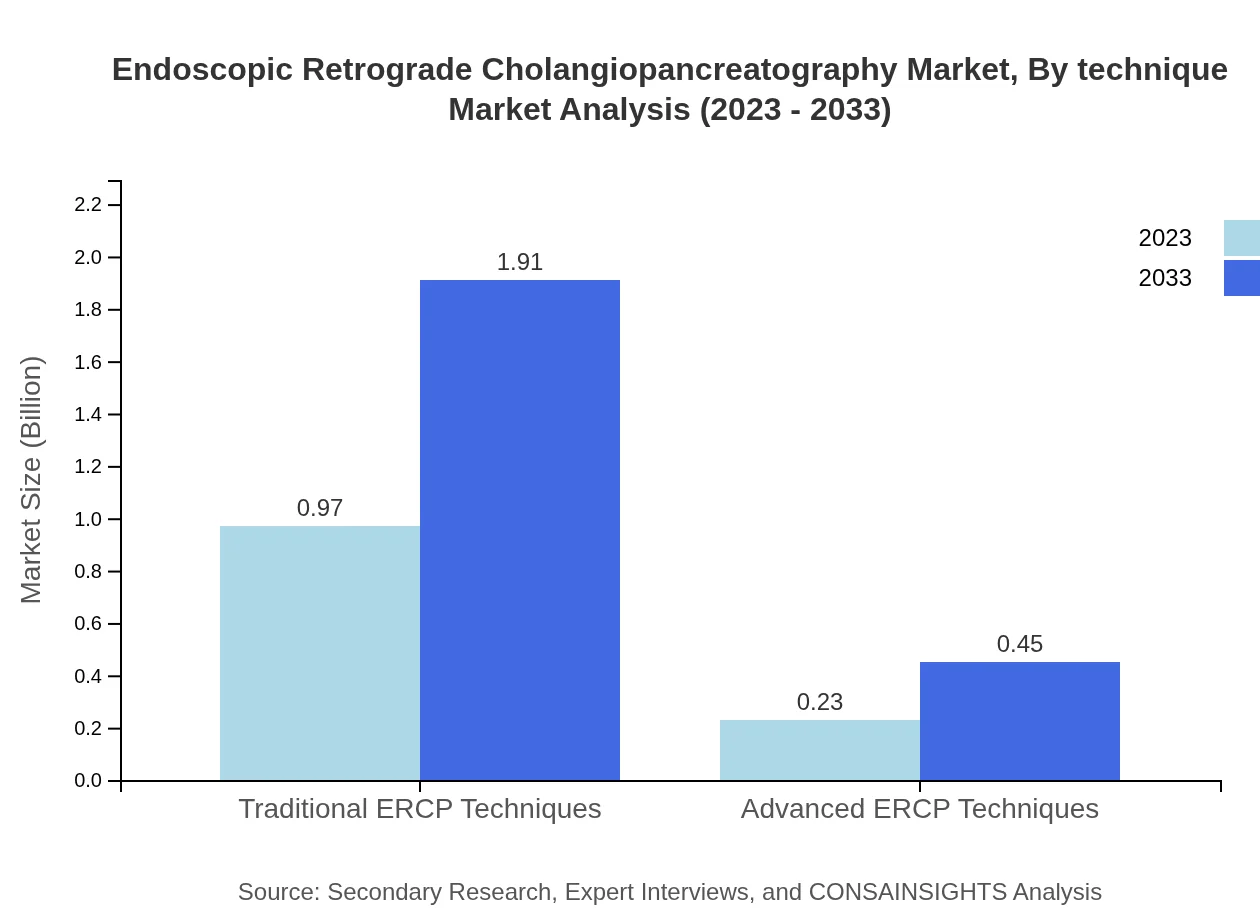
The market is divided into traditional ERCP techniques, accounting for a significant share of 81.07% in 2023, and advanced ERCP techniques, which hold 18.93% share. Projected growth for traditional techniques is from $0.97 billion to $1.91 billion by 2033, while advanced techniques will grow from $0.23 billion to $0.45 billion.
Endoscopic Retrograde Cholangiopancreatography Market Analysis By Application
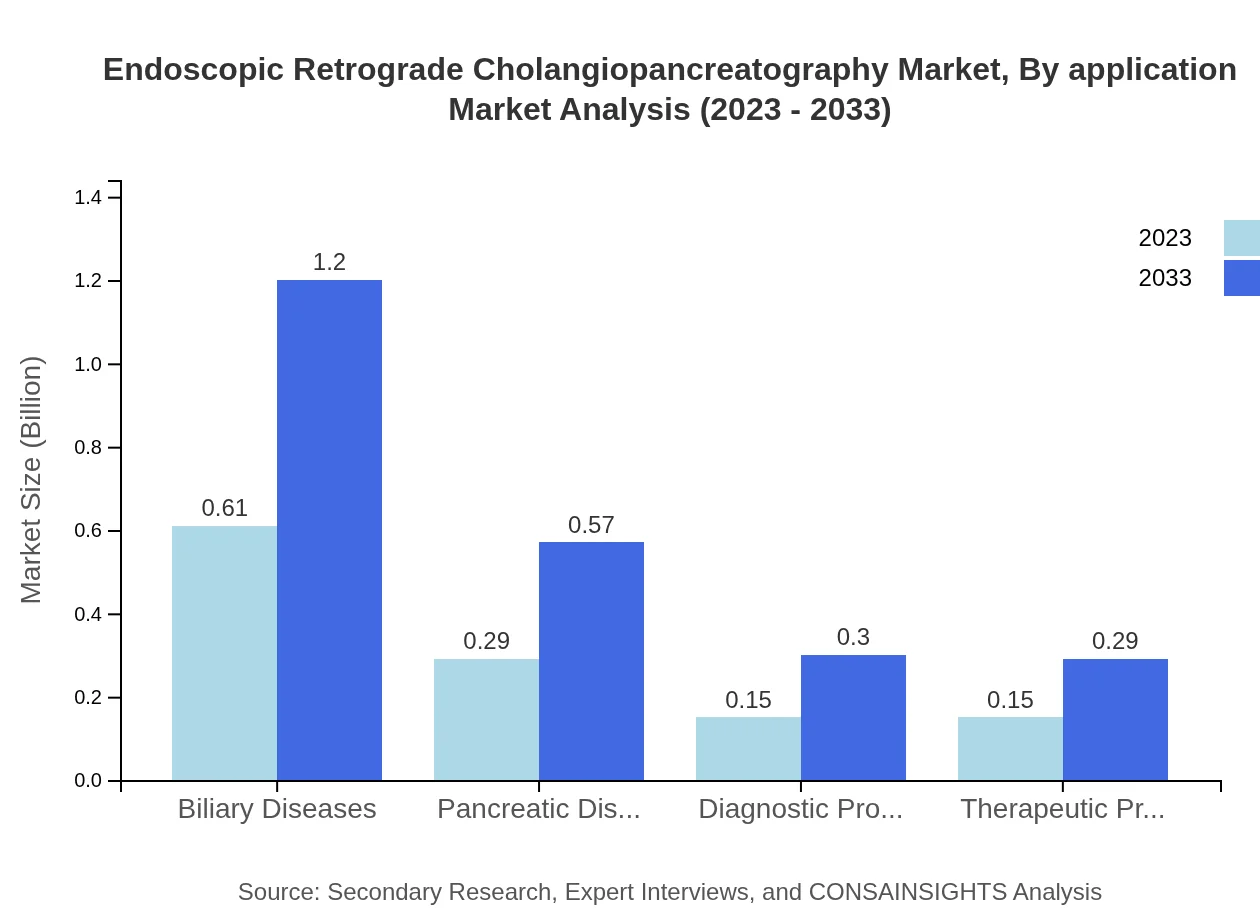
Based on applications, biliary diseases take the lead with a 50.98% market share in 2023, projected to grow from $0.61 billion to $1.20 billion. Pancreatic diseases and diagnostic/procedural applications hold 24.1% and 12.58% shares respectively, indicating integrated treatment potentials.
Endoscopic Retrograde Cholangiopancreatography Market Analysis By End User
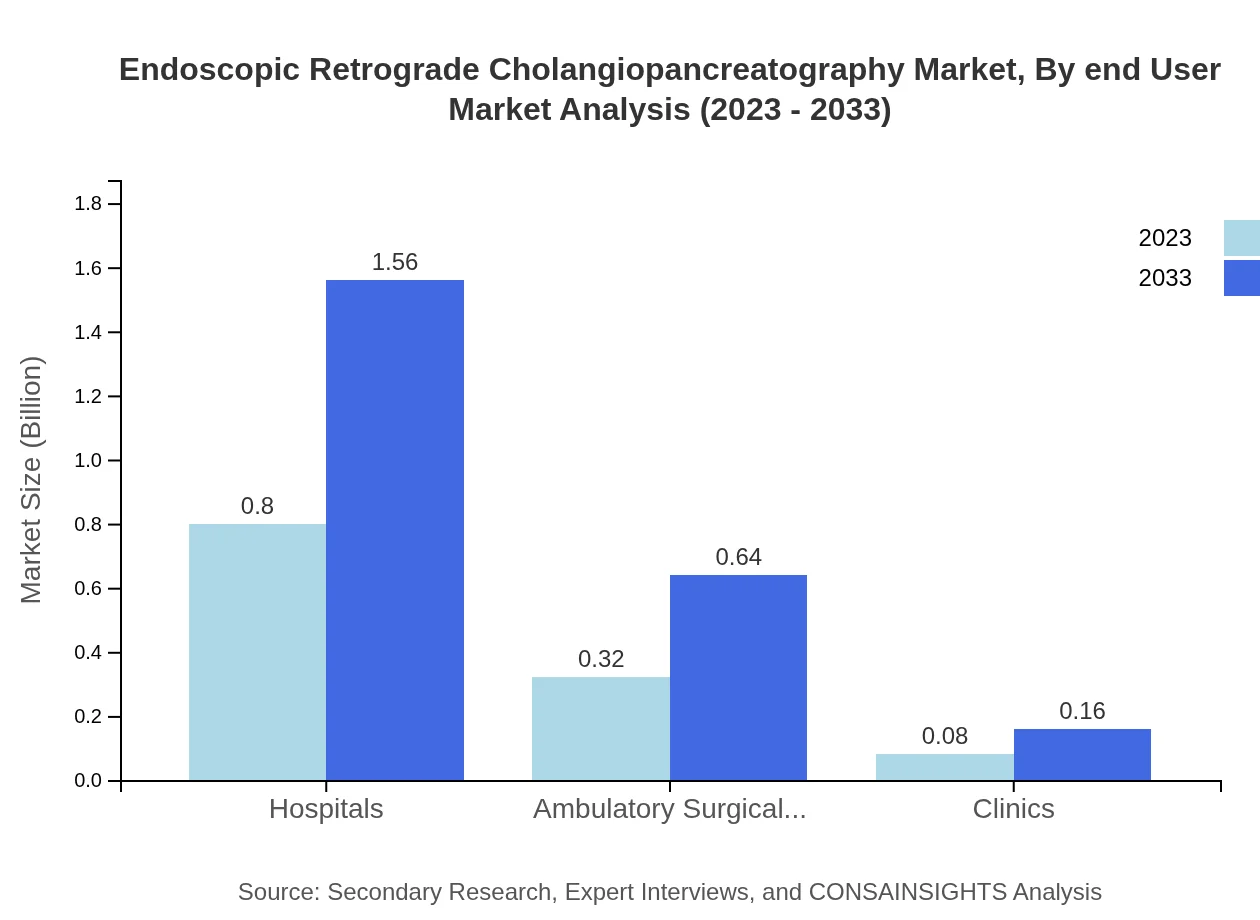
Hospitals command a leading position with 66.33% share in 2023, growing from $0.80 billion to $1.56 billion by 2033. Ambulatory surgical centers, holding 26.98%, show a growing trend due to the rising preference for outpatient services in ERCP.
Endoscopic Retrograde Cholangiopancreatography Market Analysis By Device Type
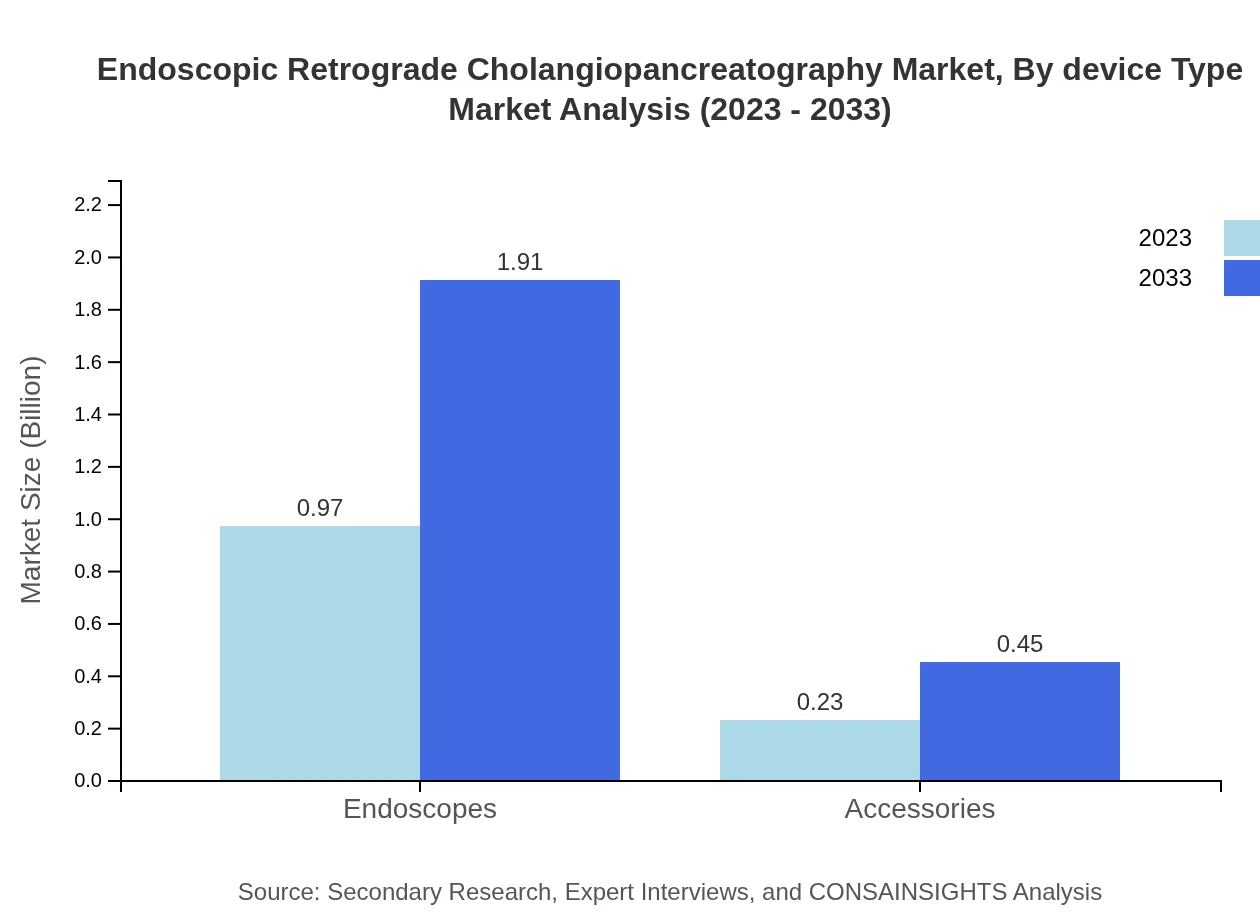
Endoscopes dominate the device type segment with a share of 81.07% in 2023, anticipated to reach $1.91 billion by 2033. ERCP accessories are gaining traction, accounting for 18.93% and projected to grow parallely.
Endoscopic Retrograde Cholangiopancreatography Market Analysis By Region Type
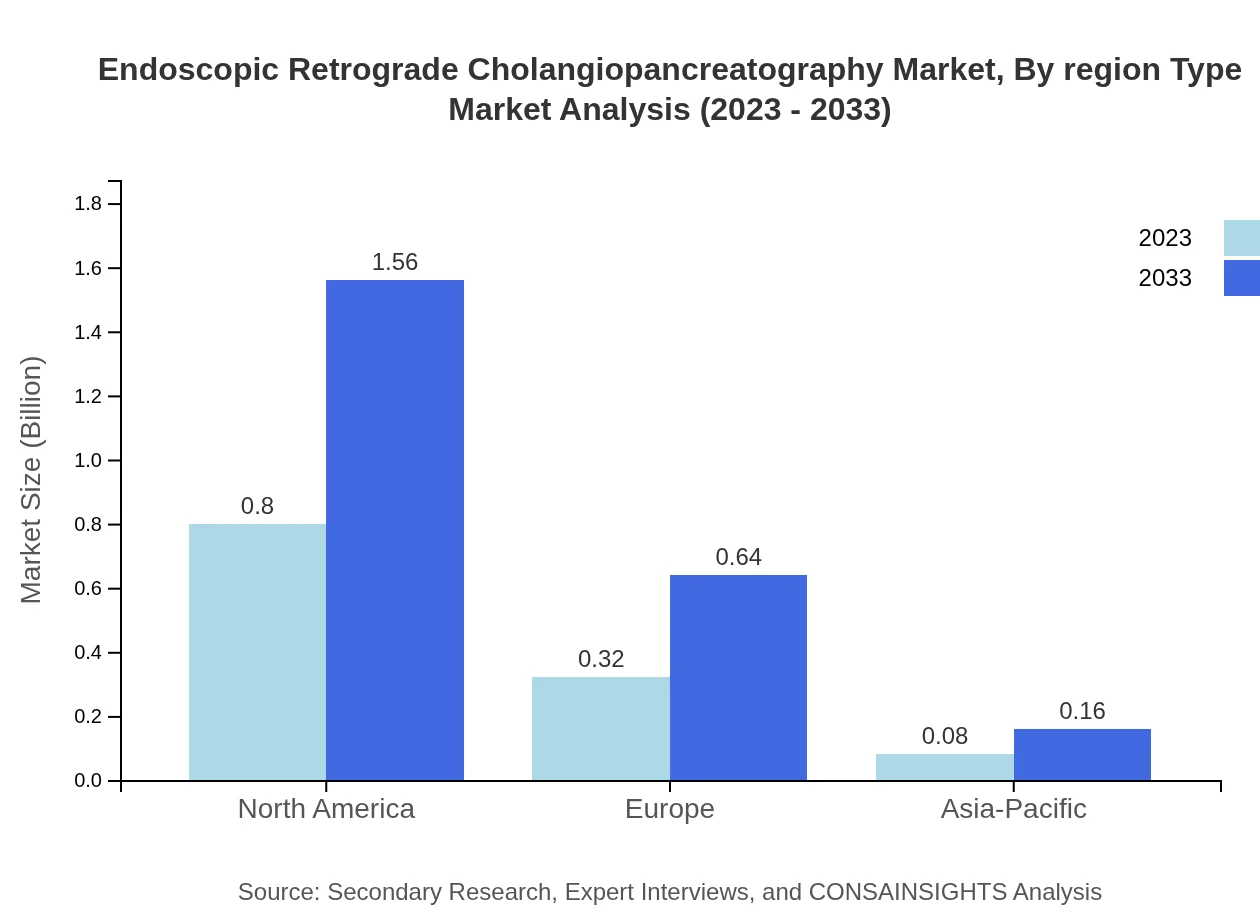
Regional analysis reveals North America as the largest market, while Europe closely follows. Asia Pacific's steadily growing market reflects healthcare development, whereas South America struggles with negative growth attributed to economic factors.
Endoscopic Retrograde Cholangiopancreatography Market Trends and Future Forecast
Tell us your focus area and get a customized research report.
Global Market Leaders and Top Companies in Endoscopic Retrograde Cholangiopancreatography Industry
Boston Scientific Corporation:
A leading provider of medical devices, Boston Scientific is known for its innovative ERCP products, including advanced endoscopes and stents crucial for biliary interventions.Medtronic :
Medtronic offers a comprehensive range of ERCP solutions, focusing on enhancing procedural efficiency and patient safety through advanced technologies and therapies.Pentax Medical:
Pentax Medical specializes in endoscopy systems and introduces various products tailored for ERCP procedures, emphasizing image quality and ergonomics.Fujifilm Holdings Corporation:
Fujifilm holds a strong portfolio in medical imaging technologies, providing top-tier endoscopic devices for ERCP that enhance diagnostic and therapeutic capabilities.Olympus Corporation:
Olympus, a pioneer in endoscope technology, plays a vital role in the ERCP marketplace by developing innovative devices that facilitate complex biliary procedures.We're grateful to work with incredible clients.









FAQs
What is the current market size?
The global market size was $1.20 Billion in 2023, representing the baseline for the 2023 to 2033 forecast period and informing further segment and regional analysis.
How big will the market be in 2033?
The market is projected to reach $2.36 Billion by 2033 according to the 2023 to 2033 forecast, reflecting anticipated adoption and technology improvements.
What is CAGR of the market?
The compound annual growth rate for the 2023 to 2033 forecast period is 6.8%, indicating steady expansion across device and service segments.
Which region is the fastest Growing in the Endoscopic Retrograde Cholangiopancreatography Market Report market?
Latin America is the fastest-growing region, projected to expand from $0.03 Billion in 2023 to $0.07 Billion in 2033, reflecting an implied 8.84% CAGR over the forecast period.
Which region is fastest Growing?
Latin America is identified as the regional market region with an implied 8.84% CAGR, increasing from $0.03 Billion in 2023 to $0.07 Billion in 2033.
What are the main end User segments?
Primary end users include Hospitals, Ambulatory Surgical Centers and Clinics, reflecting care settings where Endoscopic Retrograde Cholangiopancreatography procedures are performed.
Who are the leading companies in the market?
Top companies listed include Boston Scientific Corporation, Medtronic, Pentax Medical, Fujifilm Holdings Corporation and Olympus Corporation as major participants.
What drives regional growth patterns?
Regional expansion is influenced by healthcare infrastructure, availability of trained specialists, access to advanced endoscopic devices, and rising demand for minimally invasive care.