

Facial Care Market Report
First published: 10 October 2024 | Last updated: 25 May 2026 | Report Code: facial-care
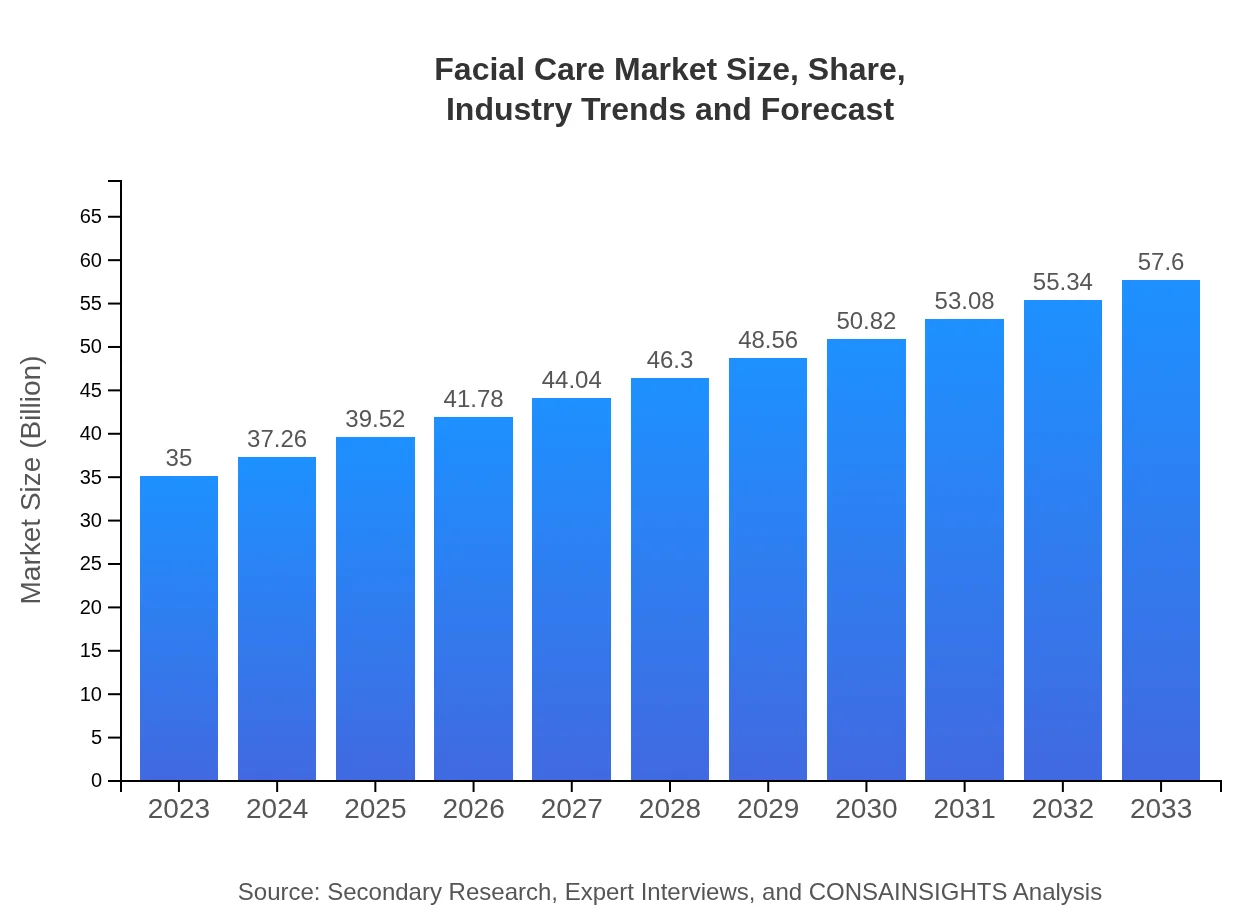
Facial Care Market — USD 35 billion in 2023, Growing to USD 57.60B by 2033 at 5% CAGR
This report provides a comprehensive analysis of the Facial Care market, highlighting market trends, regional insights, and competitive landscape from 2023 to 2033, aiming to inform stakeholders about forecasts and strategic directions in this vibrant industry.
Key Takeaways
- $35.00 Billion market in 2023 expanding to $57.60 Billion by 2033 at a 5% CAGR.
- North America is largest regional market, while no single fastest-growing region is stated because regional CAGR differences remain within 0.15 percentage points.
- North America leads by market value, rising from $11.44 Billion in 2023 to $18.83 Billion in 2033.
- Europe and Asia Pacific show substantial increases—Europe from $11.11 Billion to $18.28 Billion; Asia Pacific from $6.76 Billion to $11.13 Billion.
- Product innovation, personalized formulations, and sustainability are principal growth influences shaping demand.
- Leading firms include L'Oréal, Estée Lauder, and Procter & Gamble, driving R&D and distribution strategies.
Facial Care Market Report — Executive Summary
North America remains largest market by forecast-period value, while no single fastest-growing region is stated because top regional growth rates are separated by less than 0.15 percentage points. This report examines the facial care sector from 2023 to 2033, where the market expands from $35.00 Billion to $57.60 Billion at a 5% CAGR. Growth is supported by heightened consumer skincare awareness, innovation in product formulations, and greater emphasis on sustainable and transparent sourcing. Distribution is diversifying as online channels complement traditional retail, while personalization and targeted treatments gain traction across age and skin-type segments. Regional dynamics vary, with North America holding the highest market value through 2033. Competitive activity centers on product development and marketing by major players such as L'Oréal, Estée Lauder, and Procter & Gamble. The analysis integrates primary expert interviews and secondary sources to map opportunities and potential constraints for stakeholders navigating regulatory and saturation challenges.
Key Growth Drivers
- Rising consumer awareness of skincare benefits fuels demand for cleansers, moisturizers, exfoliators, and targeted treatments.
- Product innovation and formulation advances enable personalized and targeted solutions across skin types and age groups.
- Sustainability and ingredient transparency are prompting brand shifts toward eco-conscious packaging and clean-label offerings.
- E-commerce growth broadens access and accelerates trial, supporting direct-to-consumer strategies and omnichannel expansion.
- Investment in R&D by established firms strengthens new product pipelines and supports differentiated positioning.
| Metric | Value |
|---|---|
| Study Period | 2023 - 2033 |
| 2023 Market Size | $35.00 Billion |
| CAGR (2023-2033) | 5% |
| 2033 Market Size | $57.60 Billion |
| Top Companies | L'Oréal, Estée Lauder, Procter & Gamble |
| Published Date | 10 October 2024 |
| Last Modified Date | 25 May 2026 |
Facial Care Market Overview
Customize Facial Care Market Report market research report
- ✔ Get in-depth analysis of Facial Care market size, growth, and forecasts.
- ✔ Understand Facial Care's regional dynamics and industry-specific trends.
- ✔ Identify potential applications, end-user demand, and growth segments in Facial Care
What is the Market Size & CAGR of Facial Care Market Report market in 2023?
Facial Care Industry Analysis
Facial Care Market Segmentation and Scope
Tell us your focus area and get a customized research report.
Facial Care Market Report Market Analysis Report by Region
Europe Facial Care Market Report:
Europe grows from $11.11 Billion in 2023 to $18.28 Billion in 2033. Demand is shaped by consumer interest in clean-label and natural ingredients, regulatory scrutiny on claims, and investments in formulation innovation and sustainable packaging.Asia Pacific Facial Care Market Report:
Asia Pacific grows from $6.76 Billion in 2023 to $11.13 Billion in 2033. Growth reflects rising skincare awareness, expanding middle-class spending, and greater access via online marketplaces and localized product offerings tailored to diverse skin types.North America Facial Care Market Report:
North America is largest regional market, rising from $11.44 Billion in 2023 to $18.83 Billion in 2033. Local drivers include strong consumer spending on personal care, high adoption of new formulations and premium products, and robust retail and e-commerce channels supporting product availability.South America Facial Care Market Report:
Latin America grows from $2.53 Billion in 2023 to $4.16 Billion in 2033. Regional momentum is supported by growing beauty consumption, an emphasis on product personalization, and expanding distribution through both offline retail and digital channels.Middle East & Africa Facial Care Market Report:
Middle East and Africa grows from $3.16 Billion in 2023 to $5.2 Billion in 2033. Drivers include increasing interest in premium skincare, greater urbanization, and rising availability of international brands alongside local product development.Tell us your focus area and get a customized research report.
Research Methodology
Facial Care Market Analysis By Product Type
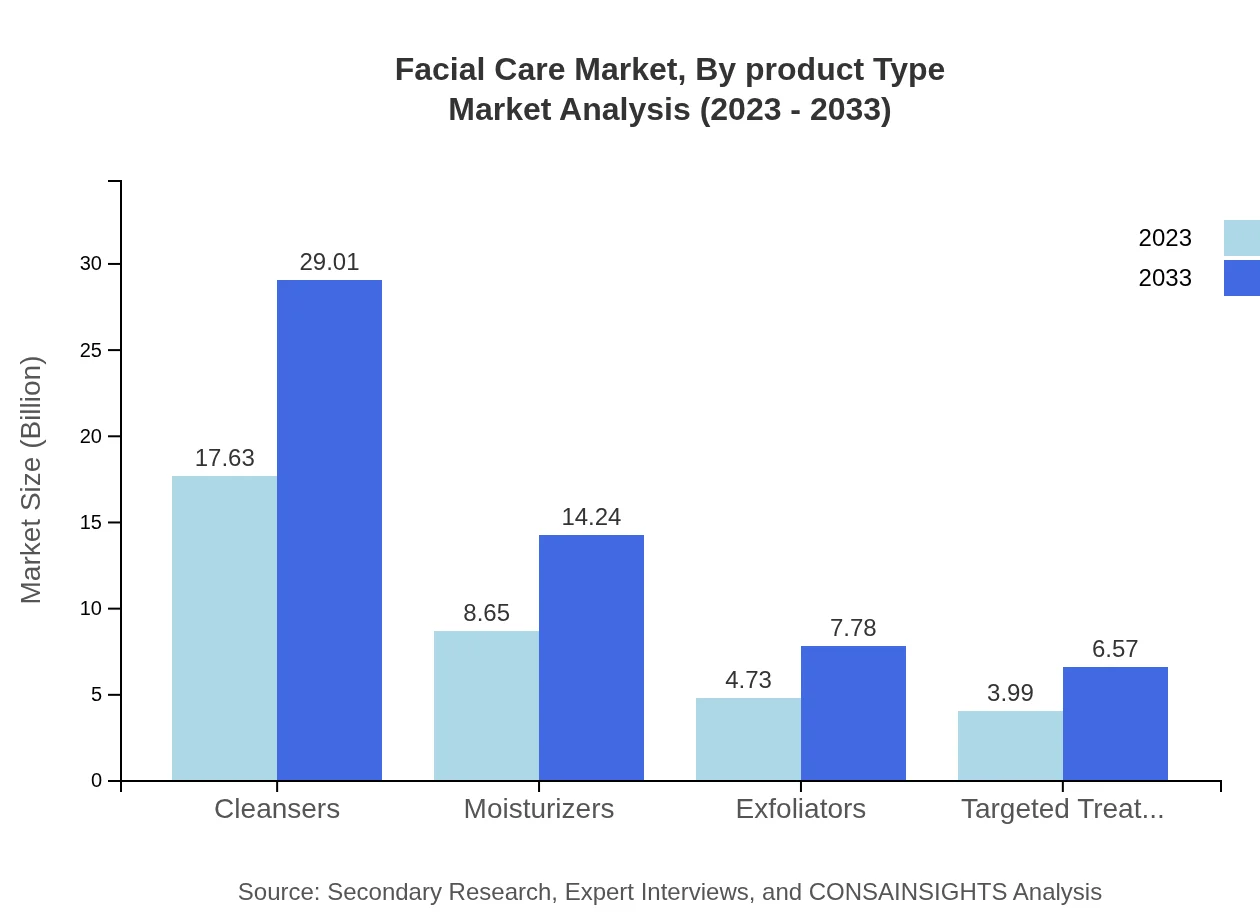
In the Facial Care market segment by product type, cleansers lead with a market size of $17.63 billion in 2023, projected to reach $29.01 billion by 2033, capturing 50.36% of market share. Moisturizers follow closely, beginning at $8.65 billion and expanding to $14.24 billion, representing 24.72% of the market.
Facial Care Market Analysis By Skin Type
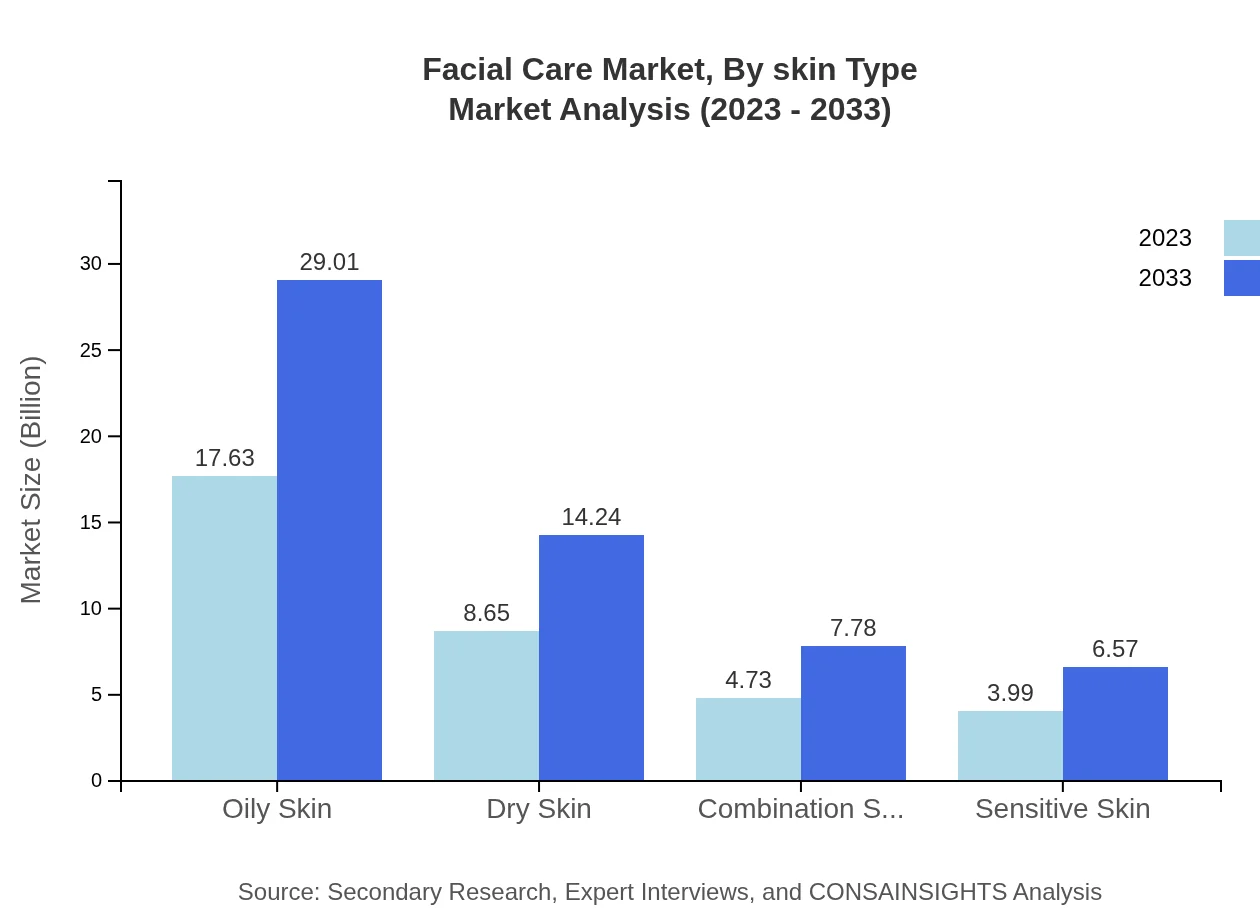
The segment focused on skin types shows oily skin dominating with a market size of $17.63 billion in 2023 to $29.01 billion by 2033, closely followed by dry skin, expected to evolve from $8.65 billion to $14.24 billion. Each segment accounts for a considerable share of the overall market.
Facial Care Market Analysis By Age Group
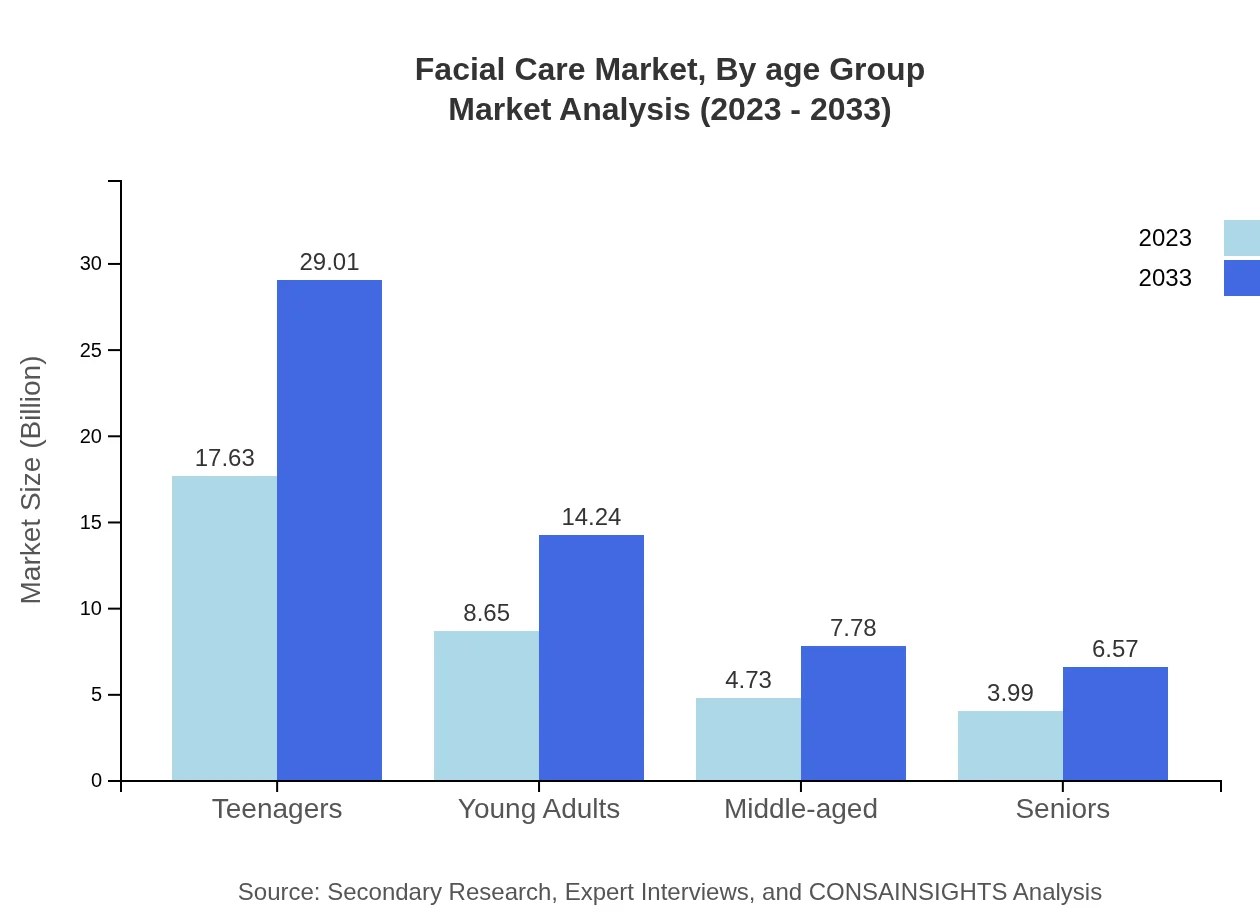
In terms of age group segmentation, teenagers account for 17.63 billion in 2023, likely increasing to 29.01 billion by 2033. Young adults hold a significant share, moving from $8.65 billion to $14.24 billion, demonstrating the growing focus on skincare during formative years.
Facial Care Market Analysis By Distribution Channel
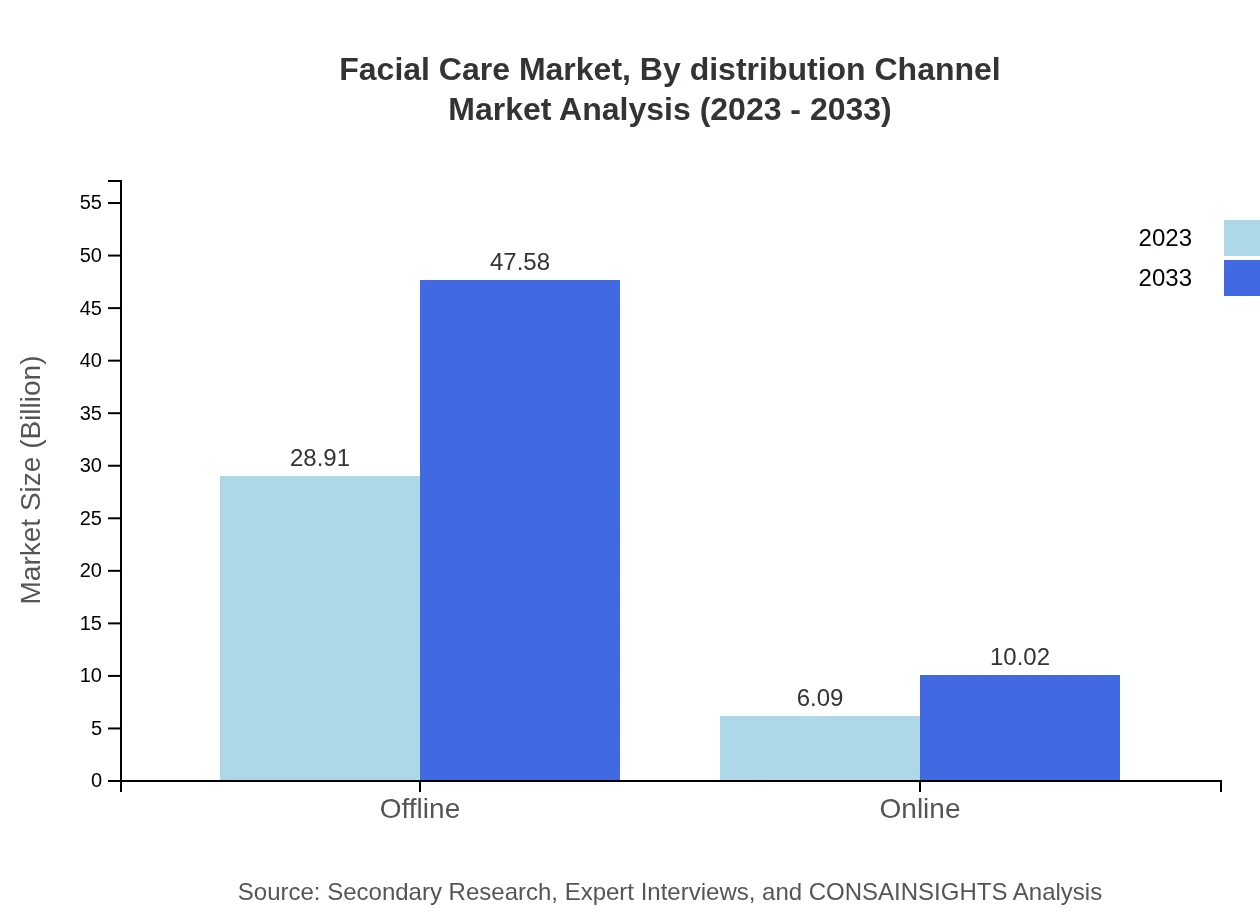
Regarding distribution channels, offline sales represent a substantial market segment beginning at $28.91 billion in 2023, set to escalate to $47.58 billion by 2033, dominating the market. Online platforms are growing, starting at $6.09 billion to $10.02 billion, indicating a shift in shopping habits.
Facial Care Market Trends and Future Forecast
Tell us your focus area and get a customized research report.
Global Market Leaders and Top Companies in Facial Care Industry
L'Oréal:
A global leader in the beauty industry, L'Oréal offers a diverse range of facial care products that cater to various skin types and consumer preferences. Their commitment to innovation and sustainability positions them at the forefront of the market.Estée Lauder:
Known for high-quality skincare products, Estée Lauder is a prominent player in the facial care sector, focusing on luxury skincare narratives and effective anti-aging solutions.Procter & Gamble:
Procter & Gamble has a strong portfolio in facial cleansing products and established brands that effectively target consumer needs through extensive research and market understanding.We're grateful to work with incredible clients.






FAQs
What is the market size of the facial care market in 2023?
The facial care market size in 2023 is $35.00 Billion, as reported in the input data for the 2023 baseline year.
How big will the facial care market be in 2033?
The market is projected to reach $57.60 Billion by 2033 according to the provided forecast figures for the 2023 to 2033 period.
What is CAGR of the facial care market for 2023 to 2033?
The compound annual growth rate (CAGR) for the forecast period 2023 to 2033 is 5% as specified in the input dataset.
Is there a single fastest Growing region in the Facial Care Market Report market?
No single fastest-growing region is stated for the Facial Care Market Report market because the top regional implied CAGR values are within 0.15 percentage points of each other, making the ranking too close to call reliably.
Which companies are identified as top players?
Top companies named in the report are L'Oréal, Estée Lauder, and Procter & Gamble, noted for R&D and market presence.
What are the primary product categories covered?
Primary product types include cleansers, moisturizers, exfoliators, and targeted treatments as listed in the segmentation facts.
How are age groups represented in segmentation?
Age-group subsegments specified are Teenagers, Young Adults, Middle-aged, and Seniors, reflecting demand across life stages.
What distribution channels are included?
Distribution channels in the report include Offline and Online options, covering traditional retail and e-commerce routes.
Why are sustainability trends important?
Sustainability and clean-label trends influence purchasing decisions and product development, prompting brands to adopt eco-friendly practices.
What research methods were used for the report?
The study used primary interviews with industry experts and secondary research from company reports and publications, plus triangulation and validation.