

Biopharmaceuticals Contract Manufacturing Market Report
First published: 10 October 2024 | Last updated: 25 May 2026 | Report Code: biopharmaceuticals-contract-manufacturing
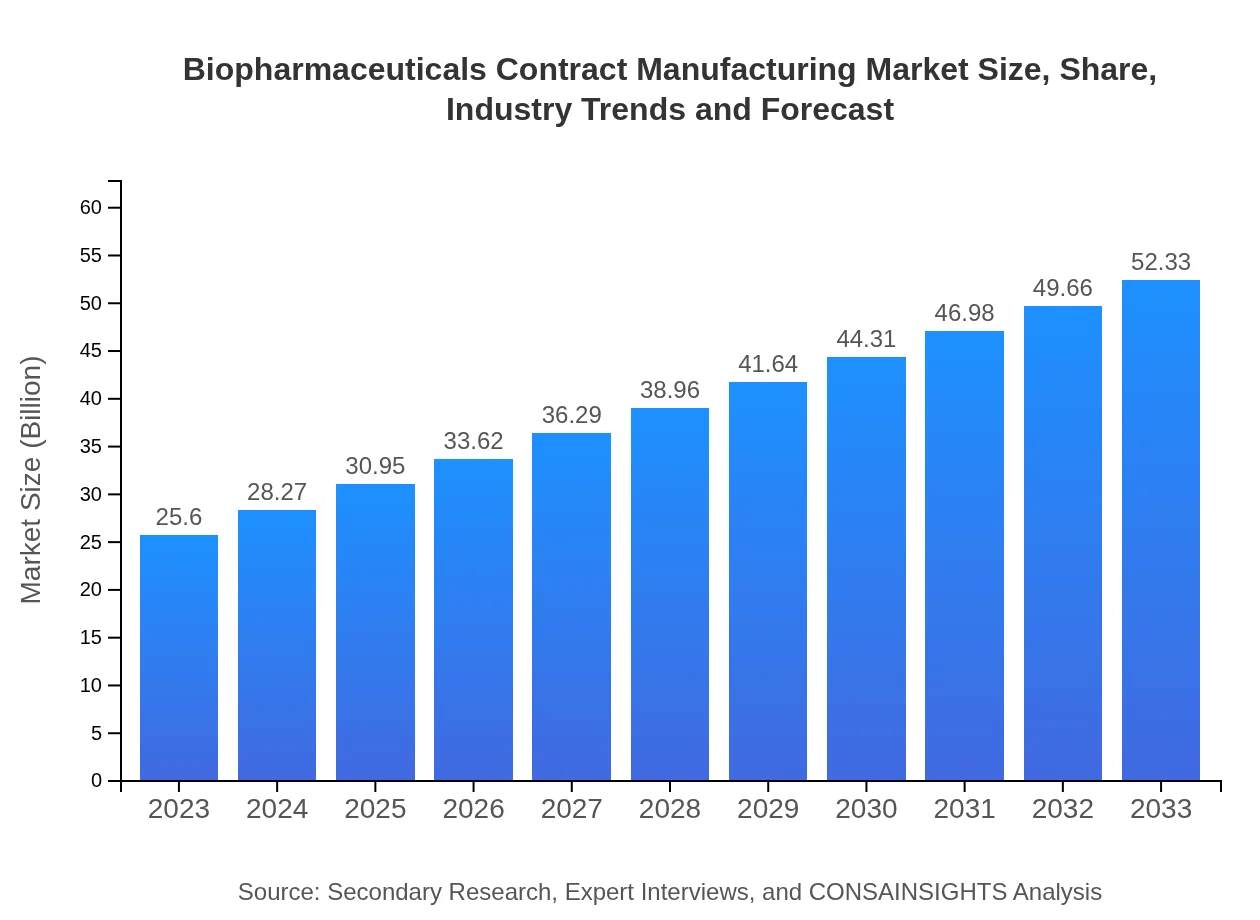
Biopharmaceuticals Contract Manufacturing Market — USD 25.6 billion in 2023, Growing to USD 52.33B by 2033 at 7.2% CAGR
This report provides an in-depth analysis of the Biopharmaceuticals Contract Manufacturing market, offering insights into market trends, segmentation, regional analysis, and key players from 2023 to 2033.
Key Takeaways
- Global market value rises from $25.60 Billion in 2023 to $52.33 Billion in 2033 at a 7.2% CAGR.
- North America is largest regional market, while no single fastest-growing region is stated because regional CAGR differences remain within 0.15 percentage points.
- Europe expands from $7.81 Billion in 2023 to $15.97 Billion in 2033; Asia Pacific grows from $4.82 Billion to $9.84 Billion.
- Top companies active in the space include Lonza Group, Samsung Biologics, and WuXi AppTec.
- Regulatory compliance and biologics-focused manufacturing capabilities are central growth enablers.
Biopharmaceuticals Contract Manufacturing Market Report — Executive Summary
North America remains largest market by forecast-period value, while no single fastest-growing region is stated because top regional growth rates are separated by less than 0.15 percentage points. The report examines the expanding demand for outsourced biopharmaceutical production driven by biologics complexity, cost pressures, and the need for scalable capacity. Market value is projected to increase from $25.60 Billion in 2023 to $52.33 Billion by 2033, supported by investments in cell-culture and downstream processing capabilities. Contract manufacturers are enhancing capacity and compliance programs to meet stringent regulatory requirements and diverse product profiles. The industry structure spans services such as cell culture, purification, formulation and filling, servicing biopharmaceutical companies, academic research organizations, and government entities. Regional dynamics show North America as the largest market, with Europe and Asia Pacific contributing substantial growth. Leading service providers such as Lonza Group, Samsung Biologics, and WuXi AppTec feature prominently in the competitive landscape. The analysis integrates expert interviews and secondary sources to outline strategic priorities for stakeholders evaluating outsourcing, capacity development, and regulatory alignment.
Key Growth Drivers
- Rising biologics development increasing demand for specialized manufacturing services and capacity.
- Strategic outsourcing by biopharmaceutical firms to concentrate internal resources on R&D and product pipeline advancement.
- Regulatory emphasis on Current Good Manufacturing Practices, FDA regulations and EMEA guidelines prompting investments in compliant facilities.
- Technological advances in cell culture, purification and formulation enhancing scalability and process efficiency.
| Metric | Value |
|---|---|
| Study Period | 2023 - 2033 |
| 2023 Market Size | $25.60 Billion |
| CAGR (2023-2033) | 7.2% |
| 2033 Market Size | $52.33 Billion |
| Top Companies | Lonza Group, Samsung Biologics, WuXi AppTec |
| Published Date | 10 October 2024 |
| Last Modified Date | 25 May 2026 |
Biopharmaceuticals Contract Manufacturing Market Overview
Customize Biopharmaceuticals Contract Manufacturing Market Report market research report
- ✔ Get in-depth analysis of Biopharmaceuticals Contract Manufacturing market size, growth, and forecasts.
- ✔ Understand Biopharmaceuticals Contract Manufacturing's regional dynamics and industry-specific trends.
- ✔ Identify potential applications, end-user demand, and growth segments in Biopharmaceuticals Contract Manufacturing
What is the Market Size & CAGR of Biopharmaceuticals Contract Manufacturing Market Report market in 2023?
Biopharmaceuticals Contract Manufacturing Industry Analysis
Biopharmaceuticals Contract Manufacturing Market Segmentation and Scope
Tell us your focus area and get a customized research report.
Biopharmaceuticals Contract Manufacturing Market Report Market Analysis Report by Region
Europe Biopharmaceuticals Contract Manufacturing Market Report:
Europe grows from $7.81 Billion in 2023 to $15.97 Billion in 2033. Growth reflects strong biologics development, regulatory frameworks such as EMEA guidelines, and manufacturers scaling purification and formulation capabilities.Asia Pacific Biopharmaceuticals Contract Manufacturing Market Report:
Asia Pacific grows from $4.82 Billion in 2023 to $9.84 Billion in 2033. Expansion is linked to increasing manufacturing investments, capacity additions, and rising demand for outsourced biologics production in regional markets.North America Biopharmaceuticals Contract Manufacturing Market Report:
North America is largest regional market, rising from $9.33 Billion in 2023 to $19.08 Billion in 2033. Local demand is driven by extensive biologics pipelines, high outsourcing activity, and investment in compliant manufacturing capacity.South America Biopharmaceuticals Contract Manufacturing Market Report:
Latin America grows from $1.15 Billion in 2023 to $2.36 Billion in 2033. Regional momentum is associated with growing adoption of outsourced manufacturing services and investments to support biologics development needs.Middle East & Africa Biopharmaceuticals Contract Manufacturing Market Report:
Middle East and Africa grows from $2.48 Billion in 2023 to $5.08 Billion in 2033. Development is supported by expanding healthcare infrastructure, demand for specialized biologics manufacturing, and efforts to meet international regulatory expectations.Tell us your focus area and get a customized research report.
Research Methodology
Biopharmaceuticals Contract Manufacturing Market Analysis By Tech
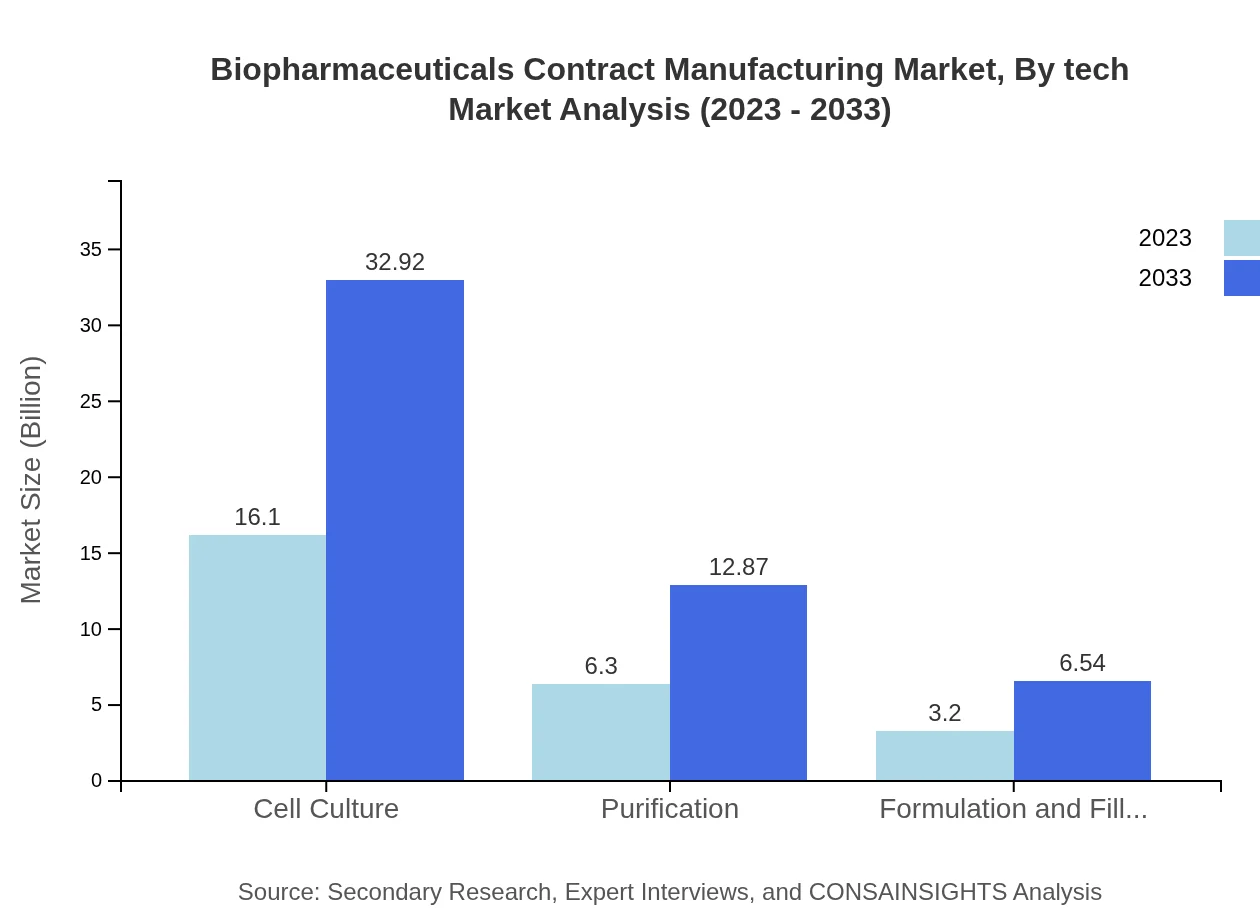
The key technology segments shaping the biopharmaceuticals contract manufacturing market include cell culture and purification processes. Cell culture technology dominates the market due to its extensive application in producing mammalian cell lines for biopharmaceuticals, with a market size projected to grow from $16.10 billion in 2023 to $32.92 billion by 2033.
Biopharmaceuticals Contract Manufacturing Market Analysis By Type
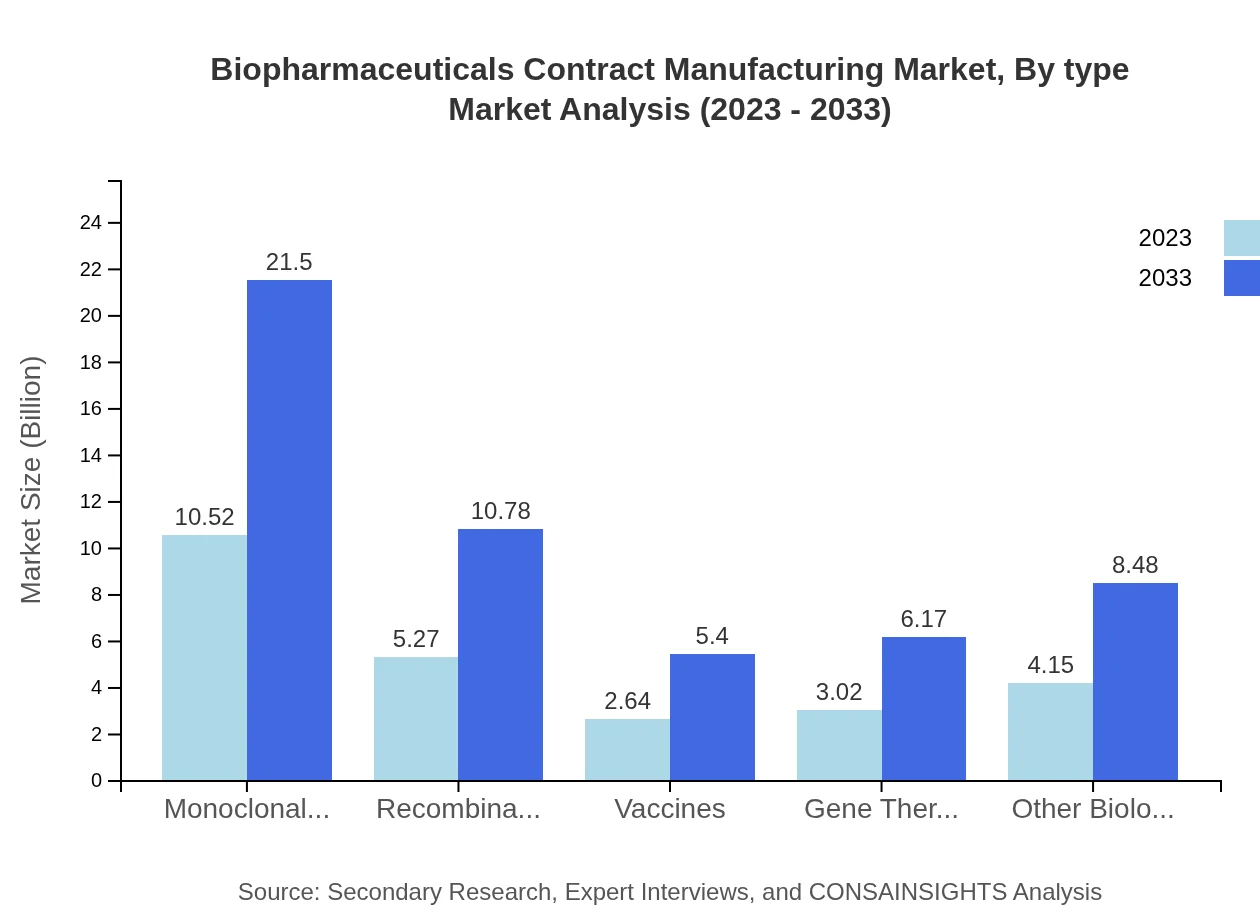
Product types such as monoclonal antibodies, recombinant proteins, and vaccines are crucial in the biopharmaceuticals contract manufacturing landscape. Monoclonal antibodies' market size is expected to reach $21.50 billion by 2033 from $10.52 billion in 2023, highlighting their significance in therapeutic applications.
Biopharmaceuticals Contract Manufacturing Market Analysis By End User
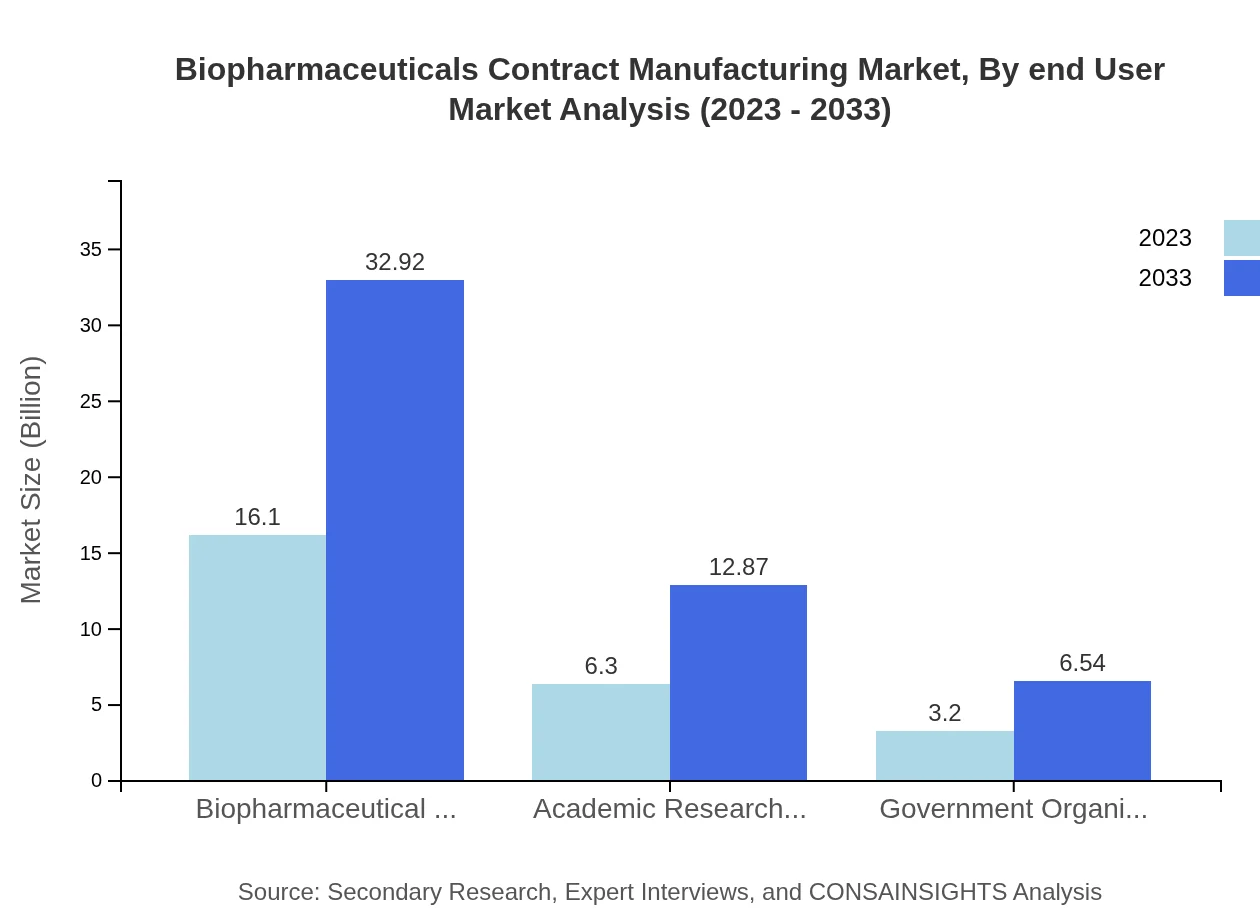
The primary end-users include biopharmaceutical companies, academic research organizations, and government entities. Biopharmaceutical companies hold the largest market share, accounting for over 60% of the overall biopharmaceuticals contract manufacturing sector, underlining their reliance on external partners for efficiency and scalability.
Biopharmaceuticals Contract Manufacturing Market Analysis By Region Analysis
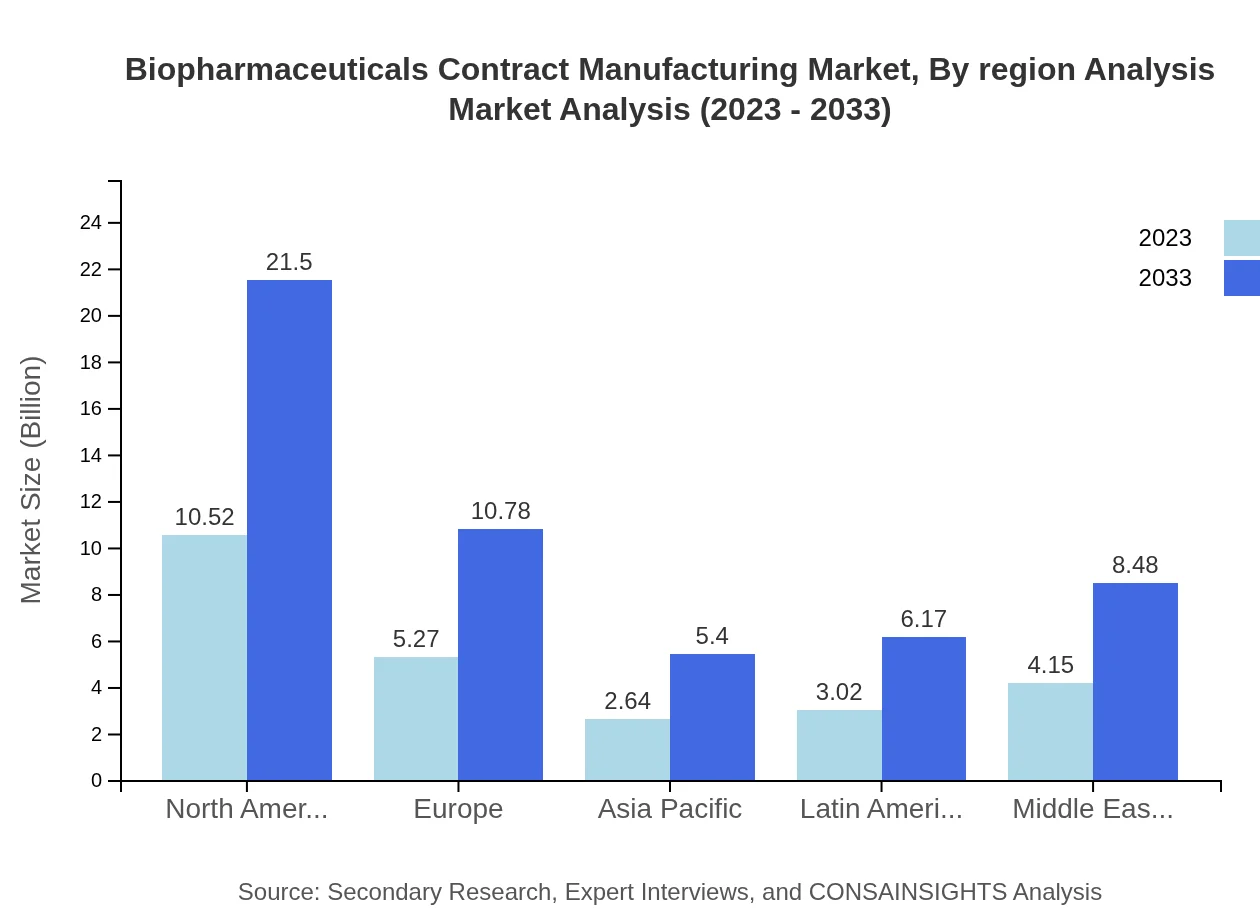
Regional analysis reveals that North America and Europe are leading in terms of market share, driven by advanced healthcare infrastructure and high R&D investments. Asia Pacific is emerging with rapid growth prospects due to increasing manufacturing capacities and strategic investment opportunities.
Biopharmaceuticals Contract Manufacturing Market Analysis By Regulatory Compliance
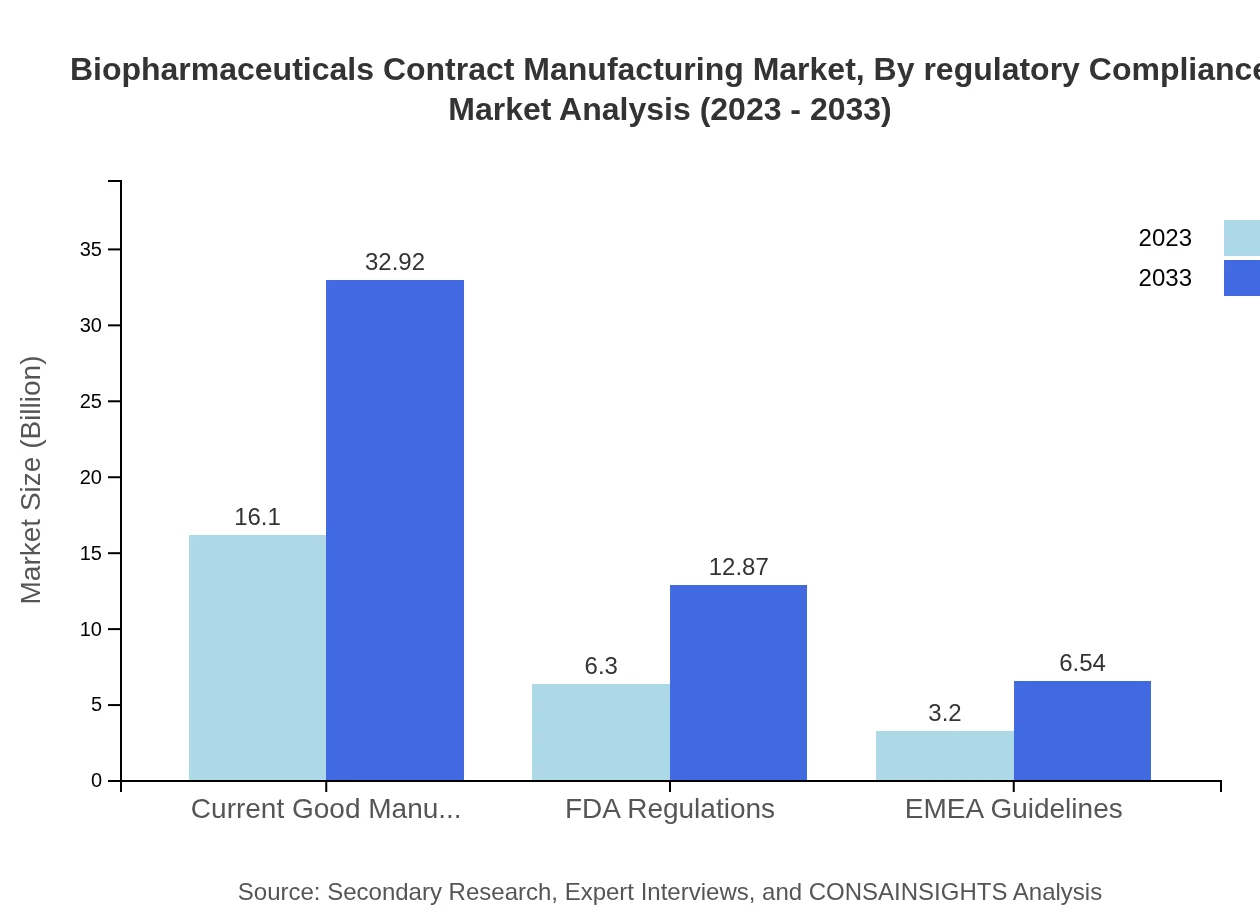
Compliance with FDA regulations, EMA guidelines, and current good manufacturing practices (cGMP) remains critical for market growth. Adherence to these regulations ensures product quality and safety, thus fostering consumer trust and enhancing market sustainability.
Biopharmaceuticals Contract Manufacturing Market Trends and Future Forecast
Tell us your focus area and get a customized research report.
Global Market Leaders and Top Companies in Biopharmaceuticals Contract Manufacturing Industry
Lonza Group:
Lonza is a Swiss multinational that provides integrated and sustainable solutions to healthcare and life sciences, with a strong focus on biologics contract manufacturing.Samsung Biologics:
Samsung Biologics is a South Korean company recognized for its robust contract manufacturing services, specializing in cell culture and biologics production.WuXi AppTec:
WuXi AppTec offers comprehensive services in the biopharmaceutical sector, including contract manufacturing, R&D, and regulatory advisory to support accelerated product development.We're grateful to work with incredible clients.









FAQs
What is the market size of the biopharmaceuticals contract manufacturing industry in 2023?
The market size in 2023 is $25.60 Billion, as reported in the input data, reflecting current contracted production demand across biologics and related manufacturing services.
How big will the market be in 2033?
The market is projected to reach $52.33 Billion in 2033, according to the provided forecast figures covering the 2023 to 2033 period.
What is CAGR of the market for 2023 to 2033?
The compound annual growth rate (CAGR) for the 2023 to 2033 forecast period is specified as 7.2% in the input dataset.
Is there a single fastest Growing region in the Biopharmaceuticals Contract Manufacturing Market Report market?
No single fastest-growing region is stated for the Biopharmaceuticals Contract Manufacturing Market Report market because the top regional implied CAGR values are within 0.15 percentage points of each other, making the ranking too close to call reliably.
Which companies are listed as top players?
The input lists Lonza Group, Samsung Biologics, and WuXi AppTec as top companies operating in the biopharmaceutical contract manufacturing sector.
What are common service segments offered by contract manufacturers?
Key service segments include cell culture, purification, and formulation and filling, as specified in the segment facts of the provided dataset.
Who are primary end users of contract manufacturing services?
Primary end users noted are biopharmaceutical companies, academic research organizations, and government organizations based on the supplied segmentation information.
How is regulatory compliance represented in the market?
Regulatory compliance categories include Current Good Manufacturing Practices, FDA regulations, and EMEA guidelines, which influence investment and operational priorities for manufacturers.