

Hazardous Area Equipment Market Report
First published: 23 October 2024 | Last updated: 24 June 2026 | Report Code: hazardous-area-equipment
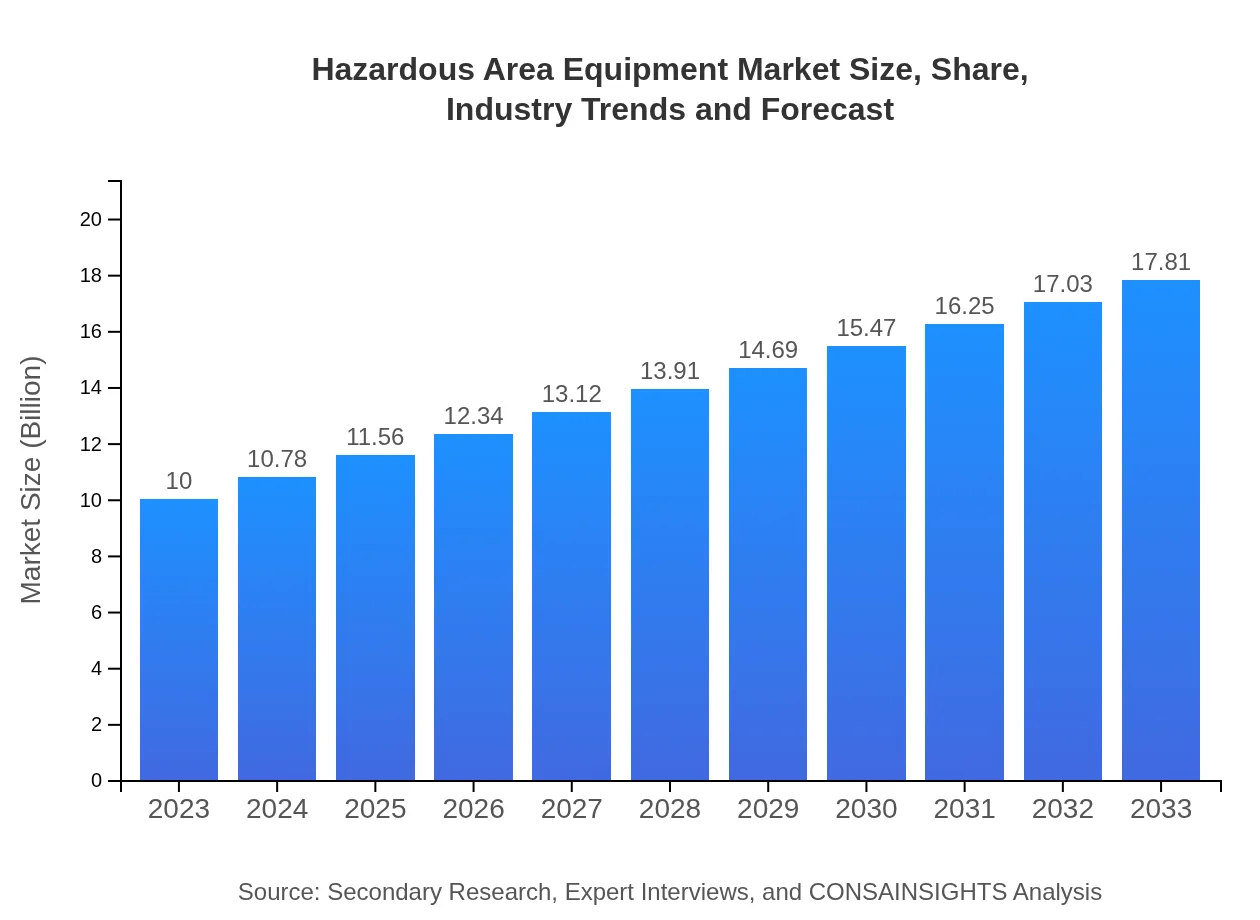
Hazardous Area Equipment Market — USD 10 billion in 2023, Growing to USD 17.81B by 2033 at 5.8% CAGR
This report provides an in-depth analysis of the Hazardous Area Equipment market from 2023 to 2033, covering market size, CAGR, industry insights, regional analysis, segmentation, and leading players. It offers critical insights into trends shaping the future of this industry.
Key Takeaways
- Global market grows from $10.00 Billion in 2023 to $17.81 Billion by 2033 at a 5.8% CAGR.
- North America is largest regional market, while no single fastest-growing region is stated because regional CAGR differences remain within 0.15 percentage points.
- North America is the largest region, increasing from $3.66 Billion in 2023 to $6.52 Billion in 2033.
- Europe expands from $2.68 Billion in 2023 to $4.78 Billion in 2033, reflecting regulatory and industrial demand.
- Asia Pacific rises from $2.15 Billion in 2023 to $3.83 Billion in 2033, driven by manufacturing and energy sectors.
- Key providers include Siemens AG, Honeywell International Inc., Schneider Electric, and Eaton Corporation PLC.
Hazardous Area Equipment Market Report — Executive Summary
North America remains largest market by forecast-period value, while no single fastest-growing region is stated because top regional growth rates are separated by less than 0.15 percentage points. This report examines the Hazardous Area Equipment market across the 2023 to 2033 forecast period, quantifying growth from $10.00 Billion to $17.81 Billion at a 5.8% CAGR. Growth is propelled by stricter safety regulations, expanding industrial activity, and technology adoption in monitoring and automation. The analysis covers product types such as lighting equipment, enclosures, sensors, and motors; end users including industrial, utilities, construction, and aerospace; and applications like oil and gas, chemical manufacturing, and mining. Regional performance is detailed with North America identified as the largest market. The competitive overview highlights major firms including Siemens AG, Honeywell International Inc., Schneider Electric, and Eaton Corporation PLC. Methodology integrates expert interviews, company reports, and triangulated data to validate findings.
Key Growth Drivers
- Stricter safety and compliance mandates increasing demand for certified hazardous area solutions.
- Industrial expansion in sectors such as oil and gas and chemical manufacturing boosting equipment purchases.
- Technological improvements in sensors, monitoring, and automation enabling safer operations in risky environments.
- Replacement and retrofit cycles in aging facilities prompting investments in modern explosion-protection products.
| Metric | Value |
|---|---|
| Study Period | 2023 - 2033 |
| 2023 Market Size | $10.00 Billion |
| CAGR (2023-2033) | 5.8% |
| 2033 Market Size | $17.81 Billion |
| Top Companies | Siemens AG, Honeywell International Inc., Schneider Electric, Eaton Corporation PLC |
| Published Date | 23 October 2024 |
| Last Modified Date | 24 June 2026 |
Hazardous Area Equipment Market Overview
Customize Hazardous Area Equipment Market Report market research report
- ✔ Get in-depth analysis of Hazardous Area Equipment market size, growth, and forecasts.
- ✔ Understand Hazardous Area Equipment's regional dynamics and industry-specific trends.
- ✔ Identify potential applications, end-user demand, and growth segments in Hazardous Area Equipment
What is the Market Size & CAGR of Hazardous Area Equipment Market Report market in 2023?
Hazardous Area Equipment Industry Analysis
Hazardous Area Equipment Market Segmentation and Scope
Tell us your focus area and get a customized research report.
Hazardous Area Equipment Market Report Market Analysis Report by Region
Europe Hazardous Area Equipment Market Report:
Europe grows from $2.68 Billion in 2023 to $4.78 Billion in 2033. The region’s expansion reflects stringent safety standards, compliance-driven replacements, and technology adoption in chemical, energy, and manufacturing sectors.Asia Pacific Hazardous Area Equipment Market Report:
Asia Pacific grows from $2.15 Billion in 2023 to $3.83 Billion in 2033. Growth is linked to rising industrialization, manufacturing capacity increases, and greater focus on workplace safety in energy and process industries.North America Hazardous Area Equipment Market Report:
North America is largest regional market, rising from $3.66 Billion in 2023 to $6.52 Billion in 2033. Regional demand is driven by regulatory enforcement, extensive industrial infrastructure, and investments in safety upgrades across energy and manufacturing.South America Hazardous Area Equipment Market Report:
Latin America grows from $0.17 Billion in 2023 to $0.3 Billion in 2033. Market activity is influenced by investments in mining and energy projects, along with gradual adoption of regulatory and safety frameworks.Middle East & Africa Hazardous Area Equipment Market Report:
Middle East and Africa grows from $1.34 Billion in 2023 to $2.38 Billion in 2033. Demand is associated with oil and gas operations, infrastructure projects, and the need for certified protective equipment in hazardous sites.Tell us your focus area and get a customized research report.
Research Methodology
Hazardous Area Equipment Market Analysis By Product Type
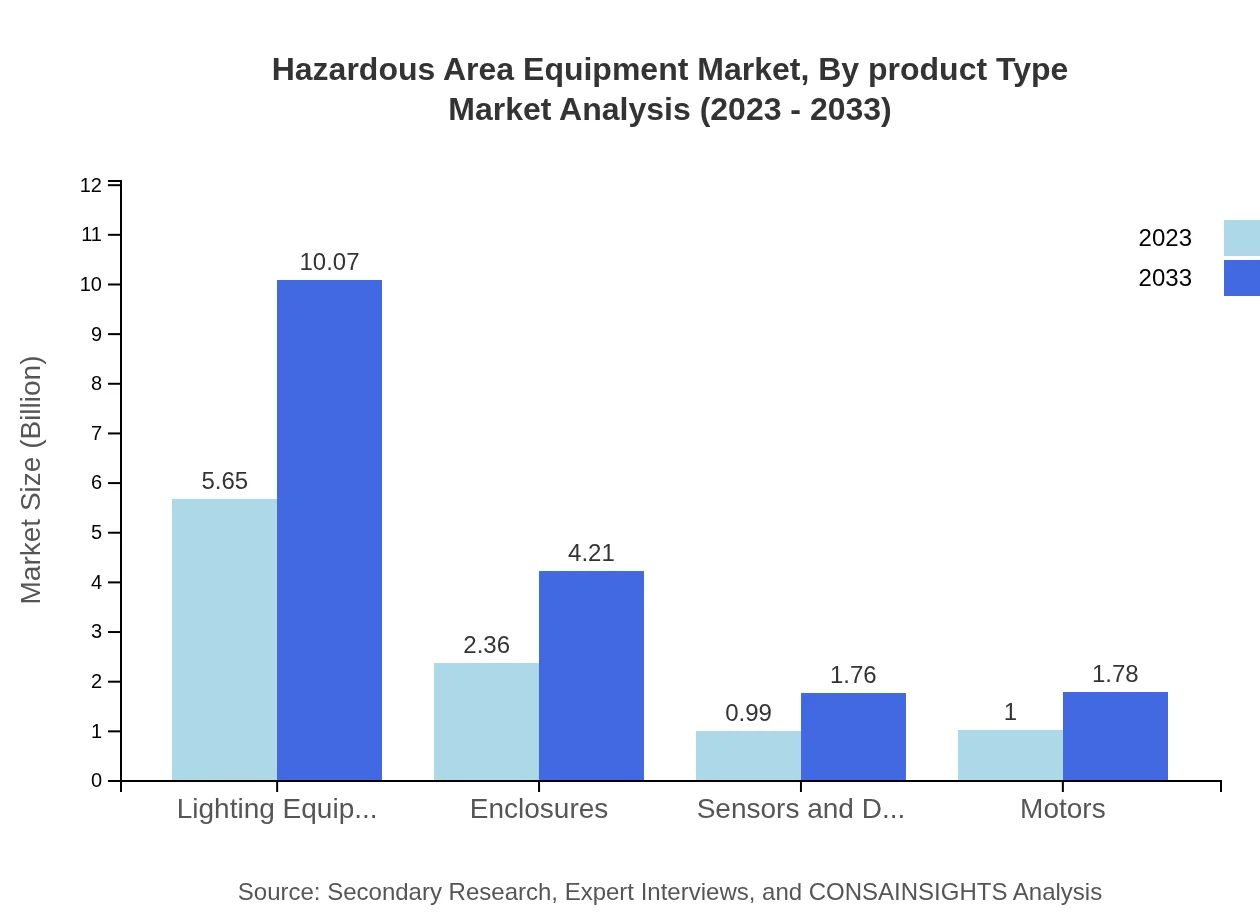
The Hazardous Area Equipment market by product type is dominated by lighting equipment, enclosures, and sensors and detectors. The lighting equipment market is valued at $5.65 billion in 2023, expected to grow to $10.07 billion by 2033, forming a substantial share of the market. Enclosures account for $2.36 billion in 2023, forecasted to increase to $4.21 billion. Additionally, sensors and detectors contribute significantly, ensuring monitoring and safety in hazardous environments.
Hazardous Area Equipment Market Analysis By Application
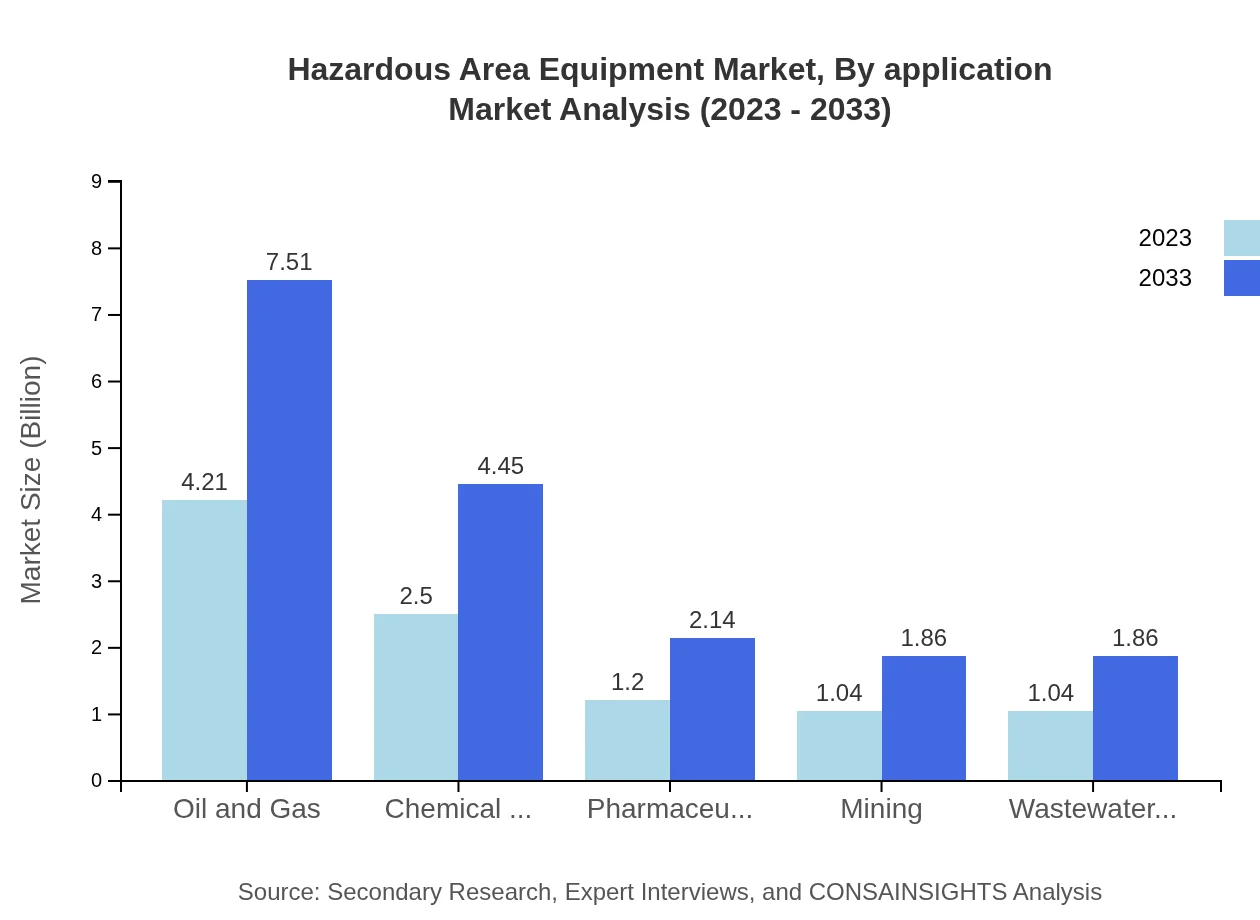
Applications are pivotal in the Hazardous Area Equipment market, with the oil and gas sector being a major contributor, holding a 42.15% share in 2023. Other critical applications include chemical manufacturing (24.99%), pharmaceuticals (12.01%), and mining (10.43%). The increasing focus on safety across these sectors amplifies demand for hazardous area solutions.
Hazardous Area Equipment Market Analysis By Standard
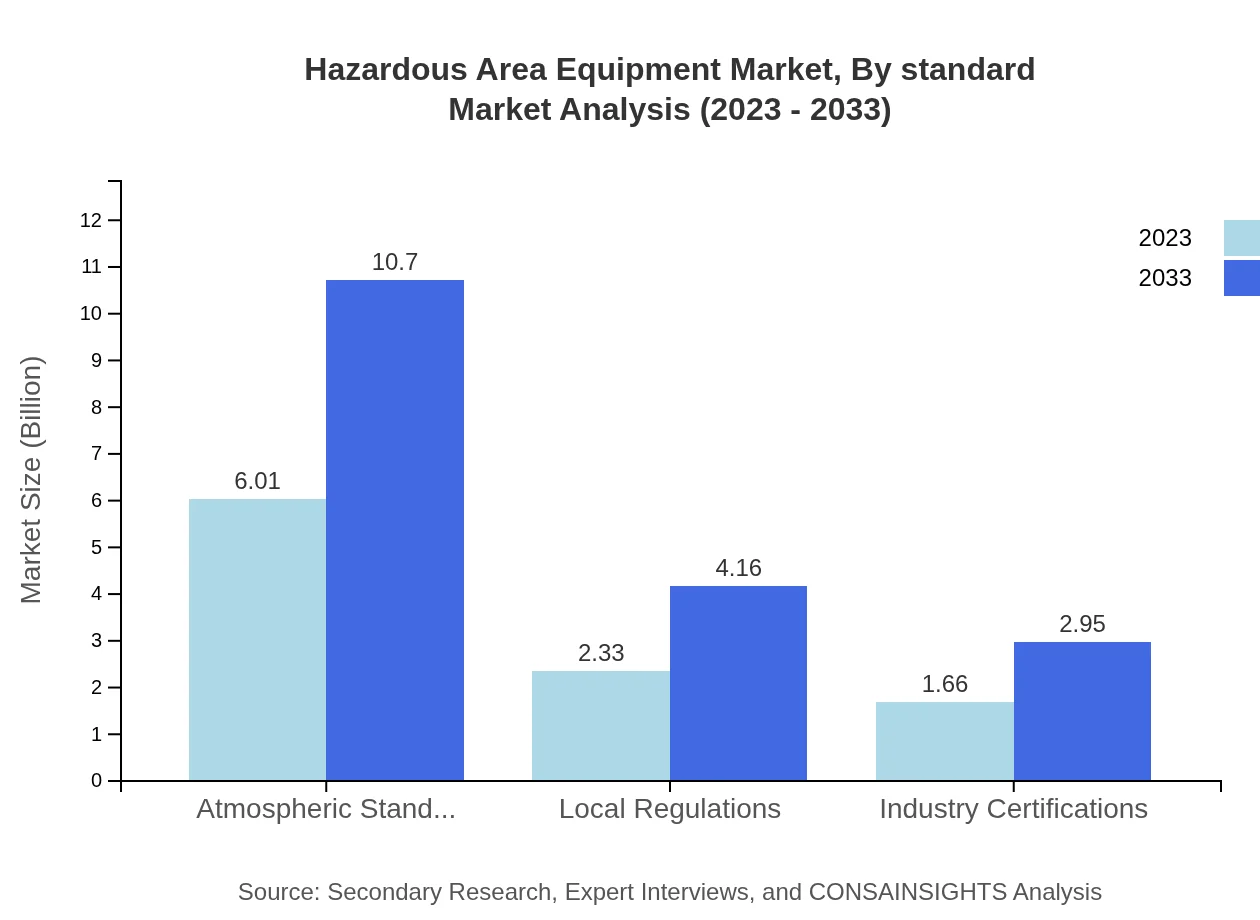
Standards such as Atmospheric Standards and Local Regulations significantly influence the Hazardous Area Equipment market. The Atmospheric Standards sector accounts for a size of $6.01 billion in 2023, expected to grow to $10.70 billion. Local regulations also play a crucial role, with a market size growing from $2.33 billion to $4.16 billion over the forecast period.
Hazardous Area Equipment Market Analysis By End User
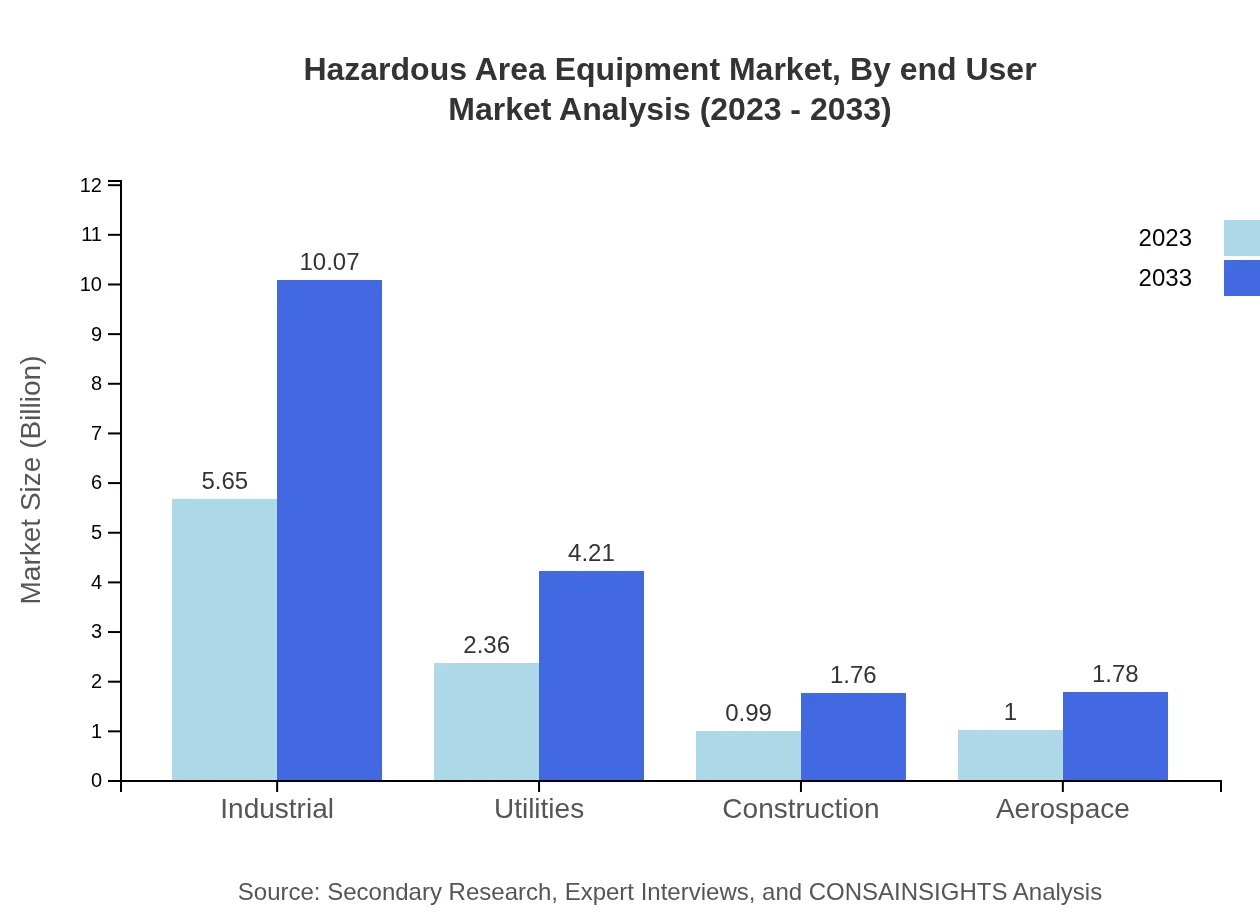
The end-user analysis reveals a strong concentration of hazardous area equipment usage in the oil and gas sector, reflecting a deep-rooted demand for reliable safety solutions. Other end-users include utilities and construction, showcasing the market's diversity across various industries needing adherence to safety standards.
Hazardous Area Equipment Market Analysis By Distribution Channel
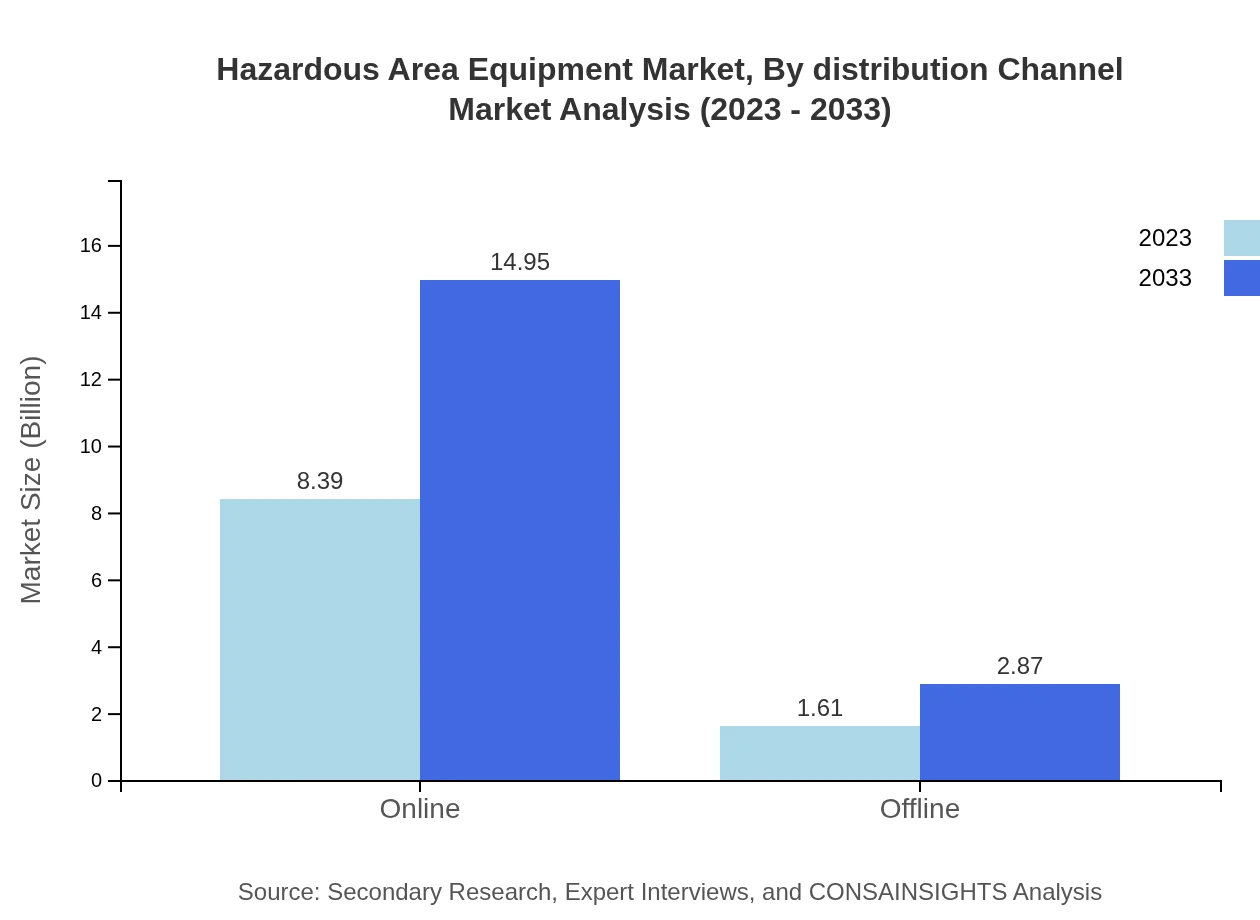
The distribution of hazardous area equipment is streamlined through online and offline channels. The online segment accounts for 83.91% of market share in 2023, with significant potential for growth as manufacturers adopt advanced digital strategies. Offline channels, while smaller, held a notable share of 16.09%, serving traditional retail and direct sales strategies.
Hazardous Area Equipment Market Trends and Future Forecast
Tell us your focus area and get a customized research report.
Global Market Leaders and Top Companies in Hazardous Area Equipment Industry
Siemens AG:
A global leader in automation and digitalization, Siemens offers a comprehensive range of hazardous area equipment that aligns with safety standards while enhancing operational efficiency.Honeywell International Inc.:
Honeywell provides a diverse portfolio of products and services that cater to hazardous area applications, emphasizing safety, reliability, and compliance with global standards.Schneider Electric:
Specializing in energy management and automation, Schneider Electric delivers innovative solutions for hazardous environments, focusing on energy efficiency and sustainability.Eaton Corporation PLC:
Eaton is recognized for its high-performance products designed for hazardous location applications, providing automation and controls to enhance safety and operational reliability.We're grateful to work with incredible clients.









FAQs
What is the market size of the Hazardous Area Equipment market in 2023?
The market size in 2023 is $10.00 Billion, based on the provided report data covering global hazardous area equipment demand and supply conditions for that year.
How big will the market be in 2033?
By 2033 the market is projected to reach $17.81 Billion according to the report figures, reflecting growth across regions and industry-driven demand over the forecast period.
What is CAGR for the forecast period?
The reported compound annual growth rate for 2023 to 2033 is 5.8%, representing the average annual expansion rate used to move from 2023 to 2033 market values.
Is there a single fastest Growing region in the Hazardous Area Equipment Market Report market?
No single fastest-growing region is stated for the Hazardous Area Equipment Market Report market because the top regional implied CAGR values are within 0.15 percentage points of each other, making the ranking too close to call reliably.
Which companies are listed as top vendors?
Top companies cited include Siemens AG, Honeywell International Inc., Schneider Electric, and Eaton Corporation PLC, representing major suppliers and technology providers in the sector.
What are common product categories covered?
Product types specified include lighting equipment, enclosures, sensors and detectors, and motors, which address different protection and monitoring needs in hazardous locations.
How are end User segments organized in the report?
End-user classifications include Industrial, Utilities, Construction, and Aerospace segments, reflecting the primary markets purchasing hazardous area equipment.
What research methods were used for the report?
The study used primary interviews with industry experts, secondary sources like company reports, and data triangulation with internal validation to ensure accuracy.