

Hereceptin Biosimilars Market Report
First published: 11 October 2024 | Last updated: 25 May 2026 | Report Code: hereceptin-biosimilars
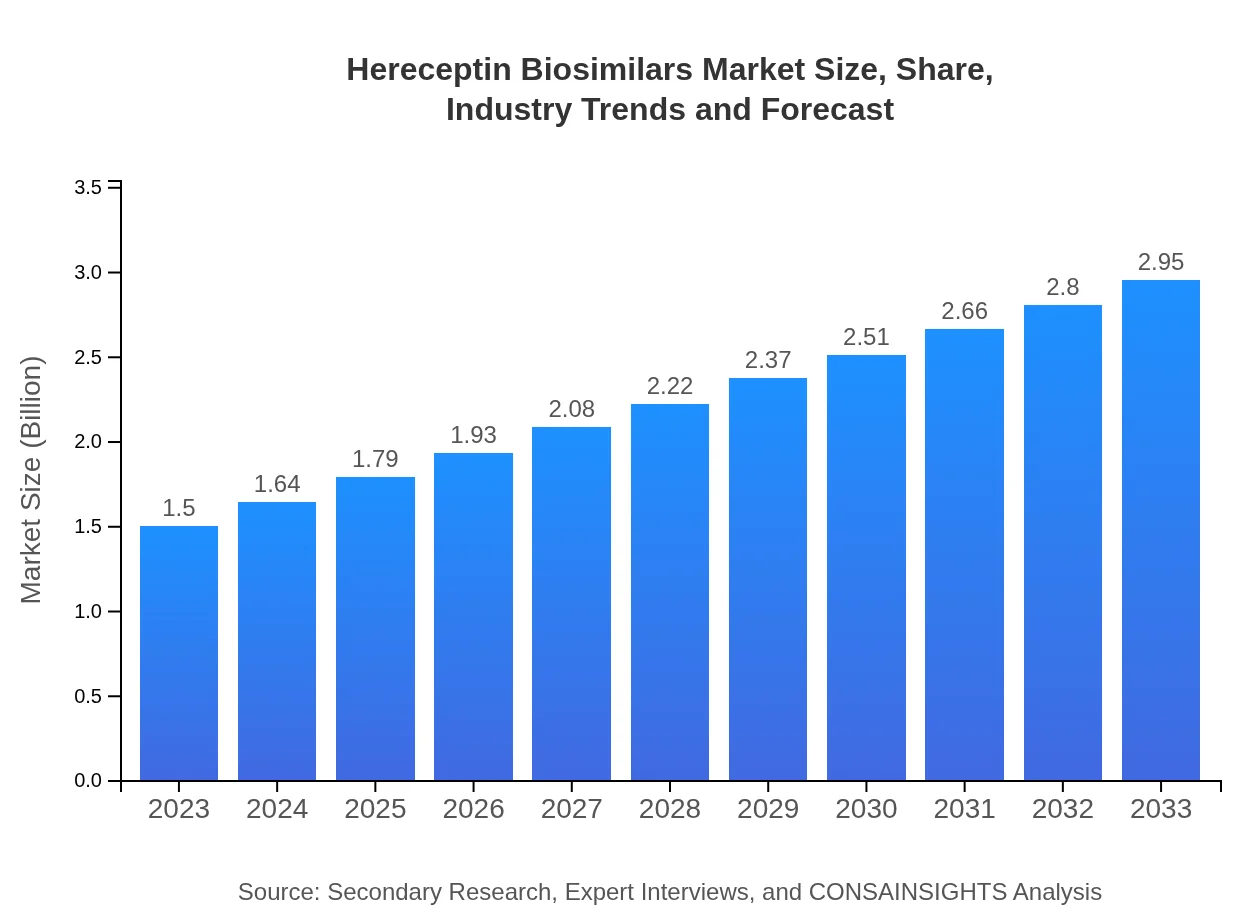
Hereceptin Biosimilars Market — USD 1.5 billion in 2023, Growing to USD 2.95B by 2033 at 6.8% CAGR
This report provides a comprehensive analysis of the Hereceptin Biosimilars market, including market size, growth rates, and forecasts from 2023 to 2033. It further explores industry dynamics, regional insights, segmentation, and competitive landscape.
Key Takeaways
- $1.50 Billion market in 2023 expanding to $2.95 Billion by 2033 at a 6.8% CAGR.
- Europe is largest regional market, while no single fastest-growing region is stated because regional CAGR differences remain within 0.15 percentage points.
- North America grows from $0.48 Billion in 2023 to $0.95 Billion in 2033, reflecting sustained demand.
- Asia Pacific, Latin America, and Middle East & Africa show consistent expansion driven by access and affordability pressures.
- Top industry participants include Roche, Teva Pharmaceuticals, Sandoz, and Amgen supporting market activity.
Hereceptin Biosimilars Market Report — Executive Summary
Europe remains largest market by forecast-period value, while no single fastest-growing region is stated because top regional growth rates are separated by less than 0.15 percentage points. The Hereceptin Biosimilars market is projected to expand from $1.50 Billion in 2023 to $2.95 Billion by 2033, driven by increasing demand for cost-effective HER2-positive cancer therapies and broader biosimilar adoption. Key stimulants include patent expirations of reference biologics, rising cancer incidence, and investments in biosimilar R&D and manufacturing. Regulatory frameworks and pricing trends influence market access and uptake. The market is segmented across product types such as trastuzumab biosimilars and combination therapies, distribution channels including hospital and retail pharmacies, and end users like hospitals and oncology centers. Regional patterns highlight Europe as the largest market, while no single regional market region is named due to close growth rates across top regions. Major companies active in the space include Roche, Teva Pharmaceuticals, Sandoz, and Amgen, which are participating through development, manufacturing, and commercialization efforts.
Key Growth Drivers
- Patent expirations on originator trastuzumab facilitating biosimilar market entry and competition.
- Rising incidence of HER2-positive cancers increasing demand for effective, affordable biologic therapies.
- Regulatory pathways and approvals that enable market authorization and clinician acceptance of biosimilars.
- Investment in manufacturing scale-up and R&D to improve product comparability and supply reliability.
- Pricing pressures prompting health systems to adopt biosimilars as cost-saving alternatives.
| Metric | Value |
|---|---|
| Study Period | 2023 - 2033 |
| 2023 Market Size | $1.50 Billion |
| CAGR (2023-2033) | 6.8% |
| 2033 Market Size | $2.95 Billion |
| Top Companies | Roche, Teva Pharmaceuticals, Sandoz, Amgen |
| Published Date | 11 October 2024 |
| Last Modified Date | 25 May 2026 |
Hereceptin Biosimilars Market Overview
Customize Hereceptin Biosimilars Market Report market research report
- ✔ Get in-depth analysis of Hereceptin Biosimilars market size, growth, and forecasts.
- ✔ Understand Hereceptin Biosimilars's regional dynamics and industry-specific trends.
- ✔ Identify potential applications, end-user demand, and growth segments in Hereceptin Biosimilars
What is the Market Size & CAGR of Hereceptin Biosimilars Market Report market in 2023?
Hereceptin Biosimilars Industry Analysis
Hereceptin Biosimilars Market Segmentation and Scope
Tell us your focus area and get a customized research report.
Hereceptin Biosimilars Market Report Market Analysis Report by Region
Europe Hereceptin Biosimilars Market Report:
Europe is largest regional market, rising from $0.54 Billion in 2023 to $1.07 Billion in 2033. 54 Billion in 2023 to $1.07 Billion in 2033 and is identified as the largest regional market. Growth reflects strong biosimilar frameworks, supportive reimbursement policies, and active adoption within hospital systems.Asia Pacific Hereceptin Biosimilars Market Report:
Asia Pacific grows from $0.27 Billion in 2023 to $0.53 Billion in 2033. Expansion is underpinned by rising healthcare access, efforts to improve affordability, and increasing acceptance of biosimilars in oncology care.North America Hereceptin Biosimilars Market Report:
North America grows from $0.48 Billion in 2023 to $0.95 Billion in 2033. Regional momentum is driven by established healthcare infrastructure, payer focus on cost containment, and clinical adoption pathways that support biosimilar use in oncology settings.South America Hereceptin Biosimilars Market Report:
Latin America grows from $0.12 Billion in 2023 to $0.23 Billion in 2033. Market advances are shaped by initiatives to expand treatment availability, pricing considerations, and gradual uptake of biosimilar therapies.Middle East & Africa Hereceptin Biosimilars Market Report:
Middle East and Africa grows from $0.09 Billion in 2023 to $0.17 Billion in 2033. Growth drivers include improving healthcare delivery, policy efforts to enhance access, and attention to cost-effective biologic options.Tell us your focus area and get a customized research report.
Research Methodology
Hereceptin Biosimilars Market Analysis By Product
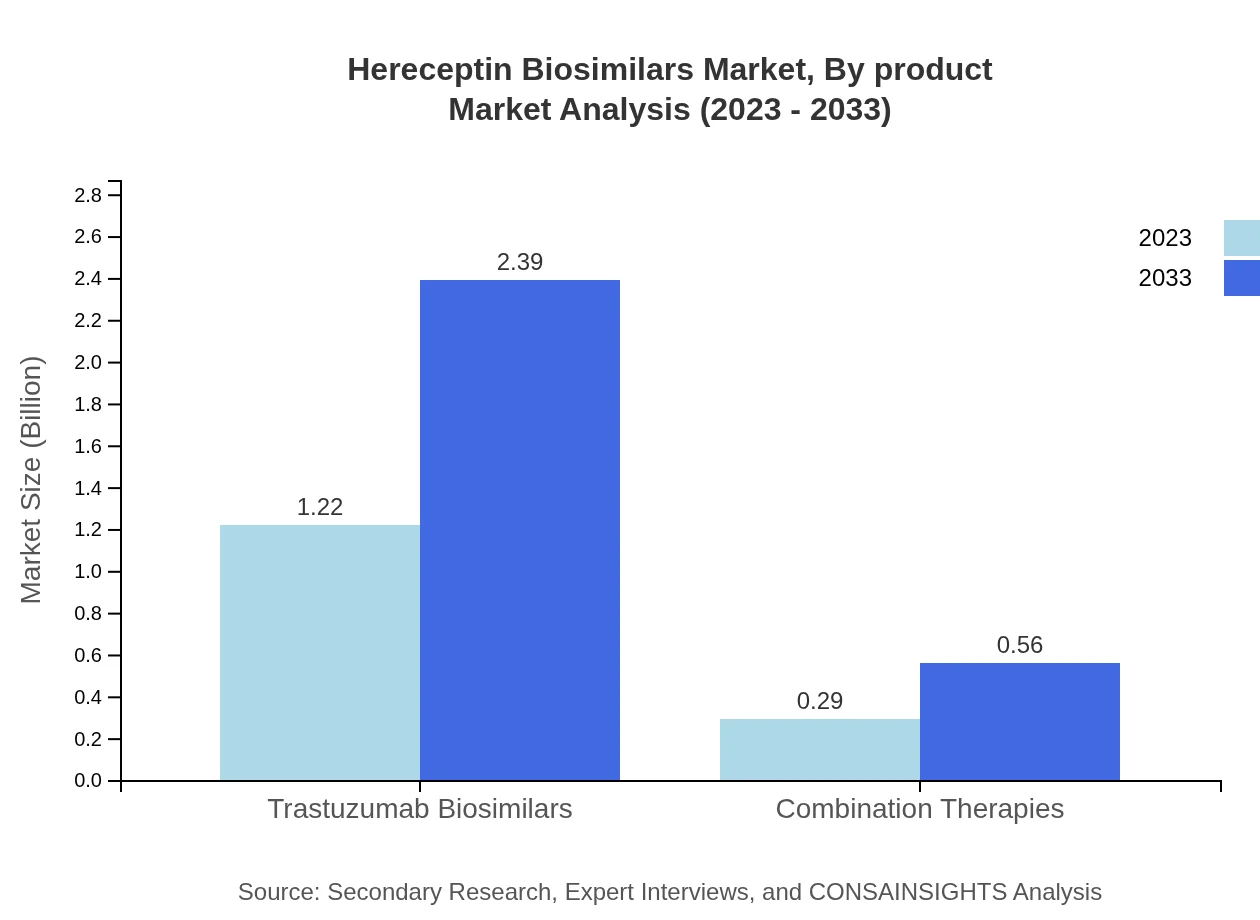
The Trastuzumab biosimilars segment, representing the largest share, accounts for a market size of $1.22 billion in 2023 and is projected to reach $2.39 billion by 2033. Combination therapies are also gaining traction, with growth from $0.29 billion to $0.56 billion during the same period.
Hereceptin Biosimilars Market Analysis By Application
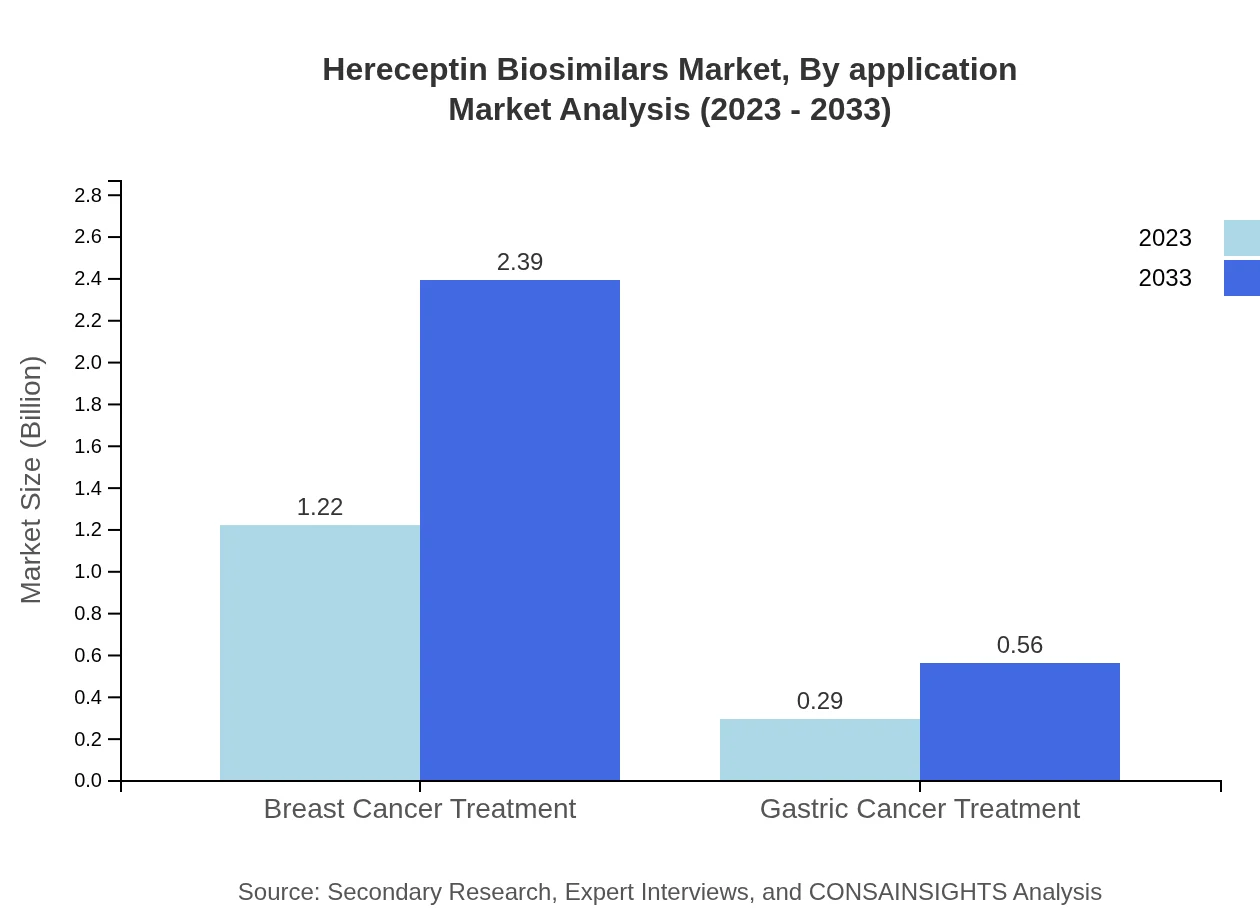
Breast cancer treatment dominates the market, which is valued at $1.22 billion in 2023 and expected to maintain this leading position through to 2033. Gastric cancer applications represent a smaller, yet growing segment, starting from $0.29 billion and growing to $0.56 billion.
Hereceptin Biosimilars Market Analysis By Distribution Channel
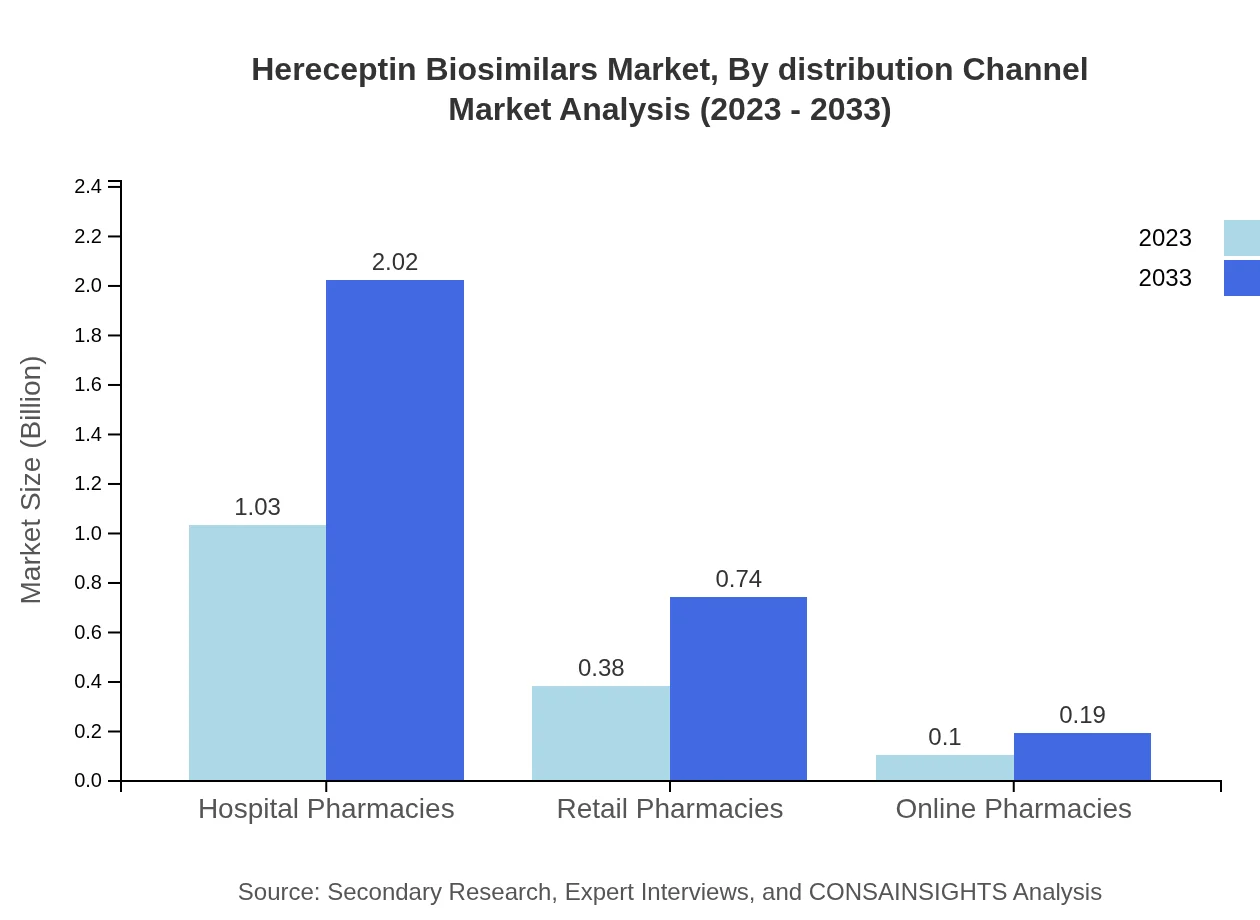
Hospital pharmacies are the largest distribution channel, with market size at $1.03 billion in 2023 and expected to grow to $2.02 billion by 2033. Retail and online pharmacies also play a crucial role, showing substantial growth rates.
Hereceptin Biosimilars Market Analysis By End User
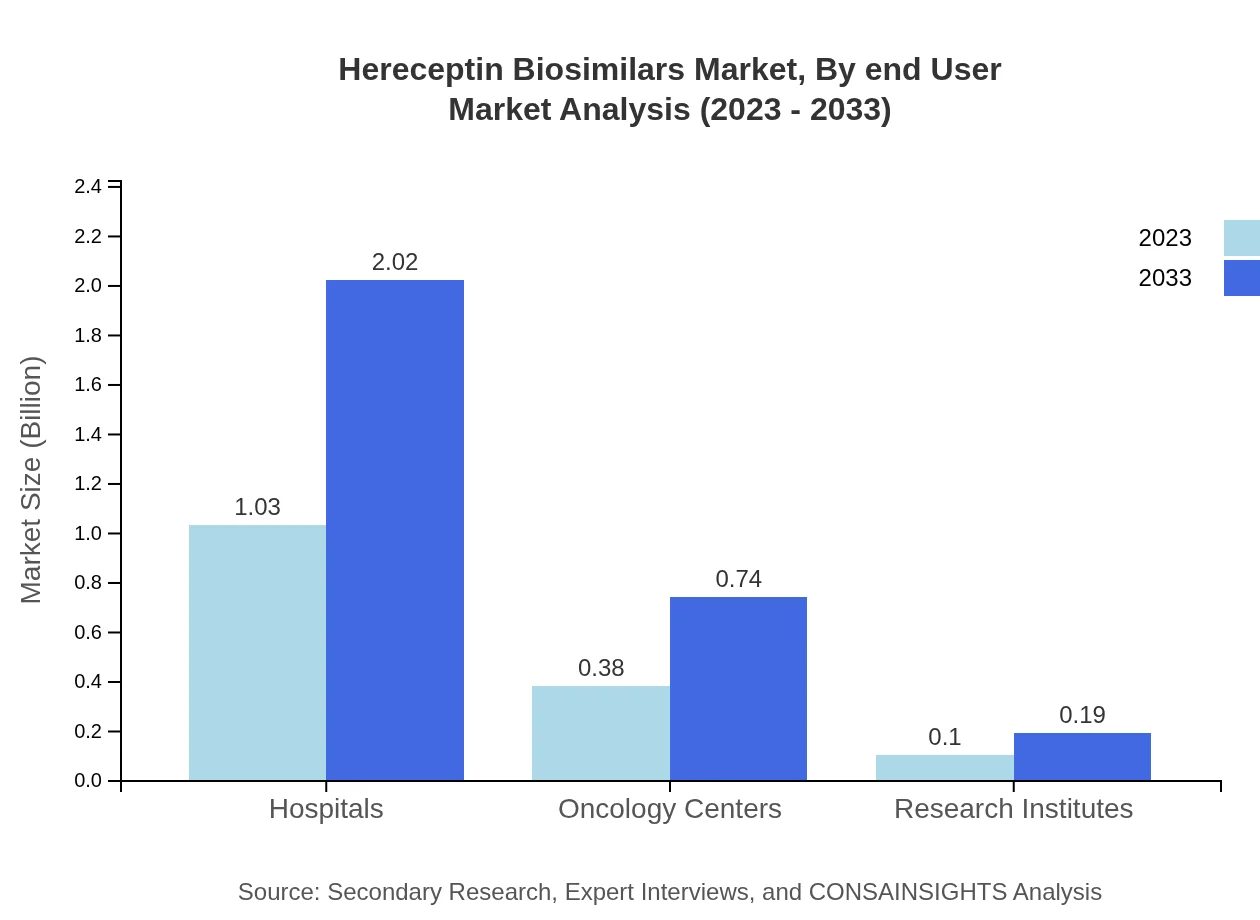
Hospitals are the predominant end-user segment, accounting for a market size of $1.03 billion in 2023, projected to hit $2.02 billion by 2033. Oncology centers follow closely, emphasizing a structured patient's pathway for complex treatments.
Hereceptin Biosimilars Market Analysis By Region Market Factors
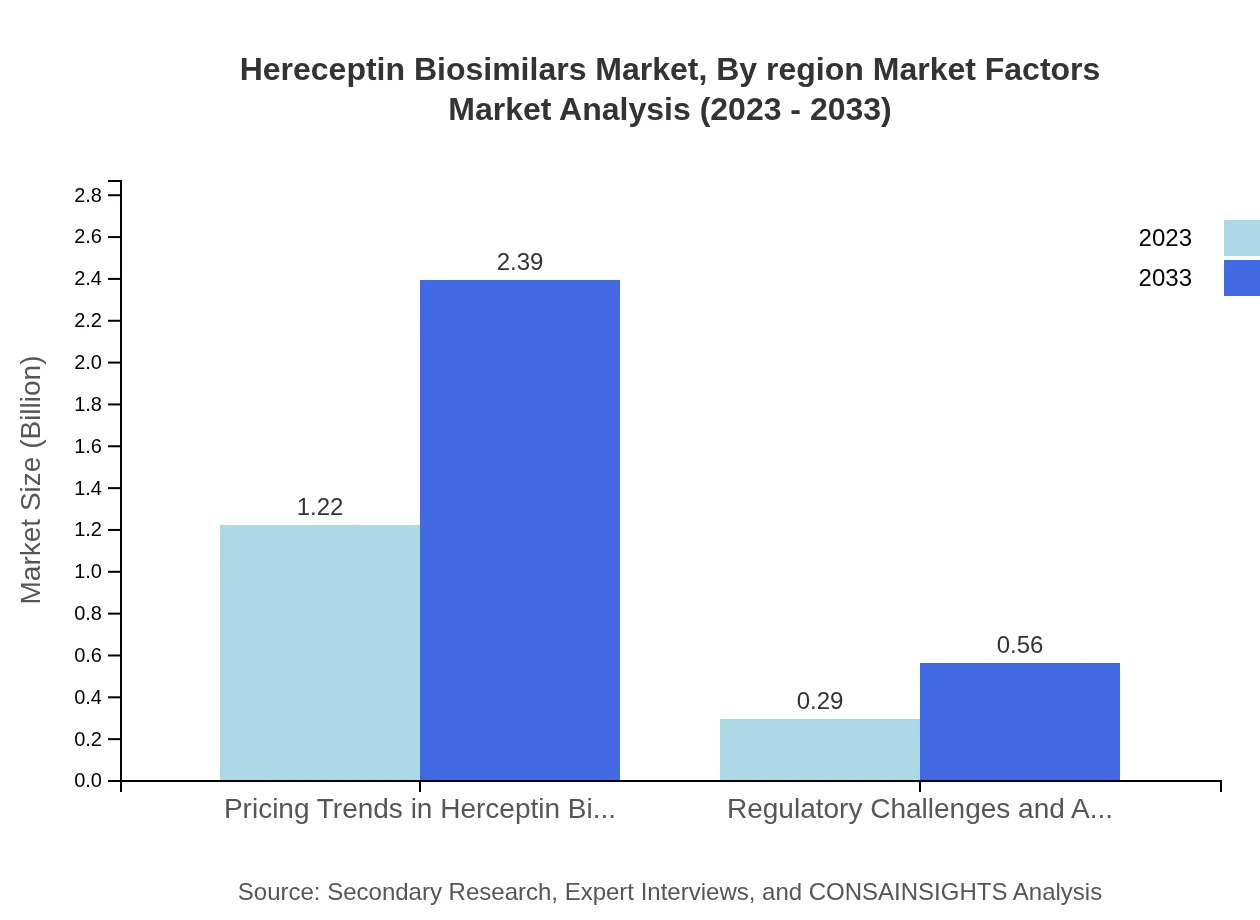
Key market factors influencing the Hereceptin Biosimilars market include regulatory challenges related to approvals, pricing trends reflecting cost-effectiveness, and the ongoing shift towards personalized medicine approaches, which cater to the specific healthcare needs of patients.
Hereceptin Biosimilars Market Trends and Future Forecast
Tell us your focus area and get a customized research report.
Global Market Leaders and Top Companies in Hereceptin Biosimilars Industry
Roche:
A pioneer in biologics with strong market presence, Roche's products heavily influence the pricing dynamics and innovation trends in the biosimilars market.Teva Pharmaceuticals:
Teva specializes in generics and biosimilars, leveraging its extensive distribution network to promote the uptake of its Hereceptin biosimilar products globally.Sandoz:
Sandoz is a major player focusing on biosimilars development, recognized for its commitment to quality and affordability in cancer treatment options.Amgen:
A leading biotechnology company, Amgen engages in biosimilars development and plays a significant role in shaping industry standards for biosimilars.We're grateful to work with incredible clients.








FAQs
What is the market size of the Hereceptin Biosimilars Market Report?
The market size was $1.50 Billion in 2023 and is projected to reach $2.95 Billion by 2033, reflecting the forecasted expansion over the 2023 to 2033 period.
How big is the market expected to be in 2033?
By 2033 the market is expected to be $2.95 Billion as provided in the forecast for the 2023 to 2033 period.
Why is Europe highlighted in the report?
Europe is identified as the largest regional market, moving from $0.54 Billion in 2023 to $1.07 Billion in 2033, reflecting substantial regional adoption and infrastructure for biosimilars.
Is there a single fastest Growing region in the Hereceptin Biosimilars Market Report market?
No single fastest-growing region is stated for the Hereceptin Biosimilars Market Report market because the top regional implied CAGR values are within 0.15 percentage points of each other, making the ranking too close to call reliably.
Who are the primary end users for these biosimilars?
Primary end users include hospitals, oncology centers, and research institutes, which are key channels for treatment delivery and clinical adoption.
What is CAGR of the Hereceptin Biosimilars market?
The compound annual growth rate (CAGR) for the forecast period 2023 to 2033 is 6.8%, as specified in the report data.
How big is the North America market in 2023 and 2033?
North America is reported at $0.48 Billion in 2023 and grows to $0.95 Billion in 2033, according to the regional figures provided.
What factors drive regional growth in Asia Pacific?
Asia Pacific expansion, shown from $0.27 Billion in 2023 to $0.53 Billion in 2033, is supported by increasing access to care and cost-driven adoption of biosimilars.