

Hydroxychloroquine Drugs Market Report
First published: 08 October 2024 | Last updated: 25 May 2026 | Report Code: hydroxychloroquine-drugs
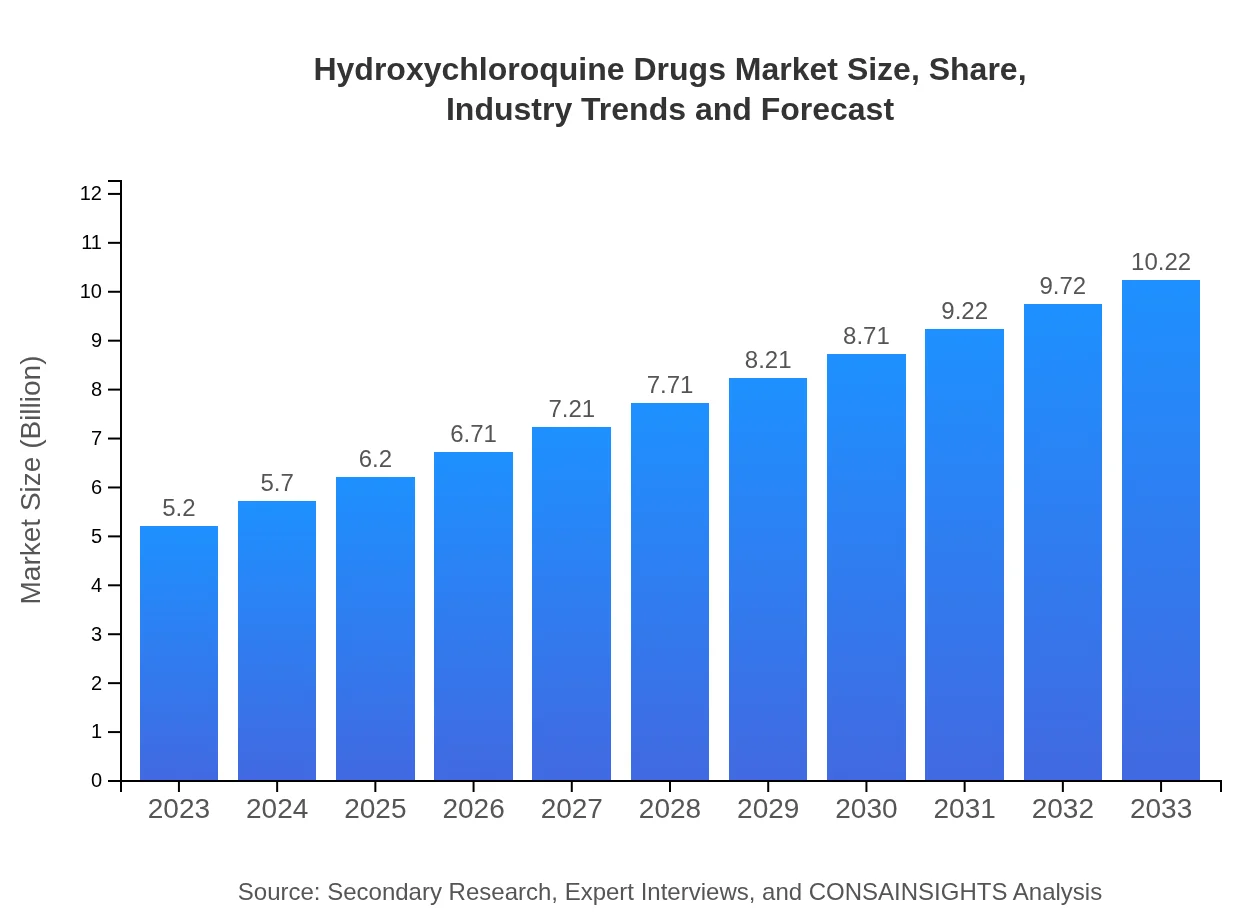
Hydroxychloroquine Drugs Market — USD 5.2 billion in 2023, Growing to USD 10.22B by 2033 at 6.8% CAGR
This report encompasses a comprehensive analysis of the Hydroxychloroquine Drugs market, detailing key insights from 2023 to 2033. It examines market trends, growth projections, regional dynamics, and competitive landscape to provide a thorough understanding of the opportunities and challenges in this segment.
Key Takeaways
- Global market value increases from $5.20 Billion in 2023 to $10.22 Billion in 2033, with a 6.8% CAGR for 2023 to 2033.
- North America is largest regional market, while no single fastest-growing region is stated because regional CAGR differences remain within 0.15 percentage points.
- Europe moves from $1.43 Billion in 2023 to $2.81 Billion in 2033, reflecting sustained clinical and generic activity.
- Asia Pacific expands from $1.03 Billion in 2023 to $2.03 Billion in 2033, supported by growing healthcare access and generics.
- Market structure includes oral and injectable formulations, hospital and home care end users, and multiple distribution channels.
- Leading manufacturers named include Sanofi, Teva Pharmaceuticals, Mylan, AbbVie, and GlaxoSmithKline.
Hydroxychloroquine Drugs Market Report — Executive Summary
North America remains largest market by forecast-period value, while no single fastest-growing region is stated because top regional growth rates are separated by less than 0.15 percentage points. The Hydroxychloroquine Drugs Market Report presents market fundamentals and the competitive landscape from 2023 to 2033. The market grew to $5.20 Billion in 2023 and is forecast to reach $10.22 Billion by 2033 at a 6.8% CAGR. Expansion is driven by persistent therapeutic demand, repositioning debates, and broader access to generic supply. Regional patterns show market concentration in North America, with notable gains across Europe and Asia Pacific. The market comprises oral and injectable formulations, distribution via hospital and retail pharmacies as well as online channels, and end users spanning hospitals, clinics, and home care settings. Key vendors such as Sanofi, Teva Pharmaceuticals, Mylan, AbbVie, and GlaxoSmithKline compete amid regulatory scrutiny and product differentiation efforts. This report offers segmented analysis, regional profiles, and trend assessment grounded in primary interviews, secondary sources, and data validation.
Key Growth Drivers
- Rising demand for indicated treatments and continued clinical use boosting baseline consumption.
- Expansion of generic manufacturing increasing availability and price-competitive supply.
- Strengthening hospital and outpatient care infrastructure supporting distribution across channels.
- Regulatory focus and ongoing clinical evaluations shaping product positioning and safety monitoring.
- Broader access in emerging healthcare markets driving uptake in Asia Pacific and Latin America.
| Metric | Value |
|---|---|
| Study Period | 2023 - 2033 |
| 2023 Market Size | $5.20 Billion |
| CAGR (2023-2033) | 6.8% |
| 2033 Market Size | $10.22 Billion |
| Top Companies | Sanofi, Teva Pharmaceuticals, Mylan, AbbVie, GlaxoSmithKline |
| Published Date | 08 October 2024 |
| Last Modified Date | 25 May 2026 |
Hydroxychloroquine Drugs Market Overview
Customize Hydroxychloroquine Drugs Market Report market research report
- ✔ Get in-depth analysis of Hydroxychloroquine Drugs market size, growth, and forecasts.
- ✔ Understand Hydroxychloroquine Drugs's regional dynamics and industry-specific trends.
- ✔ Identify potential applications, end-user demand, and growth segments in Hydroxychloroquine Drugs
What is the Market Size & CAGR of Hydroxychloroquine Drugs Market Report market in 2023?
Hydroxychloroquine Drugs Industry Analysis
Hydroxychloroquine Drugs Market Segmentation and Scope
Tell us your focus area and get a customized research report.
Hydroxychloroquine Drugs Market Report Market Analysis Report by Region
Europe Hydroxychloroquine Drugs Market Report:
Europe grows from $1.43 Billion in 2023 to $2.81 Billion in 2033. The region's expansion reflects steady clinical use, a strong generics presence, and regulatory frameworks that influence product availability and safety oversight.Asia Pacific Hydroxychloroquine Drugs Market Report:
Asia Pacific grows from $1.03 Billion in 2023 to $2.03 Billion in 2033. Increased healthcare access, rising treatment uptake, and expansion of local generic manufacturing support market growth in this region.North America Hydroxychloroquine Drugs Market Report:
North America is largest regional market, rising from $1.88 Billion in 2023 to $3.7 Billion in 2033. The regional market benefits from established clinical networks, robust hospital procurement, and extensive distribution channels that sustain demand across formulations and end users.South America Hydroxychloroquine Drugs Market Report:
Latin America grows from $0.26 Billion in 2023 to $0.51 Billion in 2033. Growth drivers include widening healthcare access and a growing role for retail and hospital pharmacies in supplying therapies.Middle East & Africa Hydroxychloroquine Drugs Market Report:
Middle East and Africa grows from $0.6 Billion in 2023 to $1.18 Billion in 2033. Market gains are linked to investments in healthcare services, improving distribution channels, and greater adoption across clinical settings.Tell us your focus area and get a customized research report.
Research Methodology
Hydroxychloroquine Drugs Market Analysis By Drug Formulation
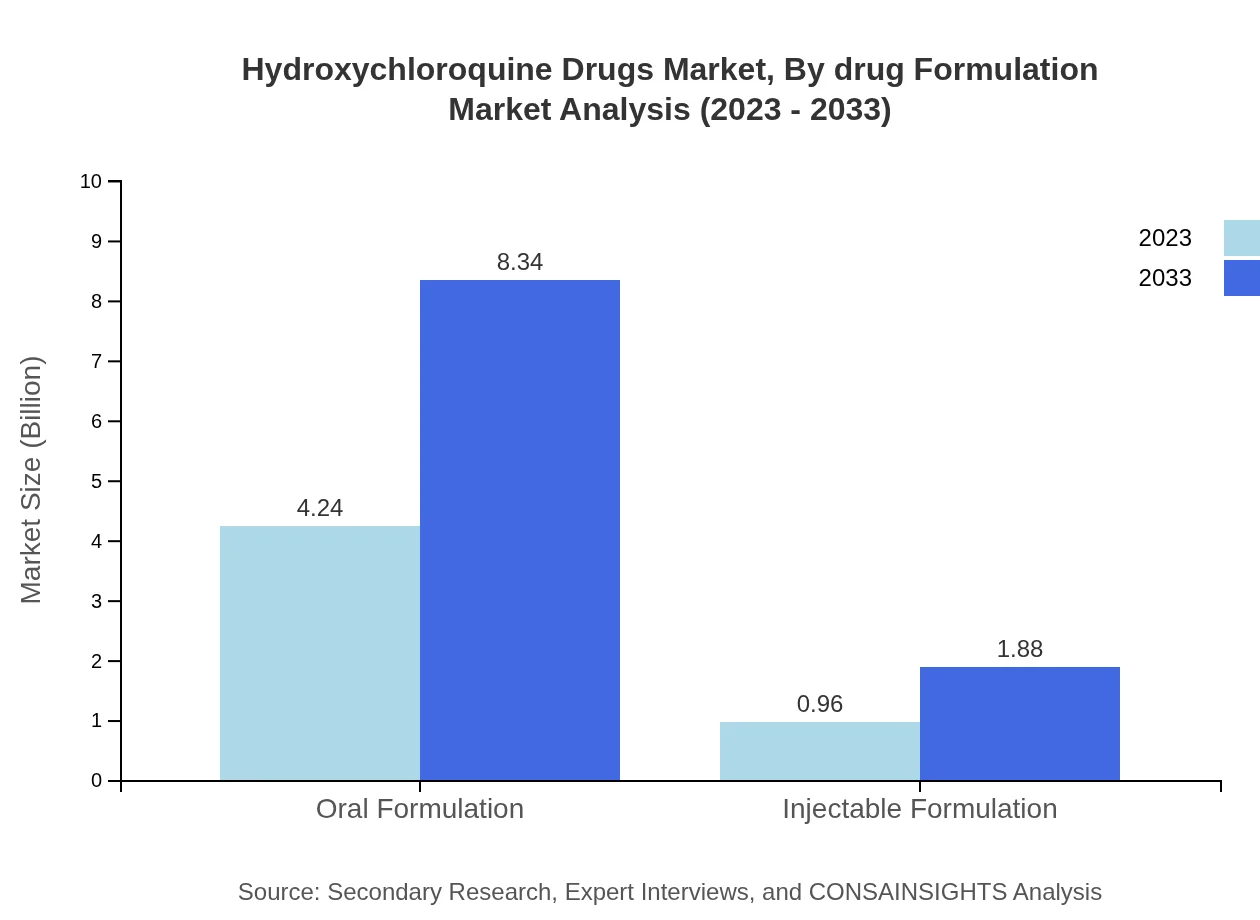
The Hydroxychloroquine market is primarily segmented into oral and injectable formulations. In 2023, oral formulations accounted for $4.24 billion, representing 81.56% market share, while injectable formulations contributed $0.96 billion (18.44% share). By 2033, the oral formulations are expected to increase to $8.34 billion, while injectables are projected to reach $1.88 billion.
Hydroxychloroquine Drugs Market Analysis By Route Of Administration
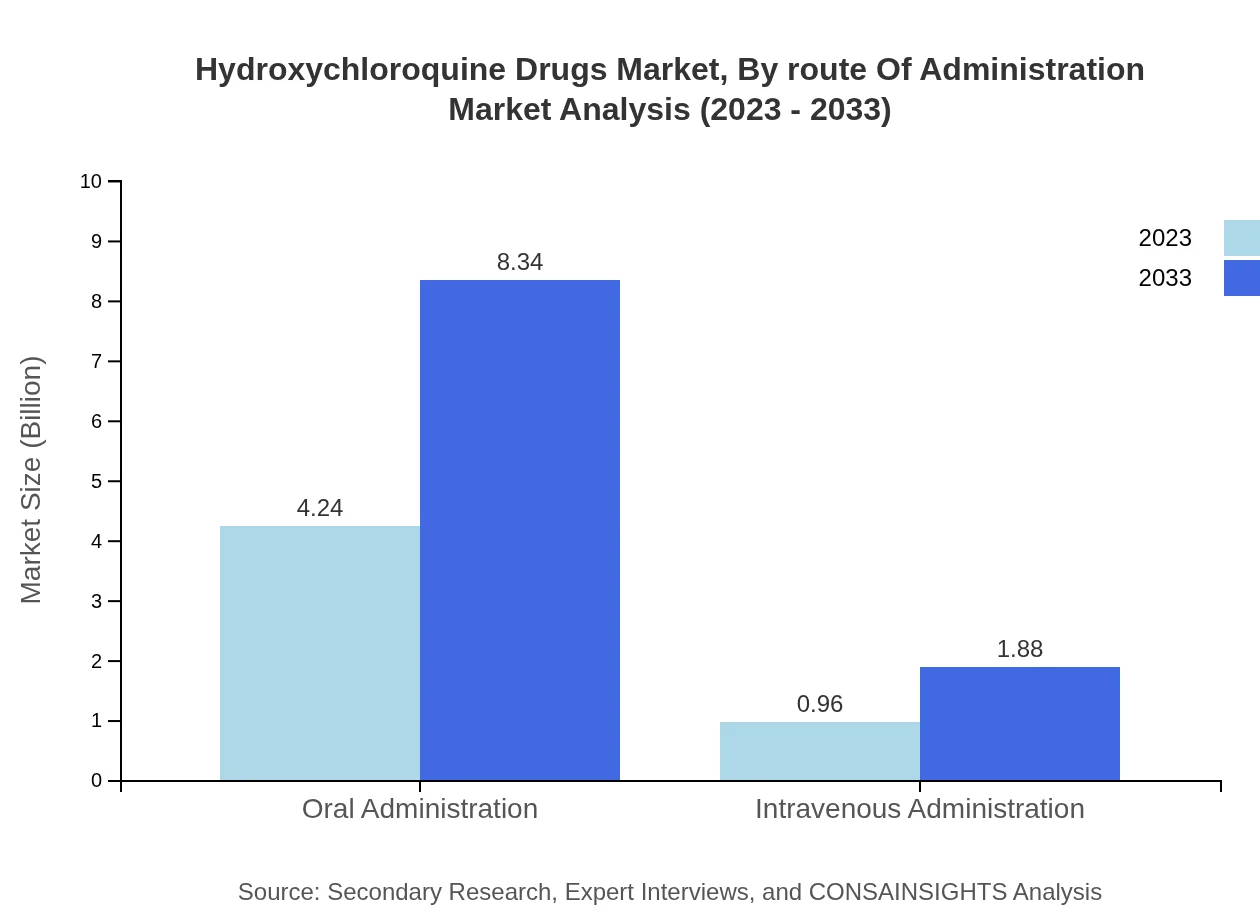
The predominant route of administration for Hydroxychloroquine is oral, representing a significant portion of patient applications. By 2033, oral administration will continue to hold the majority share at 81.56%, demonstrating sustained preference. Intravenous routes, although smaller in share, are also poised for growth, reaching $1.88 billion by 2033.
Hydroxychloroquine Drugs Market Analysis By Disease Indication
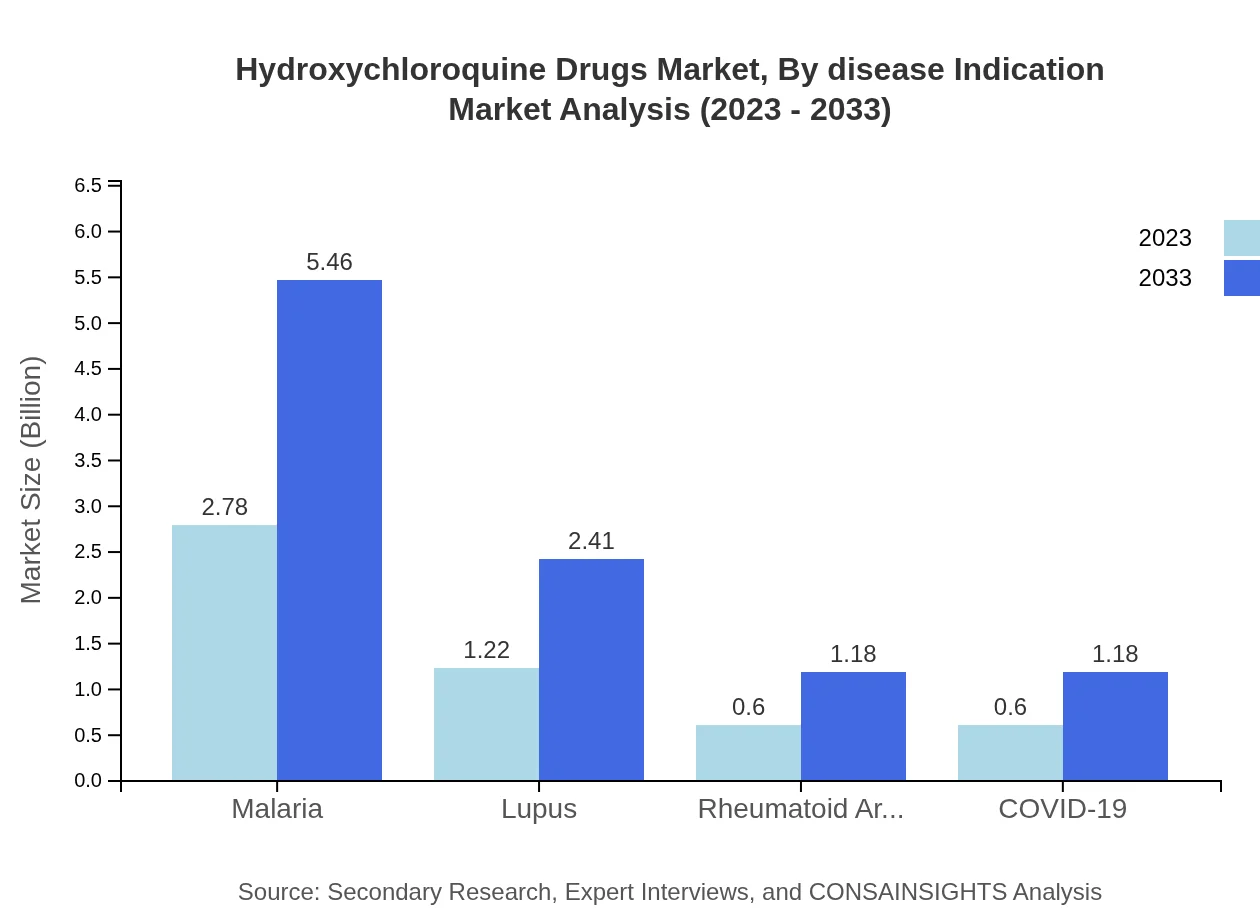
Market segmentation by disease indicates a notable distribution, where malaria remains the leading indication. As of 2023, malaria contributes $2.78 billion (53.38% share) and is projected to escalate to $5.46 billion. Lupus and rheumatoid arthritis represent significant sectors, with shares of 23.54% and 11.55% respectively.
Hydroxychloroquine Drugs Market Analysis By Distribution Channel
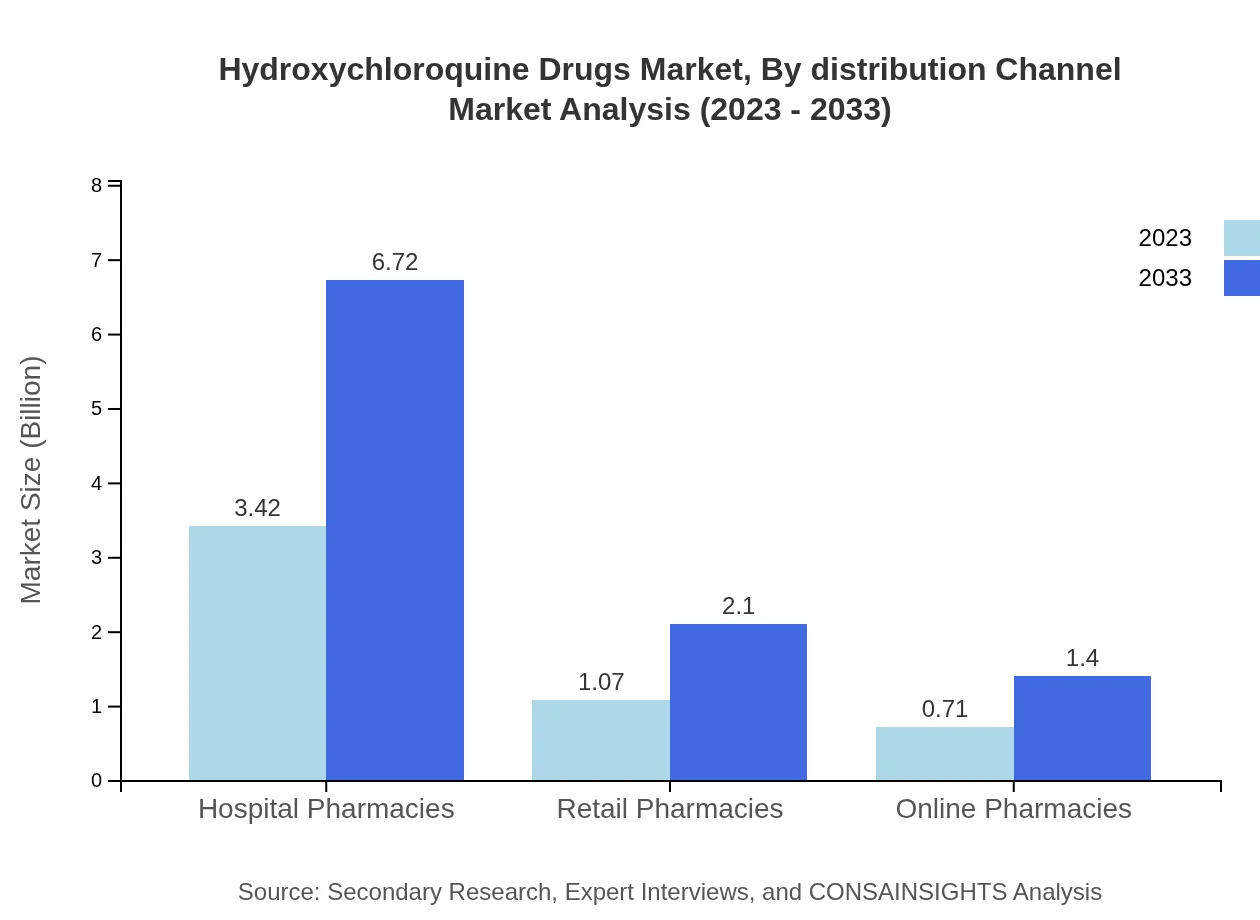
Hospital pharmacies lead the distribution channel segment with a share of 65.72% in 2023, showing robust growth potential as the market evolves. Retail and online pharmacies are also critical, constituting 20.56% and 13.72% shares respectively, indicating a shift towards more accessible patient care solutions.
Hydroxychloroquine Drugs Market Analysis By End User
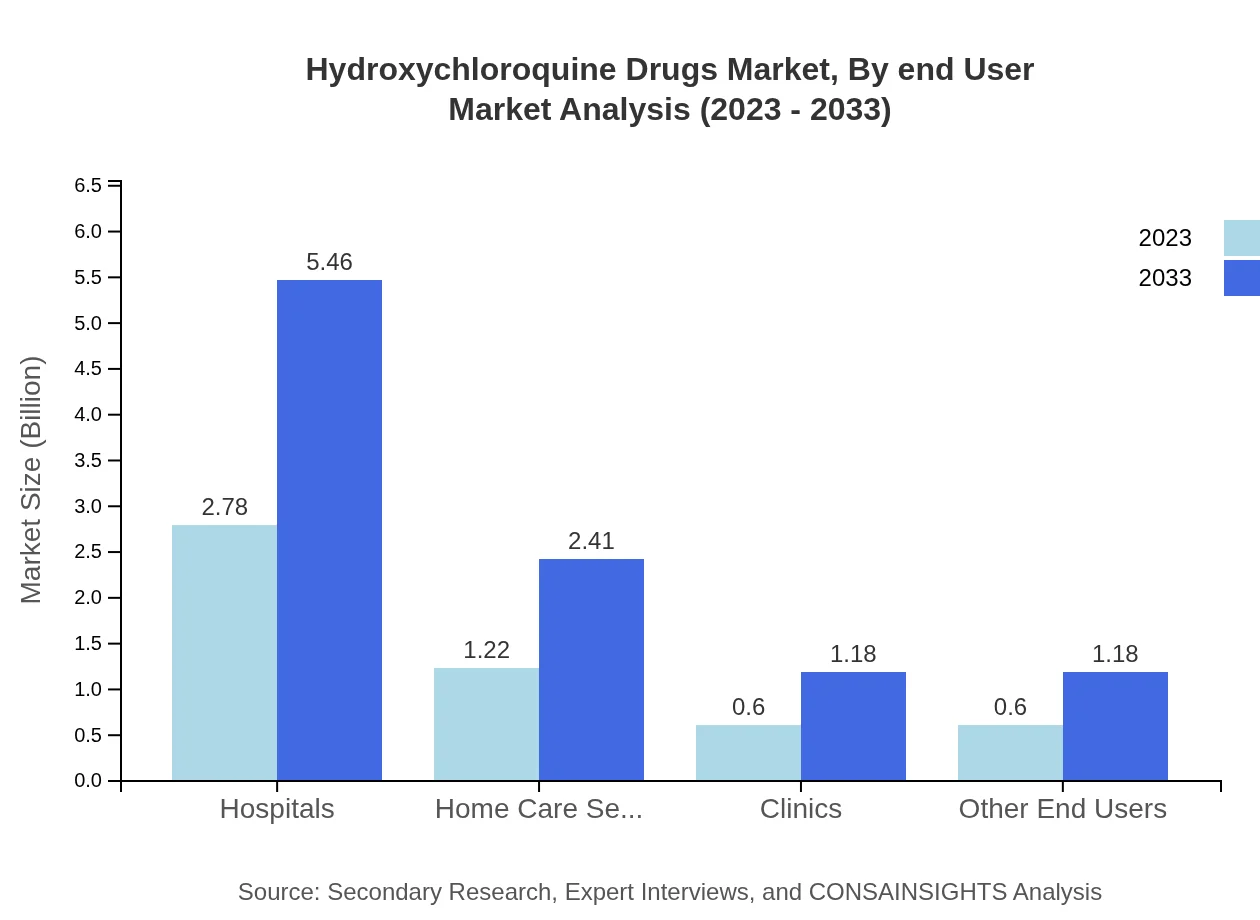
The Hydroxychloroquine Drugs market by end-user shows hospitals as the largest segment, achieving a valuation of $2.78 billion in 2023 and reflecting a steady growth trajectory. Home care settings and clinics, while smaller, are essential contributors, with respective projected values of $1.22 billion and $0.60 billion in 2023.
Hydroxychloroquine Drugs Market Trends and Future Forecast
Tell us your focus area and get a customized research report.
Global Market Leaders and Top Companies in Hydroxychloroquine Drugs Industry
Sanofi:
Sanofi is a global healthcare leader specializing in pharmaceuticals and vaccines, significantly involved in Hydroxychloroquine production and remediation for various diseases.Teva Pharmaceuticals:
Teva is a leading generic pharmaceutical company that plays a crucial role in the Hydroxychloroquine market, providing access to affordable medications worldwide.Mylan:
Mylan is recognized for its extensive portfolio in generics and specialty pharmaceuticals, including Hydroxychloroquine, catering primarily to autoimmune disease markets.AbbVie:
AbbVie focuses on immunology and oncology, advancing Hydroxychloroquine not only for malaria but also for autoimmune indications.GlaxoSmithKline:
With a strong emphasis on research and development, GlaxoSmithKline manufactures Hydroxychloroquine, ensuring efficacy and safety across various patient demographics.We're grateful to work with incredible clients.








FAQs
What is the current market size of the Hydroxychloroquine Drugs Market Report?
The market size was $5.20 Billion in 2023, as reported, reflecting baseline demand across therapeutic applications and channels.
How big will the market be by 2033?
The market is forecast to reach $10.22 Billion in 2033 according to the report, driven by sustained therapeutic use and broader generic availability.
What is CAGR of the Hydroxychloroquine Drugs Market Report?
The report states a compound annual growth rate of 6.8% for the forecast period 2023 to 2033.
Is there a single fastest Growing region in the Hydroxychloroquine Drugs Market Report market?
No single fastest-growing region is stated for the Hydroxychloroquine Drugs Market Report market because the top regional implied CAGR values are within 0.15 percentage points of each other, making the ranking too close to call reliably.
Which companies lead the Hydroxychloroquine market?
Top companies listed include Sanofi, Teva Pharmaceuticals, Mylan, AbbVie, and GlaxoSmithKline as key market participants.
What are the main distribution channels?
Distribution covers hospital pharmacies, retail pharmacies, and online pharmacies, supporting both institutional and outpatient access.
How big is the Asia Pacific market now and later?
Asia Pacific is reported at $1.03 Billion in 2023 and is projected to grow to $2.03 Billion by 2033, reflecting expanding healthcare access.
What end users are covered in the segmentation?
End-user segments include hospitals, home care settings, clinics, and other end users as specified in the report segmentation.