

Implantable Defibrillators Market Report
First published: 08 October 2024 | Last updated: 25 May 2026 | Report Code: implantable-defibrillators
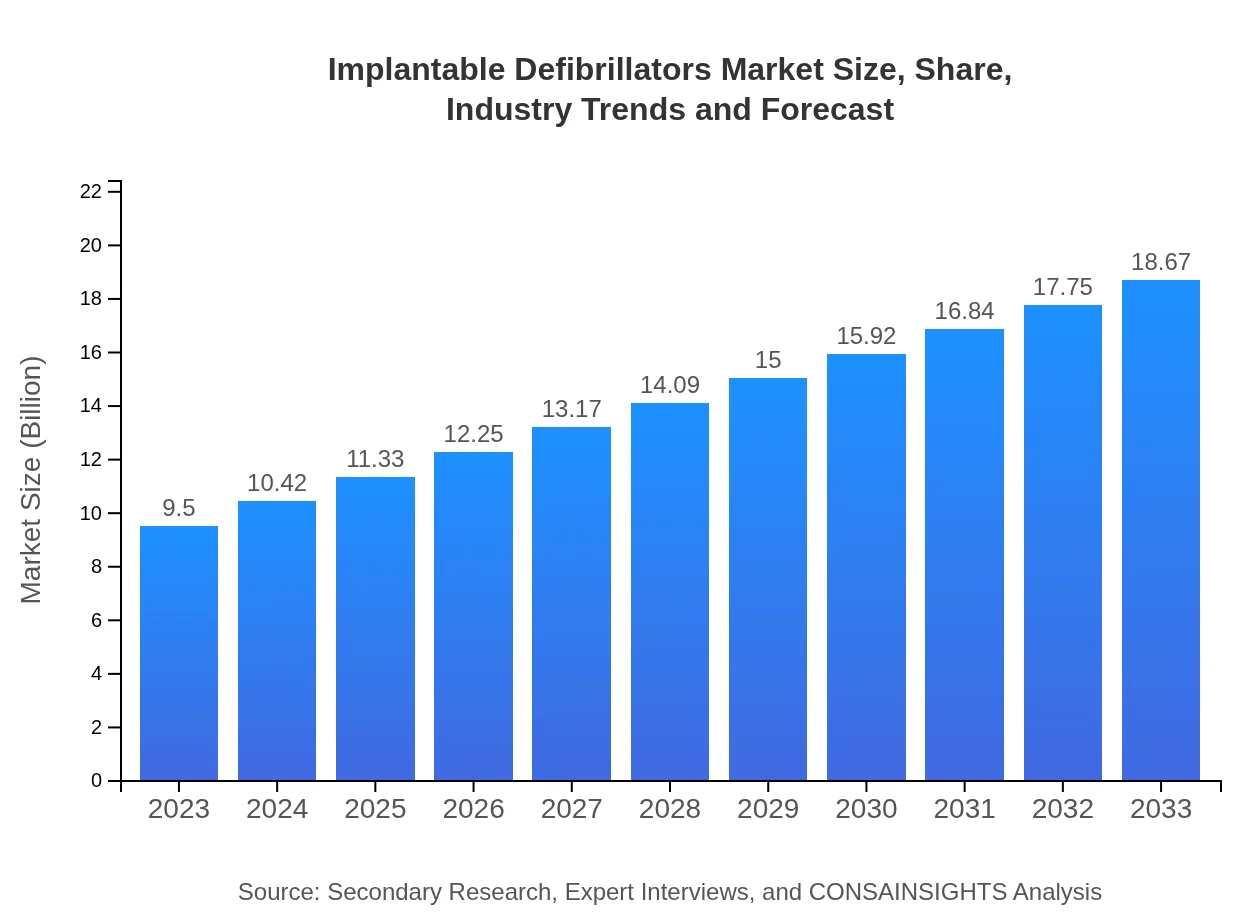
Implantable Defibrillators Market — USD $9.5 Billion in 2023, Growing to USD 18.67null by 2033 at 6.8% CAGR
This report provides an in-depth analysis of the implantable defibrillators market, including insights on market trends, size, segmentation, and growth forecasts from 2023 to 2033.
Key Takeaways
- Global market expands from $9.50 Billion in 2023 to $18.67 Billion in 2033 at a 6.8% CAGR.
- North America is largest regional market, while no single fastest-growing region is stated because regional CAGR differences remain within 0.15 percentage points.
- Europe rises from $2.75 Billion to $5.40 Billion between 2023 and 2033; Asia Pacific advances from $1.72 Billion to $3.37 Billion.
- Leading vendors include Medtronic, Boston Scientific, Abbott Laboratories, Sorin Group, and Biotronik.
- Market segmentation spans product types, applications, end-users and distribution channels relevant to clinical and home settings.
Implantable Defibrillators Market Report — Executive Summary
North America remains largest market by forecast-period value, while no single fastest-growing region is stated because top regional growth rates are separated by less than 0.15 percentage points. Demand for implantable defibrillators is being shaped by demographic trends, increasing cardiovascular disease prevalence, and ongoing device innovation. The market is forecast to grow from $9.50 Billion in 2023 to $18.67 Billion in 2033 at a 6.8% CAGR for 2023 to 2033. Product categories include transvenous, subcutaneous and external defibrillators, while applications cover ventricular fibrillation, arrhythmias, heart failure and other indications. End-users range from hospitals and cardiac centers to ambulatory surgical centers and homecare providers, with distribution through direct sales, medical supply stores and online channels. Competitive dynamics feature established medical-device firms—Medtronic, Boston Scientific, Abbott Laboratories, Sorin Group and Biotronik—focusing on product development and market access. Regional performance varies, with North America reported as the largest market. Key challenges include regulatory complexity and cost pressures, while opportunities arise from technological improvements, expanding healthcare infrastructure and increased clinical awareness of device benefits.
Key Growth Drivers
- Rising incidence of cardiovascular conditions that increase clinical demand for implantable defibrillators.
- Continued innovation in device design and functionality by major manufacturers enhancing clinical adoption.
- Expanding healthcare infrastructure and greater access to cardiac care in multiple regions.
- Aging populations that increase the pool of patients eligible for implantable cardiac therapy.
- Wider distribution channels, including online sales and direct sales models, improving device availability.
| Metric | Value |
|---|---|
| Study Period | 2023 - 2033 |
| 2023 Market Size | $9.50 Billion |
| CAGR (2023-2033) | 6.8% |
| 2033 Market Size | $18.67 Billion |
| Top Companies | Medtronic , Boston Scientific, Abbott Laboratories, Sorin Group, Biotronik |
| Published Date | 08 October 2024 |
| Last Modified Date | 25 May 2026 |
Implantable Defibrillators Market Overview
Customize Implantable Defibrillators Market Report market research report
- ✔ Get in-depth analysis of Implantable Defibrillators market size, growth, and forecasts.
- ✔ Understand Implantable Defibrillators's regional dynamics and industry-specific trends.
- ✔ Identify potential applications, end-user demand, and growth segments in Implantable Defibrillators
What is the Market Size & CAGR of Implantable Defibrillators Market Report market in 2023?
Implantable Defibrillators Industry Analysis
Implantable Defibrillators Market Segmentation and Scope
Tell us your focus area and get a customized research report.
Implantable Defibrillators Market Report Market Analysis Report by Region
Europe Implantable Defibrillators Market Report:
Europe grows from $2.75 Billion in 2023 to $5.4 Billion in 2033. Regional expansion is linked to aging populations, established hospital and cardiac center networks, and continued regulatory and clinical uptake of implantable defibrillator technologies.Asia Pacific Implantable Defibrillators Market Report:
Asia Pacific grows from $1.72 Billion in 2023 to $3.37 Billion in 2033. Growth factors include improving healthcare infrastructure, increasing awareness of cardiac conditions and greater access to device-based therapies across several markets.North America Implantable Defibrillators Market Report:
North America is largest regional market, rising from $3.62 Billion in 2023 to $7.11 Billion in 2033. Local drivers include established cardiac care systems, adoption of advanced device technologies and strong presence of major manufacturers supporting clinical deployment.South America Implantable Defibrillators Market Report:
Latin America grows from $0.24 Billion in 2023 to $0.46 Billion in 2033. Market progress is supported by gradual enhancement of cardiac care services, rising clinical awareness and broader availability of device distribution channels.Middle East & Africa Implantable Defibrillators Market Report:
Middle East and Africa grows from $1.18 Billion in 2023 to $2.33 Billion in 2033. Drivers include investments in healthcare facilities, increased diagnosis and treatment of cardiac conditions, and adoption of implantable device technologies in urban care centers.Tell us your focus area and get a customized research report.
Research Methodology
Implantable Defibrillators Market Analysis By Product Type
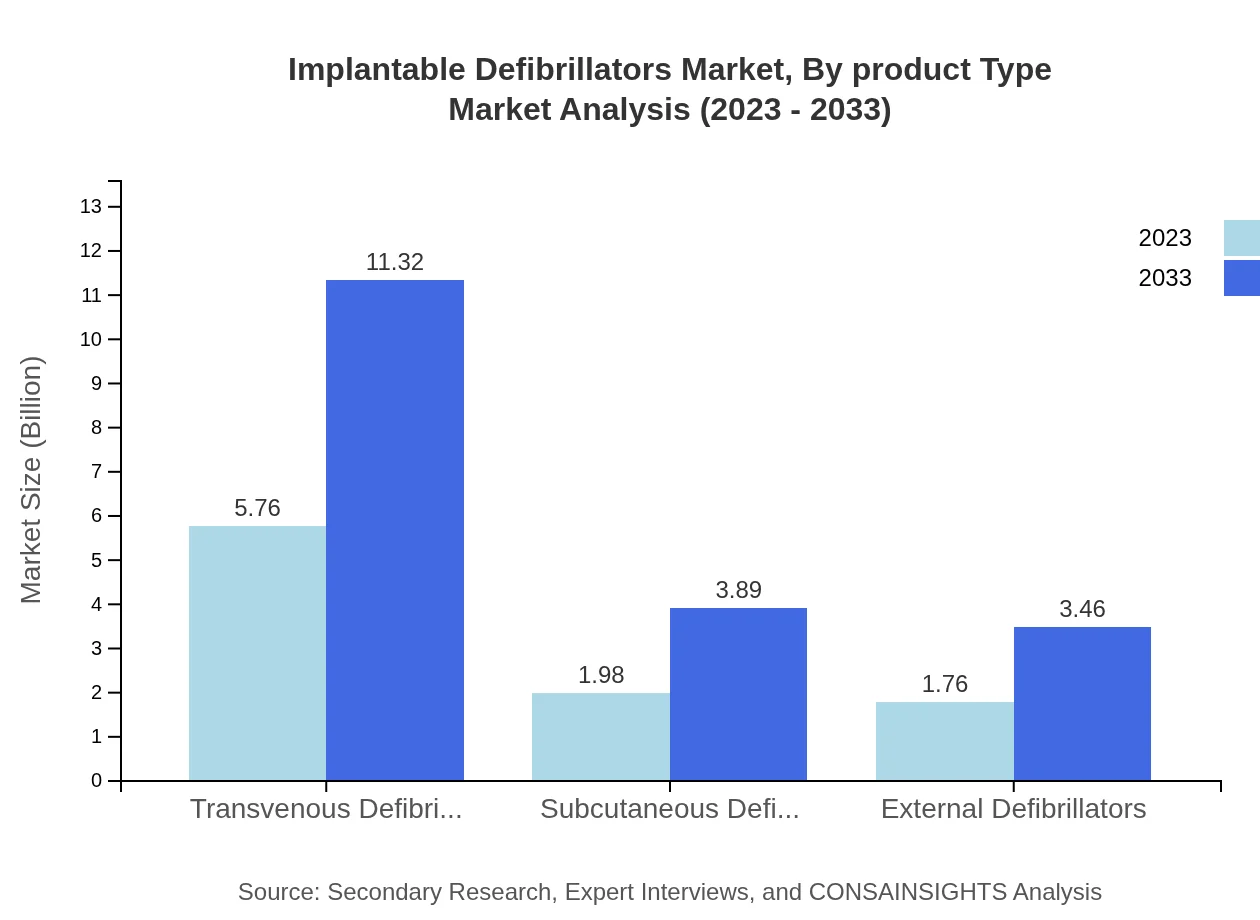
The implantable defibrillators market is characterized by various product types, prominently featuring transvenous defibrillators, which hold a major market share of 60.65% in 2023, rising to 60.65% in 2033. Subcutaneous defibrillators have a significant share at 20.82%, while external defibrillators account for 18.53%. The prominence of transvenous devices is attributable to their efficacy and advanced monitoring capabilities that significantly enhance patient management in arrhythmias.
Implantable Defibrillators Market Analysis By Application
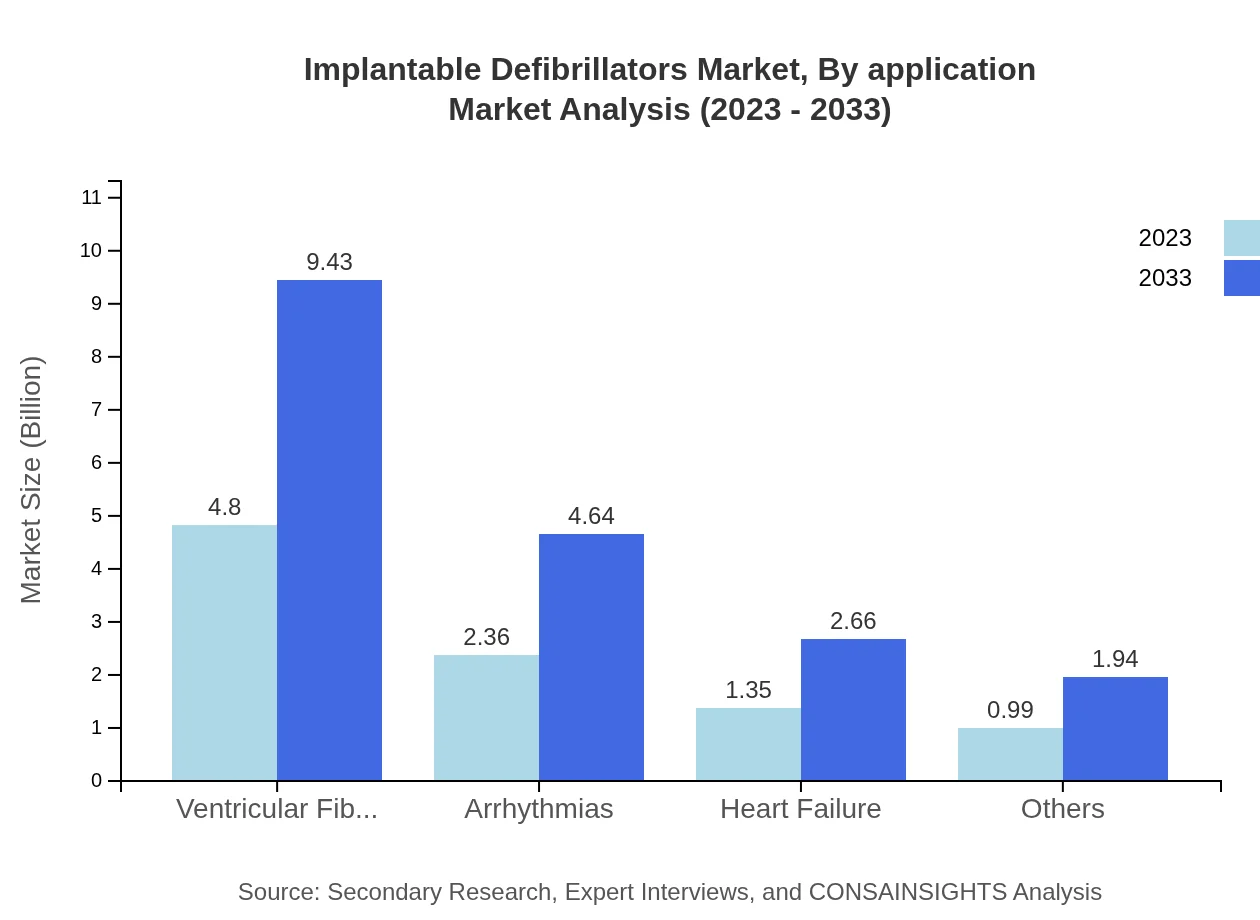
By application, the market is largely driven by its role in treating ventricular fibrillation, contributing to approximately 50.52% of the total market share in 2023 and remaining consistent through 2033. Arrhythmias and heart failure comprise crucial segments warranting advanced intervention, with 24.83% and 14.25% share respectively in 2023, highlighting their medical significance.
Implantable Defibrillators Market Analysis By End User
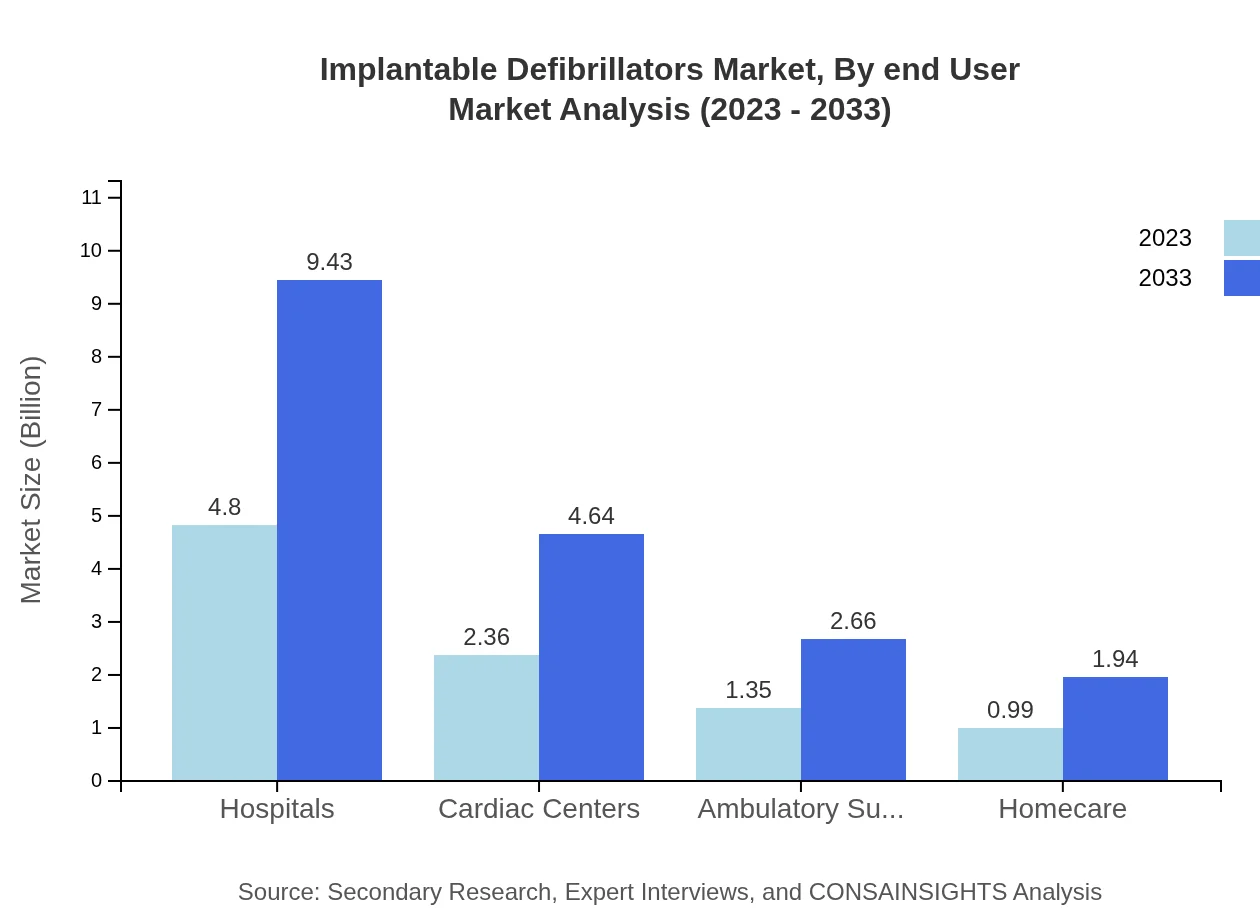
Hospitals are the leading end-user segment within the implantable defibrillators market, possessing a share of 50.52% in 2023, projected to remain stable in the next decade. Cardiac centers and ambulatory surgical centers, with shares of 24.83% and 14.25%, respectively, also remain vital within care frameworks, reflecting their crucial role in advanced cardiac care provisions.
Implantable Defibrillators Market Analysis By Distribution Channel
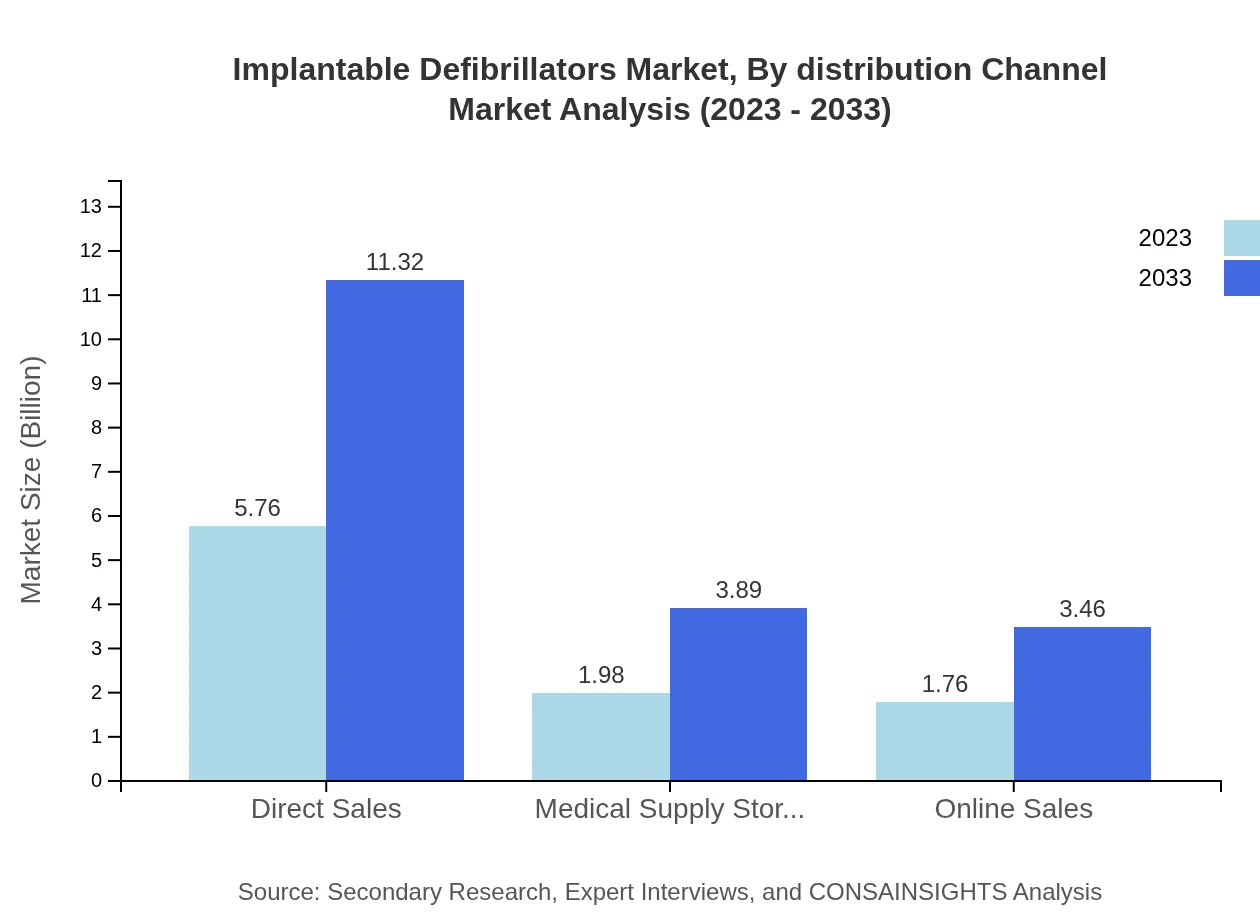
The distribution channels for implantable defibrillators are varied, with direct sales representing a substantial portion at 60.65% in 2023. Medical supply stores and online sales account for 20.82% and 18.53% of the market, respectively, showing trends towards enhanced accessibility and consumer preference for online purchasing in recent years.
Implantable Defibrillators Market Trends and Future Forecast
Tell us your focus area and get a customized research report.
Global Market Leaders and Top Companies in Implantable Defibrillators Industry
Medtronic :
Medtronic is a leading medical technology company known for its innovative cardiac devices, including implantable defibrillators that enhance patient monitoring and overall heart health management.Boston Scientific:
Boston Scientific specializes in a range of medical devices, including advanced implantable defibrillators that provide effective solutions for individuals with heart rhythm disorders.Abbott Laboratories:
Abbott is a prominent player in the cardiovascular market, delivering technologies that improve patient outcomes, particularly through innovative heart rhythm management systems.Sorin Group:
Sorin Group focuses on cardiac devices and technologies, playing a significant role in developing implantable defibrillators for arrhythmias and heart failure management.Biotronik:
Biotronik successfully combines innovative technology with proven quality in its implantable defibrillators, maintaining strong footholds in both developed and emerging markets.We're grateful to work with incredible clients.









FAQs
What is the market size of implantable defibrillators in 2023?
The market size in 2023 is $9.50 Billion as stated in the report data, representing the baseline for the 2023 to 2033 forecast period.
How big will the implantable defibrillators market be in 2033?
The market is projected to reach $18.67 Billion in 2033 according to the provided forecast figures.
What is CAGR for the forecast period?
The compound annual growth rate for the period 2023 to 2033 is 6.8% as reported in the input data.
Is there a single fastest Growing region in the Implantable Defibrillators Market Report market?
No single fastest-growing region is stated for the Implantable Defibrillators Market Report market because the top regional implied CAGR values are within 0.15 percentage points of each other, making the ranking too close to call reliably.
Why is North America the largest regional market?
North America’s scale reflects established cardiac care infrastructure, adoption of advanced devices and the regional figures provided: $3.62 Billion in 2023 to $7.11 Billion in 2033.
What are the primary product types in the market?
The report notes product types including Transvenous Defibrillators, Subcutaneous Defibrillators and External Defibrillators as key categories.
Who are the top companies in this market?
Top companies listed in the input are Medtronic, Boston Scientific, Abbott Laboratories, Sorin Group and Biotronik.
How are implantable defibrillators distributed?
Distribution channels identified include Direct Sales, Medical Supply Stores and Online Sales across clinical and non-clinical settings.
What end Users purchase implantable defibrillators?
End-user segments specified are Hospitals, Cardiac Centers, Ambulatory Surgical Centers and Homecare providers.
Why is market growth expected through 2033?
Growth is supported by rising cardiovascular disease prevalence, aging populations, technological improvements and expanding healthcare access cited in the context.