

Japanese Minimalist Furniture
First published: 07 November 2025 | Last updated: 01 February 2026 | Report Code: japanese-minimalist-furniture
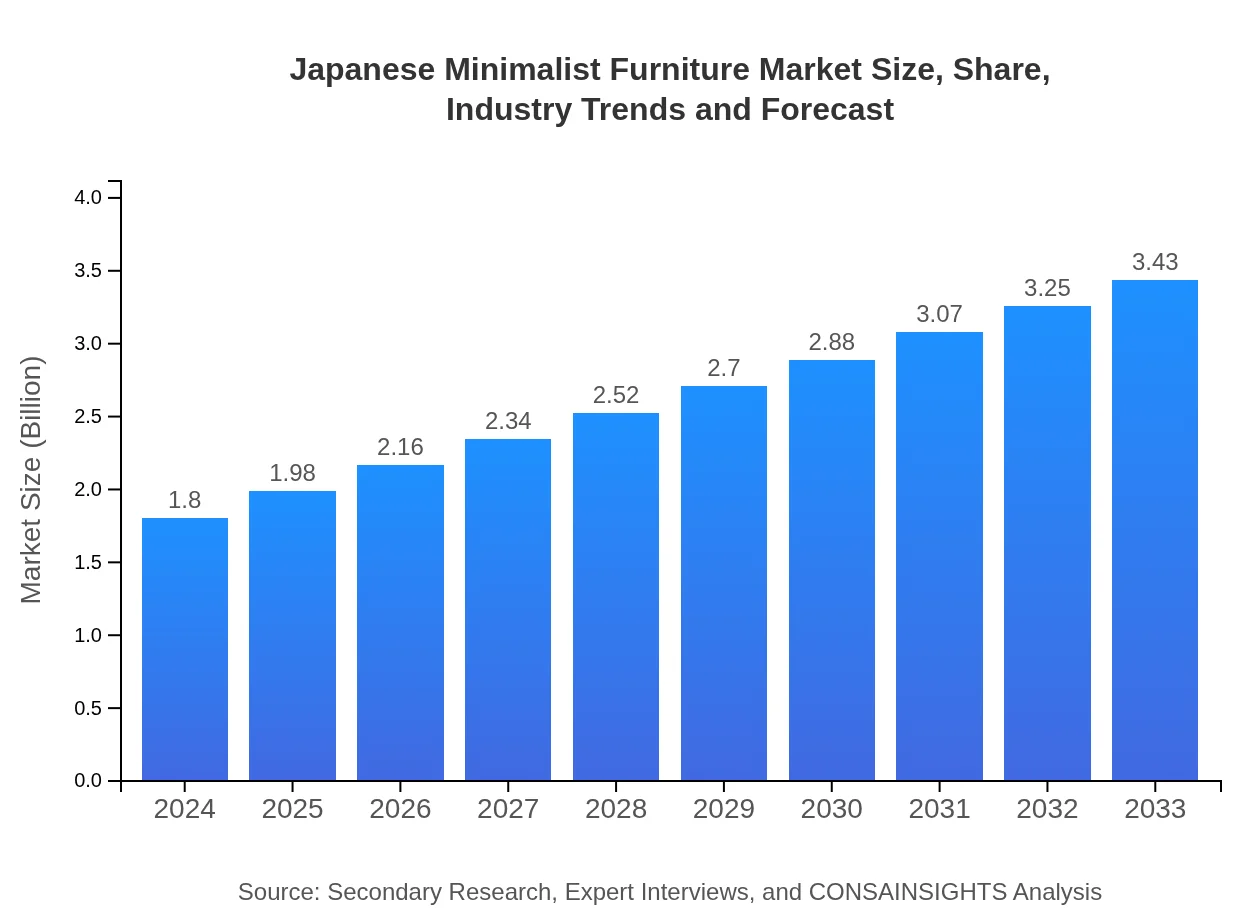
Japanese Minimalist Furniture Market — USD $1.8 Billion in 2024, Growing to USD 3.43 by 2033 at 7.2% CAGR
This comprehensive report on the Japanese Minimalist Furniture market presents key insights, data, and trends, spanning from 2024 to 2033. It addresses market size, growth rates, segmentation, regional performance, technological innovations, and product analysis, providing stakeholders with a detailed forecast and evaluation of challenges and opportunities within this unique and evolving market for informed decisions.
| Metric | Value |
|---|---|
| Study Period | 2024 - 2033 |
| 2024 Market Size | $1.80 Billion |
| CAGR (2024-2033) | 7.2% |
| 2033 Market Size | $3.43 Billion |
| Top Companies | Nissho Interiors, Minimalist Design Co., ZenCraft Furnishings |
| Published Date | 07 November 2025 |
| Last Modified Date | 01 February 2026 |
Japanese Minimalist Furniture Market Overview
Customize Japanese Minimalist Furniture market research report
- ✔ Get in-depth analysis of Japanese Minimalist Furniture market size, growth, and forecasts.
- ✔ Understand Japanese Minimalist Furniture's regional dynamics and industry-specific trends.
- ✔ Identify potential applications, end-user demand, and growth segments in Japanese Minimalist Furniture
What is the Market Size & CAGR of Japanese Minimalist Furniture market in 2024?
Japanese Minimalist Furniture Industry Analysis
Japanese Minimalist Furniture Market Segmentation and Scope
Tell us your focus area and get a customized research report.
Japanese Minimalist Furniture Market Analysis Report by Region
Europe Japanese Minimalist Furniture:
Europe is witnessing expanding market interest, with estimates rising from 0.56 in 2024 to 1.07 in 2033. Sophisticated consumer preferences, coupled with a commitment to sustainable and quality home decor, underpin the growth in this region.Asia Pacific Japanese Minimalist Furniture:
In the Asia Pacific region, the market is poised for significant growth driven by increasing urbanization, rising disposable incomes, and a growing appreciation for minimalist design. Market estimates are expected to rise from 0.34 in 2024 to 0.64 in 2033, reflecting robust potential fueled by a young demographic and expanding middle class.North America Japanese Minimalist Furniture:
North America presents a dynamic landscape where the market is projected to grow from 0.65 in 2024 to 1.24 in 2033. High consumer spending and an appetite for innovative, functional designs drive growth, with a strong demand for products that balance aesthetics with usability.South America Japanese Minimalist Furniture:
In South America, the market remains relatively small, with figures increasing from 0.10 in 2024 to 0.19 in 2033. Growth in this region is steady as increased exposure to international design trends and improvements in retail infrastructure gradually boost consumer interest.Middle East & Africa Japanese Minimalist Furniture:
In the Middle East and Africa, market figures are set to increase from 0.15 in 2024 to 0.29 in 2033. This growth is supported by rapid urban development, increasing disposable incomes, and a rising trend toward minimalist, durable home and office solutions.Tell us your focus area and get a customized research report.
Japanese Minimalist Furniture Market Analysis By Product Category
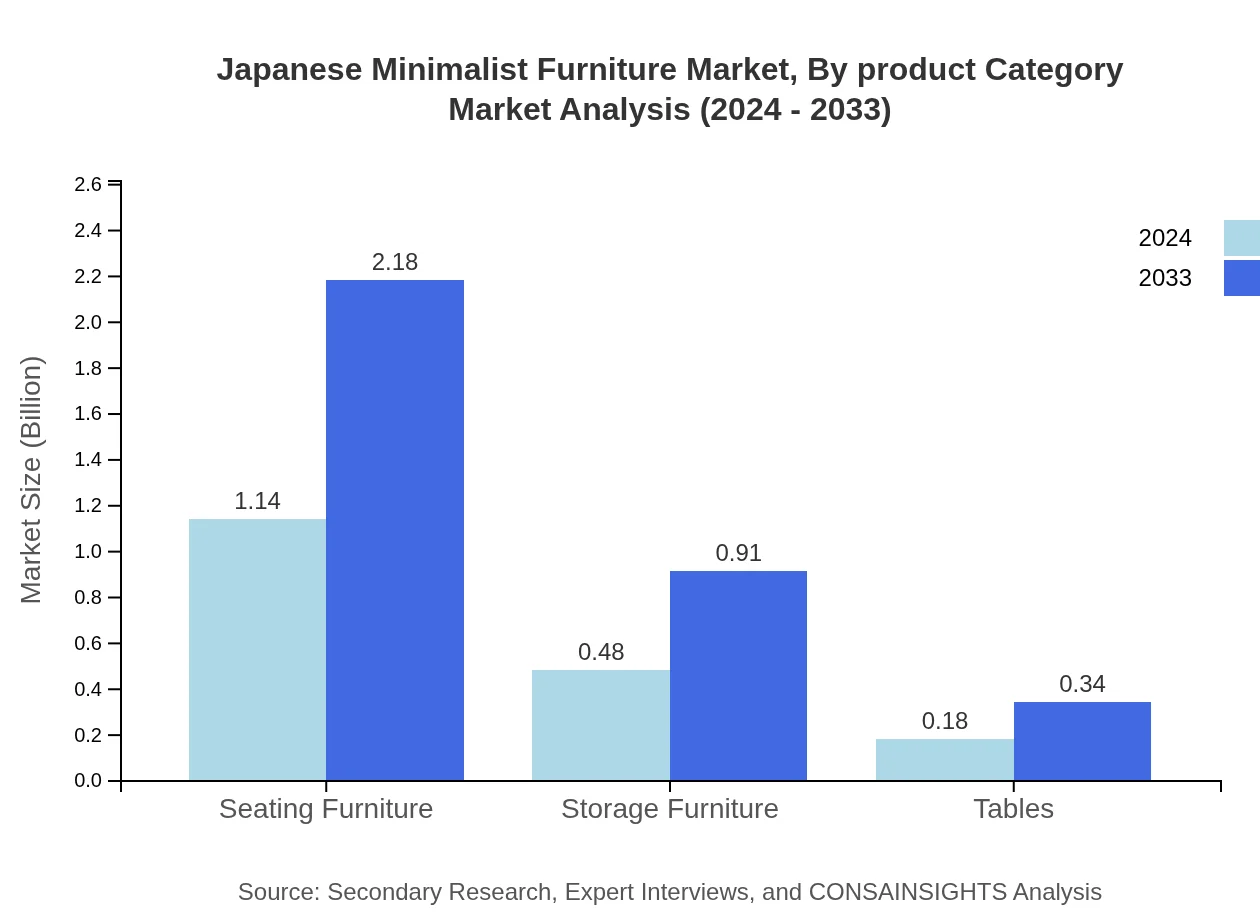
This segment analysis focuses on product categories such as seating furniture, storage furniture, and tables. The Traditional product line continues to dominate with a consistent market share; however, modern and contemporary designs are rapidly gaining traction due to their versatile applications. Detailed insights into consumer behavior, revenue performance, and design innovation trends are provided, offering market participants a clear view of product dynamics and areas of emerging opportunity.
Japanese Minimalist Furniture Market Analysis By Material
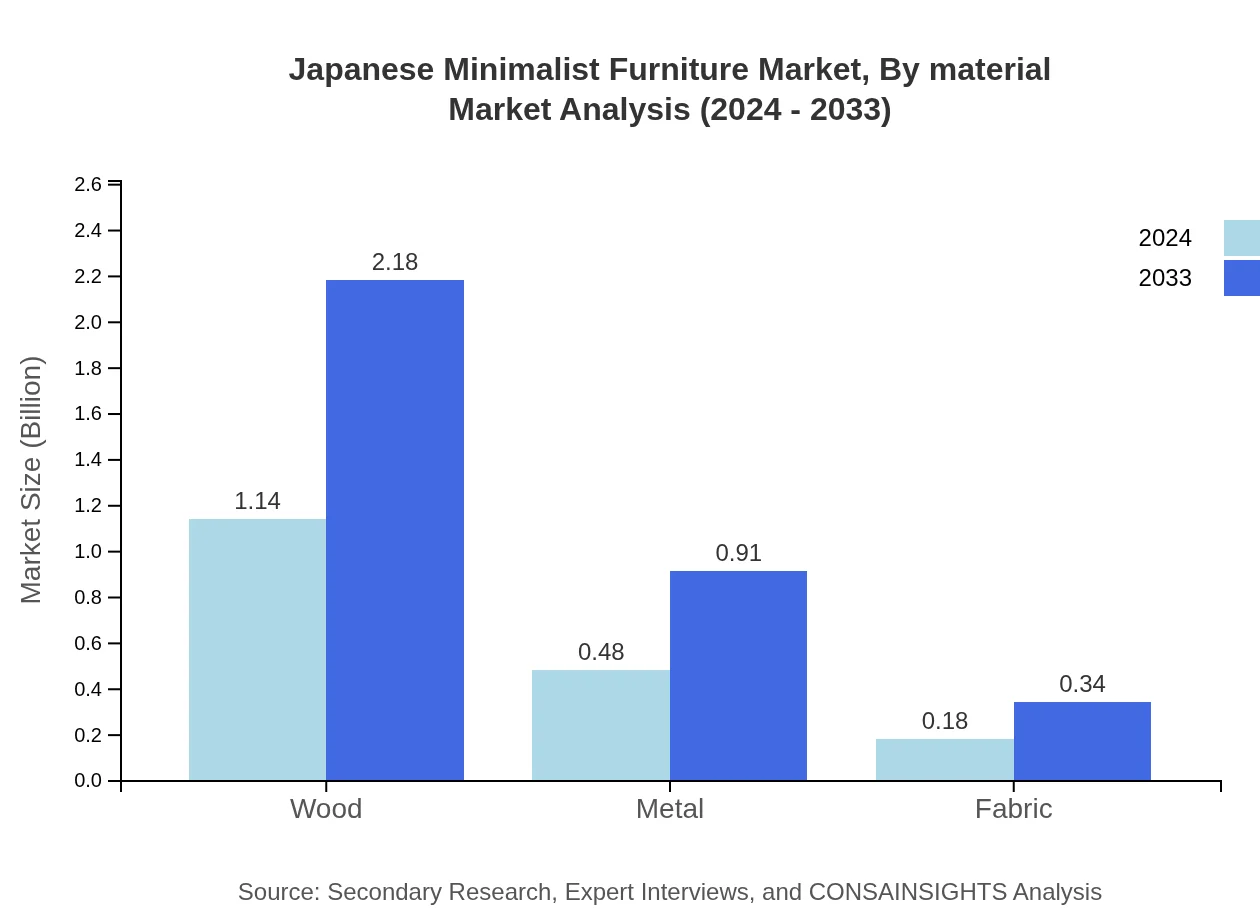
This segment delves into material preferences in the market, highlighting wood, metal, and fabric as the key components. Wood remains the cornerstone of Japanese minimalist design due to its durability and timeless aesthetic appeal, while metal and fabric cater to modern tastes with sleek and adaptable qualities. The analysis uncovers trends related to innovation, cost efficiency, and customer satisfaction linked to material selection.
Japanese Minimalist Furniture Market Analysis By Style
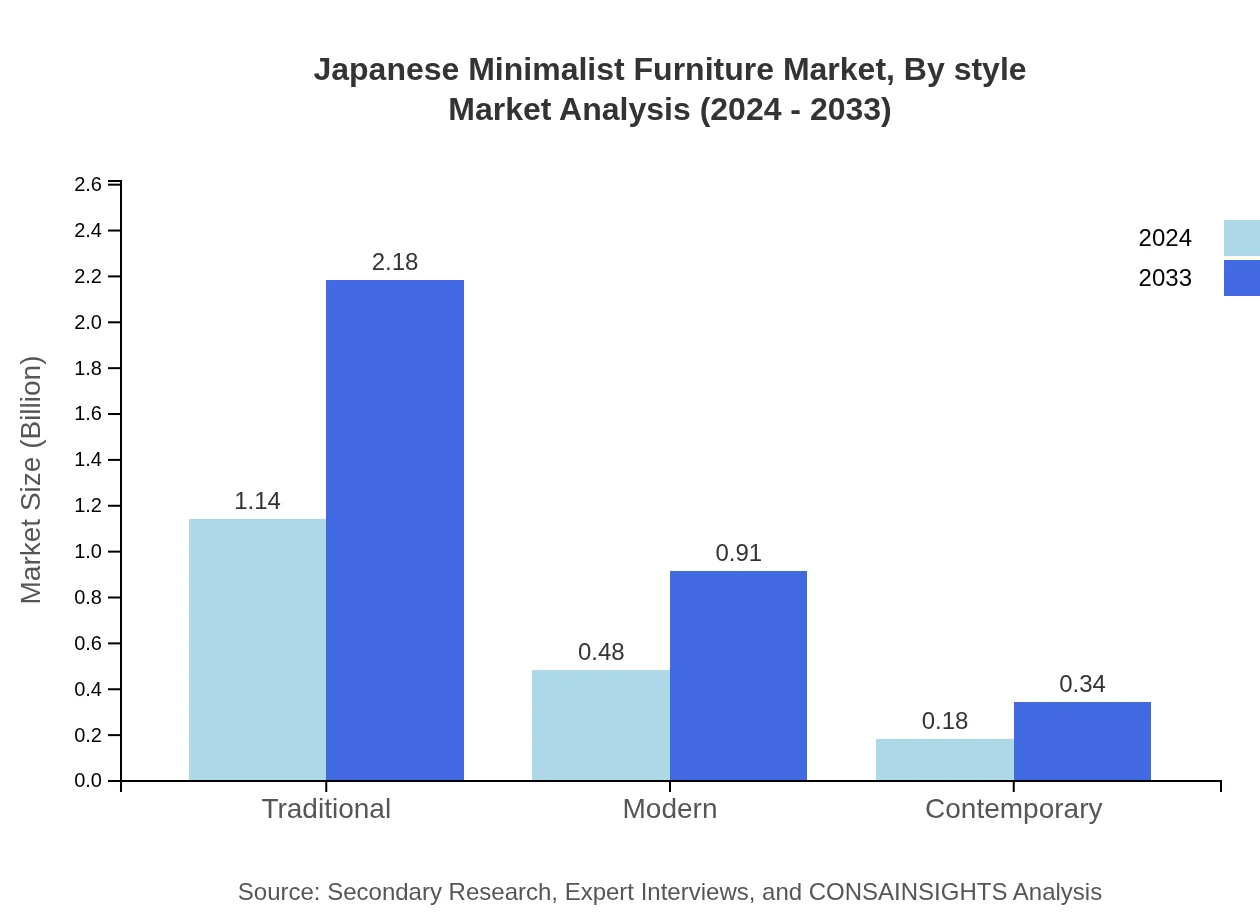
This segment reviews the stylistic elements influencing the market, encompassing traditional, modern, and contemporary designs. Traditional styles retain a significant share due to their historical and cultural resonance, whereas modern and contemporary styles are appealing to younger consumers and global markets. The analysis explores evolving design trends, market penetration, and the changing preferences that influence overall demand.
Japanese Minimalist Furniture Market Analysis By Consumer Segment
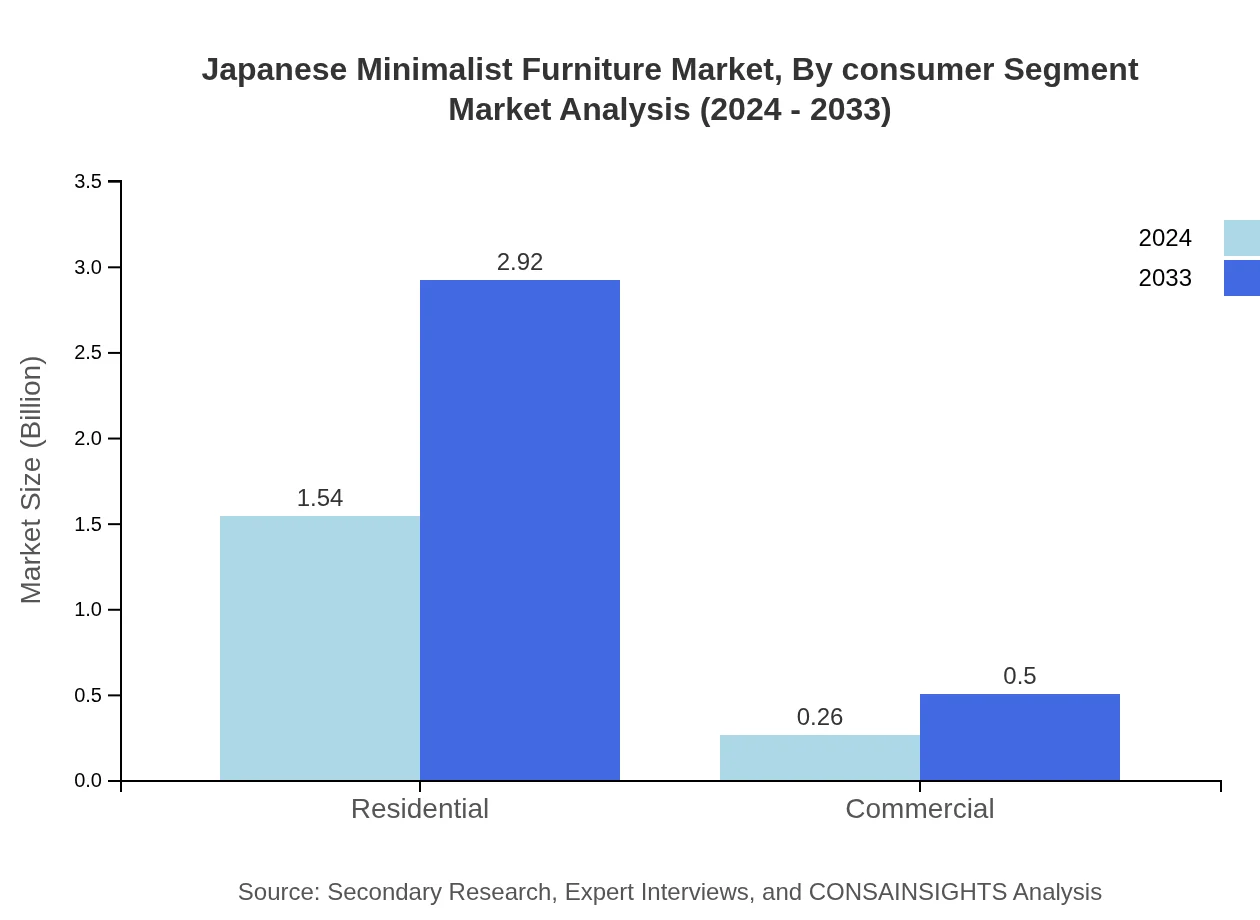
This segment examines the market based on consumer application, dividing it into residential and commercial sectors. The residential segment is particularly dominant, driven by personalized living solutions that emphasize both function and aesthetic appeal. Conversely, the commercial sector benefits from versatile designs that enhance workspace productivity and visual impact. Insights into consumer behavior and spending patterns are central to this analysis.
Japanese Minimalist Furniture Market Analysis By Price Range
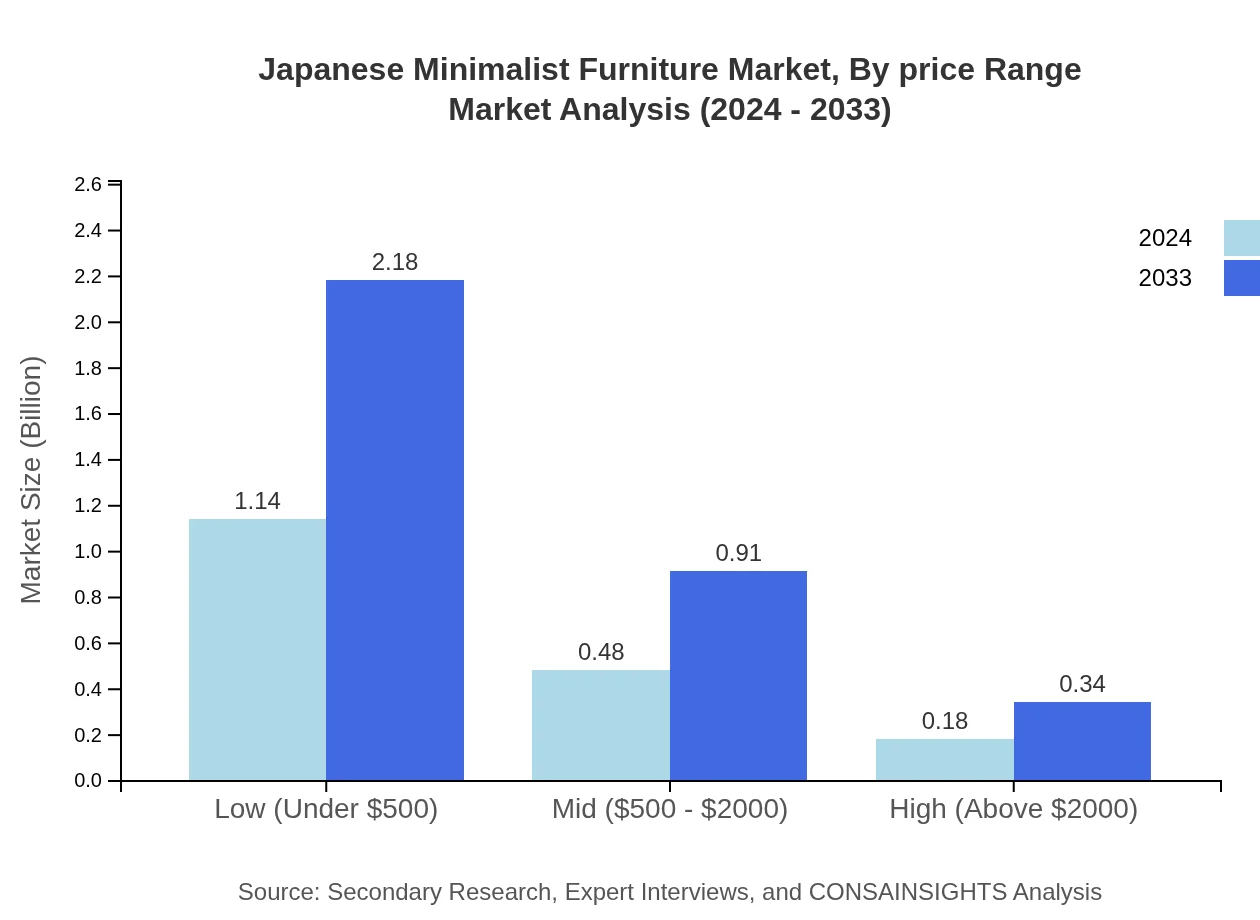
This segment categorizes products into three pricing tiers: Low (Under $500), Mid ($500 - $2000), and High (Above $2000). Each range delivers unique value propositions and caters to distinct consumer segments based on design intricacy, material quality, and overall affordability. The analysis examines pricing strategies, market competitiveness, and consumer responsiveness, providing guidance for optimal pricing models and targeted product positioning.
Japanese Minimalist Furniture Market Trends and Future Forecast
Tell us your focus area and get a customized research report.
Global Market Leaders and Top Companies in Japanese Minimalist Furniture Industry
Nissho Interiors:
Renowned for its commitment to traditional craftsmanship fused with modern innovation, Nissho Interiors consistently delivers premium, aesthetically appealing furniture that harmonizes functionality with art.Minimalist Design Co.:
Focusing on contemporary, functional designs, Minimalist Design Co. meets evolving consumer needs through innovative product lines and strategic market positioning.ZenCraft Furnishings:
Emphasizing sustainability and eco-friendly production processes, ZenCraft Furnishings leads the industry by integrating time-honored techniques with modern design sensibilities.We're grateful to work with incredible clients.









FAQs
How can the Japanese Minimalist Furniture Market Report help align our marketing strategy with customer adoption trends?
The Japanese Minimalist Furniture Market, valued at $1.8 billion and growing at a CAGR of 7.2%, offers insights to align marketing strategies. Understanding customer preferences for simplicity can help tailor campaigns to drive adoption, ensuring effective engagement and product offerings.
What product features are in highest demand according to the Japanese Minimalist Furniture Market trends?
Market trends indicate that traditional wood furniture dominates, making up 63.51% of the market share. Additionally, functionality, simplicity, and eco-friendly materials are key demand drivers that can guide product feature development in alignment with consumer expectations.
Which regions offer the best market entry and expansion opportunities in the Japanese Minimalist Furniture industry?
North America, with a projected market growth from $0.65 billion in 2024 to $1.24 billion by 2033, presents significant opportunities. Europe and Asia Pacific are also growing, providing prime regions for market entry and expansion in the furniture sector.
What emerging technologies and innovations are shaping the Japanese Minimalist Furniture market?
Innovations in sustainable material sourcing and advanced manufacturing techniques are transforming the market. Technologies that enhance supply chain efficiency and designs that optimize space utilization are also essential for addressing consumer needs and modern living styles.
Does the Japanese Minimalist Furniture Report include competitive landscape and market share analysis?
Yes, the report includes competitive landscape and market share analysis. It details key players, market distributions, and insights on competitive strategies, which are essential for businesses to identify their positioning and strategize accordingly.
How can executives use the Japanese Minimalist Furniture Report to evaluate investment risks and ROI?
Executives can analyze market size, projected CAGR of 7.2%, and segment data, enabling them to assess risks associated with investment. Understanding regional growth rates and competitive dynamics assists in forecasting potential ROI in the Japanese minimalist furniture market.
What is the market size of Japanese Minimalist Furniture?
The Japanese Minimalist Furniture market is valued at $1.8 billion and is expected to grow at a CAGR of 7.2% from 2024 to 2033. This growth reflects increasing consumer preference for minimalist designs in furniture.
Can you provide a breakdown of the market size by region?
In 2024, the market size is projected as follows: North America: $0.65 billion, Europe: $0.56 billion, Asia Pacific: $0.34 billion, Latin America: $0.10 billion, and Middle East & Africa: $0.15 billion. By 2033, these values are expected to increase significantly.
What are the key segments in the Japanese Minimalist Furniture market?
Key segments include Traditional (63.51% share), Modern (26.55% share), and Contemporary (9.94% share). Traditional wood furniture remains dominant, while modern styles are also gaining acceptance, shaping consumer choices toward simplicity and functionality.