

Lab Accessories Market Report
First published: 12 October 2024 | Last updated: 25 May 2026 | Report Code: lab-accessories
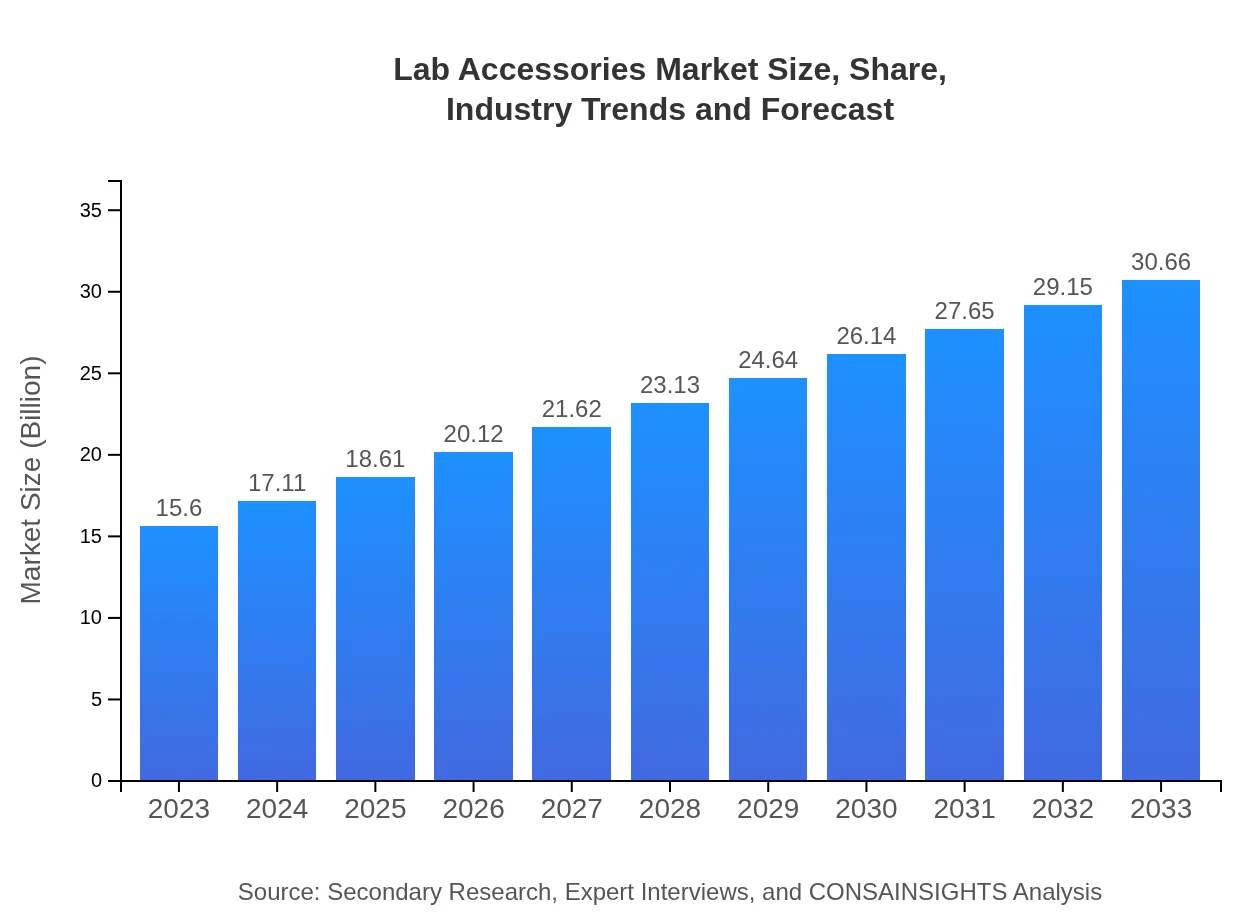
Lab Accessories Market — USD 15.6 billion in 2023, Growing to USD 30.66B by 2033 at 6.8% CAGR
This report provides a comprehensive analysis of the Lab Accessories market, highlighting market size, trends, and forecasts from 2023 to 2033. Insights include industry segmentation, regional performance, leading companies, and evolving technologies shaping the market landscape.
Key Takeaways
- Global market grows from $15.60 Billion (2023) to $30.66 Billion (2033) at a 6.8% CAGR.
- North America is largest regional market, while no single fastest-growing region is stated because regional CAGR differences remain within 0.15 percentage points.
- Europe and Asia Pacific show substantial expansion, from $3.95 Billion to $7.77 Billion and $3.27 Billion to $6.43 Billion respectively.
- Product mix includes glassware, plastic ware, and consumables; key end users are research institutes, pharmaceutical companies, hospitals, and academic labs.
- Leading companies operating in the market include Thermo Fisher Scientific, Merck Group, Corning Inc., and VWR International.
Lab Accessories Market Report — Executive Summary
North America remains largest market by forecast-period value, while no single fastest-growing region is stated because top regional growth rates are separated by less than 0.15 percentage points. The lab accessories market is forecast to expand from $15.60 Billion in 2023 to $30.66 Billion by 2033 at a 6.8% CAGR. Growth is supported by rising research activity across pharmaceutical, academic, and clinical sectors and steady demand for quality consumables, glassware, and plastic ware. Market structure spans product types, applications, end users, and distribution channels—online sales, retail, and direct sales. Innovation, stricter lab quality standards, and increasing investment in research infrastructure are primary forces shaping vendor strategies. Key players such as Thermo Fisher Scientific, Merck Group, Corning Inc., and VWR International are positioned to address demand through expanded portfolios and distribution capabilities. Regional dynamics vary: North America remains the largest market, while Europe, Asia Pacific, Latin America, and Middle East & Africa each demonstrate measurable growth driven by local R&D spending, healthcare expansion, and educational investments. The report synthesizes primary interviews, company disclosures, and expert validation to map opportunities and risks for stakeholders across the value chain.
Key Growth Drivers
- Expanded R&D spending in pharmaceutical and academic sectors boosting demand for laboratory consumables and equipment.
- Stricter laboratory quality and safety standards increasing uptake of certified glassware and plastic ware.
- Broader adoption of online procurement channels improving access to diverse product portfolios.
- Growing clinical and diagnostic testing volumes creating steady requirement for consumables and bench accessories.
- Investment in laboratory infrastructure in emerging markets supporting incremental product demand.
| Metric | Value |
|---|---|
| Study Period | 2023 - 2033 |
| 2023 Market Size | $15.60 Billion |
| CAGR (2023-2033) | 6.8% |
| 2033 Market Size | $30.66 Billion |
| Top Companies | Thermo Fisher Scientific, Merck Group, Corning Inc., VWR International |
| Published Date | 12 October 2024 |
| Last Modified Date | 25 May 2026 |
Lab Accessories Market Overview
Customize Lab Accessories Market Report market research report
- ✔ Get in-depth analysis of Lab Accessories market size, growth, and forecasts.
- ✔ Understand Lab Accessories's regional dynamics and industry-specific trends.
- ✔ Identify potential applications, end-user demand, and growth segments in Lab Accessories
What is the Market Size & CAGR of Lab Accessories Market Report market in 2023?
Lab Accessories Industry Analysis
Lab Accessories Market Segmentation and Scope
Tell us your focus area and get a customized research report.
Lab Accessories Market Report Market Analysis Report by Region
Europe Lab Accessories Market Report:
Europe grows from $3.95 Billion in 2023 to $7.77 Billion in 2033. Regional momentum is supported by concentrated pharmaceutical research, regulatory emphasis on lab standards, and continued investment by academic and clinical laboratories in consumables and glassware.Asia Pacific Lab Accessories Market Report:
Asia Pacific grows from $3.27 Billion in 2023 to $6.43 Billion in 2033. Demand stems from expanding healthcare services, rising R&D activities, and growing academic laboratory capacity that together boost requirements for plastic ware, glassware, and consumables.North America Lab Accessories Market Report:
North America is largest regional market, rising from $5.47 Billion in 2023 to $10.76 Billion in 2033. Expansion is driven by established research infrastructure, significant clinical testing volumes, and strong institutional purchasing for high-quality laboratory consumables and equipment.South America Lab Accessories Market Report:
Latin America grows from $1.17 Billion in 2023 to $2.31 Billion in 2033. Growth reflects incremental investment in laboratory facilities, rising diagnostic testing needs, and an increasing focus on equipping research and clinical labs with standard consumables.Middle East & Africa Lab Accessories Market Report:
Middle East and Africa grows from $1.72 Billion in 2023 to $3.39 Billion in 2033. Market drivers include expanding healthcare infrastructures, growing educational laboratory programs, and heightened procurement of certified lab accessories to meet quality and safety expectations.Tell us your focus area and get a customized research report.
Research Methodology
Lab Accessories Market Analysis By Product
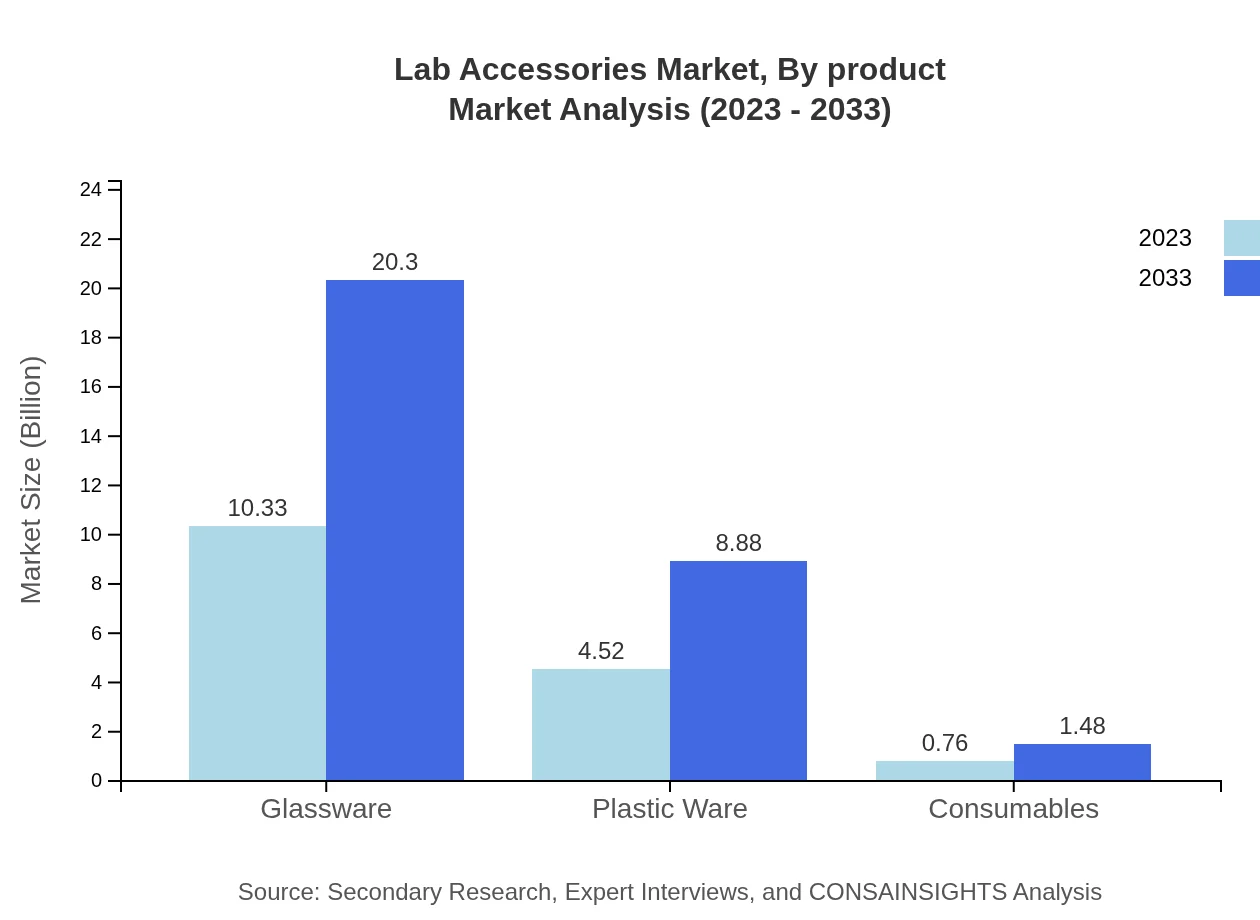
The Lab Accessories market by product includes: Glassware, valued at $10.33 billion in 2023, is expected to reach $20.30 billion by 2033, accounting for 66.21% share. Plastic Ware, currently at $4.52 billion, will grow to $8.88 billion, maintaining a 28.95% share. Consumables represent smaller segments with a market of $0.76 billion, growing to $1.48 billion, holding a share of 4.84%.
Lab Accessories Market Analysis By Application
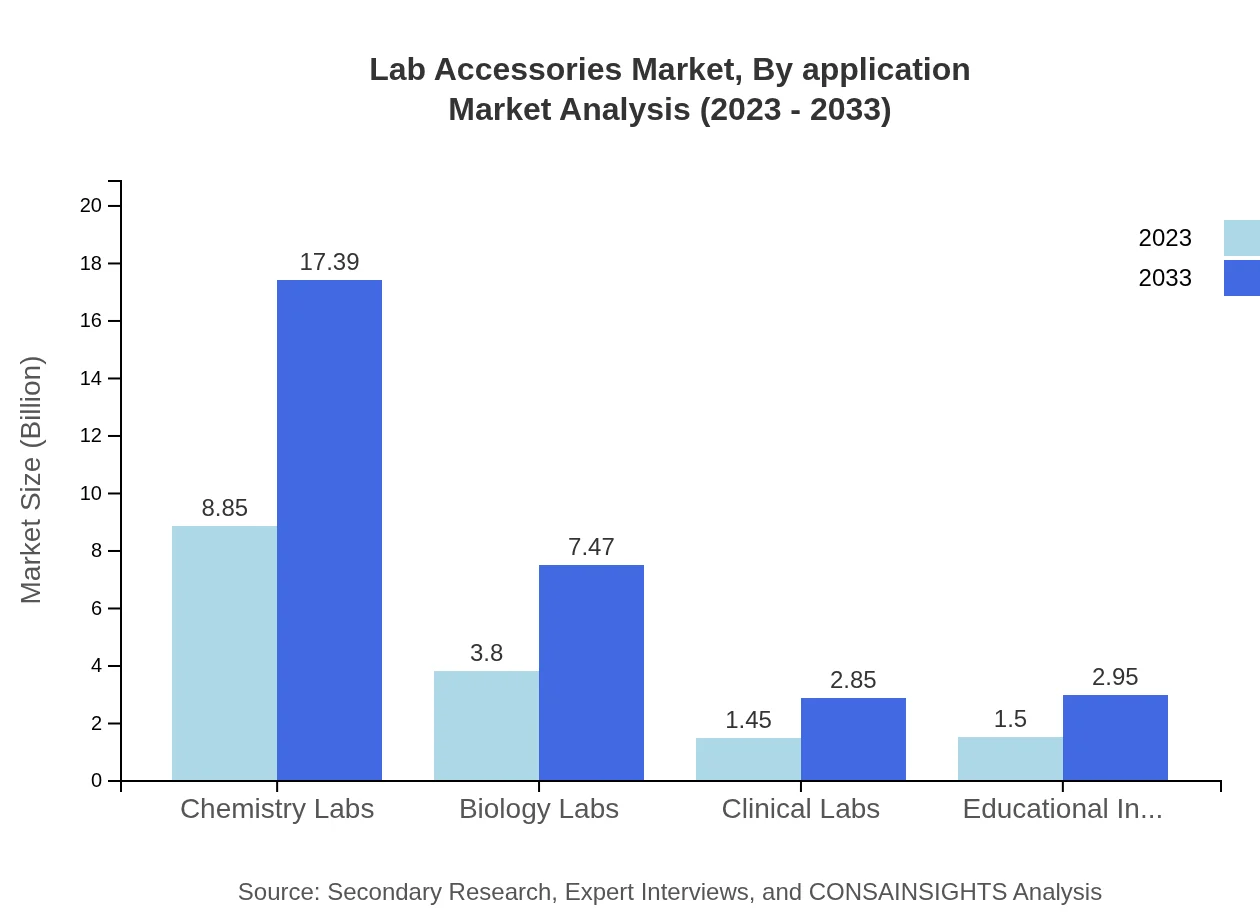
Key applications driving the Lab Accessories market include: Research Institutes, with a 2023 market size of $8.85 billion, projected to go to $17.39 billion by 2033, accounting for a significant 56.72% share. The pharmaceutical sector, currently at $3.80 billion, forecasts a rise to $7.47 billion with a 24.37% share. Hospitals, academic labs, and clinical labs also contribute to the market, albeit at smaller shares.
Lab Accessories Market Analysis By End User
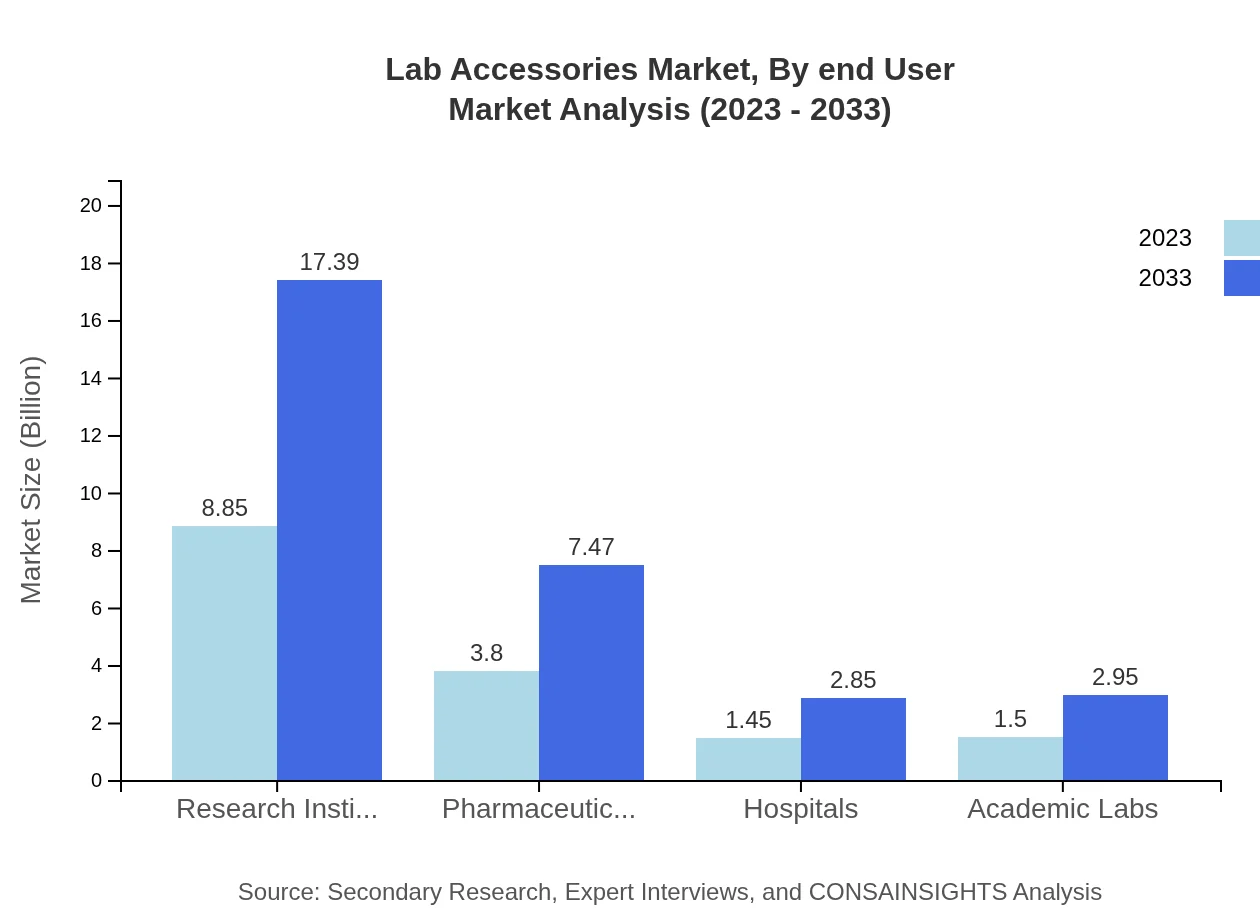
In the end-user segment, Research Institutes lead with a market of $8.85 billion in 2023, expected to grow to $17.39 billion by 2033, representing a dominant share of 56.72%. Additionally, Pharmaceuticals and Biology Labs are notable segments contributing $3.80 billion and $3.80 billion in 2023, with significant growth anticipated in the next decade.
Lab Accessories Market Analysis By Distribution Channel
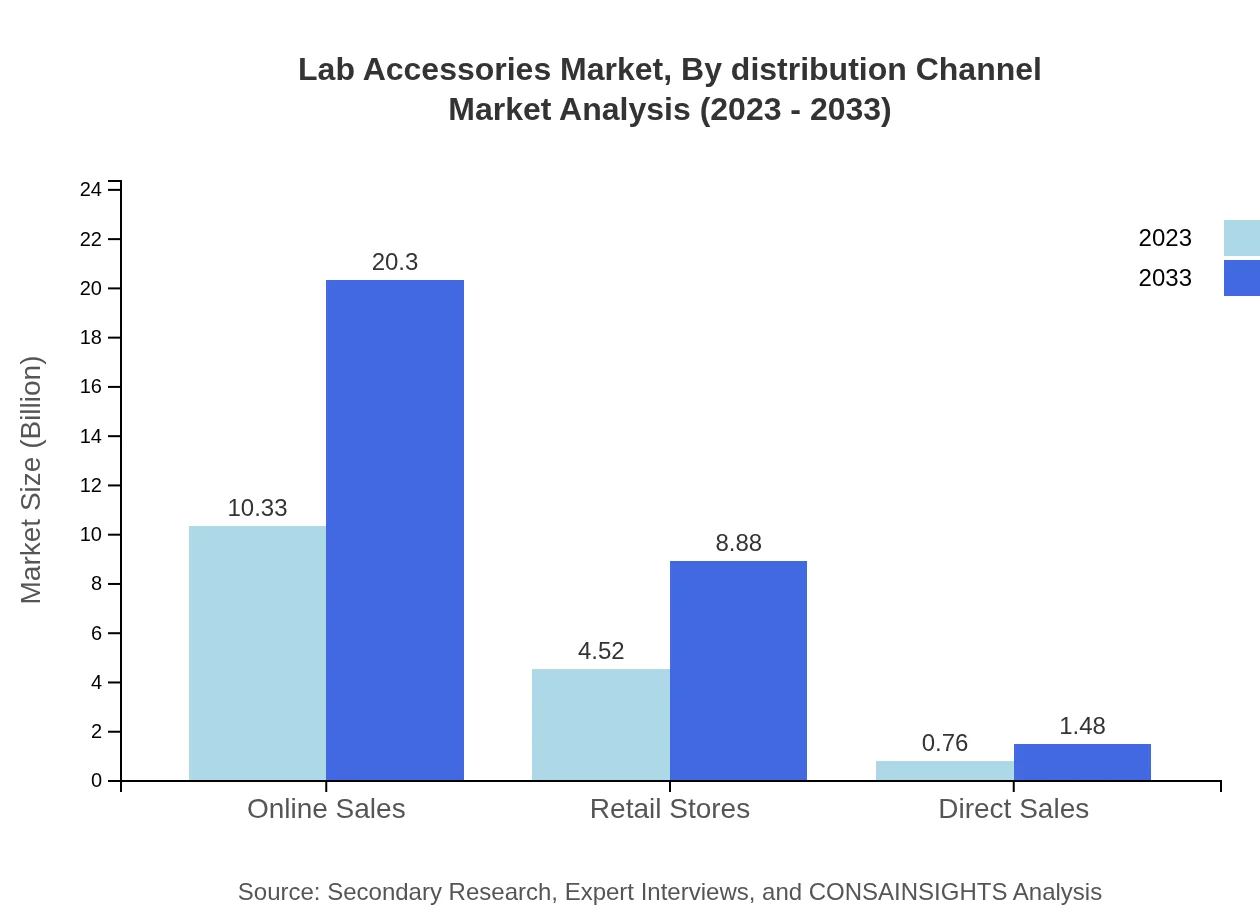
Online Sales lead the distribution channel, with a market of $10.33 billion in 2023 anticipated to rise to $20.30 billion, maintaining a notable share of 66.21%. Retail Stores follow, expected to grow from $4.52 billion to $8.88 billion, holding a share of 28.95%. Direct Sales, while smaller with a market of $0.76 billion, is anticipated to grow to $1.48 billion, maintaining a 4.84% share in the market.
Lab Accessories Market Trends and Future Forecast
Tell us your focus area and get a customized research report.
Global Market Leaders and Top Companies in Lab Accessories Industry
Thermo Fisher Scientific:
A leader in laboratory supplies, Thermo Fisher provides a broad range of lab accessories, including glassware and consumables, and emphasizes innovation through extensive R&D investments.Merck Group:
Known for its vast chemical and laboratory products, Merck Group plays a significant role in enhancing lab efficiency through advanced materials and supports researchers worldwide with high-quality accessories.Corning Inc.:
Corning specializes in glass and ceramic products for laboratory applications, promoting sustainability and quality in lab accessories with a focus on scientific advancements.VWR International:
As a global distributor of laboratory supplies, VWR offers comprehensive services and innovative lab solutions, playing a crucial role in optimizing laboratory workflows.We're grateful to work with incredible clients.









FAQs
What is the market size of the lab accessories market in 2023?
The market size for lab accessories in 2023 is $15.60 Billion, based on the provided market assessment and baseline reporting for the forecast period.
How big will the lab accessories market be in 2033?
Projected market value for 2033 is $30.66 Billion, reflecting cumulative growth across product, application, end-user, and distribution segments through the forecast.
What is CAGR of the lab accessories market for 2023 to 2033?
The compound annual growth rate for the period 2023 to 2033 is 6.8%, calculated from the reported opening and closing market values.
Is there a single fastest Growing region in the Lab Accessories Market Report market?
No single fastest-growing region is stated for the Lab Accessories Market Report market because the top regional implied CAGR values are within 0.15 percentage points of each other, making the ranking too close to call reliably.
Which companies lead the lab accessories market?
Top companies named in the report include Thermo Fisher Scientific, Merck Group, Corning Inc., and VWR International as prominent market participants.
What product categories are covered in the market segmentation?
Segmentation includes glassware, plastic ware, and consumables as primary product categories serving multiple laboratory applications and end users.
Who are the primary end users of lab accessories?
Key end users identified are research institutes, pharmaceutical companies, hospitals, and academic labs, each driving different product requirements.
How are distribution channels represented in the report?
Distribution channels include online sales, retail stores, and direct sales, reflecting multiple procurement routes for laboratories and institutions.