

Luggage Market Report
First published: 11 October 2024 | Last updated: 24 June 2026 | Report Code: luggage
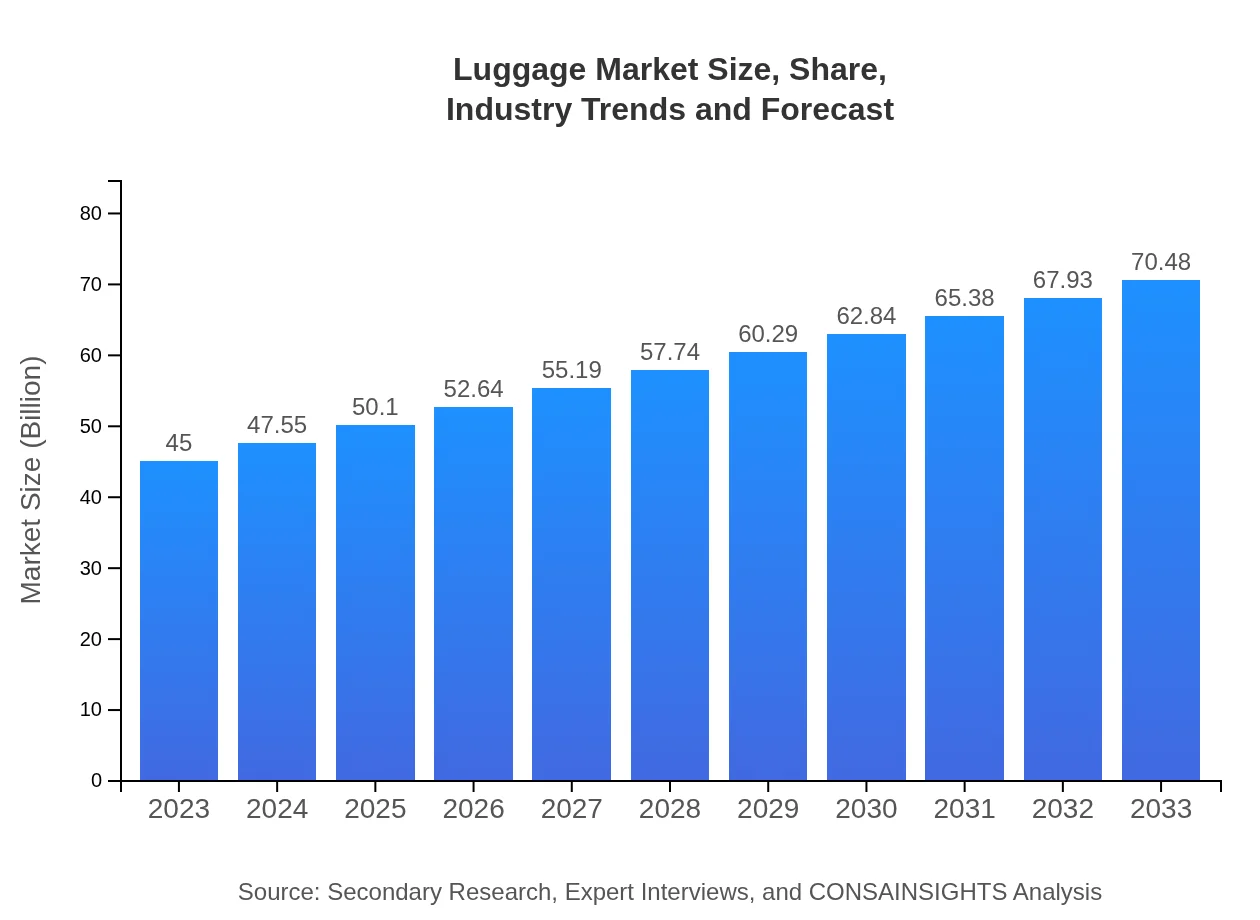
Luggage Market — USD 45 billion in 2023, Growing to USD 70.48B by 2033 at 4.5% CAGR
This report provides a comprehensive analysis of the luggage market from 2023 to 2033, detailing market size, segmentation, regional insights, industry analysis, and future trends impacting the industry.
Key Takeaways
- Global market value rising from $45.00 Billion in 2023 to $70.48 Billion in 2033 at a 4.5% CAGR.
- North America is largest regional market, while no single fastest-growing region is stated because regional CAGR differences remain within 0.15 percentage points.
- North America accounts for $16.54 Billion in 2023 and is projected to reach $25.91 Billion by 2033.
- Europe expands from $12.59 Billion to $19.71 Billion between 2023 and 2033, reflecting sustained demand.
- Product and material shifts, including hard-shell and polycarbonate adoption, and expanding online retail channels shape market dynamics.
- Top manufacturers named include Samsonite, Travelpro, Tumi, and American Tourister, driving innovation and distribution reach.
Luggage Market Report — Executive Summary
North America remains largest market by forecast-period value, while no single fastest-growing region is stated because top regional growth rates are separated by less than 0.15 percentage points. The luggage market is forecast to grow from $45.00 Billion in 2023 to $70.48 Billion by 2033 at a 4.5% CAGR, supported by rising travel demand and higher disposable incomes. Material innovation, smart features, and sustainability considerations are reshaping product development, while e-commerce continues to broaden distribution. Regional performance varies: North America is identified as the largest regional market with growth to $25.91 Billion by 2033. Market segmentation includes hard-shell, soft-shell, accessories, materials such as polycarbonate and aluminium, and price tiers from economy to premium. Leading companies like Samsonite, Travelpro, Tumi, and American Tourister are noted for product diversification and channel expansion. Stakeholders should monitor material cost pressures, supply chain variability, and consumer preference shifts toward technology-enabled and eco-friendly luggage to align strategies with emerging demand patterns.
Key Growth Drivers
- Increased global travel volumes and higher disposable incomes elevating demand for varied luggage types.
- Material and design innovations with polycarbonate and aluminium improving durability and consumer appeal.
- Rising e-commerce penetration expanding access to branded and niche luggage offerings worldwide.
- Demand for smart features and personalization encouraging manufacturers to integrate technology and bespoke options.
- Sustainability focus prompting adoption of eco-friendly materials and production methods across product lines.
| Metric | Value |
|---|---|
| Study Period | 2023 - 2033 |
| 2023 Market Size | $45.00 Billion |
| CAGR (2023-2033) | 4.5% |
| 2033 Market Size | $70.48 Billion |
| Top Companies | Samsonite, Travelpro, Tumi, American Tourister |
| Published Date | 11 October 2024 |
| Last Modified Date | 24 June 2026 |
Luggage Market Overview
Customize Luggage Market Report market research report
- ✔ Get in-depth analysis of Luggage market size, growth, and forecasts.
- ✔ Understand Luggage's regional dynamics and industry-specific trends.
- ✔ Identify potential applications, end-user demand, and growth segments in Luggage
What is the Market Size & CAGR of Luggage Market Report market in 2023?
Luggage Industry Analysis
Luggage Market Segmentation and Scope
Tell us your focus area and get a customized research report.
Luggage Market Report Market Analysis Report by Region
Europe Luggage Market Report:
Europe grows from $12.59 Billion in 2023 to $19.71 Billion in 2033. Regional momentum is supported by robust tourism flows, sustainability preferences influencing material choices, and increasing adoption of online retail platforms for luggage purchases.Asia Pacific Luggage Market Report:
Asia Pacific grows from $8.63 Billion in 2023 to $13.51 Billion in 2033. 63 Billion in 2023 to $13.51 Billion by 2033. Growth reflects rising middle-class travel, growing e-commerce penetration, and rising interest in modern luggage designs and cost-effective materials among consumers.North America Luggage Market Report:
North America is largest regional market, rising from $16.54 Billion in 2023 to $25.91 Billion in 2033. 54 Billion in 2023 and is projected to rise to $25.91 Billion by 2033. Local drivers include strong travel activity, established retail channels, and demand for premium and technology-enabled luggage that support continued regional expansion.South America Luggage Market Report:
Latin America grows from $3.47 Billion in 2023 to $5.44 Billion in 2033. Regional demand is shaped by expanding leisure travel, improving retail infrastructure, and wider availability of international and domestic brands through online and offline channels.Middle East & Africa Luggage Market Report:
Middle East and Africa grows from $3.77 Billion in 2023 to $5.91 Billion in 2033. 77 Billion in 2023 to $5.91 Billion by 2033. Drivers include rising outbound and inbound travel, investment in retail and tourism, and interest in durable and premium luggage suited to regional travel patterns.Tell us your focus area and get a customized research report.
Research Methodology
Luggage Market Analysis By Product
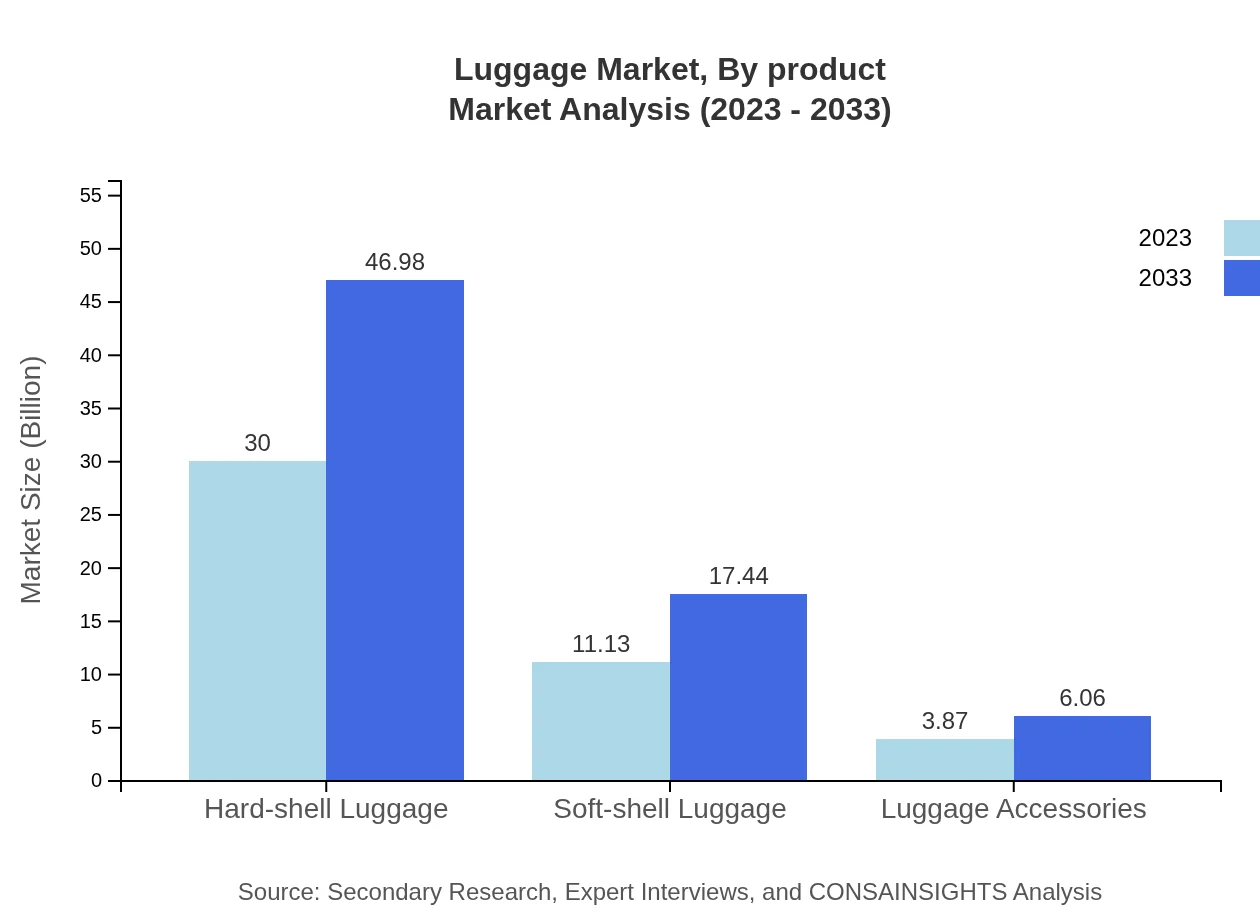
The luggage market is primarily divided into hard-shell luggage and soft-shell luggage. In 2023, hard-shell luggage commands a significant market share, valued at $30 billion, highlighting its durability and security features. The forecast suggests a growth to $46.98 billion by 2033. Soft-shell luggage, valued at $11.13 billion in 2023, is projected to increase to $17.44 billion, favored for its flexibility and lightweight characteristics.
Luggage Market Analysis By Material
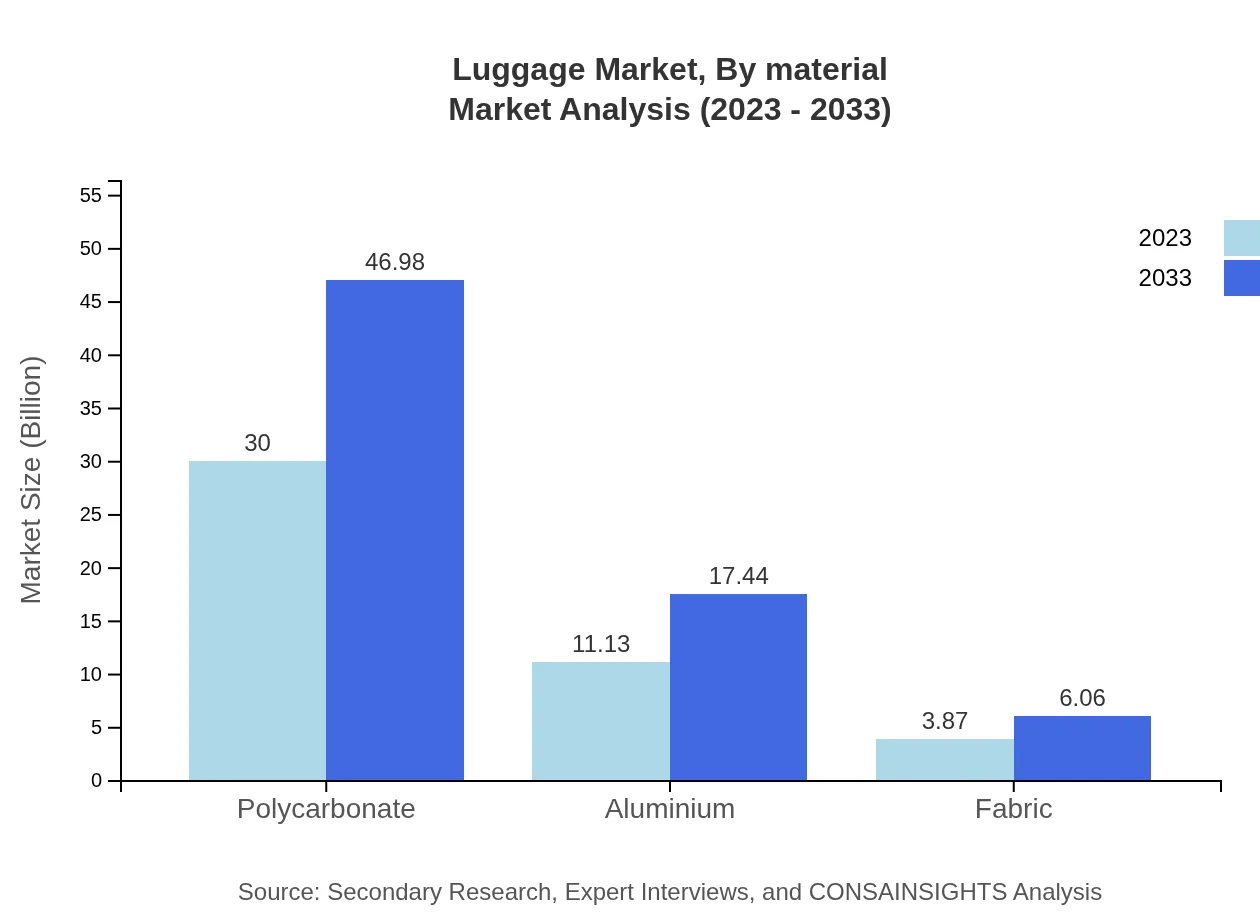
Material segmentation reveals that polycarbonate luggage earns a significant share, increasing from $30 billion in 2023 to $46.98 billion by 2033. Aluminum and fabric materials are also key segments, projected to grow from $11.13 billion to $17.44 billion and $3.87 billion to $6.06 billion respectively, as consumers seek diverse material attributes for functionality and style.
Luggage Market Analysis By Price Range
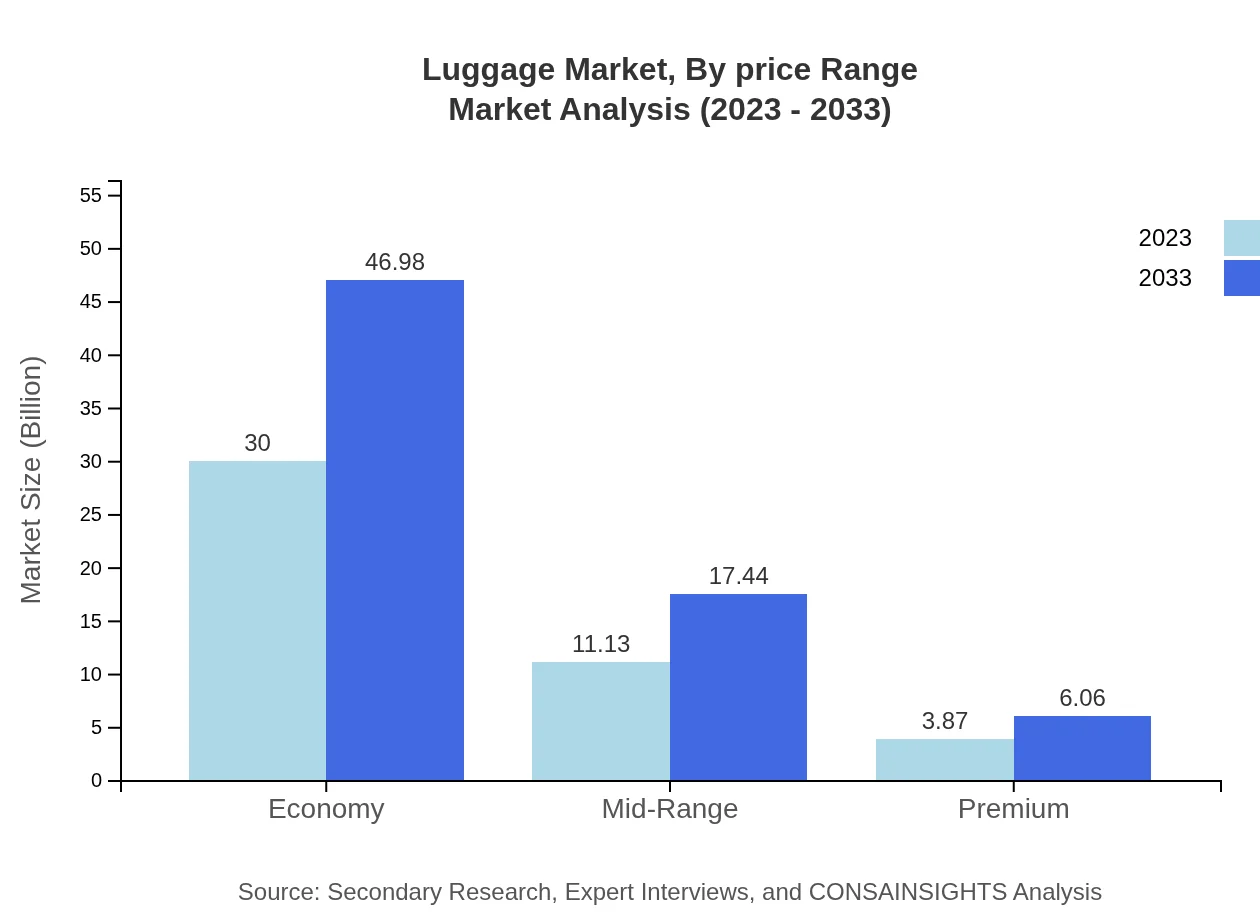
Analyzing the price range segments, economy luggage accounts for $30 billion in 2023, predicted to grow to $46.98 billion. The mid-range segment, currently at $11.13 billion, is expected to rise to $17.44 billion, while premium luggage is set to grow from $3.87 billion to $6.06 billion, addressing varied consumer preferences.
Luggage Market Analysis By End User
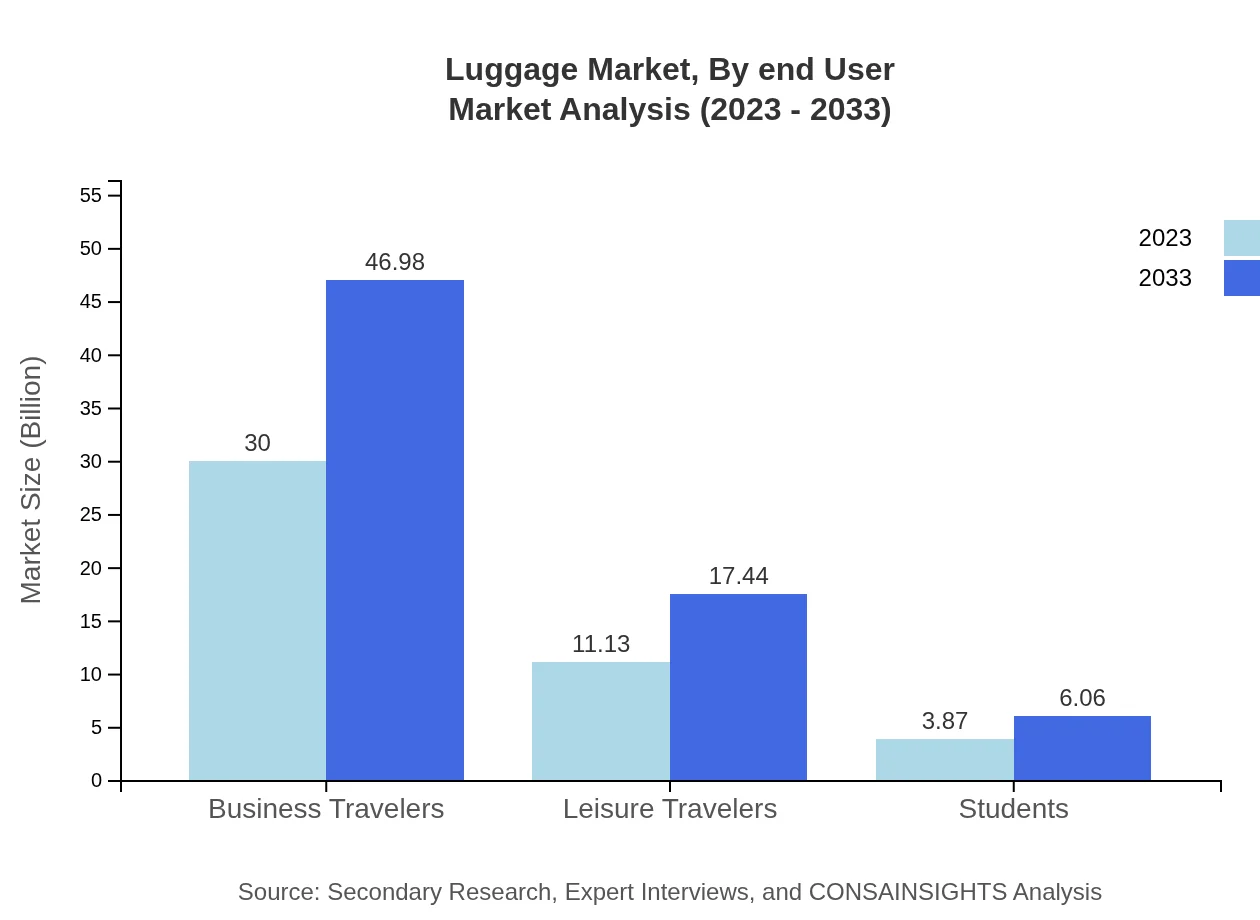
The end-user analysis highlights that business travelers lead the market with a share of $30 billion, expected to grow to $46.98 billion. Leisure travelers follow, moving from $11.13 billion to $17.44 billion, while student luggage is forecast to increase from $3.87 billion to $6.06 billion, representing a growing segment of travel.
Luggage Market Analysis By Distribution Channel
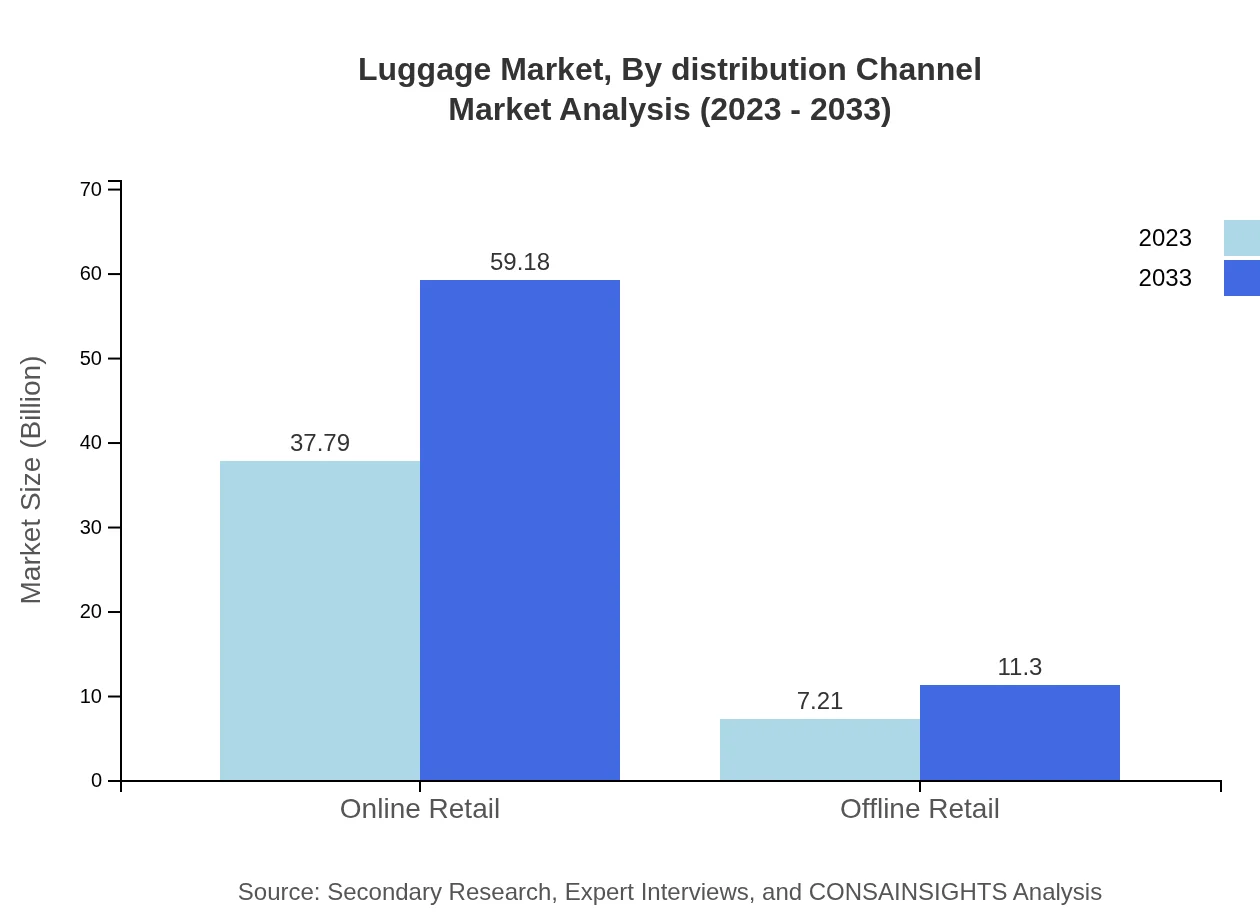
Distribution channels for luggage sales are increasingly dominated by online retail, accounting for $37.79 billion in 2023 and forecasted to reach $59.18 billion by 2033. Offline retail, while smaller at $7.21 billion, is still anticipated to grow to $11.30 billion, reflecting consumer preference for both traditional and modern purchasing options.
Luggage Market Trends and Future Forecast
Tell us your focus area and get a customized research report.
Global Market Leaders and Top Companies in Luggage Industry
Samsonite:
A pioneer in the luggage industry, Samsonite offers a range of durable and stylish travel solutions, incorporating innovative materials and designs.Travelpro:
Known for its high-quality luggage geared towards business travelers, Travelpro focuses on functionality and durability, enhancing the travel experience.Tumi:
Tumi is synonymous with luxury in the luggage industry, offering premium products crafted for durability and sophistication.American Tourister:
A subsidiary of Samsonite, American Tourister provides affordable and functional travel solutions, catering to a broad market.We're grateful to work with incredible clients.









FAQs
What is the market size of the luggage market in 2023?
The luggage market size in 2023 is $45.00 Billion according to the report, representing the baseline for the 2023 to 2033 forecast period.
How big will the luggage market be in 2033?
By 2033 the market is projected to reach $70.48 Billion, reflecting growth over the 2023 to 2033 forecast interval at the stated CAGR.
What is CAGR of the luggage market for 2023 to 2033?
The compound annual growth rate for the luggage market over 2023 to 2033 is 4.5%, as specified for the forecast period.
Is there a single fastest Growing region in the Luggage Market Report market?
No single fastest-growing region is stated for the Luggage Market Report market because the top regional implied CAGR values are within 0.15 percentage points of each other, making the ranking too close to call reliably.
Who are the top companies in the luggage market?
Top companies listed include Samsonite, Travelpro, Tumi, and American Tourister, noted for product portfolios and distribution networks.
Why is online retail important for the luggage market?
Online retail expands consumer reach, supports direct-to-consumer models, and enables broader product variety, contributing to distribution growth across the market.
What product segments are covered in the luggage market?
Product segments include hard-shell luggage, soft-shell luggage, and luggage accessories, reflecting the core categories tracked in the report.
How are materials segmented in the luggage market?
Materials are segmented into polycarbonate, aluminium, and fabric, each representing distinct performance and cost profiles influencing product choices.
Which end User groups are analyzed in the report?
The report examines business travelers, leisure travelers, and students as primary end-user groups driving demand across segments.
Why is sustainability a trend in the luggage market?
Sustainability is influencing material selection and manufacturing practices as brands respond to consumer preference for eco-friendly products and responsible sourcing.