

Nuclear Medicine Radioisotopes Market Report
First published: 11 October 2024 | Last updated: 25 May 2026 | Report Code: nuclear-medicine-radioisotopes
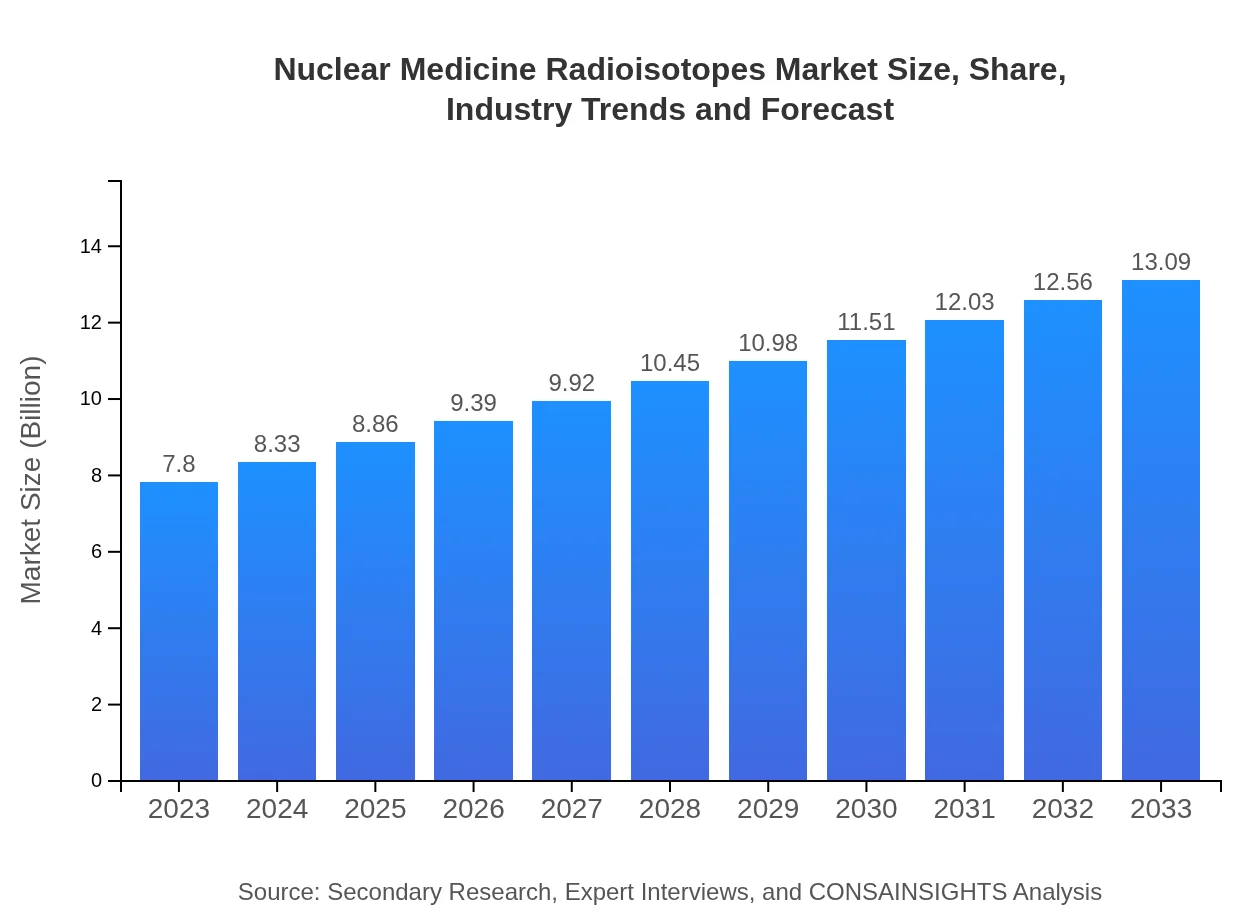
Nuclear Medicine Radioisotopes Market — USD 7.8 billion in 2023, Growing to USD 13.09B by 2033 at 5.2% CAGR
This report provides an in-depth analysis of the Nuclear Medicine Radioisotopes market from 2023 to 2033, covering market size, trends, regional insights, and key players. It aims to deliver data-driven insights to aid strategic decision-making in this growing industry.
Key Takeaways
- Global market value rising from $7.80 Billion in 2023 to $13.09 Billion in 2033 at a 5.2% CAGR.
- North America is largest regional market, while no single fastest-growing region is stated because regional CAGR differences remain within 0.15 percentage points.
- Europe advances from $2.28 Billion in 2023 to $3.83 Billion in 2033, reflecting sustained clinical demand.
- Asia Pacific grows from $1.49 Billion in 2023 to $2.49 Billion in 2033, driven by expanding diagnostic capacity.
- Middle East and Africa increases from $1.00 Billion in 2023 to $1.67 Billion in 2033; Latin America moves from $0.49 Billion to $0.82 Billion.
Nuclear Medicine Radioisotopes Market Report — Executive Summary
North America remains largest market by forecast-period value, while no single fastest-growing region is stated because top regional growth rates are separated by less than 0.15 percentage points. This report outlines market fundamentals, quantifies regional trajectories, and profiles key participants such as Siemens Healthineers, General Electric Company (GE Healthcare), Cardinal Health, and Bristol-Myers Squibb. Market expansion is supported by technological improvements in isotope production, wider clinical application in diagnostics and therapeutics, and growing prevalence of chronic diseases requiring imaging and targeted treatments. Regulatory and safety considerations influence supply-chain investments, while collaborations between manufacturers, healthcare providers, and research institutes accelerate adoption. The analysis covers segmentation by end user, application, radioisotope, production method, and distribution channel, offering stakeholders actionable insights for planning and investment over the 2023 to 2033 forecast period.
Key Growth Drivers
- Rising demand for diagnostic imaging and targeted radiotherapeutics due to increasing chronic disease incidence.
- Advances in isotope production technologies including cyclotrons, reactors, and generator systems enhancing supply reliability.
- Expanding clinical applications and research activities that boost consumption across hospitals and diagnostic centers.
- Strategic partnerships among manufacturers, research institutes, and healthcare providers facilitating product development and distribution.
- Regulatory focus on safety prompting investments in compliant production and logistics capabilities.
| Metric | Value |
|---|---|
| Study Period | 2023 - 2033 |
| 2023 Market Size | $7.80 Billion |
| CAGR (2023-2033) | 5.2% |
| 2033 Market Size | $13.09 Billion |
| Top Companies | Siemens Healthineers, General Electric Company (GE Healthcare), Cardinal Health, Bristol-Myers Squibb |
| Published Date | 11 October 2024 |
| Last Modified Date | 25 May 2026 |
Nuclear Medicine Radioisotopes Market Overview
Customize Nuclear Medicine Radioisotopes Market Report market research report
- ✔ Get in-depth analysis of Nuclear Medicine Radioisotopes market size, growth, and forecasts.
- ✔ Understand Nuclear Medicine Radioisotopes's regional dynamics and industry-specific trends.
- ✔ Identify potential applications, end-user demand, and growth segments in Nuclear Medicine Radioisotopes
What is the Market Size & CAGR of Nuclear Medicine Radioisotopes Market Report market in 2023?
Nuclear Medicine Radioisotopes Industry Analysis
Nuclear Medicine Radioisotopes Market Segmentation and Scope
Tell us your focus area and get a customized research report.
Nuclear Medicine Radioisotopes Market Report Market Analysis Report by Region
Europe Nuclear Medicine Radioisotopes Market Report:
Europe grows from $2.28 Billion in 2023 to $3.83 Billion in 2033. Demand is driven by widening clinical applications, ongoing research activities, and regulatory frameworks that encourage investment in safe isotope production and distribution.Asia Pacific Nuclear Medicine Radioisotopes Market Report:
Asia Pacific grows from $1.49 Billion in 2023 to $2.49 Billion in 2033. Growth reflects increased diagnostic capacity, rising incidence of chronic diseases, and expanding research and clinical adoption of radiopharmaceuticals across hospitals and diagnostic centers.North America Nuclear Medicine Radioisotopes Market Report:
North America is largest regional market, rising from $2.55 Billion in 2023 to $4.28 Billion in 2033. Regional expansion is propelled by established clinical infrastructure, high utilization of diagnostic and therapeutic isotopes, and investments by major healthcare and manufacturing players.South America Nuclear Medicine Radioisotopes Market Report:
Latin America grows from $0.49 Billion in 2023 to $0.82 Billion in 2033. Market development is supported by growing healthcare access, adoption of diagnostic imaging services, and investments in supply chain capabilities for radioisotopes.Middle East & Africa Nuclear Medicine Radioisotopes Market Report:
Middle East and Africa grows from $1 Billion in 2023 to $1.67 Billion in 2033. Uptake is influenced by expanding medical infrastructure, rising demand for diagnostic and therapeutic procedures, and initiatives to strengthen local production and distribution networks.Tell us your focus area and get a customized research report.
Research Methodology
Nuclear Medicine Radioisotopes Market Analysis By Radioisotope
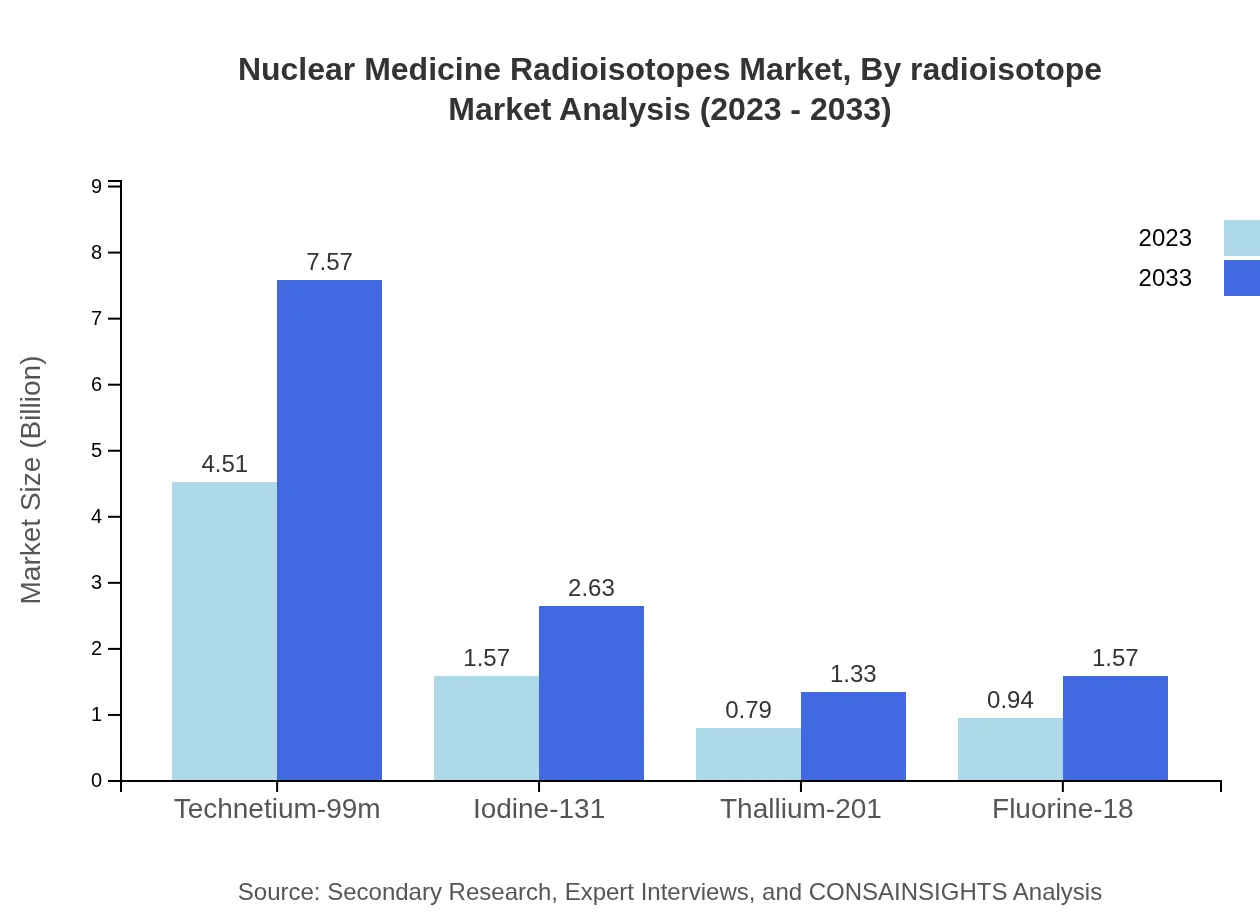
The market size for Technetium-99m is expected to grow from $4.51 billion in 2023 to $7.57 billion by 2033, maintaining a dominant share of 57.78%. Iodine-131 will see an increase from $1.57 billion to $2.63 billion, capturing 20.08% of the market, while Thallium-201 and Fluorine-18 will also represent noteworthy shares, contributing significantly to overall growth.
Nuclear Medicine Radioisotopes Market Analysis By Application
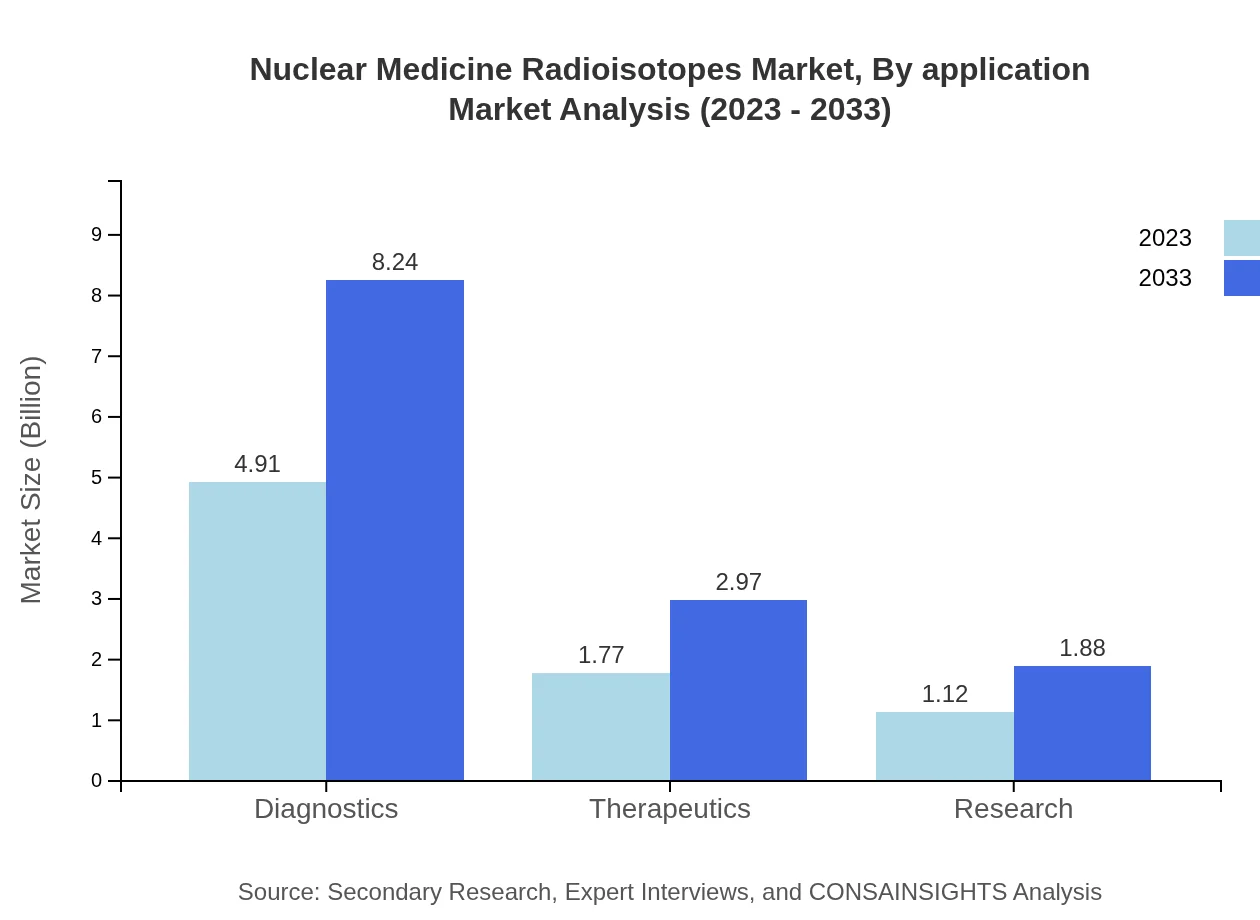
The diagnostic application segment dominates with a market size of $4.91 billion in 2023, expected to reach $8.24 billion by 2033. In comparison, the therapeutic segment’s size is projected to expand from $1.77 billion to $2.97 billion, indicating a growing demand for radioisotope-based therapies.
Nuclear Medicine Radioisotopes Market Analysis By Production Method
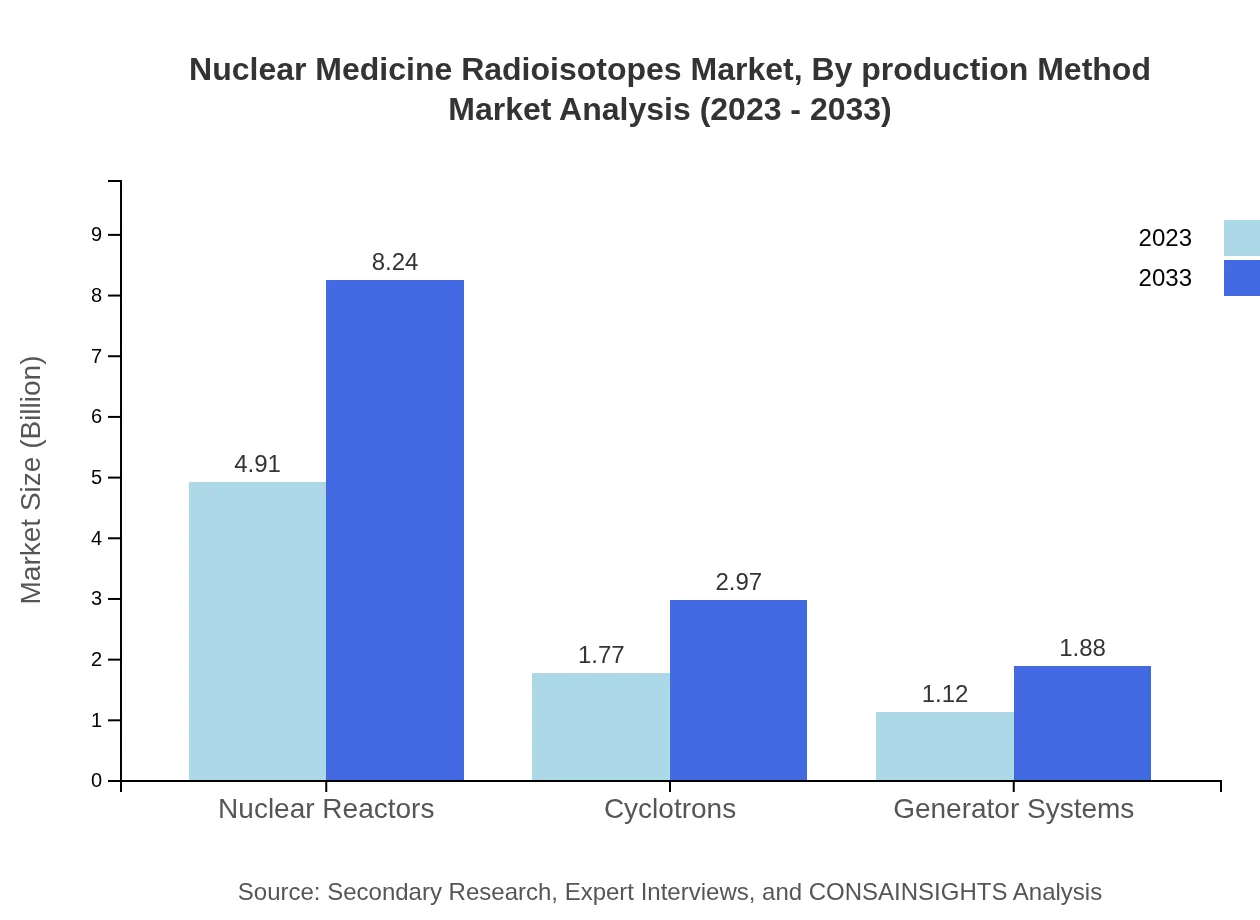
Production methods such as Nuclear Reactors currently account for a significant market size of $4.91 billion, with expectations to increase to $8.24 billion by 2033. Cyclotrons also show promising growth from $1.77 billion to $2.97 billion, reflecting advancements in production techniques.
Nuclear Medicine Radioisotopes Market Analysis By End User
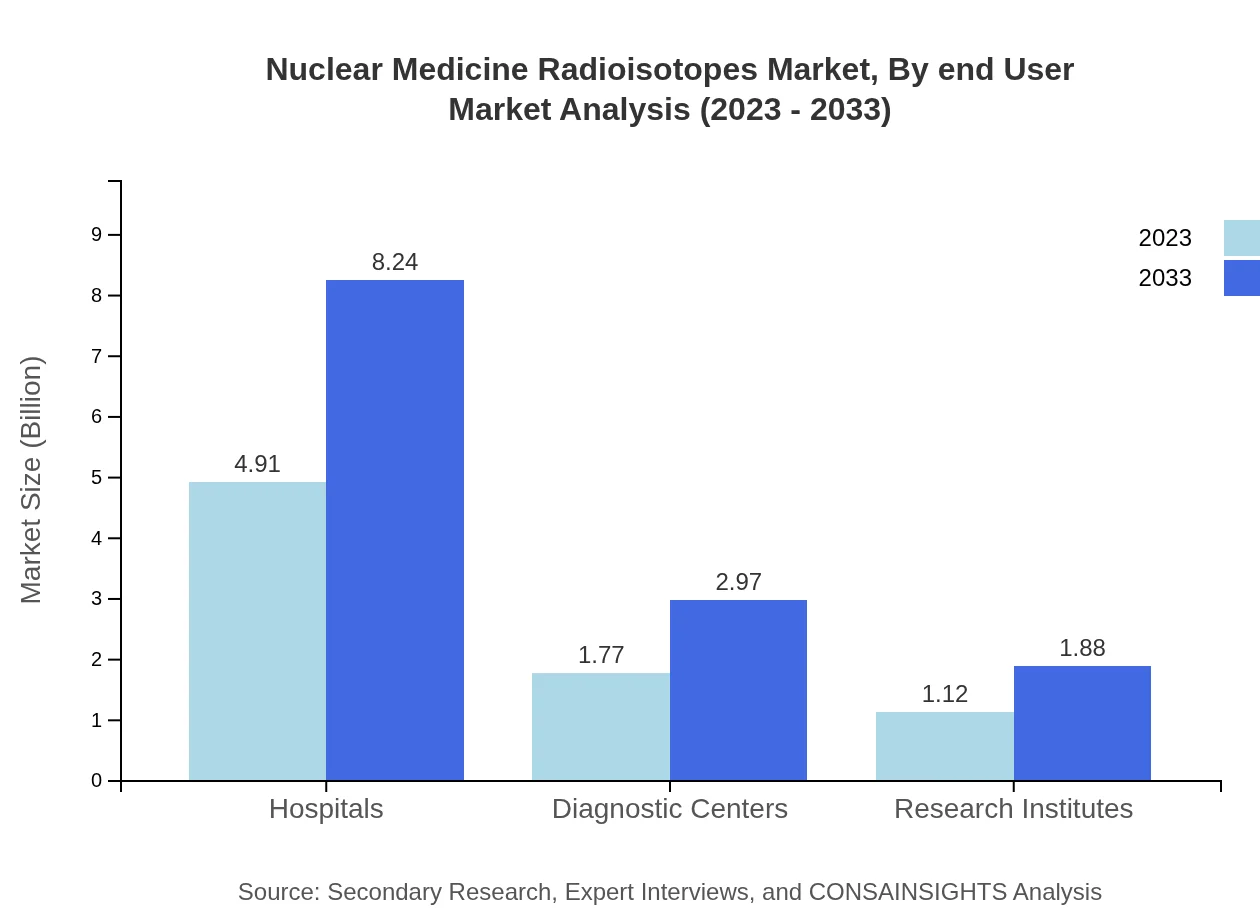
Hospitals dominate the end-user segment with a market size of $4.91 billion in 2023, expected to grow to $8.24 billion while accounting for 62.91% market share. Diagnostic centers and research institutes also contribute significantly with anticipated growth through 2033.
Nuclear Medicine Radioisotopes Market Analysis By Distribution Channel
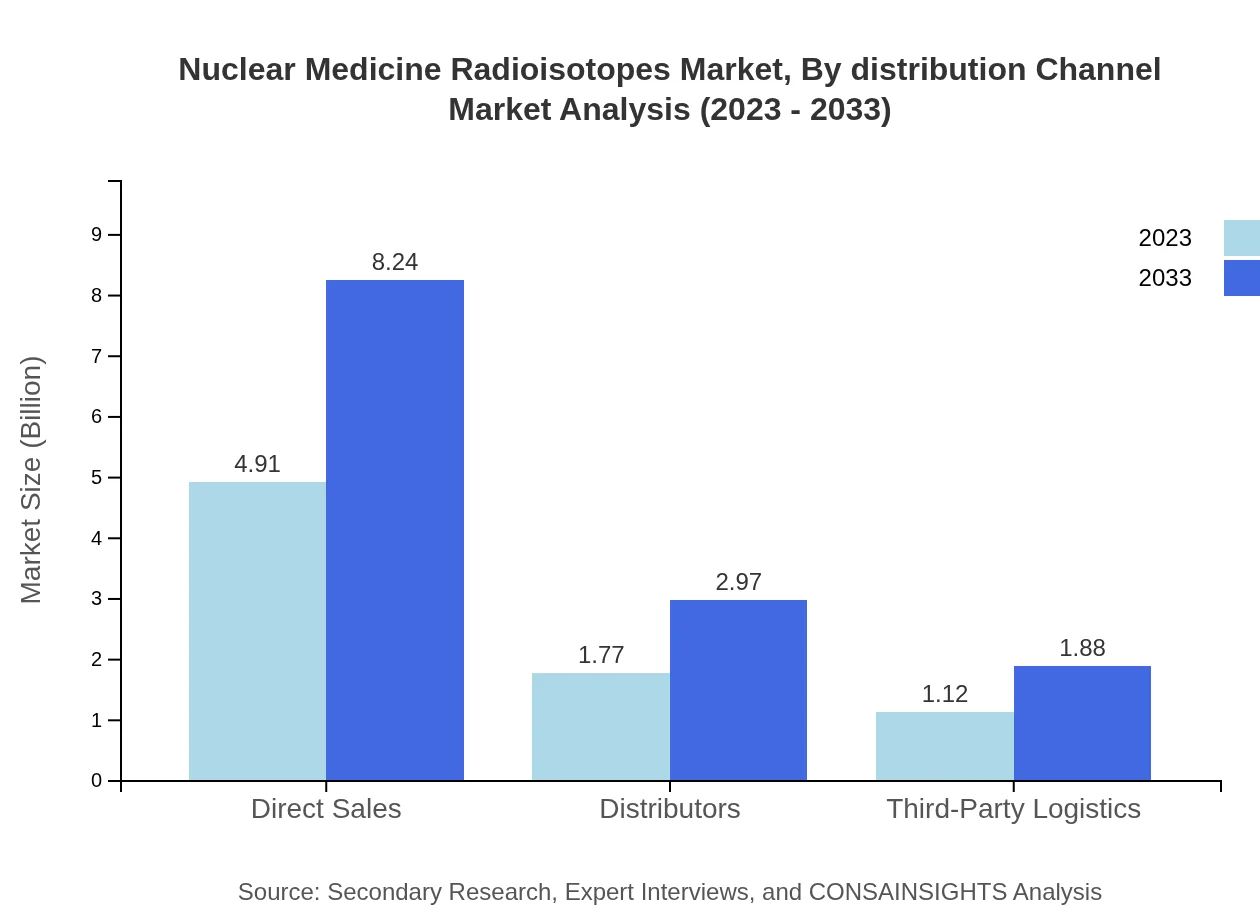
Direct sales currently dominate the distribution channels with a market size of $4.91 billion in 2023 expected to reach $8.24 billion by 2033. Distributors and third-party logistics also represent essential channels that are projected to enhance their contribution to market growth.
Nuclear Medicine Radioisotopes Market Trends and Future Forecast
Tell us your focus area and get a customized research report.
Global Market Leaders and Top Companies in Nuclear Medicine Radioisotopes Industry
Siemens Healthineers:
A leading medical technology company that offers innovative solutions in nuclear medicine, focusing on precision diagnostics and advanced imaging solutions.General Electric Company (GE Healthcare):
A prominent player in the healthcare sector providing a wide range of medical imaging technologies, including nuclear medicine radioisotopes used for diagnostics and treatment.Cardinal Health:
A key distributor of nuclear medicine products, representing various radioisotopes and supporting the preparation and distribution processes for their effective use in clinical settings.Bristol-Myers Squibb:
A global pharmaceutical company heavily invested in the research and development of targeted radioisotope therapies for oncology and other diseases.We're grateful to work with incredible clients.







FAQs
What is the current market size of the Nuclear Medicine Radioisotopes Market Report?
The market size was $7.80 Billion in 2023 according to the report, representing the base year for the 2023 to 2033 forecast period.
How big will the market be in 2033?
The market is projected to reach $13.09 Billion by 2033, reflecting anticipated growth across clinical and production segments during the 2023 to 2033 timeframe.
What is CAGR of the Nuclear Medicine Radioisotopes Market Report?
The report indicates a compound annual growth rate (CAGR) of 5.2% for the forecast period of 2023 to 2033.
Is there a single fastest Growing region in the Nuclear Medicine Radioisotopes Market Report market?
No single fastest-growing region is stated for the Nuclear Medicine Radioisotopes Market Report market because the top regional implied CAGR values are within 0.15 percentage points of each other, making the ranking too close to call reliably.
Which companies lead the industry?
Top companies listed include Siemens Healthineers, General Electric Company (GE Healthcare), Cardinal Health, and Bristol-Myers Squibb as key market participants.
What are common end users in this market?
Primary end users include hospitals, diagnostic centers, and research institutes, each consuming radioisotopes for clinical imaging, therapeutics, and investigational studies.
How do production methods impact supply?
Production via nuclear reactors, cyclotrons, and generator systems affects availability and distribution; investments in these methods are crucial to meet clinical demand.
Why are regulations important for market growth?
Regulatory requirements for handling radioactive materials shape production, distribution, and safety protocols, prompting industry investments to ensure compliance and secure supply chains.