

Organic Infant Sleepwear
First published: 07 November 2025 | Last updated: 01 February 2026 | Report Code: organic-infant-sleepwear
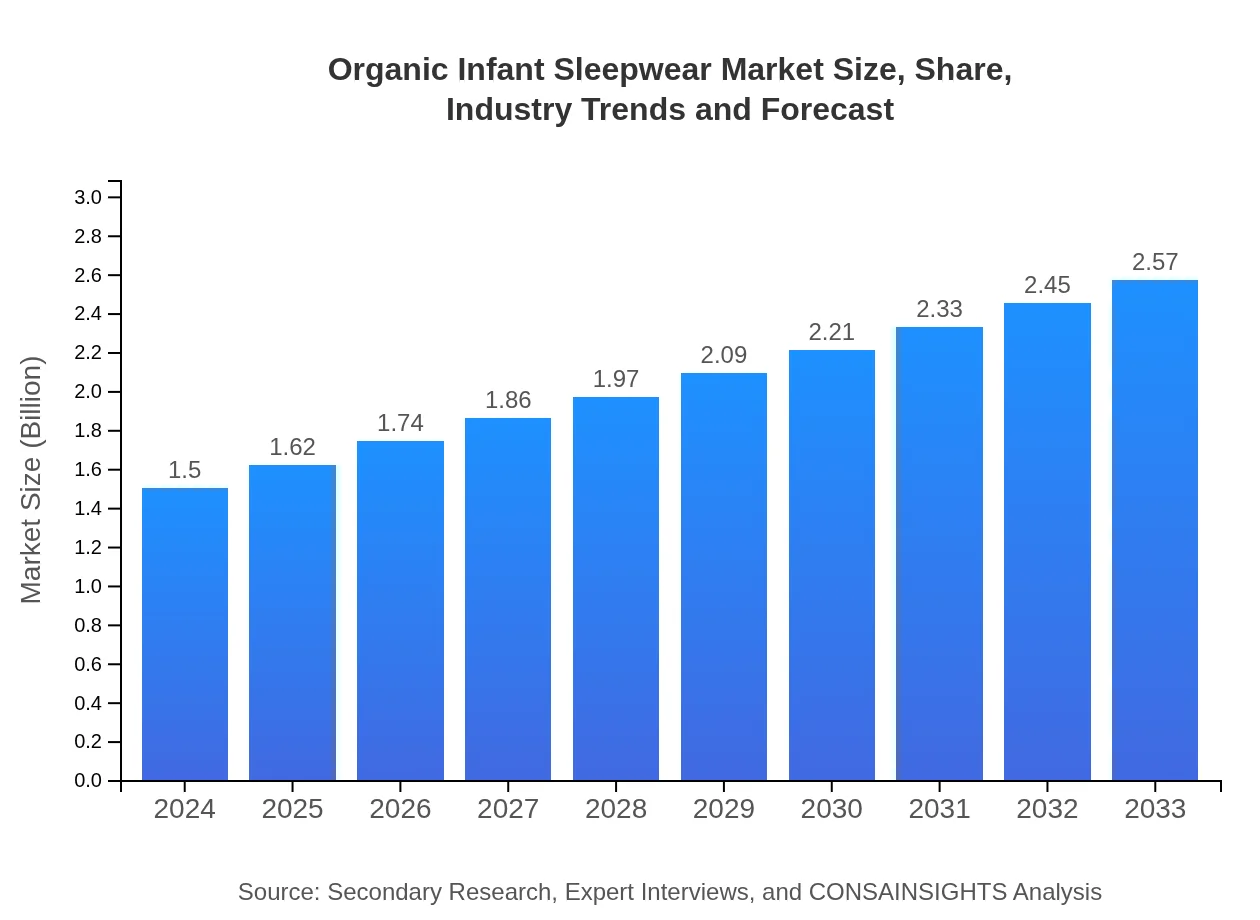
Organic Infant Sleepwear Market — USD $1.5 Billion in 2024, Growing to USD 2.57 by 2033 at 6.0% CAGR
This report delivers an in‐depth analysis of the Organic Infant Sleepwear market, exploring diverse insights from market size to segmentation and regional trends. Covering the forecast period from 2024 through 2033, it provides data-driven perspectives, technology innovations, and comprehensive industry analysis to inform stakeholders about growth prospects and market dynamics.
| Metric | Value |
|---|---|
| Study Period | 2024 - 2033 |
| 2024 Market Size | $1.50 Billion |
| CAGR (2024-2033) | 6.0% |
| 2033 Market Size | $2.57 Billion |
| Top Companies | EcoKids Apparel, GreenSprout Fashions |
| Published Date | 07 November 2025 |
| Last Modified Date | 01 February 2026 |
Organic Infant Sleepwear Market Overview
Customize Organic Infant Sleepwear market research report
- ✔ Get in-depth analysis of Organic Infant Sleepwear market size, growth, and forecasts.
- ✔ Understand Organic Infant Sleepwear's regional dynamics and industry-specific trends.
- ✔ Identify potential applications, end-user demand, and growth segments in Organic Infant Sleepwear
What is the Market Size & CAGR of Organic Infant Sleepwear market in 2024?
Organic Infant Sleepwear Industry Analysis
Organic Infant Sleepwear Market Segmentation and Scope
Tell us your focus area and get a customized research report.
Organic Infant Sleepwear Market Analysis Report by Region
Europe Organic Infant Sleepwear:
Europe remains one of the most mature markets for Organic Infant Sleepwear, driven by stringent safety regulations and high consumer expectations for sustainable products. The region has seen a consistent rise in demand as well as investments in green technologies and certifications that enhance product credibility. Key markets include Western and Northern Europe, where consumer preferences are strongly aligned with sustainability goals and eco-friendly product offerings, ensuring robust market performance.Asia Pacific Organic Infant Sleepwear:
Asia Pacific is witnessing significant growth driven by rising disposable incomes, urbanization, and a shift in consumer preference towards organic and sustainable products. The region’s market for Organic Infant Sleepwear is expanding as modern manufacturing practices and increasing regulatory oversight encourage the adoption of eco-friendly products. In addition to traditional retail channels, digital platforms are playing a crucial role in market expansion, providing greater access and transparency in product sourcing and quality certification.North America Organic Infant Sleepwear:
North America continues to be a robust market for organic infant products, with high consumer consciousness regarding environmental impact and product safety. The region benefits from a well-developed retail infrastructure and a strong emphasis on quality certifications and eco-labeling. Despite competitive pressures, premium pricing and niche marketing strategies continue to support steady growth in the Organic Infant Sleepwear market across the United States and Canada.South America Organic Infant Sleepwear:
South America is emerging as an attractive market for Organic Infant Sleepwear due to increased awareness among young parents regarding sustainable practices. Although market penetration is still in its nascent stages compared to other regions, significant advancements in organic farming and textile manufacturing have led to improved product quality. Strategic collaborations and government initiatives in some countries are further facilitating market growth.Middle East & Africa Organic Infant Sleepwear:
The Middle East and Africa region, although relatively small in market size, are experiencing progressive growth thanks to increased economic development and rising awareness of organic products. Government initiatives aimed at promoting sustainable practices and improving standards in textile production are beginning to bear fruit in these areas, paving the way for market expansion. Both traditional retail outlets and emerging e-commerce platforms are expected to contribute positively to the growth trajectory in this region.Tell us your focus area and get a customized research report.
Organic Infant Sleepwear Market Analysis By Material
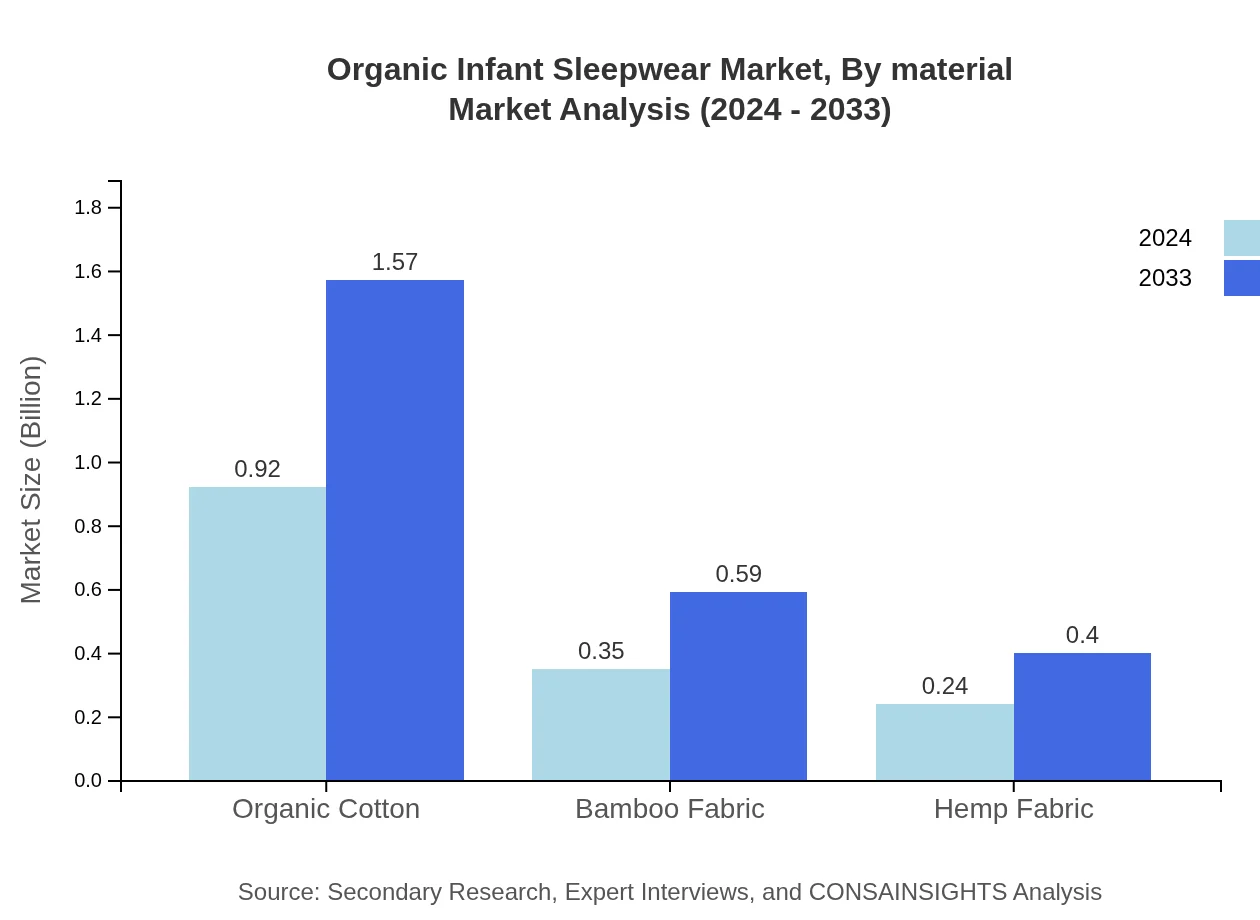
In the material segment, organic cotton commands a dominant share due to its widespread availability, high consumer acceptance, and verified certifications ensuring chemical-free production. Bamboo fabric and hemp fabric, while representing smaller slices of the market, are steadily gaining traction as they offer natural antibacterial properties and superior moisture-wicking features, which are ideal for infant sleepwear. The projected growth in material segments reflects a well-informed shift towards sustainable practices. Manufacturers are investing in advanced processing methods that preserve the inherent qualities of these materials while reducing environmental footprints. Overall, this segmentation not only highlights consumer preference trends but also incentivizes raw material innovation within the supply chain.
Organic Infant Sleepwear Market Analysis By Product
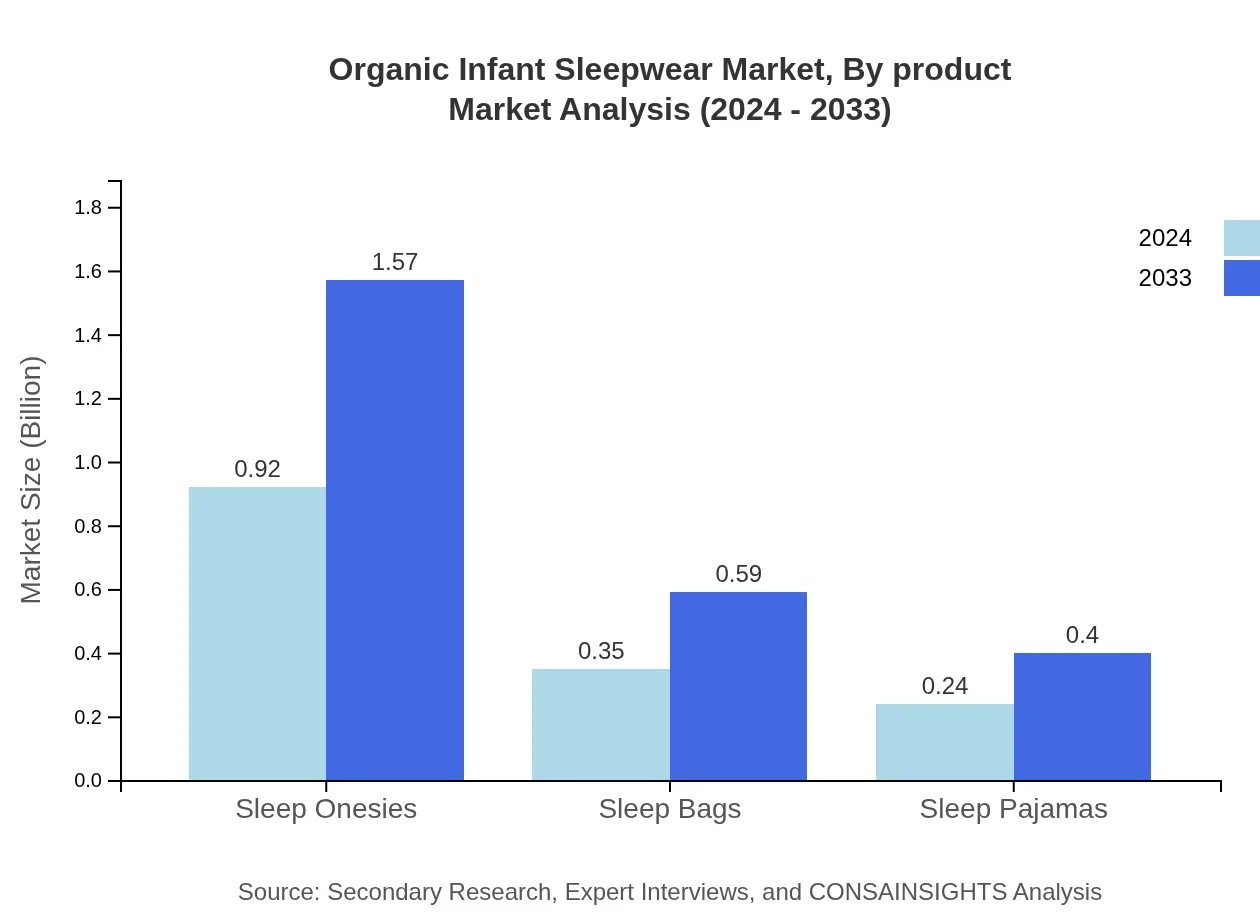
The product segmentation in Organic Infant Sleepwear includes sleep onesies, sleep bags, and sleep pajamas. Sleep onesies hold the largest market share, primarily because of their versatility and comfort, making them the preferred choice among parents. Sleep bags and sleep pajamas offer distinct functionalities and seasonal variations, contributing to a balanced portfolio. Product type segmentation also emphasizes the importance of design innovation and the integration of ergonomic features, ensuring both comfort and safety for infants. As manufacturers refine product aesthetics while maintaining sustainability standards, this segment is poised for robust growth supported by evolving consumer expectations and rising awareness of product safety benefits.
Organic Infant Sleepwear Market Analysis By Age Group
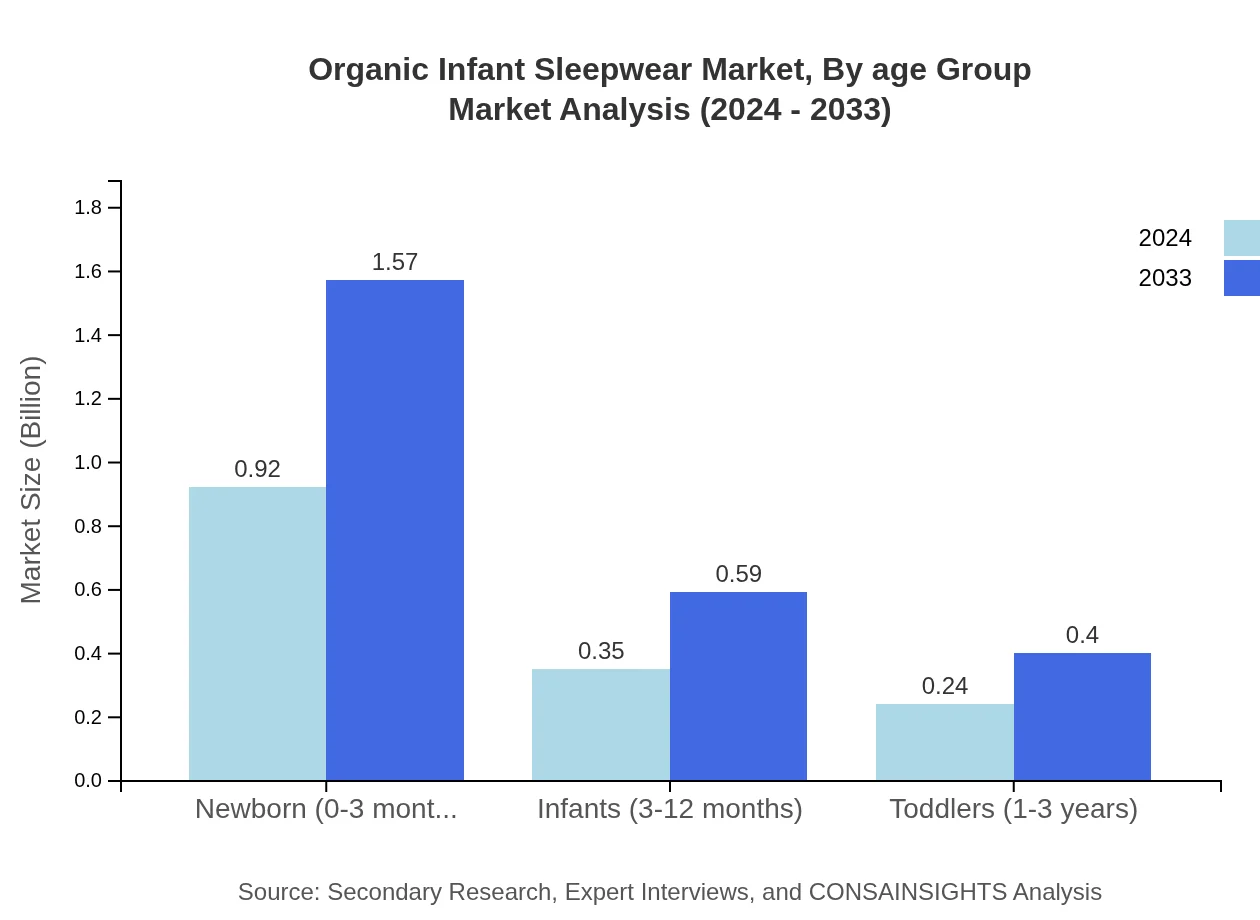
This segmentation is categorized into three primary age groups: Newborn (0-3 months), Infants (3-12 months), and Toddlers (1-3 years). Newborn products, which include particularly delicate sleepwear styles, command the highest share due to the critical importance of hygiene and safety during early life stages. The infants and toddlers segments, although smaller in market share, are equally important as they cater to the growth and changing comfort needs of children. The segmentation has spurred innovations in size adaptability, fabric softness, and design safety - features that resonate well with consumer preferences focused on optimizing comfort and health benefits for younger age groups.
Organic Infant Sleepwear Market Analysis By Brand
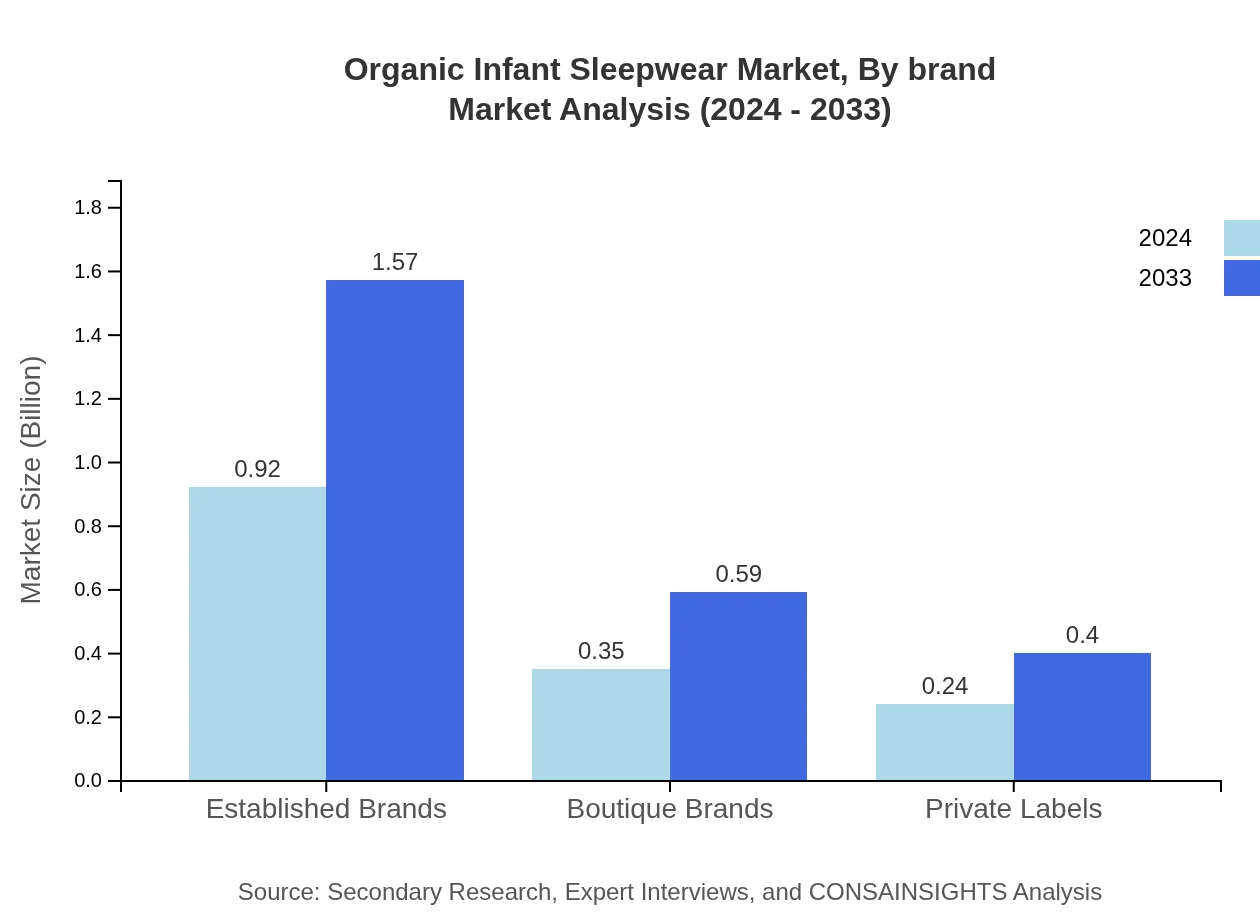
Brand segmentation distinguishes between established brands, boutique brands, and private labels, each playing a unique role in shaping market dynamics. Established brands continue to maintain dominant market positions due to a legacy of trust, quality assurance, and consistent product performance. Boutique brands are emerging as strong competitors by offering niche, innovative designs that appeal to trend-sensitive, eco-conscious consumers. Private labels provide competitively priced alternatives without sacrificing quality, benefiting from close collaborations with quality-certified manufacturers. Together, these segments encourage healthy competition and drive continuous innovation, ensuring that the breadth of consumer options continues to expand in alignment with evolving market trends and sustainability commitments.
Organic Infant Sleepwear Market Analysis By Distribution Channel
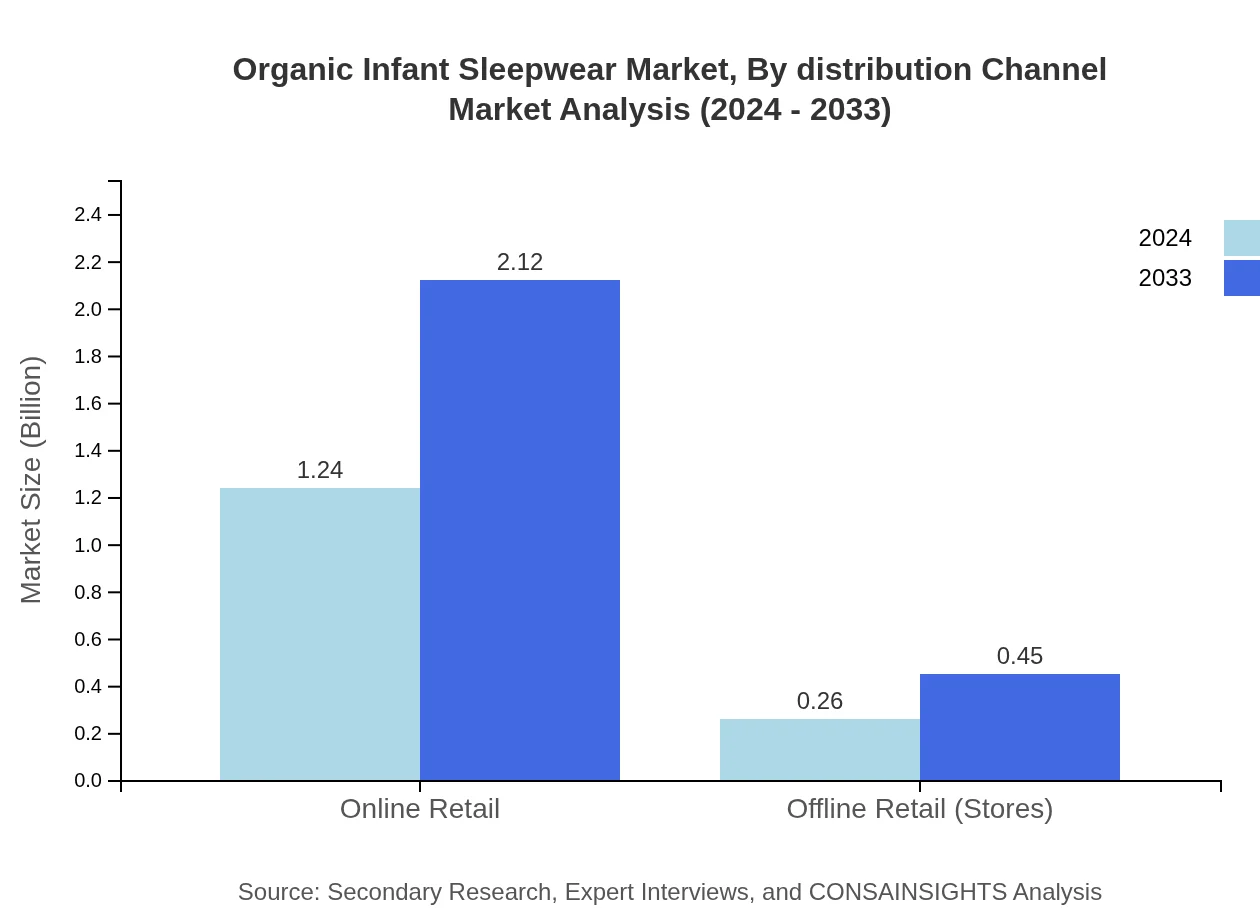
The distribution channel analysis is bifurcated into online retail and offline retail outlets. Online retail has experienced exponential growth, driven by an increase in e-commerce penetration and consumer preference for convenient shopping experiences. Digital channels offer a wide range of product information, certifications, consumer reviews, and price comparisons, significantly bolstering consumer confidence in organic products. Offline retail remains essential, particularly for consumers who prioritize tactile product examination and personalized customer service in brick-and-mortar outlets. The synergy between online and offline channels is setting the stage for an integrated retail experience, ensuring widespread accessibility and reinforcing the market’s overall growth prospects.
Organic Infant Sleepwear Market Trends and Future Forecast
Tell us your focus area and get a customized research report.
Global Market Leaders and Top Companies in Organic Infant Sleepwear Industry
EcoKids Apparel:
EcoKids Apparel is a pioneer in the sustainable infant wear market, known for its commitment to organic materials, innovative design, and responsible manufacturing practices. The company has consistently led market trends by integrating eco-friendly certifications and engaging in partnerships that promote global sustainability.GreenSprout Fashions:
GreenSprout Fashions has built a robust reputation with high-quality organic textiles and ethically produced sleepwear. The firm leverages advanced technology and rigorous quality control to meet the exacting standards of modern parents, ensuring product safety, comfort, and environmental responsibility.We're grateful to work with incredible clients.








FAQs
How can the market report help align our marketing strategy with customer adoption trends?
The Organic Infant Sleepwear Market is projected to grow from $1.5 billion in 2024 with a CAGR of 6.0%. Understanding adoption trends enables tailored marketing strategies to address consumer preferences, ensuring alignment with market growth.
What product features are in highest demand according to the market trends?
The trend analysis indicates strong demand for established brands, particularly organic cotton sleepwear, accounting for 61.2% market share. Features like environmental sustainability and comfort drive consumer preferences, paving the way for product innovation.
Which regions offer the best market entry and expansion opportunities in the organic Infant Sleepwear industry?
Regions like North America, projected to reach $0.89 billion by 2033, and Europe, anticipated at $0.80 billion, present ample market entry opportunities. The steady growth in these areas highlights a promising landscape for expansion.
What emerging technologies and innovations are shaping the organic Infant Sleepwear market?
Innovations in sustainable fabrics, such as bamboo and hemp, along with advancements in online retail strategies, shape market dynamics. The integration of eco-friendly manufacturing processes appeals to environmentally conscious consumers.
Does the report include competitive landscape and market share analysis?
Yes, the report outlines a competitive landscape detailing market shares by segments such as established brands (61.2%) and boutique brands (23.12%). Insights into competitor strategies and consumer preferences inform better positioning.
How can executives use the report to evaluate investment risks and ROI?
Executives can utilize market size data, projected growth rates, and regional insights to assess investment risks and forecast ROI. Understanding market trends and competitive dynamics maximizes strategic decision-making.
What are the expected market sizes for each segment in the organic infant sleepwear category?
By 2033, sleep onesies and organic cotton products will dominate with $1.57 billion and $1.57 billion, respectively. Boutique brands will reach $0.59 billion, offering diverse opportunities across established categories.