

Placental Protein Market Report
First published: 21 October 2024 | Last updated: 25 May 2026 | Report Code: placental-protein
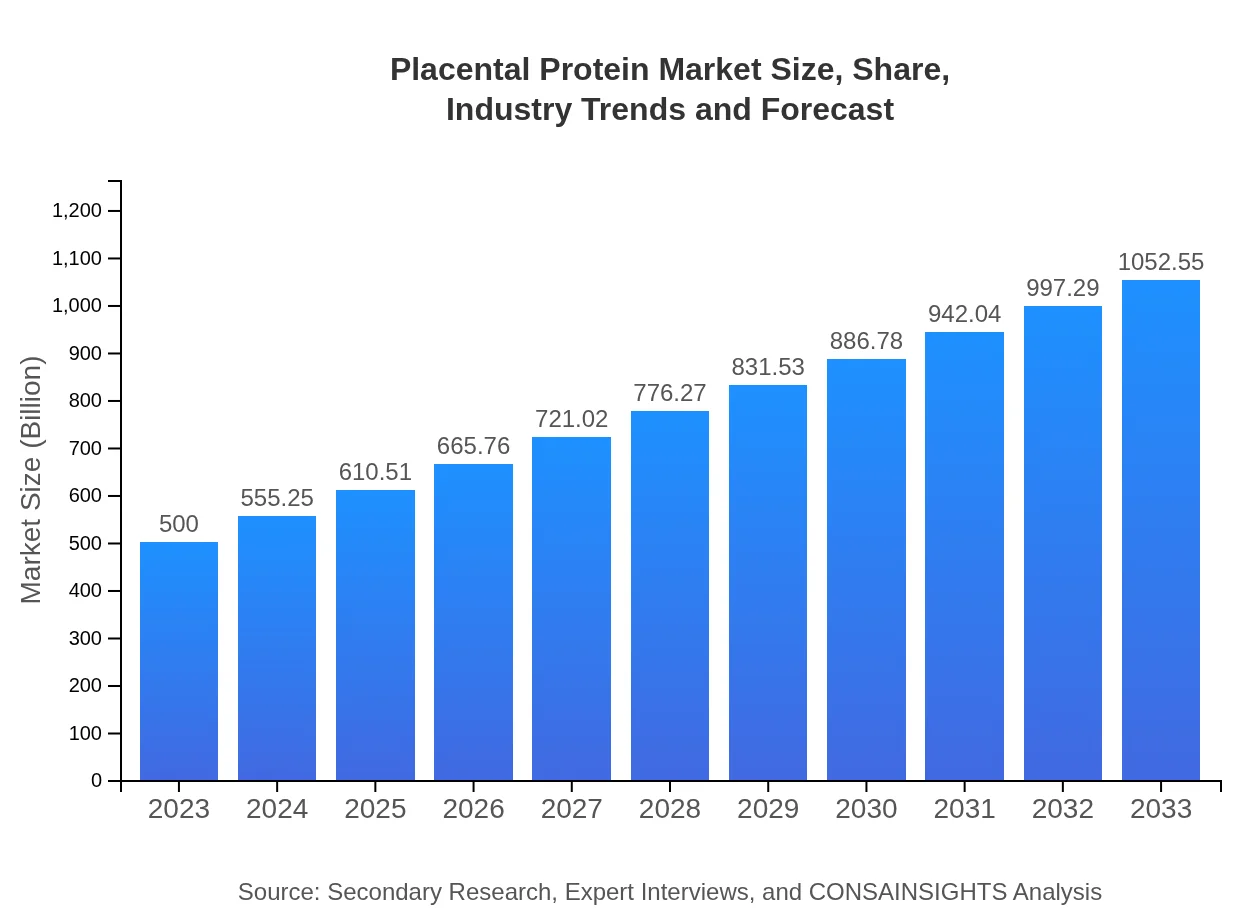
Placental Protein Market — USD 500 million in 2023, Growing to USD 1052.55M by 2033 at 7.5% CAGR
This report provides an in-depth analysis of the placental protein market, including market size, growth trends, and segmentation. Insights are forecasted from 2023 to 2033, examining regional dynamics, technological advancements, and key players impacting the industry.
Key Takeaways
- Global market value rises from $500.00 Billion in 2023 to $1052.55 Billion in 2033 at a 7.5% CAGR over 2023 to 2033.
- North America is largest regional market, while no single fastest-growing region is stated because regional CAGR differences remain within 0.15 percentage points.
- Europe expands from $158.2 Billion in 2023 to $333.03 Billion in 2033; Asia Pacific grows from $76.5 Billion to $161.04 Billion in the same period.
- Segment diversity includes multiple forms, sources, applications, product types, and distribution channels, reflecting broad end-market adoption.
- Top companies profiled include BioCare Copenhagen, SkinMedica, Reneux, and MediCera, with focus on R&D and extraction innovations.
Placental Protein Market Report — Executive Summary
North America remains largest market by forecast-period value, while no single fastest-growing region is stated because top regional growth rates are separated by less than 0.15 percentage points. This report synthesizes market sizing, regional movement, segmentation, and competitive positioning for placental proteins through 2033. Drivers include rising incorporation of placental extracts in cosmetics, growing therapeutic and nutritional applications in healthcare and food and beverage, and advances in extraction and formulation technologies. The study maps regional markets and quantifies 2023 and 2033 values to show expansion trends. North America is identified as the largest market by 2033. The analysis evaluates multiple segment layers—form, source, application, product type, and distribution—highlighting varied adoption paths. Competitive coverage profiles companies such as BioCare Copenhagen, SkinMedica, Reneux, and MediCera. Methodology combines primary interviews with industry experts, secondary sources from company reports and publications, and internal validation to ensure robust findings and trend interpretation for stakeholders planning strategic moves.
Key Growth Drivers
- Increased use of placental extracts in personal care and cosmetics driving demand for specialized formulations.
- Growing incorporation into healthcare and nutritional products expands application scope and purchase volumes.
- Advances in extraction and processing technologies improving product purity and bioavailability, supporting broader adoption.
- Rising consumer awareness of natural and functional ingredients prompting higher uptake across food and beverage and wellness products.
- Ongoing R&D and collaboration between industry and research institutions accelerating new product development and commercialization.
| Metric | Value |
|---|---|
| Study Period | 2023 - 2033 |
| 2023 Market Size | $500.00 Million |
| CAGR (2023-2033) | 7.5% |
| 2033 Market Size | $1052.55 Million |
| Top Companies | BioCare Copenhagen, SkinMedica, Reneux, MediCera |
| Published Date | 21 October 2024 |
| Last Modified Date | 25 May 2026 |
Placental Protein Market Overview
Customize Placental Protein Market Report market research report
- ✔ Get in-depth analysis of Placental Protein market size, growth, and forecasts.
- ✔ Understand Placental Protein's regional dynamics and industry-specific trends.
- ✔ Identify potential applications, end-user demand, and growth segments in Placental Protein
What is the Market Size & CAGR of Placental Protein Market Report market in 2023?
Placental Protein Industry Analysis
Placental Protein Market Segmentation and Scope
Tell us your focus area and get a customized research report.
Placental Protein Market Report Market Analysis Report by Region
Europe Placental Protein Market Report:
Europe grows from $158.2 Billion in 2023 to $333.03 Billion in 2033. Regional expansion is influenced by consumer preference for premium skincare and nutraceutical products, coupled with research activity and regulatory frameworks guiding product standards.Asia Pacific Placental Protein Market Report:
Asia Pacific grows from $76.5 Billion in 2023 to $161.04 Billion in 2033. Growth in the region is supported by rising expenditures on personal care and health supplements, expanding manufacturing capacity, and growing consumer awareness of functional ingredients.North America Placental Protein Market Report:
North America is largest regional market, rising from $191.25 Billion in 2023 to $402.6 Billion in 2033. Growth reflects strong demand in personal care and therapeutic applications, investment in formulation R&D, and established distribution channels supporting scale-up.South America Placental Protein Market Report:
Latin America grows from $32.85 Billion in 2023 to $69.15 Billion in 2033. Market momentum is linked to increasing demand for natural and functional personal care and food products, alongside opportunities for wider distribution and product localization.Middle East & Africa Placental Protein Market Report:
Middle East and Africa grows from $41.2 Billion in 2023 to $86.73 Billion in 2033. Drivers include emerging interest in therapeutic and cosmetic applications, growing retail penetration, and gradual upticks in research and manufacturing investments.Tell us your focus area and get a customized research report.
Research Methodology
Placental Protein Market Analysis By Product Type
The market is primarily segmented into liquid and solid forms. Liquids accounted for $431.20 million in 2023 and expected to grow to $907.72 million by 2033, holding a market share of 86.24%. Solid forms are valued at $68.80 million in 2023 with a projected value of $144.83 million by 2033, making up 13.76% of the market. This shows a clear consumer preference for liquid extracts due to their versatility and convenience.
Placental Protein Market Analysis By Application
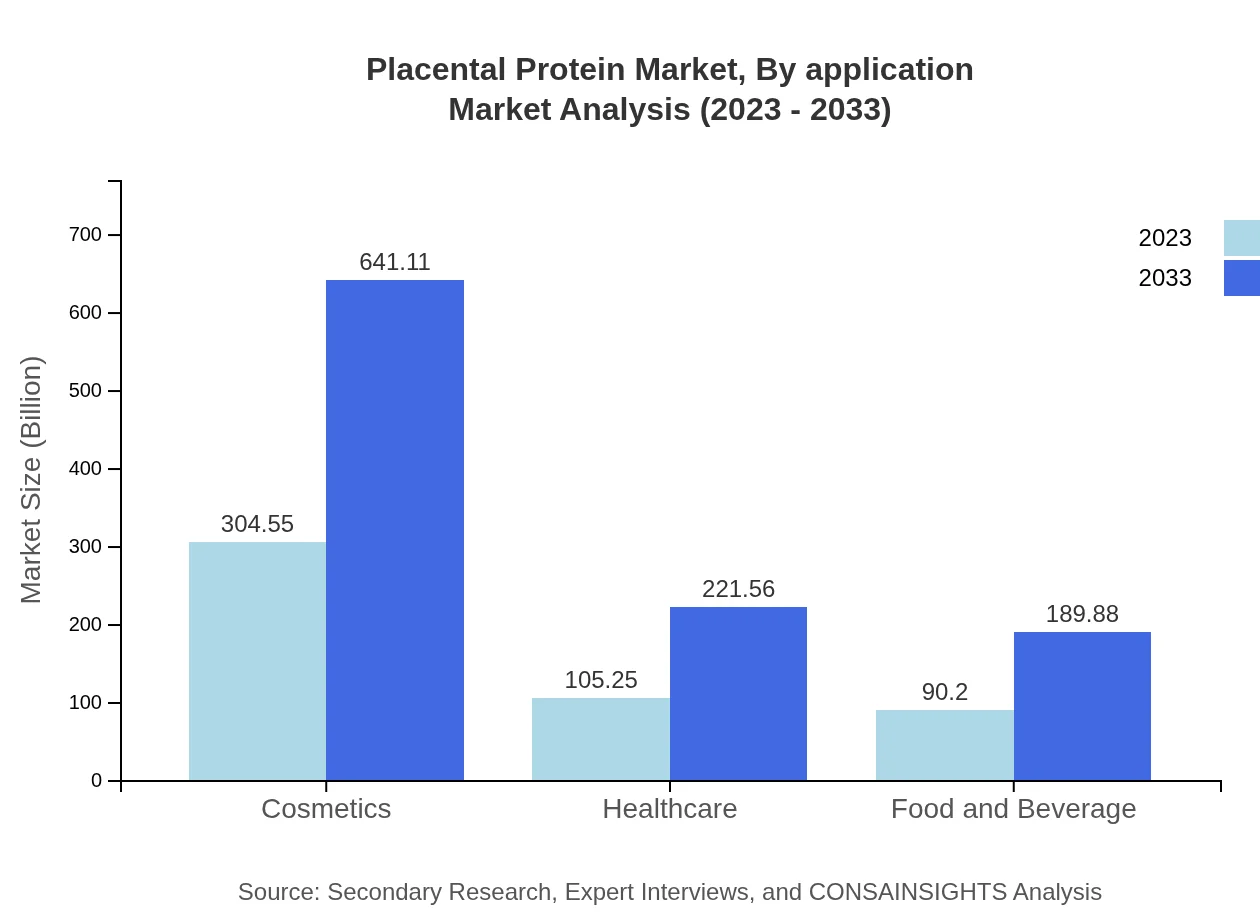
By application, the cosmetics segment leads with a size of $304.55 million in 2023, predicted to grow to $641.11 million by 2033, representing a 60.91% share. The healthcare application follows with a size of $105.25 million, forecasted to reach $221.56 million by 2033, while food and beverage applications are expected to increase from $90.20 million to $189.88 million. The emphasis on natural ingredients is shaping product innovation in these sectors.
Placental Protein Market Analysis By Source
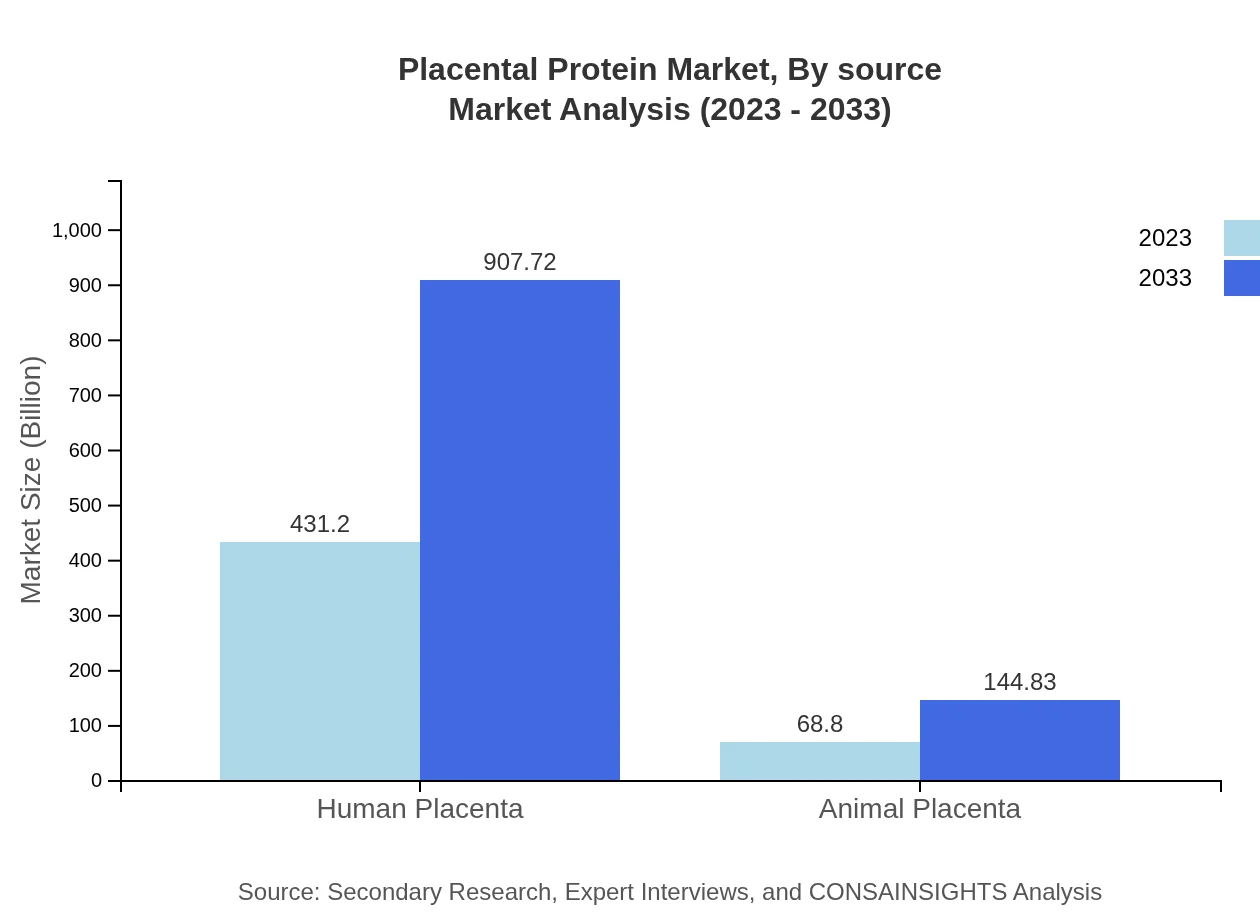
The placental protein market is divided into human and animal sources. The human placenta segment displays a strong performance with a size of $431.20 million growing to $907.72 million by 2033 (86.24% share), while animal placenta results in a market size growth from $68.80 million to $144.83 million (13.76% share). The demand for human-derived proteins is likely bolstered by their perceived quality and efficacy.
Placental Protein Market Analysis By Form
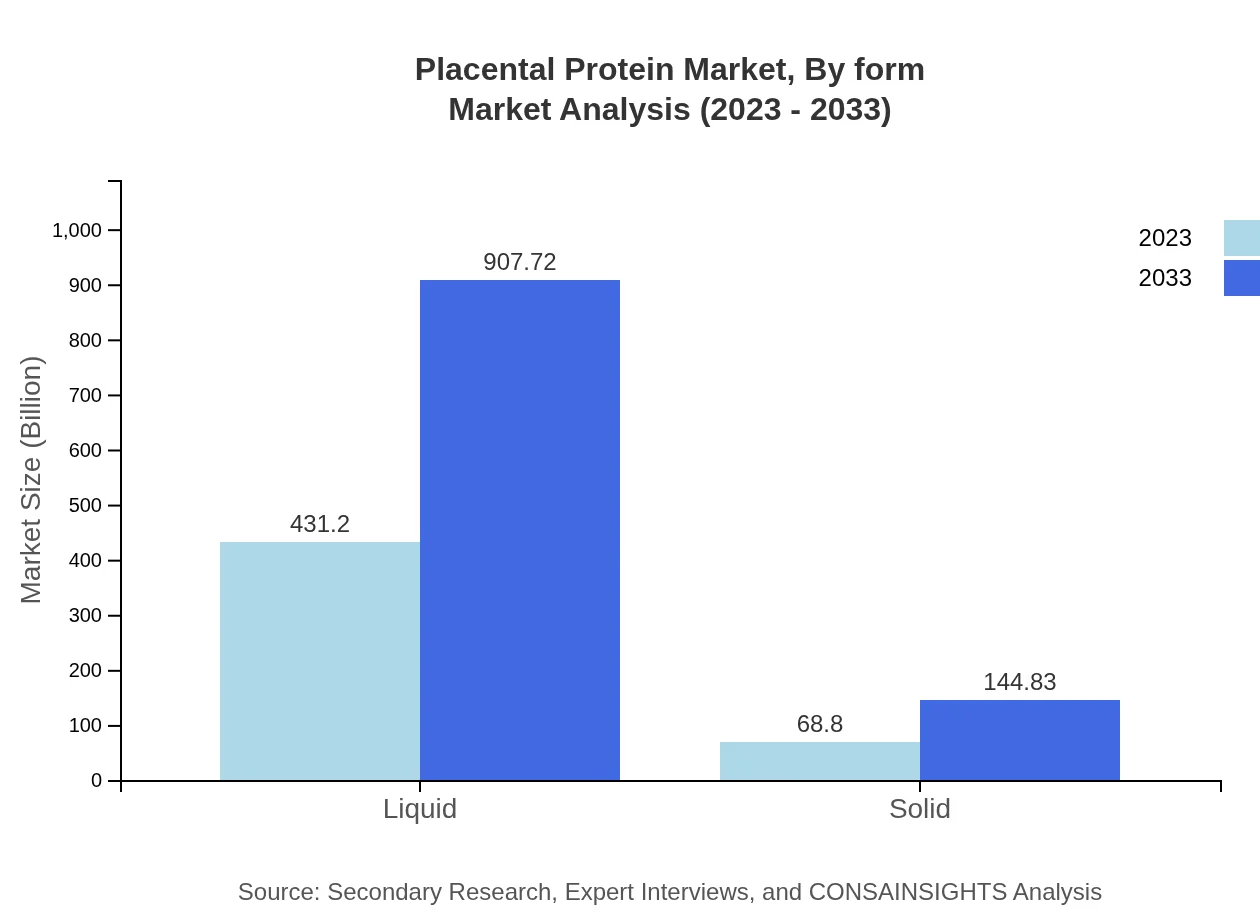
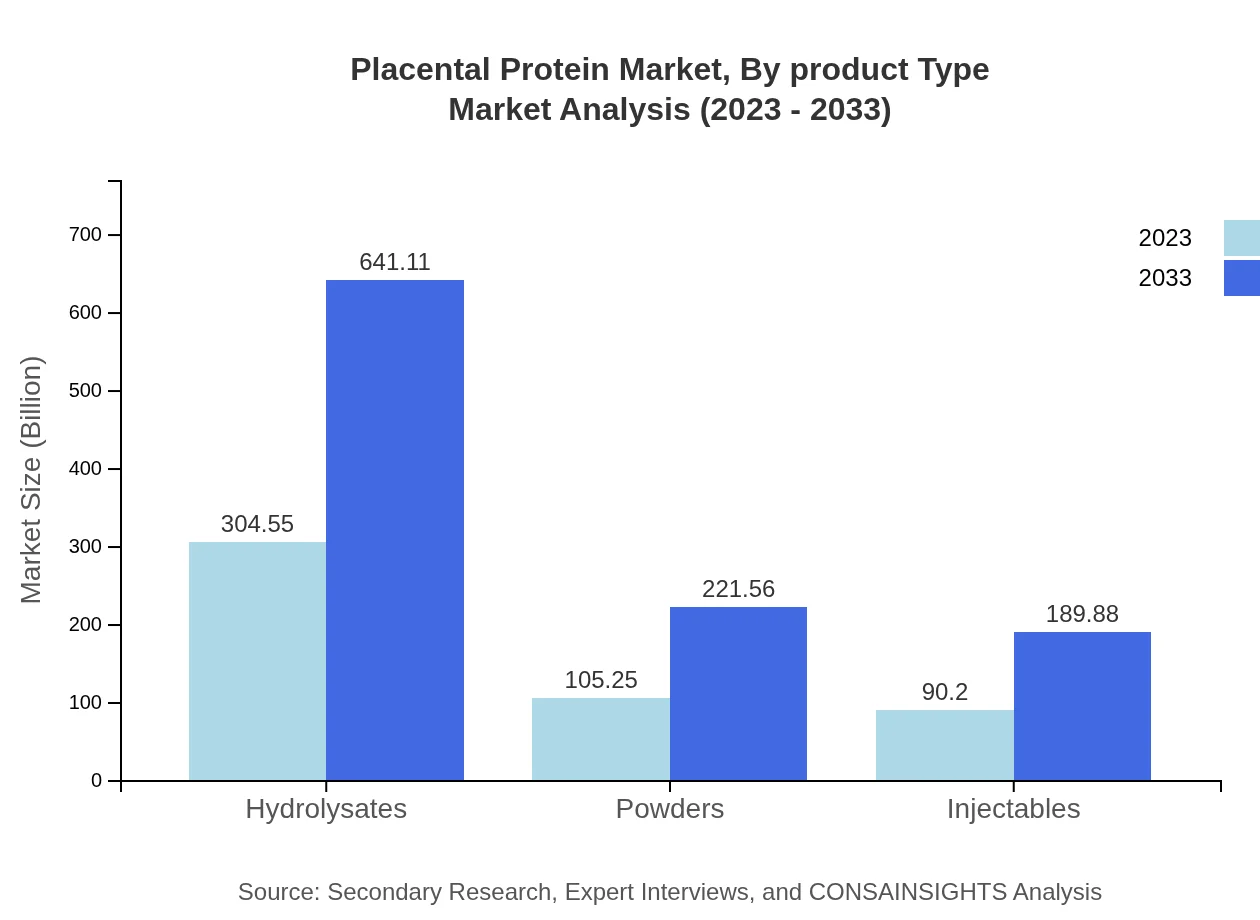
Market offerings are available in forms such as hydrolysates, powders, and injectables. Hydrolysates lead the market, expected to grow from $304.55 million in 2023 to $641.11 million by 2033. Powders are projected to show steady growth from $105.25 million to $221.56 million over the same period, while injectables are expected to reach $189.88 million by 2033. The versatility of hydrolysates in various applications signifies their dominance.
Placental Protein Market Analysis By Distribution Channel
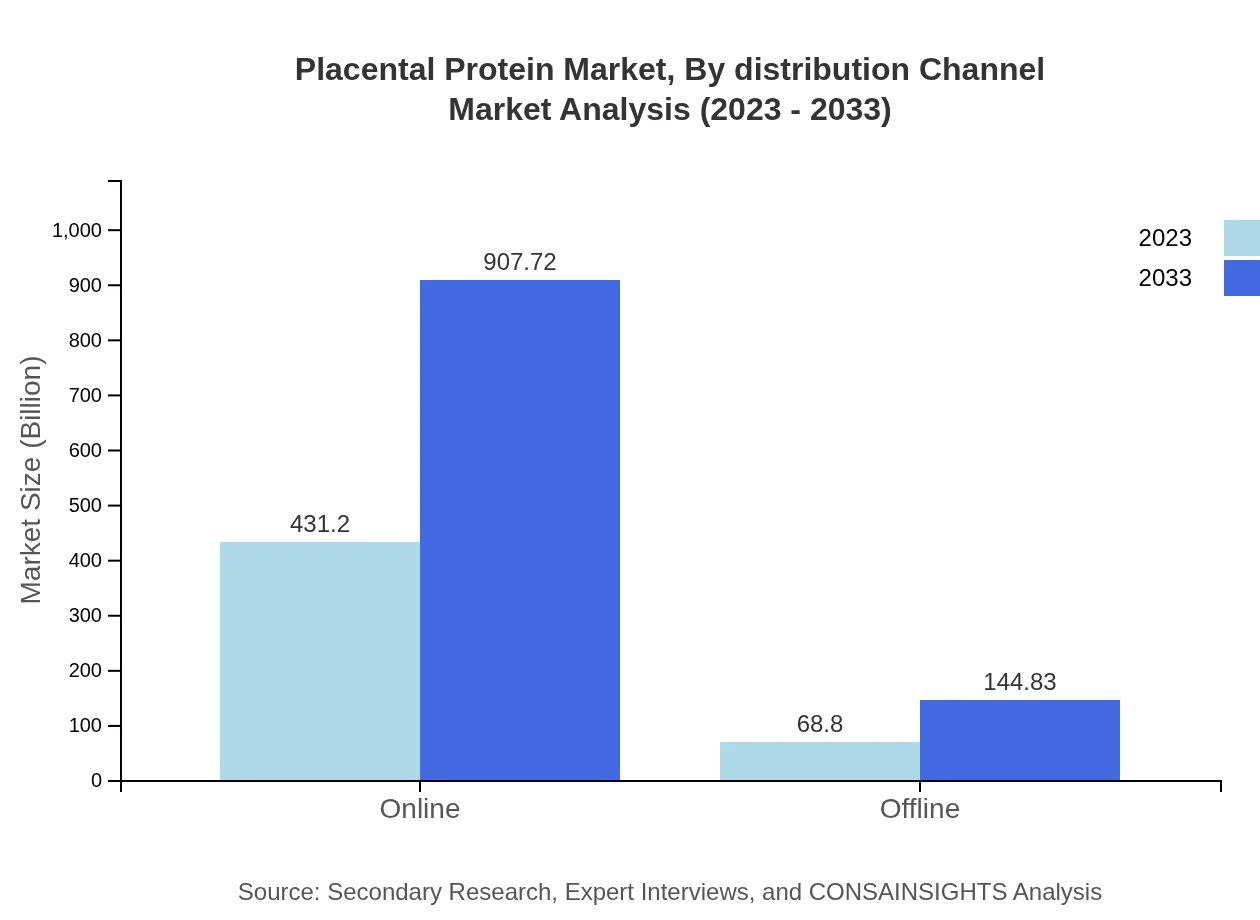
The distribution channels are categorized as online and offline. The online channel currently represents a larger market segment, growing from $431.20 million in 2023 to $907.72 million by 2033. The offline channel is growing steadily, though at a smaller rate, forecasted to increase from $68.80 million to $144.83 million. The increasing shift towards e-commerce is pivotal in shaping purchasing behaviors.
Placental Protein Market Trends and Future Forecast
Tell us your focus area and get a customized research report.
Global Market Leaders and Top Companies in Placental Protein Industry
BioCare Copenhagen:
BioCare Copenhagen is a leader in the extraction and production of high-quality placental proteins, specializing in skin health and functional health products.SkinMedica:
SkinMedica is renowned for its advanced skincare formulations leveraging placental proteins to enhance skin rejuvenation and anti-aging effects.Reneux:
Reneux focuses on innovative healthcare solutions utilizing placental extracts in nutraceuticals that promote overall health and wellness.MediCera:
MediCera specializes in dermatological products and utilizes placental proteins for their regenerative properties in skin repair treatments.We're grateful to work with incredible clients.








FAQs
What is the market size in 2023?
The market size in 2023 is $500.00 Billion, as stated in the report’s base-year valuation for the placental protein market.
How big is the market expected to be by 2033?
By 2033 the market is projected to reach $1052.55 Billion, reflecting expansion across multiple end-use sectors through the forecast period.
What is CAGR for the forecast period?
The compound annual growth rate (CAGR) for 2023 to 2033 is 7.5%, representing the projected average annual growth rate over the decade.
Which region is the largest?
North America is the largest regional market, growing from $191.25 Billion in 2023 to $402.6 Billion in 2033 according to regional data.
Is there a single fastest Growing region in the Placental Protein Market Report market?
No single fastest-growing region is stated for the Placental Protein Market Report market because the top regional implied CAGR values are within 0.15 percentage points of each other, making the ranking too close to call reliably.
Which companies are profiled in the report?
Top companies included are BioCare Copenhagen, SkinMedica, Reneux, and MediCera, highlighted for their roles in product development and market activity.
What segments are covered by form and source?
Form and source segmentation includes liquid and solid forms, and human placenta and animal placenta sources, covering key product categorizations.
How was research conducted?
Research combined primary interviews with industry experts, secondary review of company reports and publications, and triangulation with internal validation for trend analysis.