

Quantum Computing Software
First published: 12 March 2026 | Last updated: 14 March 2026 | Report Code: quantum-computing-software
Quantum Computing Software Market — USD $1.9 Billion in 2024, Growing to USD 14.19 by 2033 at 23.4% CAGR
This comprehensive report on the Quantum Computing Software market provides a detailed analysis of current trends, key drivers, and technological breakthroughs forecasted from 2024 to 2033. It offers insights into market size, growth rates, segmentation strategies, regional performance, and major industry players—delivering essential data to guide investment and strategic planning in this cutting-edge sector.
| Metric | Value |
|---|---|
| Study Period | 2024 - 2033 |
| 2024 Market Size | $1.90 Billion |
| CAGR (2024-2033) | 23.4% |
| 2033 Market Size | $14.19 Billion |
| Top Companies | Qubit Innovations, Quantum Leap Technologies, NextGen Quantum Systems |
| Published Date | 12 March 2026 |
| Last Modified Date | 14 March 2026 |
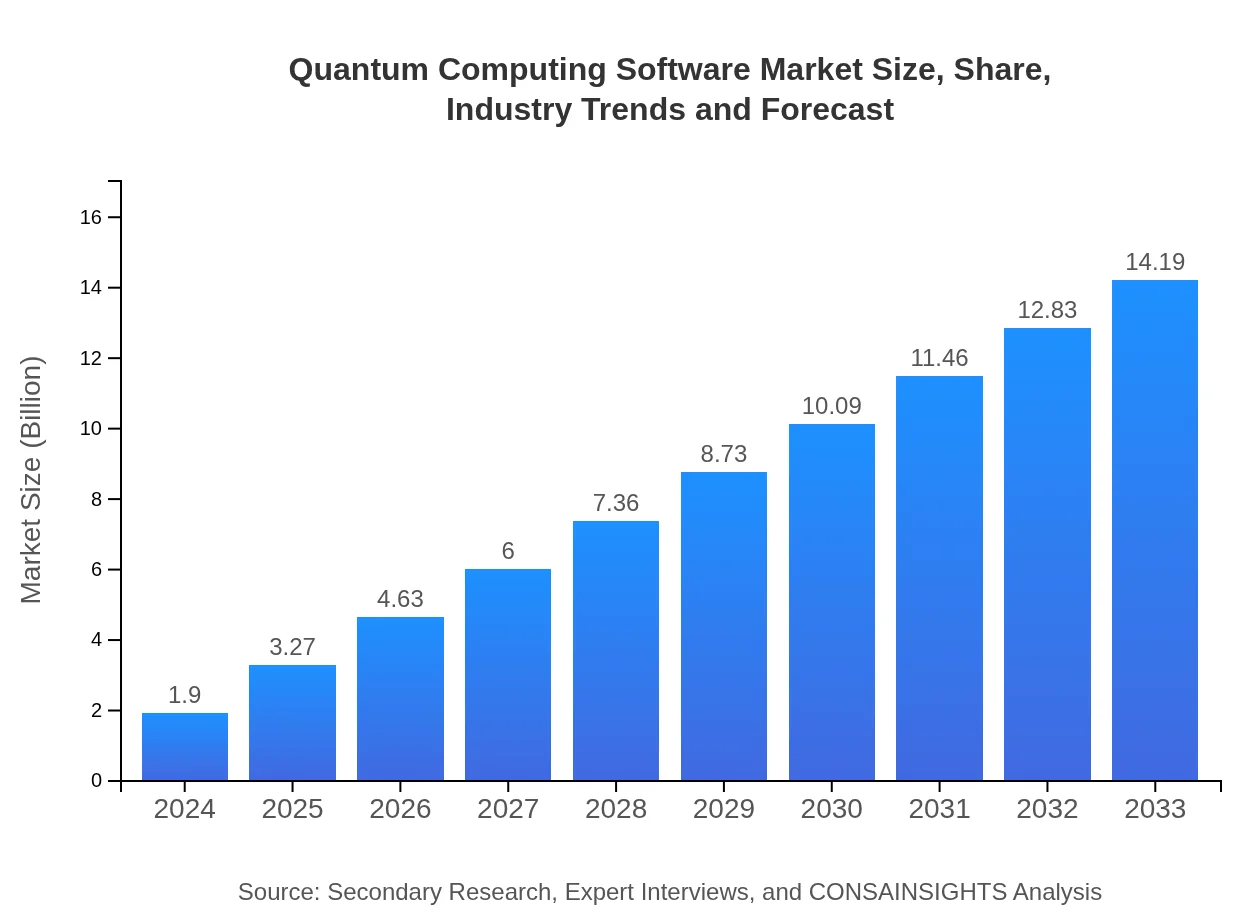
Quantum Computing Software Market Overview
Customize Quantum Computing Software market research report
- ✔ Get in-depth analysis of Quantum Computing Software market size, growth, and forecasts.
- ✔ Understand Quantum Computing Software's regional dynamics and industry-specific trends.
- ✔ Identify potential applications, end-user demand, and growth segments in Quantum Computing Software
What is the Market Size & CAGR of Quantum Computing Software market in {Year}?
Quantum Computing Software Industry Analysis
Quantum Computing Software Market Segmentation and Scope
Tell us your focus area and get a customized research report.
Quantum Computing Software Market Analysis Report by Region
Europe Quantum Computing Software:
Europe is poised for substantial growth in the quantum software market, with figures rising from 0.58 in 2024 to 4.34 by 2033. European nations are focusing on leveraging their robust industrial base and supportive regulatory frameworks to drive innovation in quantum computing. Collaborative efforts among governments, research institutions, and private enterprises underpin the region’s strategic initiatives, making Europe a significant market for high-performance quantum computing solutions.Asia Pacific Quantum Computing Software:
In the Asia Pacific region, market growth is set to accelerate with a projected expansion from a modest base of 0.35 in 2024 to 2.58 by 2033. Countries in this region are rapidly adopting quantum technologies due to heavy government backing, growing R&D initiatives, and a surge in technology startups. The region’s dynamic ecosystem is characterized by robust academic-industry partnerships and significant investments in high-tech infrastructure, fueling a steady stream of innovation in quantum software solutions.North America Quantum Computing Software:
North America stands as a powerhouse in the Quantum Computing Software market, with the market size expected to rise from 0.70 in 2024 to 5.22 in 2033. The region benefits from a well-established technology sector, significant capital availability, and strong academic research institutions, which together foster an environment conducive to both innovation and commercialization. Strategic partnerships and advanced infrastructure continue to solidify North America’s leadership role in this domain.South America Quantum Computing Software:
South America represents an emerging market with initial figures of 0.02 in 2024, growing to 0.13 by 2033. Although relatively small compared to other regions, the continent is witnessing early signs of investment and research interest in quantum computing. Increasing collaboration between universities and tech firms, along with nascent government initiatives, is expected to pave the way for gradual improvements and a more defined market structure over the forecast period.Middle East & Africa Quantum Computing Software:
The Middle East and Africa region, with expected growth from 0.26 in 2024 to 1.92 by 2033, is emerging as a promising market. This region is gradually embracing quantum technologies, driven by strategic national initiatives and increasing investments in digital transformation. Although at an early stage, the combined focus on education, infrastructure, and cross-border collaborations is set to enhance the market potential in these regions.Tell us your focus area and get a customized research report.
Quantum Computing Software Market Analysis By Software Type
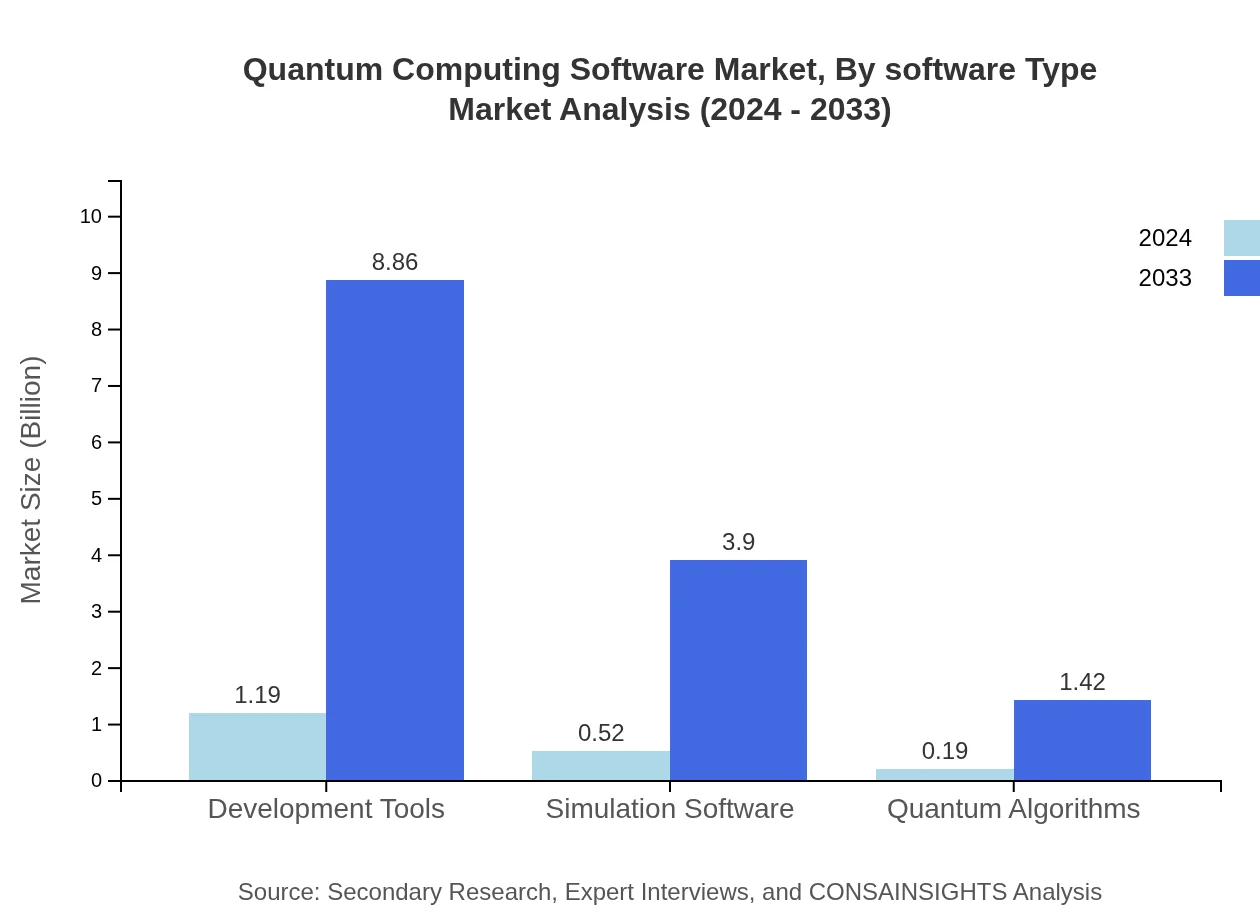
The by-software-type segment scrutinizes offerings such as simulation software, quantum algorithms, and development tools. Innovation in these areas is crucial to enhancing computational accuracy and efficiency. As organizations seek to integrate quantum capabilities into their existing infrastructures, advancements in software development have become central to competitive differentiation and operational success.
Quantum Computing Software Market Analysis By Industry Application
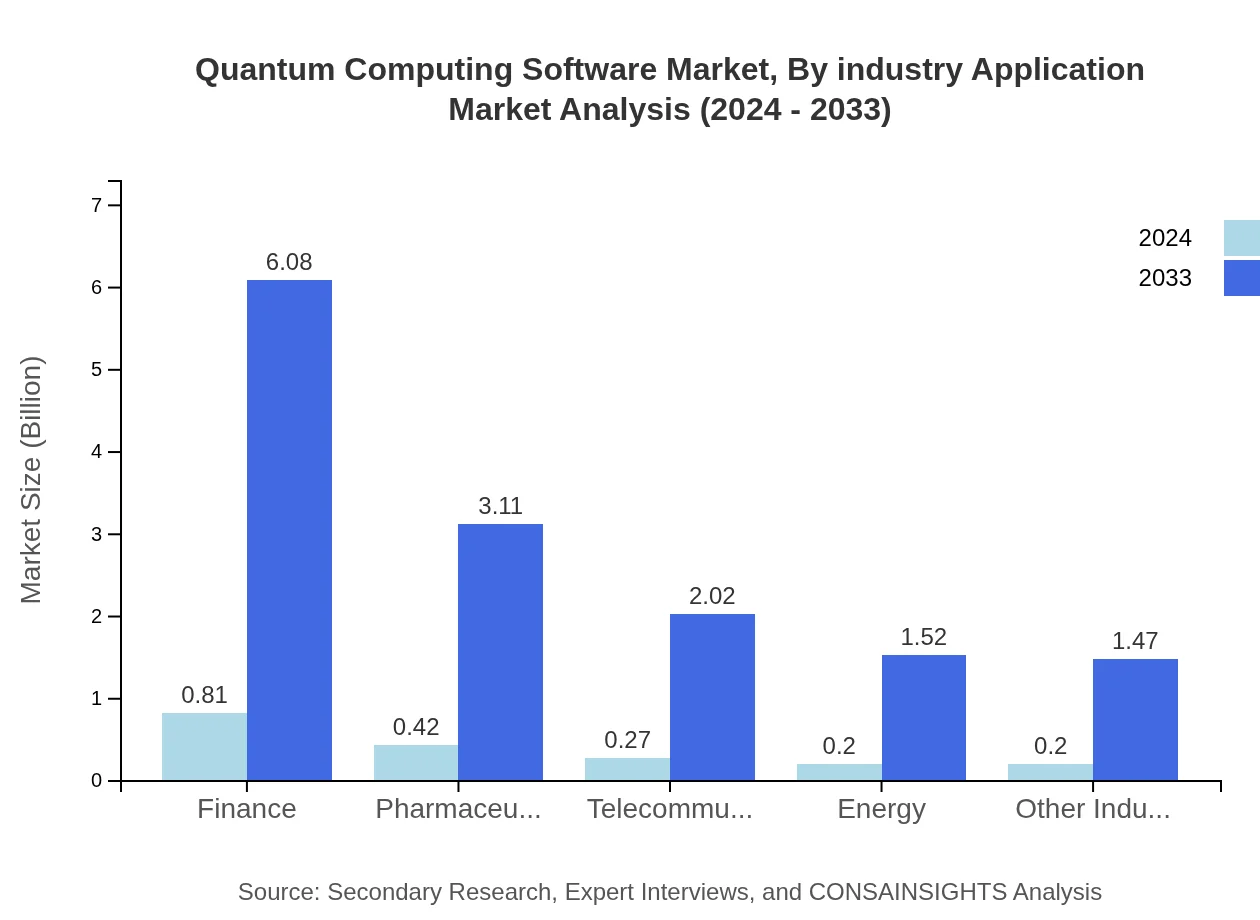
This segment addresses the deployment of quantum software across various industries including finance, pharmaceuticals, telecommunications, energy, and other specialized sectors. Each industry leverages quantum computing to solve complex problems, optimize operations, and enhance data analytics. By tailoring solutions to industry-specific challenges, the segment contributes significantly to the broader adoption of quantum technologies.
Quantum Computing Software Market Analysis By Deployment Model
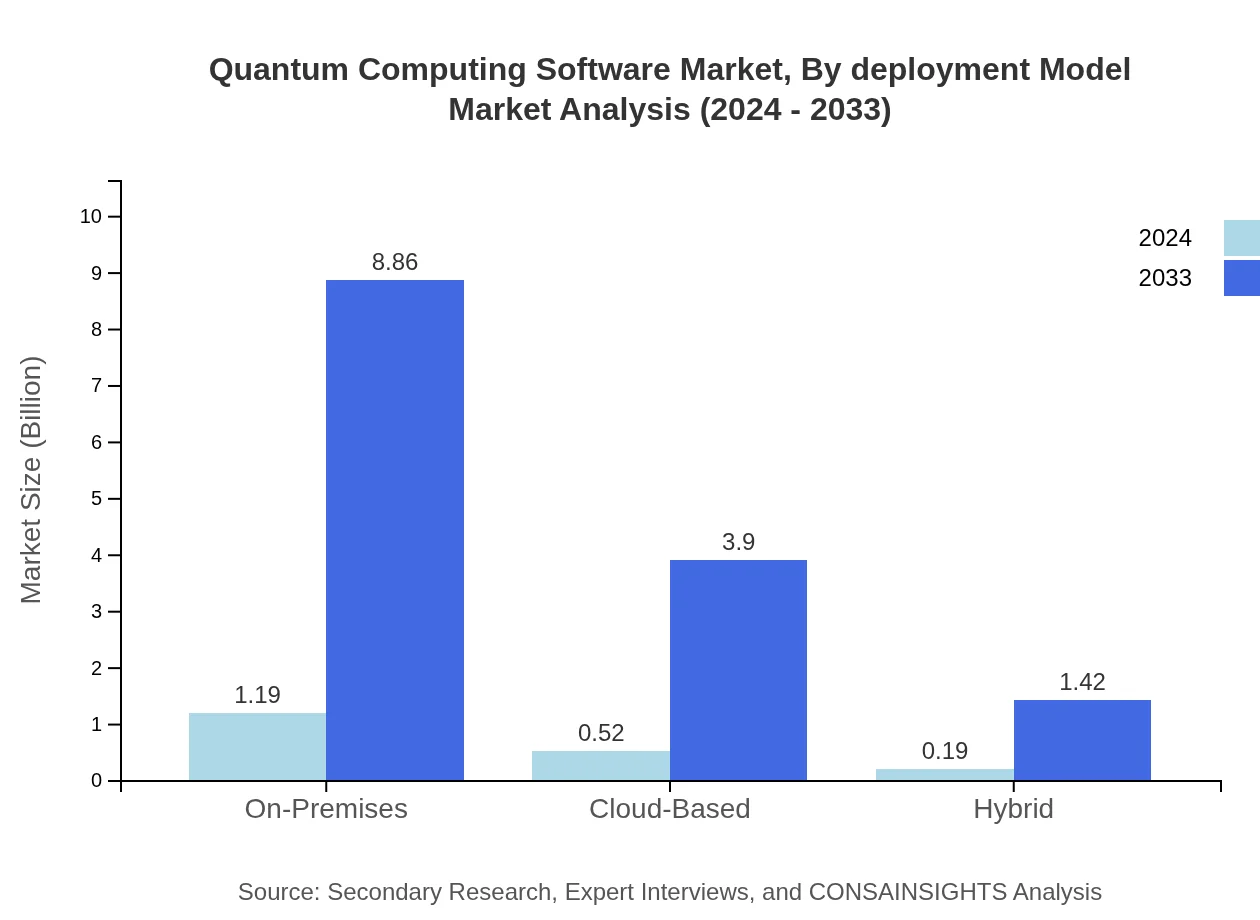
Analyzing deployment models such as on-premises, cloud-based, and hybrid solutions, this segment focuses on the infrastructure choices that organizations make based on performance, security, and cost considerations. The trend toward flexible, scalable environments is driving innovation in deployment models, ensuring that quantum software can meet a variety of operational demands and organizational sizes.
Quantum Computing Software Market Analysis By End User
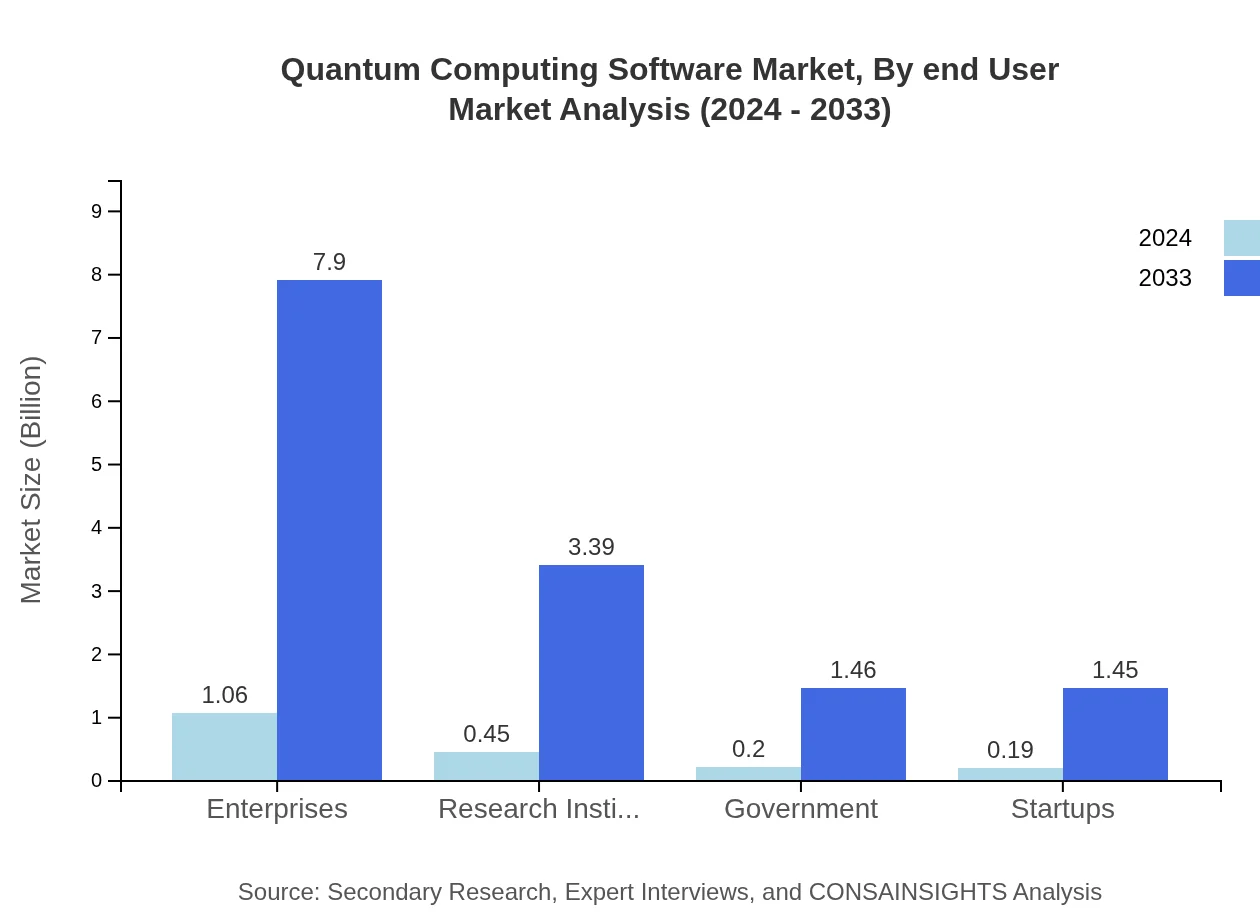
Focusing on the end-user, this segment categorizes the market into enterprises, research institutions, government organizations, and startups. Each end-user group has distinct requirements and adoption challenges, from robust security protocols in governmental projects to agile, innovative approaches in startups. This segmentation helps clarify market dynamics and facilitates targeted product and service development.
Quantum Computing Software Market Trends and Future Forecast
Tell us your focus area and get a customized research report.
Global Market Leaders and Top Companies in Quantum Computing Software Industry
Qubit Innovations:
A pioneer in quantum algorithms and software platforms, Qubit Innovations offers comprehensive solutions that accelerate both research and commercial applications. Their focus on scalable and secure quantum software has positioned them as a leader in this emerging field.Quantum Leap Technologies:
Renowned for robust quantum computing infrastructure, Quantum Leap Technologies is at the forefront of developing advanced simulation software and development tools. Their innovative approach and strategic partnerships are driving industry standards and commercial adoption.NextGen Quantum Systems:
Specializing in versatile quantum software tools and seamless cloud integrations, NextGen Quantum Systems is dedicated to empowering enterprises with cutting-edge quantum applications, ensuring enhanced efficiency and transformative breakthroughs in digital computation.We're grateful to work with incredible clients.









FAQs
How can the Quantum Computing Software Market Report help align our marketing strategy with customer adoption trends?
The report forecasts the quantum computing software market will grow from $1.9 billion in 2024 to $5.22 billion in North America and $4.34 billion in Europe by 2033, indicating increasing adoption trends that can inform marketing strategies.
What product features are in highest demand according to the Quantum Computing Software Market Report trends?
In 2024, development tools will dominate the market with $1.19 billion (62.47% share), while simulation software will hold a significant share of 27.5%, showcasing the high demand for robust, actionable software features.
Which regions offer the best market entry and expansion opportunities in the Quantum Computing Software industry?
North America is projected to grow to $5.22 billion by 2033, while Europe will reach $4.34 billion. Asia Pacific and the Middle East show promising growth, indicating optimal regions for market entry and expansion.
What emerging technologies and innovations are shaping the Quantum Computing Software market?
Emerging technologies include advanced quantum algorithms and hybrid configurations, with cloud-based solutions projected to reach $3.90 billion in market size by 2033, significantly influencing how quantum software is deployed and utilized.
Does the Quantum Computing Software Market Report include competitive landscape and market share analysis?
Yes, the report provides detailed market share analysis across various segments, like enterprises (55.65%), showcasing the competitive landscape and informing strategic decisions for market players.
How can executives use the Quantum Computing Software Market Report to evaluate investment risks and ROI?
Executives can assess projected market growth (CAGR of 23.4%) and evaluate segment sizes and shares to identify potential investment risks and estimate ROI based on reliable market forecasts.
What is the market size of quantum computing software?
The quantum computing software market is currently valued at $1.9 billion with a robust projected CAGR of 23.4%, suggesting significant growth potential leading into 2033.
What are the projected sizes in different segments of the quantum computing software market?
By 2033, enterprises may reach $7.90 billion, while research institutions might grow to $3.39 billion. Government and startups can also see expansion, indicating diverse growth across market segments.