

Retinoblastoma Treatment Market Report
First published: 08 October 2024 | Last updated: 25 May 2026 | Report Code: retinoblastoma-treatment
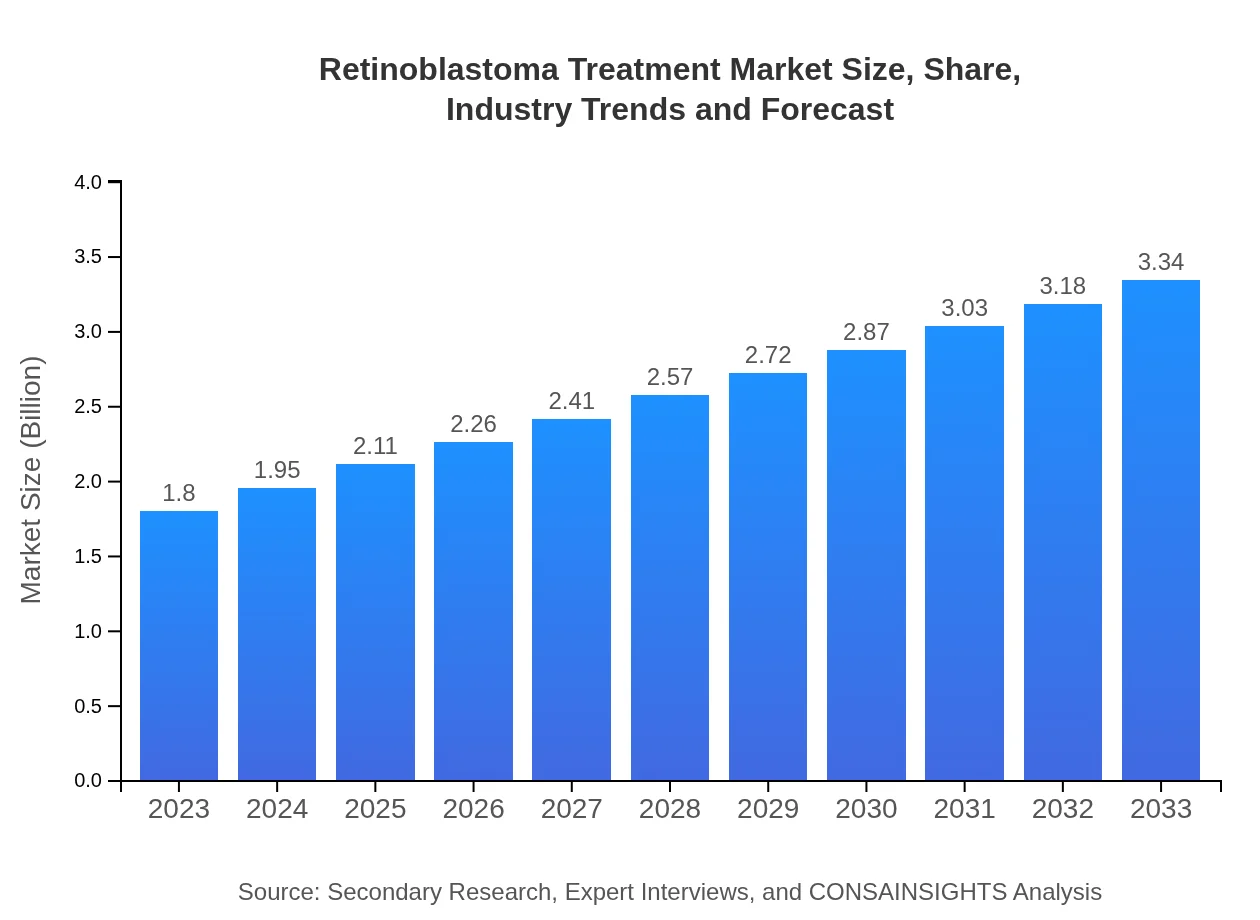
Retinoblastoma Treatment Market — USD $1.8 Billion in 2023, Growing to USD 3.34null by 2033 at 6.2% CAGR
This report provides a comprehensive analysis of the Retinoblastoma Treatment market, offering insights into market trends, segmentation, regional performance, and forecasts from 2023 to 2033. The report aims to equip stakeholders with valuable data to make informed strategic decisions.
Key Takeaways
- Global market value increases from $1.80 Billion in 2023 to $3.34 Billion in 2033 with a 6.2% CAGR over 2023 to 2033.
- North America is largest regional market, while no single fastest-growing region is stated because regional CAGR differences remain within 0.15 percentage points.
- Europe grows from $0.55 Billion in 2023 to $1.01 Billion in 2033, reflecting expanding care access and treatment options.
- Asia Pacific rises from $0.3 Billion in 2023 to $0.56 Billion in 2033 amid increased screening and adoption of advanced therapies.
- Top companies active in the space include Roche, Bristol-Myers Squibb, Novartis, and Genentech.
Retinoblastoma Treatment Market Report — Executive Summary
North America remains largest market by forecast-period value, while no single fastest-growing region is stated because top regional growth rates are separated by less than 0.15 percentage points. This report presents a concise assessment of the Retinoblastoma Treatment market, quantifying growth from $1.80 Billion in 2023 to $3.34 Billion by 2033 at a 6.2% CAGR during 2023 to 2033. Market expansion is driven by earlier detection, greater awareness, and the introduction of more effective therapies across chemotherapy, surgery, radiation, and immunotherapy. Regional performance varies: North America is identified as the largest market with significant investment in pediatric oncology infrastructure. Europe and Asia Pacific show steady gains supported by enhanced screening programs and adoption of new treatment protocols. The competitive landscape highlights active participation from Roche, Bristol-Myers Squibb, Novartis, and Genentech. Segmentation covers disease stage, treatment modality, age groups and end users, revealing diverse care pathways and settings including hospitals, oncology clinics, and home care. Key challenges include access disparities and cost pressures for novel therapeutics, while opportunities stem from personalized medicine and collaborative research. The report synthesizes primary interviews and secondary sources to inform strategy, product development and market entry decisions.
Key Growth Drivers
- Rising early-detection efforts and awareness programs increasing timely diagnosis and treatment initiation.
- Broader adoption of multimodal treatments—chemotherapy, surgery, radiation, and immunotherapy—improving clinical options.
- Investments by major pharmaceutical firms, including Roche, Bristol-Myers Squibb, Novartis, and Genentech, fueling R&D and pipeline therapies.
- Expansion of pediatric oncology infrastructure in developed markets supporting patient access to specialized care.
- Improved screening and referral pathways in emerging markets enhancing case identification and treatment uptake.
| Metric | Value |
|---|---|
| Study Period | 2023 - 2033 |
| 2023 Market Size | $1.80 Billion |
| CAGR (2023-2033) | 6.2% |
| 2033 Market Size | $3.34 Billion |
| Top Companies | Roche, Bristol-Myers Squibb, Novartis, Genentech |
| Published Date | 08 October 2024 |
| Last Modified Date | 25 May 2026 |
Retinoblastoma Treatment Market Overview
Customize Retinoblastoma Treatment Market Report market research report
- ✔ Get in-depth analysis of Retinoblastoma Treatment market size, growth, and forecasts.
- ✔ Understand Retinoblastoma Treatment's regional dynamics and industry-specific trends.
- ✔ Identify potential applications, end-user demand, and growth segments in Retinoblastoma Treatment
What is the Market Size & CAGR of Retinoblastoma Treatment Market Report market in 2023?
Retinoblastoma Treatment Industry Analysis
Retinoblastoma Treatment Market Segmentation and Scope
Tell us your focus area and get a customized research report.
Retinoblastoma Treatment Market Report Market Analysis Report by Region
Europe Retinoblastoma Treatment Market Report:
Europe grows from $0.55 Billion in 2023 to $1.01 Billion in 2033. Expansion is driven by strengthened healthcare infrastructure, greater awareness, and uptake of multimodal treatments and specialist oncology services across several national systems.Asia Pacific Retinoblastoma Treatment Market Report:
Asia Pacific grows from $0.3 Billion in 2023 to $0.56 Billion in 2033. This progression is supported by improving access to diagnostics, expanding screening initiatives, and gradual adoption of newer treatment modalities in major healthcare centers.North America Retinoblastoma Treatment Market Report:
North America is largest regional market, rising from $0.7 Billion in 2023 to $1.3 Billion in 2033. Growth reflects concentrated pediatric oncology resources, higher diagnosis rates through screening programs, and strong clinical adoption of advanced therapeutic approaches.South America Retinoblastoma Treatment Market Report:
Latin America grows from $0.06 Billion in 2023 to $0.11 Billion in 2033. Market progression is influenced by growing awareness, incremental improvements in pediatric oncology care, and efforts to expand referral networks and treatment availability.Middle East & Africa Retinoblastoma Treatment Market Report:
Middle East and Africa grows from $0.2 Billion in 2023 to $0.36 Billion in 2033. Growth is associated with investments in oncology services, international collaborations, and initiatives to improve early detection and access to therapies.Tell us your focus area and get a customized research report.
Research Methodology
Retinoblastoma Treatment Market Analysis By Treatment Type
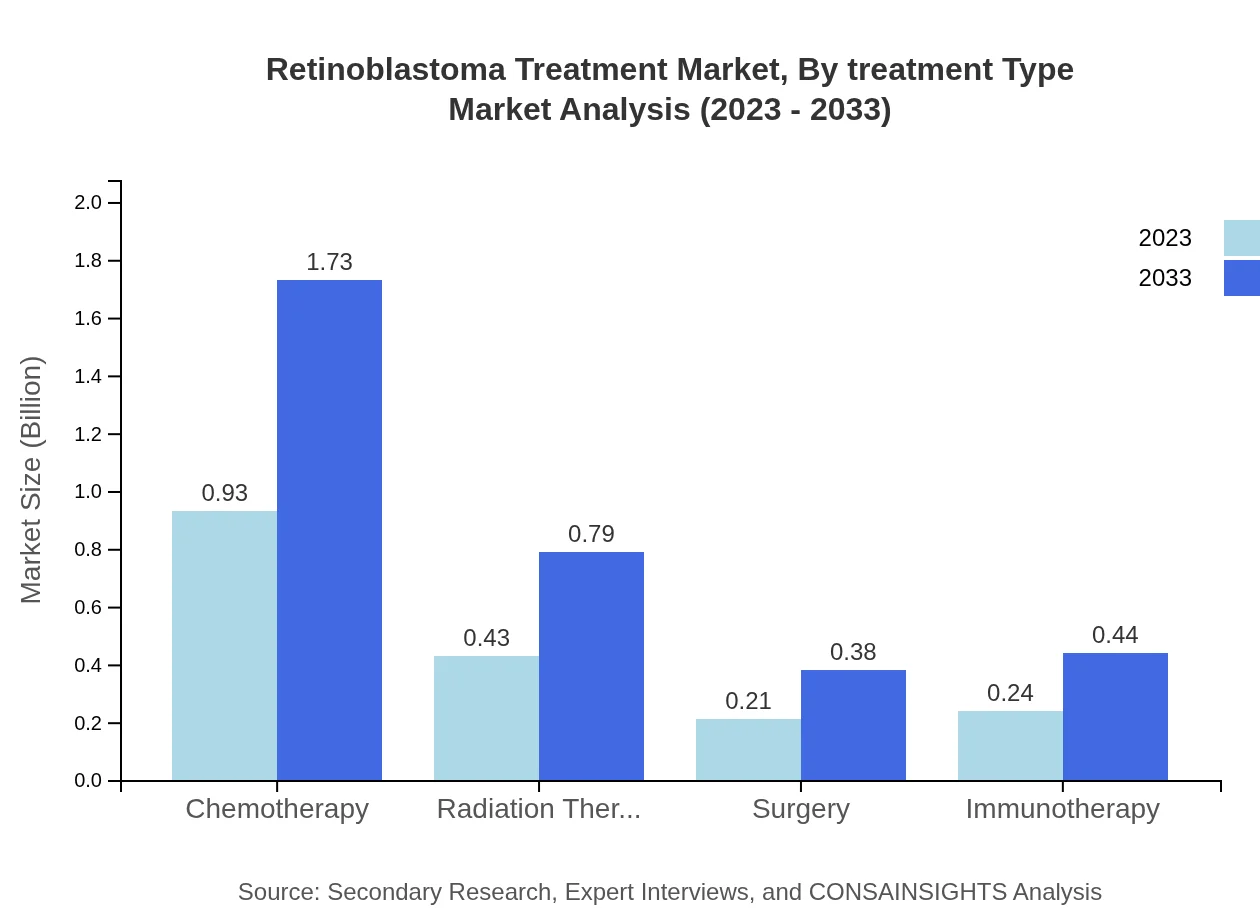
In 2023, the treatment type analysis reveals that chemotherapy holds a significant share with a market size of USD 0.93 billion, representing 51.75% of the total market. Radiation therapy and surgery follow, with market sizes of USD 0.43 billion and USD 0.21 billion, respectively. By 2033, chemotherapy is projected to grow to USD 1.73 billion, while radiation therapy and surgery are expected to reach USD 0.79 billion and USD 0.38 billion.
Retinoblastoma Treatment Market Analysis By Stage
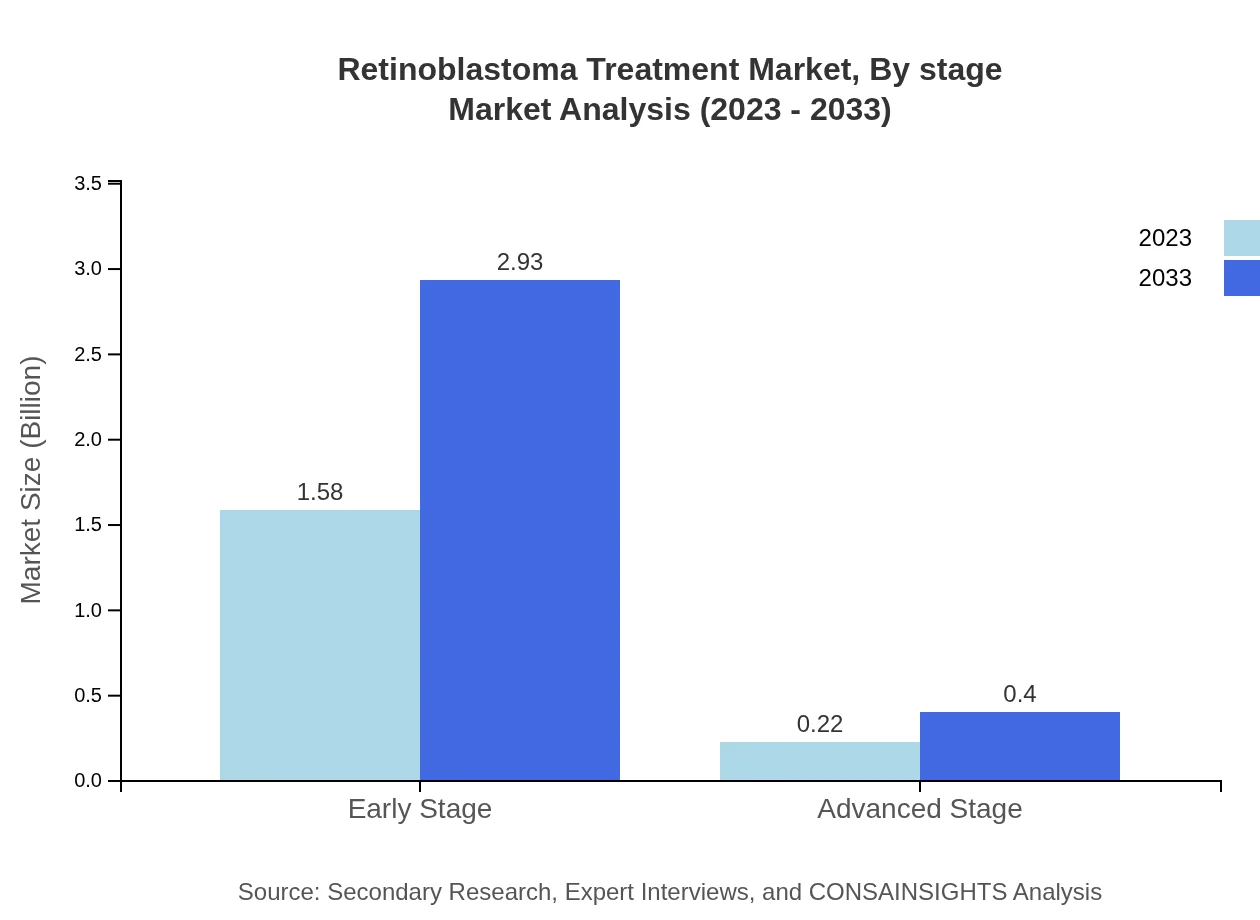
The market segmentation by disease stage indicates that early-stage treatments dominate with a market size of USD 1.58 billion in 2023, equating to 87.93% share, and is forecasted to grow to USD 2.93 billion by 2033. Advanced-stage treatments account for 12.07% of the market with a size of USD 0.22 billion in 2023, expected to rise to USD 0.40 billion.
Retinoblastoma Treatment Market Analysis By Age Group
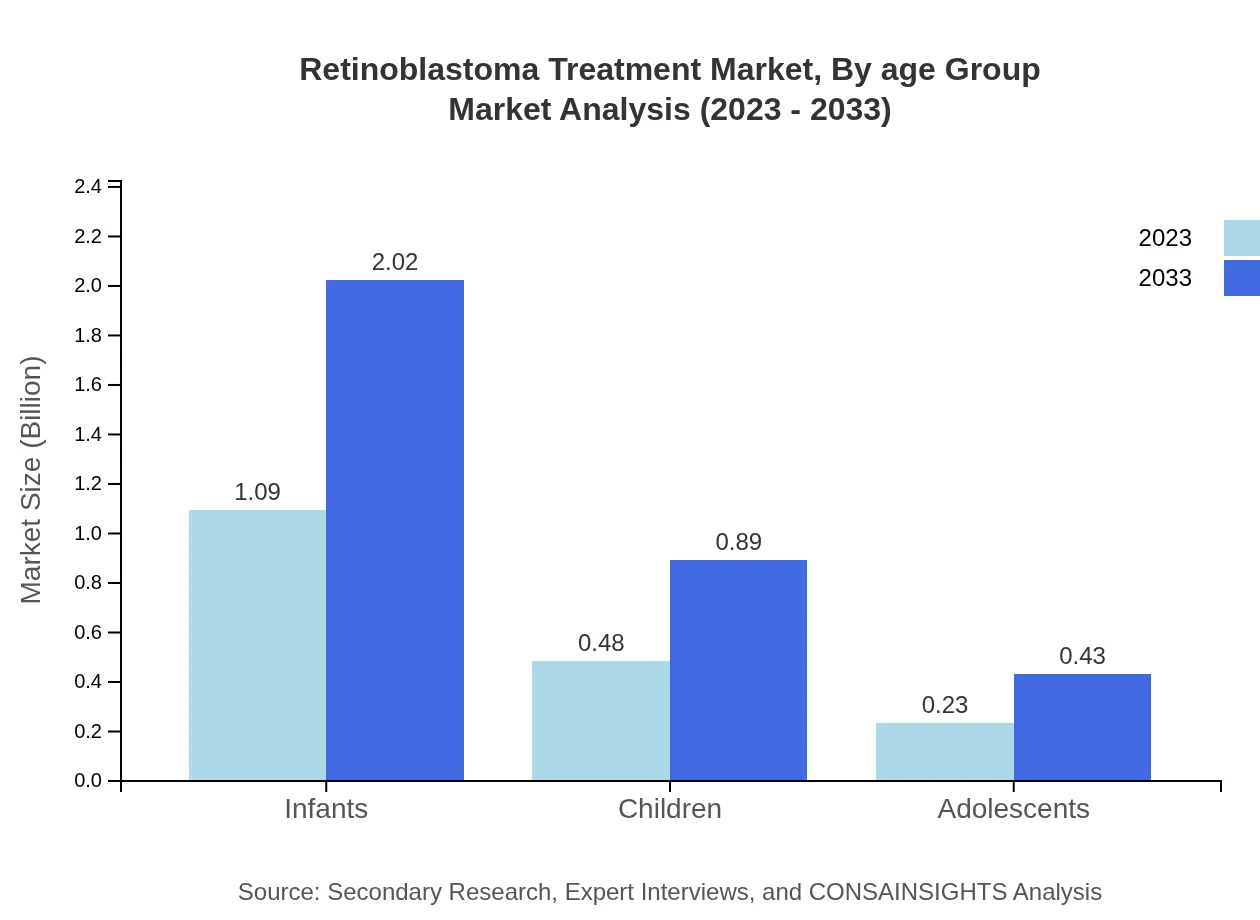
For age groups, infants represent the highest market share with USD 1.09 billion in 2023, reflecting 60.45% of the market and expected to double to USD 2.02 billion by 2033. The treatment for children comes next at USD 0.48 billion (26.69% share) and adolescents at USD 0.23 billion (12.86% share), with both groups projected for growth.
Retinoblastoma Treatment Market Analysis By End User
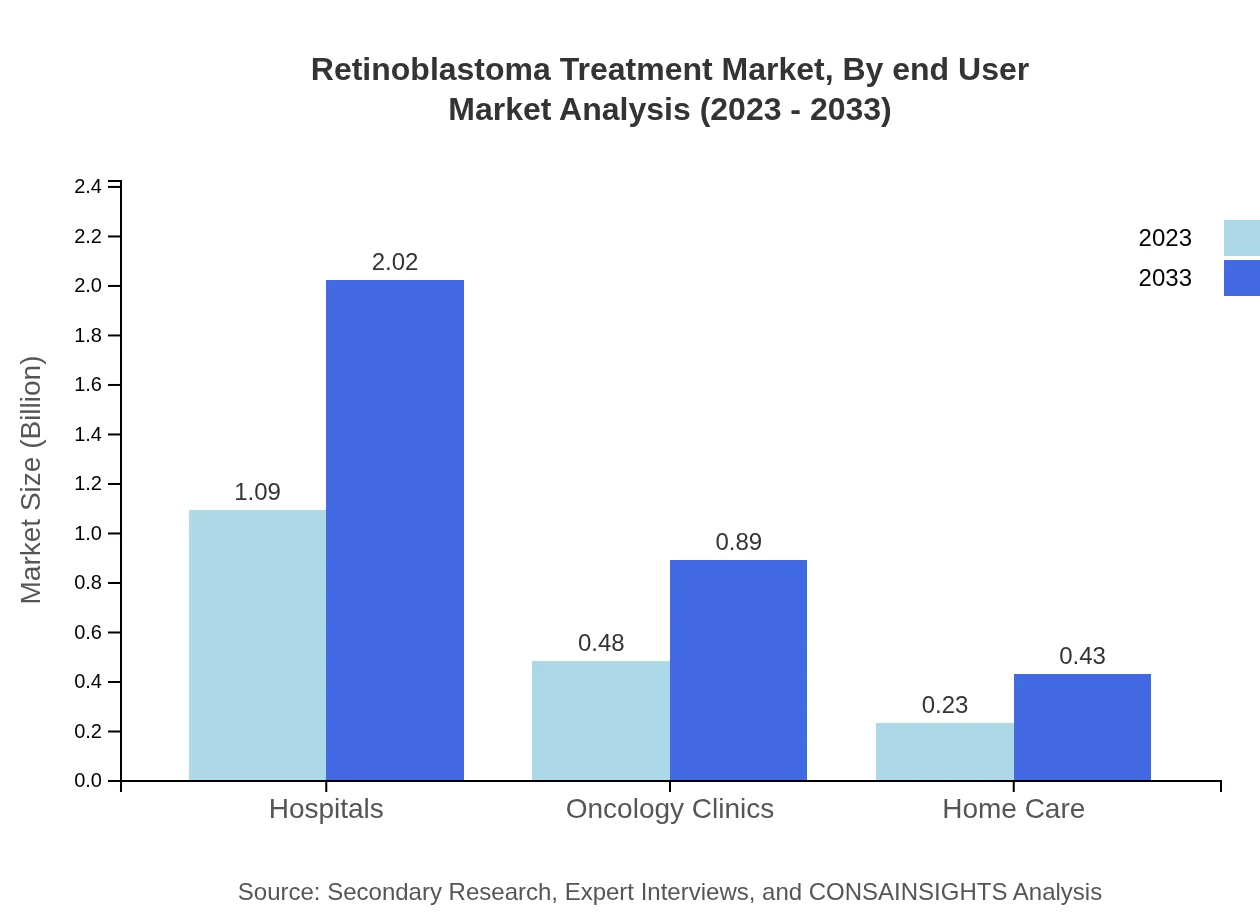
Hospitals dominate the end-user segment, contributing USD 1.09 billion in 2023, approximately 60.45% of the market, forecasted to reach USD 2.02 billion by 2033. Oncology clinics hold 26.69% of the market at USD 0.48 billion, expected to grow significantly in the next decade, while home care remains at 12.86% share.
Retinoblastoma Treatment Market Trends and Future Forecast
Tell us your focus area and get a customized research report.
Global Market Leaders and Top Companies in Retinoblastoma Treatment Industry
Roche:
Roche is a pioneer in oncology, focusing on innovative therapies for pediatric cancer, including retinoblastoma. They contribute significantly through research and collaborations.Bristol-Myers Squibb:
Bristol-Myers Squibb specializes in cancer treatment therapies, with several ongoing projects aimed at improving outcomes in pediatric oncology.Novartis:
Novartis is actively involved in advancing retinoblastoma treatments through groundbreaking clinical trials and developing next-generation therapies.Genentech:
Genentech emphasizes genetic research and innovation in treatments, focusing on targeted therapies for improving retinoblastoma patient care.We're grateful to work with incredible clients.







FAQs
What is the market size of the Retinoblastoma Treatment market in 2023?
The market size in 2023 is $1.80 Billion as stated in the report data.
How big will the market be in 2033?
By 2033 the market is projected to reach $3.34 Billion according to the provided forecast figures.
What is CAGR of the market during the forecast period?
The compound annual growth rate for 2023 to 2033 is 6.2% based on the supplied projections.
Is there a single fastest Growing region in the Retinoblastoma Treatment Market Report market?
No single fastest-growing region is stated for the Retinoblastoma Treatment Market Report market because the top regional implied CAGR values are within 0.15 percentage points of each other, making the ranking too close to call reliably.
Which treatment types are highlighted in the report?
The report lists chemotherapy, radiation therapy, surgery, and immunotherapy as primary treatment types included in the market segmentation.
Who are the leading companies mentioned?
Top companies named in the input are Roche, Bristol-Myers Squibb, Novartis, and Genentech.
What are typical end users for retinoblastoma treatment?
Reported end users include hospitals, oncology clinics, and home care settings as part of the market segmentation.
How big is the Europe market in 2023 and 2033?
Europe is reported at $0.55 Billion in 2023 and grows to $1.01 Billion by 2033 per the regional facts.
What factors drive market growth overall?
Key growth drivers include improved diagnostics, heightened awareness, investment in therapies, and expanding pediatric oncology services.
Which age groups are included in segmentation?
The report identifies infants, children, and adolescents as the age-group categories in the segmentation.