

Sarcopenia Treatment Market Report
First published: 21 October 2024 | Last updated: 25 May 2026 | Report Code: sarcopenia-treatment
Sarcopenia Treatment Market — USD 1.5 billion in 2023, Growing to USD 2.62B by 2033 at 5.6% CAGR
This report provides an in-depth analysis of the Sarcopenia Treatment market, encompassing historical data, market trends, and projections for 2023 to 2033. Insights include market size, segmentation, regional analysis, and leading players in the industry.
Key Takeaways
- Global market projected from $1.50 Billion in 2023 to $2.62 Billion in 2033 at a 5.6% CAGR.
- North America is largest regional market, while no single fastest-growing region is stated because regional CAGR differences remain within 0.15 percentage points.
- Europe increases from $0.47 Billion in 2023 to $0.82 Billion in 2033, reflecting strong demand for integrated care.
- Segmentation highlights pharmaceuticals, nutritional supplements, and exercise-based therapies across hospital, retail, and online channels.
Sarcopenia Treatment Market Report — Executive Summary
North America remains largest market by forecast-period value, while no single fastest-growing region is stated because top regional growth rates are separated by less than 0.15 percentage points. The Sarcopenia Treatment Market Report outlines market expansion driven by demographic shifts, heightened clinical and public awareness, and improvements in therapeutic and nutritional interventions. The market grows from $1.50 Billion in 2023 to $2.62 Billion by 2033 at a 5.6% CAGR, supported by pharmaceutical development, supplement adoption, and rehabilitation-focused programs. Regional patterns show North America as the largest market, with notable contributions from Europe, Asia Pacific, Middle East and Africa, and Latin America. The report examines segmentation by treatment type, therapy method, patient demographics, and distribution channel, and profiles key players including Abbott Laboratories, Pfizer Inc., Nestlé Health Science, GSK (GlaxoSmithKline), and Amgen Inc. Methodology combines expert interviews, company documentation, and secondary literature with data triangulation and internal validation to deliver evidence-based insights for healthcare providers, payers, and manufacturers.
Key Growth Drivers
- Aging populations increasing prevalence and demand for sarcopenia interventions.
- Rising awareness among clinicians and patients about muscle health and functional outcomes.
- Advances in pharmaceutical and nutritional formulations targeting muscle mass and strength.
- Integration of preventive and rehabilitative services within healthcare systems to support long-term care.
- Wider availability of distribution channels, including hospital, retail, and online pharmacies.
| Metric | Value |
|---|---|
| Study Period | 2023 - 2033 |
| 2023 Market Size | $1.50 Billion |
| CAGR (2023-2033) | 5.6% |
| 2033 Market Size | $2.62 Billion |
| Top Companies | Abbott Laboratories, Pfizer Inc., Nestlé Health Science, GSK (GlaxoSmithKline), Amgen Inc. |
| Published Date | 21 October 2024 |
| Last Modified Date | 25 May 2026 |
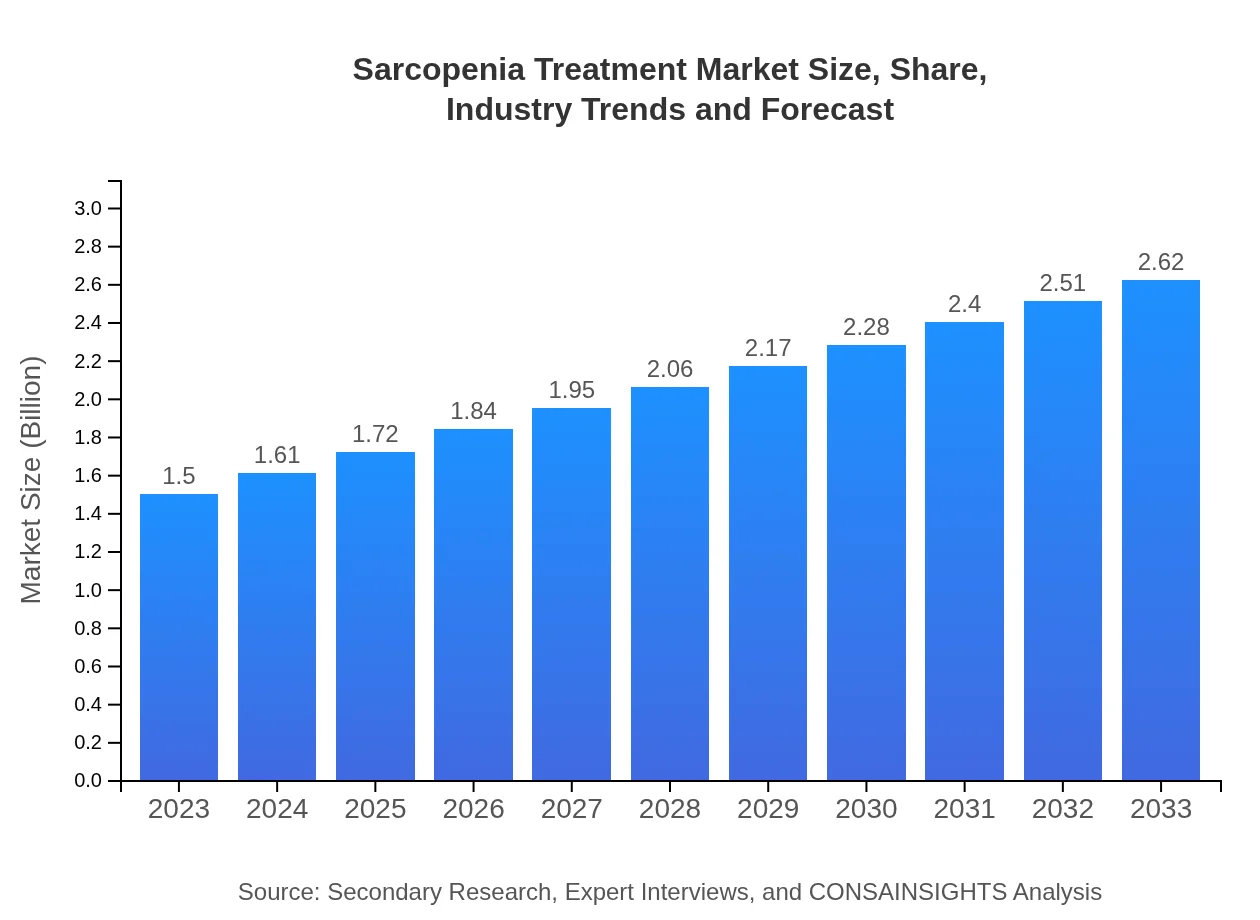
Sarcopenia Treatment Market Overview
Customize Sarcopenia Treatment Market Report market research report
- ✔ Get in-depth analysis of Sarcopenia Treatment market size, growth, and forecasts.
- ✔ Understand Sarcopenia Treatment's regional dynamics and industry-specific trends.
- ✔ Identify potential applications, end-user demand, and growth segments in Sarcopenia Treatment
What is the Market Size & CAGR of Sarcopenia Treatment Market Report market in 2023?
Sarcopenia Treatment Industry Analysis
Sarcopenia Treatment Market Segmentation and Scope
Tell us your focus area and get a customized research report.
Sarcopenia Treatment Market Report Market Analysis Report by Region
Europe Sarcopenia Treatment Market Report:
Europe grows from $0.47 Billion in 2023 to $0.82 Billion in 2033. Regional expansion reflects rising awareness of muscle health, integration of preventive care and therapy programs, and use of nutritional and exercise-based interventions.Asia Pacific Sarcopenia Treatment Market Report:
Asia Pacific grows from $0.3 Billion in 2023 to $0.53 Billion in 2033. Growth is influenced by increasing elderly populations, rising healthcare investment, and broader availability of supplements and therapeutic programs.North America Sarcopenia Treatment Market Report:
North America is largest regional market, rising from $0.49 Billion in 2023 to $0.86 Billion in 2033. Demand is driven by demographic aging, established healthcare infrastructure, and adoption of pharmaceuticals, supplements, and rehabilitation services in clinical practice.South America Sarcopenia Treatment Market Report:
Latin America grows from $0.04 Billion in 2023 to $0.07 Billion in 2033. Market gains are linked to growing recognition of sarcopenia, expanding access to supplements and therapies, and incremental healthcare delivery improvements.Middle East & Africa Sarcopenia Treatment Market Report:
Middle East and Africa grows from $0.2 Billion in 2023 to $0.34 Billion in 2033. Drivers include demographic shifts toward older populations, growing attention to elder care, and gradual adoption of combined therapeutic and nutritional approaches.Tell us your focus area and get a customized research report.
Research Methodology
Sarcopenia Treatment Market Analysis By Treatment Type
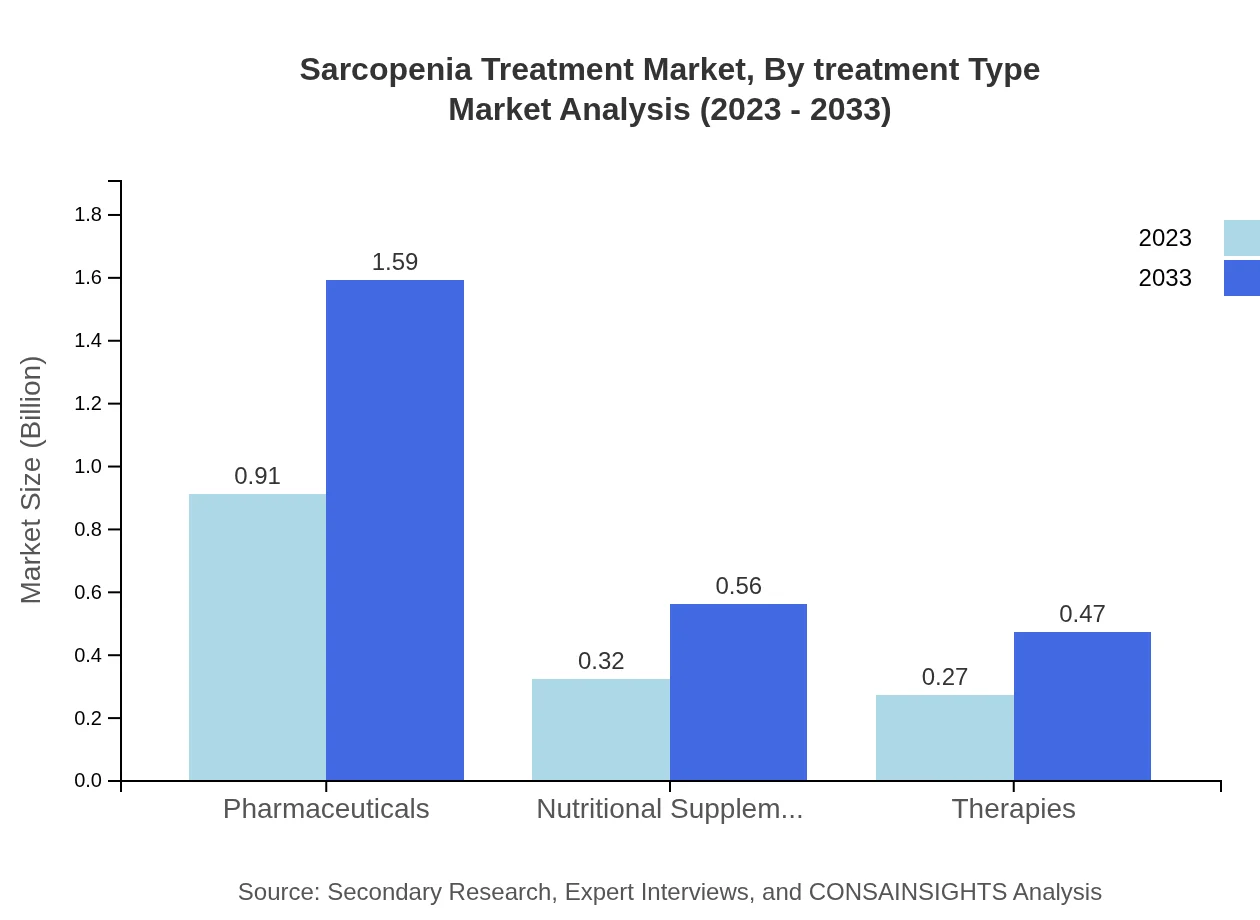
The treatment type segment is pivotal in shaping the Sarcopenia Treatment market. Pharmaceuticals account for 60.8% of the market share in 2023, anticipated to remain constant through 2033, indicating their dominance in therapeutic options. Nutritional supplements, representing 21.39% of the share, are increasingly recognized for their role in muscle preservation, projected to enhance their market size from USD 0.32 billion to USD 0.56 billion during the same period.
Sarcopenia Treatment Market Analysis By Therapy Method
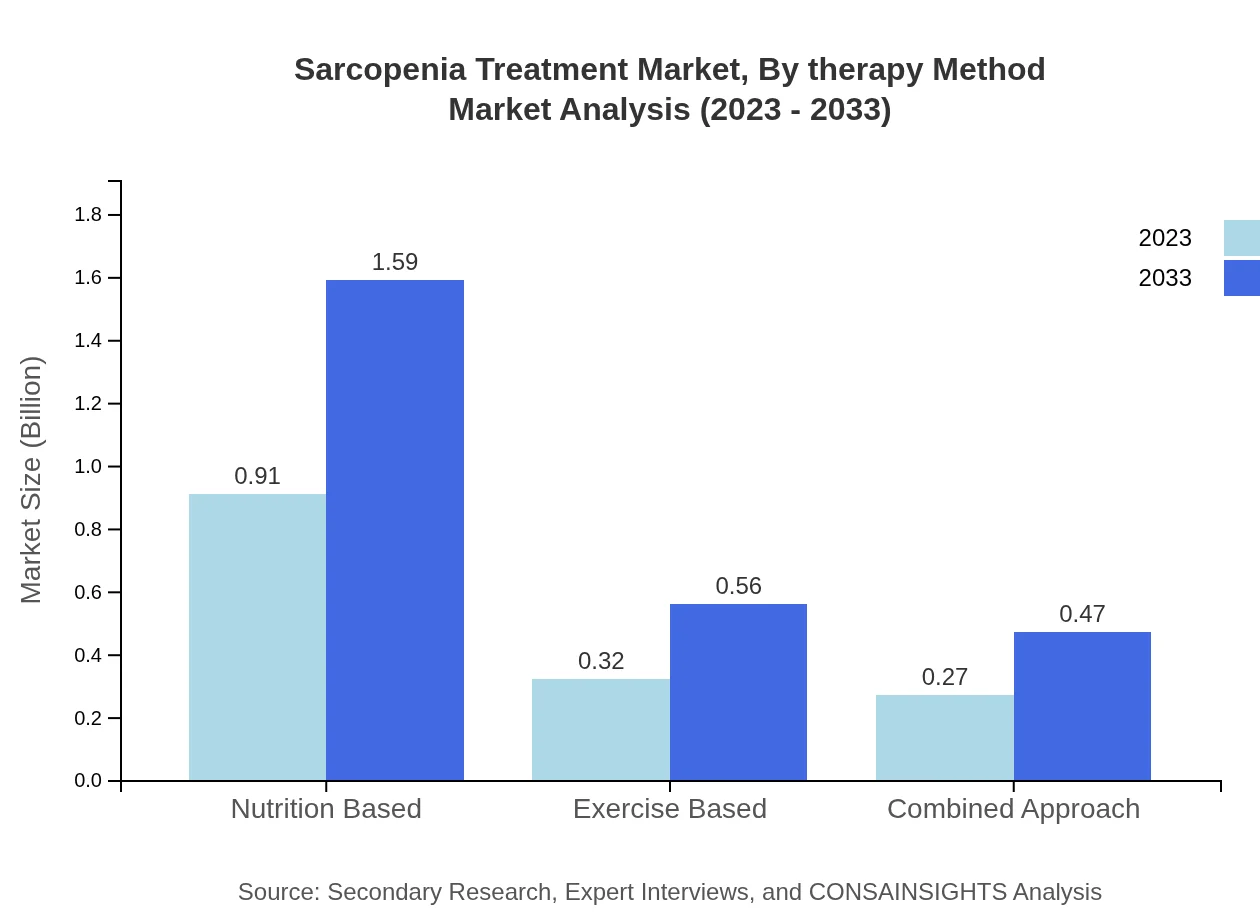
Therapy methods are segmented into Nutrition-Based, Exercise-Based, and Combined Approach strategies. Nutrition-Based therapies hold a significant portion of the market at 60.8% in 2023, focusing on dietary interventions. Exercise-Based therapies follow closely, capturing 21.39% of the market share. The Combined Approach is gaining popularity, predicted to increase its size from USD 0.27 billion in 2023 to USD 0.47 billion by 2033, reflecting the effectiveness of integrating multiple treatment modalities.
Sarcopenia Treatment Market Analysis By Patient Demographics
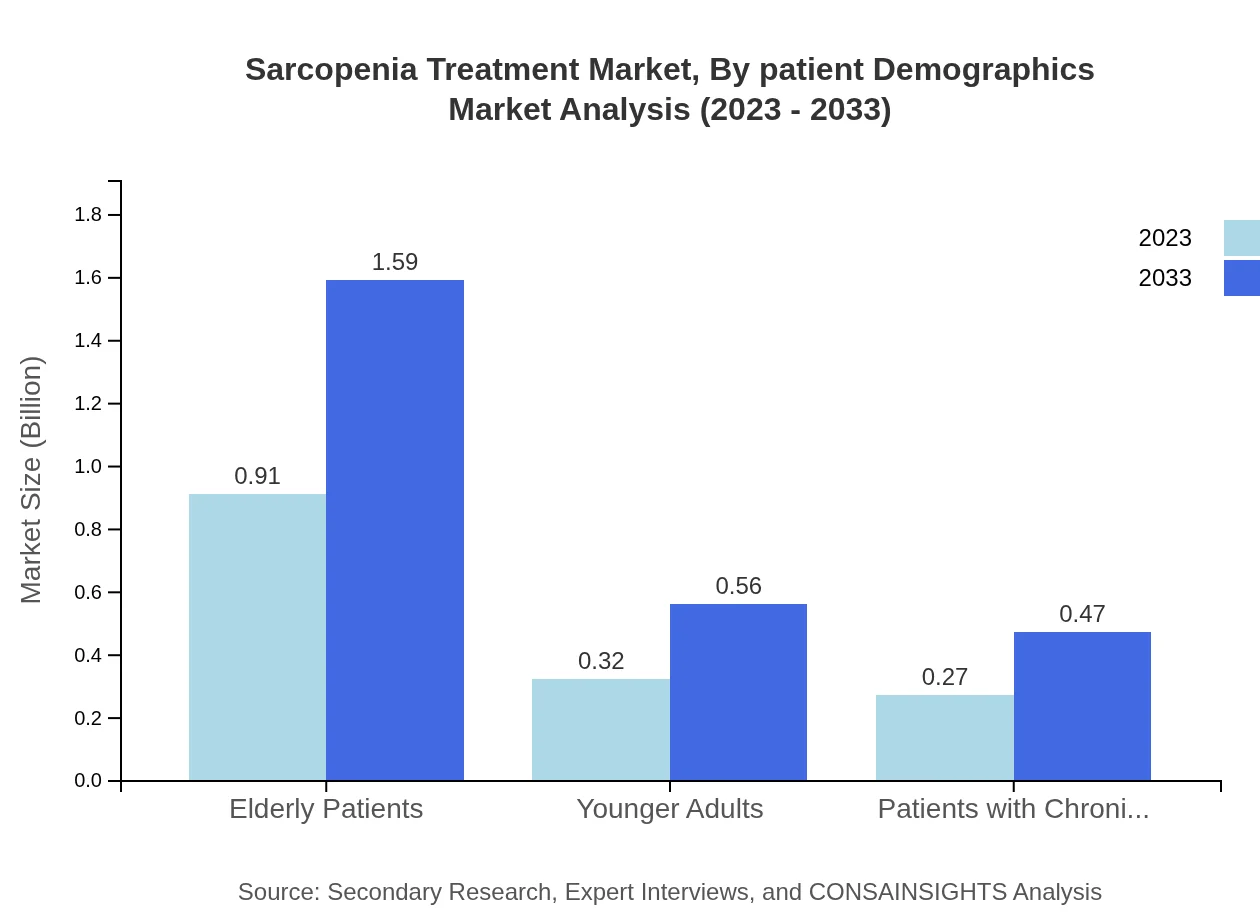
The market segmented by patient demographics is expected to show promising trends, especially among Elderly Patients, who currently represent 60.8% of the market share in 2023. This segment is projected to grow significantly, reflecting the aging population’s increasing need for effective sarcopenia interventions, with sizes expected to rise from USD 0.91 billion to USD 1.59 billion by 2033.
Sarcopenia Treatment Market Analysis By Channel
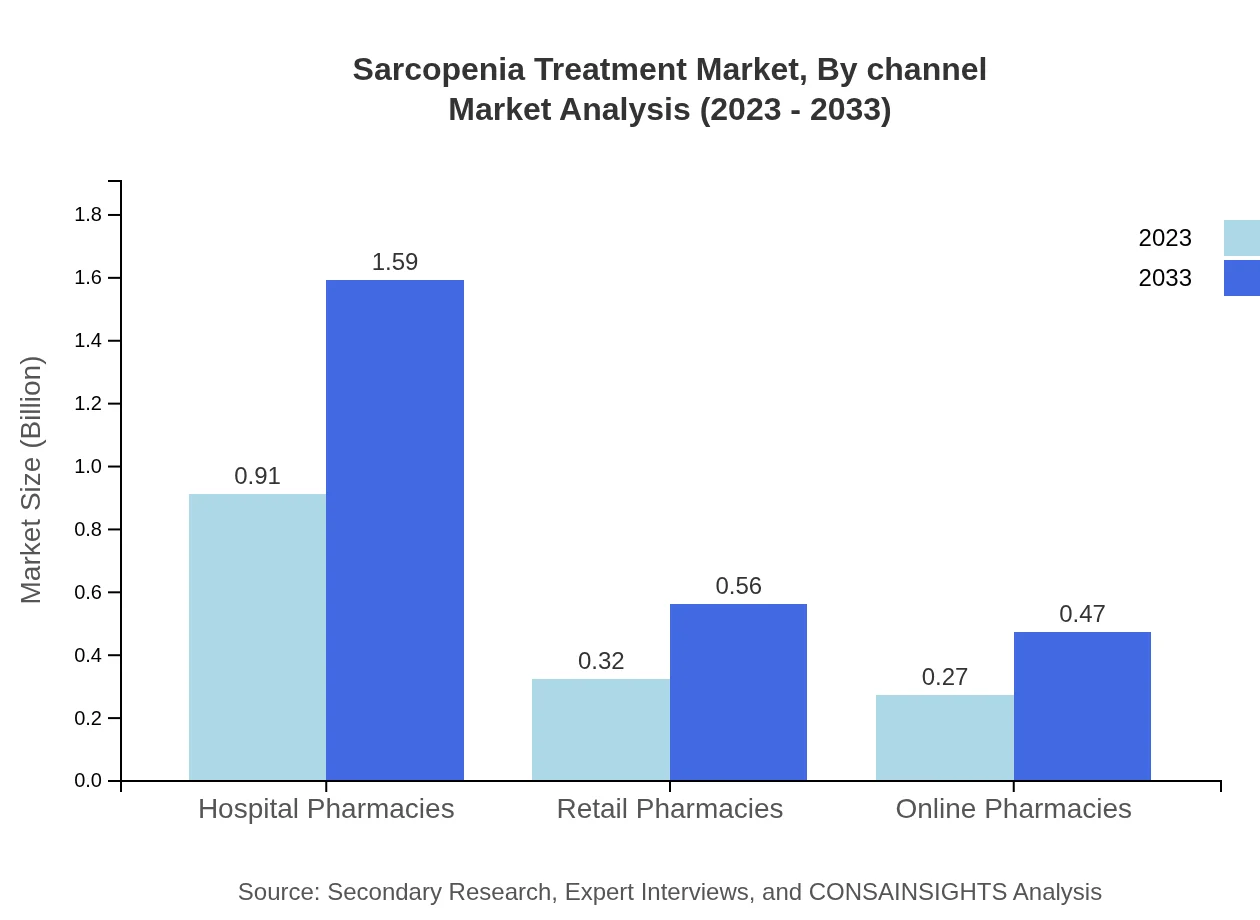
Distribution channels for sarcopenia treatments comprise Hospitals, Retail, and Online Pharmacies. Hospital Pharmacies dominate the landscape, holding a market share of 60.8% in 2023, expected to maintain predominance due to the clinical nature of treatment. Retail Pharmacies make up 21.39% of the share, with an expected size increase from USD 0.32 billion to USD 0.56 billion through 2033. Online Pharmacies are also emerging, reflecting a shift towards e-commerce in healthcare.
Sarcopenia Treatment Market Trends and Future Forecast
Tell us your focus area and get a customized research report.
Global Market Leaders and Top Companies in Sarcopenia Treatment Industry
Abbott Laboratories:
A leader in nutritional science, Abbott manufactures various nutritional supplements aimed at combating sarcopenia, leveraging extensive research and development.Pfizer Inc.:
Pfizer is at the forefront of developing therapeutic solutions targeting muscle-related disorders, with a commitment to advancing treatment protocols for sarcopenia.Nestlé Health Science:
Nestlé Health Science offers a range of nutritional products designed for the aging population, focusing on improving quality of life and functional capabilities.GSK (GlaxoSmithKline):
GSK is noted for its innovations in pharmaceuticals that address muscle degeneration, contributing significantly to the sarcopenia treatment landscape.Amgen Inc.:
Amgen specializes in biotechnology and is involved in research for effective therapies to enhance muscle health, particularly in older adults.We're grateful to work with incredible clients.







FAQs
What is the market size of the Sarcopenia Treatment Market Report in 2023?
The market size in 2023 is $1.50 Billion, based on reported figures for the global sarcopenia treatment market.
How big is the Sarcopenia Treatment Market Report projected to be in 2033?
The market is projected to reach $2.62 Billion in 2033 according to the provided forecast values.
What is CAGR of the Sarcopenia Treatment Market Report for 2023 to 2033?
The compound annual growth rate for the 2023 to 2033 forecast period is 5.6% as specified in the report data.
Is there a single fastest Growing region in the Sarcopenia Treatment Market Report market?
No single fastest-growing region is stated for the Sarcopenia Treatment Market Report market because the top regional implied CAGR values are within 0.15 percentage points of each other, making the ranking too close to call reliably.
Which companies are highlighted in the report?
Top companies listed include Abbott Laboratories, Pfizer Inc., Nestlé Health Science, GSK (GlaxoSmithKline), and Amgen Inc.
What are the primary treatment categories covered?
The report covers pharmaceuticals, nutritional supplements, and exercise-based therapies as the main treatment categories.
How are distribution channels categorized?
Distribution is detailed across hospital pharmacies, retail pharmacies, and online pharmacies as the reported channel subsegments.
What patient demographics are included in segmentation?
Segmentation includes elderly patients, younger adults, and patients with chronic conditions as the primary demographic groups.
Why is expert input used in the methodology?
Primary interviews with industry specialists provide context, validate assumptions, and complement secondary sources to strengthen the analysis.