
Reports >
Life Sciences
>
Selfcare Medical Devices Market Report

Selfcare Medical Devices Market Report
First published: 21 October 2024 | Last updated: 28 May 2026 | Report Code: selfcare-medical-devices
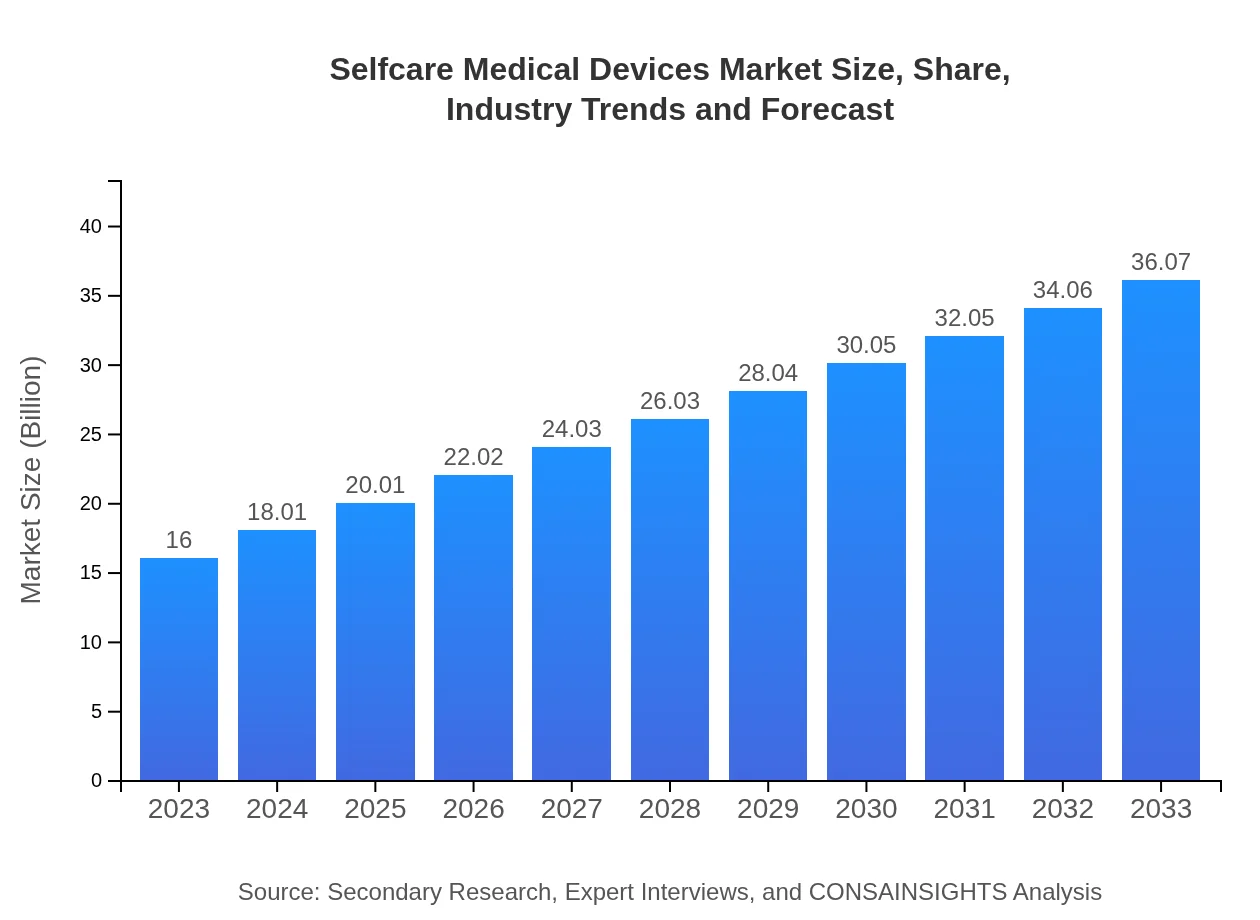
Selfcare Medical Devices Market — USD $16 Billion in 2023, Growing to USD 36.07null by 2033 at 8.2% CAGR
This report provides a comprehensive analysis of the Selfcare Medical Devices market, covering key insights, market dynamics, and forecasts from 2023 to 2033 across various segments and regions.
Key Takeaways
- Global market expands from $16.00 Billion (2023) to $36.07 Billion (2033) at an 8.2% CAGR.
- North America is largest regional market, while no single fastest-growing region is stated because regional CAGR differences remain within 0.15 percentage points.
- North America is the largest region, rising from $5.63 Billion in 2023 to $12.69 Billion in 2033.
- Europe grows from $4.95 Billion in 2023 to $11.16 Billion in 2033, reflecting strong adoption of connected devices.
- Asia Pacific increases from $3.02 Billion in 2023 to $6.81 Billion in 2033 amid rising digital health uptake.
- Top companies identified include Fitbit, Inc., Omron Healthcare, Inc., and Philips Healthcare.
Selfcare Medical Devices Market Report — Executive Summary
North America remains largest market by forecast-period value, while no single fastest-growing region is stated because top regional growth rates are separated by less than 0.15 percentage points. The Selfcare Medical Devices Market Report examines accelerating consumer adoption of home-use health technologies, driven by increased chronic disease prevalence, telehealth expansion, and rising demand for remote monitoring. Over the 2023 to 2033 forecast period the market is projected to reach $36.07 Billion from $16.00 Billion, at an 8.2% CAGR. Regional performance varies: North America is the largest market by end value. Product segmentation highlights monitoring, therapeutic, and diagnostic categories alongside digital and non-digital technologies. Distribution channels include online and retail outlets, and regulatory frameworks span FDA standards and EU regulations. The analysis profiles key participants such as Fitbit, Inc., Omron Healthcare, Inc., and Philips Healthcare, and outlines growth drivers, adoption barriers, and opportunities for solution providers and stakeholders.
Key Growth Drivers
- Rising prevalence of chronic illnesses prompting demand for at-home monitoring and management devices.
- Expansion of telehealth services increases reliance on patient-operated diagnostic and monitoring tools.
- Technological advances in connected and digital devices enhance remote data collection and user engagement.
- Greater consumer health awareness and willingness to self-manage conditions drive adoption across age groups.
- Wider availability through online stores and retail channels improves access and convenience for consumers.
| Metric | Value |
|---|---|
| Study Period | 2023 - 2033 |
| 2023 Market Size | $16.00 Billion |
| CAGR (2023-2033) | 8.2% |
| 2033 Market Size | $36.07 Billion |
| Top Companies | Fitbit, Inc., Omron Healthcare, Inc., Philips Healthcare |
| Published Date | 21 October 2024 |
| Last Modified Date | 28 May 2026 |
Selfcare Medical Devices Market Overview
Customize Selfcare Medical Devices Market Report market research report
- ✔ Get in-depth analysis of Selfcare Medical Devices market size, growth, and forecasts.
- ✔ Understand Selfcare Medical Devices's regional dynamics and industry-specific trends.
- ✔ Identify potential applications, end-user demand, and growth segments in Selfcare Medical Devices
What is the Market Size & CAGR of Selfcare Medical Devices Market Report market in 2023?
Selfcare Medical Devices Industry Analysis
Selfcare Medical Devices Market Segmentation and Scope
Tell us your focus area and get a customized research report.
Selfcare Medical Devices Market Report Market Analysis Report by Region
Europe Selfcare Medical Devices Market Report:
Europe grows from $4.95 Billion in 2023 to $11.16 Billion in 2033. The region’s growth is influenced by regulatory frameworks such as EU regulations, rising telehealth integration, and heightened adoption of digital selfcare tools among consumers.Asia Pacific Selfcare Medical Devices Market Report:
Asia Pacific grows from $3.02 Billion in 2023 to $6.81 Billion in 2033. Growth drivers include increasing access to digital health technologies, rising healthcare awareness, and expanding online retail channels that facilitate broader device distribution.North America Selfcare Medical Devices Market Report:
North America is largest regional market, rising from $5.63 Billion in 2023 to $12.69 Billion in 2033. This expansion reflects established healthcare infrastructures, strong consumer acceptance of wearable and connected devices, and broad distribution channels that support scaling of monitoring and therapeutic products.South America Selfcare Medical Devices Market Report:
Latin America grows from $1.26 Billion in 2023 to $2.84 Billion in 2033. 26 Billion in 2023 and grows to $2.84 Billion in 2033. Market expansion is supported by rising consumer interest in affordable self-monitoring solutions and growing availability through online and retail outlets.Middle East & Africa Selfcare Medical Devices Market Report:
Middle East and Africa grows from $1.14 Billion in 2023 to $2.57 Billion in 2033. Local drivers include increasing demand for remote healthcare options, gradual adoption of connected devices, and expanding retail and online access.Tell us your focus area and get a customized research report.
Research Methodology
Selfcare Medical Devices Market Analysis By Device Type
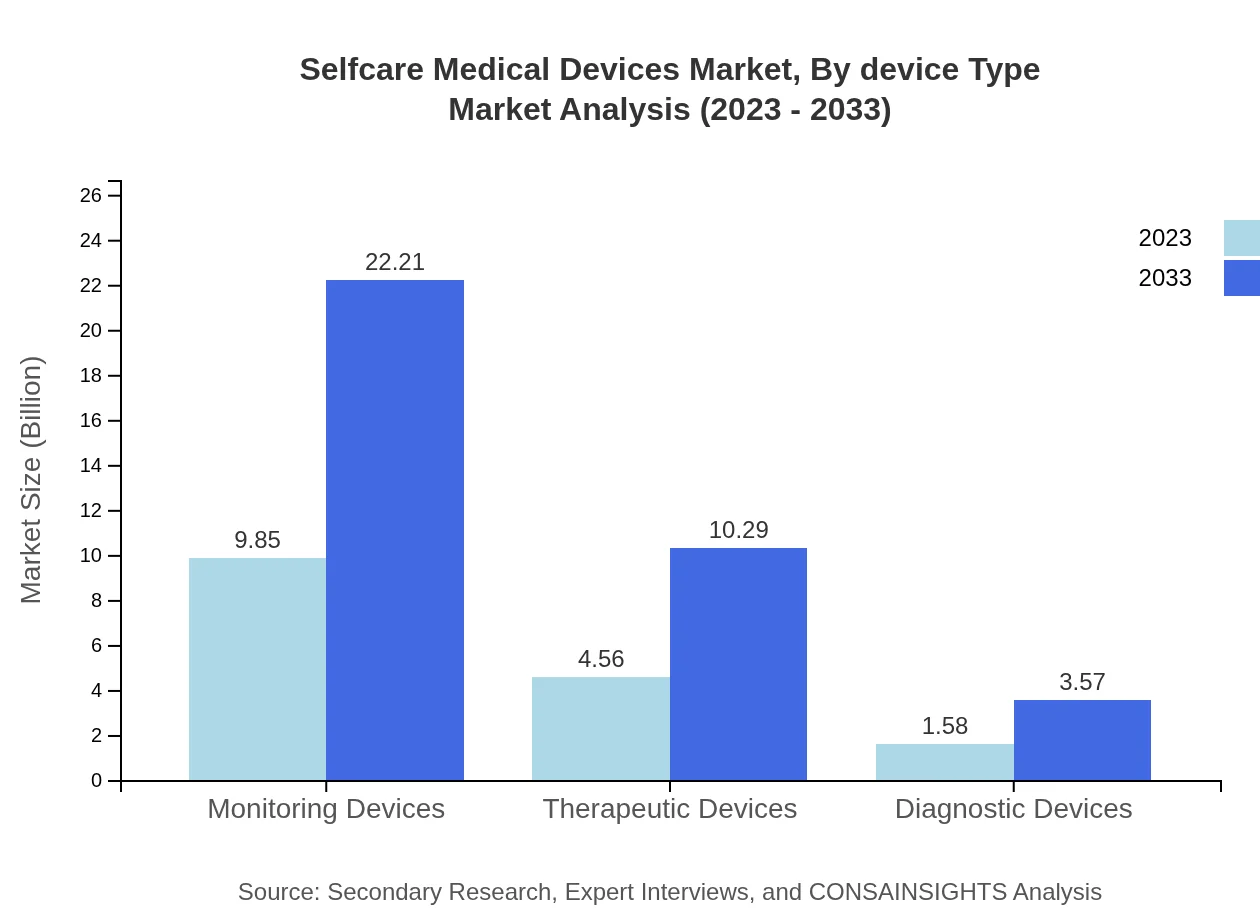
The Self-Care Medical Devices market, segmented by device type, features monitoring devices leading the segment with a size of $9.85 billion in 2023, anticipated to grow to $22.21 billion by 2033. Therapeutic devices presently valued at $4.56 billion are projected to reach $10.29 billion, while diagnostic devices represent a smaller segment valued at $1.58 billion, expected to grow to $3.57 billion.
Selfcare Medical Devices Market Analysis By Technology
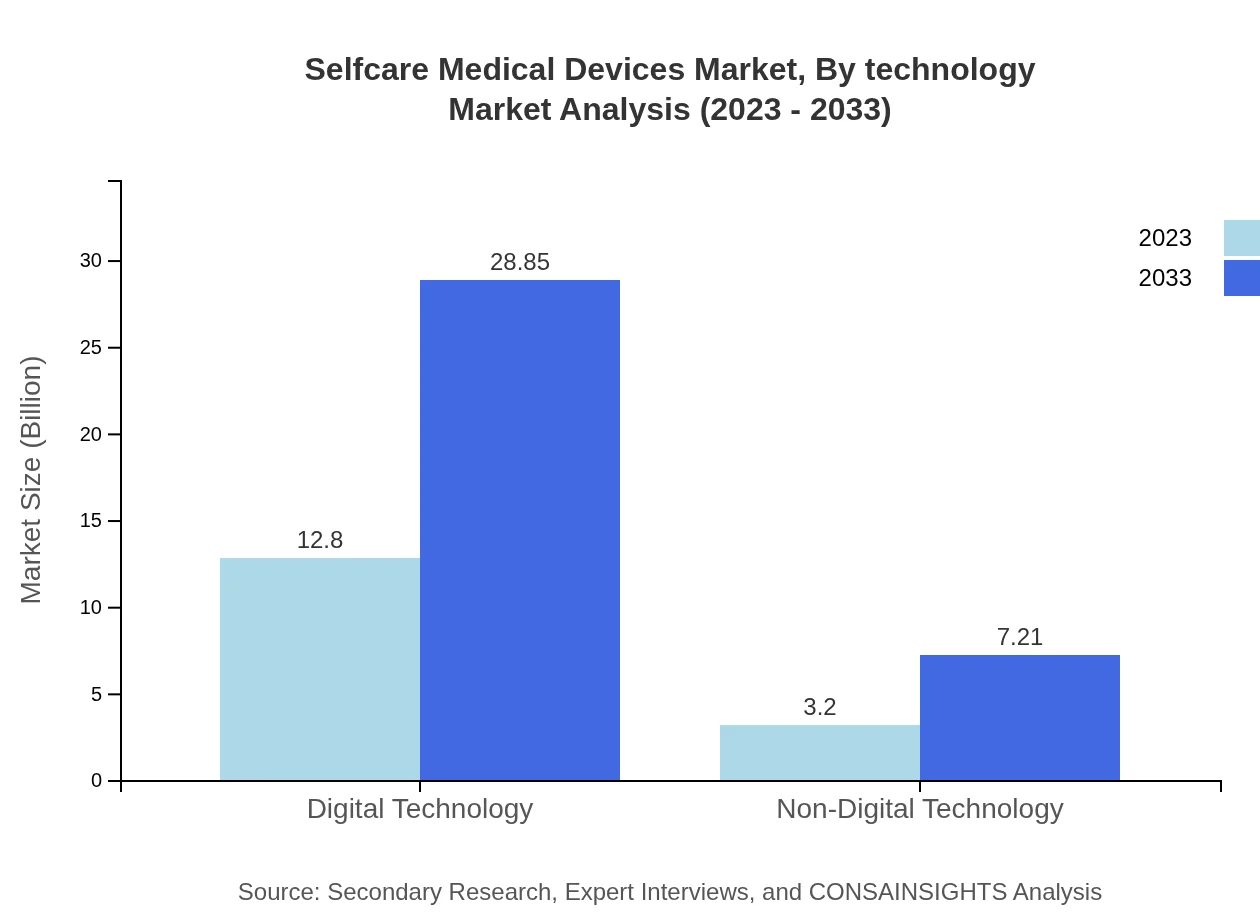
The segmentation by technology emphasizes the growing influence of digital technology, capturing a significant market share of 80% in 2023, forecasted to remain the same in 2033. This segment has a current market value of $12.80 billion, which will rise to $28.85 billion. Non-Digital technology holds a smaller share of 20%, valued at $3.20 billion, projected to grow to $7.21 billion.
Selfcare Medical Devices Market Analysis By Distribution Channel
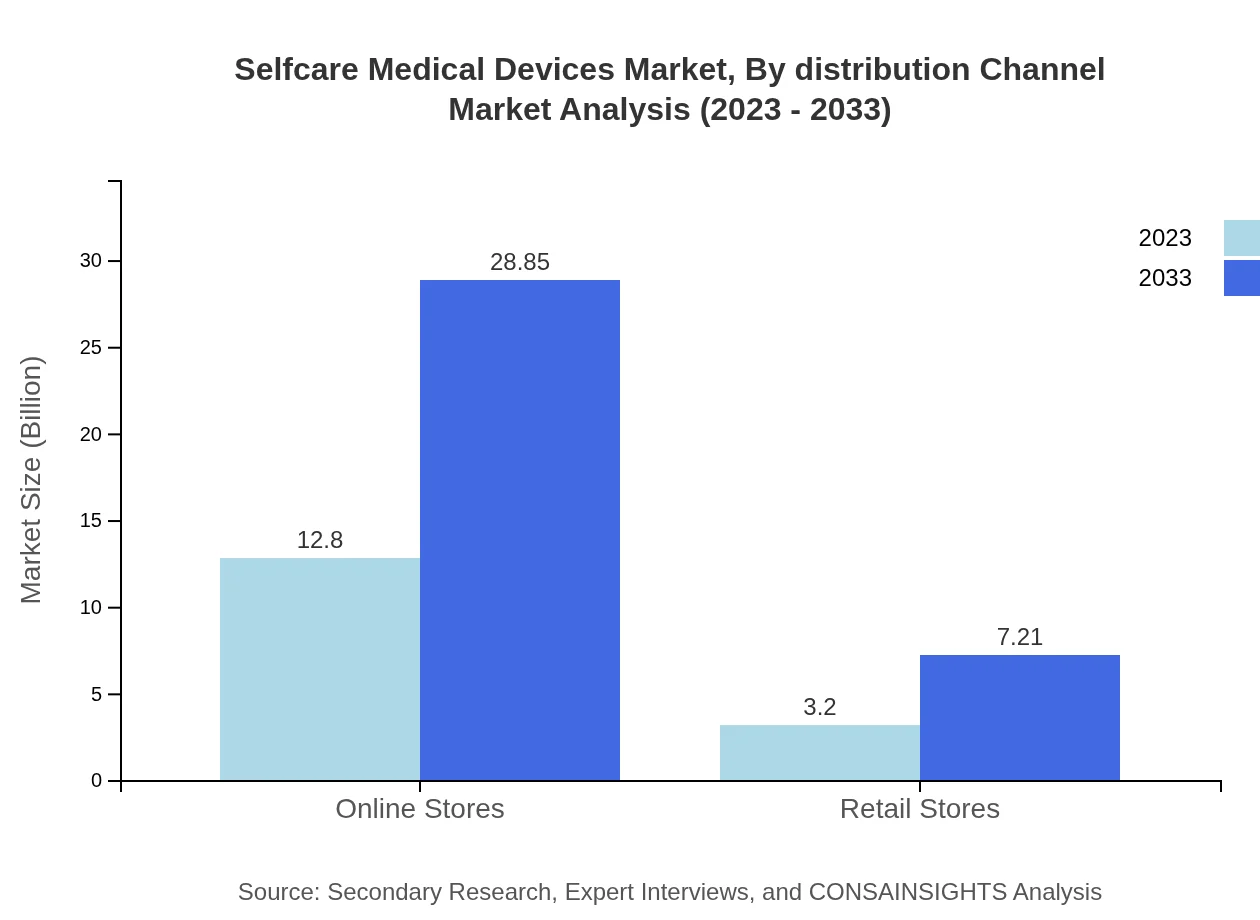
Online stores dominate the distribution channels for selfcare devices, with a projected size of $12.80 billion in 2023, which will rise to $28.85 billion by 2033, maintaining an 80% market share. Retail stores make up the remaining share, holding $3.20 billion, expected to grow to $7.21 billion.
Selfcare Medical Devices Market Analysis By Consumer Demographics
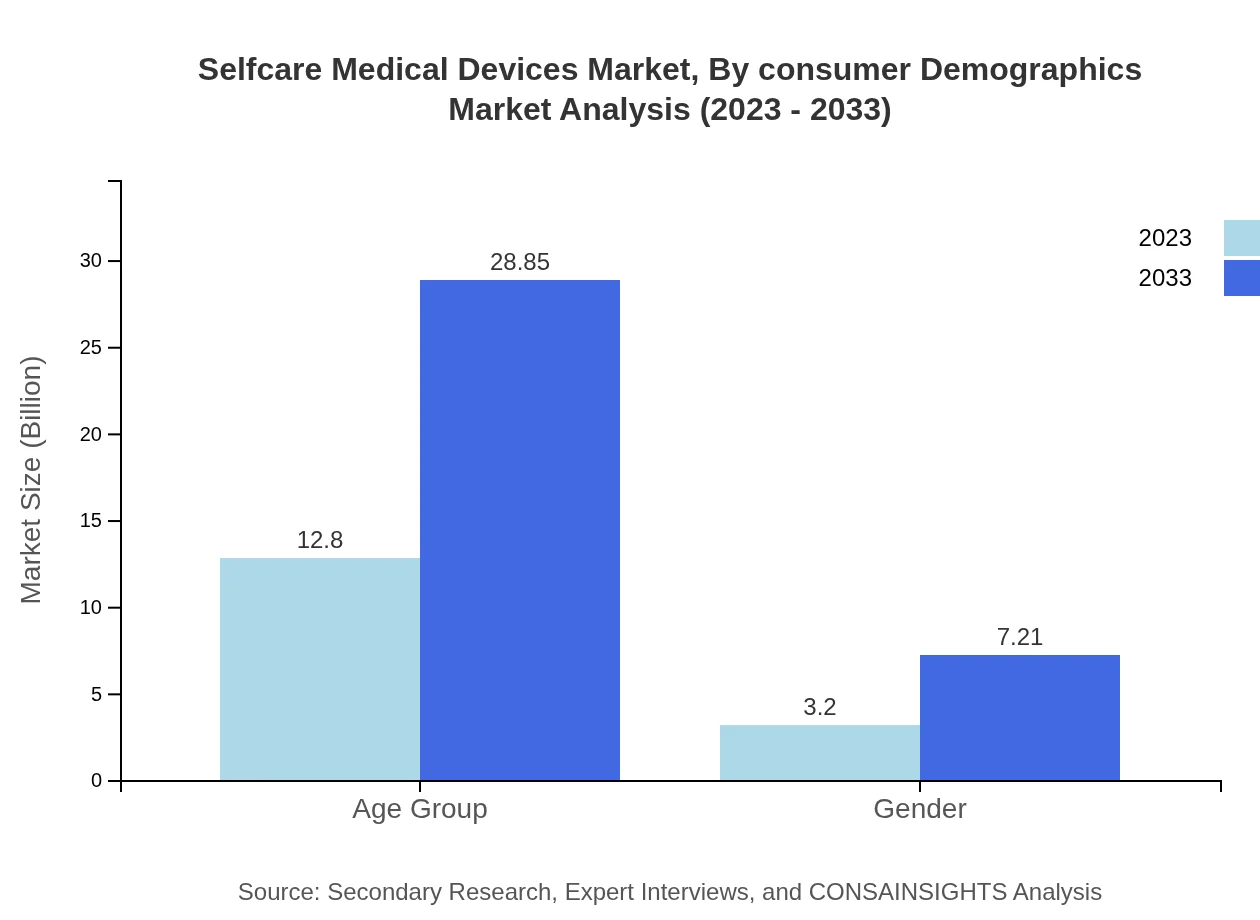
Analysis by consumer demographics reveals market segmentation focusing on age groups and gender. Age-specific devices account for $12.80 billion in market size, expected to reach $28.85 billion by 2033 (80% share), while segments focused on gender represent $3.20 billion, forecasted to grow to $7.21 billion (20% share).
Selfcare Medical Devices Market Analysis By Regulatory Standards
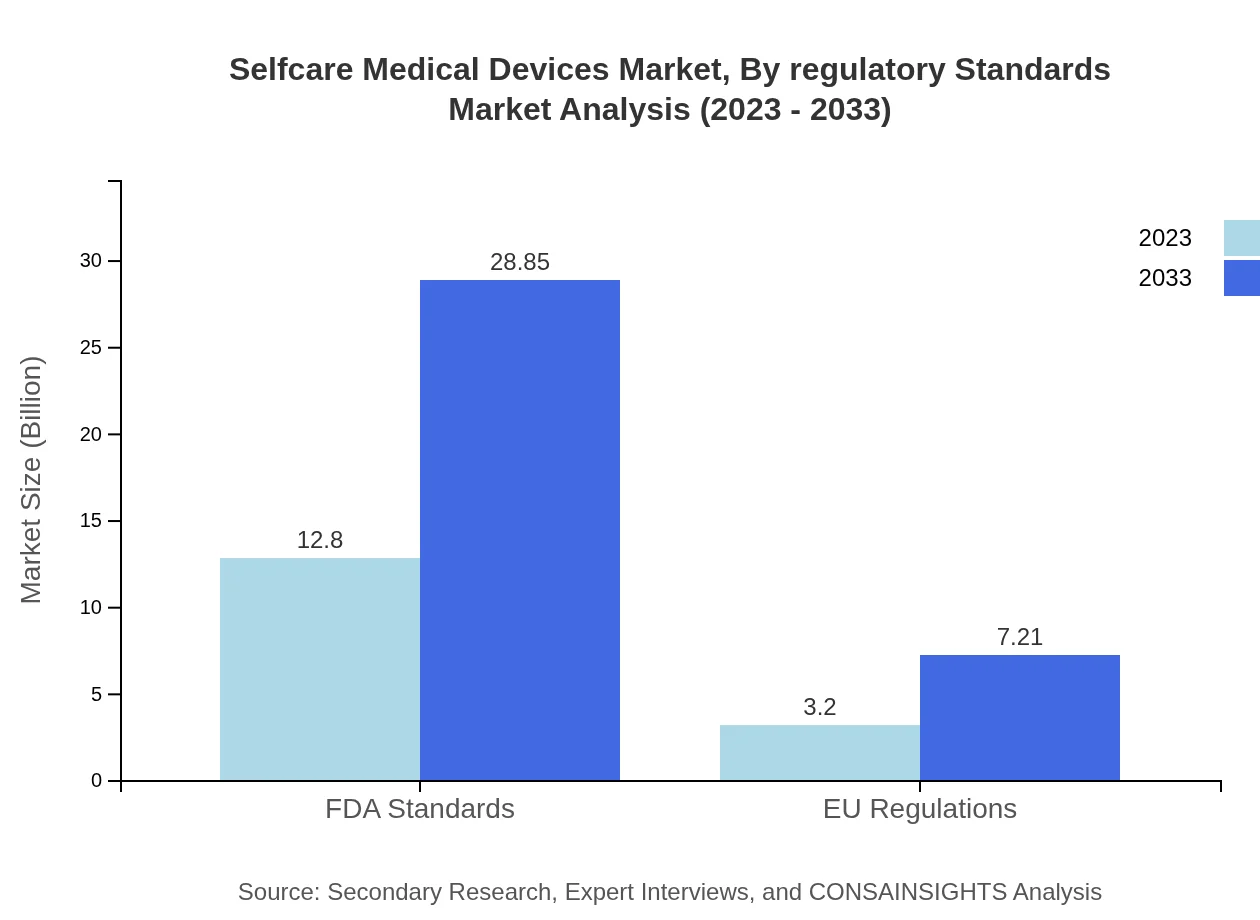
Regulatory standards segment the market around FDA standards and EU regulations. The FDA standards market is valued at $12.80 billion, projected to grow to $28.85 billion while holding an 80% share. The EU regulations market stands at $3.20 billion, growing to $7.21 billion, also maintaining a 20% market share.
Selfcare Medical Devices Market Trends and Future Forecast
Tell us your focus area and get a customized research report.
Global Market Leaders and Top Companies in Selfcare Medical Devices Industry
Fitbit, Inc.:
Fitbit is a leader in wearable health technologies, recognized for its fitness trackers and smartwatches that promote self-monitoring of health metrics.Omron Healthcare, Inc.:
Omron specializes in home healthcare devices, particularly blood pressure monitors and pulse oximeters, contributing significantly to the selfcare medical devices market.Philips Healthcare:
Philips is a key player in the medical devices sector, innovating in personal health products ranging from home monitoring solutions to advanced diagnostic devices.We're grateful to work with incredible clients.









FAQs
What is the market size of the selfcare medical devices market in 2023?
The market size in 2023 is $16.00 Billion, reflecting current adoption of home-use health tools and baseline demand for monitoring, therapeutic, and diagnostic devices.
How big will the market be in 2033?
The market is projected to reach $36.07 Billion in 2033, based on continued adoption of digital and non-digital selfcare technologies and expanded distribution access.
What is CAGR for the forecast period?
The reported compound annual growth rate (CAGR) for 2023 to 2033 is 8.2%, representing the average annual growth across the forecast horizon.
Is there a single fastest Growing region in the Selfcare Medical Devices Market Report market?
No single fastest-growing region is stated for the Selfcare Medical Devices Market Report market because the top regional implied CAGR values are within 0.15 percentage points of each other, making the ranking too close to call reliably.
Which companies are leading the sector?
Top companies named in the report include Fitbit, Inc., Omron Healthcare, Inc., and Philips Healthcare, representing established manufacturers across device categories.
What are primary trends shaping market growth?
Key trends include increased connectivity of devices, growth in telehealth integration, and expanding personalized care offerings that support at-home monitoring and management.
What regulatory standards are relevant to the market?
Regulatory frameworks noted include FDA Standards and EU Regulations, which guide product approval, safety, and market access for selfcare devices.
How big is the Europe market in 2023 and 2033?
Europe is reported at $4.95 Billion in 2023 and is projected to reach $11.16 Billion in 2033, driven by adoption of connected health solutions and regulatory alignment.
Who are typical consumers targeted by selfcare devices?
Consumer segments include demographic groups defined by age and gender, reflecting varied needs across age groups and gender-specific health monitoring requirements.
Why is online distribution important for this market?
Online stores expand reach and convenience, enabling faster product discovery and purchase, supporting broader adoption of selfcare monitoring and therapeutic devices.