
Reports >
Life Sciences
>
Skincare Devices Market Report

Skincare Devices Market Report
First published: 15 October 2024 | Last updated: 28 May 2026 | Report Code: skincare-devices
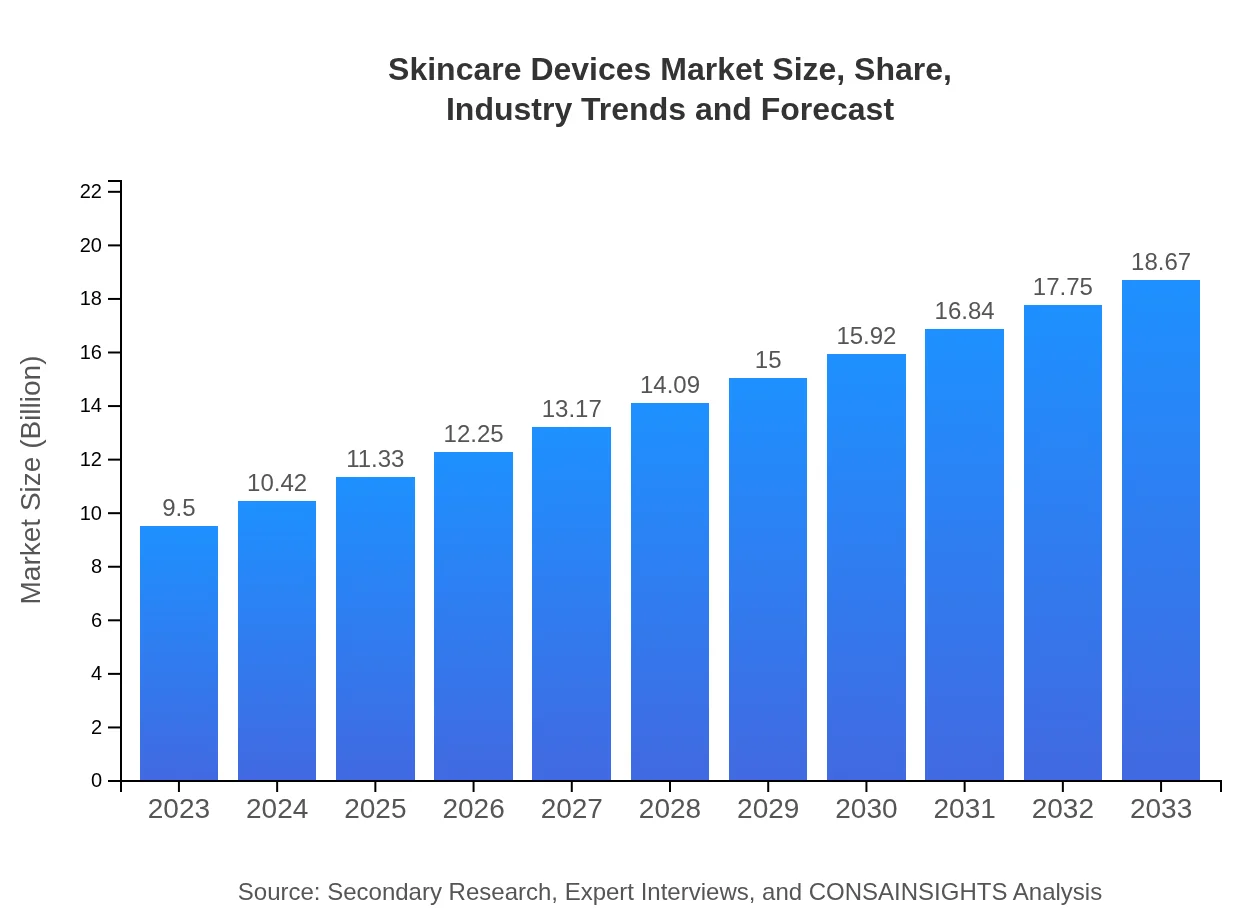
Skincare Devices Market — USD 9.5 billion in 2023, Growing to USD 18.67B by 2033 at 6.8% CAGR
This report provides detailed insights into the Skincare Devices market, analyzing its growth, segmentation, and key trends from 2023 to 2033. It encompasses market size, regional analysis, technological advancements, and profiles of industry leaders, offering valuable foresight for stakeholders.
Key Takeaways
- Global market expands from $9.50 Billion in 2023 to $18.67 Billion in 2033 at a 6.8% CAGR, reflecting steady long-term demand.
- North America is largest regional market, while no single fastest-growing region is stated because regional CAGR differences remain within 0.15 percentage points.
- Europe grows from $2.44 Billion in 2023 to $4.8 Billion in 2033, driven by adoption of advanced skincare solutions.
- Asia Pacific increases from $1.92 Billion in 2023 to $3.77 Billion in 2033 as consumer awareness and e-commerce uptake expand.
Skincare Devices Market Report — Executive Summary
North America remains largest market by forecast-period value, while no single fastest-growing region is stated because top regional growth rates are separated by less than 0.15 percentage points. The report examines market expansion propelled by rising consumer focus on skin health, greater disposable incomes, and adoption of technology-driven devices. From 2023 to 2033 the market is projected to increase from $9.50 Billion to $18.67 Billion at a 6.8% CAGR. Product innovation across cleansing, anti-aging and moisturizing categories, coupled with multifunctional offerings and intensified e-commerce and direct sales strategies, shapes competitive dynamics. Key players such as Philips, NuFace, Foreo, L'Oreal and Clarisonic (part of L'Oreal) are noted for portfolio investments and launches. North America remains largest market by forecast-period value, while no single fastest-growing region is stated because top regional growth rates are separated by less than 0.15 percentage points. The study segments the market by technology, application, device type, consumer type and distribution channel, and reviews regulatory and pricing considerations that influence adoption rates.
Key Growth Drivers
- Rising consumer emphasis on personal grooming and skin wellness boosting demand for device-based solutions.
- Technological advancement including light therapy and microcurrent modalities encouraging product upgrades and multifunctionality.
- Expansion of online and direct-to-consumer channels improving accessibility and reducing time-to-market for new devices.
- Increased R&D and product launches by established brands such as Philips and L'Oreal driving innovation and market penetration.
| Metric | Value |
|---|---|
| Study Period | 2023 - 2033 |
| 2023 Market Size | $9.50 Billion |
| CAGR (2023-2033) | 6.8% |
| 2033 Market Size | $18.67 Billion |
| Top Companies | Philips, NuFace, Foreo, L'Oreal, Clarisonic (part of L'Oreal) |
| Published Date | 15 October 2024 |
| Last Modified Date | 28 May 2026 |
Skincare Devices Market Overview
Customize Skincare Devices Market Report market research report
- ✔ Get in-depth analysis of Skincare Devices market size, growth, and forecasts.
- ✔ Understand Skincare Devices's regional dynamics and industry-specific trends.
- ✔ Identify potential applications, end-user demand, and growth segments in Skincare Devices
What is the Market Size & CAGR of Skincare Devices Market Report market in 2023?
Skincare Devices Industry Analysis
Skincare Devices Market Segmentation and Scope
Tell us your focus area and get a customized research report.
Skincare Devices Market Report Market Analysis Report by Region
Europe Skincare Devices Market Report:
Europe grows from $2.44 Billion in 2023 to $4.8 Billion in 2033. Adoption of advanced skincare technologies, increased spending on personal care, and the presence of major companies support regional expansion.Asia Pacific Skincare Devices Market Report:
Asia Pacific grows from $1.92 Billion in 2023 to $3.77 Billion in 2033. Consumer awareness, rising disposable incomes, and growth of e-commerce and multifunctional devices underpin market progression in the region.North America Skincare Devices Market Report:
North America is largest regional market, rising from $3.08 Billion in 2023 to $6.05 Billion in 2033. Regional leadership reflects strong consumer demand, established distribution networks, and ongoing product innovation by major brands.South America Skincare Devices Market Report:
Latin America grows from $0.83 Billion in 2023 to $1.63 Billion in 2033. Market development is tied to growing interest in personal grooming, expanding retail channels, and increasing availability of international brands.Middle East & Africa Skincare Devices Market Report:
Middle East and Africa grows from $1.23 Billion in 2023 to $2.41 Billion in 2033. Demand is influenced by rising beauty and wellness awareness, urbanization, and greater access to both online and offline distribution options.Tell us your focus area and get a customized research report.
Research Methodology
Skincare Devices Market Analysis By Device Type
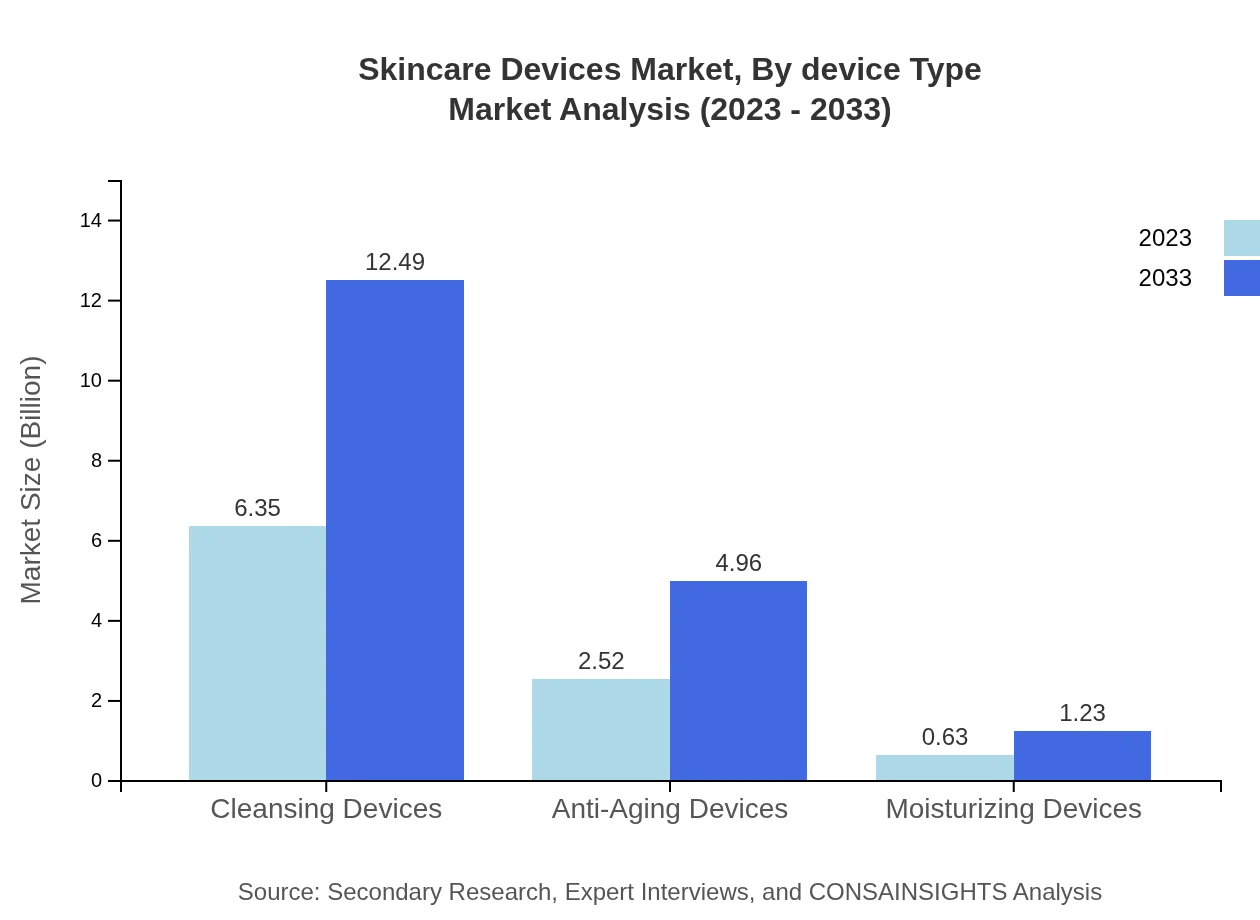
By device type, the skincare devices market is predominantly driven by Cleansing Devices, which hold a significant market share, valued at $6.35 billion in 2023 and expected to double by 2033. Anti-Aging Devices follow with $2.52 billion in 2023, projected to reach $4.96 billion by 2033. The demand for Moisturizing Devices and Spa and Salon equipment also increasingly supports market growth.
Skincare Devices Market Analysis By Technology
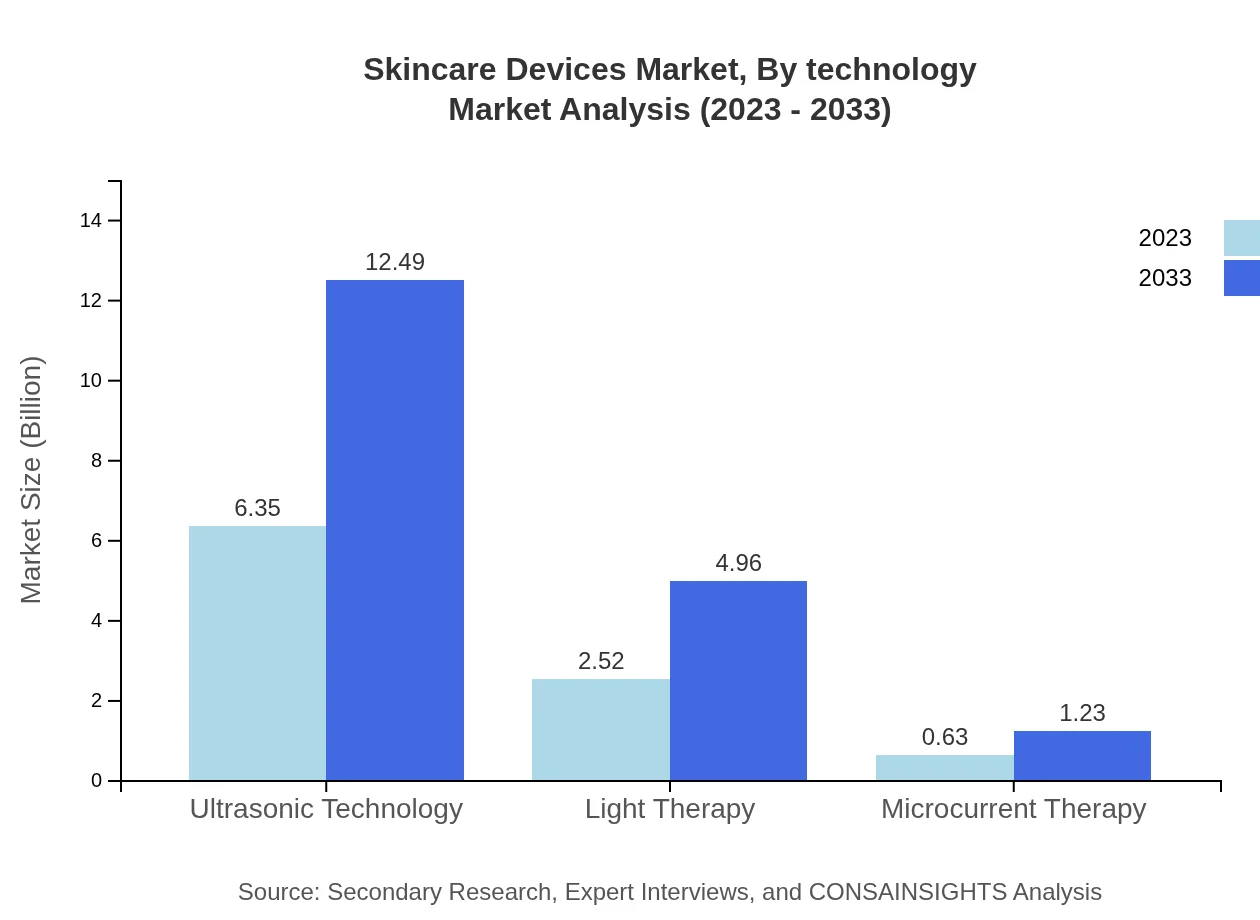
The Skincare Devices market is benefitting from technological innovations. Ultrasonic Technology leads with a substantial market share, anticipated to grow from $6.35 billion in 2023 to $12.49 billion by 2033. Light Therapy and Microcurrent Therapy also contribute significantly, growing steadily as consumers seek advanced skincare treatments at home.
Skincare Devices Market Analysis By Application
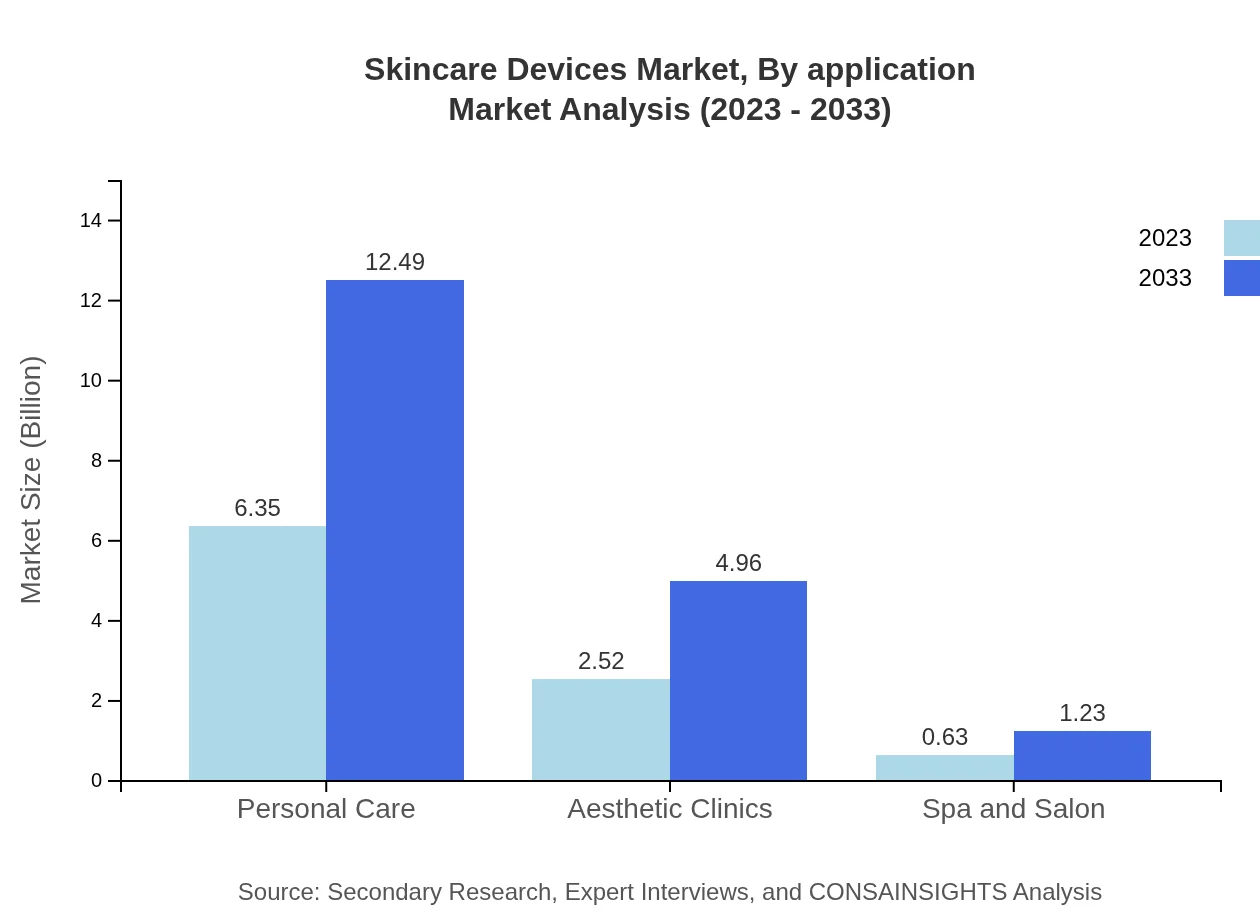
The application segment showcases a clear divide between Personal Care and professional usage in aesthetic clinics. Personal Care dominates the market, largely due to the proliferation of at-home devices. Only a fraction of the market is devoted to professional use, indicating significant growth potential for personal care devices in the future.
Skincare Devices Market Analysis By Consumer Type
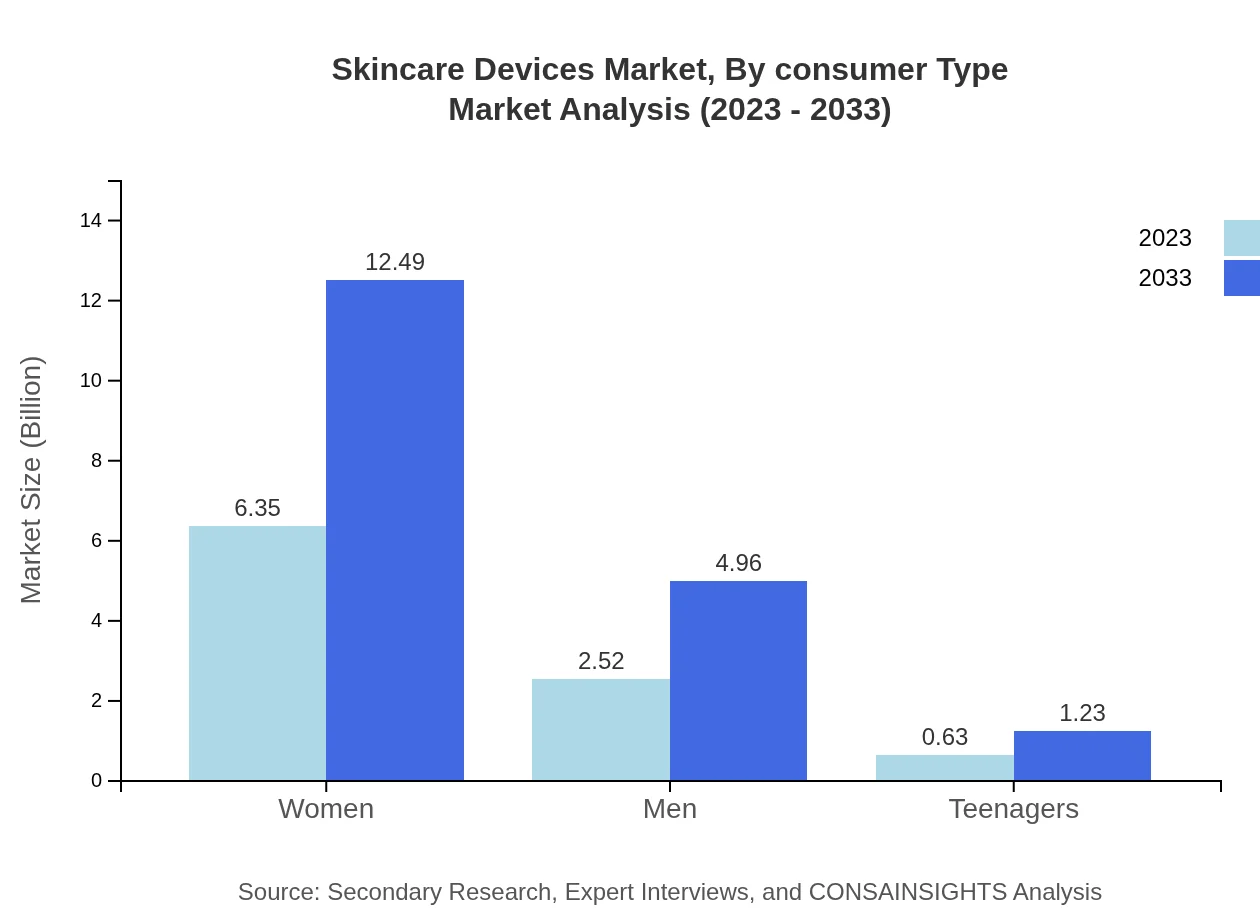
Women constitute the largest segment of the Skincare Devices market, projected to account for $6.35 billion in 2023. Men's skincare is gaining momentum with a revenue of $2.52 billion, and the teenage segment is anticipated to grow modestly, indicating changing dynamics in skincare preferences.
Skincare Devices Market Analysis By Distribution Channel
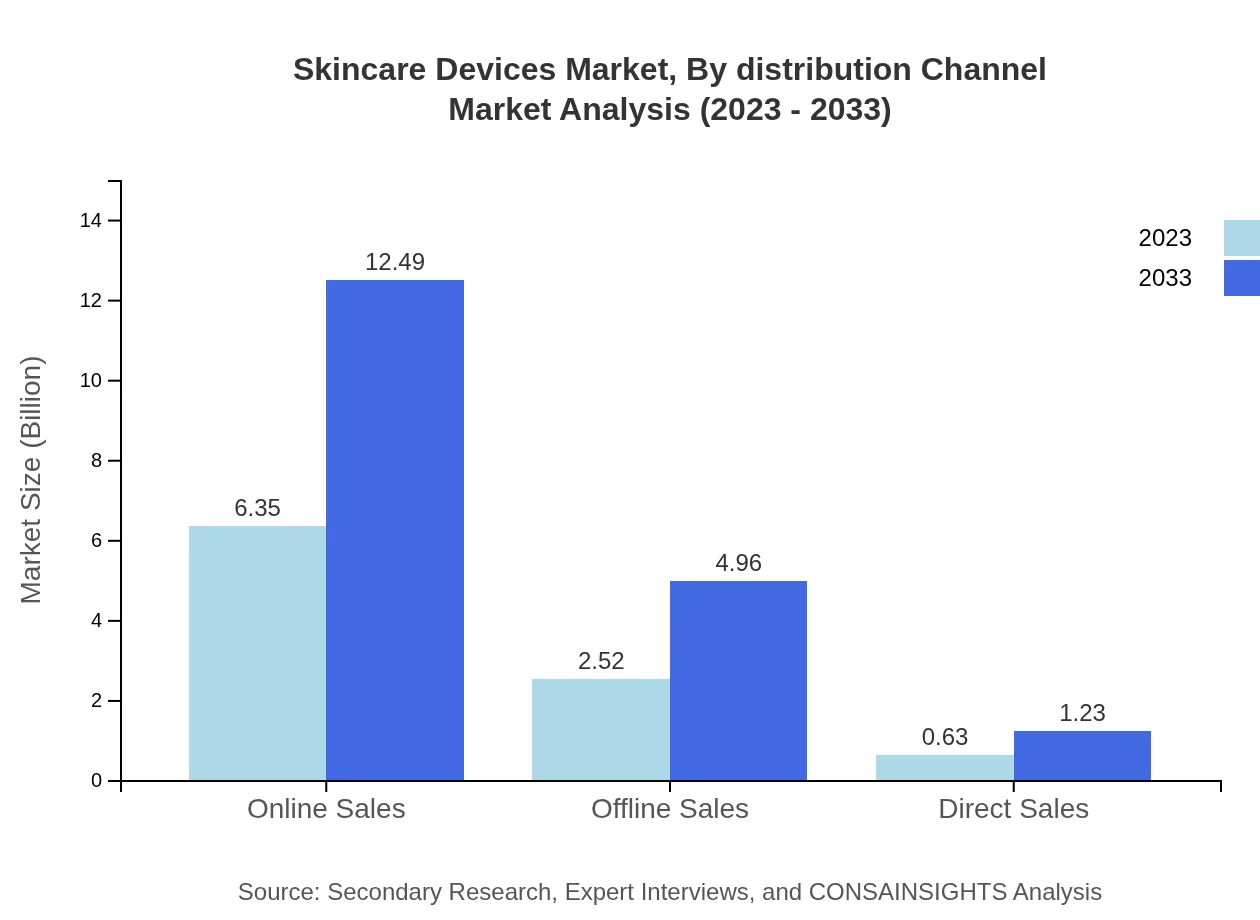
Online sales dominate the distribution landscape, increasing from $6.35 billion in 2023 to $12.49 billion by 2033. Offline sales, while still substantial at $2.52 billion in 2023, reflect a trend of consumers shifting towards online shopping, driven by convenience.
Skincare Devices Market Trends and Future Forecast
Tell us your focus area and get a customized research report.
Global Market Leaders and Top Companies in Skincare Devices Industry
Philips:
Philips is a leading player in the skincare devices market, known for its innovative light therapy and cleansing devices. With a robust R&D, Philips focuses on delivering safe and effective solutions, enhancing consumer trust.NuFace:
NuFace specializes in microcurrent technology devices aimed at facial toning and anti-aging. The company’s commitment to research and consumer feedback contributes to its strong market position and customer loyalty.Foreo:
Foreo is renowned for its silicone cleansing devices, combining effective cleaning with aesthetics. Its marketing campaigns target millennials and Gen Z, establishing a significant presence in the skincare segment.L'Oreal:
As one of the largest cosmetics companies globally, L'Oreal has a strong foothold in the skincare devices segment with a diverse product range focusing on anti-aging and skin rejuvenation technologies.Clarisonic (part of L'Oreal):
Clarisonic is best known for its sonic facial cleansing devices. Despite its recent transition under L'Oreal, it continues to influence the market with its innovative approaches to skin cleansing.We're grateful to work with incredible clients.








FAQs
What is the market size of the skincare devices market in 2023?
The market size in 2023 is $9.50 Billion as specified in the report, representing the baseline for the 2023 to 2033 forecast period.
How big will the skincare devices market be in 2033?
The market is projected to reach $18.67 Billion by 2033 according to the provided ten-year forecast figures.
What is CAGR for the forecast period?
The compound annual growth rate for the forecast period 2023 to 2033 is 6.8% as stated in the input data.
Is there a single fastest Growing region in the Skincare Devices Market Report market?
No single fastest-growing region is stated for the Skincare Devices Market Report market because the top regional implied CAGR values are within 0.15 percentage points of each other, making the ranking too close to call reliably.
Which companies are leading in the skincare devices industry?
Top companies listed include Philips, NuFace, Foreo, L'Oreal, and Clarisonic (part of L'Oreal), noted for innovation and market activity.
What are common distribution channels for devices?
Distribution channels highlighted are online sales, offline sales, and direct sales, each facilitating different go-to-market and consumer engagement strategies.
How big is the Europe market in 2023 and 2033?
Europe is reported at $2.44 Billion in 2023 and is projected to reach $4.8 Billion in 2033, reflecting steady regional demand growth.
What drives adoption in Asia Pacific?
Asia Pacific growth, from $1.92 Billion in 2023 to $3.77 Billion in 2033, is associated with rising awareness, digital retail growth, and interest in advanced skincare technologies.
Which market segments are covered?
The report covers segments by technology, application, device type, consumer type and distribution channel, with specific subsegments listed for each category.
Who contributed to the research methodology?
Research includes primary interviews with industry experts and secondary sources like company reports and publications, combined via triangulation and validation.