
Reports >
Life Sciences
>
Teleradiology Software Market Report

Teleradiology Software Market Report
First published: 07 October 2024 | Last updated: 28 May 2026 | Report Code: teleradiology-software
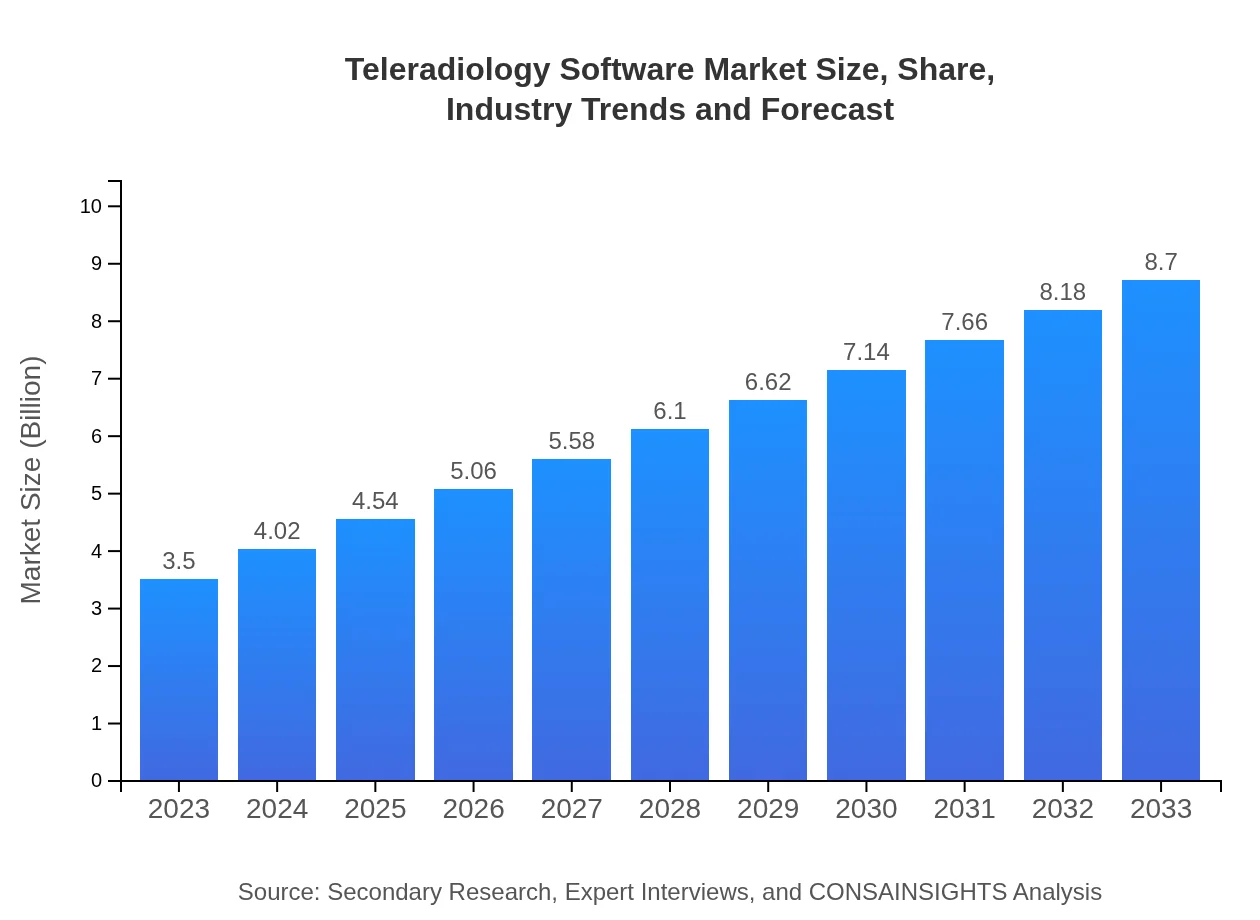
Teleradiology Software Market — USD 3.5 billion in 2023, Growing to USD 8.70B by 2033 at 9.2% CAGR
This report offers an in-depth analysis of the Teleradiology Software market, covering critical insights about the industry from 2023 to 2033. It includes market size, growth projections, segmentation, regional breakdowns, and trends affecting the market landscape.
Key Takeaways
- Global market value rises from $3.50 Billion in 2023 to $8.70 Billion in 2033, reflecting a 9.2% CAGR over the forecast period.
- North America is largest regional market; Latin America is regional market region based on implied CAGR across 2023 to 2033.
- Latin America is identified as the regional market region, increasing from $0.13 Billion in 2023 to $0.33 Billion in 2033.
- Cloud-based and AI-enabled solutions, alongside strengthened data security, are core forces supporting market expansion.
- Key vendors include Philips Healthcare, GE Healthcare, Siemens Healthineers, Everlight Radiology, and Radnet.
Teleradiology Software Market Report — Executive Summary
Regional analysis shows North America as largest market and Latin America as fastest-growing region by implied CAGR. The Teleradiology Software Market Report outlines a market expected to grow from $3.50 Billion in 2023 to $8.70 Billion by 2033 at a 9.2% CAGR. Growth is driven by expanding remote diagnostic needs, broader cloud deployment, and integration of AI and image-processing capabilities. Data protection and compliance requirements are shaping product development and deployment models, with cloud-based and on-premises options both prominent. North America represents the largest regional share, while Latin America records the highest implied growth rate. Market segmentation covers product types, technologies, application areas, security features, and user types such as hospitals, radiology centers, and clinics. Competitive dynamics feature established medical imaging and healthcare IT vendors including Philips Healthcare, GE Healthcare, Siemens Healthineers, Everlight Radiology, and Radnet. This report combines primary interviews, secondary literature, and internal validation to present trend-forward analysis for stakeholders planning product, investment, or market-entry strategies.
Key Growth Drivers
- Rising demand for remote diagnostics and telehealth services expanding the need for teleradiology solutions.
- Increased adoption of cloud-based deployment models enabling scalable image storage and sharing.
- Integration of AI and machine-learning technologies improving image analysis and reporting efficiency.
- Stronger emphasis on data encryption, user authentication, and compliance standards to protect patient information.
- Growing investments by hospitals and diagnostic centers in advanced imaging workflows and reporting tools.
| Metric | Value |
|---|---|
| Study Period | 2023 - 2033 |
| 2023 Market Size | $3.50 Billion |
| CAGR (2023-2033) | 9.2% |
| 2033 Market Size | $8.70 Billion |
| Top Companies | Philips Healthcare, GE Healthcare, Siemens Healthineers, Everlight Radiology, Radnet |
| Published Date | 07 October 2024 |
| Last Modified Date | 28 May 2026 |
Teleradiology Software Market Overview
Customize Teleradiology Software Market Report market research report
- ✔ Get in-depth analysis of Teleradiology Software market size, growth, and forecasts.
- ✔ Understand Teleradiology Software's regional dynamics and industry-specific trends.
- ✔ Identify potential applications, end-user demand, and growth segments in Teleradiology Software
What is the Market Size & CAGR of Teleradiology Software Market Report market in 2023?
Teleradiology Software Industry Analysis
Teleradiology Software Market Segmentation and Scope
Tell us your focus area and get a customized research report.
Teleradiology Software Market Report Market Analysis Report by Region
Europe Teleradiology Software Market Report:
Europe grows from $0.87 Billion in 2023 to $2.16 Billion in 2033. Regional growth is supported by telehealth policy adoption, investments in healthcare IT, and a focus on interoperability and data protection across clinical networks.Asia Pacific Teleradiology Software Market Report:
Asia Pacific grows from $0.75 Billion in 2023 to $1.87 Billion in 2033. Growth is propelled by increasing access to diagnostic services, rising telemedicine deployment, and expanding imaging capacity in hospitals and clinics.North America Teleradiology Software Market Report:
North America is largest regional market, rising from $1.31 Billion in 2023 to $3.25 Billion in 2033. Local drivers include mature healthcare infrastructure, high adoption of cloud and AI-enabled imaging, and significant investment by hospitals and diagnostic centers.South America Teleradiology Software Market Report:
Latin America is fastest-growing region by implied CAGR, increasing from $0.13 Billion in 2023 to $0.33 Billion in 2033. 13 Billion in 2023 to $0.33 Billion in 2033 and is identified as the regional growth market with an implied 9.76% CAGR. Expansion is driven by rising telehealth adoption and investments to modernize diagnostic infrastructure.Middle East & Africa Teleradiology Software Market Report:
Middle East and Africa grows from $0.44 Billion in 2023 to $1.08 Billion in 2033. Drivers include growing healthcare digitization, enhanced imaging capabilities, and targeted investments to improve remote diagnostic access.Tell us your focus area and get a customized research report.
Research Methodology
Teleradiology Software Market Analysis By Product Type
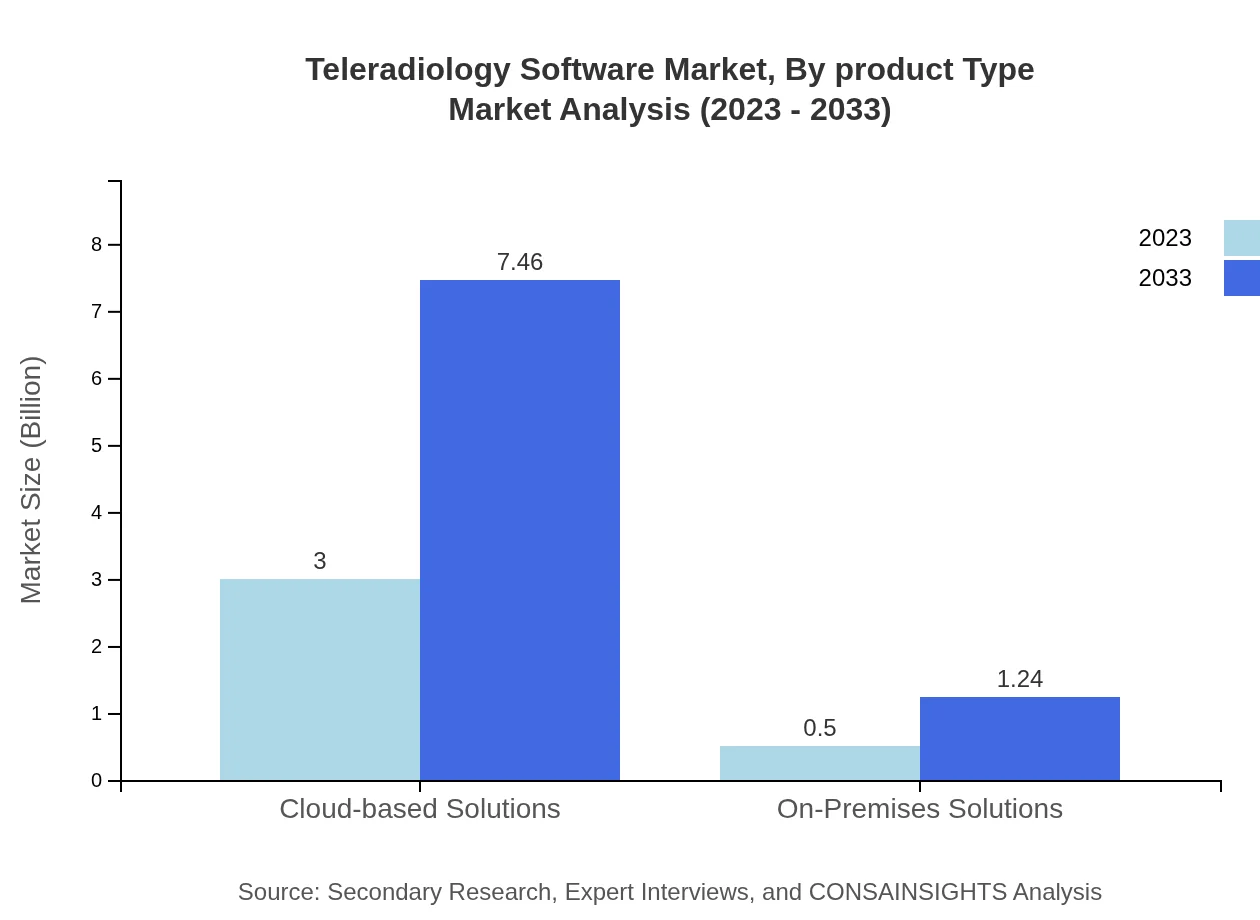
The Teleradiology Software market by product type is led by AI and Machine Learning solutions, projected to grow from $3.00 billion in 2023 to $7.46 billion by 2033, representing a dominant share of 85.74%. Image Processing and Cloud-Based Solutions follow closely, with significant market roles contributing to the industry's growth.
Teleradiology Software Market Analysis By Application Area
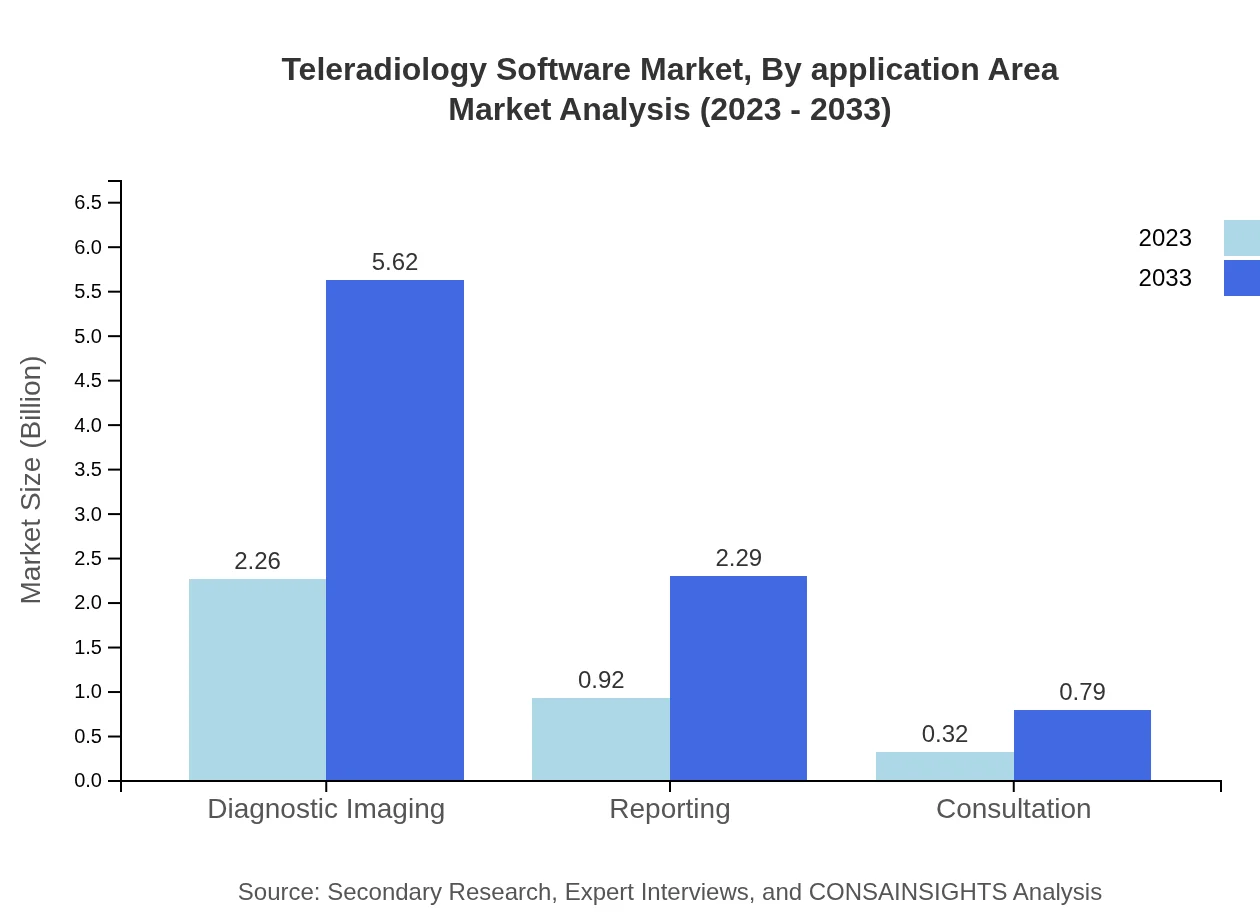
Key application areas include Diagnostic Imaging, featuring a share of 64.59% in 2023 ($2.26 billion) expected to grow to $5.62 billion by 2033. Reporting and Consultation also hold substantial market positions, reflecting the industry's expansion into comprehensive diagnostic processes.
Teleradiology Software Market Analysis By User Type
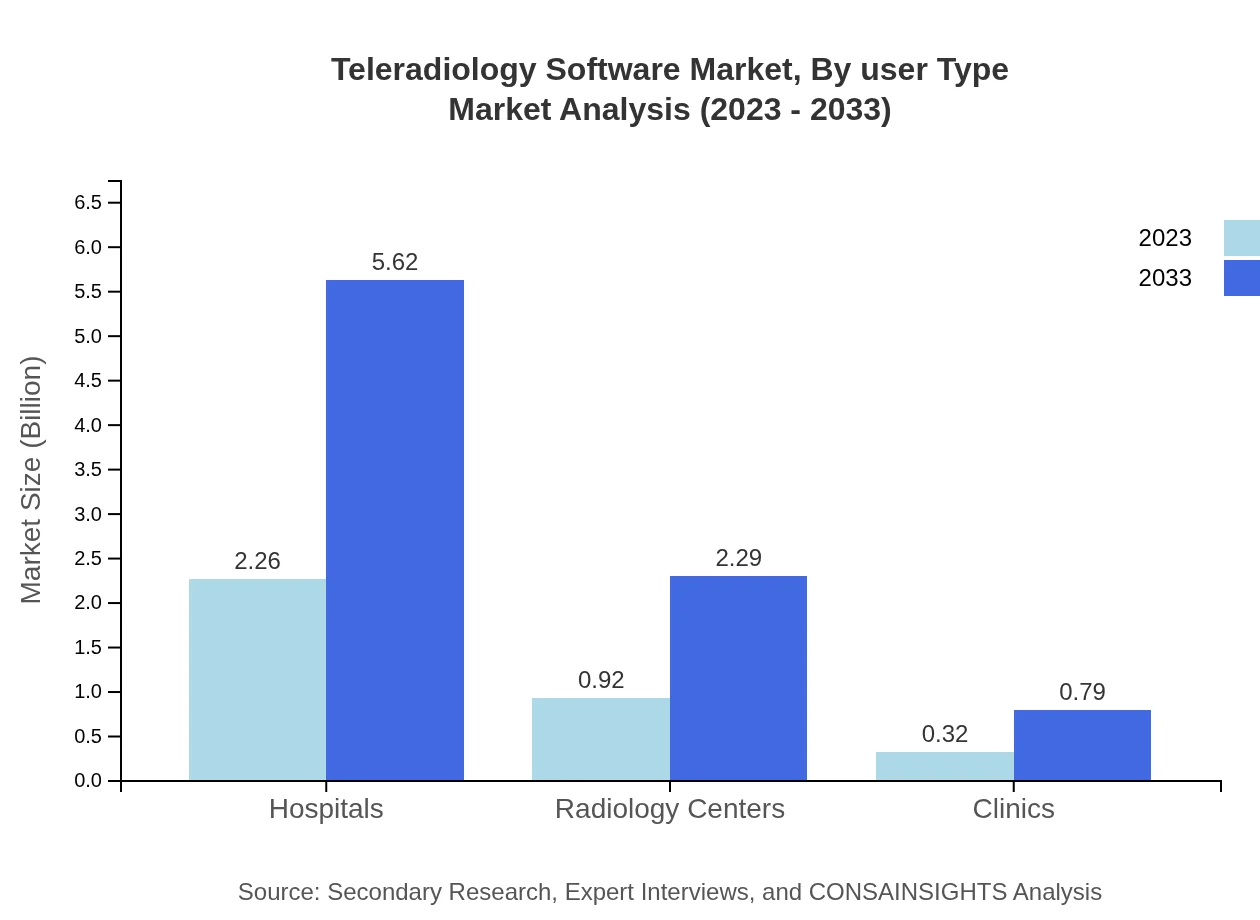
The market is predominantly driven by hospitals, forecasted to expand from $2.26 billion in 2023 to $5.62 billion by 2033, maintaining a market share of 64.59%. Radiology Centers and Clinics represent vital user segments, contributing to the demand for advanced diagnostic solutions.
Teleradiology Software Market Analysis By Technology
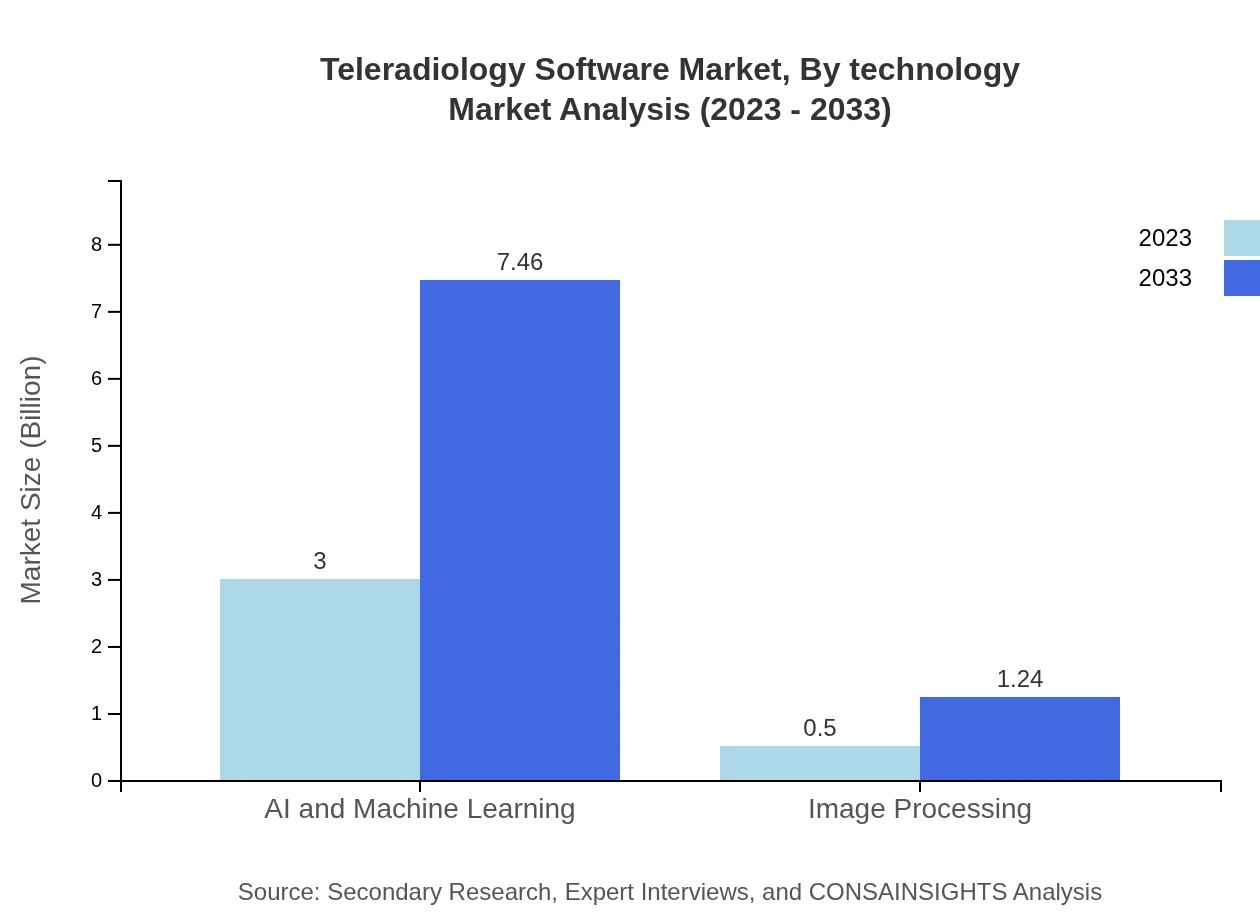
Technological developments such as Cloud-based and AI-enhanced solutions are reshaping the market. Cloud-based solutions are set to represent 85.74% of the market, growing from $3.00 billion in 2023 to $7.46 billion by 2033, illustrating a trend toward scalable and flexible solutions.
Teleradiology Software Market Analysis By Market Security
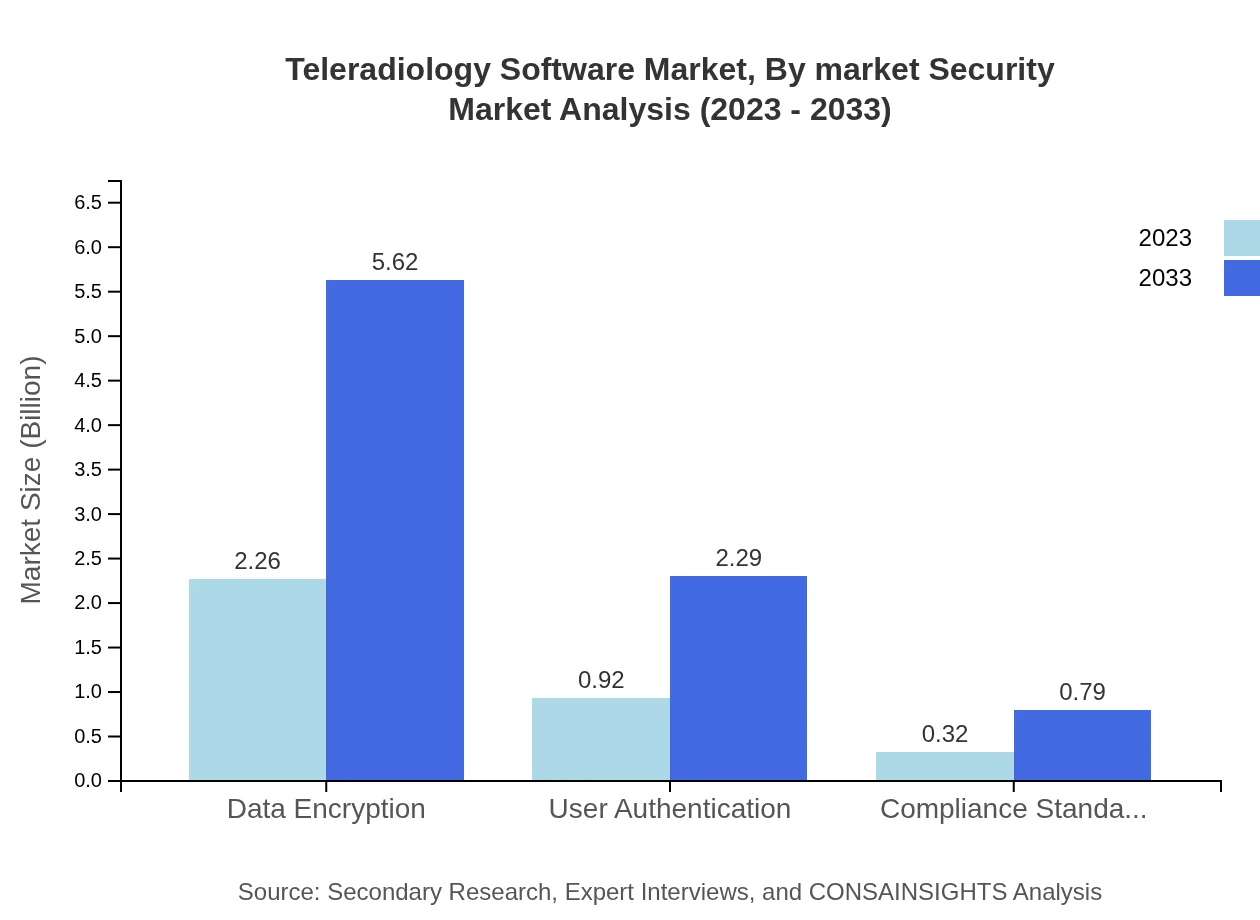
Security remains a top priority in the Teleradiology Software market, with Data Encryption and User Authentication taking center stage. Data Encryption holds a market share of 64.59% in 2023, while User Authentication stands at 26.37%. Both are expected to grow significantly as security awareness escalates.
Teleradiology Software Market Trends and Future Forecast
Tell us your focus area and get a customized research report.
Global Market Leaders and Top Companies in Teleradiology Software Industry
Philips Healthcare:
Philips Healthcare is a leader in health technology, offering advanced imaging systems alongside comprehensive teleradiology solutions that enhance remote diagnostics.GE Healthcare:
GE Healthcare provides innovative imaging and informatics solutions, focusing on improving patient outcomes with robust teleradiology services and strong global presence.Siemens Healthineers:
Siemens Healthineers is known for its cutting-edge imaging technologies and teleradiology frameworks that ensure effective and timely patient care.Everlight Radiology:
Everlight Radiology specializes in providing high-quality remote radiology services, enhancing accessibility and ensuring rapid reporting for healthcare facilities worldwide.Radnet:
Radnet is a leading provider of outpatient diagnostic imaging services, integrating teleradiology for operational efficiency and improved patient care.We're grateful to work with incredible clients.









FAQs
What is the market size of the Teleradiology Software Market Report in 2023?
The market size in 2023 is $3.50 Billion according to the report, serving as the baseline for the forecast period running from 2023 to 2033.
How big will the market be by 2033?
The market value is projected to reach $8.70 Billion in 2033, reflecting growth driven by technology adoption and expanded telehealth services.
What is CAGR of the market during 2023 to 2033?
The reported compound annual growth rate for 2023 to 2033 is 9.2%, summarizing growth expectations across regions and segments.
Which region is the fastest Growing in the Teleradiology Software Market Report market?
Latin America is the fastest-growing region, projected to expand from $0.13 Billion in 2023 to $0.33 Billion in 2033, reflecting an implied 9.76% CAGR over the forecast period.
Which region is the fastest Growing?
Latin America is identified as the regional market region with an implied 9.76% CAGR, expanding from $0.13 Billion in 2023 to $0.33 Billion in 2033.
Who are the leading companies in the teleradiology software market?
Top companies listed include Philips Healthcare, GE Healthcare, Siemens Healthineers, Everlight Radiology, and Radnet, representing major vendors in imaging and services.
What user types are covered as segments?
Reported user-type segments include Hospitals, Radiology Centers, and Clinics, reflecting primary adopters of teleradiology solutions.
How are security concerns addressed in product segmentation?
Market segmentation for security lists Data Encryption, User Authentication, and Compliance Standards as core categories shaping solution design and procurement.
What technology categories are highlighted?
By-technology segments include AI and Machine Learning and Image Processing, underscoring the role of automation and analytic tools in the market.
What product deployment types are included?
Product-type segmentation covers Cloud-based Solutions and On-Premises Solutions, reflecting different IT strategies among healthcare providers.