
Reports >
Life Sciences
>
Urinary Catheters Market Report

Urinary Catheters Market Report
First published: 10 October 2024 | Last updated: 28 May 2026 | Report Code: urinary-catheters
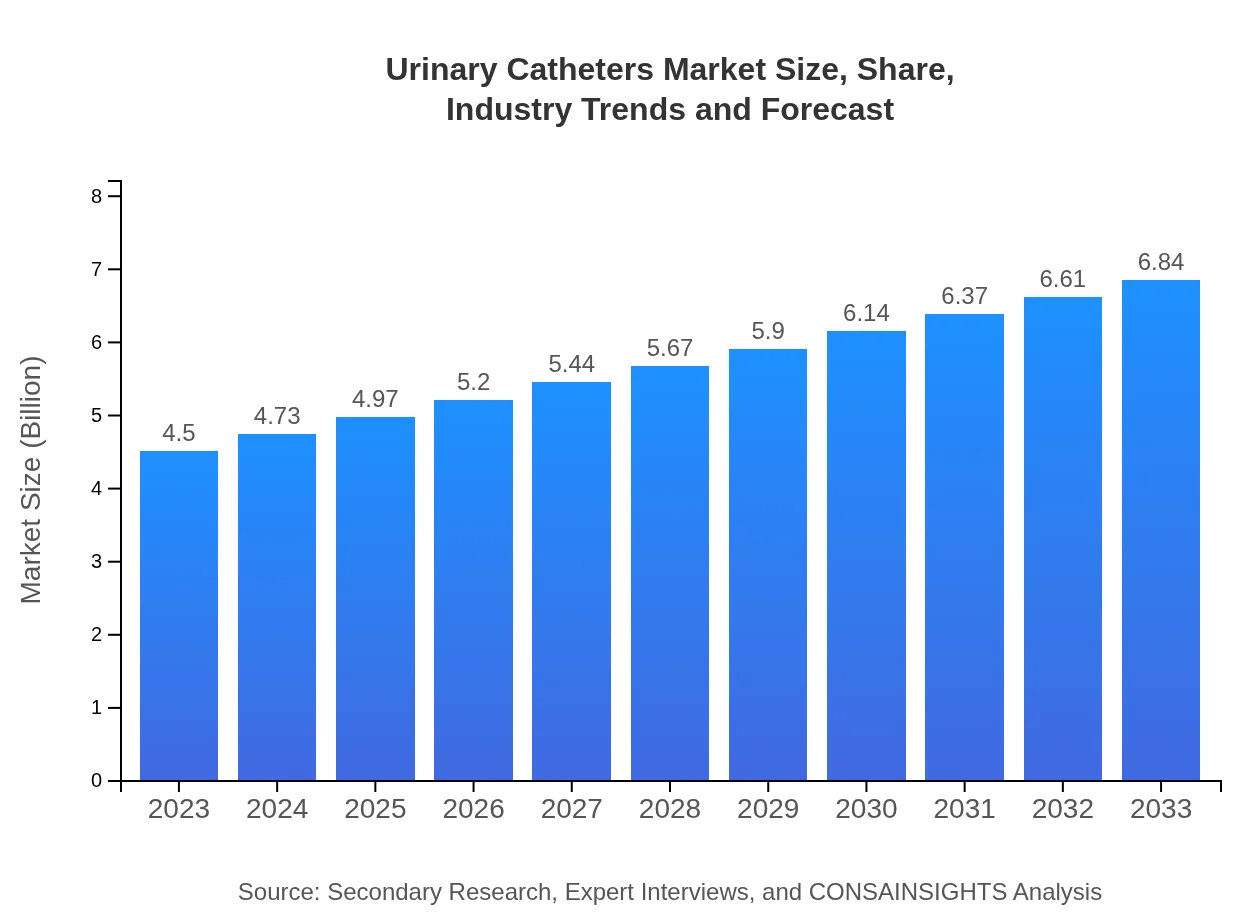
Urinary Catheters Market — USD $4.5 Billion in 2023, Growing to USD 6.84null by 2033 at 4.2% CAGR
This report delves into the Urinary Catheters market from 2023 to 2033, providing crucial insights, market size data, growth forecasts, and detailed analysis of trends, technology, segmentation, and regional performance.
Key Takeaways
- Global market value increases from $4.50 Billion (2023) to $6.84 Billion (2033) at a 4.2% CAGR.
- North America is largest regional market, while no single fastest-growing region is stated because regional CAGR differences remain within 0.15 percentage points.
- North America is the largest region, expanding from $1.71 Billion to $2.6 Billion between 2023 and 2033.
- Europe grows from $1.23 Billion in 2023 to $1.87 Billion in 2033, reflecting strong demand in clinical settings.
- Asia Pacific climbs from $0.88 Billion to $1.33 Billion over the forecast period, driven by rising healthcare access and aging populations.
- Product and end-user shifts emphasize disposable and biocompatible devices, with hospitals and homecare settings as primary demand centers.
Urinary Catheters Market Report — Executive Summary
North America remains largest market by forecast-period value, while no single fastest-growing region is stated because top regional growth rates are separated by less than 0.15 percentage points. The urinary catheters market is projected to grow from $4.50 Billion in 2023 to $6.84 Billion by 2033, reflecting a 4.2% CAGR during 2023 to 2033. Growth is underpinned by demographic trends, increased incidence of urinary conditions, and innovation in catheter materials and designs that prioritize safety and ease of use. Regional demand patterns show North America as the largest market, supported by established clinical infrastructure and high adoption of advanced products. Europe and Asia Pacific present sizeable opportunities as healthcare access expands and infection-control priorities rise. Key segments include intermittent, indwelling, and external catheters across hospitals, nursing homes, and homecare settings. Leading firms such as C.R. Bard, Inc., Coloplast A/S, Boston Scientific Corporation, Medtronic PLC, and Teleflex Incorporated are active in product development and distribution. The market faces regulatory and training challenges, while trends toward disposable, biocompatible options and remote-care integration are shaping future adoption and procurement strategies.
Key Growth Drivers
- Aging populations and higher prevalence of urinary disorders increasing clinical and homecare demand.
- Shift toward disposable and biocompatible materials driven by infection prevention priorities.
- Advances in catheter design and materials improving patient comfort and reducing complication rates.
- Wider adoption in hospital and homecare settings as care models evolve toward outpatient and home-based management.
- Ongoing investment by major manufacturers in product innovation and distribution reach.
| Metric | Value |
|---|---|
| Study Period | 2023 - 2033 |
| 2023 Market Size | $4.50 Billion |
| CAGR (2023-2033) | 4.2% |
| 2033 Market Size | $6.84 Billion |
| Top Companies | C.R. Bard, Inc., Coloplast A/S, Boston Scientific Corporation, Medtronic PLC, Teleflex Incorporated |
| Published Date | 10 October 2024 |
| Last Modified Date | 28 May 2026 |
Urinary Catheters Market Overview
Customize Urinary Catheters Market Report market research report
- ✔ Get in-depth analysis of Urinary Catheters market size, growth, and forecasts.
- ✔ Understand Urinary Catheters's regional dynamics and industry-specific trends.
- ✔ Identify potential applications, end-user demand, and growth segments in Urinary Catheters
What is the Market Size & CAGR of Urinary Catheters Market Report market in 2023?
Urinary Catheters Industry Analysis
Urinary Catheters Market Segmentation and Scope
Tell us your focus area and get a customized research report.
Urinary Catheters Market Report Market Analysis Report by Region
Europe Urinary Catheters Market Report:
Europe grows from $1.23 Billion in 2023 to $1.87 Billion in 2033. Healthcare modernization, regulatory emphasis on patient safety, and rising use of disposable and biocompatible catheters are key contributors to regional growth.Asia Pacific Urinary Catheters Market Report:
Asia Pacific grows from $0.88 Billion in 2023 to $1.33 Billion in 2033. Improved healthcare access, demographic shifts toward older populations, and growing adoption of modern catheter technologies drive expansion in this region.North America Urinary Catheters Market Report:
North America is largest regional market, rising from $1.71 Billion in 2023 to $2.6 Billion in 2033. Established hospital infrastructure, early adoption of advanced devices, and emphasis on infection-control protocols support sustained demand and product uptake.South America Urinary Catheters Market Report:
Latin America grows from $0.15 Billion in 2023 to $0.22 Billion in 2033. Incremental improvements in healthcare infrastructure, along with growing attention to infection prevention, underpin modest market increases.Middle East & Africa Urinary Catheters Market Report:
Middle East and Africa grows from $0.54 Billion in 2023 to $0.82 Billion in 2033. Investments in clinical services, a focus on safer device options, and expanding hospital capacity contribute to regional market gains.Tell us your focus area and get a customized research report.
Research Methodology
Urinary Catheters Market Analysis By Product
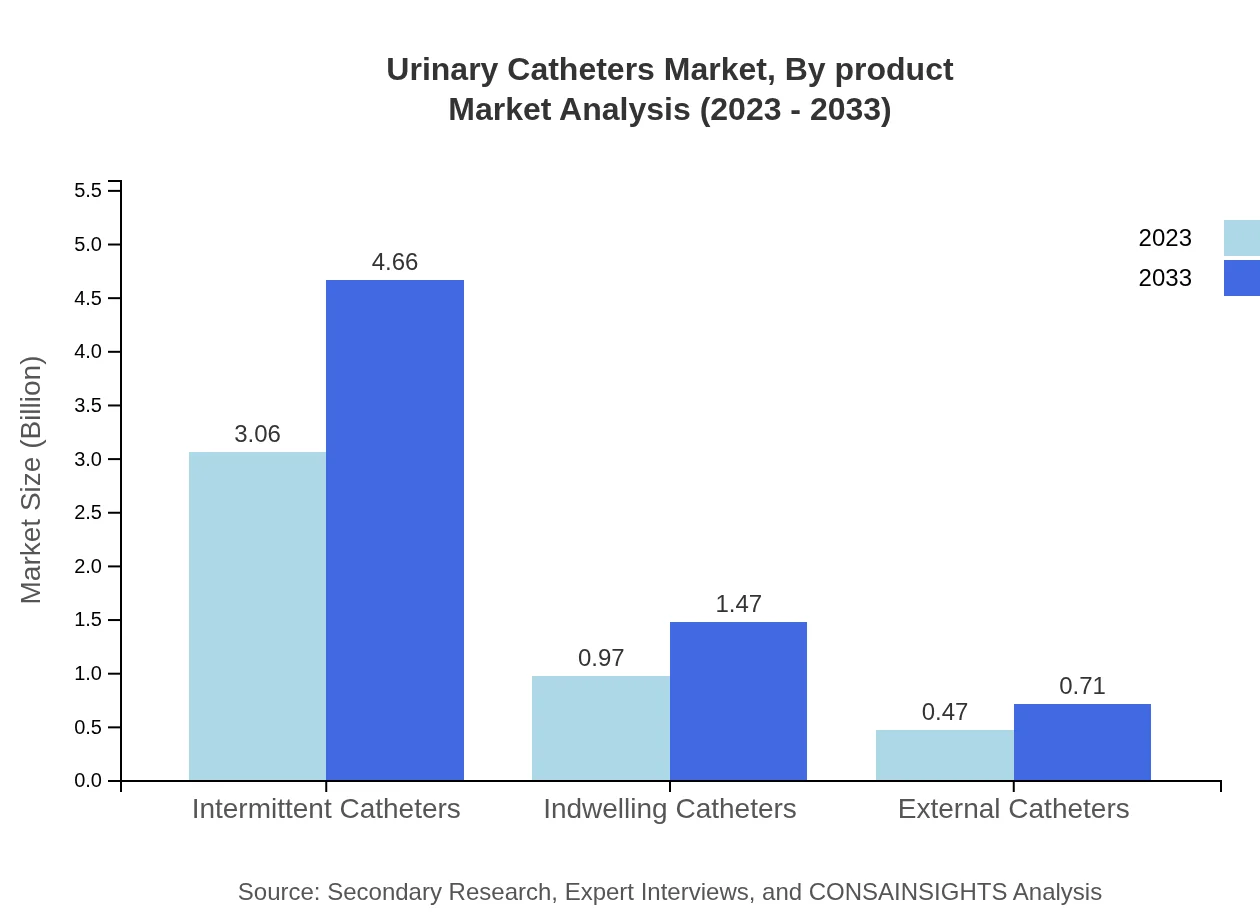
The Urinary Catheters market by product shows significant differentiation. Intermittent Catheters dominate the market with a size of $3.06 billion in 2023, expanding to $4.66 billion by 2033, capturing 68.1% of the market share due to their ease of use and lower infection rates. Indwelling Catheters, valued at $0.97 billion in 2023, will grow to $1.47 billion, holding a 21.5% share, reflecting their necessity for patients with long-term needs. External Catheters hold the remaining market share.
Urinary Catheters Market Analysis By Material
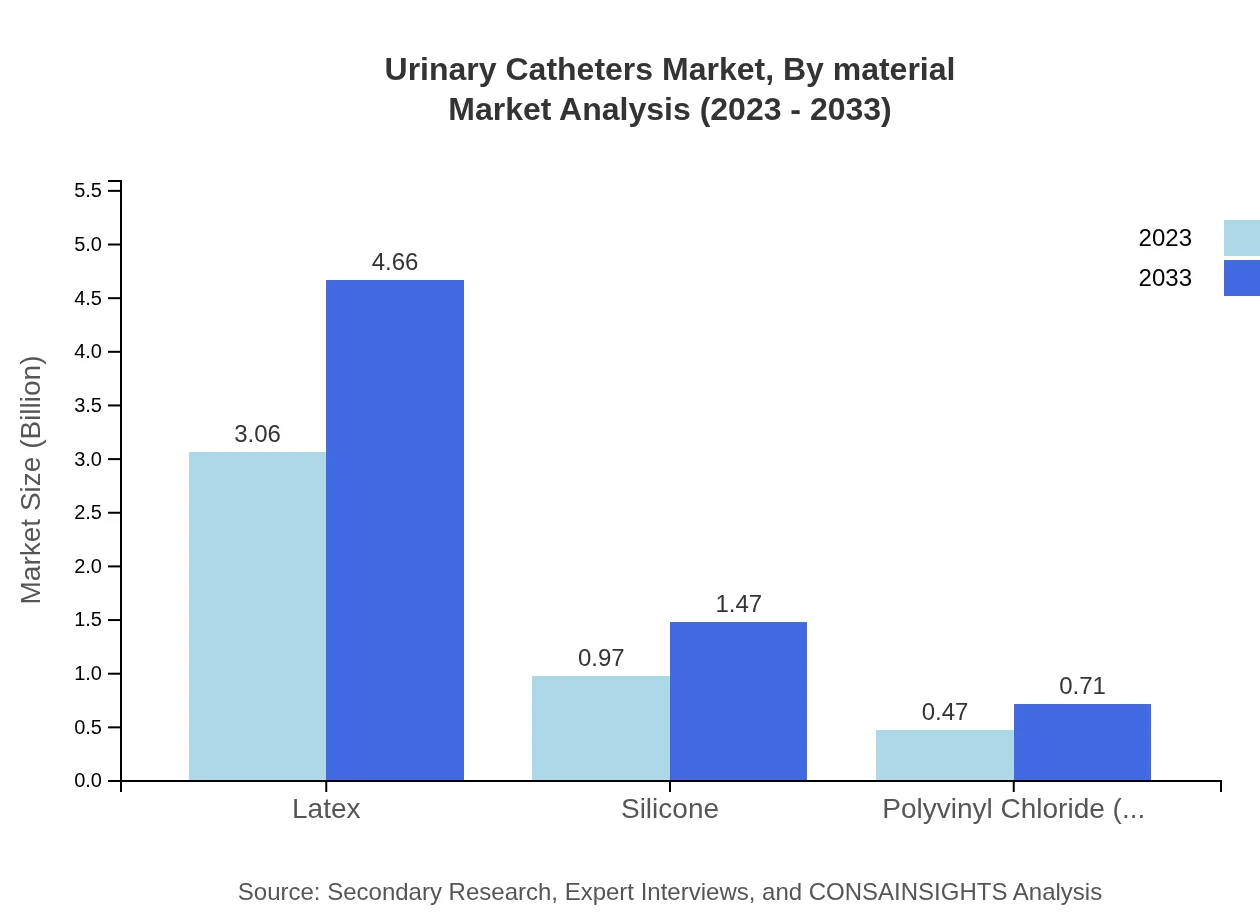
In terms of material, Latex catheters represent the largest segment, valued at $3.06 billion in 2023 and expected to grow to $4.66 billion by 2033, maintaining a 68.1% market share. Silicone and PVC catheters, with respective shares of 21.5% and 10.4%, are projected to see stable growth, driven by their biocompatibility and reduced allergic reactions.
Urinary Catheters Market Analysis By End User
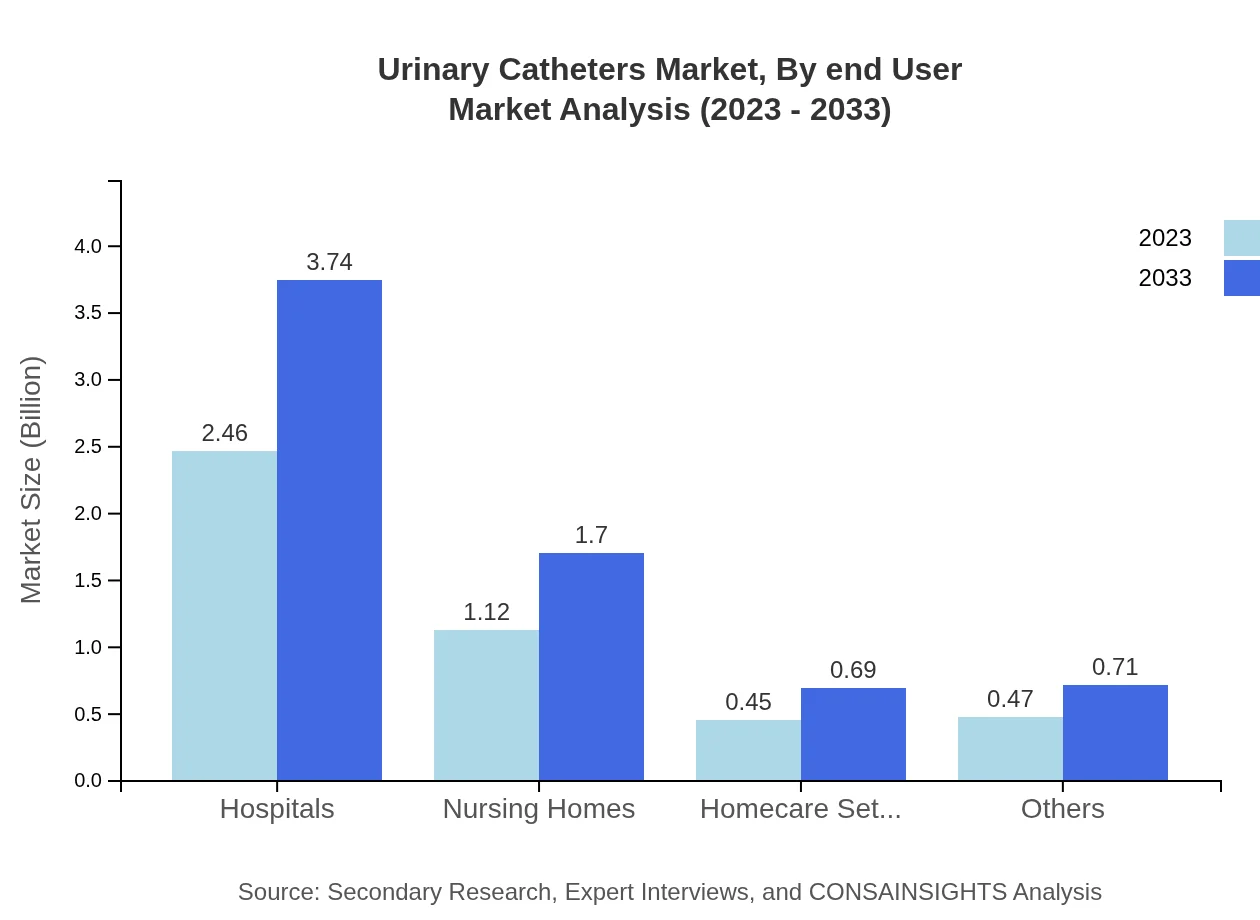
Hospitals are the largest end-user segment, with a market size of $2.46 billion in 2023, expanding to $3.74 billion by 2033, capturing 54.67% of the market due to high catheter utilization rates in acute care settings. Nursing homes follow with $1.12 billion in 2023, growing to $1.70 billion, and homecare settings are gaining significance, projected to rise steadily as outpatient care expands.
Urinary Catheters Market Analysis By Application
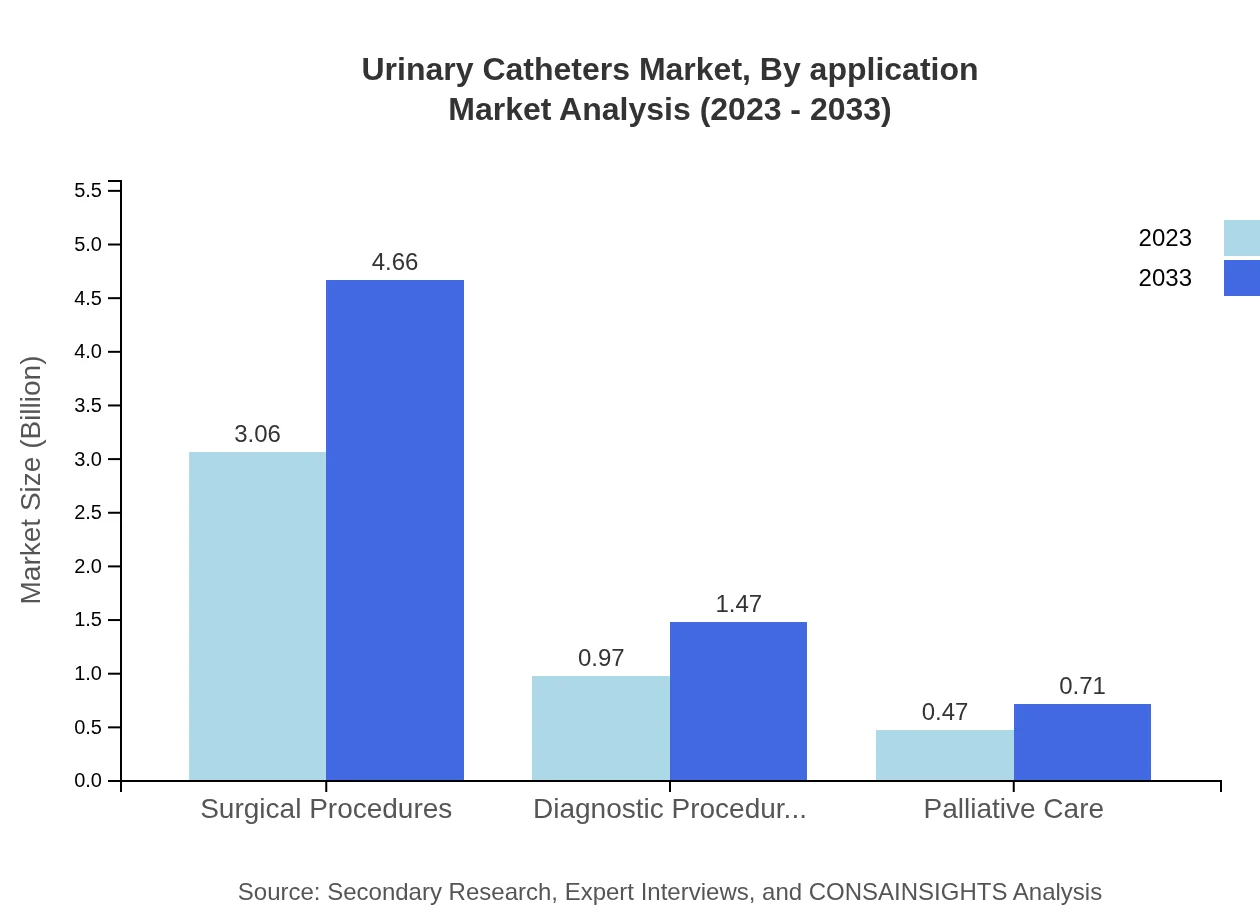
The application segment is led by surgical procedures, which account for a market size of $3.06 billion in 2023, and is expected to rise to $4.66 billion. Diagnostic procedures capture 21.5% market share, with a growing focus on minimal invasive techniques driving demand for catheters during diagnostics.
Urinary Catheters Market Analysis By Distribution Channel
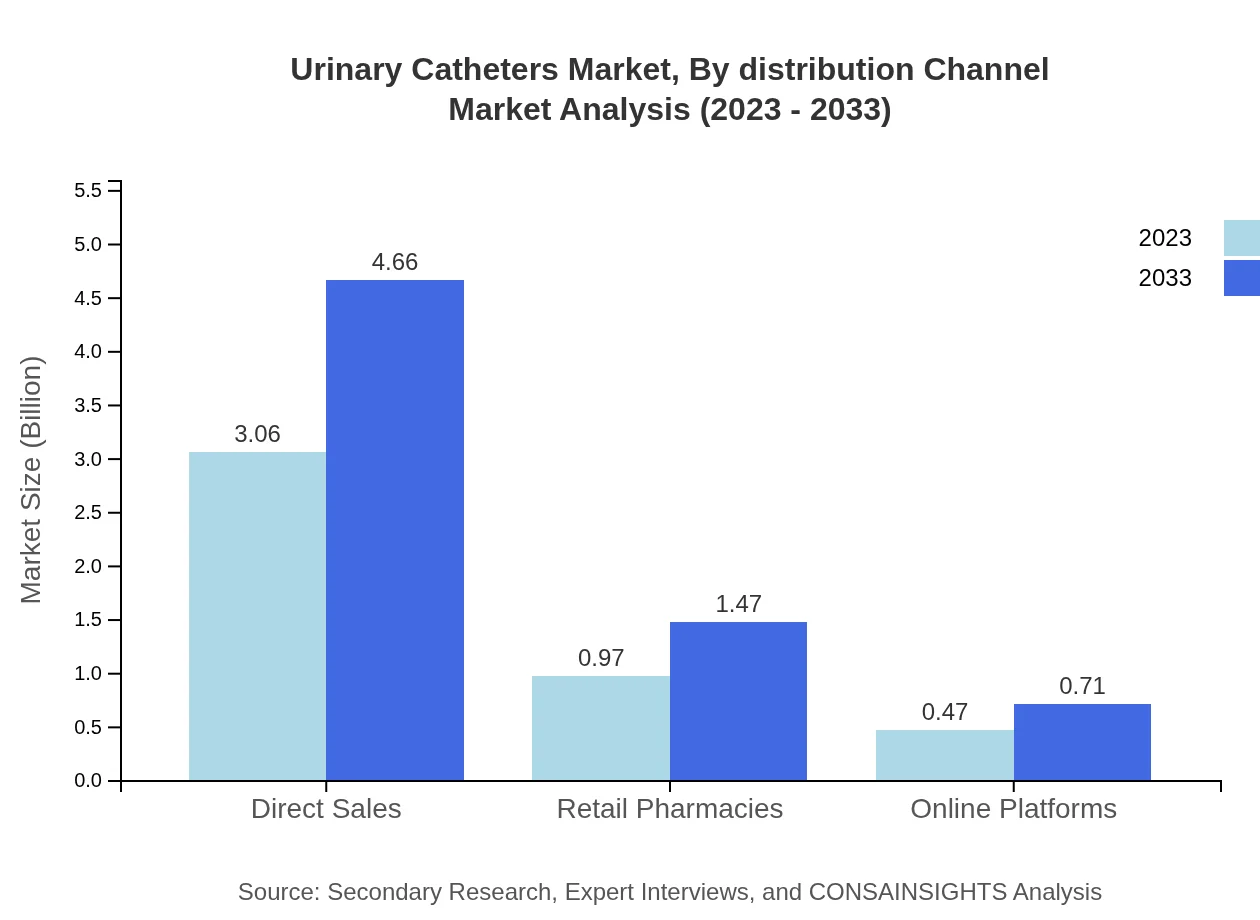
Direct sales lead the distribution channels with a market size of $3.06 billion in 2023 and a share of 68.1%, enhancing distributor partnerships for effective inventory and supply. Retail pharmacies and online platforms are vital channels, contributing significantly as e-commerce continues to expand.
Urinary Catheters Market Trends and Future Forecast
Tell us your focus area and get a customized research report.
Global Market Leaders and Top Companies in Urinary Catheters Industry
C.R. Bard, Inc.:
A leader in catheter innovation, C.R. Bard specializes in advanced urological systems, providing a comprehensive portfolio of urinary catheters designed for safety and patient comfort.Coloplast A/S:
Coloplast is at the forefront of urinary care, known for its user-friendly products and educational resources that enhance patient experiences and outcomes.Boston Scientific Corporation:
Boston Scientific focuses on developing groundbreaking catheter technologies, ensuring enhanced performance and reliability in diverse healthcare environments.Medtronic PLC:
Medtronic offers a range of urological products, dedicated to providing innovative solutions that improve the lives of patients through meticulous product design.Teleflex Incorporated:
Teleflex specializes in critical care medical devices, providing innovative urinary catheters along with integrated solutions aimed at optimizing catheter management.We're grateful to work with incredible clients.









FAQs
What is the market size of the urinary catheters market in 2023?
The market size for urinary catheters in 2023 is $4.50 Billion, as specified in the report data.
How big will the urinary catheters market be in 2033?
By 2033 the market is projected to reach $6.84 Billion according to the provided forecast figures.
What is CAGR for the forecast period?
The market is expected to grow at a compound annual growth rate (CAGR) of 4.2% during 2023 to 2033.
Is there a single fastest Growing region in the Urinary Catheters Market Report market?
No single fastest-growing region is stated for the Urinary Catheters Market Report market because the top regional implied CAGR values are within 0.15 percentage points of each other, making the ranking too close to call reliably.
Which companies lead the urinary catheters market?
Top companies listed include C.R. Bard, Inc., Coloplast A/S, Boston Scientific Corporation, Medtronic PLC, and Teleflex Incorporated.
What are common end users for catheters?
Primary end users include hospitals, nursing homes, and homecare settings, which drive clinical and at-home catheter demand.
How do materials impact catheter adoption?
Materials such as latex, silicone, and PVC influence biocompatibility and comfort, affecting clinician and patient preference for specific applications.
What market trends are affecting growth?
Trends include a move to disposable devices, focus on infection control, biocompatible materials, and product innovations that simplify catheter use.