

Adhd Therapeutics Market Report
First published: 15 October 2024 | Last updated: 25 May 2026 | Report Code: adhd-therapeutics
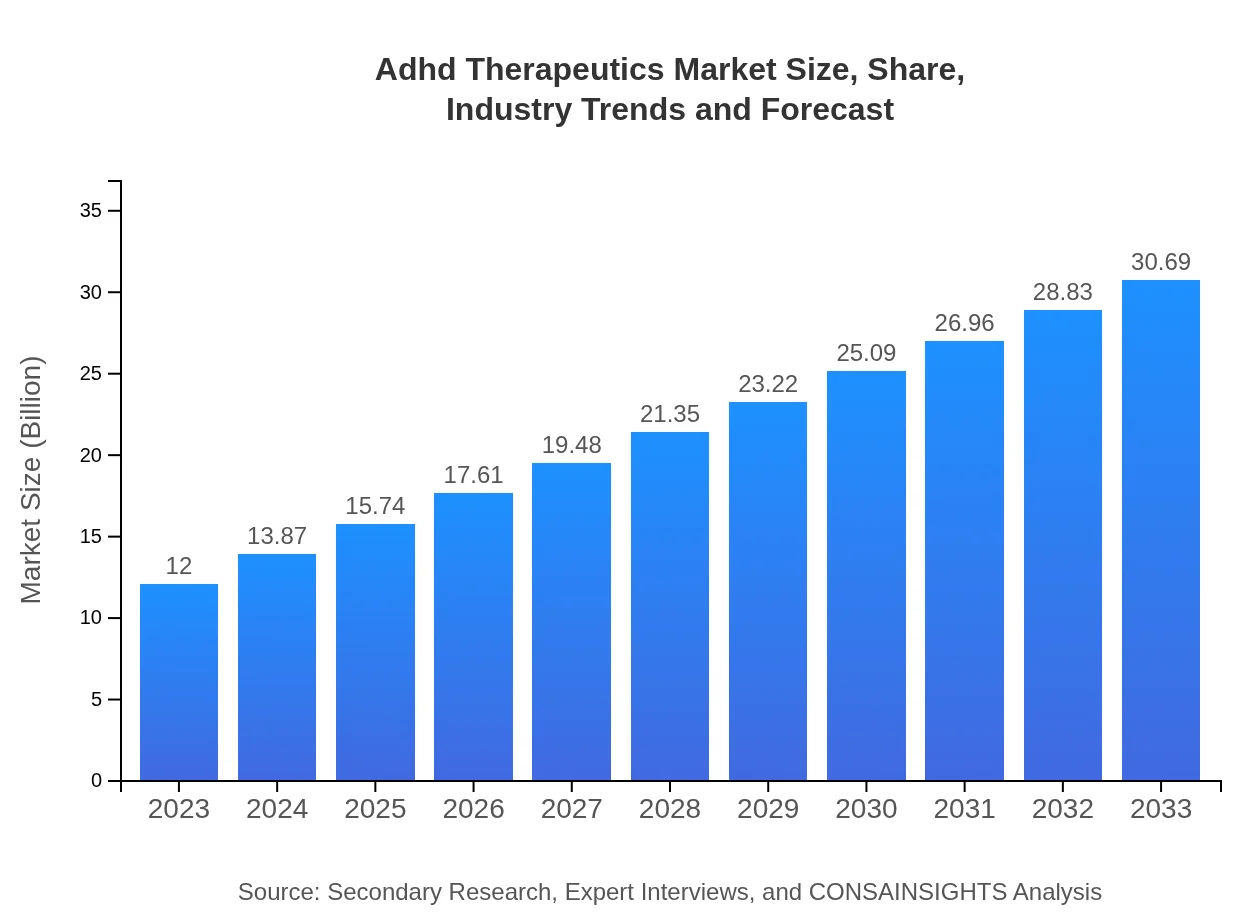
Adhd Therapeutics Market — USD $12 Billion in 2023, Growing to USD 30.69null by 2033 at 9.5% CAGR
This market report provides an in-depth analysis of the ADHD therapeutics landscape, detailing its current conditions, market size, regional insights, and key players. The report forecasts trends and growth opportunities in the ADHD therapeutics market from 2023 to 2033.
Key Takeaways
- Global market expands from $12.00 Billion in 2023 to $30.69 Billion in 2033 with a 9.5% CAGR over 2023 to 2033.
- North America is largest regional market, while no single fastest-growing region is stated because regional CAGR differences remain within 0.15 percentage points.
- Europe and Asia Pacific show substantial increases: Europe from $3.75 Billion to $9.59 Billion, Asia Pacific from $2.22 Billion to $5.68 Billion.
- Market segmentation highlights stimulants and non-stimulants across age groups and routes of administration.
- Leading companies include Johnson & Johnson, Shire (part of Takeda), and Novartis, reflecting strong pharmaceutical participation.
Adhd Therapeutics Market Report — Executive Summary
North America remains largest market by forecast-period value, while no single fastest-growing region is stated because top regional growth rates are separated by less than 0.15 percentage points. The Adhd Therapeutics Market Report outlines a decade-long expansion driven by rising diagnosis rates, greater awareness, and innovations in drug formulations and delivery. Market size grows from $12.00 Billion in 2023 to $30.69 Billion in 2033 at a 9.5% CAGR during 2023 to 2033. North America remains the largest regional market, supported by established healthcare infrastructure and high adoption of advanced treatments. Product segmentation covers stimulants and non-stimulants, varied indications, patient age groups and administration routes. Key trends include personalized treatment approaches, improved formulations and the growing role of telemedicine in patient management. Major pharmaceutical firms—Johnson & Johnson, Shire (part of Takeda) and Novartis—are active in development and commercialization. The report evaluates regulatory environments, access challenges, and opportunities for formulation and delivery innovation across regions.
Key Growth Drivers
- Increased awareness and diagnosis of ADHD leading to broader patient identification and treatment initiation.
- Advances in medication formulations and delivery methods improving efficacy and patient adherence.
- Expansion of telehealth and remote care options facilitating access to assessment and ongoing treatment.
- Regulatory frameworks and clinical research supporting development and approval of new therapeutic options.
- Pharmaceutical investment from established firms driving pipeline development and commercial availability.
| Metric | Value |
|---|---|
| Study Period | 2023 - 2033 |
| 2023 Market Size | $12.00 Billion |
| CAGR (2023-2033) | 9.5% |
| 2033 Market Size | $30.69 Billion |
| Top Companies | Johnson & Johnson, Shire (part of Takeda), Novartis |
| Published Date | 15 October 2024 |
| Last Modified Date | 25 May 2026 |
ADHD Therapeutics Market Overview
Customize Adhd Therapeutics Market Report market research report
- ✔ Get in-depth analysis of Adhd Therapeutics market size, growth, and forecasts.
- ✔ Understand Adhd Therapeutics's regional dynamics and industry-specific trends.
- ✔ Identify potential applications, end-user demand, and growth segments in Adhd Therapeutics
What is the Market Size & CAGR of Adhd Therapeutics Market Report market in 2023?
ADHD Therapeutics Industry Analysis
ADHD Therapeutics Market Segmentation and Scope
Tell us your focus area and get a customized research report.
Adhd Therapeutics Market Report Market Analysis Report by Region
Europe Adhd Therapeutics Market Report:
Europe grows from $3.75 Billion in 2023 to $9.59 Billion in 2033. Regional drivers include growing clinical awareness, regulatory frameworks supporting therapeutic development, and demand for improved formulations and personalized treatment approaches.Asia Pacific Adhd Therapeutics Market Report:
Asia Pacific grows from $2.22 Billion in 2023 to $5.68 Billion in 2033. Expansion reflects increasing diagnosis rates, broader access to care, and adoption of novel delivery systems and telehealth services that improve treatment reach.North America Adhd Therapeutics Market Report:
North America is largest regional market, rising from $4.47 Billion in 2023 to $11.44 Billion in 2033. Growth is supported by established healthcare systems, high treatment uptake, technological adoption in care delivery, and active participation by major pharmaceutical firms.South America Adhd Therapeutics Market Report:
Latin America grows from $0.11 Billion in 2023 to $0.28 Billion in 2033. Market advancement is driven by improving awareness, gradual increases in diagnosis and access to approved therapies, and growing interest in tailored treatment options.Middle East & Africa Adhd Therapeutics Market Report:
Middle East and Africa grows from $1.45 Billion in 2023 to $3.7 Billion in 2033. Growth stems from rising awareness, expanding healthcare infrastructure, and greater availability of therapeutics adapted to regional needs.Tell us your focus area and get a customized research report.
Research Methodology
Adhd Therapeutics Market Analysis By Drug Type
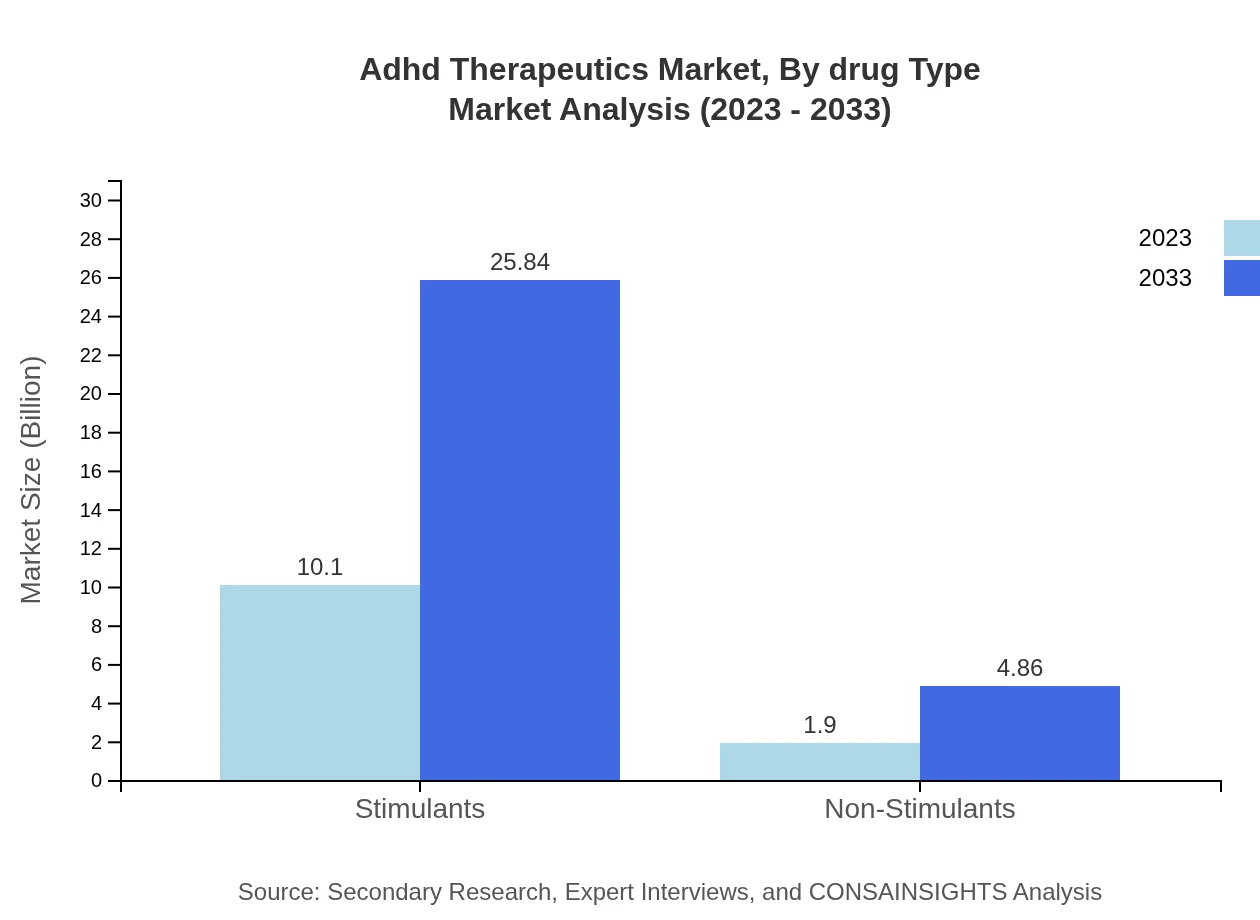
The market is dominated by stimulants, which account for a market size of $10.10 billion in 2023 and is expected to increase to $25.84 billion by 2033. They are preferred for their efficacy and rapid action. Non-stimulant drugs have also gained traction, primarily focusing on long-term management with a projected increase from $1.90 billion in 2023 to $4.86 billion in 2033.
Adhd Therapeutics Market Analysis By Indication
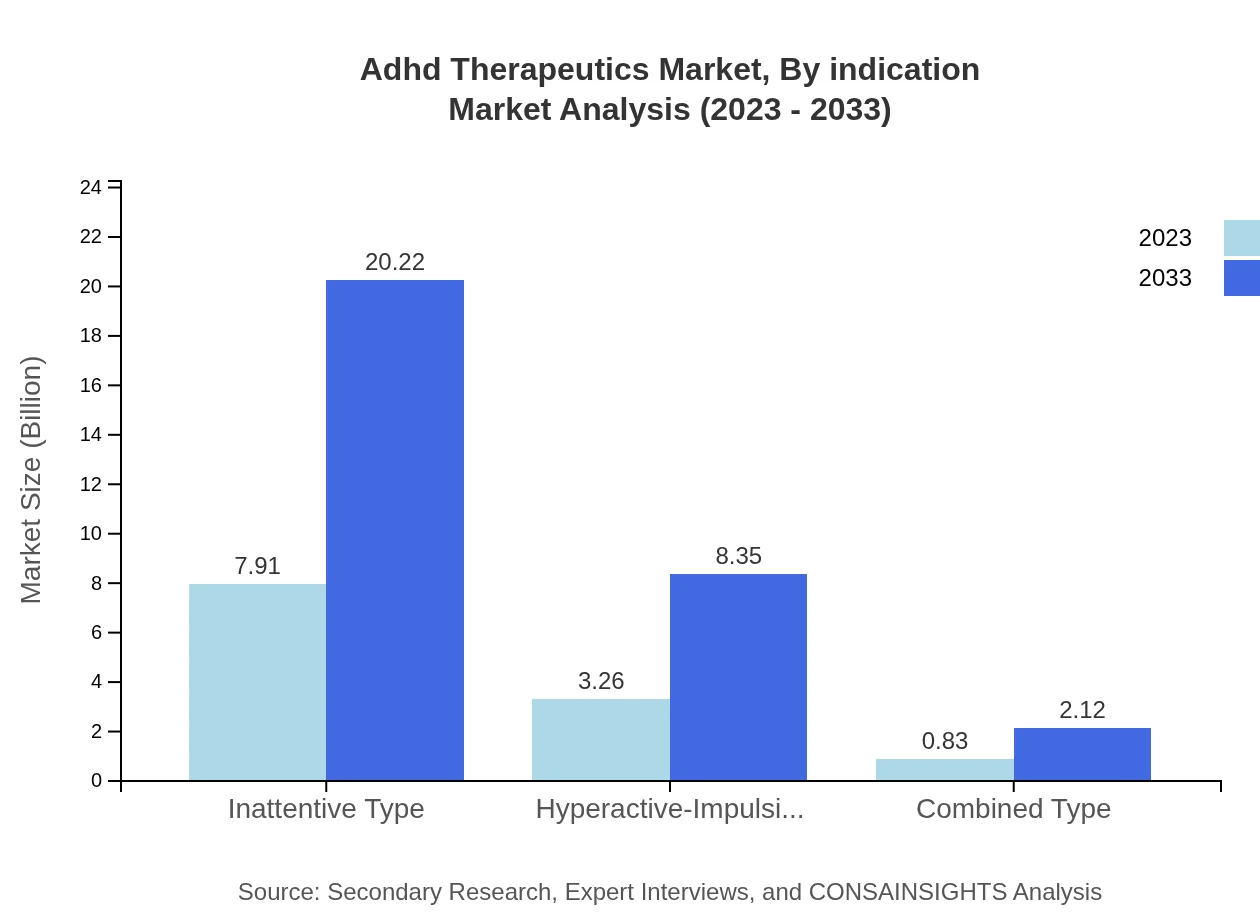
The inattentive type dominates with a market share of 65.88% in 2023, poised to grow its size from $7.91 billion to $20.22 billion by 2033. The hyperactive-impulsive type holds 27.2% of the market, while the combined type represents 6.92%. The focus is shifting towards understanding various ADHD presentations for better-tailored therapies.
Adhd Therapeutics Market Analysis By Patient Age
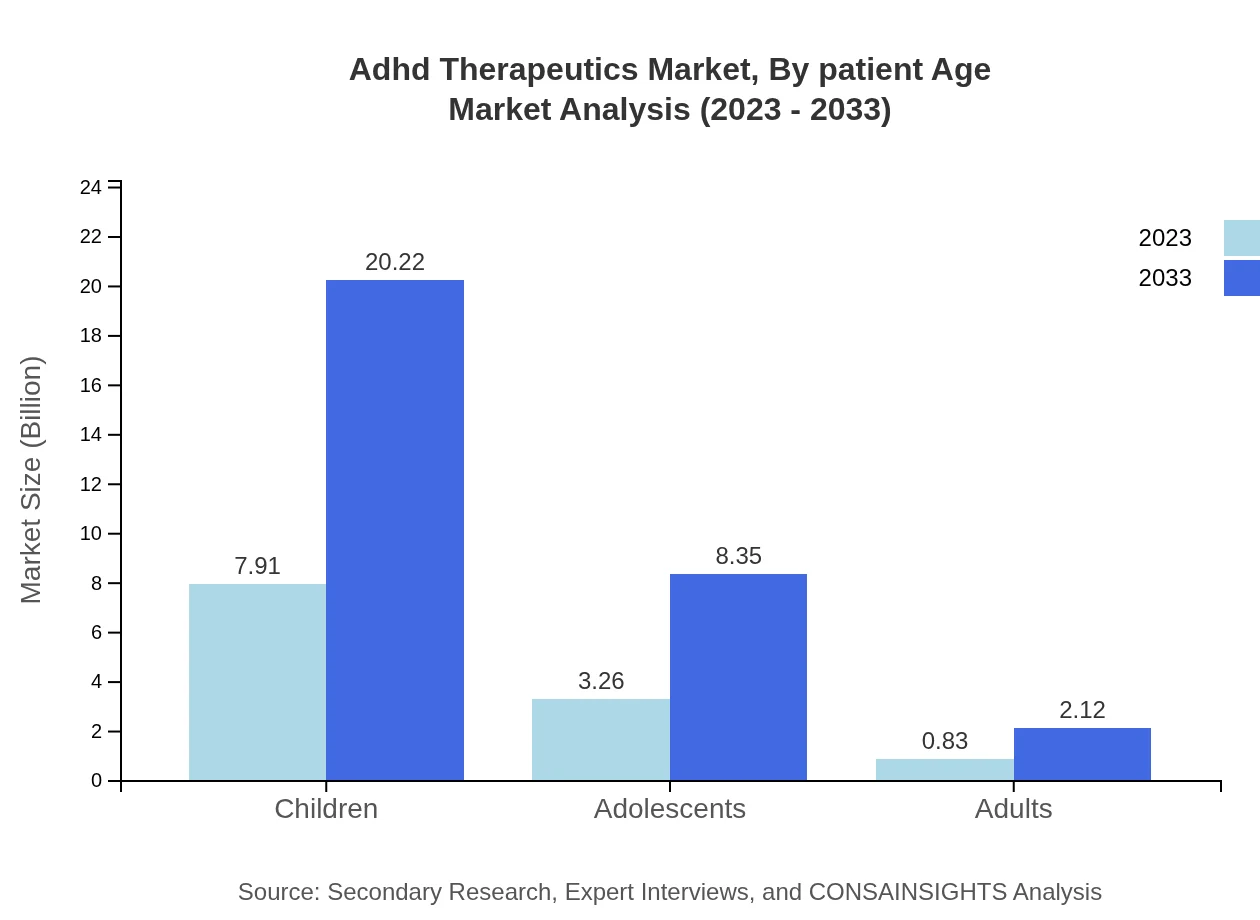
In 2023, children (65.88% share) will generate $7.91 billion, followed by adolescents (27.2% share) with $3.26 billion. Adult treatment is emerging, but only represents 6.92% of the market in 2023. The trends indicate an increasing focus on adults as awareness of ADHD in adulthood rises.
Adhd Therapeutics Market Analysis By Route Administration
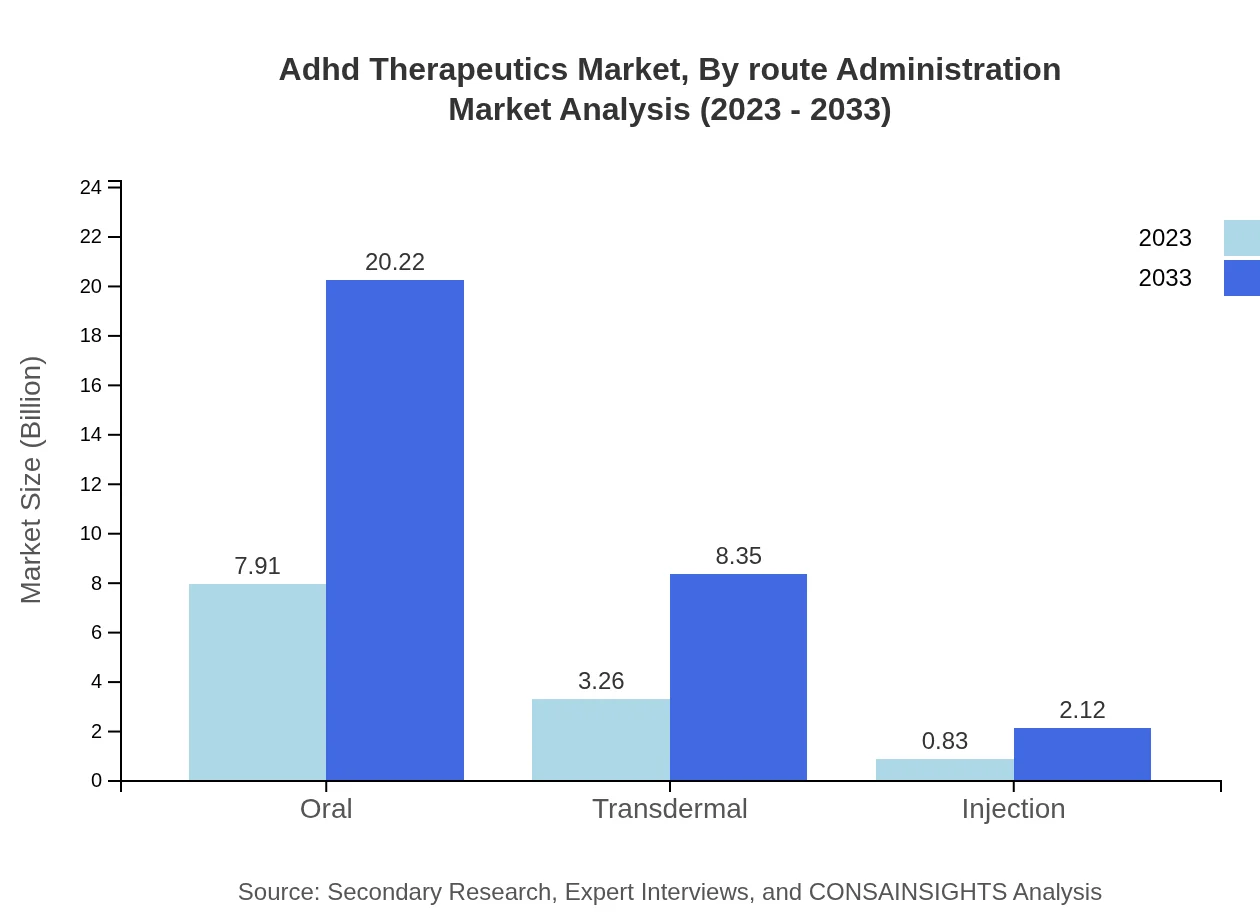
Oral administration remains the most common route, generating $7.91 billion in 2023 with consistent growth expected. Transdermal methods are gaining traction, moving from $3.26 billion to reflect a growing preference for non-invasive methods. Injection routes, while less common, are projected to grow alongside advancements in delivery technologies.
ADHD Therapeutics Market Trends and Future Forecast
Tell us your focus area and get a customized research report.
Global Market Leaders and Top Companies in ADHD Therapeutics Industry
Johnson & Johnson:
A global leader in pharmaceuticals, Johnson & Johnson offers a range of ADHD treatments including stimulants and non-stimulant options, focusing on innovative solutions and patient engagement.Shire (part of Takeda):
Known for its innovative approach to ADHD drugs, Shire specializes in developing stimulant medications and plays a crucial role in research and education related to ADHD.Novartis:
Novartis is a pioneer in CNS therapeutics, producing various medications for ADHD while emphasizing extensive research and market reach.We're grateful to work with incredible clients.









FAQs
What is the market size in 2023?
The market size in 2023 is $12.00 Billion as stated in the report data, representing the baseline for the 2023 to 2033 forecast period.
What is the projected market size in 2033?
The projected market size in 2033 is $30.69 Billion according to the provided forecast figures for the 2023 to 2033 period.
What is CAGR for the forecast period?
The CAGR for the 2023 to 2033 forecast period is 9.5%, as specified in the input dataset for the market projection.
Which region is the largest?
North America is identified as the largest regional market, rising from $4.47 Billion in 2023 to $11.44 Billion in 2033.
How big is the Europe market?
Europe is reported to increase from $3.75 Billion in 2023 to $9.59 Billion in 2033 based on the regional figures supplied.
How big is the Asia Pacific market?
Asia Pacific grows from $2.22 Billion in 2023 to $5.68 Billion in 2033 according to the region-specific values in the data.
Who are the top companies in this market?
Top companies listed in the report include Johnson & Johnson, Shire (part of Takeda), and Novartis, reflecting major pharmaceutical participation.
Is there a single fastest Growing region in the Adhd Therapeutics Market Report market?
No single fastest-growing region is stated for the Adhd Therapeutics Market Report market because the top regional implied CAGR values are within 0.15 percentage points of each other, making the ranking too close to call reliably.