

Allergy Treatment Market Report
First published: 11 October 2024 | Last updated: 25 May 2026 | Report Code: allergy-treatment
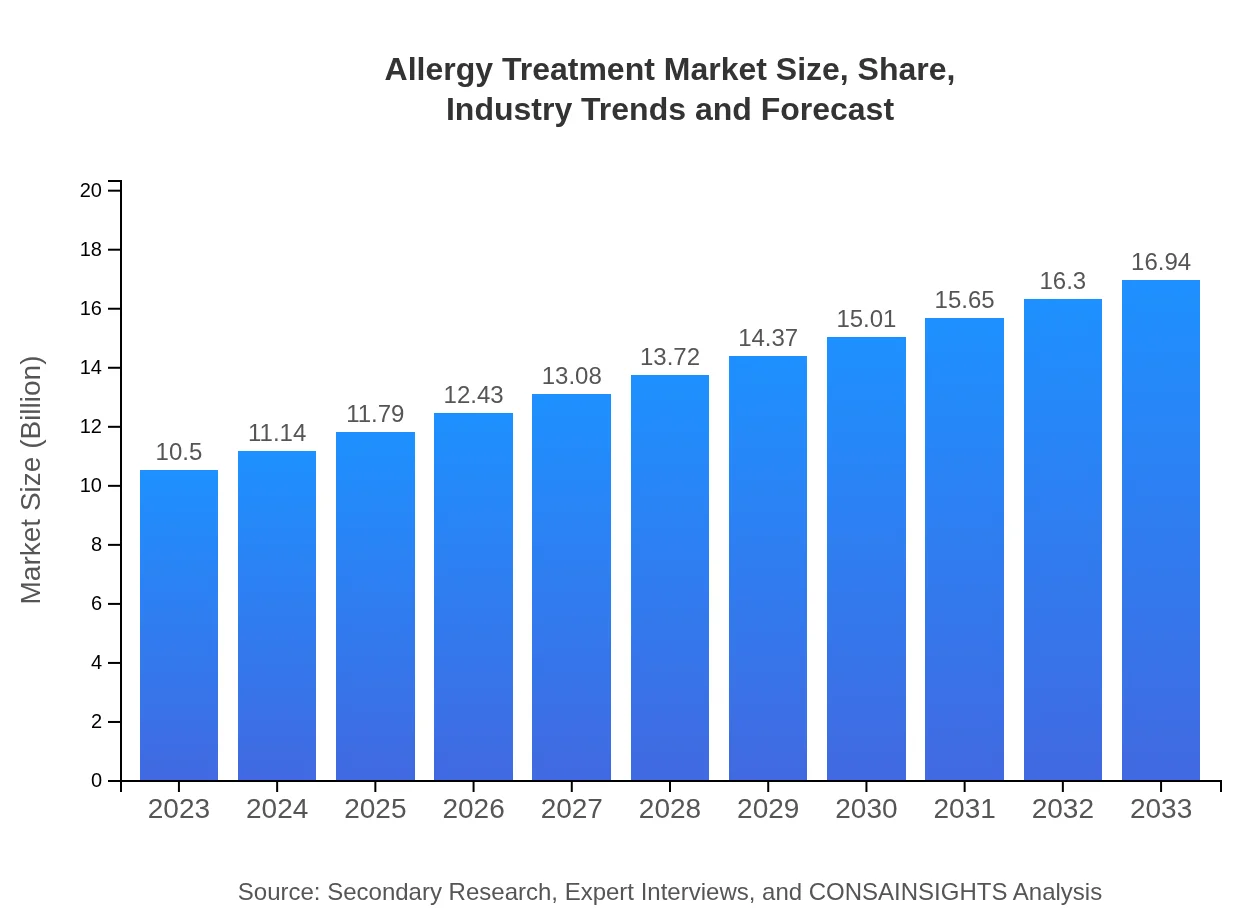
Allergy Treatment Market — USD 10.5 billion in 2023, Growing to USD 16.94B by 2033 at 4.8% CAGR
This report provides a comprehensive analysis of the Allergy Treatment market, delving into current trends, segment performance, and regional insights. Covering the forecast period from 2023 to 2033, we present an in-depth examination of market size, growth potential, and key players in the industry.
Key Takeaways
- Global market expands from $10.50 Billion in 2023 to $16.94 Billion in 2033 at a 4.8% CAGR.
- North America is largest regional market, while no single fastest-growing region is stated because regional CAGR differences remain within 0.15 percentage points.
- Europe grows from $2.76 Billion in 2023 to $4.45 Billion in 2033, reflecting steady demand for allergy therapies.
- Asia Pacific rises from $2.2 Billion to $3.54 Billion, driven by rising awareness and healthcare access.
- Key industry participants include Allergen Inc., Novartis, GlaxoSmithKline, Sanofi, and Aimmune Therapeutics.
Allergy Treatment Market Report — Executive Summary
North America remains largest market by forecast-period value, while no single fastest-growing region is stated because top regional growth rates are separated by less than 0.15 percentage points. The Allergy Treatment market is projected to grow from $10.50 Billion in 2023 to $16.94 Billion by 2033 at a 4.8% CAGR. Growth is supported by expanded diagnosis, increased allergy prevalence, and innovation in therapeutic approaches such as immunotherapy and biologics. Market structure spans treatment types, allergen categories, distribution channels, and demographic segments, with immunotherapy and symptomatic care central to demand. Regional variations reflect differing healthcare access, regulatory environments, and consumer awareness. Leading companies named in the market include Allergen Inc., Novartis, GlaxoSmithKline, Sanofi, and Aimmune Therapeutics. Ongoing R&D, adaptive distribution strategies, and patient-centric care models are expected to shape product launches and commercialization efforts through 2033.
Key Growth Drivers
- Rising diagnosis rates and broader screening are increasing patient identification and treatment initiation.
- Advances in targeted therapies and immunotherapies are expanding clinical options and improving outcomes.
- Greater patient awareness and education are boosting treatment adherence and demand for symptomatic care.
- Expansion of healthcare infrastructure and access in multiple regions supports treatment uptake.
- Investment by pharmaceutical companies in allergy-specific portfolios accelerates product development and availability.
| Metric | Value |
|---|---|
| Study Period | 2023 - 2033 |
| 2023 Market Size | $10.50 Billion |
| CAGR (2023-2033) | 4.8% |
| 2033 Market Size | $16.94 Billion |
| Top Companies | Allergen Inc., Novartis, GlaxoSmithKline, Sanofi, Aimmune Therapeutics |
| Published Date | 11 October 2024 |
| Last Modified Date | 25 May 2026 |
Allergy Treatment Market Overview
Customize Allergy Treatment Market Report market research report
- ✔ Get in-depth analysis of Allergy Treatment market size, growth, and forecasts.
- ✔ Understand Allergy Treatment's regional dynamics and industry-specific trends.
- ✔ Identify potential applications, end-user demand, and growth segments in Allergy Treatment
What is the Market Size & CAGR of Allergy Treatment Market Report market in 2023?
Allergy Treatment Industry Analysis
Allergy Treatment Market Segmentation and Scope
Tell us your focus area and get a customized research report.
Allergy Treatment Market Report Market Analysis Report by Region
Europe Allergy Treatment Market Report:
Europe grows from $2.76 Billion in 2023 to $4.45 Billion in 2033. 76 Billion in 2023 to $4.45 Billion in 2033, influenced by structured reimbursement policies, increasing adoption of advanced therapies, and expanded awareness of allergy management across healthcare systems.Asia Pacific Allergy Treatment Market Report:
Asia Pacific grows from $2.2 Billion in 2023 to $3.54 Billion in 2033. 2 Billion in 2023 to $3.54 Billion in 2033, supported by improving healthcare infrastructure, greater access to diagnosis and treatment, and rising public awareness of allergic conditions.North America Allergy Treatment Market Report:
North America is largest regional market, rising from $3.65 Billion in 2023 to $5.89 Billion in 2033. This expansion reflects established healthcare delivery, strong investment in allergy therapeutics, and high levels of diagnosis and treatment uptake.South America Allergy Treatment Market Report:
Latin America grows from $0.97 Billion in 2023 to $1.57 Billion in 2033. 97 Billion in 2023 to $1.57 Billion in 2033, with growth linked to increasing healthcare investment, broader availability of therapies, and growing recognition of allergy prevalence.Middle East & Africa Allergy Treatment Market Report:
Middle East and Africa grows from $0.92 Billion in 2023 to $1.48 Billion in 2033. 92 Billion in 2023 to $1.48 Billion in 2033, driven by gradual improvements in healthcare accessibility, targeted public health initiatives, and increasing treatment adoption.Tell us your focus area and get a customized research report.
Research Methodology
Allergy Treatment Market Analysis By Treatment Type
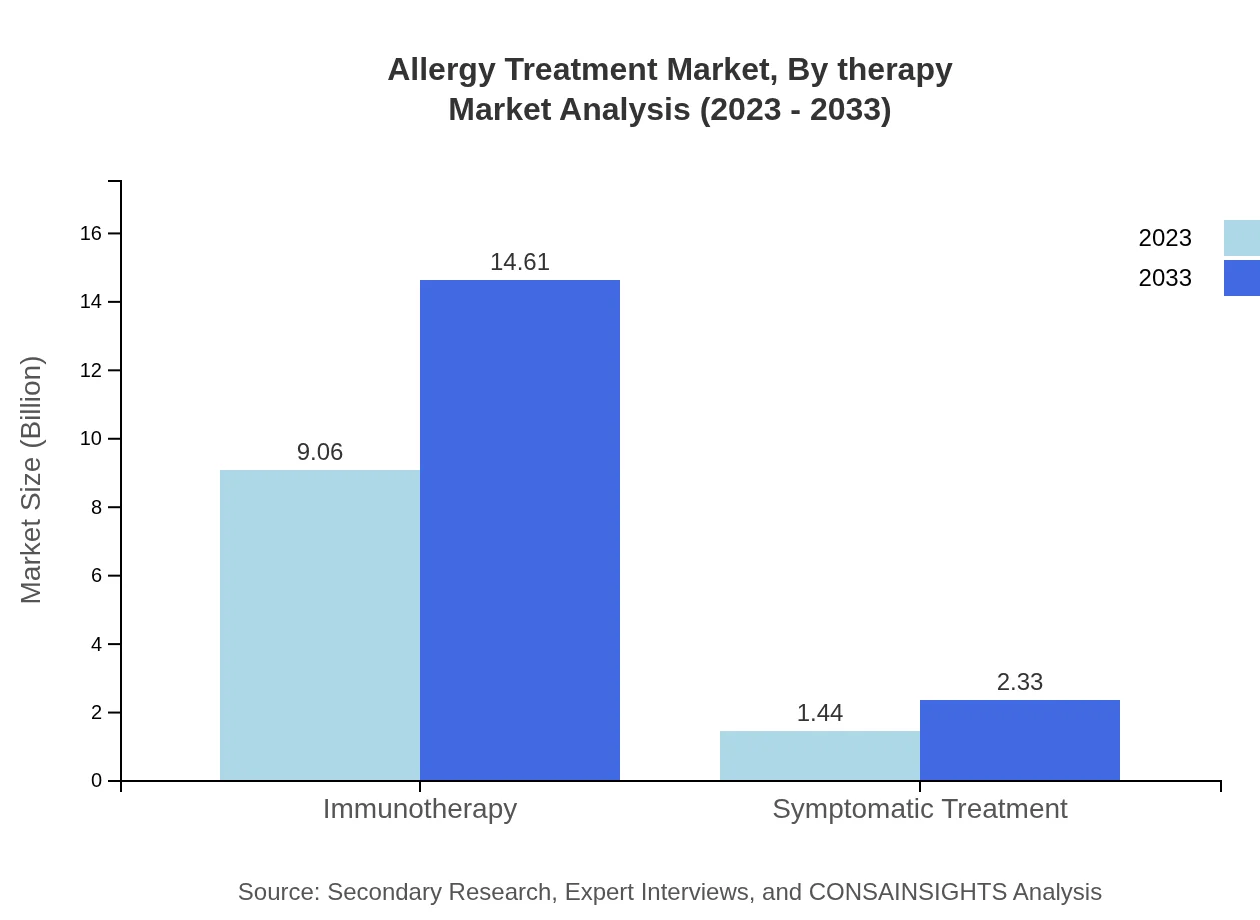
The Allergy Treatment Market is segmented into two primary treatment types: Immunotherapy and Symptomatic Treatment. Immunotherapy accounts for a significant portion of the market, with a valuation of approximately $9.06 billion in 2023 and expected to reach $14.61 billion by 2033, maintaining an 86.24% market share. Symptomatic treatments, while growing, contribute less to the overall market size, valued at $1.44 billion in 2023 and projected to reach $2.33 billion by 2033, with a 13.76% share.
Allergy Treatment Market Analysis By Allergen Type
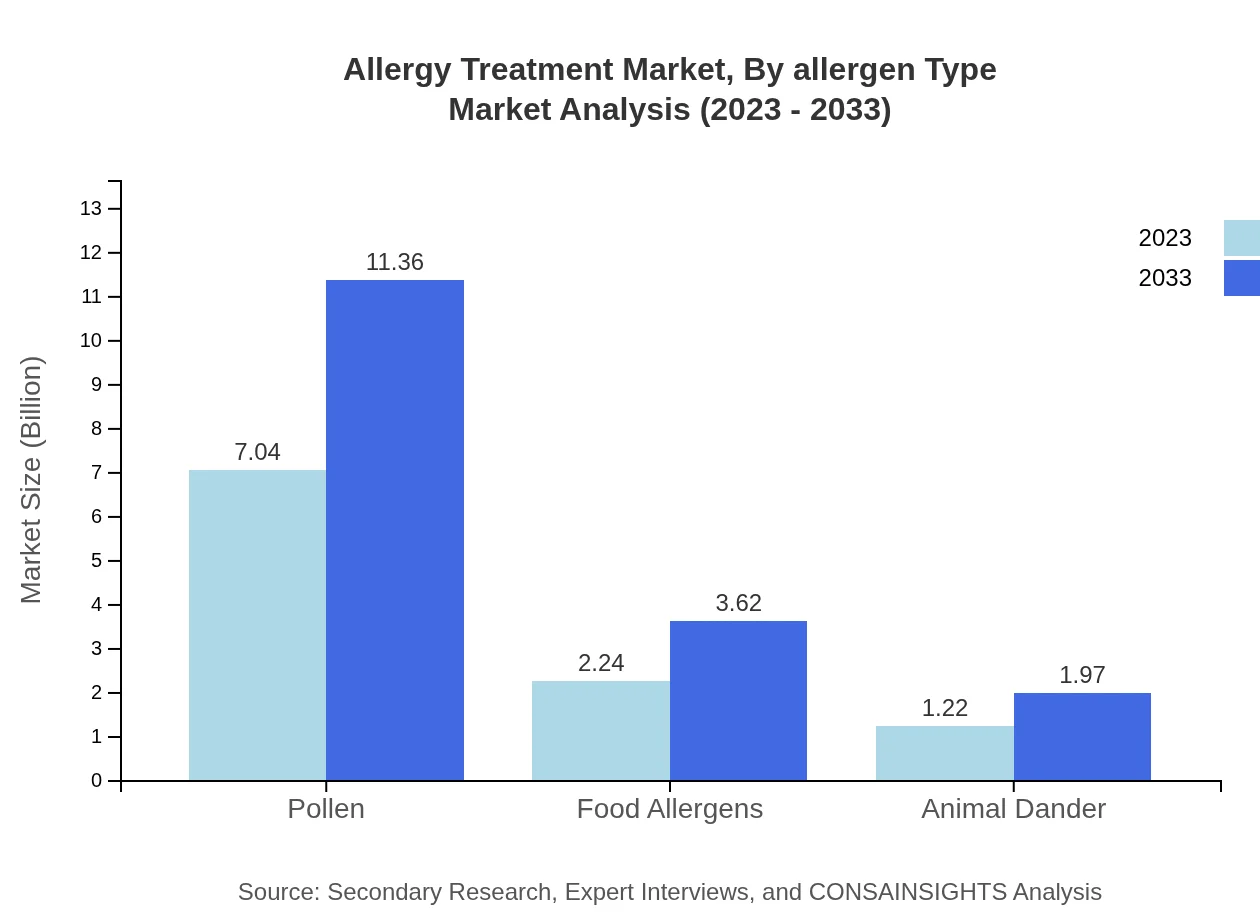
The market is segmented by allergen types such as pollen, food allergens, and animal dander. Pollen treatments dominate the market, amounting to $7.04 billion in 2023, with anticipated growth to $11.36 billion by 2033, holding a 67.04% market share. Food allergens and animal dander treatments follow, valued at $2.24 billion and $1.22 billion in 2023, respectively.
Allergy Treatment Market Analysis By Therapy
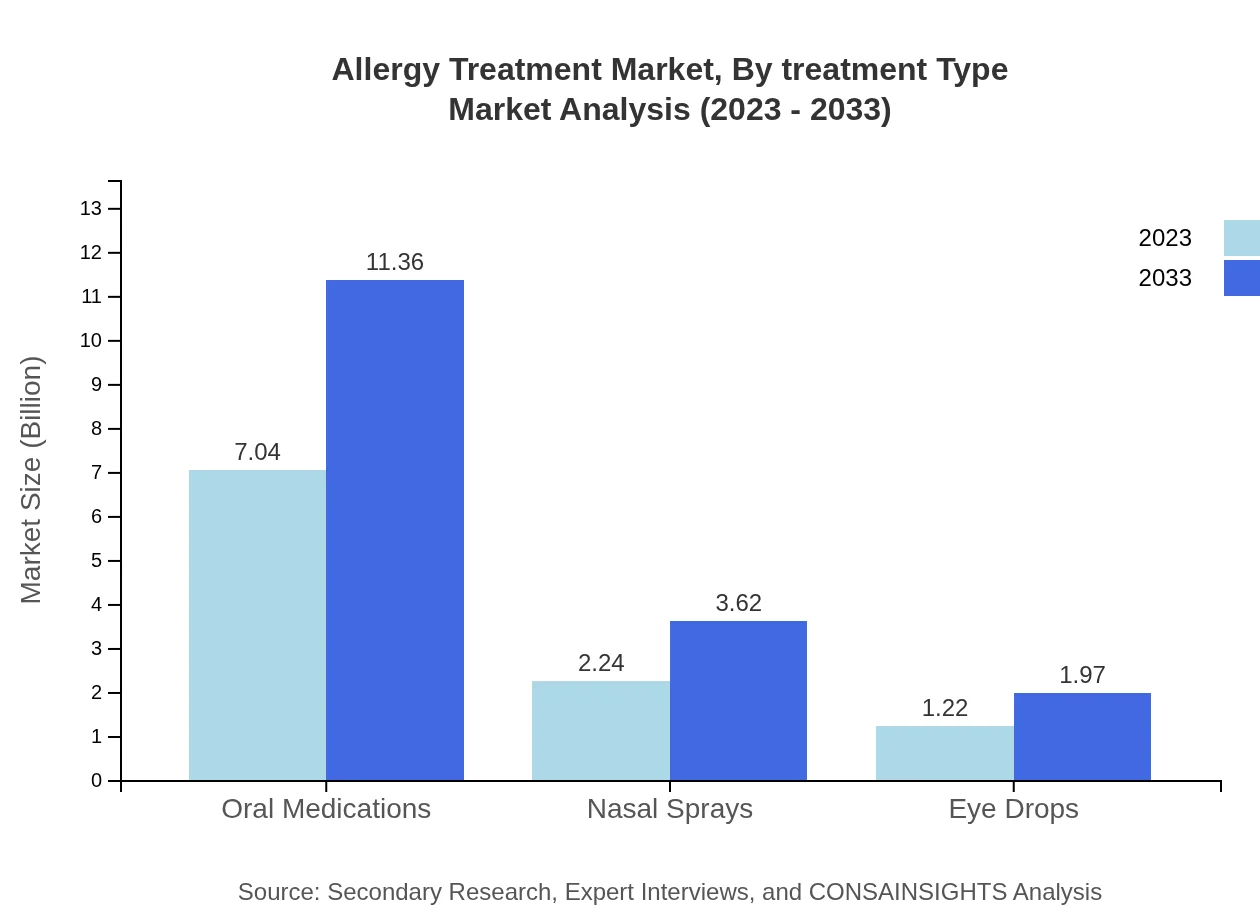
Within therapy approaches, oral medications lead the market at $7.04 billion in 2023, with growth projections towards $11.36 billion by 2033, affirming a dominance of 67.04%. Other therapies such as nasal sprays and eye drops have smaller yet significant market shares.
Allergy Treatment Market Analysis By Distribution Channel
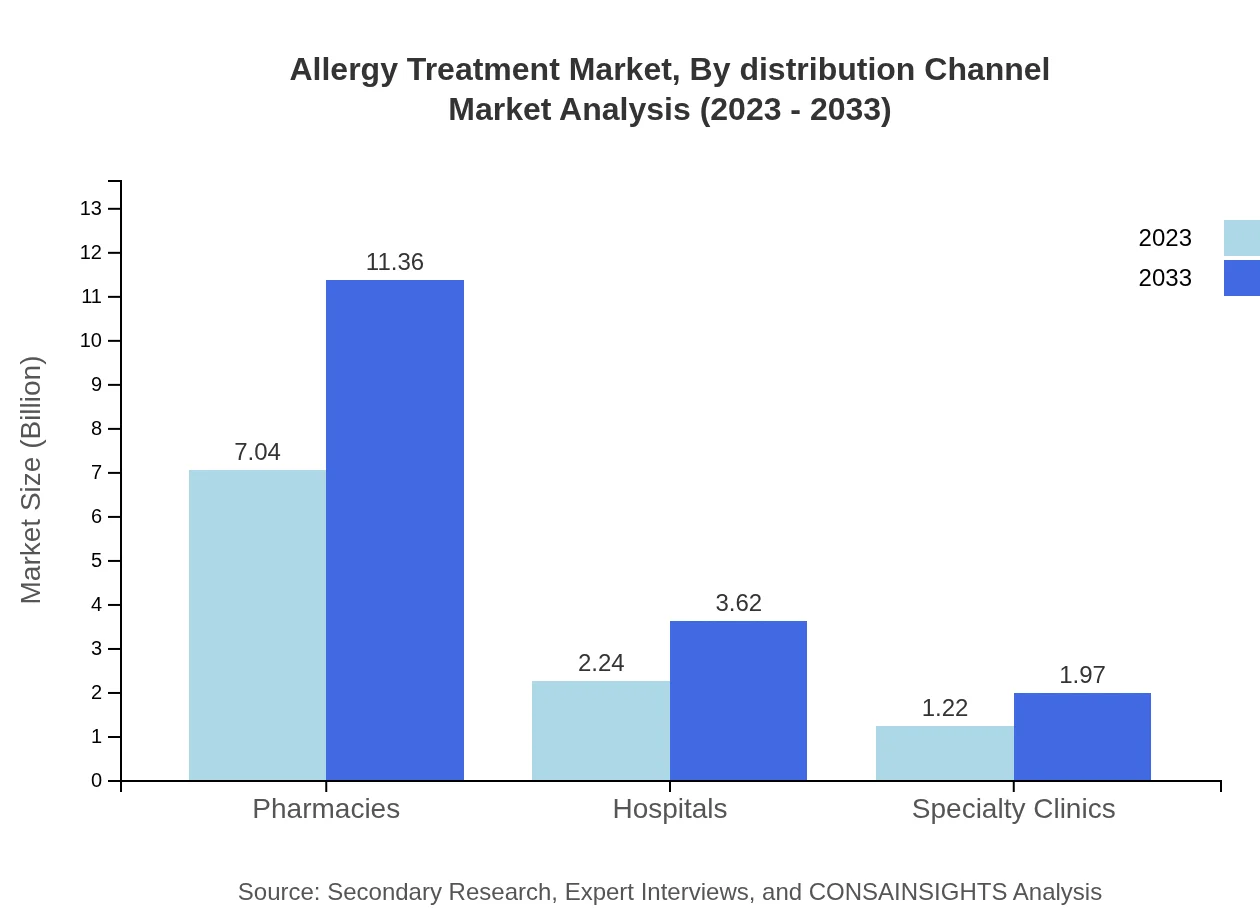
Pharmacies remain the primary point of sale for Allergy Treatments, representing a market size of $7.04 billion in 2023, leading to $11.36 billion in 2033. Hospitals and specialty clinics account for smaller but critical market shares, facilitating patient access across varied demographics.
Allergy Treatment Market Analysis By Demographics
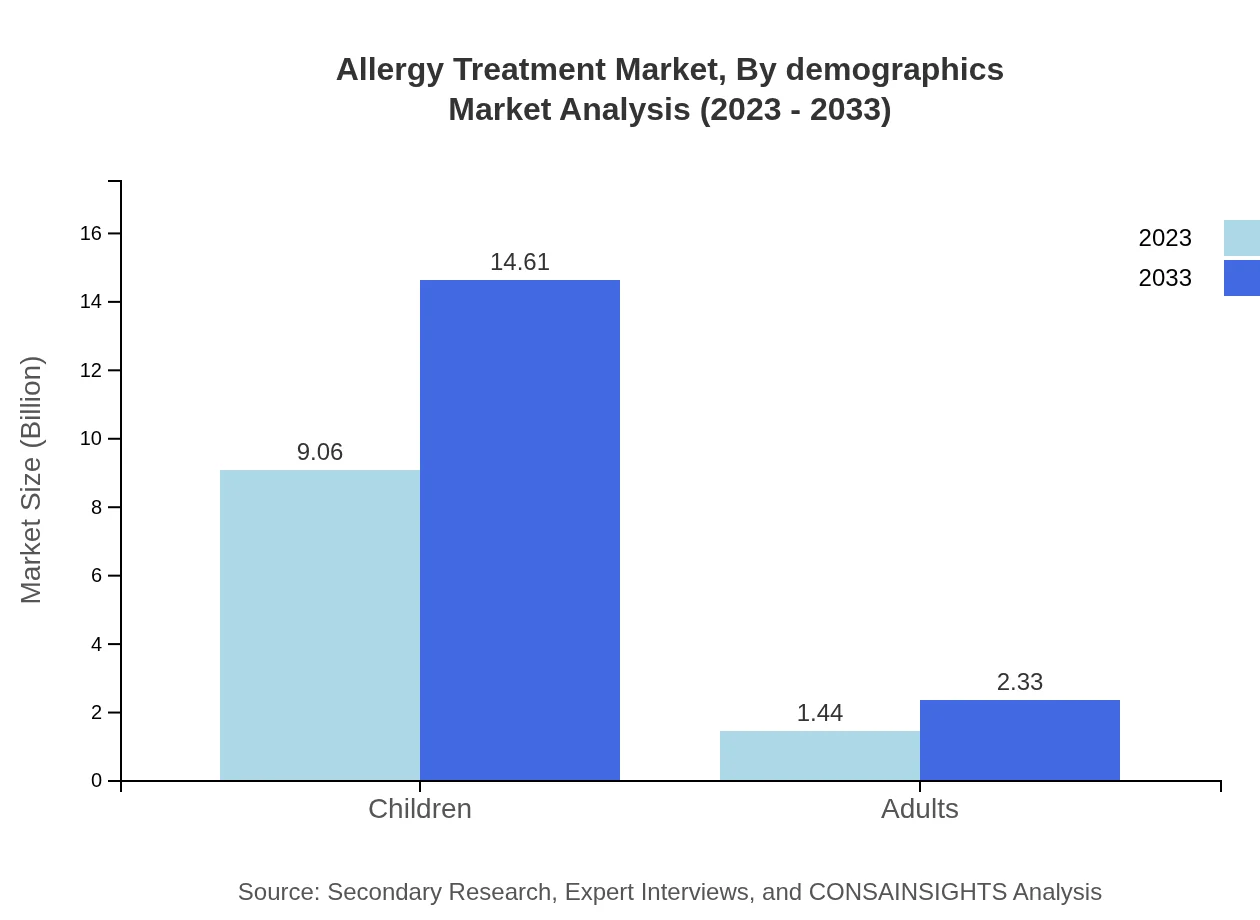
The Allergy Treatment market is further divided into demographics such as children and adults. Treatments for children dominate with a market value of $9.06 billion, expected to reach $14.61 billion by 2033, exemplifying a robust 86.24% share. The adult segment, while smaller, illustrates growth potential from $1.44 billion in 2023 to $2.33 billion by 2033.
Allergy Treatment Market Trends and Future Forecast
Tell us your focus area and get a customized research report.
Global Market Leaders and Top Companies in Allergy Treatment Industry
Allergen Inc.:
Allergen Inc. specializes in developing innovative treatments for allergic diseases, focusing on immunotherapy solutions that enhance patient outcomes.Novartis:
As a leader in pharmaceuticals, Novartis provides a range of allergy medications and is heavily involved in research to develop new therapies.GlaxoSmithKline:
GlaxoSmithKline is a key player in the allergy treatment market, offering diverse products including antihistamines and vaccines for allergen desensitization.Sanofi:
Sanofi is known for its comprehensive portfolio of allergy treatments that range from symptomatic therapies to biological solutions.Aimmune Therapeutics:
Aimmune Therapeutics focuses on developing a robust pipeline of therapies targeting food allergies, particularly peanut allergens.We're grateful to work with incredible clients.









FAQs
What is the market size of the Allergy Treatment market in 2023?
The market size for 2023 is $10.50 Billion as reported for the Allergy Treatment market.
How big will the Allergy Treatment market be in 2033?
By 2033 the Allergy Treatment market is reported to reach $16.94 Billion according to the forecast provided.
What is CAGR for the Allergy Treatment market over 2023 to 2033?
The compound annual growth rate for the forecast period 2023 to 2033 is 4.8%.
Is there a single fastest Growing region in the Allergy Treatment Market Report market?
No single fastest-growing region is stated for the Allergy Treatment Market Report market because the top regional implied CAGR values are within 0.15 percentage points of each other, making the ranking too close to call reliably.
Which companies are listed as top players in this market?
Top companies named include Allergen Inc., Novartis, GlaxoSmithKline, Sanofi, and Aimmune Therapeutics.
What are the main treatment categories in the market?
Primary treatment categories include immunotherapy and symptomatic treatment, covering a range of therapeutic modalities and delivery forms.
How are distribution channels characterized in the report?
Distribution channels include pharmacies, hospitals, and specialty clinics, each serving different patient access and dispensing roles.
Who contributed to the research methodology for this report?
Research involved primary interviews with industry experts, plus secondary research using company reports and publications for validation.
What allergen types are covered in the segmentation?
The segmentation lists pollen, food allergens, and animal dander as primary allergen categories addressed in the report.
Which demographic segments are included in the analysis?
Demographic segments specified are children and adults, reflecting age-based differences in allergy prevalence and treatment needs.